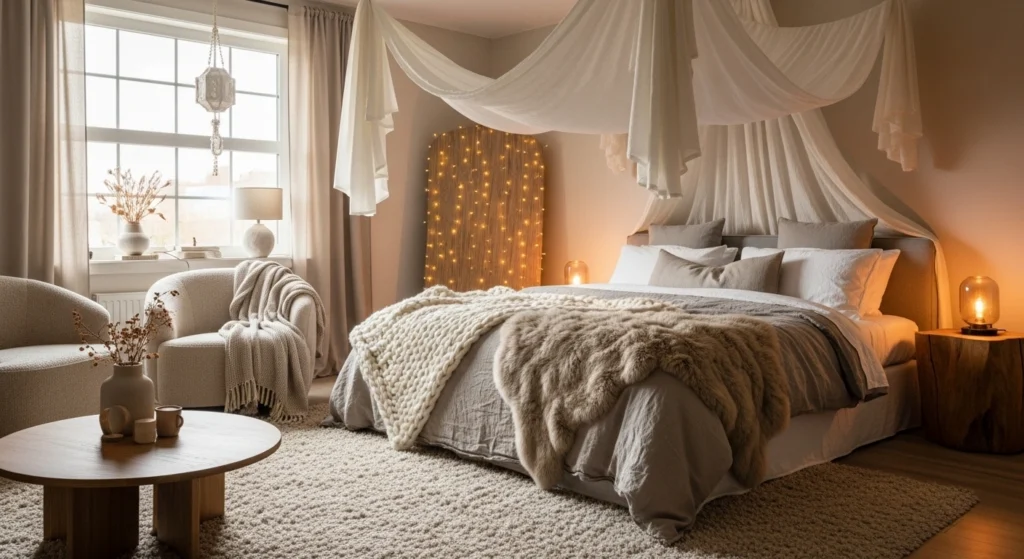
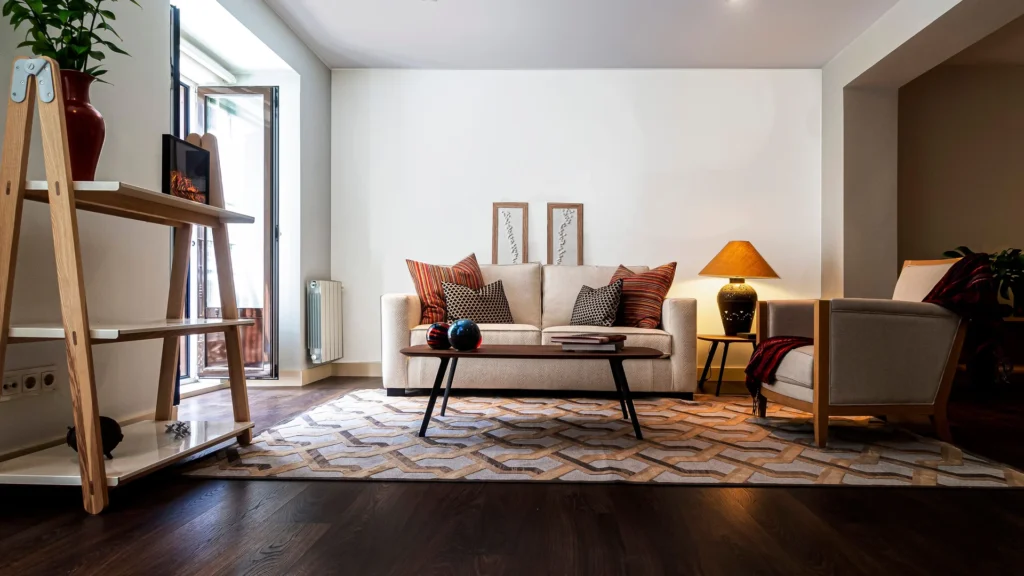
Winter Basement Decor Ideas (7 Steps to a Warmer Room)
A basement in winter is the coldest, darkest room in the house — bare floors, one small window, and a single ceiling light that makes everything look grey. The good news is that warming one up does not need a remodel or a big budget: seven practical steps, mostly rugs, lamps and secondhand finds, turn a forgotten basement into the warmest room in the house for roughly the price of one new piece of furniture.
Work through the steps in order: warm the floor first, then the light, then the sofa and the walls, then give the room a corner to sit in and something to look at. Each one is small on its own, but together they make a basement that holds its warmth, looks intentional, and feels like a proper room instead of a storage space with a sofa in it.
If the basement doubles as a bedroom, our basement bedroom makeover ideas tackle the same low light with a bed in the room, and our winter playroom decor ideas warm up a basement play space for the kids. For the rest of the house, our winter home decor ideas carry the same layers upstairs.
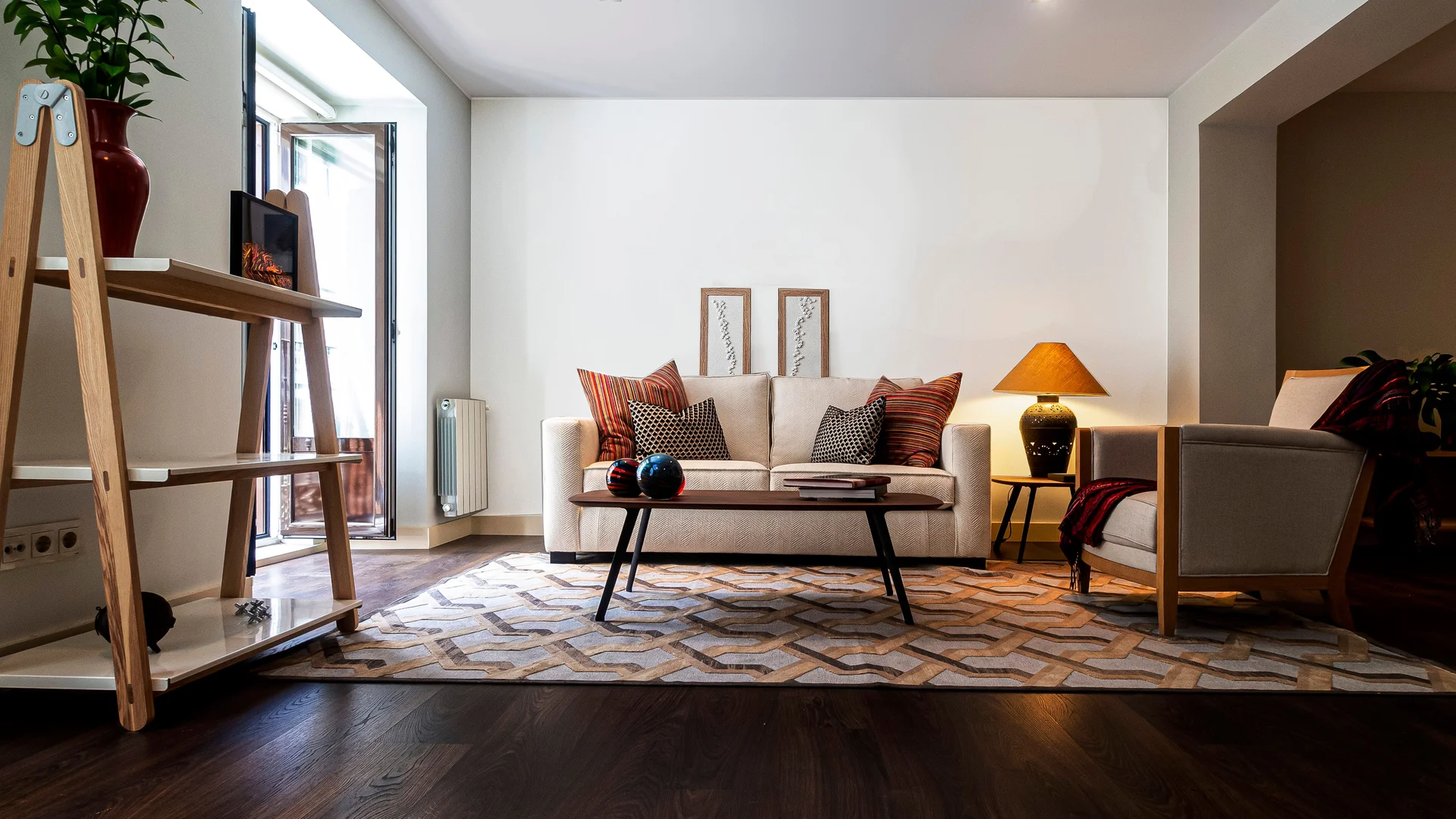
Step 1: Start with a Big, Warm Rug
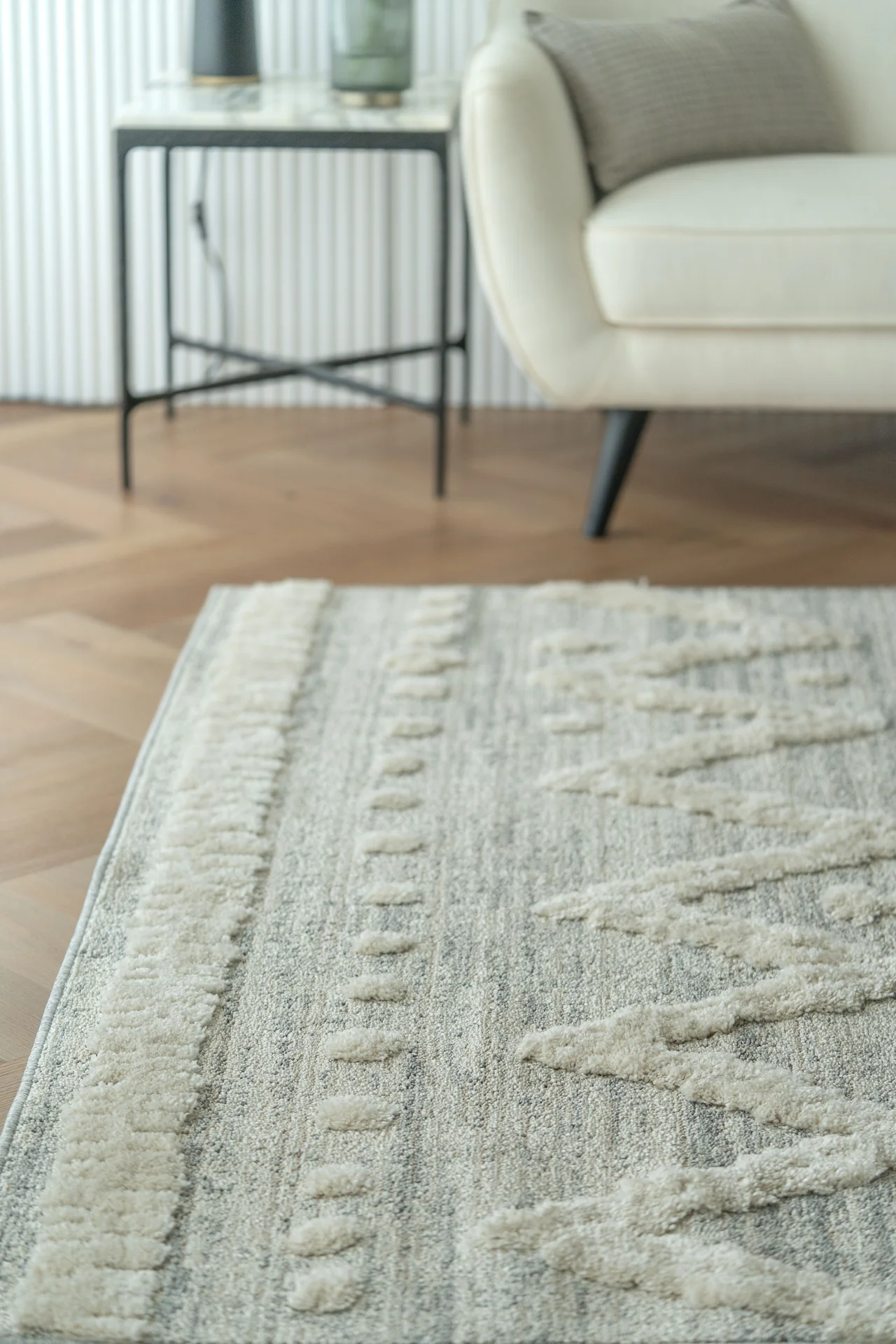
Basement floors are cold for a reason: concrete or bare boards with nothing but cold earth below them. Before you buy anything else, put a thick rug over the main seating area — the whole patch of floor under the sofa and coffee table, not just a small mat in front of it. A rug changes the room instantly, and it is the cheapest warmth you will buy all winter.
Look for wool or cotton rugs secondhand first: charity shops, Facebook Marketplace and house-clearance sales are full of them, often for $20 to $40 for a large one. A thick, textured rug like the cream one here feels wonderful underfoot and hides the cold floor completely, while a flat weave is easiest to clean if the basement gets dusty. Whatever you choose, put a non-slip rug underlay underneath — basement floors are usually smooth concrete or boards, and a rug that slides is a rug you will stop using.
Tip: Buy the rug bigger than you think you need. A rug that stops halfway under the sofa looks like a mistake; one that runs under the front legs of the sofa and out to the coffee table looks like a decision — and it keeps your feet warm for the whole room, not just one spot.
Step 2: Layer the Light at Three Heights
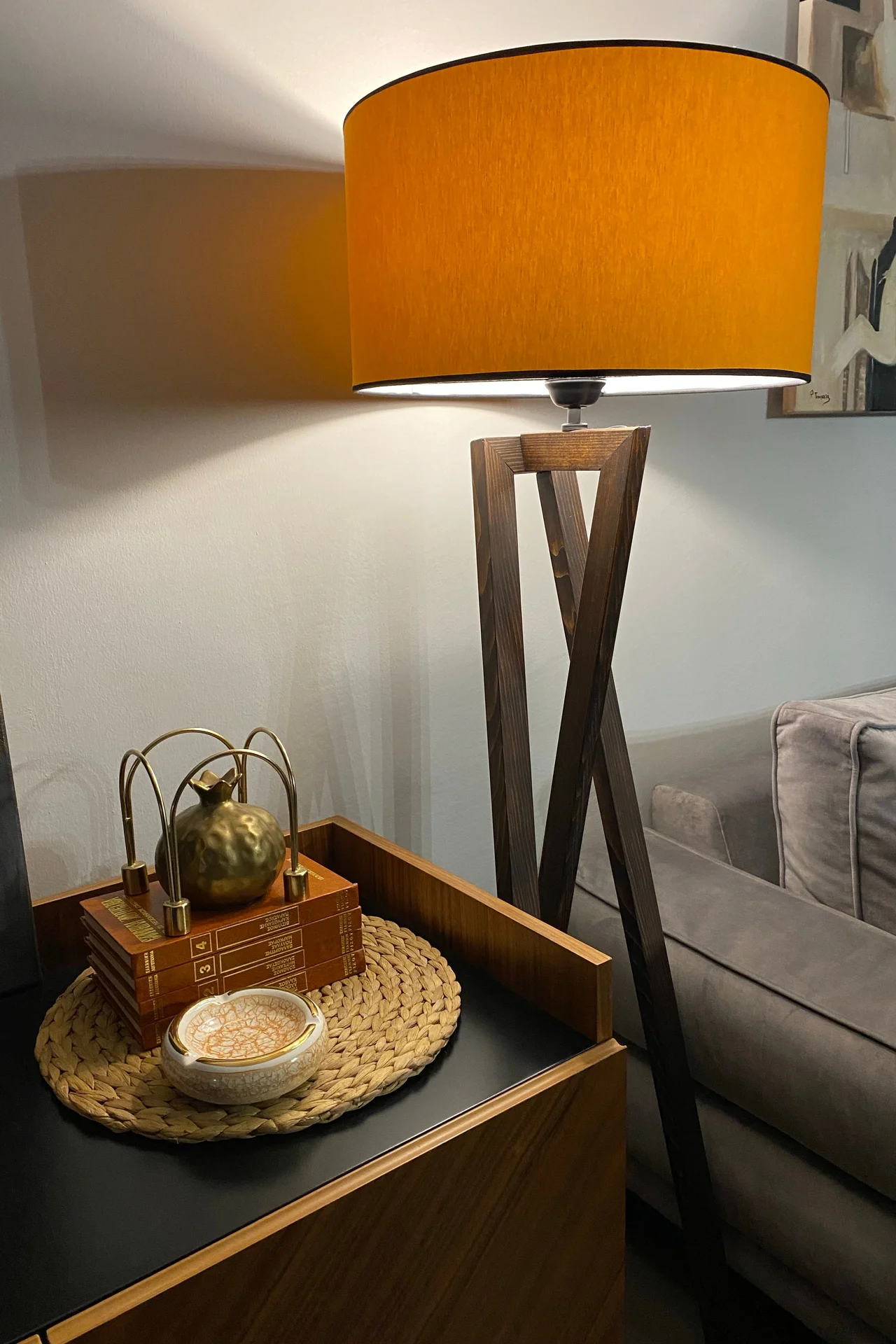
Basements usually have one ceiling light, and it is usually cold white, which makes the room feel like a corridor at night. Warm light is the cheapest mood change there is: a tall floor lamp like this one, a table lamp on a side table, and a small lamp or a string of fairy lights at a third height. The whole set costs $10 to $20 secondhand, and it changes the room more than any piece of furniture.
Put the light low and at different heights, not all on the ceiling. A floor lamp beside the sofa, a table lamp on the side table, and a small lamp on a shelf throw warm light across the seating area instead of down from above. Use warm-white LED bulbs (2700K) in every fitting — they make the walls look warm instead of grey — and avoid cool-white bulbs entirely in this room: they make a basement feel colder than it is.
Tip: Switch the lamps on an hour before it gets dark, not after. A room that is already glowing when the light goes outside never feels gloomy — a room you light after dark always feels like you are catching up.
Step 3: Dress the Sofa with Throws and Cushions
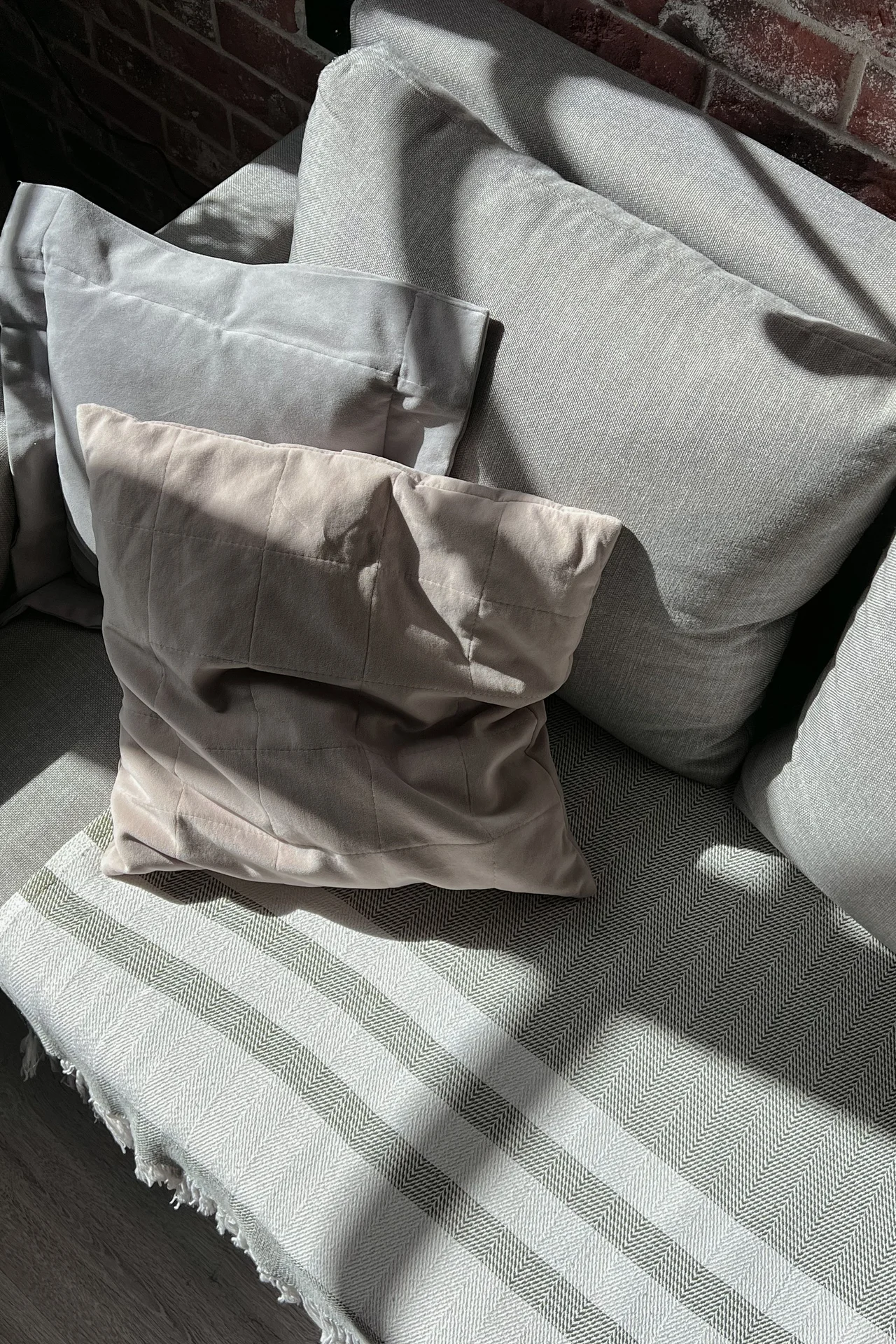
A bare sofa in a basement looks cold even when the room is warm. The fix is layers: two or three cushions in different textures — velvet, wool, a knit — and a folded throw across one arm or the back of the sofa. Each layer adds a little more softness, and the sofa starts to look like somewhere you want to sit instead of somewhere you ended up.
Mix one pattern with plain textures rather than stacking three patterns together: grey velvet cushions with a striped throw, or a plaid throw with plain cream cushions. Charity shops are full of good cushions for a few dollars each, and a throw folded across the arm is the piece your guests will actually reach for. Wash everything secondhand before it goes on the sofa, and keep one spare throw folded on the end of the sofa for the coldest evenings.
Tip: Fold the throw across the arm of the sofa, not bunched on the seat. A folded throw looks deliberate, stays put while you sit, and is easy to pull over your knees without remaking the whole sofa.
Step 4: Dress the Bare Walls with Shelves and Texture
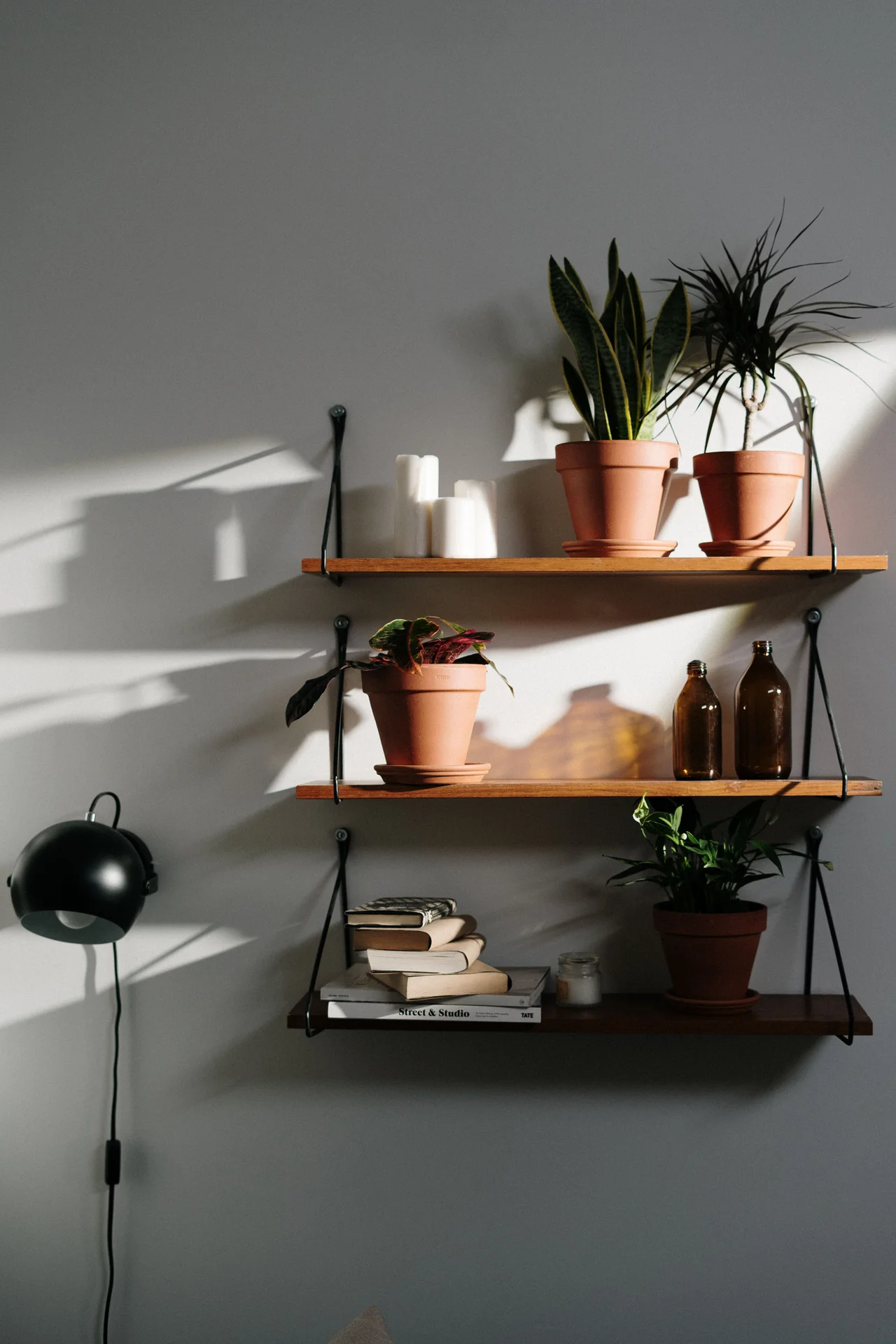
Basement walls are usually the problem: bare, grey, and colder to the eye than any other wall in the house. Three wooden floating shelves change that completely — terracotta pots with plants on the top shelf, candles and amber bottles in the middle, a stack of books and a small plant at the bottom. The wall stops being a blank grey slab and starts being part of the room.
Keep the shelves shallow and the styling loose: two or three objects per shelf, with space between them, so the wall still breathes. Terracotta pots are the cheapest warmth you can put on a shelf — their colour alone warms a grey wall — and a candle or two adds a glow in the evening. If your basement walls are concrete, use proper masonry anchors or a leaning ladder shelf instead of forcing screws that will not hold.
Tip: Style the shelves from the top down, and leave one shelf half-empty on purpose. A shelf crammed edge to edge looks like storage; a shelf with breathing room looks like a decision.
Step 5: Make a Reading Nook in the Quiet Corner
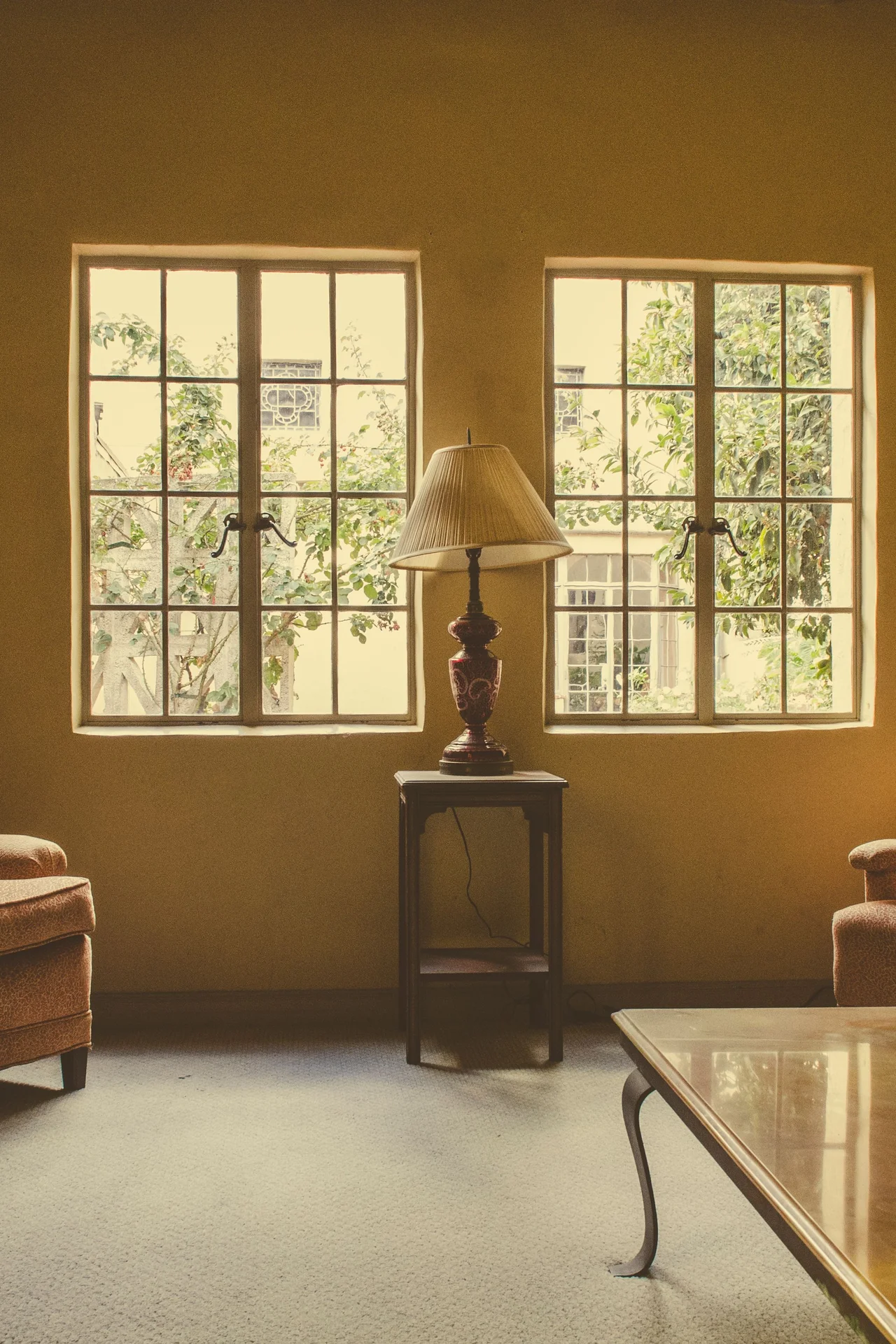
Every basement has a quiet corner — by the small window, or at the far end away from the television. That corner is a reading nook waiting to happen: one comfortable armchair, a small side table, and a table lamp. That is the whole project. The lamp is the important part: a nook without its own light is just a chair in a corner, but a chair with a lamp beside it is somewhere to sit with a book for an hour.
Look for a solid, comfortable armchair secondhand — $20 to $40 will buy a good one, and a loose cushion in a plain fabric covers a multitude of sins. Put the lamp on a small table at elbow height so the light falls on the book, not on the ceiling, and keep a stack of books on the table or on the floor beside the chair. The nook works best in the corner with the most daylight, even if that daylight is only a small basement window — the lamp does the rest after dark.
Tip: Sit in the chair before you buy it, and check that you can read comfortably with the lamp on. A chair that is comfortable in the shop and impossible to read in is a chair that ends up back at the charity shop.
Step 6: Add Baskets, Wood and Low-Light Plants
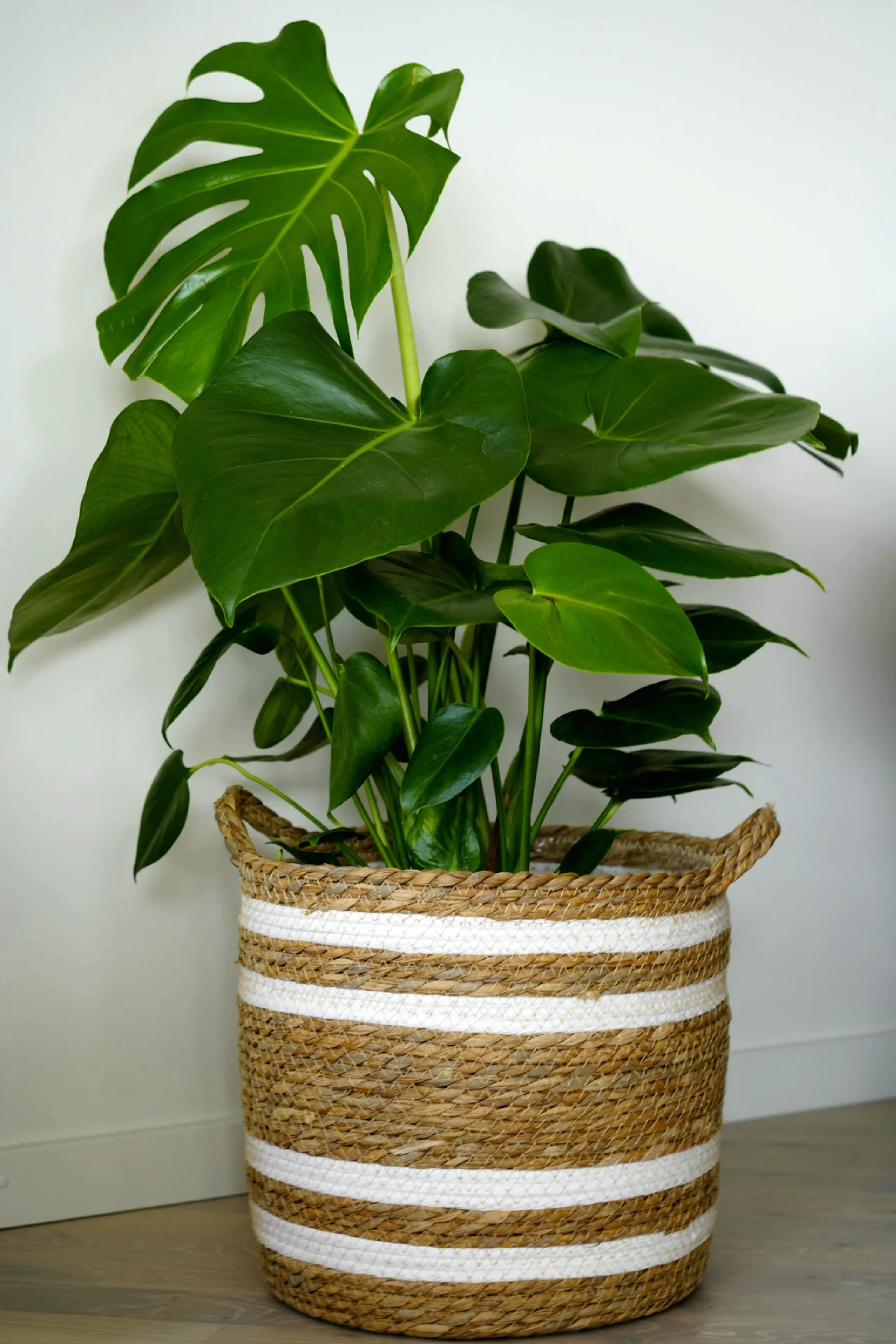
A basement with no living things in it feels like a storage room, however well you furnish it. Plants fix that — and the right ones thrive in low light. A monstera in a woven seagrass basket like this one, a snake plant on a shelf, a pothos trailing from a high spot: green against grey walls is the fastest way to make a basement feel alive.
Choose plants that forgive low light and forgetful watering: snake plants, pothos, ZZ plants and monstera all cope with a basement window and a weekly water. Put them in woven baskets rather than plastic pots — the basket hides the pot, adds the wood-and-fibre texture a basement needs, and costs a few dollars at a charity shop. A basket of rolled-up throws by the sofa does the same job in a different way: texture, warmth, and somewhere to put the blankets.
Tip: Buy the basket before the plant, and make sure the plant’s pot fits inside it with room for a saucer. A plant drowning in its own basket because there is nowhere for the water to go is a plant that will not last the winter.
Step 7: Give the Room a Glowing Focal Point
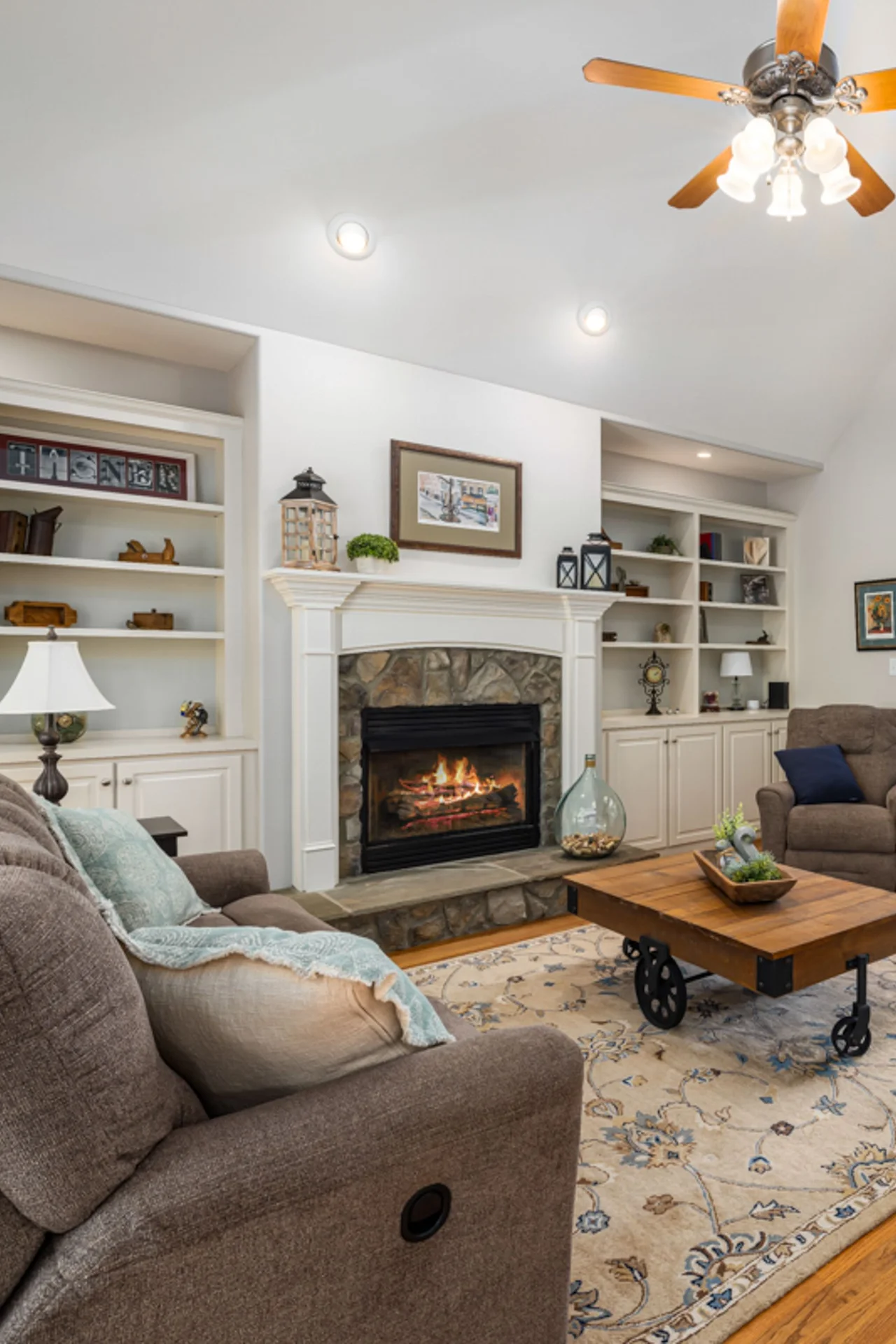
Every room needs one thing to look at, and a basement needs it more than most — without a focal point, the eye slides off to the bare walls and the low ceiling. If the basement has a fireplace, it is the answer: light it, dress the mantel with a lantern and a small plant, and arrange the seating around it. The fire does what no lamp can do — it moves, it crackles, and it makes the whole room feel warm even before the temperature changes.
No fireplace is no problem: a cluster of lanterns and pillar candles on the coffee table, or an electric fireplace against the longest wall, does the same job for a fraction of the cost. Keep the focal point low and warm — candles at coffee-table height, or a fire at hearth height — so the glow falls across the seating area instead of up at the ceiling. Never leave candles burning unattended, and keep them well away from throws and cushions.
Tip: Light the focal point first when you come downstairs, before the lamps. A room with a glowing centre already feels warm when you walk in — a room you light from the ceiling down always feels like you are catching up.
Winter Basement Budget Table
Here is the whole project at a glance. Buy secondhand first, and the total lands well under the cost of one new sofa:
| Step | What to buy | Rough cost | Where to find it cheap |
|---|---|---|---|
| 1. Floor | Thick rug + non-slip rug underlay | $20–$40 | Charity shops, Facebook Marketplace |
| 2. Light | Floor lamp + table lamp + warm-white LED bulbs | $10–$20 | Charity shops, pound and dollar stores |
| 3. Sofa | Throws + two or three cushions | $15–$30 | Thrifted, end-of-line sales |
| 4. Walls | Three floating shelves + terracotta pots + candles | $20–$40 | Hardware store, charity shops |
| 5. Nook | Armchair + small side table | $20–$40 | Charity shops, local buy-and-sell groups |
| 6. Plants | Low-light plants + woven baskets | $10–$20 | Garden centre clearance, thrifted baskets |
| 7. Focal point | Lanterns + pillar candles (or an electric fireplace) | $10–$20 | Sale rails, secondhand |
| Total | Seven steps, whole room | ~$105–$210 | Secondhand first, sales second |
Read Next
Keep the winter warmth going: our basement bedroom makeover ideas tackle the same low light with a bed in the room, our winter playroom decor ideas warm up a basement play space for the kids, our winter home decor ideas carry these layers through the rest of the house, and our winter sunroom decor ideas warm up the brightest room in the house the same way.
Frequently Asked Questions
How do I make a basement feel warm in winter without a remodel?
Start with the floor and the light, because that is where the cold shows. A thick rug with a non-slip underlay warms the floor, layered lamps with warm-white bulbs (2700K) warm the light, and throws, cushions and plants warm the eye. A glowing focal point — a fireplace, or a cluster of lanterns and candles — pulls the whole room together. Together these steps cost roughly $105 to $210 secondhand, and they work better than one expensive heater running all night.
What is the best rug for a cold basement floor?
A thick wool or cotton rug, bought as large as you can afford — big enough to run under the front legs of the sofa and out to the coffee table. Wool is warmest and hardest-wearing; cotton is easiest to wash. Buy secondhand first, and always use a non-slip rug underlay underneath, because basement floors are smooth concrete or boards and a sliding rug is a rug you will stop using.
How many lamps does a basement room need?
Three, at three different heights: a floor lamp beside the sofa, a table lamp on a side table, and a small lamp or a string of fairy lights on a shelf. One ceiling light alone makes a basement feel like a corridor; three low, warm lights make it feel like a room. Use warm-white LED bulbs (2700K) in all of them, and switch them on an hour before dark so the room is already glowing when evening comes.
What plants survive in a low-light basement?
Snake plants, pothos, ZZ plants and monstera all cope with a small basement window and a weekly water — they are the plants that forgive both low light and forgetful owners. Put them in woven baskets rather than plastic pots: the basket hides the pot and adds the wood-and-fibre texture a basement needs. Keep them near the window in the day and do not overwater in winter, when the soil dries slowly.
How do I stop a basement feeling damp in winter?
Ventilate a little every day, even in winter: open the small window or run a fan for ten minutes in the morning to let the damp air out, and do not dry clothes in the basement if you can avoid it. Keep furniture a few centimetres away from the outside walls so air can move behind it, and run a dehumidifier on the dampest days — dry air feels warmer than damp air at the same temperature, so the room will feel warmer too.