
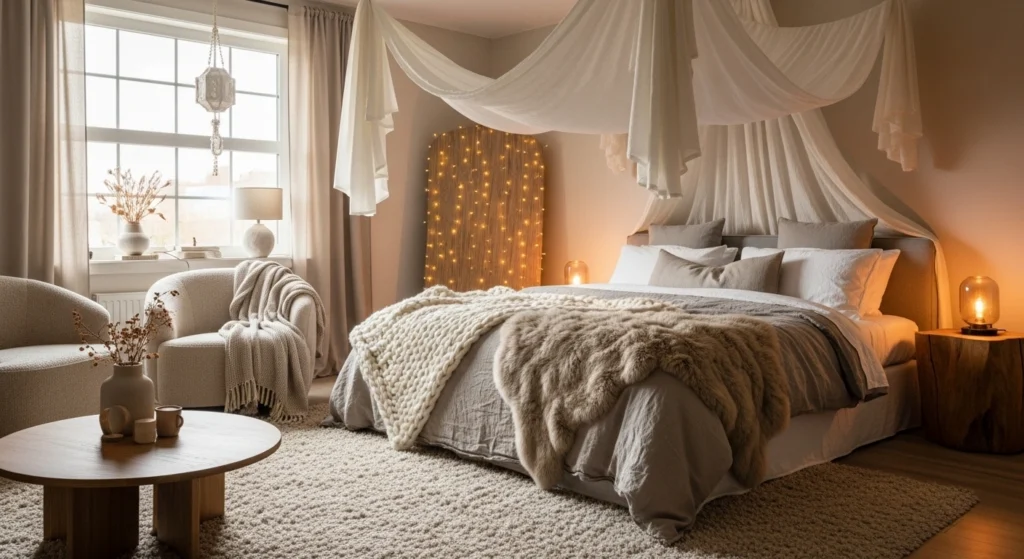
After a long day, we all crave a space where we can finally exhale — a bedroom that wraps around us like a gentle hug: soft, warm, and deeply calming.
That’s the whole idea behind cocooning. Instead of chasing trends, you build an emotional retreat where comfort comes first: layered textures, warm light, and quiet corners that make you feel genuinely safe. And if bare walls are breaking the spell, these easy DIY wall decor ideas for your bedroom finish the cocoon beautifully.
Whether you want a full comfort retreat or just a softer place to land each night, these 11 ideas work in every season and on almost any budget. Planning a spring bedroom refresh? Start here — then keep the coziness going into warmer months with these cool summer bedroom ideas.
1. Layer Blankets and Throws for Instant Warmth
Nothing says comfort like sinking into layers of softness. Start with your bedding: a quilt or duvet as the base, a chunky knit throw across the foot of the bed, and a couple of cushions in different textures. Linen, cotton, wool, and faux fur each add their own kind of softness.
The secret is mixing rather than matching. A smooth cotton sheet against a nubby wool throw against a velvety cushion creates the kind of richness you can see from the doorway. Even a lightweight throw tossed casually over the bed makes the whole room feel more inviting.
Shop this amazing waterproof layered blanket (paid link)

2. Choose Curved Furniture That Feels Like an Embrace
Sharp corners feel alert; curves feel safe. A rounded headboard, a barrel chair, or even a circular mirror softens the room’s edges and makes the space feel like it’s gently holding you.
You don’t need a full furniture overhaul for this to work. One curved piece — a bouclé accent chair, an arched floor lamp, a round ottoman — is enough to shift the mood, whether you buy new or find it secondhand.

3. Switch to Warm Amber Lighting
Harsh white overheads are the fastest way to kill coziness. Swap them for warm amber light — around 2700K — and the room instantly feels calmer. Table lamps, wall sconces, and string lights all cast the kind of gentle glow that makes evenings feel slower.
Layer your light the way you layer bedding: a bedside lamp for reading, a soft glow in a dark corner, maybe fairy lights along a shelf. Several small warm sources beat one bright ceiling light every time.

4. Hang Canopy Drapes for a Private Cocoon
Few things feel safer than a bed wrapped in soft fabric. Sheer canopy drapes turn an ordinary bed into a private retreat — a little world of your own inside the room.
Choose light, breathable fabrics in neutral tones for the calmest effect. Most styles hang from simple adhesive ceiling hooks, so this is a renter-friendly project that typically costs $40–$120: shop these minimalist canopy drapes with lights (paid link).

5. Mix Soft Textures and Materials
Cocooning is a tactile experience. Velvet cushions, a shaggy rug underfoot, linen curtains that filter daylight, a knit pouf beside the bed — every surface should invite touch.
Aim for at least three different textures in the room. The contrast is what makes it interesting: smooth against nubby, heavy against sheer. Focus on natural materials like cotton, wool, and wood for an authentic feel.

6. Stick to a Warm Neutral Palette
Color sets the room’s emotional temperature. Warm whites, oatmeal, taupe, soft caramel, and muted clay tell your nervous system to relax. Cool grays and stark whites do the opposite.
Add depth with wooden accents and subtle patterns rather than bold color. This is the cheapest transformation on the list — a tin of warm-toned paint, or simply swapping cool-white bedding for cream, can change how the whole room feels for almost nothing.

7. Carve Out a Cozy Reading Nook
A cocooning bedroom deserves a corner that’s just for you. A comfortable chair, a small side table, a floor lamp, and a soft throw are all it takes — a place to read, journal, or simply sit with your thoughts.
Tuck it by a window if you can; daylight makes the nook a daytime retreat too. For more inspiration, browse these spring reading nook decor ideas — many of them work year-round.

8. Embrace Hygge with Thrifted Finds
The Danish idea of hygge — cozy contentment — is cocooning’s close cousin, and it doesn’t require spending much. Thrift stores are full of chunky knit blankets, ceramic mugs, candle holders, and soft cushions waiting for a second life.
Look for natural materials and warm tones, and don’t worry about matching perfectly. A collected, slightly imperfect room feels more personal — and more comforting — than a showroom ever could.

9. Clear the Clutter with Hidden Storage
It’s hard to relax in a room that feels chaotic — but calm doesn’t mean empty, it means everything has a home. Under-bed boxes, lidded baskets, and a nightstand with drawers swallow the visual noise.
Do one surface at a time: clear the nightstand, then the dresser top, then the floor. Each cleared surface lowers the room’s visual volume a notch until the whole space feels quiet and safe.

10. Add Scent and Sound
Cocooning isn’t only visual. A lavender pillow spray, a cedar candle, or eucalyptus in a vase tells your brain it’s time to unwind. Sound matters too — a white noise machine, soft rain sounds, or a low evening playlist can make the room feel like a true sanctuary.
Keep it subtle: one signature scent and one background sound are plenty. The goal is a gentle atmosphere, not a spa gift shop.

11. Refresh the Room with One Statement Piece
Sometimes a single change makes the biggest impact. One statement piece — a large textured wall hanging, an oversized floor cushion, or a sculptural lamp — can refresh the entire room.
A single bold choice gives the eye somewhere to land and makes everything around it feel intentional. It’s the fastest way to make a familiar room feel new again.

Cocooning on Any Budget
You don’t need to spend a fortune to feel wrapped in comfort. Here’s how the look scales:
- Under $50: Warm-toned bulbs, a thrifted throw, and furniture rearranged into a cozier layout.
- $50–$200: Layered bedding, canopy drapes, and new cushions in mixed textures.
- $200 and up: A curved accent chair, quality layered lighting, and a statement piece that anchors the room.
Most people achieve a beautiful transformation between $150–$300 by focusing on texture and light — the two things your senses notice first.
5 Easy Steps to Your Cocooning Bedroom
- Warm up the lighting — swap cool bulbs for warm amber ones.
- Layer the bed — add a throw and cushions in different textures.
- Soften one corner — a chair, a lamp, and a blanket make a nook.
- Clear one surface — then another, until the room feels calm.
- Add scent and sound — one candle, one playlist, done.
Final Thoughts
Creating a cocooning bedroom doesn’t have to be expensive or complicated. It’s about choosing comfort on purpose — every layer, every glow, every quiet corner working together to make you feel safe.
Start small: layer your textures, warm your lighting, and claim one cozy corner as your own. Over time, your bedroom will become the retreat you look forward to all day. Sweet dreams and warm nights ahead.
Quick Answers
What exactly is a cocooning bedroom?
It’s a design approach focused on comfort and emotional safety rather than looks alone. Think layered soft textures, warm lighting, calming colors, and cozy corners — a bedroom designed from the start to make you feel wrapped up and at ease.
How can I make my bedroom cozy on a small budget?
Start with what you own: rearrange the furniture for a better flow, pile every blanket and throw you have onto the bed, and swap cool-white bulbs for warm ones. Thrift stores are excellent for knit throws, cushions, and candle holders at a fraction of retail prices.
What colors make a bedroom feel most cocoon-like?
Warm neutrals — oatmeal, taupe, warm white, soft caramel, and muted clay. These tones signal relaxation to your brain. Avoid stark whites and cool grays, which can make a room feel clinical instead of cozy.
How do I keep a cozy bedroom from looking cluttered?
Give everything a hidden home: under-bed boxes, lidded baskets, and nightstands with drawers. Keep surfaces mostly clear and let texture — not stuff — create the coziness. If a surface looks covered, something on it probably doesn’t belong there.
Affiliate Disclosure: As an Amazon Associate, I earn from qualifying purchases. This means if you click on my links and make a purchase, I may receive a small commission at no extra cost to you. Thank you for supporting my content!