Winter Playroom Decor Ideas: How to Make a Playroom Warm, Tidy and Safe (in 7 Steps)
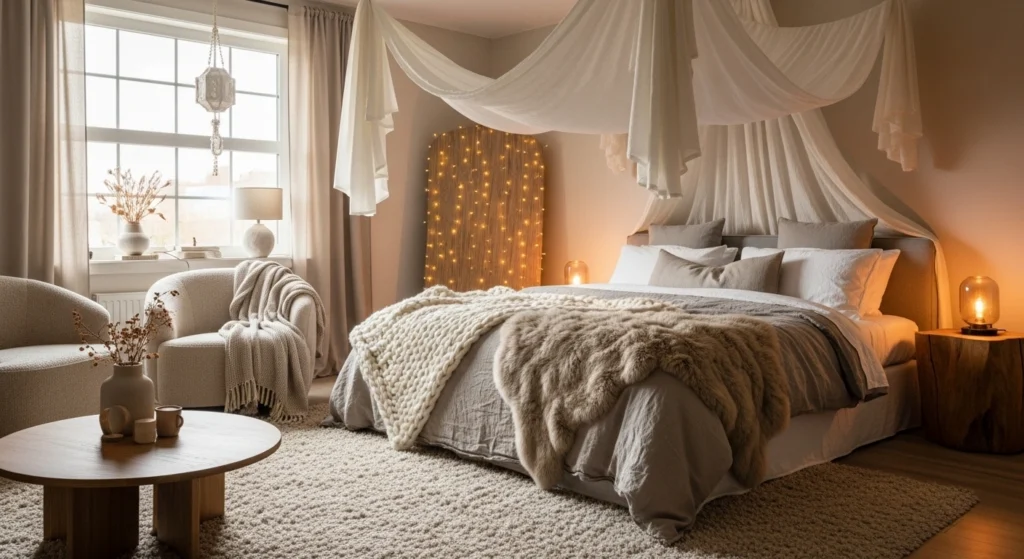
When the cold sets in, the playroom becomes the hardest-working room in the house — it has to keep small feet warm, hold a mountain of toys, and still feel calm at the end of the day. These winter playroom decor ideas do all three, in seven practical steps, without a remodel and without buying a whole new room of furniture.
Work through the steps in order: warm the floor first, then the storage, then the light. Each one is small on its own, but together they turn a cold, cluttered room into a place your children actually want to play in — and a room you can tidy in ten minutes flat.
If bedtime is the other end of the same problem, our winter kids bedroom decor ideas warm up the room where the day ends, and our printable nursery wall art adds a soft, handmade touch to the littlest rooms. For the rest of the house, our winter home decor ideas layer the same warmth through every room.
Step 1: Warm the Floor First
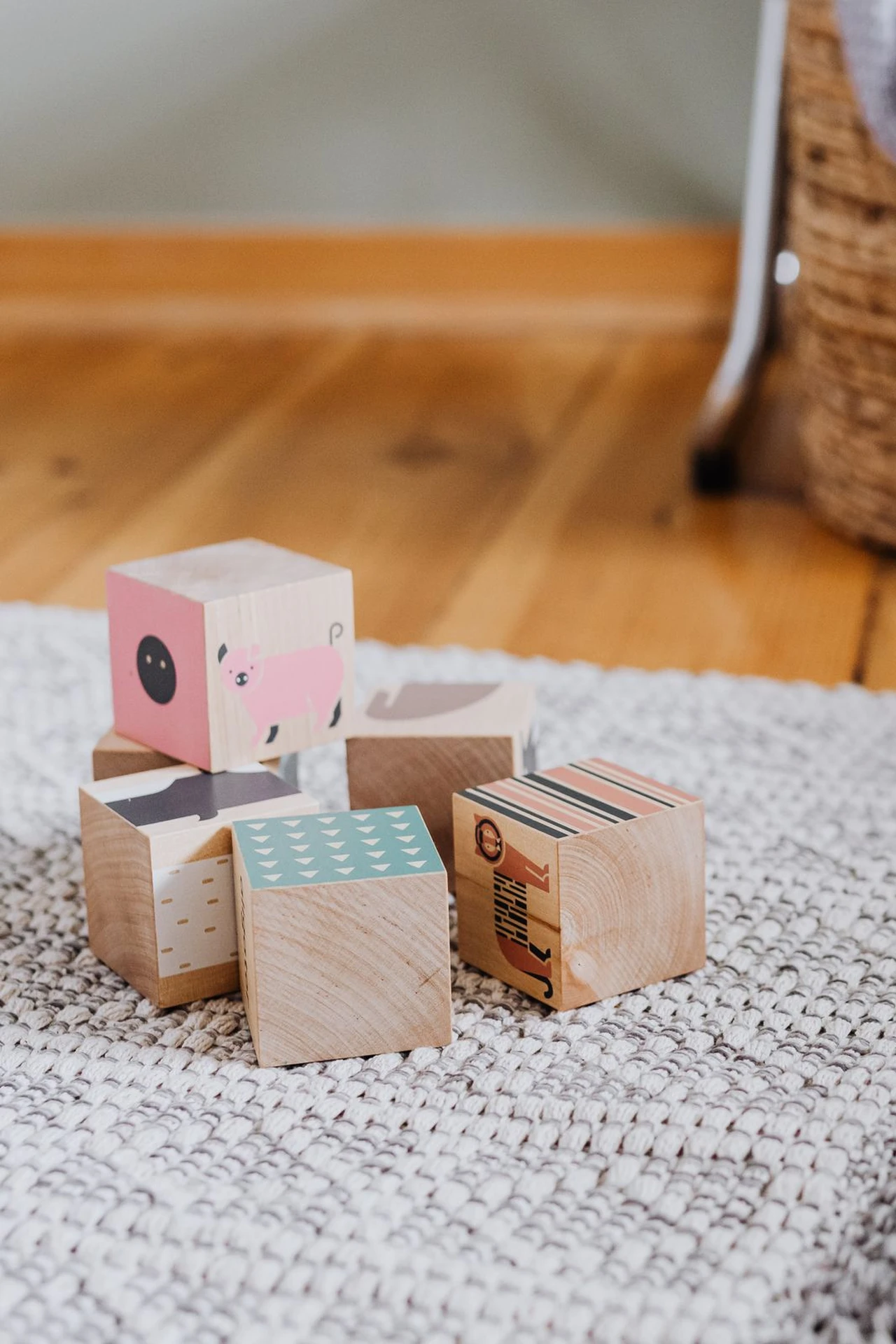
A playroom is a floor room. Children sit on it, build on it, lie on it — and in winter a bare wooden floor is cold enough to send them straight back to the sofa. So the first step is always the floor: a thick, low-pile rug big enough to cover the main play area, with a non-slip underlay underneath so it never slides when small feet run across it.
Choose a rug you can actually clean. Wool and cotton blends wash well, and a flat weave shakes out easily, while a deep shaggy pile traps crumbs and small toy pieces. A woven rug in a pale, warm neutral does the job without shouting, and it gives every other step in this list a soft base to sit on. Keep the rug clear of the doorway so nobody trips on its edge coming in with an armful of toys.
Tip: Put the rug down before anything else, and let your child choose where the blocks live on it — a play zone they helped place is a play zone they will actually use.
Step 2: Put Storage Low, Where Small Hands Can Reach

Most playroom storage fails for one simple reason: it is built for adults. Tall shelves and deep boxes mean a child cannot reach their own toys — or put them back — without help, so the floor becomes the storage. Low, open shelves change that completely. Everything sits at your child’s height, in plain sight, and tidying becomes a game of putting things back where they belong rather than a chore.
Keep the shelves shallow and the contents light: a few wooden toys, a puzzle, a stack of chunky blocks. One kind of toy per shelf, no stacking things three deep. Anchor the shelving unit to the wall — it is the single most important safety step in this whole list, and it takes ten minutes with a furniture strap. A small rug in front of the shelves marks the play zone and catches the pieces that roll off.
Tip: Leave one shelf empty on purpose. An empty shelf is where tonight’s half-finished build or tomorrow’s new toy goes — a room with nowhere to put things is a room that stays messy.
Step 3: Make a Reading Corner with Books Facing Out
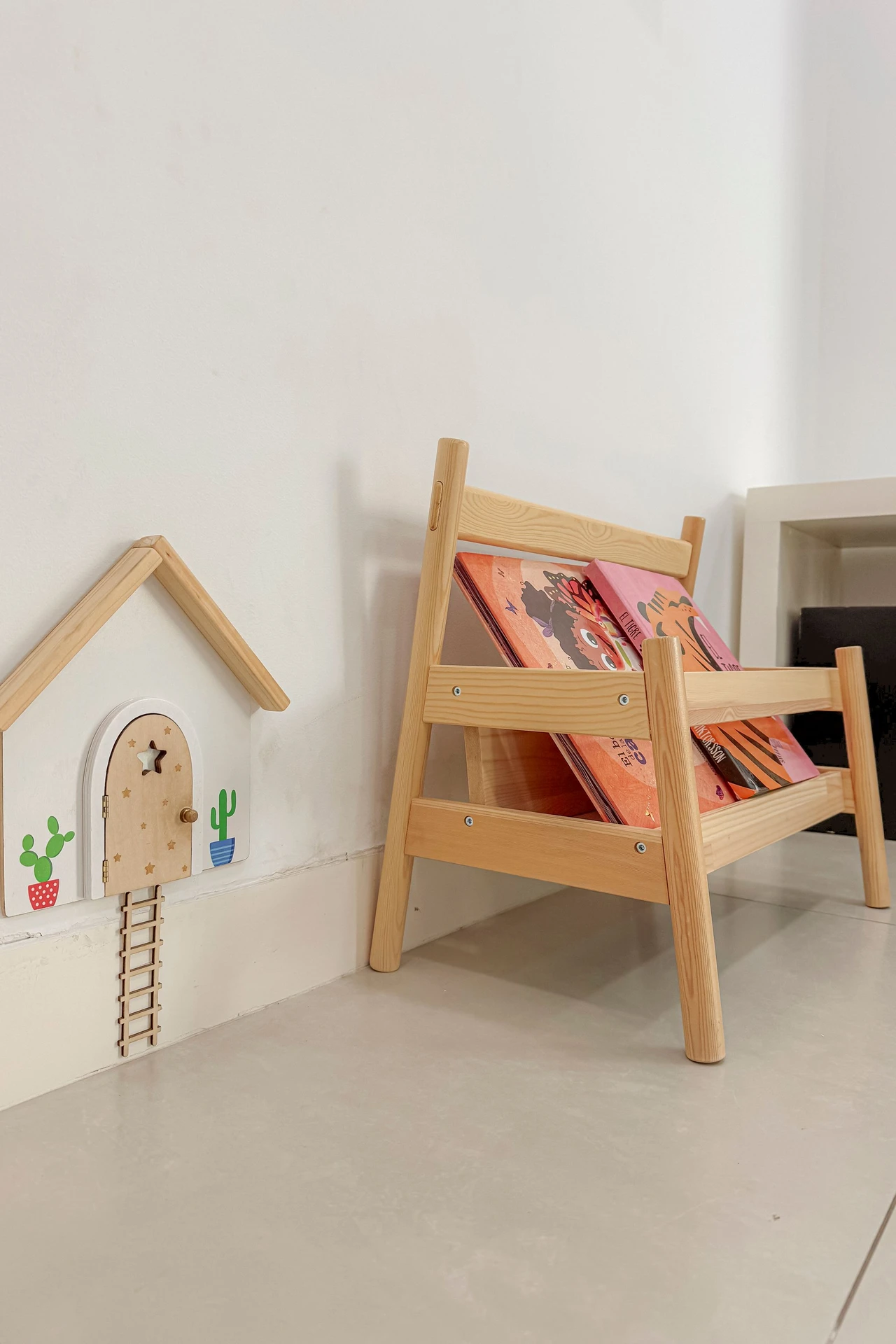
A reading corner does not need a chair or a canopy — it needs books a child can see. A low, forward-facing book stand lets your child choose by the cover, which is exactly how small children pick what to read. Ten books, facing out, beat fifty books spine-out on a tall shelf every single time.
Place the stand in the quietest corner of the room, away from the door and the toy shelves, and add one soft thing to sit on — a floor cushion or a folded blanket is enough. Rotate the books every couple of weeks so the corner feels fresh without buying anything new. A small wall decoration at your child’s eye level, like a tiny fairy door, makes the corner feel like their place, not just a piece of furniture.
Tip: Keep the reading corner books separate from the rest of the room’s books. When the same ten books are always in the same place, your child learns where to find them — and where to put them back.
Step 4: Give Them a Table of Their Own
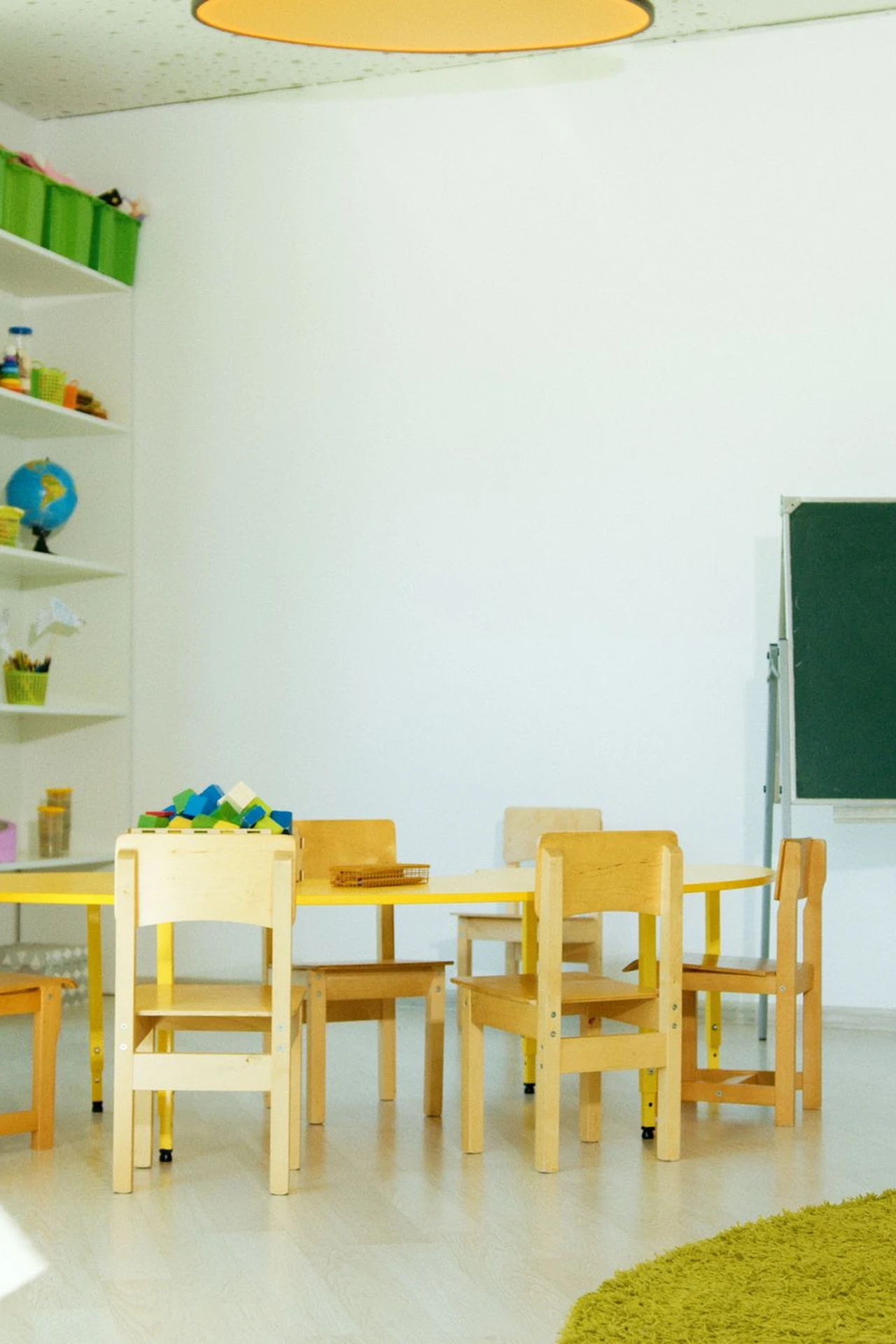
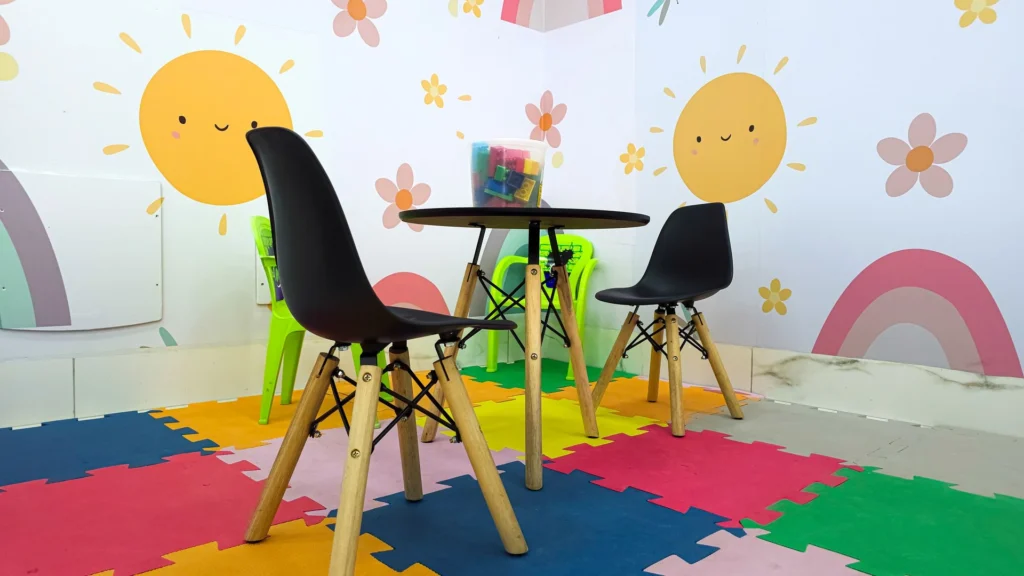
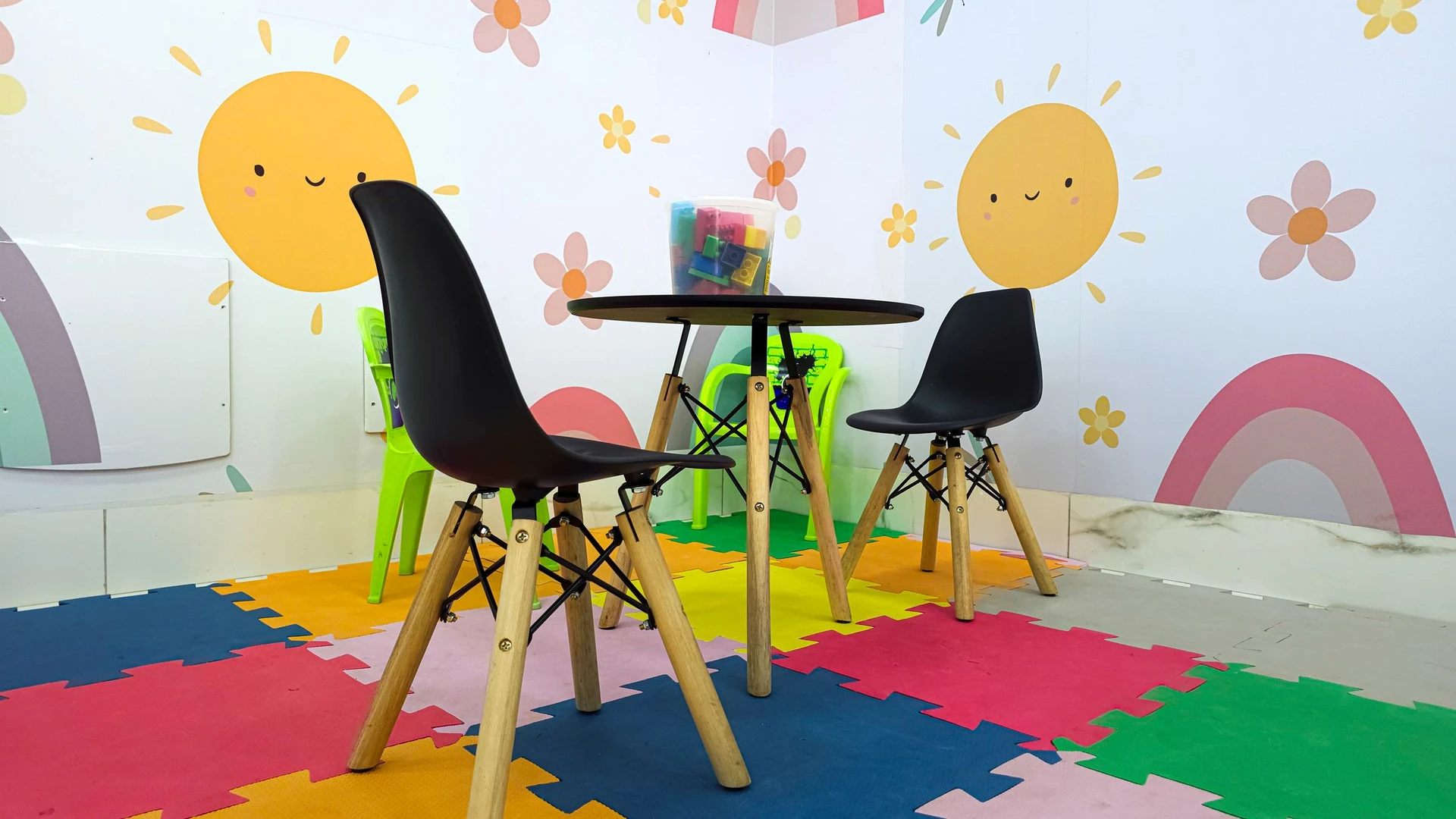
Every playroom needs a table at the right height — not the dining table, and not the floor. A child-sized table with sturdy little chairs is where the drawing, the sticking and the building happen, and it keeps the mess in one place instead of spreading it across the whole room. In winter, when outdoor play is short, the table is where the long afternoons go.
Keep the tabletop clear when it is not in use: a pot of crayons, the paper they are working on, and nothing else. Store the rest — paints, glue, stickers — on a low shelf beside the table, not on it, so the table is always ready to sit down at. A wipe-clean surface matters more than a pretty one; a painted wooden top or a simple plastic mat saves the table from a hundred marker accidents. A chalkboard easel nearby gives them a big surface for big drawings without using a whole ream of paper.
Tip: Put the table near the window if you can. Winter daylight is short, and a table in the brightest corner of the room gets used far more than one tucked into the dark.
Step 5: Build a Quiet Den for Slowing Down
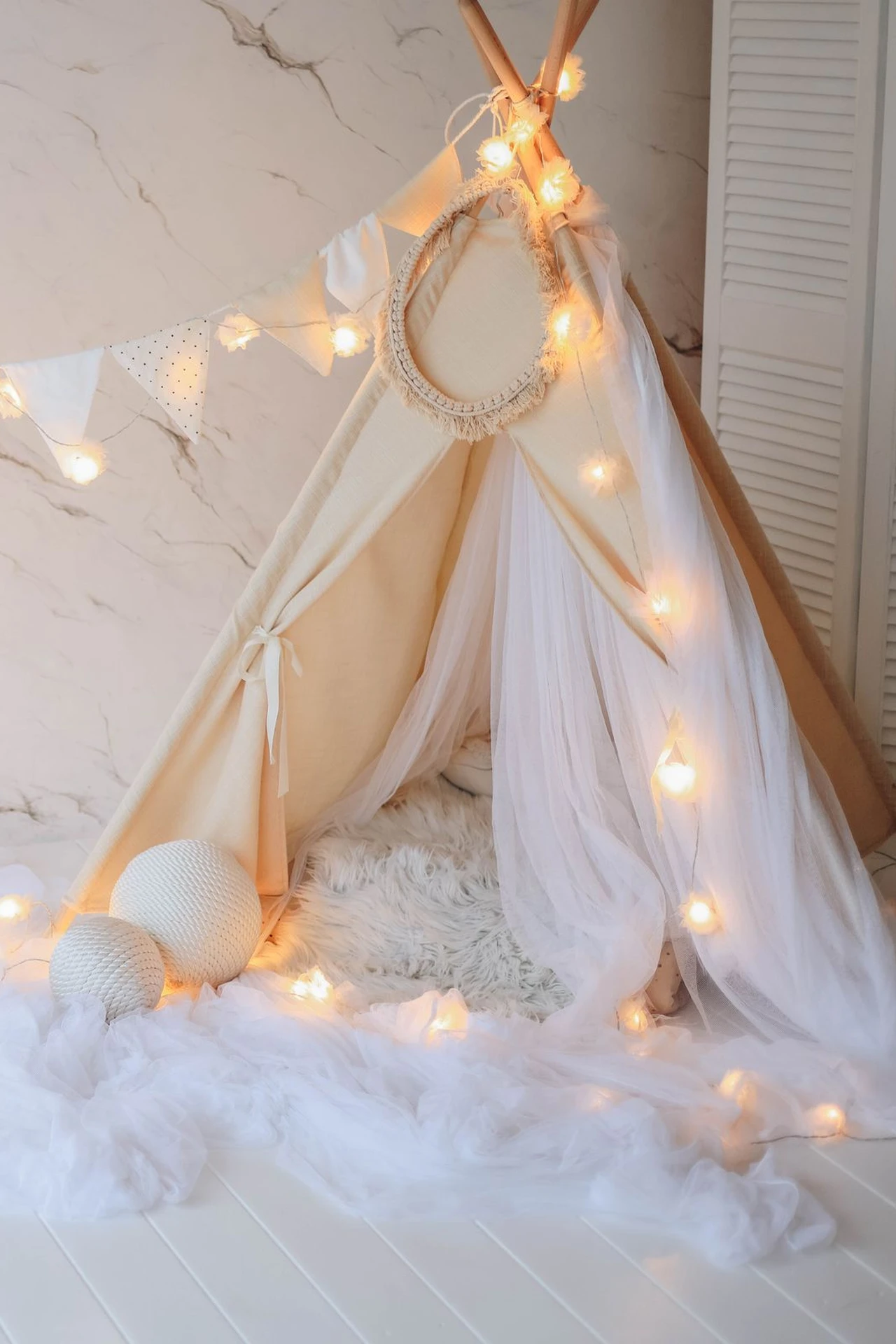
A playroom that is all energy has nowhere to slow down, and winter afternoons need a slow corner. A small teepee tent or fabric den gives your child a place to hide, read and be quiet — the winter version of a garden den, indoors and warm. It does not need to be big: a tent, a soft rug inside, and one or two cushions are enough.
Keep the den simple and safe. Battery fairy lights, strung high where small hands cannot tug them, give it a warm glow without any mains cables or heat. Nothing that lights up, beeps or needs charging goes inside — the den is the quiet place, and the noisy toys stay on the shelves. A string of bunting across the front makes it feel finished, and a soft toy or two is all the decoration it needs.
Tip: Let the den be the one place in the room with a rule: nothing gets stored in it. A den full of toys is not a den — it is just another cupboard.
Step 6: Layer in Warm Light for Dark Afternoons
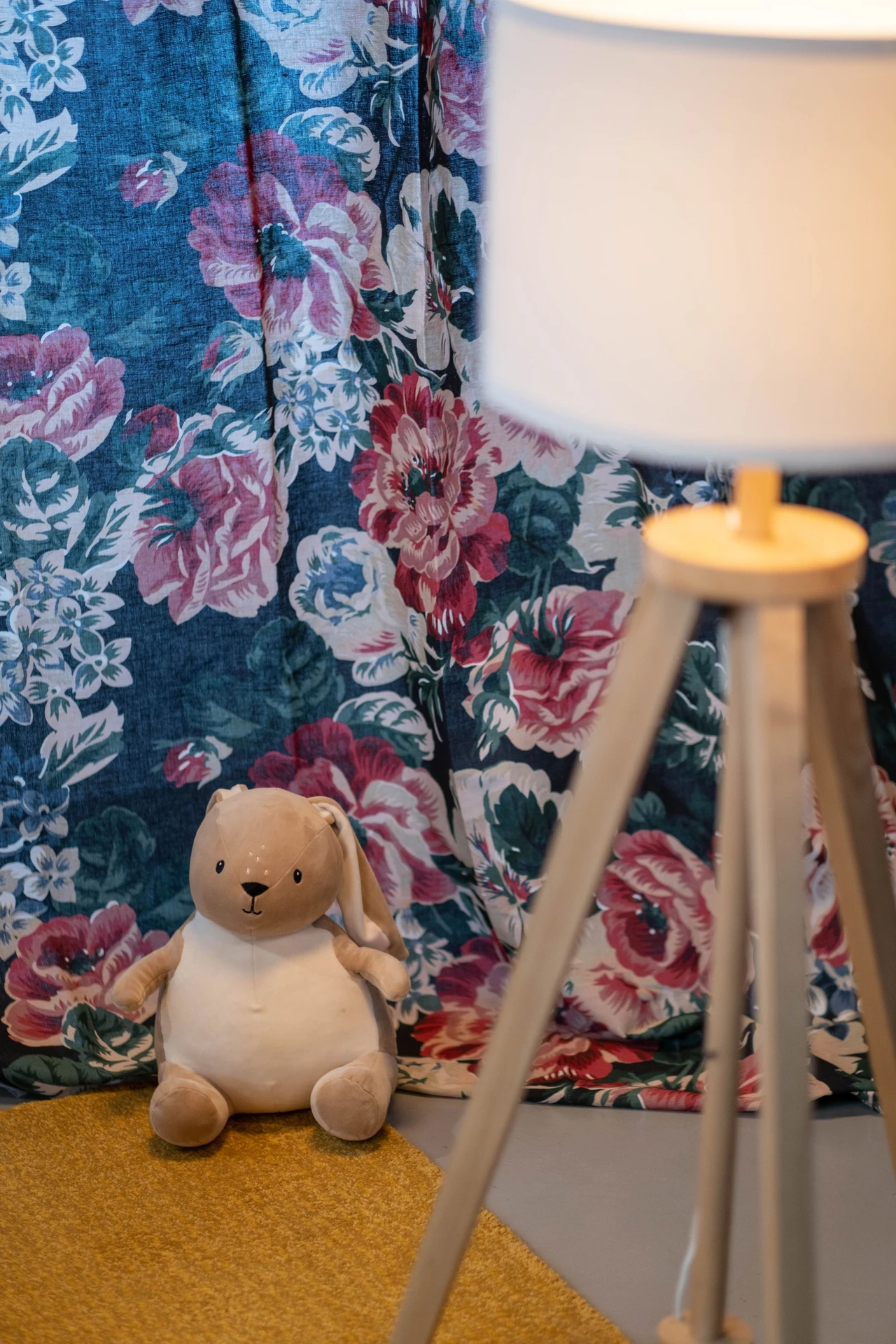
Winter light is the playroom’s biggest problem after the cold floor. The sun sets before tea time, the ceiling light is harsh, and a room lit only from above feels flat and tired by four o’clock. The fix is a second, low source of warm light: a floor lamp or a table lamp with a warm-white bulb, placed where your child actually plays.
Choose a lamp with a heavy, stable base that cannot be pulled over, and keep its cable tucked behind furniture or clipped along the skirting board — trailing cables and small children do not mix. A fabric shade softens the light, and a dimmer or a smart bulb set to warm white lets you drop the room down to a calm glow for the last hour before bedtime. One good lamp changes the whole feeling of the room more than any decoration will.
Tip: Switch the lamp on an hour before it gets dark, not after. A room that is already warm and glowing when the light goes outside never feels gloomy in the first place.
Step 7: Give Floor Play a Permanent Home
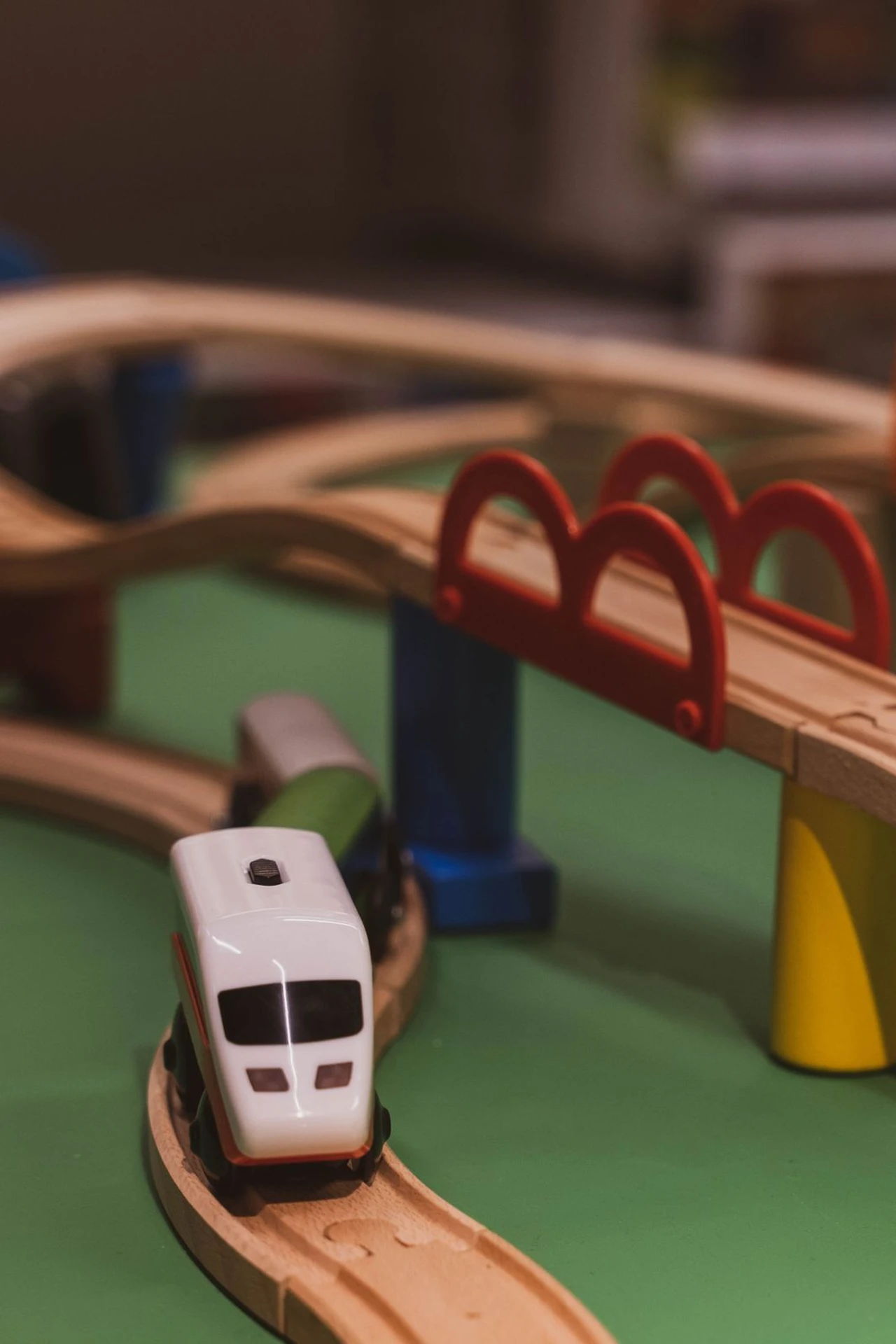
Some toys are not meant to be packed away every night. A wooden train track, a block city, a doll’s house — these are the toys your child returns to every day, and rebuilding them from scratch each morning is what makes the room feel chaotic. Give one floor toy a permanent home: a low table, a play mat, or a marked-out corner of the rug where the track stays built.
The trick is to choose just one. One track, one city, one home base — everything else rotates in and out of the shelves from Step 2. A green play mat underneath marks the boundary: the track lives on the mat, and the mat is the only place the pieces go. When the track has a home, the rest of the floor stays clear, and the room is tidy enough to play in again tomorrow without a big clean-up first.
Tip: Photograph the finished track before bedtime. If it gets knocked over, the photo shows your child how to rebuild it — and rebuilding it is half the fun.
Winter Playroom Checklist
Run through this once, and the room is ready for the coldest weeks:
| Zone | Do this | Why it helps |
|---|---|---|
| Floor | Thick low-pile rug with a non-slip underlay over the main play area | Warm feet and a soft landing for floor play all winter |
| Storage | Low open shelves, one kind of toy per shelf, anchored to the wall | Your child can reach — and tidy — their own toys |
| Reading | Forward-facing book stand in the quietest corner, ten books at a time | Books they can see are books they will actually pick up |
| Table | Child-sized table and chairs near the window, top kept clear | Drawing and making has a home instead of spreading everywhere |
| Den | Small tent with a soft rug inside and battery fairy lights strung high | A quiet corner for slowing down on long dark afternoons |
| Light | Warm-white floor or table lamp with a stable base, switched on before dark | The room stays glowing and calm when the sun goes early |
| Safety | Anchor shelves, hide cables, keep small parts off the floor, clear the doorway | A tidy room is a safe room — and a safe room is a room you can relax in |
Read Next
Keep the winter warmth going: our winter kids bedroom decor ideas make bedtime just as cosy, our printable nursery wall art adds a handmade touch to the littlest room, and our winter home decor ideas carry the same layers through the rest of the house.
Frequently Asked Questions
How do I keep a playroom warm in winter?
Start with the floor: a thick rug with a non-slip underlay over the main play area makes the biggest difference, because children play on the floor. Add a warm lamp for the dark afternoons, keep the door closed to hold the heat in, and put the reading corner and the den away from the window, where the cold draught sits.
What is the best storage for a small playroom?
Low, open shelves your child can reach — one kind of toy per shelf, nothing stacked three deep. Add a couple of baskets for the small bits, anchor everything to the wall, and leave one shelf empty so there is always somewhere for the next toy to go. Deep boxes and tall cupboards look tidy in photos but do not work for small children.
How can I make a playroom safe for toddlers?
Anchor every shelf and bookcase to the wall, hide or clip away all cables, use battery lights instead of mains fairy lights, and keep small parts in lidded boxes on a high shelf until your child is old enough for them. Check the floor every evening for anything small enough to swallow, and keep the doorway clear so nobody trips coming in or out.
How do I stop toys taking over the whole house?
Give every toy a home inside the playroom and rotate them: keep a small set out on the low shelves and the rest in a cupboard, swapping a few each week. One floor toy — a train track or a block city — gets a permanent spot, and everything else goes back on its shelf before bedtime. The rule that makes it stick is simple: the toys live in the playroom, and the playroom door closes at night.
What lighting works best in a playroom on dark winter afternoons?
Warm white, low down, and layered: a floor or table lamp near where your child plays, plus battery fairy lights in the den. Avoid cool-white ceiling light on its own — it feels harsh and makes the room look cold. Switch the lamp on before it gets dark so the room is already glowing when the sun goes.