A blank wall looks like an easy design opportunity — until you must decide what actually goes on it. Floating shelves keep the room light and open. Built-ins turn an unused wall into substantial storage and make the architecture feel intentional. Both can look beautiful. The harder question: which one makes sense for your room? It depends less on trends and more on what you want the wall to do: display a few favorites, store a growing book collection, hide clutter, or make an awkward wall work harder.
Floating Shelves: When You Want the Wall to Feel Light
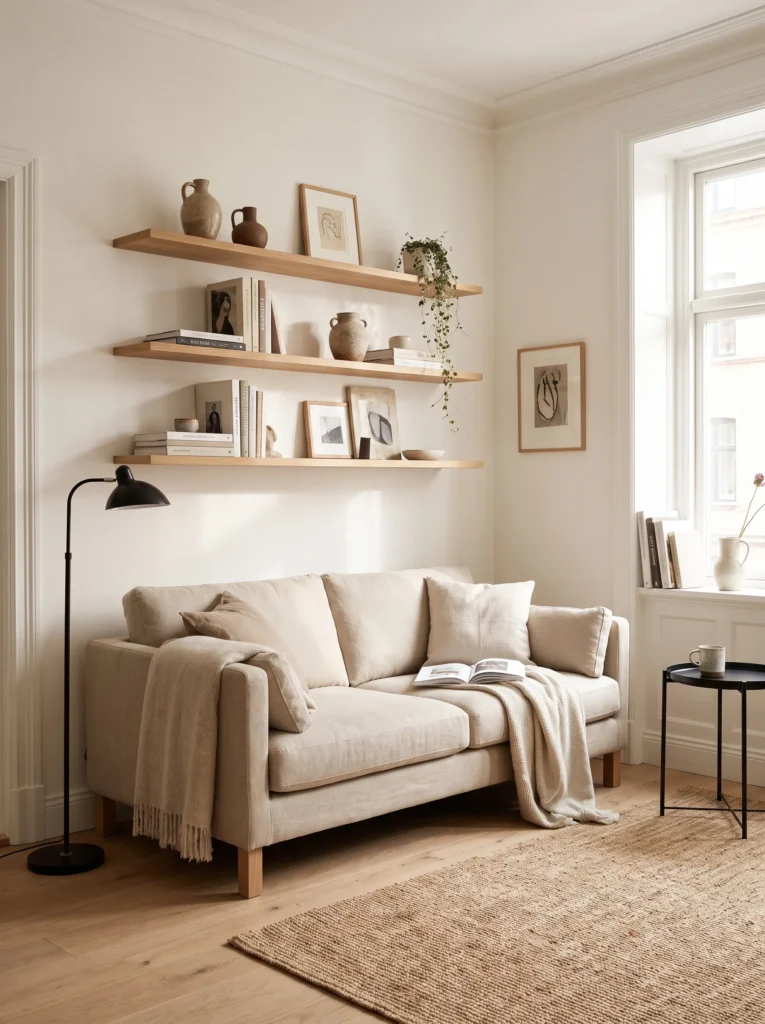
No visible brackets or side supports — floating shelves almost disappear into the background. Best for: displaying art and objects, keeping small rooms open, adding storage without a large cabinet, filling narrow wall sections, a contemporary look, and arrangements you can change later. They’re most effective for display rather than maximum storage: a few careful shelves hold books, ceramics, art, plants without the room revolving around the shelving. The limit: they’re not the answer for large amounts of everyday stuff.
Built-Ins: When the Wall Becomes Part of the Room
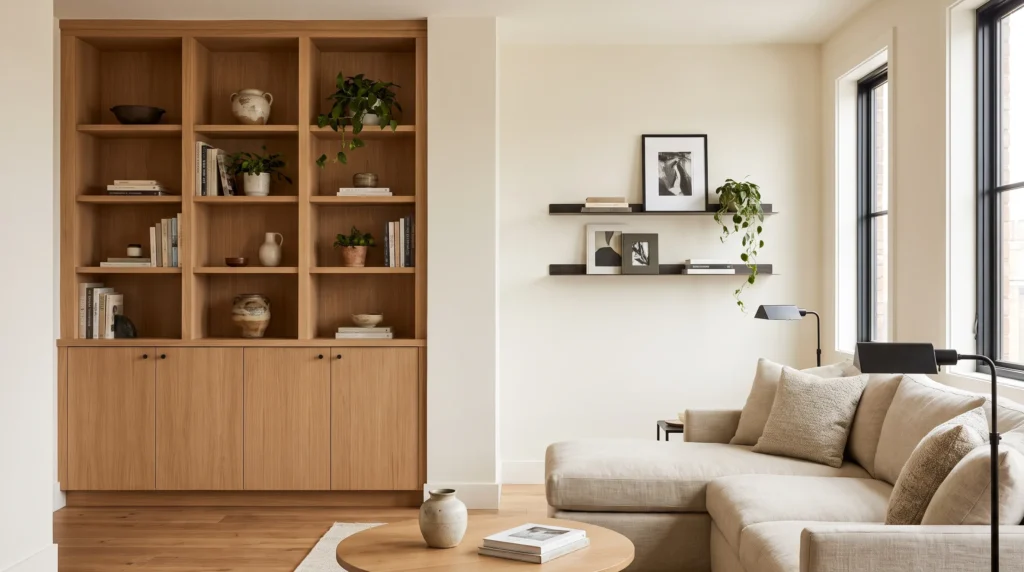
Built-ins don’t attach to the wall — they become part of the architecture: floor-to-ceiling, wrapping a fireplace, filling an alcove, framing a TV or doorway. They maximize an entire section: books, baskets, closed storage, decor, electronics, kids’ things, office supplies, large collections — with proportions designed around your ceiling height, wall width, and actual objects. The result feels far more integrated than individual shelves.
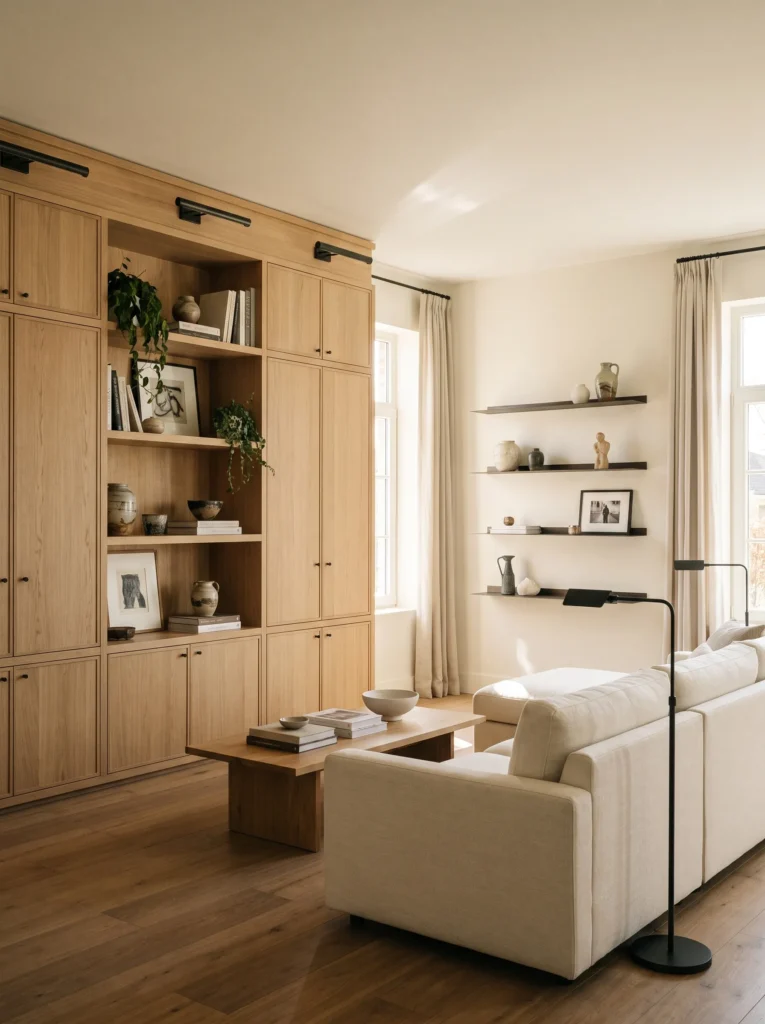
The Real Difference: How Much Commitment You’re Making
Beyond style (floating = minimalist, built-in = substantial), the deeper difference is permanence. Floating shelves remove, reposition, and replace easily. Built-ins become part of the room — an advantage when you know what you want, a liability when needs and layouts keep changing. Ask: do I want to add something to this wall, or change what this wall does?
Mostly Display? Start With Floating
A small collection of books, photos, ceramics, or plants doesn’t need a wall of cabinetry. A few floating shelves accomplish the visual purpose with far less structure — and give objects breathing room: the eye sees individual pieces against the wall, not one big installation. Effective in small living rooms, bedrooms, offices, kitchens, hallways, and small bathrooms. The key is restraint: enough empty space around objects keeps them intentional. Packed shelves turn the lightest system into a visually heavy wall.
Storage Priority? Built-Ins Win
Built-ins combine storage types in one installation: open shelves for books and decor, lower cabinets for toys and paperwork, drawers for small belongings, tall compartments for big objects. That flexibility is hard to match with floating shelves. And remember the distinction: display space makes things visible; storage space helps you control them. If your real problem is clutter, more open shelves won’t solve it.
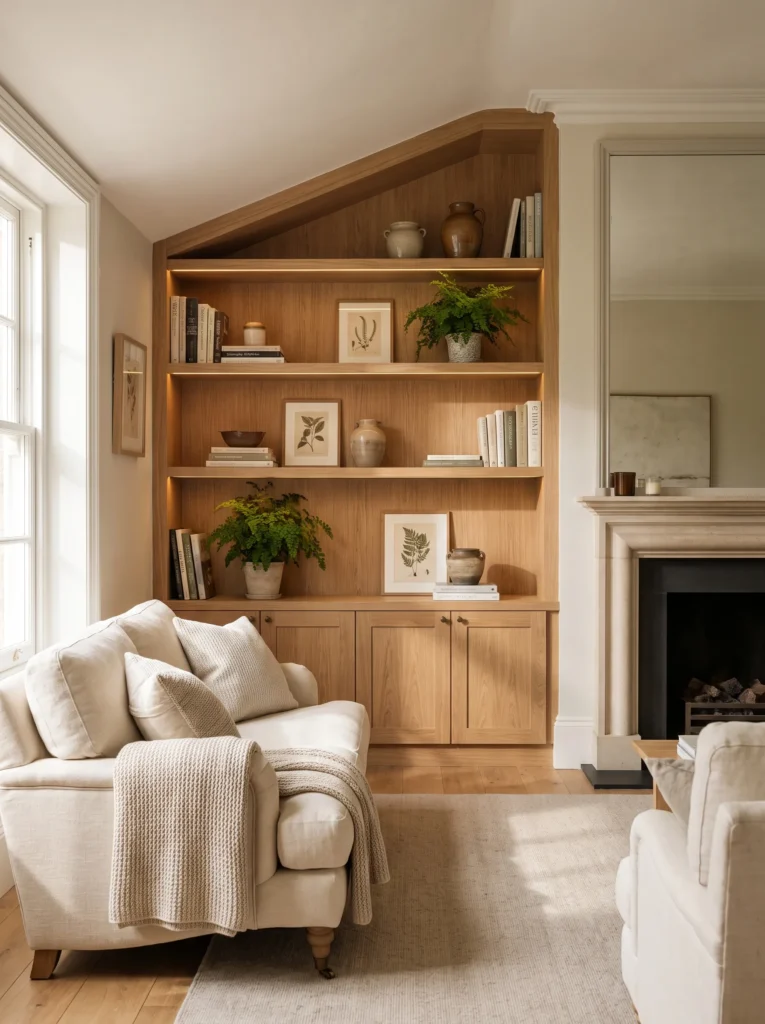
Let the Architecture Decide
Wide uninterrupted wall: plenty of options. Awkward alcove, windows, doors, radiators, outlets, fireplaces, sloped ceilings, columns: built-ins can be designed around obstacles in a way floating shelves can’t always match. Sometimes the “simpler” solution isn’t the easiest — a custom installation can use an awkward wall better precisely because it was designed for it.
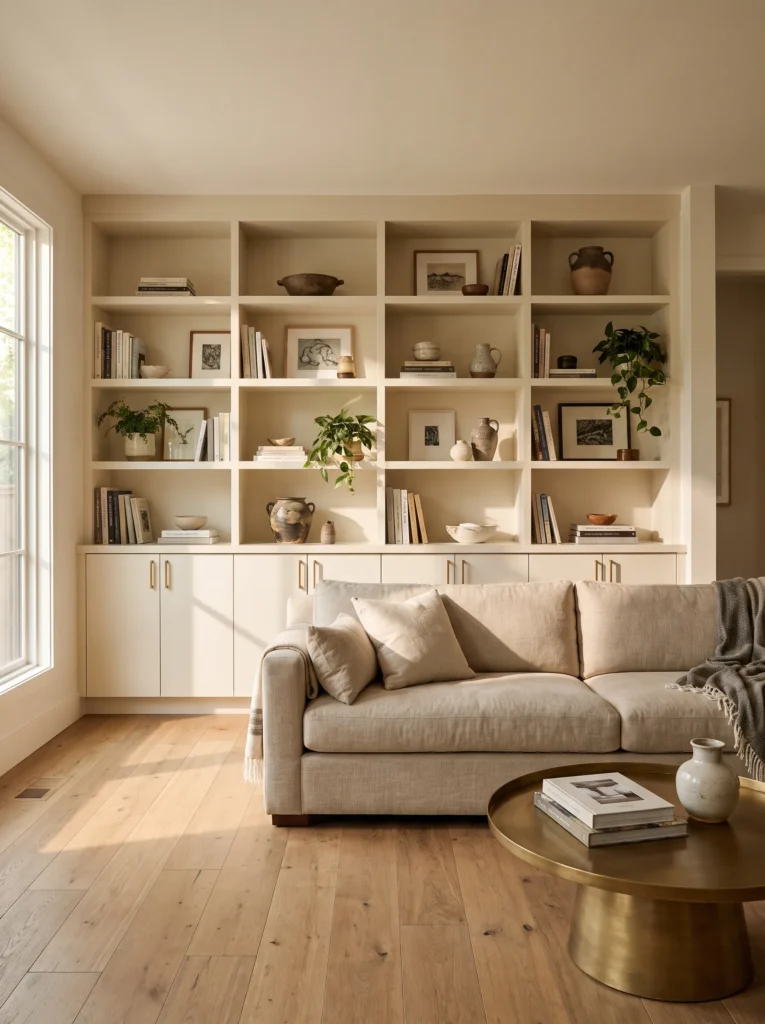
Small Rooms: Efficiency Over Lightness
Floating shelves often suit small rooms — but don’t rule out built-ins. A shallow floor-to-ceiling built-in with lower closed cabinets can provide more useful storage than several floating shelves plus separate storage furniture, without taking much floor space. The question isn’t “which looks smaller” — it’s which uses the available space more efficiently. For kitchens specifically, see our open kitchen shelving guide.
Inventory Before You Decide
Don’t start with the shelves — start with the objects. Mostly books and decor? Floating shelves may be enough. Toys, electronics, baskets, everyday clutter? Built-ins give more flexibility. Display plus hidden storage? A built-in with both open and closed sections. Choosing shelving by how it looks empty is the classic mistake — it only reveals itself once your actual belongings arrive.
Built-Ins Don’t Have to Look Heavy
Paint a full-height built-in the wall color and it visually recedes. Slim framing, open sections, integrated lighting, and a balanced open/closed mix keep it contemporary. The goal isn’t invisibility — it’s making it feel like it belongs there, which matters most in modern interiors where big built-ins could dominate.
Floating Shelves Aren’t Automatically Minimalist
Too many packed shelves create more visual noise than a simple built-in. Minimalism isn’t the shelf style — it’s how much visual information you put on them. A few well-edited objects make floating shelves elegant.
How Long Will This Design Last?
Staying for years? Custom shelving solves a long-term storage problem well. Like rearranging often? Floating shelves flex with you. And rooms change purpose — today’s display wall becomes tomorrow’s nursery, office, or guest room. The more uncertain the room’s future, the more valuable flexibility becomes.
Balance With the Rest of the Room
A large sofa, substantial coffee table, and dark built-ins read very differently from a slim sofa with pale floating shelves. If the room already has substantial pieces, lighter shelving balances it; if the room feels empty, an architectural built-in gives the wall presence. The goal is comfortable visual balance, not equal noticeability.
The Decision, Summarized
Choose floating shelves for: lighter visual effect, flexible display, simpler addition, less commitment, smaller storage needs.
Choose built-ins for: maximum wall use, substantial storage, open + closed combinations, awkward spaces, architectural integration.
And you can mix: a built-in with floating-style open shelves, or floating shelves alongside existing cabinets. The best shelving responds to what the room needs, not the trend.
Quick Answers
Are floating shelves or built-ins better?
Neither universally. Floating shelves suit display-focused, flexible, low-commitment needs; built-ins suit maximum storage, clutter control, and awkward walls. Start by inventorying what the shelving must hold.
Do floating shelves hold a lot of weight?
Properly installed into studs with quality hardware, floating shelves hold books and everyday objects well — but they’re not the best solution for very heavy loads or large quantities. Built-ins handle serious storage better.
Are built-in shelves worth the cost?
When the wall must solve a real storage problem or an awkward space needs a custom fit, yes — they use space more efficiently than any freestanding alternative. For pure display, floating shelves give you the look for far less.
Affiliate Disclosure: As an Amazon Associate, I earn from qualifying purchases. If you click a link and buy, I may receive a small commission at no extra cost to you. Thank you for supporting my content!