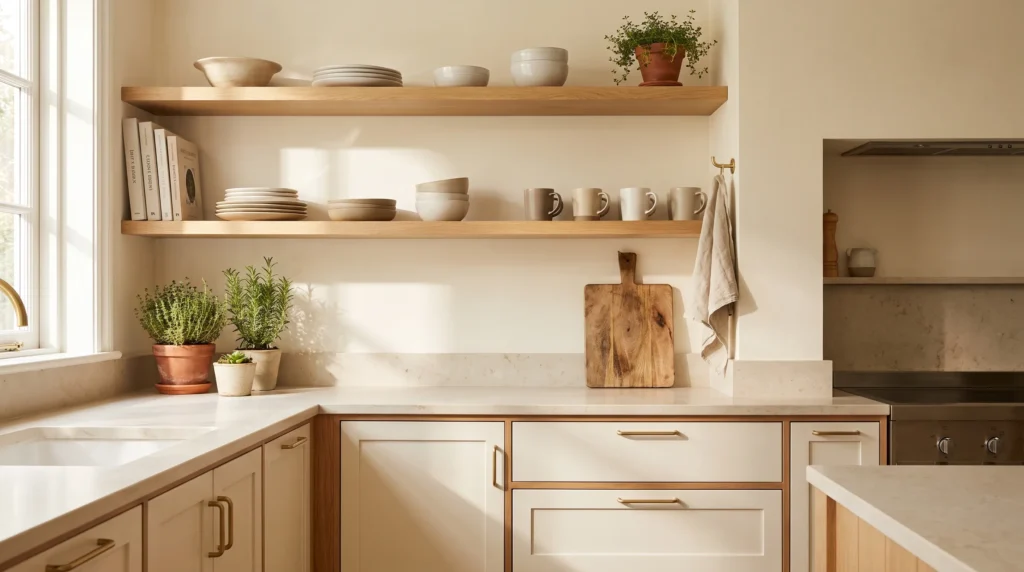
Open shelving can make a kitchen feel lighter, more relaxed, and personal — everyday dishes within reach, ceramics and cookbooks on display. But the same idea frustrates when everything on the shelf demands looking at, cleaning, and organizing. That’s the part kitchen photos don’t show. Open shelving isn’t automatically better than upper cabinets. The right question isn’t whether it looks good — it’s whether it will work in your kitchen every day.
It Works When You Use What It Holds
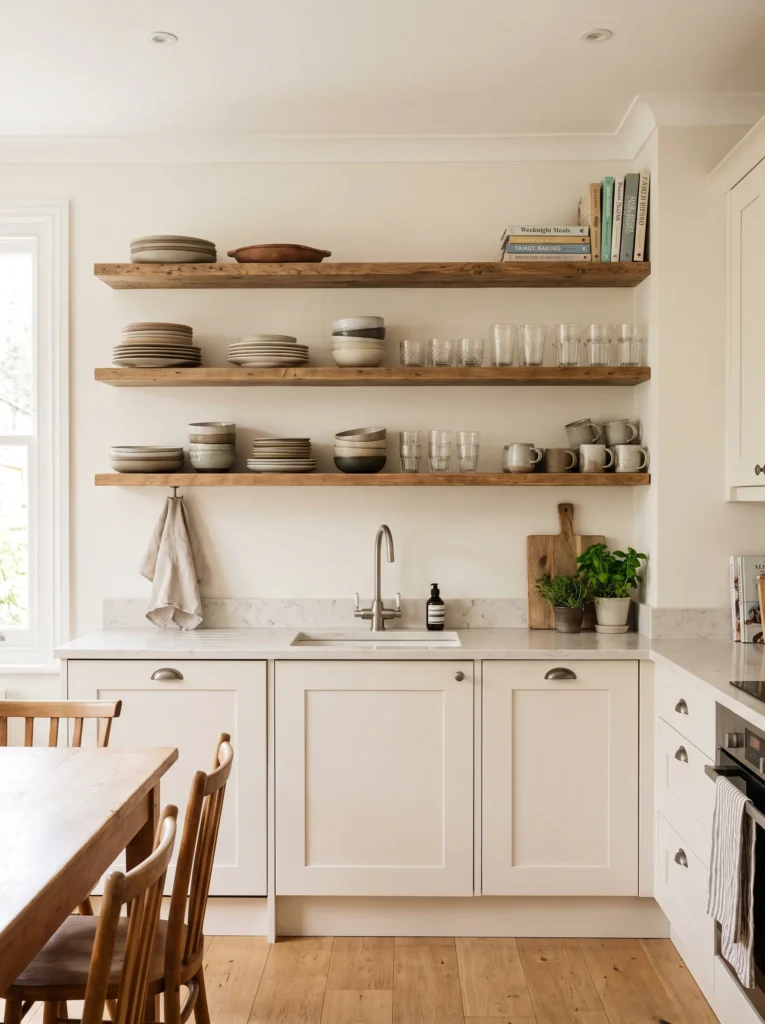
The big advantage is accessibility: no doors, no reaching into cupboard backs. Everyday plates, bowls, mugs, glasses, frequently used cookware, cookbooks, serving pieces — when the items match your daily routine, the kitchen feels effortless. A shelf of rarely used objects is decoration, not storage. That’s not bad, but it changes whether open shelving is the best use of the wall.
The Cleaning Question
Photos don’t show the cleaning routine. Exposed kitchen shelves collect dust — and near the cooktop, grease, steam, and airborne particles too. That doesn’t make them hard to maintain; it makes location decisive. A shelf several feet from the range is far easier than one beside it. Smooth ceramics and glassware wipe down easily; textured decor, woven baskets, and rarely used pieces need more attention. If you prefer low-maintenance, don’t underestimate this part.
Your Kitchen Must Look Good Between Meals
Closed cabinets let you shut the door and forget. Open shelving makes everything part of the room — a strength when everyday objects become the kitchen’s character, a liability when mismatched packaging and half-used containers take over. The fix isn’t matching everything; it’s editing what’s visible: plates, bowls, glasses, a few cookbooks, one or two decorative pieces — intentional without over-styled.
You Don’t Have to Choose All-or-Nothing
The most practical kitchens mix both. Open shelves: things you reach for regularly or genuinely enjoy seeing. Closed cabinets: food packaging, cleaning supplies, small appliances, less attractive cookware, backups, rarely used items. For many homes, a small amount of open shelving beats replacing an entire wall of cabinets — visual openness without forcing every essential into the display.
Respect the Cooktop Zone
Heat, steam, and residue make shelves near the range more demanding. Everyday dishes that wash easily can still work there; hard-to-clean decorative objects can’t. Consider splashing and steam during normal cooking — the prettiest shelf location isn’t necessarily the most practical one.
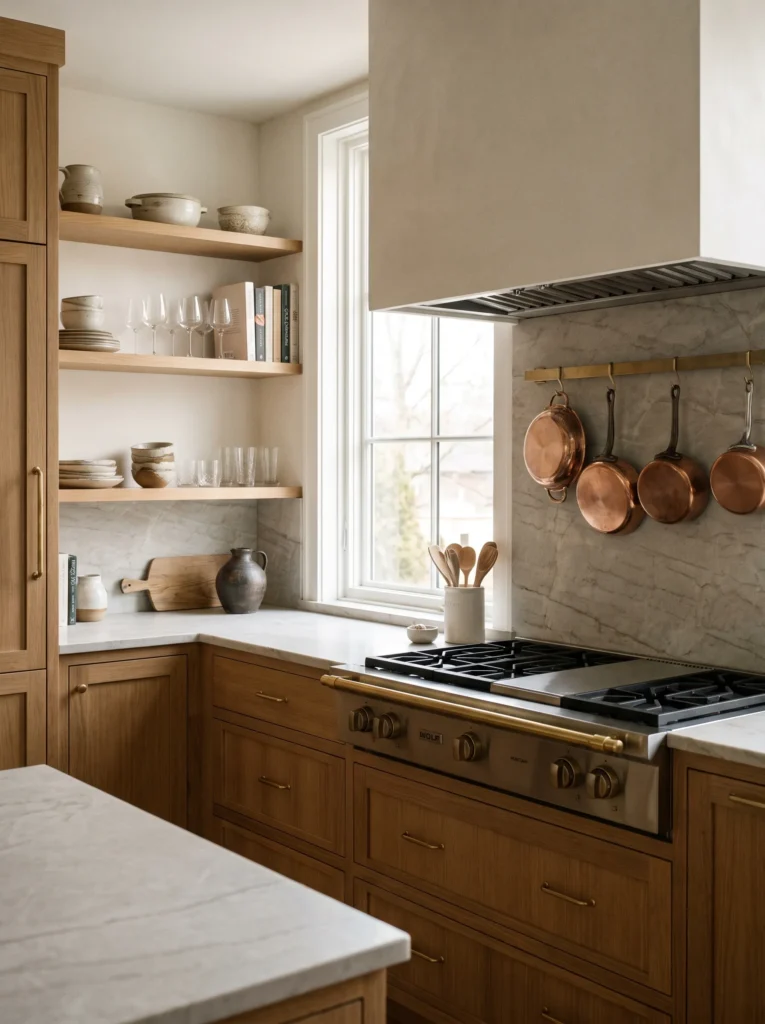
Small Kitchens: Breathing Room, Not More Stuff
Open shelving suits small kitchens because it removes uninterrupted blocks of cabinetry — but only when the shelves aren’t overloaded. Three packed shelves feel as busy as cabinets. What you leave empty matters almost as much as what you store. A little negative space calms the whole wall.
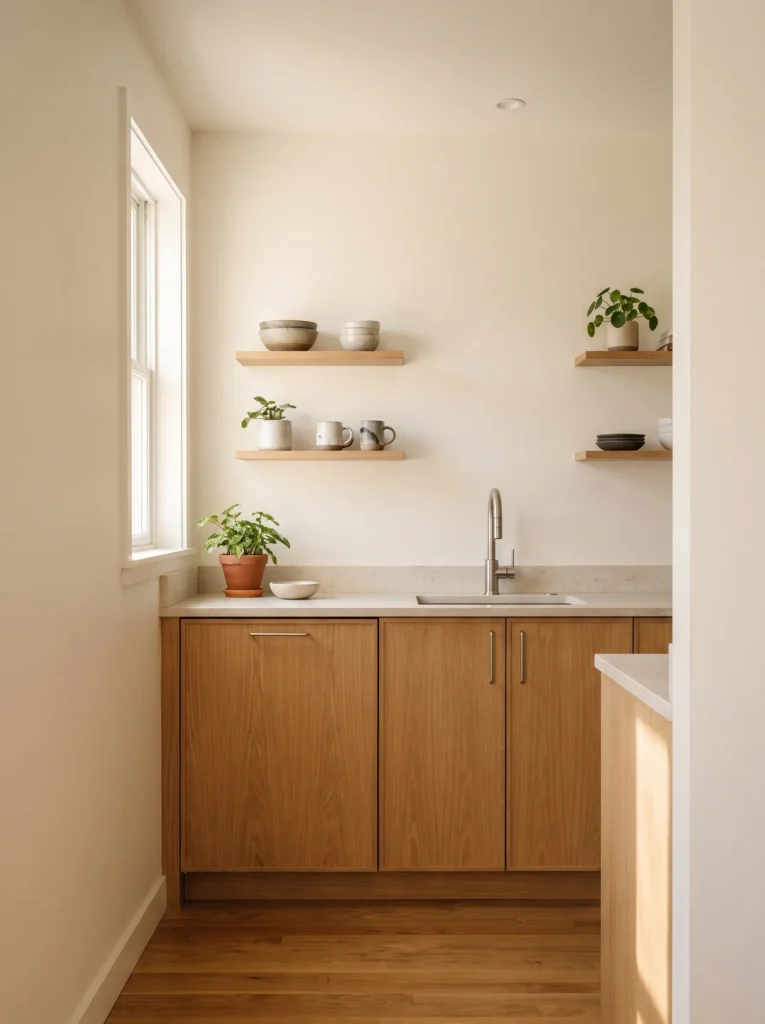
Mount at a Usable Height
Shelves must be accessible: everyday plates and glasses within easy reach, serving pieces higher, decor wherever it makes visual sense without hurting function. Too low interferes with countertop work; too high kills the convenience advantage. Don’t choose shelf height from a photograph — choose it from what the shelves must do.
Style in Groups, Not Item by Item
Don’t fill every inch. Leave space between small visual groups — a stack of plates beside a few bowls, mugs in one section, a cookbook or small framed piece for height elsewhere. The goal isn’t symmetry; it’s objects that look like they belong together.
Choose Material for the Kitchen
Natural wood brings warmth; stone feels architectural; painted shelves blend into the wall; metal brackets add utilitarian character. Match the kitchen’s existing materials — warm wood cabinets and stone counters want a shelf that relates to one of them. Open shelving is visually prominent (there’s less to hide behind), so material choice shows more than with closed cabinetry.
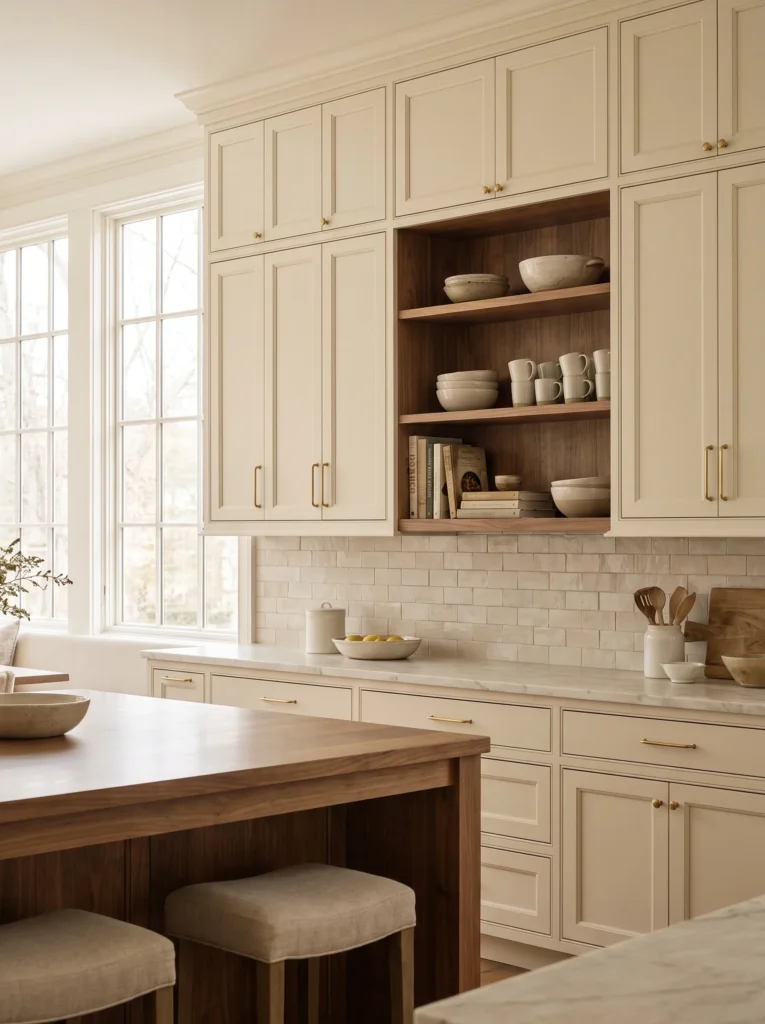
When It Makes Sense — and When It Doesn’t
Consider it when: you use the displayed items frequently; you don’t mind occasional cleaning; you enjoy seeing your dishes; the kitchen needs visual lightness; you can leave breathing room; you want personality without replacing all cabinets.
Skip it when: you want everything hidden; the kitchen produces serious grease or steam; you dislike frequent visual tidying; you need every inch of wall storage; you have lots of mismatched or bulky items to conceal.
Wondering about floating shelves specifically versus built-ins? Our floating shelves vs built-in guide compares both approaches.
Give the Shelves a Job
Don’t install open shelving because it looked beautiful in someone else’s kitchen. Decide what the shelves must do: everyday dishes → keep accessible; display → give objects breathing room; small-kitchen lightness → resist filling every inch; more to hide than show → keep the cabinets. The best open shelving isn’t the prettiest — it’s the one that makes everyday life easier while making the kitchen feel like yours.
Quick Answers
Is open kitchen shelving practical?
Yes, when it holds items you use daily and sits away from heavy grease and steam. It’s impractical when it becomes a dusting chore or forces your clutter into permanent display.
Should I replace all my upper cabinets with open shelves?
Usually not — a mix works better. Use open shelves for beautiful, frequently used items and keep closed cabinets for packaging, cleaning supplies, small appliances, and everything you don’t want to see.
How do I keep open kitchen shelves from looking cluttered?
Edit what’s visible, style in small groups with breathing room between them, and leave some shelf space empty. Restraint is what separates intentional from chaotic.
Affiliate Disclosure: As an Amazon Associate, I earn from qualifying purchases. If you click a link and buy, I may receive a small commission at no extra cost to you. Thank you for supporting my content!