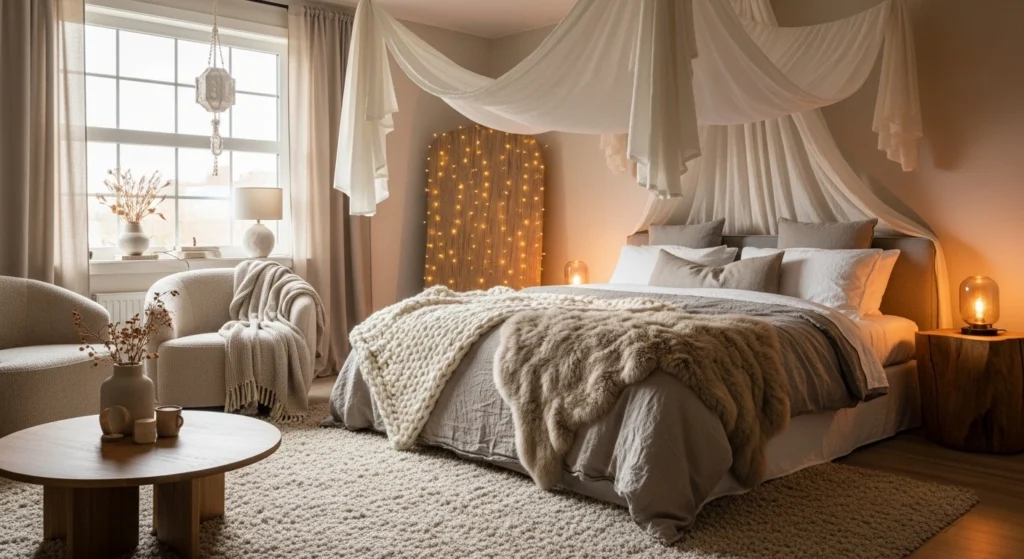
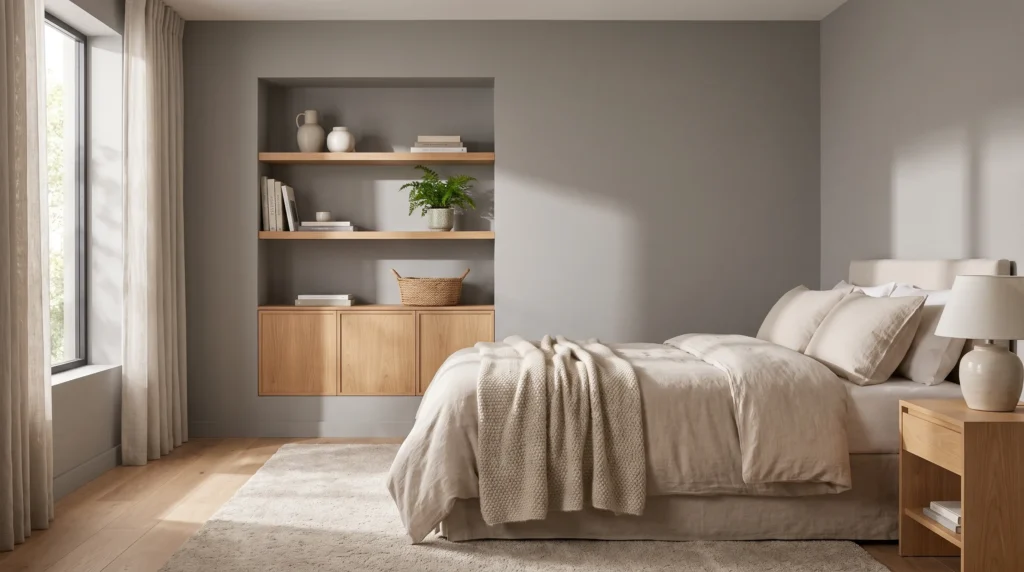
An awkward bedroom niche — too small for furniture, too noticeable to ignore — might be a shallow recess beside the wardrobe, an unused wall section, a former closet opening, or a deeper alcove that doesn’t quite work with the room. Leaving it empty can make the bedroom feel unfinished; filling it wrong makes it more awkward. The useful question isn’t “what can I put here” — it’s “what is this space actually suited for?” A shallow niche may become display or built-in shelving; a deeper one could hold a compact desk, reading seat, or storage. Location matters too: beside the bed differs from near the entrance or opposite the bed. Before buying anything, study the niche’s width, depth, height, location, lighting, and relationship to the rest of the bedroom.
Measure First, Shop Later
The fastest way to make an awkward niche worse: shopping before measuring. Record the recess’s width, depth, and height, plus distances to the bed, wardrobe, door, and windows. Depth is decisive — a few-inches-deep niche can’t take the solutions a chair-deep recess can. Note the shape too: sloped ceilings, uneven walls, awkward outlets, or odd proportions may suit custom solutions better than standard furniture. Don’t assume every inch must be filled — sometimes making the niche look deliberate beats forcing a new function onto it.
Decide What the Niche Should Do
With dimensions in hand, identify the bedroom’s biggest need: lacking storage? Nowhere for books or art? A useful small workspace? A reading spot? Or is the location better suited to a decorative feature? Decide before choosing materials. A niche near the wardrobe naturally becomes storage; a deeper one near a window could be a reading area; a shallow recess opposite the bed may suit shelving or a display wall. The best transformation solves a problem the room already has.
Shallow Niches: Go Vertical
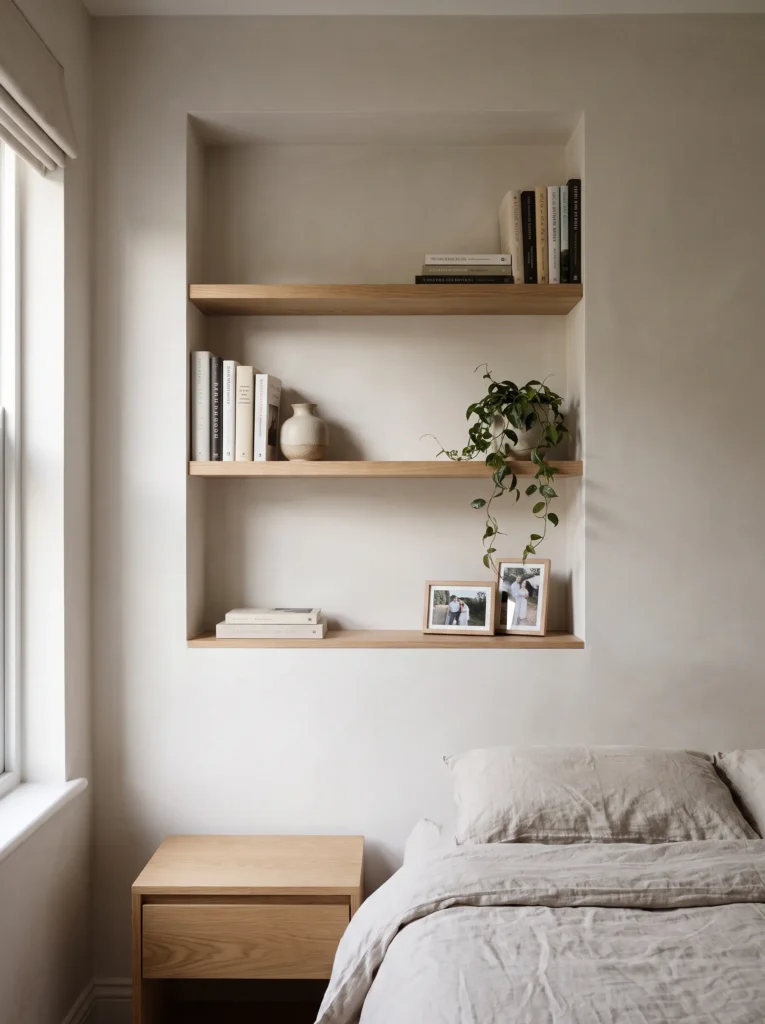
Not deep enough for furniture isn’t a limitation — use the wall. Floating shelves, built-in shelves, or open-plus-closed combinations turn a shallow recess into a useful vertical zone without projecting into the bedroom. Ideal for books, small baskets, framed photos, plants, accessories. Keep shelf depth appropriate: deep shelves in a shallow recess look bulky and waste the recess’s visual advantage. A few well-proportioned shelves feel intentional while preserving openness. Our floating shelves vs built-in guide covers both approaches.
Deeper Niches: Functional Storage
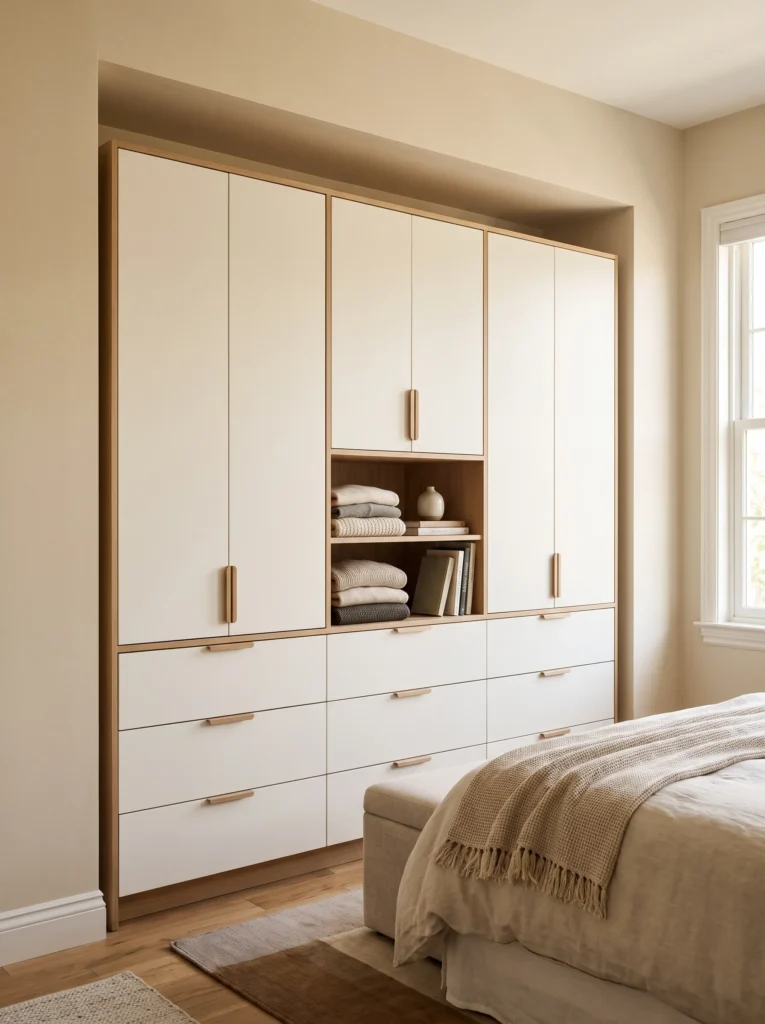
A deeper niche with a storage-starved room can take a narrow wardrobe, drawers, shelving, or open-plus-closed combinations. Built-ins excel here — furniture follows the recess’s exact dimensions instead of leaving gaps around standard cabinets. But built-ins aren’t automatic: renters or anyone who may repurpose the niche later should prefer freestanding flexibility. Decide how permanent the solution should be before committing to construction.
The Niche as a Compact Workspace
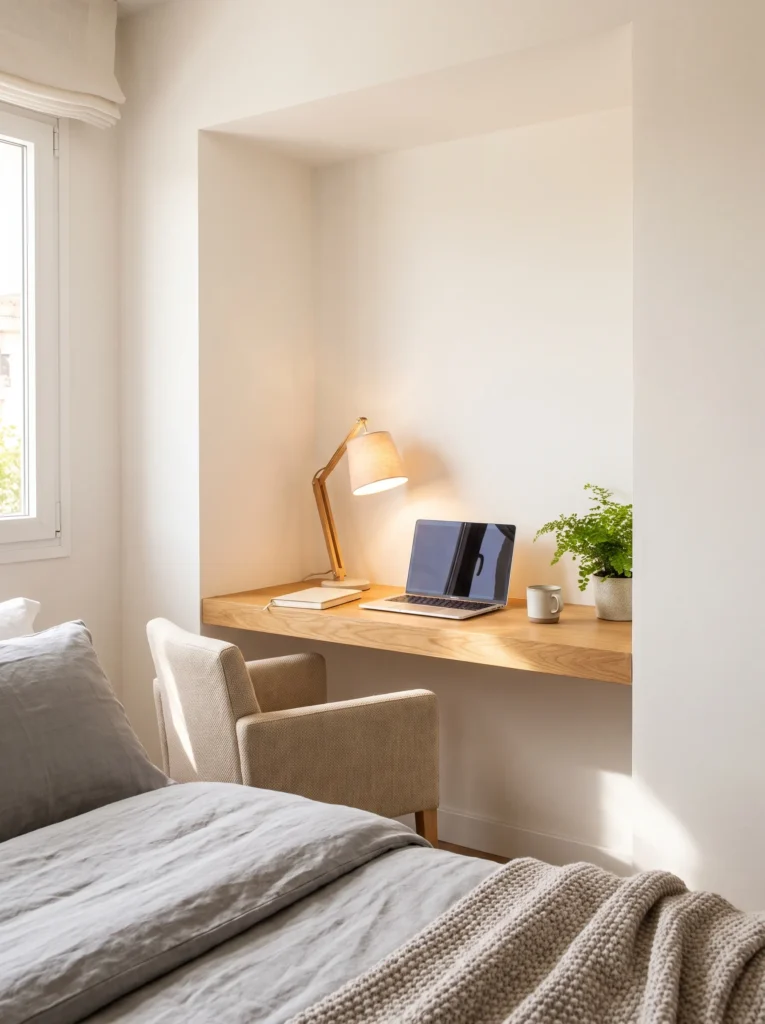
A niche can make an excellent compact workspace — given enough depth for a comfortable desk surface and sitting clearance. A wall-mounted desktop avoids traditional-desk bulk; add a comfortable chair, task lighting, and minimal storage for a dedicated work zone that doesn’t take over the bedroom. But don’t force a workspace where it creates circulation problems: if the chair blocks a walkway or the desktop leaves no usable room, choose another function. For workspace inspiration, see our under-stairs study ideas.
The Niche as a Reading Nook
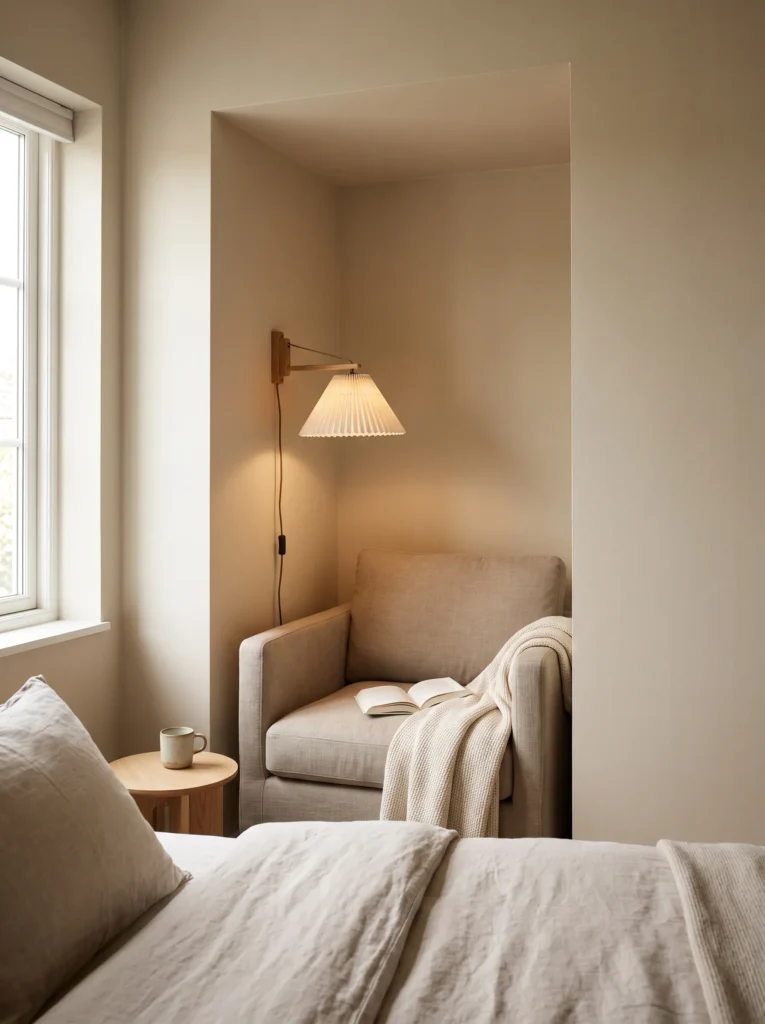
With enough depth, a compact upholstered chair, small bench, or built-in seat turns an unused recess into a reading area — a destination within the bedroom. Near a window, study how daylight shifts through the day; add a floor or wall-mounted lamp for evenings. Keep furnishings scaled: a large lounge chair may fit but crowd the whole bedroom — a compact chair with a small side table achieves the purpose while preserving circulation.
Niches Beside the Bed
A niche beside the bed differs from one across the room — it can extend the bedside zone with storage for books, lighting, personal items, even clothing. Built-in shelving works well here, providing storage without another freestanding nightstand. Keep height and depth practical: bedside items should be reachable without leaning awkwardly across the mattress — a shallow shelf at the right height often beats a deep cabinet.
Make It Look Intentional
A useful niche shouldn’t look like an afterthought. The difference: whether it feels connected to the bedroom. Completely different materials, colors, or proportions make it read as an architectural problem someone tried to fill. Instead, give the niche a visual relationship with the room — repeat the bedroom’s wood tone, wall color, metal finish, or upholstery. A light-wood shelf echoing a wooden bed frame, warm white built-ins blending into the wall. The most successful niche looks like it was always meant to be there.
Use Color to Define the Recess
Paint gives an awkward niche presence cheaply. A contrasting shade emphasizes the recess’s depth, turning it architectural; a similar or slightly darker version of the wall color creates depth without disconnection. With shelving or artwork inside, a deeper background adds contrast; to make the niche disappear, stay close to the wall color. Don’t choose drama just because the space feels empty — it should support the bedroom, not become the first thing you see entering.
Let Lighting Decide the Function
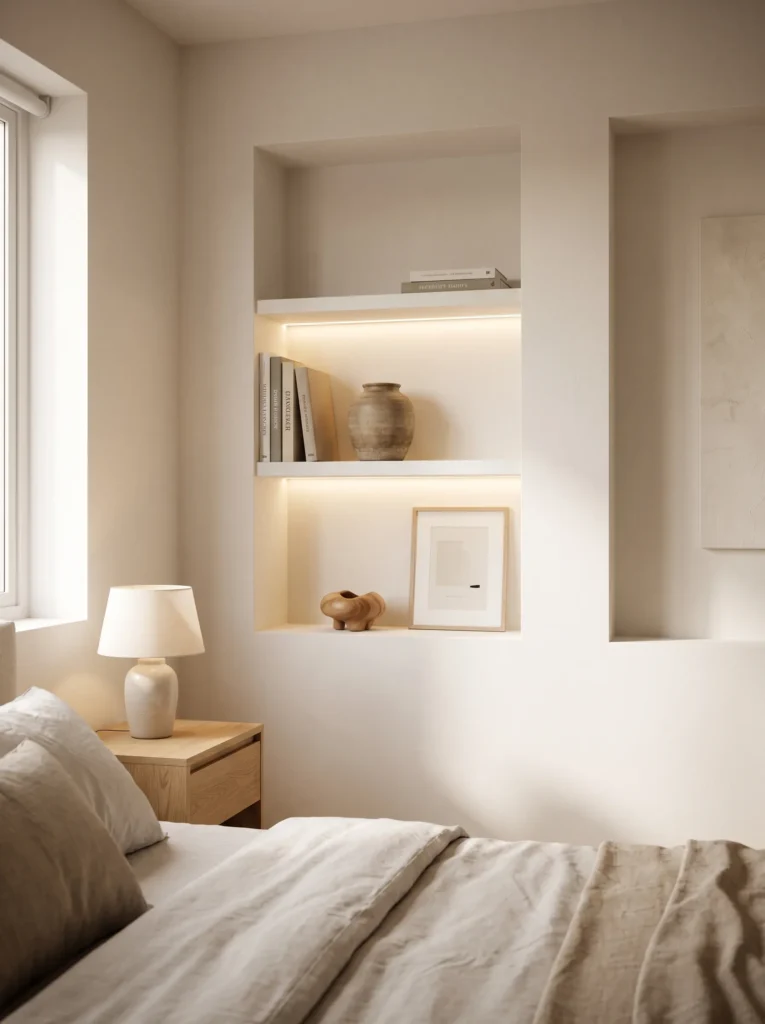
A poorly lit niche feels like a dark leftover, especially away from the main window. Integrated shelf lighting highlights books and objects; a small wall light serves a reading niche; adjustable spotlights emphasize art or architecture; subtle lighting makes storage contents findable. Match the lighting to the purpose — decorative display needs soft accent light, workspaces and reading nooks need practical illumination. Plan the light source before installing shelves or cabinetry — hiding wires afterward is miserable.
When Built-Ins Are Worth It
Built-ins make oddly shaped niches look remarkably intentional because they follow the architecture. Worth it when: the niche has unusual dimensions, standard furniture leaves big gaps, the bedroom needs storage, you want integration, or the space justifies permanence. Not automatic, though: a shallow recess with simple dimensions does fine with ready-made shelves, and rentals have different limits. For a small niche needing two shelves, a full built-in adds expense and complexity without payoff.
Don’t Default to Shelves
Shelving is the easy suggestion — not always the right one. Too many shelves turn a small niche into a visually busy storage wall, and they invite the classic problem: filling shelves simply because they exist. If the bedroom already has enough storage, the niche may work better as a small display with a few chosen objects. One large artwork, a mirror, a plant, a small book collection can out-impact an entire shelving wall. Empty space is still part of the design.
Consider a Mirror
In a shallow or awkward niche where furniture won’t fit, a properly sized mirror reflects light and gives the recess purpose without taking space. Works well near dressing areas or wardrobes when a full-length mirror has no home elsewhere. Shape can answer the architecture: rounded softens a boxy recess, rectangular emphasizes clean built-in lines. If it reflects a window or an attractive part of the bedroom, the room feels more open too.
Give It a Real Job
The most useful niches solve small persistent problems: nowhere for extra books, charging cables colonizing the nightstand, accessories with no home, no place for meaningful objects. A niche becomes their dedicated zone without another large furniture piece. The distinction: useful storage vs. storage for storage’s sake. Don’t build a cabinet because the niche exists — give the space a job first.
When to Leave It Mostly Empty
Sometimes less produces a better bedroom: directly opposite the bed, deep storage can feel visually heavy; near a doorway, furniture interferes with movement; extremely shallow, and shelves create awkward protruding edges; already enough storage, and there’s no practical reason for more. Then treat the niche as architecture: a painted recess, simple artwork, subtle lighting, one decorative object. Not every awkward space needs to become storage.
Watch the Proportions
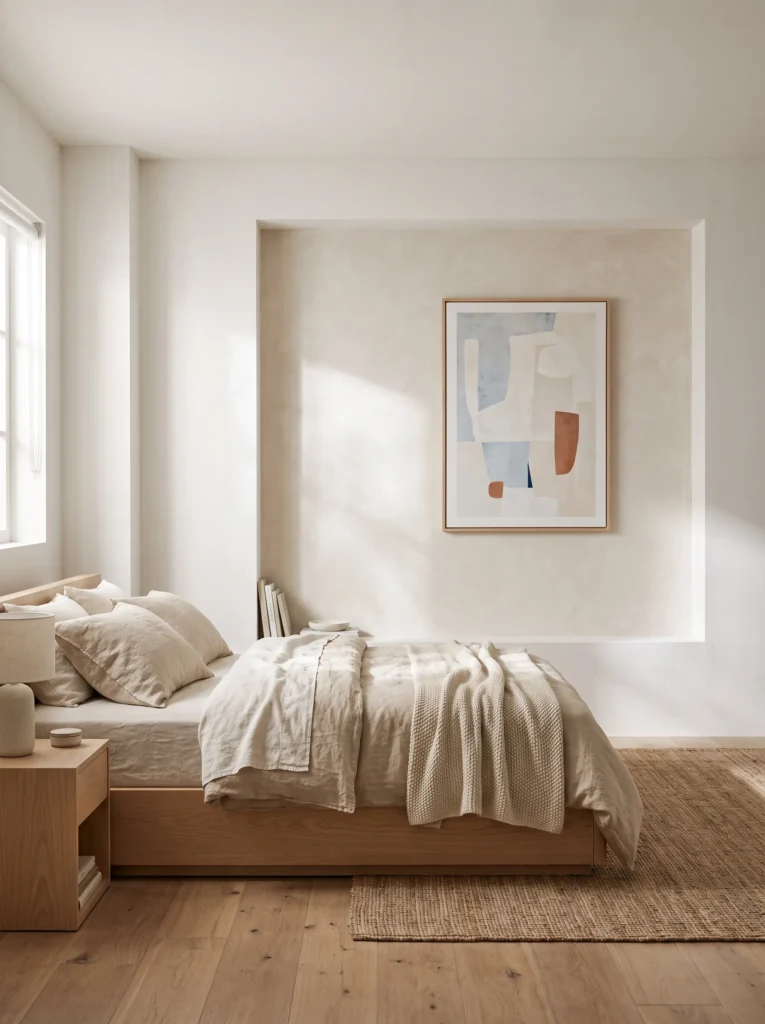
A niche distorts furniture scale: a tiny chair looks lost in a large alcove; a full-size wardrobe squeezed into a narrow recess overwhelms the room. Compare furniture dimensions against both the niche and the surrounding bedroom, leaving clearance for doors, drawers, walking paths, and normal use — especially with desks, wardrobes, cabinets, reading chairs, and storage benches. Fitting the niche isn’t enough; it must fit the room around it.
One Function, Done Well
A bedroom should still feel like a bedroom. If the niche becomes workstation, storage wall, reading corner, and display area simultaneously, it competes with the room’s purpose. Choose one main function and let everything else support it — a workspace needs desk, lighting, and a little storage; a reading nook needs seating, light, and a book rest; a storage niche needs closed cabinets with a small open section. One job, done well, beats five jobs done awkwardly.
Think About the View From the Bed
The pillow perspective is one of the most experienced views in a bedroom. If the niche is directly visible from the bed, consider how its contents look tidy and untidy. Open shelves of everyday belongings create visual noise; closed cabinetry, a curated display, or a simple painted recess keeps the view calm. The niche should support the room’s restful atmosphere, not turn the opposite wall into a utility zone.
Hide Clutter With Doors
When the niche needs substantial storage but the bedroom already shows a lot of furniture, closed doors help. Flat-front doors painted the wall color make built-ins feel almost architectural; wood doors add warmth as a deliberate feature. Match the choice to the room: plenty of texture already → simpler fronts; flat-feeling space → natural wood for warmth without extra decoration.
Check the Outlets First
Before designing a desk, charging station, or illuminated display: where are the outlets? Workspaces need power for laptop, monitor, lamp; reading nooks benefit from nearby charging. If the niche lacks suitable power, assess whether adding electrical work is practical before committing to the design — accounting for it before cabinetry goes in beats retrofitting after.
Small Niches: Think Small Solutions
Not every niche fits furniture. For very small recesses, solve the little clutter problems: a narrow shelf for bedside books, small hooks for accessories, a recessed cabinet for personal items, a shallow ledge for art or photos. A niche useful for one specific purpose still succeeds — its value is using awkward space without demanding more room.
Your Decision Process
1. How deep? Shallow → shelves, art, mirrors, shallow storage. Deeper → more options.
2. Where? Beside the bed, near the entrance, and opposite the bed all suggest different functions.
3. What’s missing? Storage, workspace, seating, display, or just visual balance?
4. How permanent? Renters and future changers prefer flexible furniture.
5. Does it block circulation? If it narrows walkways or fights doors, reconsider.
6. Does it look good in normal use? A solution that only works when perfectly organized isn’t practical.
Quick Answers
What can I do with an awkward bedroom niche?
Match the function to the depth and location: shallow niches suit shelving, artwork, or mirrors; deeper ones can become storage, a compact workspace, or a reading nook. Always measure first and solve a problem the room actually has.
Should I put built-in shelves in a bedroom niche?
Built-ins are worth it for unusual dimensions or when standard furniture leaves gaps — but they’re not automatic. Simple ready-made shelves often serve shallow, regularly shaped niches perfectly well, especially in rentals.
How do I make a bedroom niche look intentional?
Connect it visually to the room: repeat the bedroom’s wood tone, wall color, metal finish, or upholstery; use paint to define the recess; add appropriate lighting. The goal is a niche that looks like it was always part of the design.
Affiliate Disclosure: As an Amazon Associate, I earn from qualifying purchases. If you click a link and buy, I may receive a small commission at no extra cost to you. Thank you for supporting my content!