
You want your kids to love reading — but their books live in dog-eared floor piles or vanish into toy boxes. A reading corner shouldn’t look like a toy aisle; it should be a small, intentional retreat built for a child’s sense of wonder and comfort. Fifteen ways to build one:
1. The Canopy Cocoon
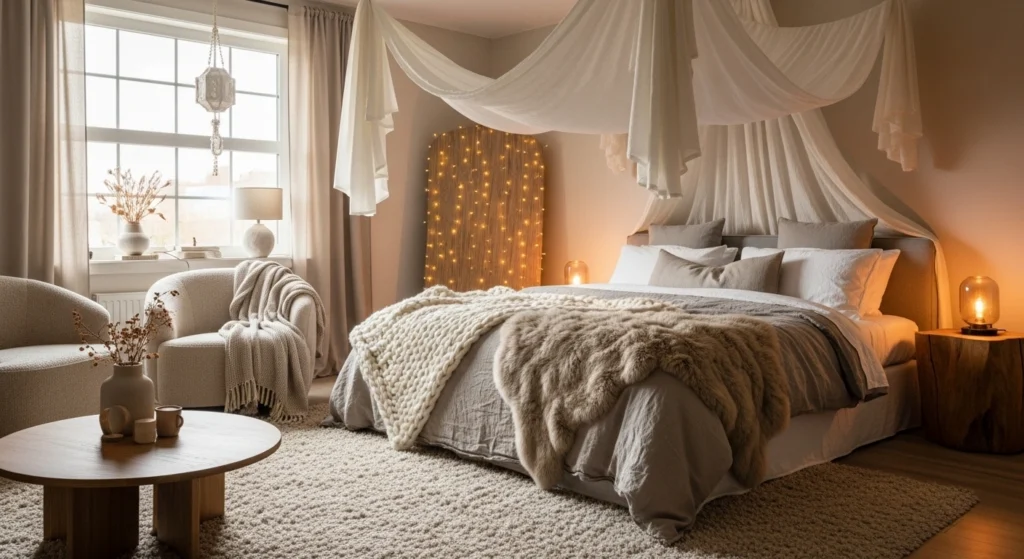
Hang a flowing cotton or linen canopy from the ceiling over a plush round floor cushion. The draping fabric walls create a semi-private cocoon — a visible signal that this corner means quiet time — while adding beautiful vertical interest. Sand, sage, or soft ivory keep it calm.

2. Forward-Facing Book Ledges
Spine-out shelves make kids dump every book to find one. Shallow forward-facing ledges at shoulder height turn covers into rotating wall art — kids spot favorites instantly and slide them back. Independent reading starts with visible books.

3. The Closet Hideaway
Got an underused closet? Pull the doors and lower rods, line the walls with fun wallpaper, add a thick foam mat and low floating shelves. A curtain across the frame makes a private hideaway that feels like a secret — kids will fight over who gets it.

4. Montessori Book Display
A low, floor-standing front-facing rack keeps 6–10 books at toddler height — no tipping hazard, no adult needed. Rotate titles weekly: fewer visible books means less overwhelm and cleanup little hands can actually manage.

5. The Under-Stairs Nook
That awkward void under the stairs (or an attic eave) is a reading nook waiting to happen. A custom-cut bench pad over a low storage box, tucked into the alcove — cozy, built-in, and scaled exactly for small readers.

6. Zone the Playroom
In an active playroom, reading space gets swallowed by blocks and noise. Place a low double-sided storage credenza perpendicular to the wall — toys on one side, reading chair on the other — and ground the quiet zone with a thick woven rug. A clear boundary between loud and calm.

7. The Sinking Seat
Stiff chairs end reading sessions early. A dense high-back beanbag or floor nest in washable corduroy, sherpa, or canvas lets kids shift positions comfortably — the seat adapts to them, so they stay with the book longer.

8. The Weekend Teepee
A canvas A-frame teepee: wood dowels, draped canvas, foam tiles plus a faux-sheepskin rug inside. Buildable in a weekend, packable when floor space is needed for games. The classic kid hideout, reading edition.

9. Shadow-Box Book Walls
Deep shadow-box shelves mounted in a grid turn book storage into wall art: group by color gradient or theme, and heavy hardcovers get real structural support. Utility becomes a visual feature.

10. Keep the Palette Calm
Neon primaries overstimulate; a restful nook needs restraint. Three tones max — say, warm cream, sage green, one wood accent — across cushions, bins, and walls. A calm sensory landscape makes the corner a true decompression zone.

11. Removable Wall Decals
Bare drywall feels institutional; permanent wallpaper is a commitment. Matte fabric wall decals — watercolor trees, soft stars — add whimsy and narrative without touching the paint. Perfect for renters and for tastes that change yearly.

12. The Rolling Library
If your kid reads on the couch, not in their room, books migrate everywhere. A low rolling book cart with divider slots corrals the collection and wheels to wherever reading happens — then parks back. Cleanup = rolling it home.

13. Cordless Lamp Light
Overheads glare; cords trip toddlers. A small battery-operated LED lamp with a rattan or frosted shade on a low stool gives warm (2700K) focused light on the pages — safe, cozy, reachable.

14. Printable Storybook Art
Frame downloadable storybook illustrations or literary quotes in simple raw-wood frames with shatterproof acrylic (not glass) above the nook. Intellectual inspiration that’s safe over a headrest — and costs almost nothing.

15. The Rattan Lounger
A kid-sized rattan Papasan or wicker lounge chair with a thick cotton cushion and chunky knit throw: organic texture against soft fabric, deeply relaxing. The boho reading throne.

Build It This Weekend
You don’t need a big floor plan or a carpenter — just a corner with intent: visible books, a comfortable seat, warm light, calm colors. Start with the canopy or the ledges; the rest layers on naturally. More kid spaces: our kids bedroom storage solutions and teenage room makeover ideas.
Quick Answers
How do I get my child to read more?
Make books visible (forward-facing covers), comfortable (a seat they choose), and the space inviting (warm light, calm colors). Environment beats exhortation.
What age is a reading nook good for?
Any — toddlers love the Montessori rack and floor cushions; older kids want the closet hideaway or canopy with real privacy.
How much space do I need for a reading nook?
A single corner: a 3×3 foot footprint fits a cushion, ledges, and a lamp. Closets, under-stairs voids, and playroom corners all work.
Affiliate Disclosure: As an Amazon Associate, I earn from qualifying purchases. If you click a link and buy, I may receive a small commission at no extra cost to you. Thank you for supporting my content!