Choosing a bathroom vanity isn’t about finding one that fits between two walls. The right vanity gives enough storage without crowding the room, leaves comfortable movement, complements the bathroom’s proportions, and supports your daily routine. The same vanity can feel balanced in one bathroom and overwhelming in another. So instead of asking “what size vanity should I buy,” ask: “what size fits the way my bathroom works?”
Start With the Bathroom, Not the Vanity
The classic renovation mistake: choosing a vanity you love online, then forcing it to fit. Designers work the opposite way — they understand the room first. Is this the morning-rush bathroom? One user or two getting ready simultaneously? Is storage the biggest frustration? Already cramped? Staying for years or renovating to sell? Your answers point to the right size long before you compare product dimensions.
Think in Three Zones
The Storage Zone: everything the vanity must hold — toiletries, cleaning supplies, hair tools, extra towels, daily essentials. If you’re always running out of storage, a slightly wider vanity improves daily life more than decorative shelving later.
The Movement Zone: can drawers open without blocking the doorway? Can two people pass? Do cabinet doors clear the toilet and shower? A vanity shouldn’t interrupt the room’s flow — it should belong there.
The Visual Zone: even a vanity that fits can dominate a small bathroom; an undersized one can leave a big bathroom unfinished. The goal isn’t the biggest possible — it’s visual balance between vanity, mirror, lighting, toilet, shower, and walls.
Single or Double? Let the Routine Decide
A double vanity isn’t automatically an upgrade — sometimes it just eats space. Single wins when: one person uses the bathroom most, storage beats a second sink, the room is compact, or you want maximum floor space. Double earns its keep when: two people regularly get ready simultaneously, the bathroom is wide enough for comfortable clearance, and shared-sink mornings feel rushed. It’s about matching your routine, not luxury.
Width: Bigger Isn’t Better
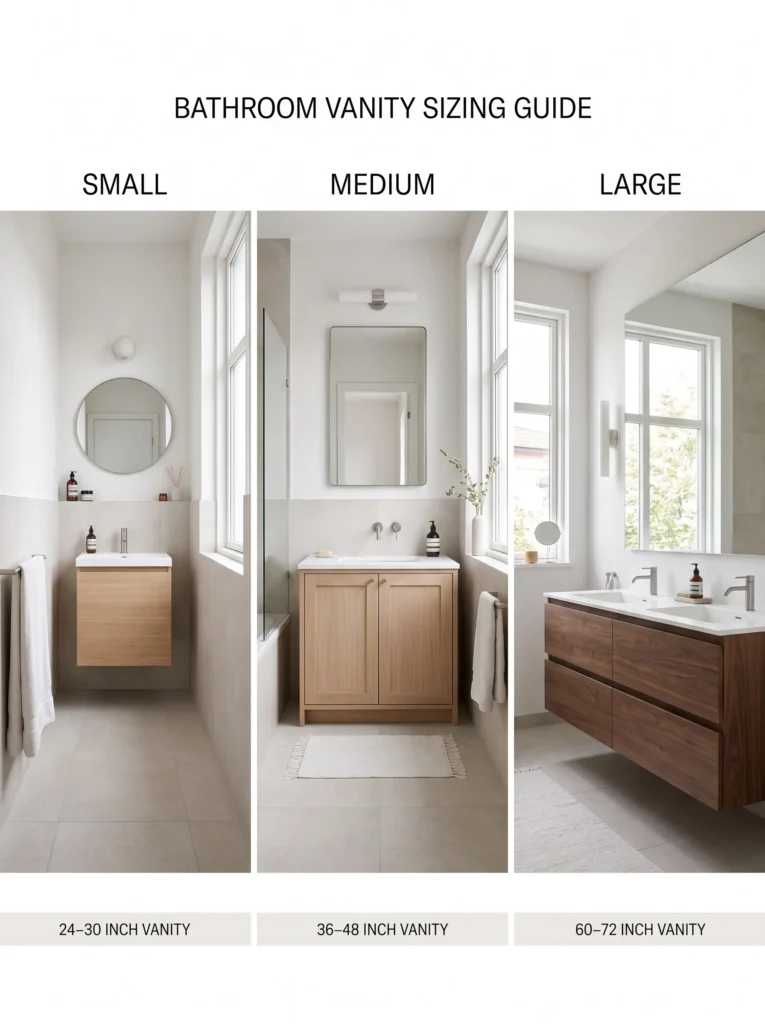
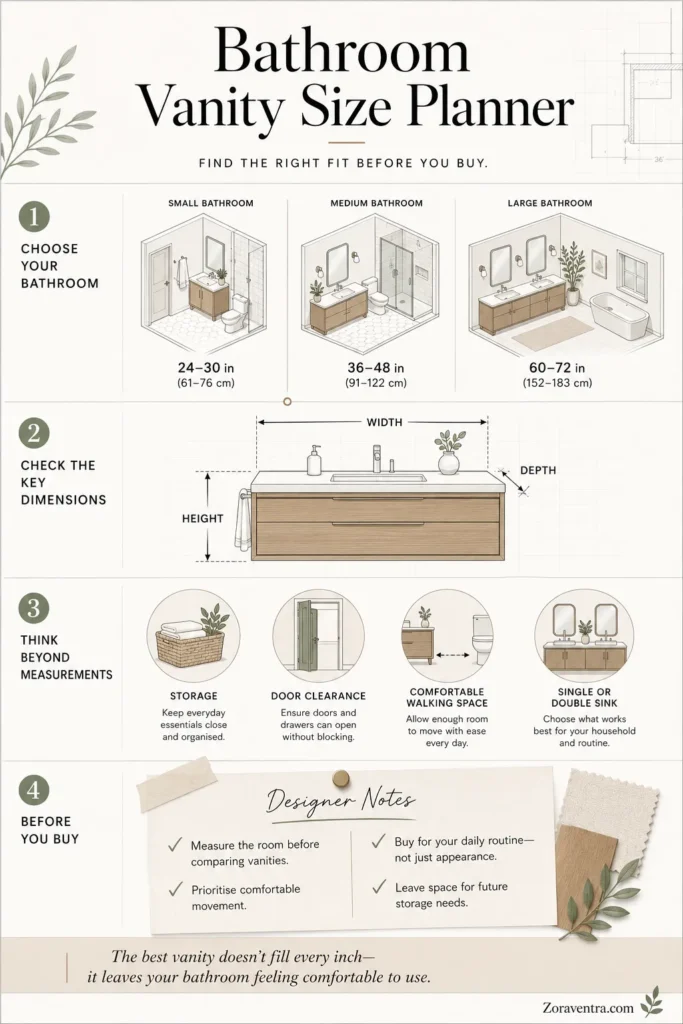
24–30 inches: powder rooms and very small bathrooms.
36 inches: guest bathrooms or compact primary baths.
48 inches: medium bathrooms needing extra storage.
60 inches: primary baths with room for a double-sink option.
72 inches: large primary baths designed for two users.
These aren’t strict rules — a well-planned 48-inch vanity beats a squeezed-in 60-inch one. Choose the vanity that leaves the bathroom feeling open, not the one that fills every wall.
Don’t Overlook Depth
Width gets the attention, but depth shapes daily comfort. Standard vanities run 20–22 inches deep — enough countertop with comfortable movement. 16–18 inch shallow models rescue narrow bathrooms and cloakrooms. Deeper vanities add storage but can make compact bathrooms feel noticeably tighter. Before buying, picture standing at the vanity while someone walks behind you — if it feels restricted on paper, real life will be worse.
Height: Comfort First
Vanities have grown taller: older homes often have 30–32 inch models; today’s standard is 34–36 inches (“comfort height”) — less bending for most adults. But taller isn’t always better: with young kids using the bathroom daily, a slightly lower vanity or a sturdy step stool may be smarter. Choose for the people who actually use it, not the trend.
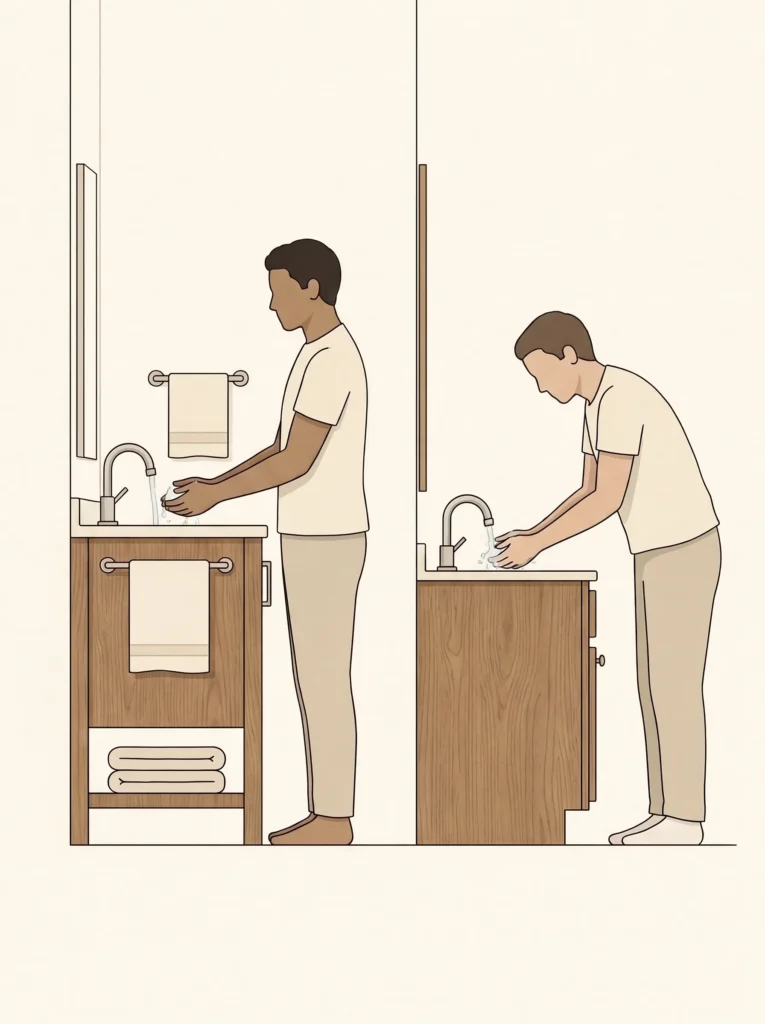
Let Storage Needs Influence Size
It’s easy to fixate on external dimensions and forget why you’re replacing the vanity. A guest bath needs hand soap, spare towels, and basics. A busy family bath needs toiletries, hair tools, skincare, medications, cleaning supplies, extra toilet paper. If your current vanity always feels cluttered, a few extra inches of width solves a daily problem. Sometimes the right storage layout matters more than the biggest cabinet.
Leave Room to Move
Even the perfect vanity frustrates if the space around it fails: cabinet doors and drawers must open fully without hitting the toilet, shower, or bathroom door; you need clear floor space to stand comfortably without feeling boxed in. A bathroom should never feel like an obstacle course. Proportion thinking helps everywhere — our rug size guide shows how the right dimensions improve comfort and movement in living areas too.
Floating or Freestanding?
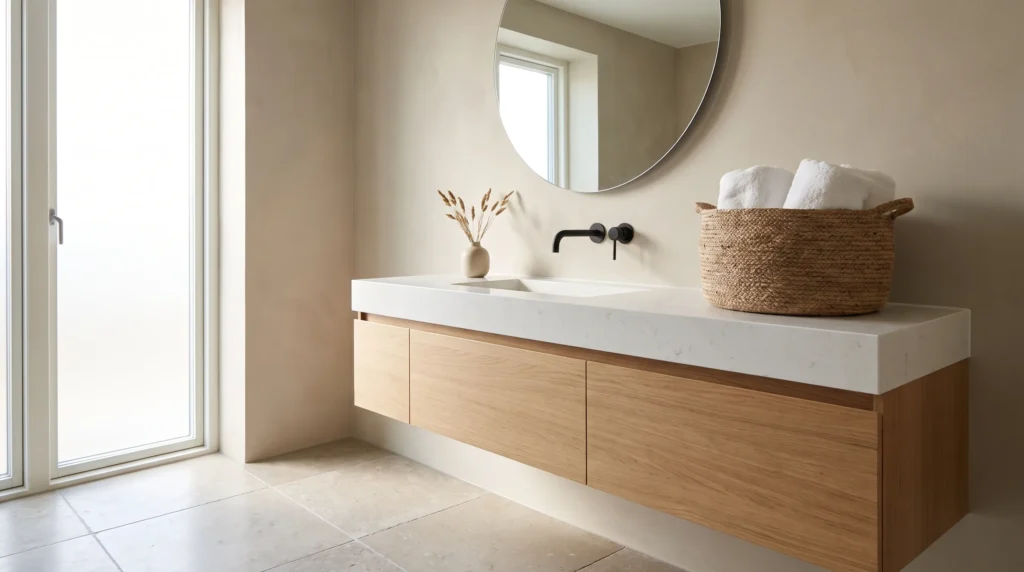
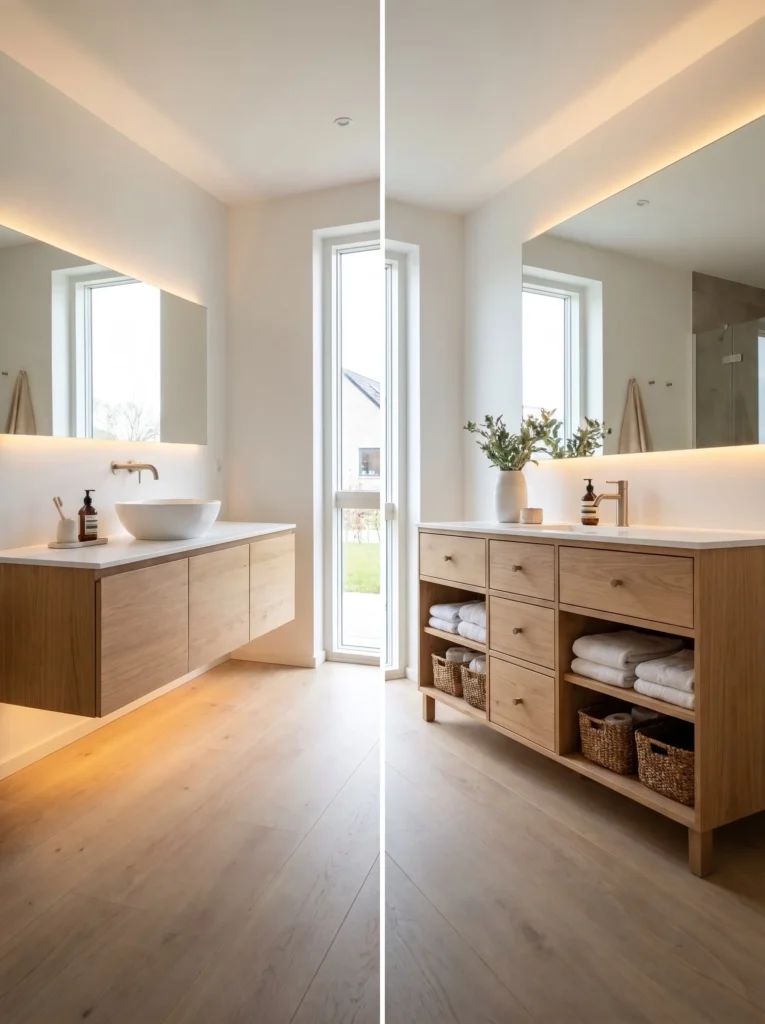
Same dimensions, completely different feel. Floating (wall-mounted, open floor beneath): lighter, more spacious, more visible floor — excellent for small bathrooms. Freestanding: more substantial, often more storage — great for family bathrooms where practicality matches appearance. Small + open-feeling goal → floating. Storage priority → freestanding.
Mistakes to Avoid
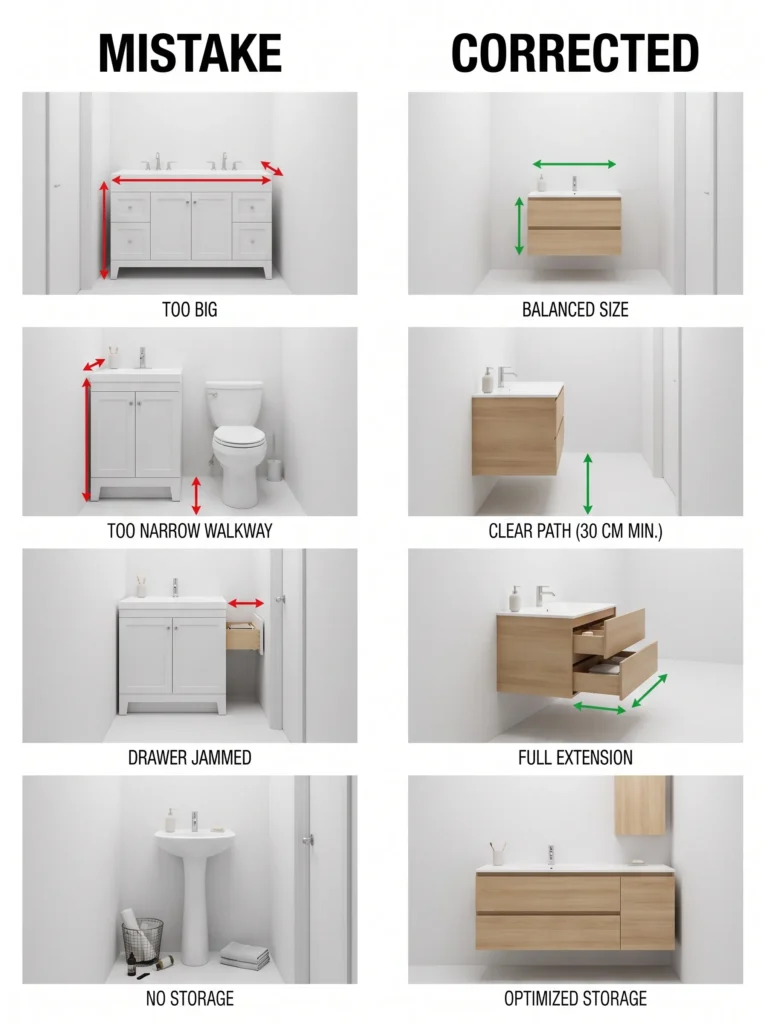
Choosing the largest vanity that fits — fitting between walls isn’t the same as belonging in the room; breathing room makes bathrooms feel larger.
Ignoring storage needs — a vanity that supports your routine beats one chosen for looks.
Forgetting door and drawer clearance — toilets, shower screens, and bathroom doors become expensive obstacles; sketch a floor plan first.
Choosing style before size — color, countertop, and hardware come after confirming dimensions. Right size first makes every other decision easier.
Your Shopping Checklist
Bring these measurements: bathroom width and depth, available vanity width, preferred vanity depth, vanity height, door and drawer clearance, storage requirements, single or double sink. Comparing vanities with your numbers in hand beats showroom guessing every time. Planning the mirror too? Our bathroom mirror size guide picks up where this leaves off.
Quick Answers
What is the standard bathroom vanity size?
Common widths run 24 to 72 inches; 20–22 inches deep and 34–36 inches high (“comfort height”) are today’s standards. But “standard” matters less than what fits your room’s storage, movement, and visual balance.
Should I get a single or double vanity?
Double only when two people regularly get ready at the same time and the room has comfortable clearance. Otherwise a single vanity with better storage usually serves daily life better.
Are floating vanities good for small bathrooms?
Yes — the visible floor beneath makes the room feel larger and lighter. Choose freestanding when storage is the priority, since floating models typically offer less of it.
Affiliate Disclosure: As an Amazon Associate, I earn from qualifying purchases. If you click a link and buy, I may receive a small commission at no extra cost to you. Thank you for supporting my content!