How to Choose the Right Rug Size for Every Room

Buying a rug seems simple—until you bring it home.

A rug that looked perfect in the showroom or on your screen can suddenly make your living room feel cramped, your dining chairs catch on the edges, or your bedroom look oddly unbalanced. In most cases, the problem isn’t the rug itself. It’s the size.

The right rug does much more than cover the floor. It defines conversation areas, anchors furniture, creates better visual balance, and helps a room feel intentionally designed. A rug that’s too small can make even a beautifully decorated space feel disconnected, while one that’s properly sized can make the same room look larger, more cohesive, and more inviting.

The good news is that choosing the right rug size doesn’t require guessing or following complicated design rules. Once you understand a few simple principles, you’ll be able to confidently choose a rug that fits your room, your furniture, and the way you use the space.

Whether you’re furnishing a cozy apartment or updating a spacious family home, this guide will walk you through the sizing rules professional designers rely on—so you can avoid costly mistakes and choose a rug that looks right from day one.

Why Rug Size Matters More Than Most People Think

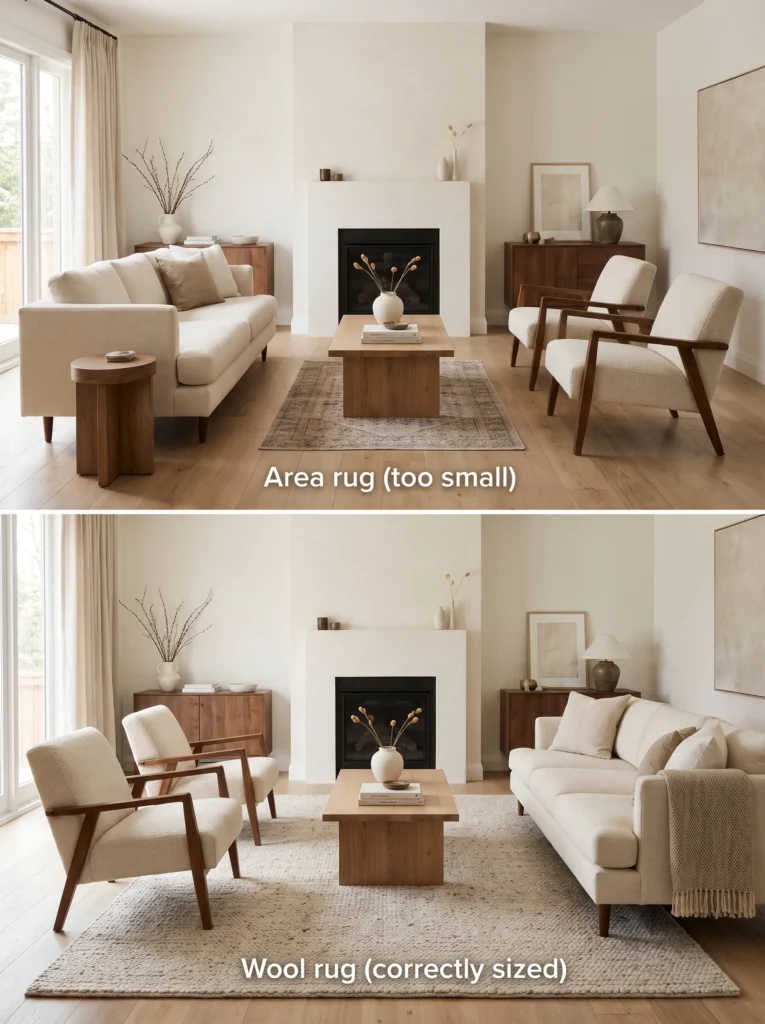
Comparison of incorrect and correct rug size in a living room

When shopping for a rug, many homeowners focus on the pattern, color, or material first. While those choices certainly influence the room’s style, the size of the rug has an even greater impact on how the space feels.

A correctly sized rug acts like a frame for the room. It connects furniture, establishes clear zones, and creates a sense of proportion. Without that foundation, even high-quality furniture can appear as though it’s floating without purpose.

Imagine a living room where the coffee table sits on a small rug while the sofa and chairs remain completely outside its edges. The furniture feels disconnected, and the room often appears smaller than it really is.

Now picture the same room with a rug large enough for at least the front legs of the seating to rest on it. Suddenly, the furniture feels connected, the layout looks intentional, and the entire room appears more spacious.

This principle applies throughout the home. In a dining room, the rug should comfortably accommodate both the table and the chairs, even when they’re pulled out. In a bedroom, it should provide a soft landing underfoot when you get out of bed. In an entryway, it should help define the space while leaving enough room for doors to open freely.

In other words, rug size isn’t just a measurement—it’s one of the key elements that determines whether a room feels balanced or awkward.

The Most Common Rug Size Mistakes Homeowners Make

Many decorating frustrations come down to one surprisingly common issue: choosing a rug that’s too small.

It’s an easy mistake to make. Smaller rugs usually cost less, are easier to move, and often seem large enough when viewed online or in a showroom. But once placed in a room, they can disrupt the entire layout.

Here are some of the most common sizing mistakes to avoid.

Choosing a Rug That Only Fits the Coffee Table

This is perhaps the most frequent mistake in living rooms.

A rug that sits only beneath the coffee table leaves the surrounding furniture visually disconnected. Instead of bringing the seating area together, it creates the impression that each piece is standing alone.

Whenever possible, choose a rug that extends beneath at least the front legs of your sofa and chairs. This simple adjustment creates a much more cohesive arrangement.

Forgetting About Furniture Placement

A rug should work with your furniture—not compete with it.

Before buying, think about where sofas, beds, dining chairs, or benches will sit. The rug should support the layout rather than becoming an isolated decorative piece in the middle of the floor.

Ignoring the Room’s Shape

The dimensions of the room matter just as much as the dimensions of the rug.

For example, a long, narrow room may benefit from a runner or rectangular rug, while a square seating area often looks more balanced with a larger rectangular or square option.

Choosing a rug that complements the room’s proportions helps create a more harmonious layout.

Buying Before Measuring

It sounds obvious, yet it’s one of the easiest mistakes to make.

Never rely on estimates alone. Measure the room, note the furniture placement, and use painter’s tape to outline the rug’s dimensions on the floor if possible. Seeing the footprint in your actual space can help you judge whether the size feels right before making a purchase.

A Simple Rule for Choosing the Right Rug Size

If you only remember one thing from this guide, let it be this:

The rug should feel connected to the furniture—not isolated in the middle of the room.

Many homeowners assume a rug is simply an accessory placed under a coffee table or in the center of a room. Professional designers approach it differently. They treat a rug as the foundation that visually ties furniture together and helps define how the space is used.

Instead of asking, “Will this rug fit the room?”, ask yourself:

  • Does it connect the furniture?
  • Does it leave enough walking space?
  • Does it make the room feel balanced?

Those questions usually lead to the right size more reliably than focusing on dimensions alone.

Another helpful guideline is to leave a border of visible flooring around the edges of the room whenever possible. This creates a natural frame that prevents the rug from feeling either too small or wall-to-wall.

Keep in mind that every home is different. Open-concept layouts, compact apartments, and older homes often require slight adjustments. Think of rug-sizing guidelines as a starting point rather than strict rules.

Living Room Rug Size Guide

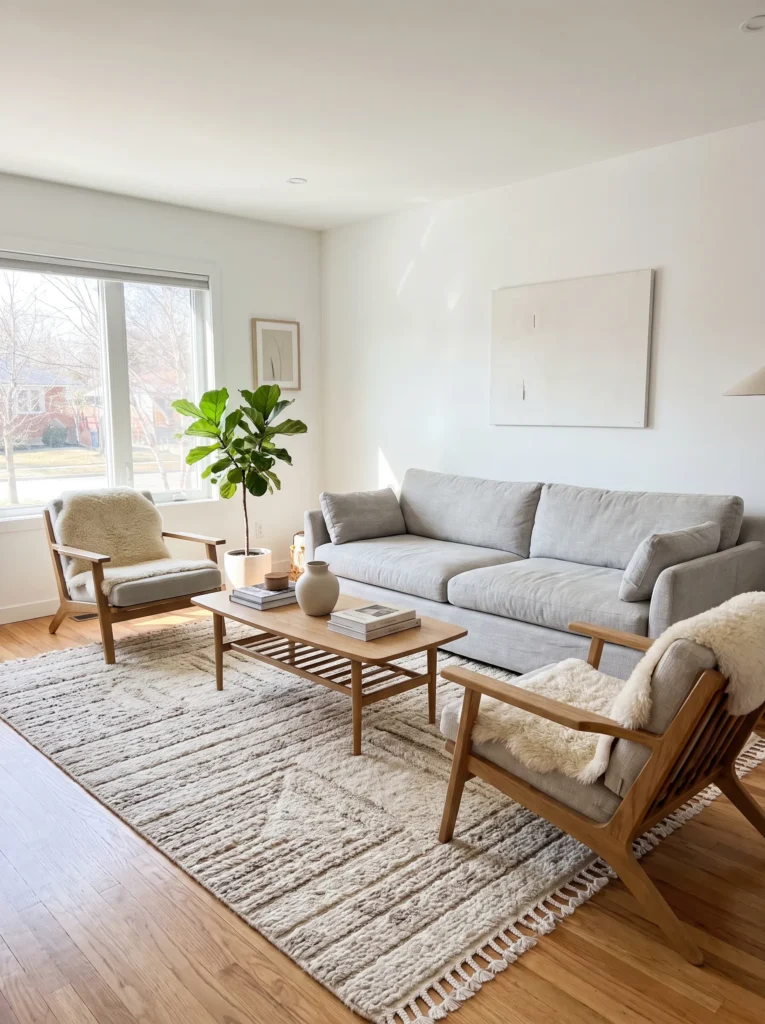
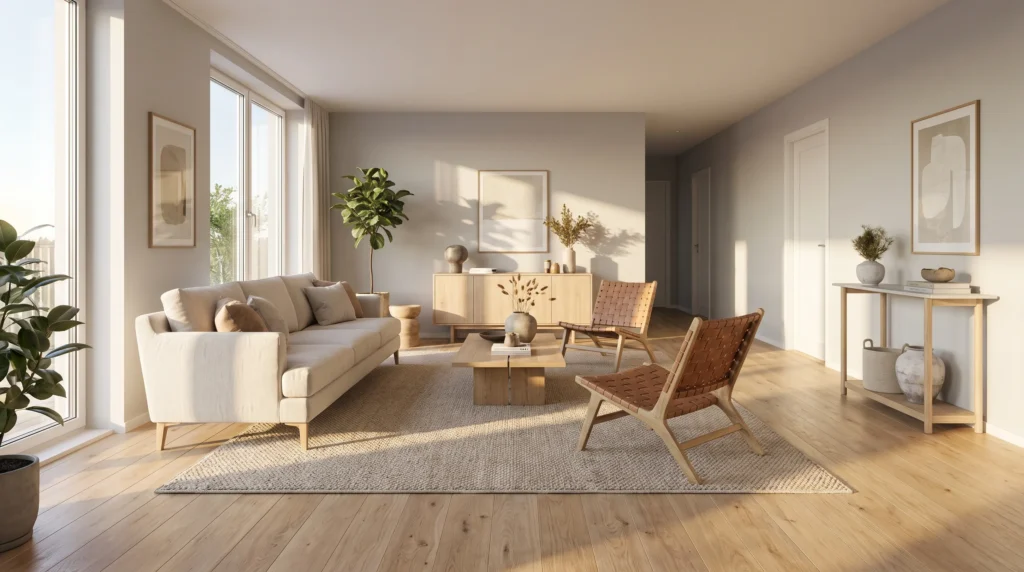
Living room showing proper rug placement beneath furniture

The living room is where rug size has the biggest visual impact. A properly sized rug can make the seating area feel intentional and inviting, while one that’s too small can make the room feel fragmented.

Rather than choosing a rug based only on the room’s dimensions, start with your furniture layout.

Best Practice: Anchor the Seating Area

A rug should visually connect the main seating pieces.

Whenever space allows, position the rug so that at least the front legs of the sofa and chairs rest on it. This creates a unified conversation area and gives the room a more balanced appearance.

In larger living rooms, placing all the furniture legs on the rug can create an even more luxurious look, but it isn’t always necessary.

Small Living Rooms

If you’re decorating a smaller living room, resist the temptation to buy the smallest rug available.

A slightly larger rug often makes the room feel more spacious because it visually expands the seating area instead of breaking it apart.

Choosing a rug based only on price can sometimes result in a layout that feels cramped, so it’s worth investing in the largest size that comfortably fits your space.

Open-Concept Living Spaces

In open floor plans, rugs play an important role in defining different zones.

A well-sized rug helps separate the living area from the dining or kitchen space without the need for walls or dividers.

When selecting a rug for an open-concept room, make sure it comfortably fits the seating arrangement rather than trying to fill the entire open space.

Bedroom Rug Size Guide

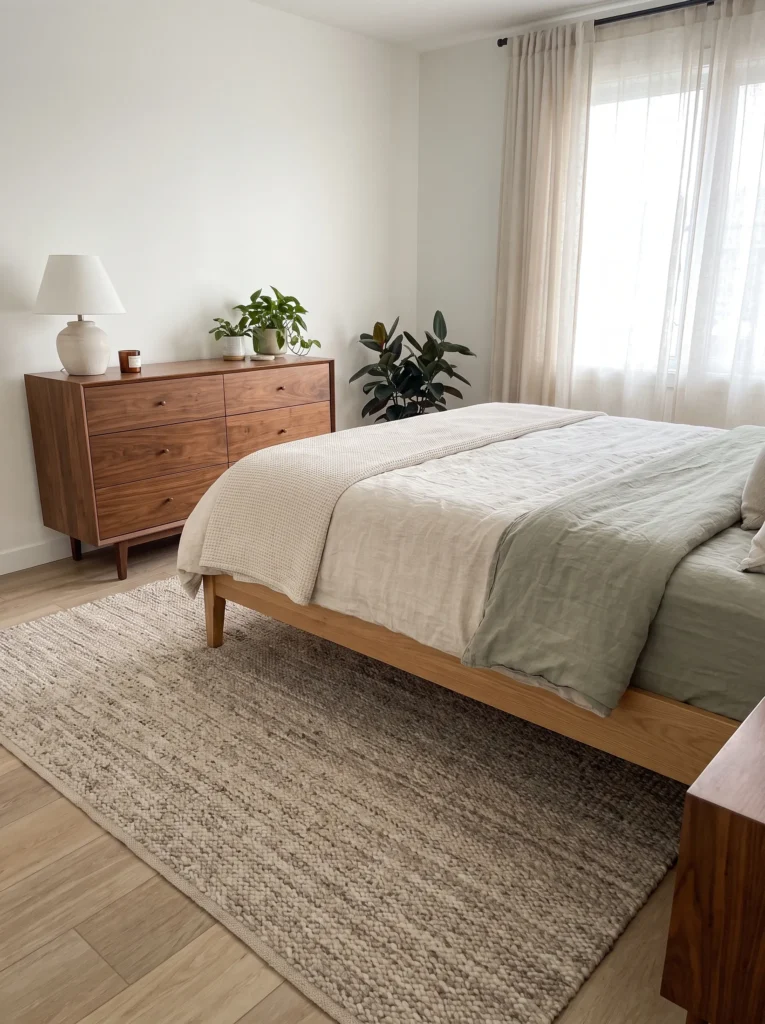
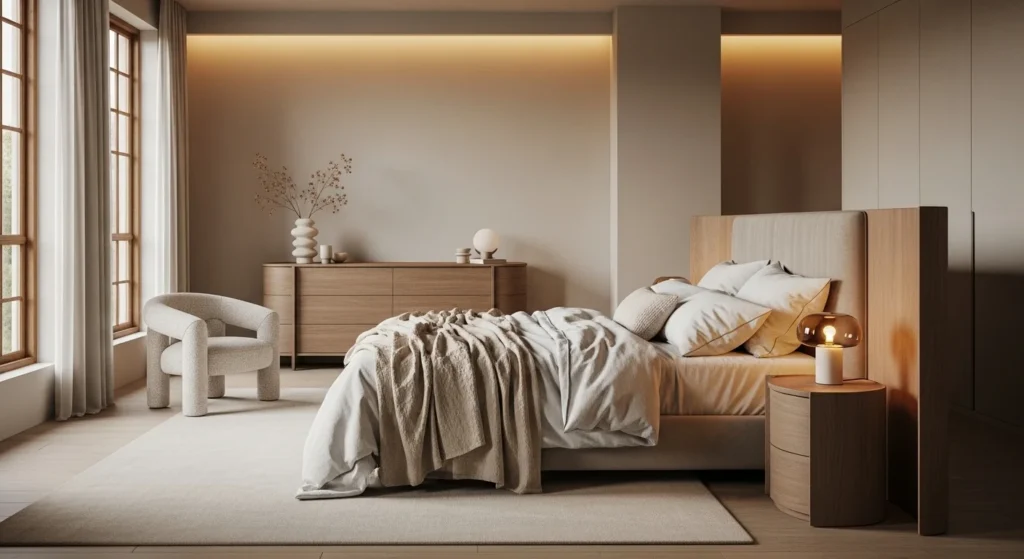
Bedroom with properly sized area rug under the bed

A bedroom rug should do more than add softness underfoot. It should create balance around the bed and make the room feel complete.

Because the bed is usually the largest piece of furniture in the room, the rug should be sized with it in mind.

Position the Rug Around the Bed

One of the most popular approaches is to place the rug partially underneath the bed so it extends beyond the sides and foot of the bed.

This allows you to step onto a soft surface when getting out of bed while also framing the sleeping area.

The exact amount of rug visible will depend on the room size, but the goal is to create a generous border around the bed rather than leaving only a narrow strip exposed.

Smaller Bedrooms

If a full-size area rug isn’t practical, there are still ways to achieve a balanced look.

For example, runners placed along each side of the bed or a rug positioned at the foot of the bed can provide comfort without overwhelming the room.

The key is ensuring the rug feels intentional rather than like an afterthought.

Dining Room Rug Size Guide

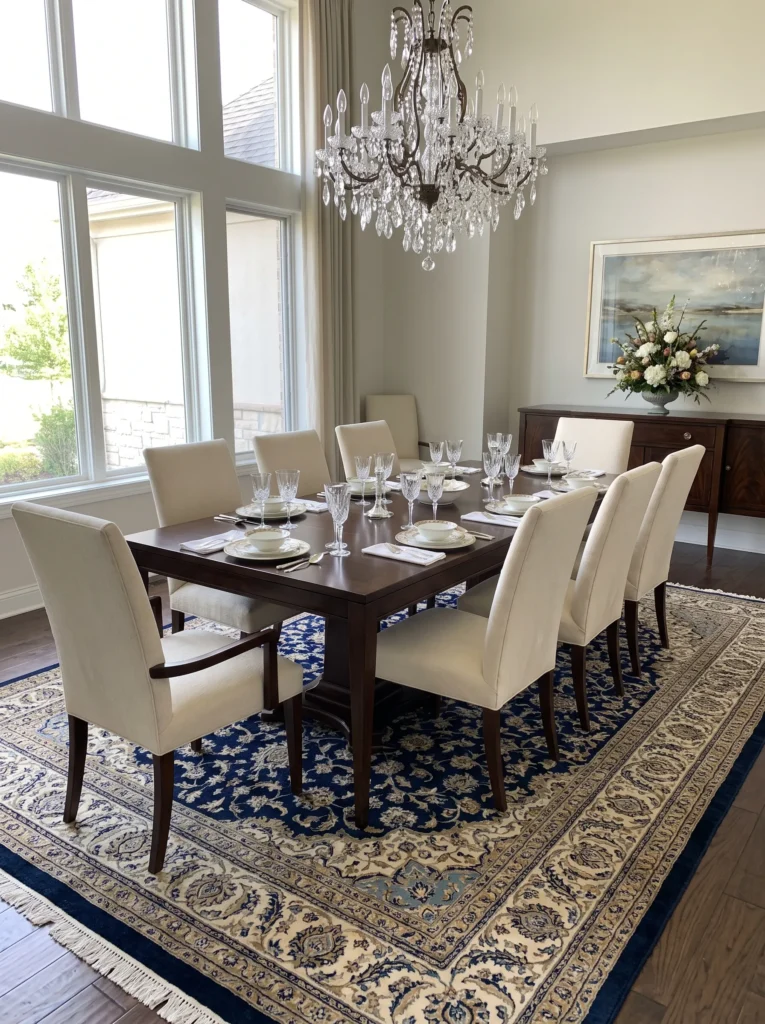
Dining room showing correct rug size under table and chairs

Dining rooms have one important requirement that many homeowners overlook.

The rug should be large enough for both the table and the chairs, even when someone pulls a chair out to sit down.

If the chair slides off the edge of the rug every time it’s moved, the space can quickly become uncomfortable and the rug may wear unevenly over time.

Test the Layout Before You Buy

Before purchasing a rug, imagine the dining chairs in their fully pulled-out position.

If every chair can remain on the rug while someone is seated comfortably, you’ve likely chosen an appropriate size.

This simple test prevents one of the most common dining room decorating mistakes.

Match the Rug to the Table Shape

The shape of the rug should generally complement the shape of the dining table.

For example:

  • A rectangular table usually pairs well with a rectangular rug.
  • A round dining table often looks best with a round rug.
  • A square table typically works well with a square rug.

Matching shapes helps create visual harmony without making the dining area feel crowded.

Entryway and Hallway Rug Size Guide

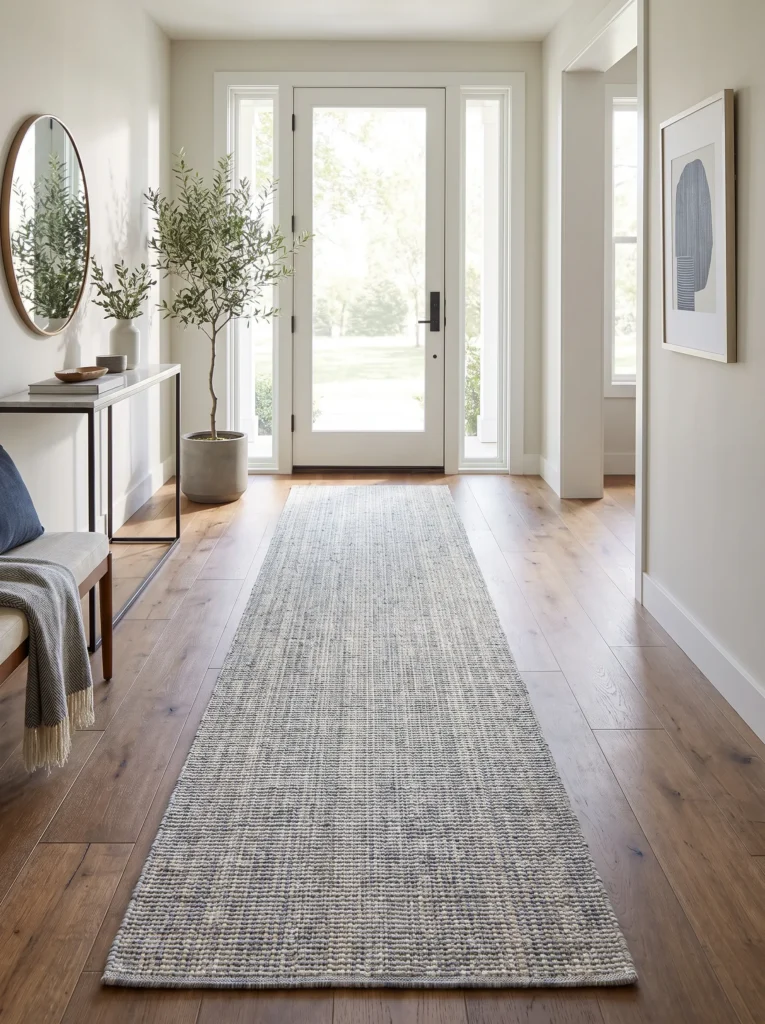
Proper runner rug placement in a hallway

The entryway is the first space people see when they enter your home, and a well-sized rug helps create a welcoming first impression. In hallways, runners add warmth while making long, narrow spaces feel more intentional.

Unlike living rooms or bedrooms, these areas are primarily used for movement. The rug should support that flow instead of interrupting it.

Leave Space Around the Edges

A rug that stretches from wall to wall can make an entryway or hallway feel cramped. Leaving a border of visible flooring around the rug creates a cleaner, more balanced appearance and helps define the space.

This border doesn’t have to be large—just enough to frame the rug naturally.

Make Sure Doors Can Open Freely

Before choosing a rug, check how nearby doors operate.

A rug that’s too thick or too large may prevent entry doors, closet doors, or interior doors from opening smoothly.

If clearance is limited, consider a lower-pile rug that provides comfort without interfering with everyday use.

Choose a Rug That Fits the Shape of the Space

Long hallways usually look best with runners because they emphasize the natural proportions of the space.

For square or compact entryways, an area rug that complements the room’s shape often creates a more balanced look than a narrow runner.

The goal is to enhance the architecture rather than fight against it.

Rug Placement Rules That Instantly Improve Any Room

Choosing the right size is only part of the equation. Placement has just as much influence on how polished your room feels.

These simple rules work in almost every home.

Keep Furniture Connected

Whenever possible, avoid placing a rug where it floats alone in the center of the room.

Whether it’s a living room, bedroom, or home office, the rug should visually connect the furniture and help define the space.

If the rug feels disconnected from the furniture, the room usually feels disconnected as well.

Create Clear Walkways

A rug should never make it difficult to move comfortably through a room.

When planning placement, think about how people naturally walk through the space.

Leave enough visible flooring for comfortable walkways and avoid placing rug edges where they create tripping hazards.

A room that functions well almost always feels better to live in.

Think About Balance, Not Just Measurements

It’s easy to focus only on dimensions when buying a rug, but visual balance matters just as much.

Ask yourself:

  • Does the rug feel centered within the furniture arrangement?
  • Is there enough visible flooring around the edges?
  • Does the rug make the room feel grounded rather than crowded?

If the answer is yes, you’ve likely chosen a size that works well—even if it isn’t identical to a standard recommendation.

Quick Rug Size Reference Chart

While every room is different, this chart provides a helpful starting point when comparing common rug sizes.

RoomRecommended PlacementCommon Rug Sizes
Living RoomFront legs of seating on the rug or all furniture on larger layouts5×8, 8×10, 9×12
BedroomUnder the lower portion of the bed with space around the sides6×9, 8×10, 9×12
Dining RoomTable and chairs remain on the rug when chairs are pulled out8×10, 9×12
EntrywayRug centered with visible flooring around the edges3×5, 4×6
HallwayRunner centered with flooring visible on both sides2×6, 2×8, 2×10

Tip: These are general guidelines. Always measure your room and furniture before purchasing to ensure the rug fits your specific layout.

Before You Buy: A Simple Measuring Trick

One of the easiest ways to avoid buying the wrong rug size doesn’t require any special tools.

Use painter’s tape to mark the exact dimensions of the rug directly on your floor.

Once the outline is in place:

  • Walk around it.
  • Open nearby doors.
  • Pull out dining chairs.
  • Sit on the sofa.
  • Stand beside the bed.

This simple exercise helps you visualize how the rug will interact with the room before spending money.

Many homeowners are surprised by how different a rug feels in their own space compared to a product photo online.

Taking a few extra minutes to measure can save the hassle of returns and help you choose a rug that feels like it was made for your room.

Final Thoughts

Choosing the right rug size isn’t about memorizing measurements—it’s about creating a room that feels balanced, comfortable, and connected.

The best rug is one that supports your furniture layout, allows people to move naturally through the space, and complements the proportions of the room.

While colors, patterns, and materials influence a rug’s style, its size has the greatest impact on how the entire room comes together.

By measuring carefully, thinking about furniture placement first, and using these room-by-room guidelines, you can choose a rug with confidence and avoid one of the most common decorating mistakes.

A well-sized rug doesn’t just complete a room—it helps everything else in the space look better.

Frequently Asked Questions

How do I know if my rug is too small?

A rug is usually too small if it sits alone in the middle of the room without connecting the surrounding furniture. In living rooms, at least the front legs of the main seating should typically rest on the rug to create a cohesive layout.

Should all furniture sit on the rug?

Not always. In many living rooms, placing the front legs of sofas and chairs on the rug creates a balanced look. In larger rooms, all furniture legs can rest on the rug if the size allows.

How much floor should show around a rug?

Leaving a visible border of flooring around the rug helps frame the space and prevents the room from feeling overcrowded. The exact amount depends on the room size, but maintaining a consistent border generally creates the most balanced appearance.

What happens if I buy a rug that’s too large?

A rug that’s too large can overwhelm the room, make furniture placement more difficult, and reduce the sense of visual balance. The ideal rug should define the space while still allowing enough flooring to remain visible around its edges.

Leave a Comment

Your email address will not be published. Required fields are marked *