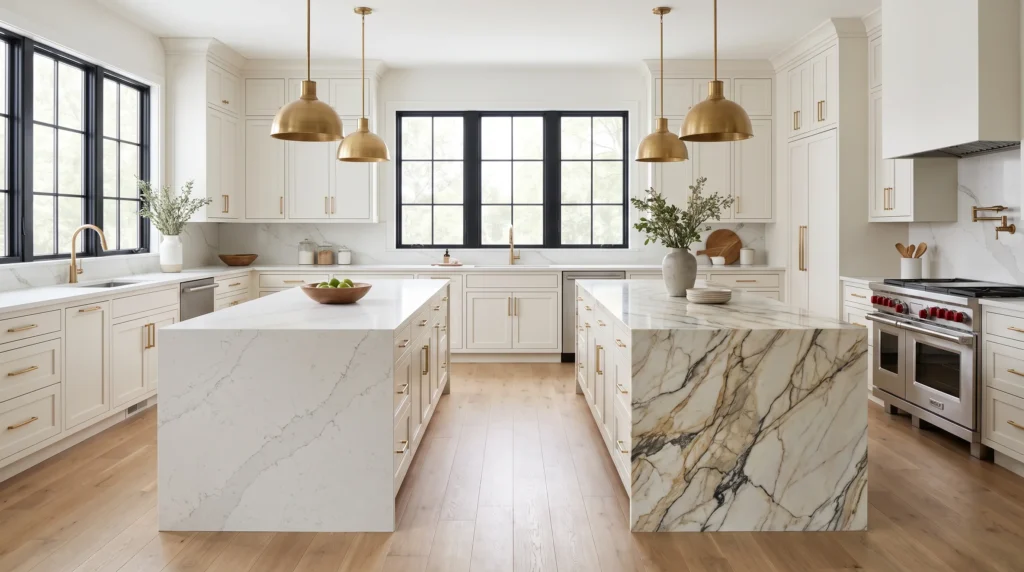
Walk through any kitchen showroom and you’ll hear two materials recommended again and again: quartz and quartzite. They can look surprisingly similar — beautiful, durable, transformative. The decision isn’t about appearance alone; it’s about how your kitchen functions every day. Do you want minimal maintenance? Natural stone character? A kitchen in constant use by kids and guests? Your answers matter more than the trend.
The One Big Difference
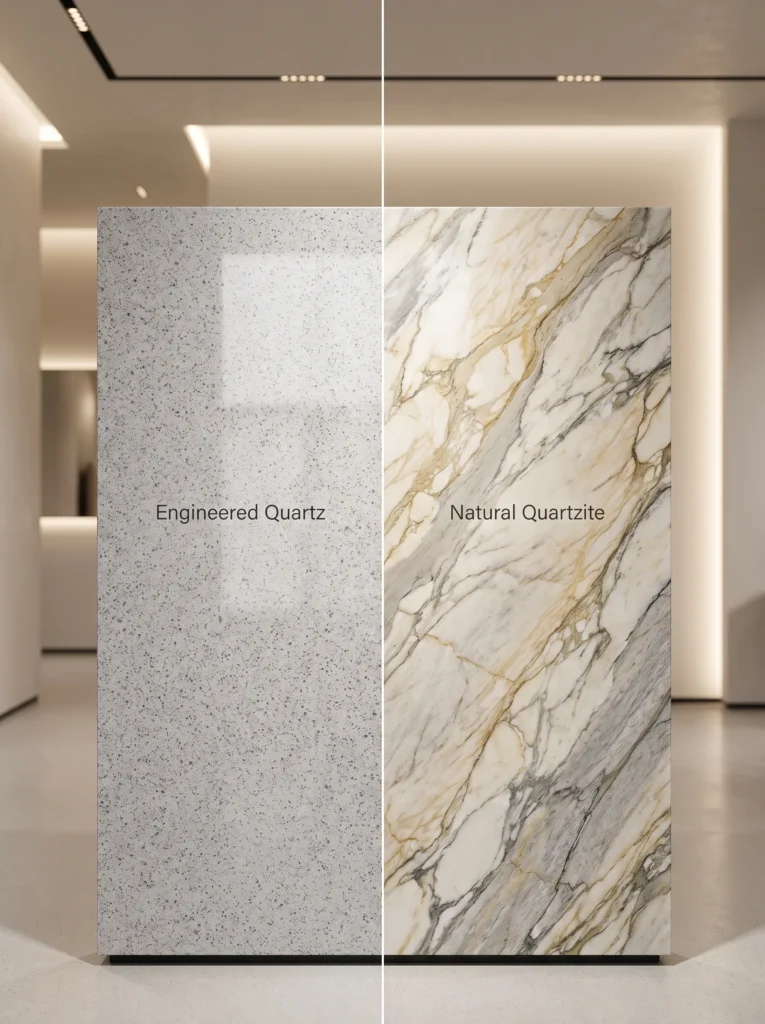
Despite the near-identical names, they’re very different materials. Quartz is engineered: natural quartz crystals bound with resins and pigments — consistent appearance, excellent durability, very little maintenance. Quartzite is cut from natural stone: every slab unique, with veining and color variation formed over thousands of years. Neither is automatically better — the better choice depends on what you value most.
Easy Maintenance? Quartz Wins
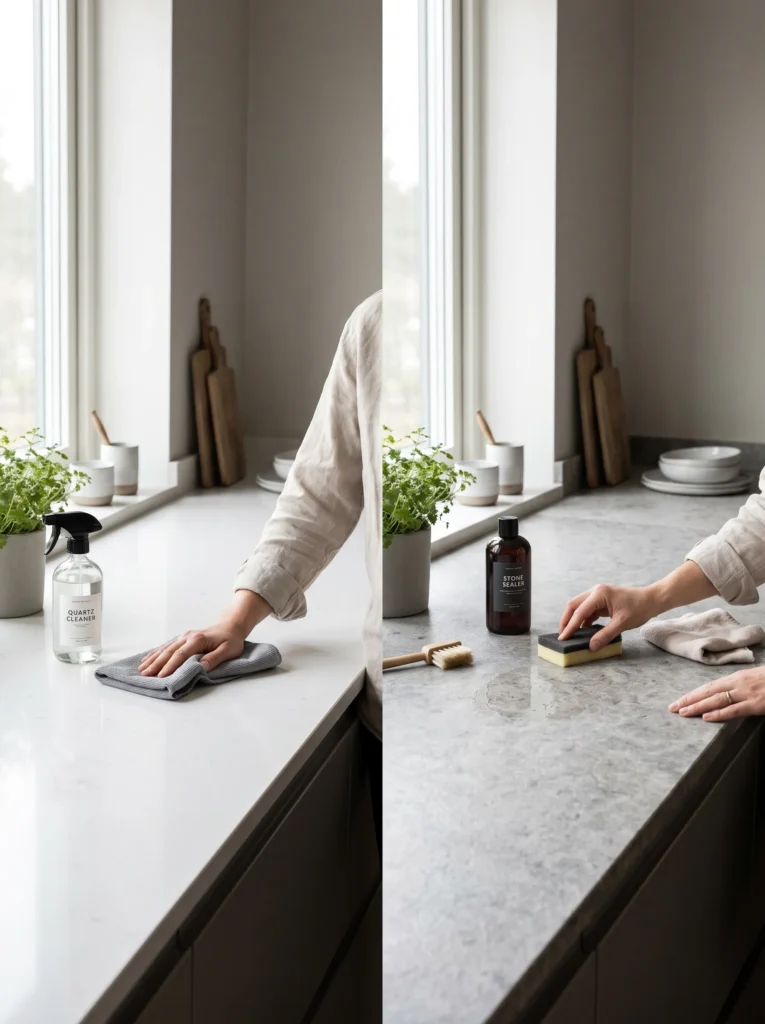
In a constantly busy kitchen — breakfast rush, homework at the island, weekend baking, family dinners — low maintenance is gold. Quartz needs no sealing: its non-porous engineered surface shrugs off coffee, juice, oil, and tomato sauce. Routine care is a soft cloth, warm water, gentle cleaner. If you’d rather enjoy your kitchen than maintain it, quartz is the practical choice.
Love Natural Stone? Quartzite Stands Out
Some materials have individuality manufactured surfaces can’t replicate. Every quartzite slab carries unique veining and natural movement — no two installations alike. For homeowners wanting organic character and timelessness over perfect uniformity, quartzite offers authenticity that’s hard to imitate. The cost: periodic sealing to protect against stains and moisture. Many owners consider that small maintenance a fair trade for natural character.
Busy Family Kitchen? Think Lifestyle, Not Looks
Picture the typical weekday: kids making snacks, a hot pan beside the stove, coffee cups on the island, groceries unpacked. Quartz excels here — easy to clean, resistant to everyday stains. Quartzite is incredibly durable but asks for more attention over the years. Constantly busy + convenience matters = quartz. Dream kitchen + natural beauty as the priority = quartzite may be worth the care.
Heat Resistance: Quartzite’s Advantage
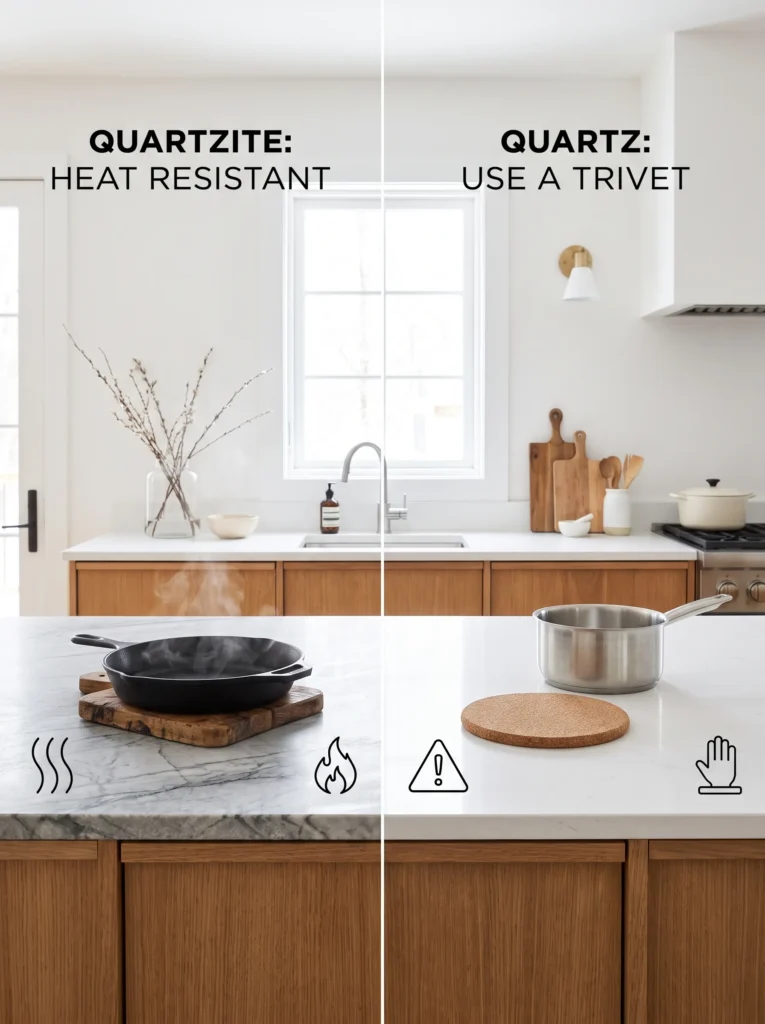
As natural stone, quartzite handles high temperatures extremely well. Quartz is durable, but its resins can suffer from prolonged exposure to very hot cookware. For most households this isn’t a daily concern — but frequent cooks who move hot pots straight from the stove get extra margin of confidence from quartzite. (Still use trivets — no countertop loves direct heat.)
Appearance: Consistency vs. Character
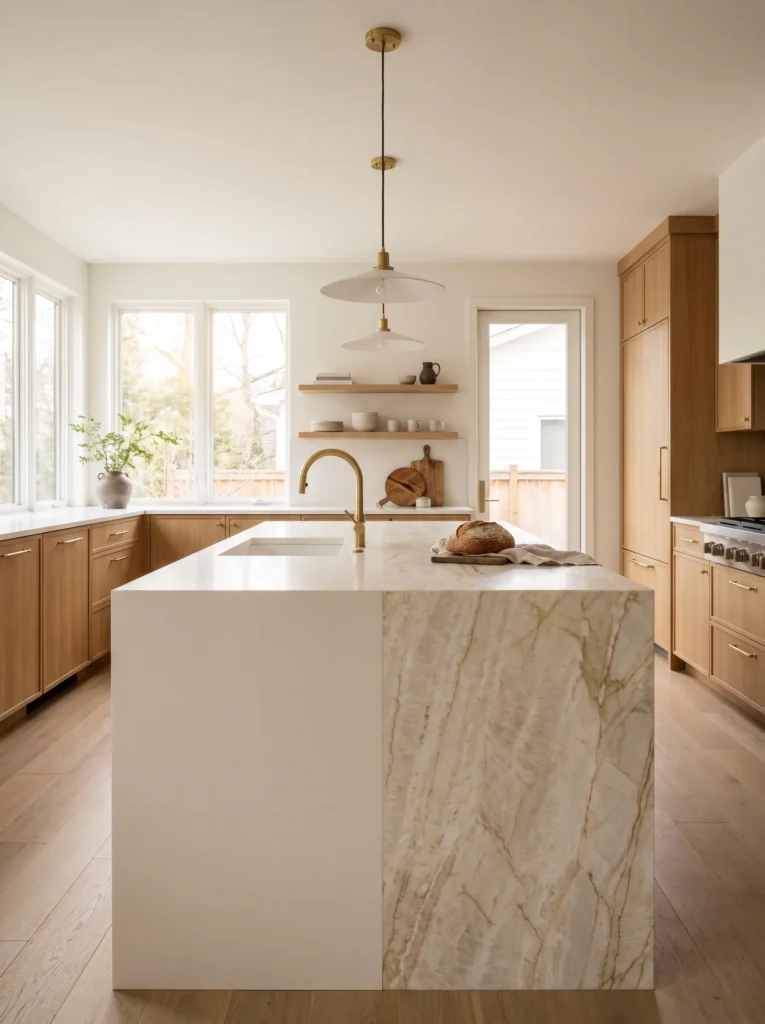
Quartz offers predictable patterns slab to slab — easier to match large islands, backsplashes, and additional sections. Clean, contemporary, controlled. Quartzite celebrates variation — natural veining makes the surface a focal point, not just a design element. Your kitchen style decides: controlled contemporary → quartz; unique natural beauty → quartzite.
Durability: Both Last
Both handle years of everyday use. Quartz resists scratches, chips, and common stains dependably. Quartzite is exceptionally hard natural stone that stands up to daily wear with proper care. The useful question isn’t “which is stronger” — it’s which kind of durability matters to you: easy-maintenance toughness (quartz) or natural-stone strength with occasional care (quartzite).
Maintenance Head-to-Head
Quartz: non-porous, no sealing schedule, routine cleaning only — one of the easiest countertops to own.
Quartzite: straightforward daily cleaning, but periodic sealing is part of owning natural stone.
Neither is difficult. The difference is simply how much maintenance you’re comfortable adding to your routine.
Value: Think Beyond the Quote
Quartz often wins on overall value: predictable installation, lower maintenance costs, consistent performance. Quartzite can cost more (stone, fabrication, installation) — but you’re buying a unique piece of natural stone that can’t be replicated. Convenience and simplicity → quartz is the better investment. Genuine natural stone as part of your vision → quartzite justifies the cost.

Choose by Lifestyle
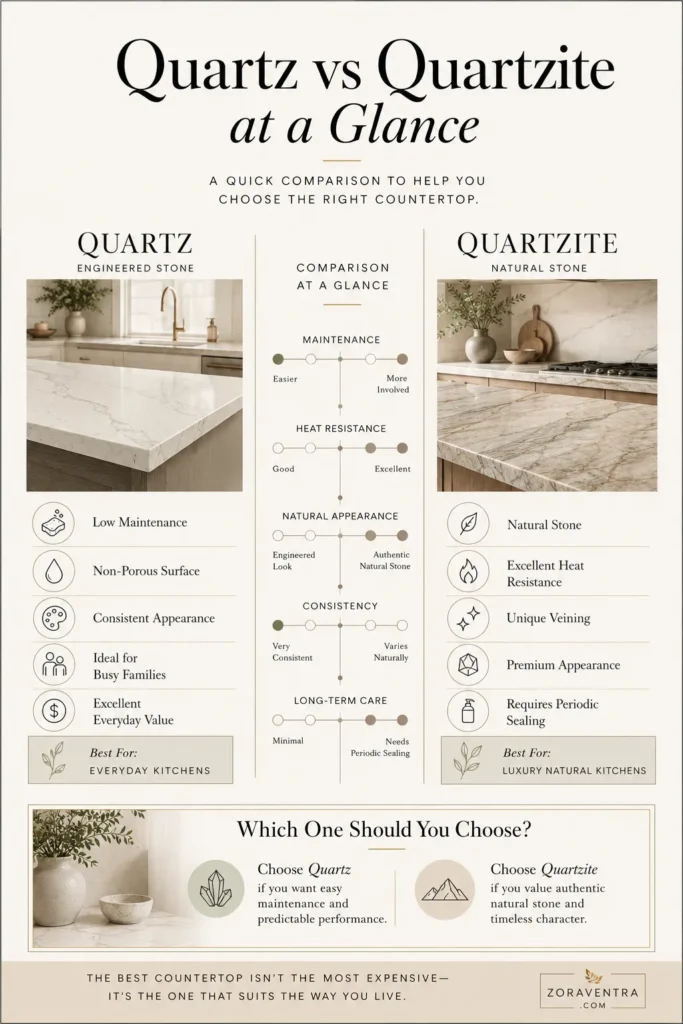
Quartz if: you want the lowest maintenance; the kitchen sees heavy daily use; you have young kids; you prefer consistent colors and patterns; easy cleaning is a top priority.
Quartzite if: you love authentic natural stone; unique veining beats perfect consistency; you’re comfortable with occasional sealing; you enjoy timeless organic materials; you want a one-of-a-kind surface.
At a Glance
Quartz — engineered stone; consistent patterns; very low maintenance; no sealing; very good heat resistance; excellent stain resistance. Best for busy family kitchens.
Quartzite — natural stone; unique veining; moderate maintenance; sealing required; excellent heat resistance; excellent stain resistance (when sealed). Best for natural-stone lovers.
Mistakes to Avoid
Choosing on appearance alone — countertops are work surfaces you’ll use daily; lifestyle fit beats showroom love.
Underestimating maintenance — quartz needs almost none; quartzite needs periodic sealing. Know the difference before buying.
Only comparing initial cost — think 10–15 years of cleaning, maintenance, durability, and daily convenience.
Ignoring your kitchen habits — nightly cooks and weekend entertainers have different priorities. How do you actually use your kitchen?
Countertops shape how your cabinetry reads, too — if you’re renovating, see our guide on whether white kitchen cabinets are still in style for how materials and finishes work together.
Quick Answers
Which is better, quartz or quartzite?
Neither universally. Quartz wins on low maintenance and consistency — ideal for busy families. Quartzite wins on natural beauty and heat resistance — ideal for natural-stone lovers comfortable with periodic sealing.
Does quartzite need to be sealed?
Yes — as a natural stone, quartzite benefits from periodic sealing to protect against stains and moisture. Quartz, being engineered and non-porous, never needs sealing.
Is quartzite more expensive than quartz?
It can be, depending on the stone, fabrication, and installation. But value isn’t just the quote — quartz saves on long-term maintenance, while quartzite offers a one-of-a-kind natural surface.
Affiliate Disclosure: As an Amazon Associate, I earn from qualifying purchases. If you click a link and buy, I may receive a small commission at no extra cost to you. Thank you for supporting my content!