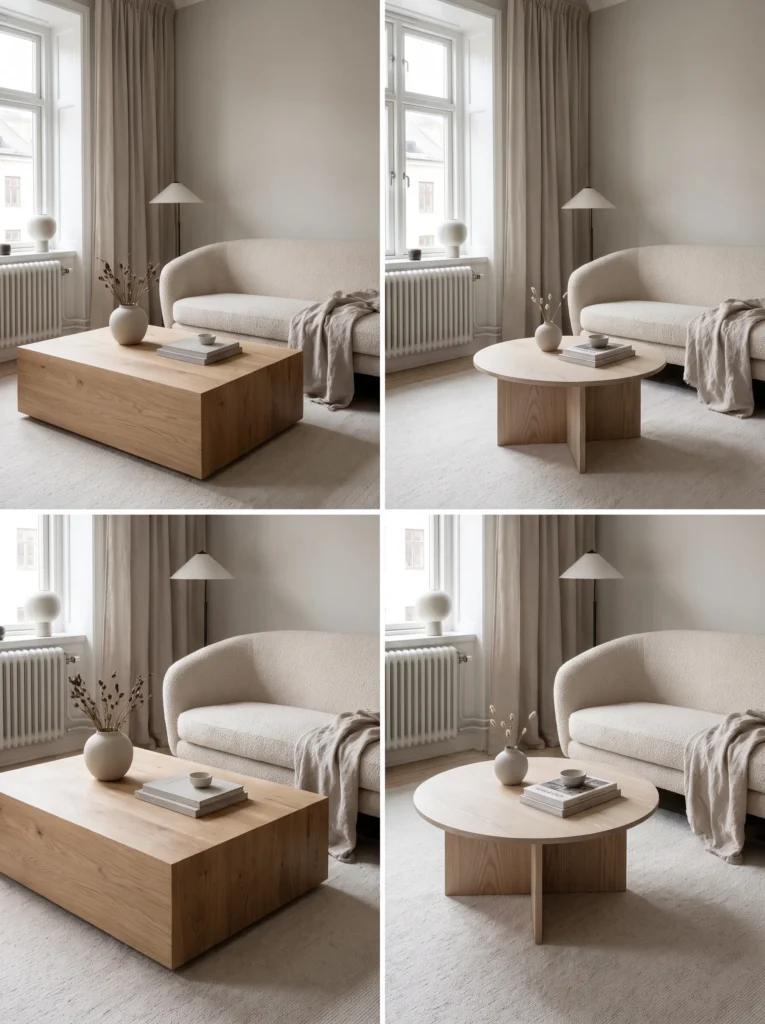
Buying a coffee table seems simple—until it arrives and something feels off.
Maybe it looks too small in front of the sofa. Perhaps it’s so large that walking around it becomes awkward. Or it sits at the wrong height, making it uncomfortable to use every day.
These problems are surprisingly common, and they rarely happen because someone chose the wrong style.
More often, they happen because the right measurements were never taken before shopping.
A coffee table should do more than fill the empty space in front of your sofa. It should make the seating area feel balanced, allow people to move comfortably through the room, and be practical for everyday living.
The good news is that you don’t need to memorise complicated design rules.
By taking five simple measurements before you buy, you’ll dramatically increase your chances of choosing a coffee table that looks proportionate, functions well, and feels like it truly belongs in your living room.
Why Measurements Matter More Than Style

It’s easy to fall in love with a beautiful coffee table online or in a showroom.
But even the most stylish design can feel out of place if its size doesn’t suit your room.
A table that’s too long can dominate the seating area.
One that’s too short may make the sofa appear oversized.
A table that’s too tall can feel awkward every time you reach for a drink, while one that’s too low may be uncomfortable to use.
Style catches your attention.
Proper proportions make the room feel comfortable.
That’s why experienced interior designers often measure the space first and choose the design second.
Measurement 1: Your Sofa Width
Your sofa provides the visual anchor for the entire seating area, so its width should guide your coffee table selection.
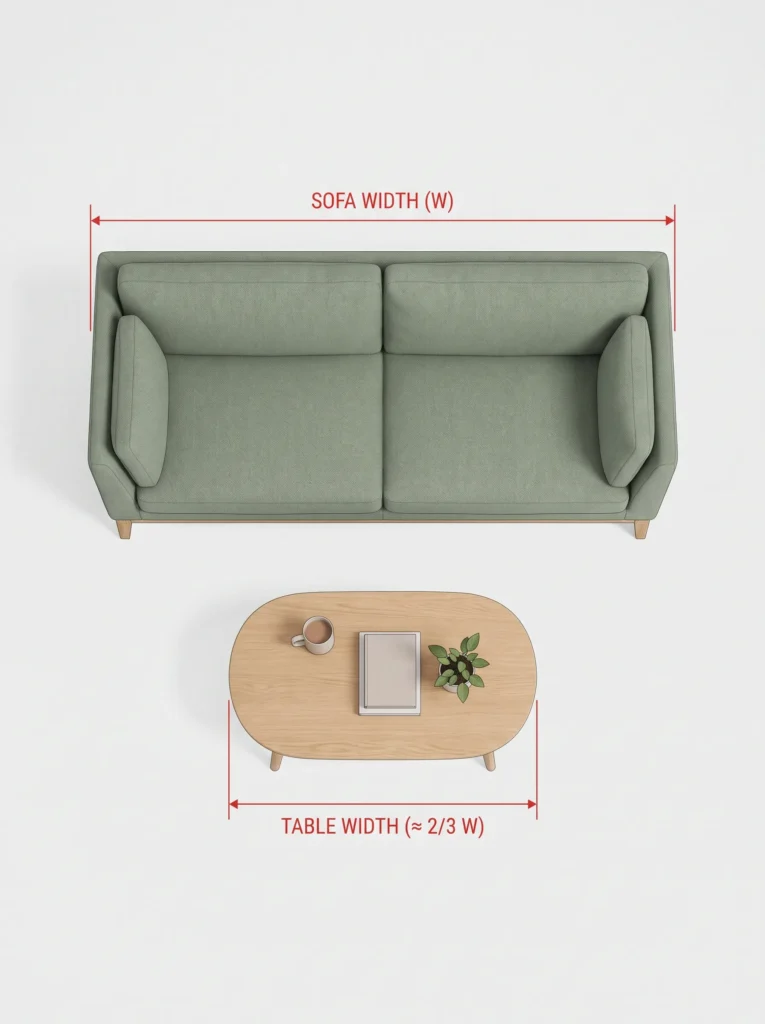
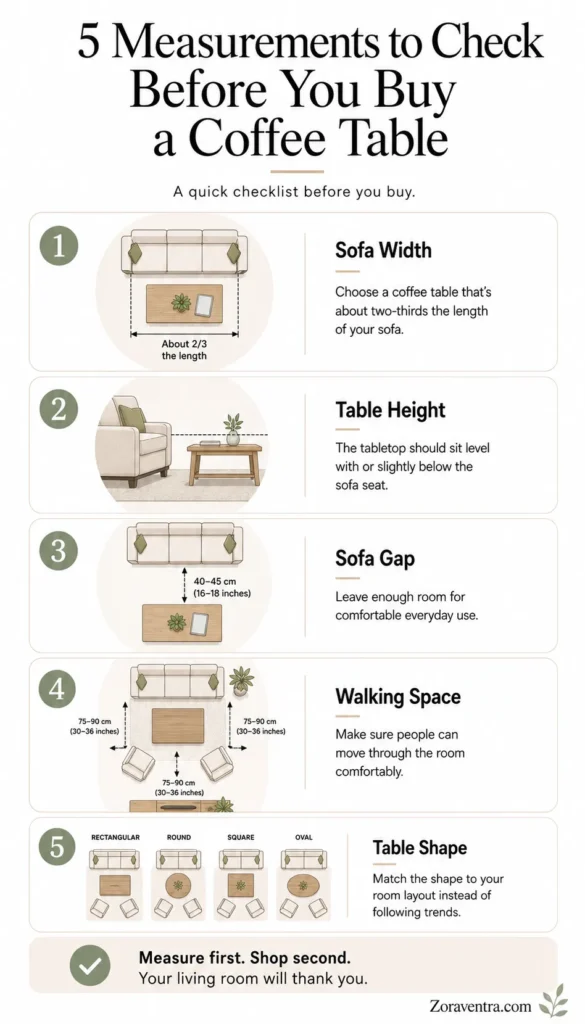
As a general rule, a coffee table looks most balanced when it’s about two-thirds the length of the sofa.
For example:
- A 180 cm (71-inch) sofa pairs well with a coffee table around 120 cm (47 inches) long.
- A 210 cm (83-inch) sofa usually suits a coffee table around 140 cm (55 inches) long.
This doesn’t need to be exact.
The goal is simply to avoid a table that looks dramatically smaller or larger than the sofa behind it.
When the proportions feel balanced, the entire living room appears more thoughtfully designed.

Measurement 2: Coffee Table Height
Height is one of the most overlooked measurements, yet it’s something you’ll notice every day.
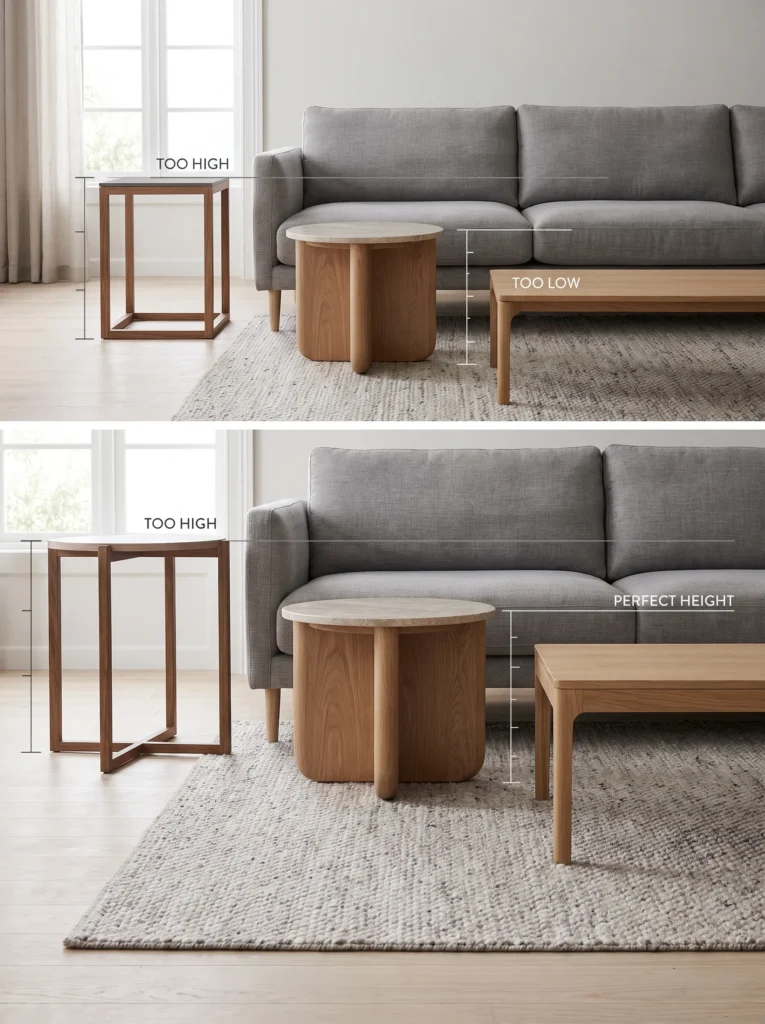
A coffee table should generally be the same height as your sofa cushions or slightly lower.
This makes it easy to place drinks, books, or remote controls without awkward reaching.
If the table is significantly higher than the seat cushions, it can interrupt sightlines and make the room feel visually heavy.
If it’s much lower, it may look stylish but become less practical for everyday use.
Before shopping, measure from the floor to the top of your sofa seat cushion.
If you’re replacing your sofa as well, choosing the right upholstery is just as important as choosing the right table. Our guide to Best Sofa Fabric for Kids and Pets: What Actually Holds Up to Real Life explains which materials are best for busy family homes.
Take that number with you.
It’s one of the simplest ways to avoid buying a table that feels uncomfortable once it’s in your home.

Measurement 3: The Distance Between the Sofa and the Coffee Table
Even a perfectly sized coffee table won’t feel right if it’s placed too close—or too far—from the sofa.
Ideally, leave around 40–45 cm (16–18 inches) between the edge of the sofa and the coffee table.
This provides enough room to walk comfortably while keeping the table within easy reach.
If the gap is much smaller, moving through the space can feel cramped.
If it’s much larger, everyday items become inconvenient to reach, and the seating area may feel disconnected.
Good living room design isn’t just about how furniture looks.
It’s also about how naturally people move through the space.
Measurement 4: Leave Enough Walking Space
A coffee table shouldn’t just fit your sofa—it should fit the way people move through the room.
One of the biggest mistakes homeowners make is choosing a table that blocks natural walkways.
Before buying, measure the space around your seating area and think about how people enter, leave, and move through the room.
As a general guideline, try to leave at least 75–90 cm (30–36 inches) of clear walking space where people regularly pass.
If your living room is compact, you may need to choose a narrower coffee table or a round design that allows traffic to flow more naturally.
A beautiful coffee table quickly becomes frustrating if everyone has to squeeze past it every day.
Once you’ve chosen the right coffee table size, pairing it with the correct rug dimensions helps the entire seating area feel balanced. Our Rug Size Guide explains how to choose proportions that work with different living room layouts.
Measurement 5: Match the Shape to Your Seating Layout
The final measurement isn’t just about length or height—it’s about understanding the shape of your room.
Different seating layouts naturally suit different coffee table shapes.
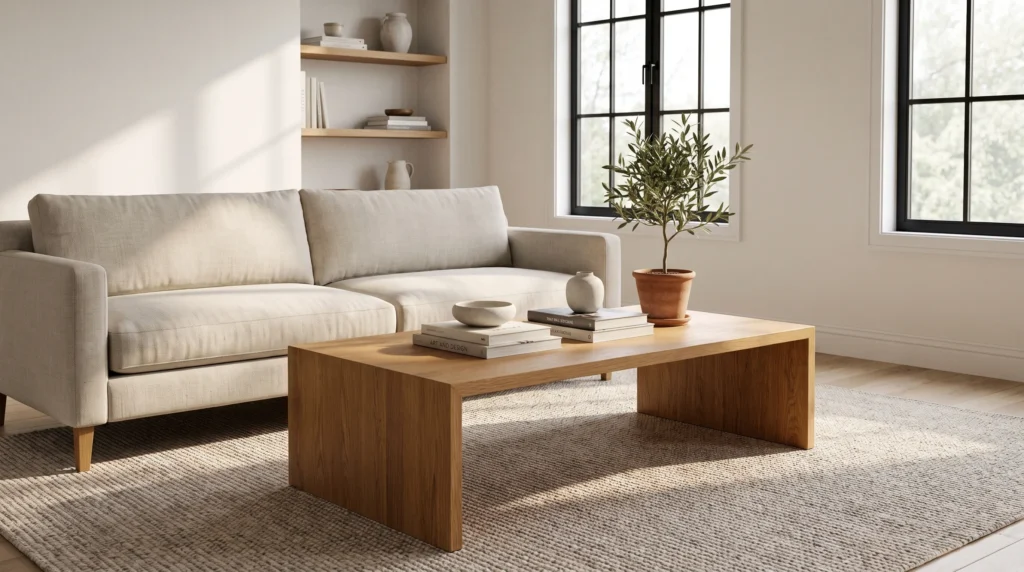
Rectangular Coffee Tables
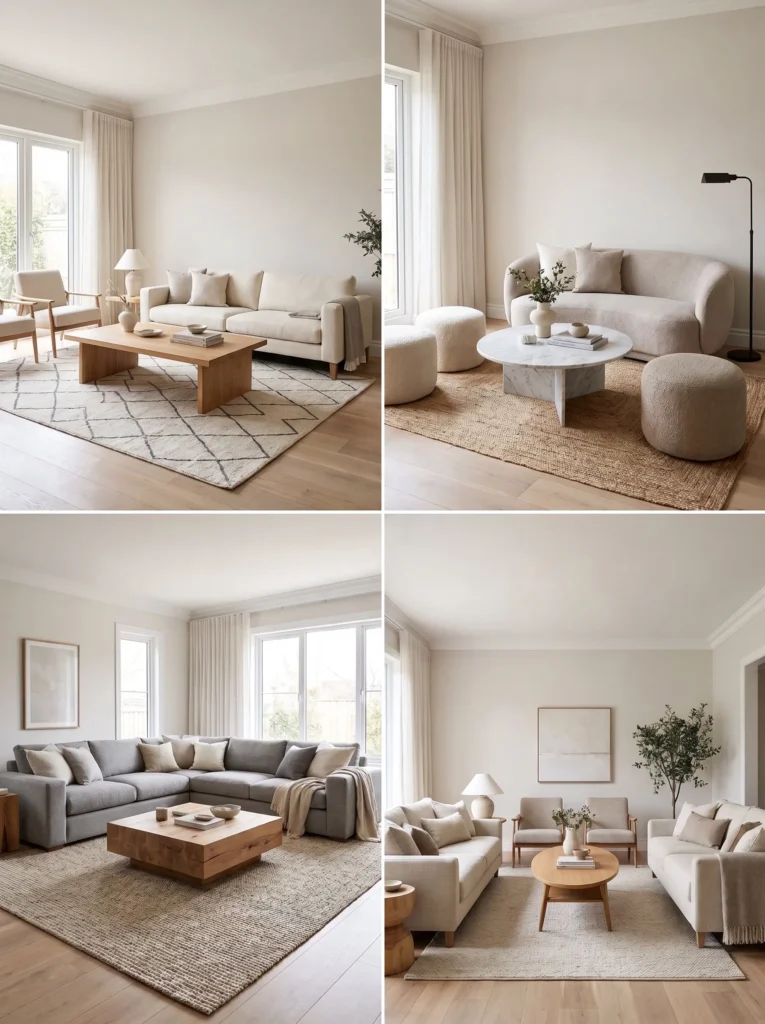
Rectangular tables work best with standard three-seat sofas or long seating arrangements because they mirror the sofa’s proportions.
They’re also ideal when you want plenty of surface space for books, drinks, or decorative accessories.
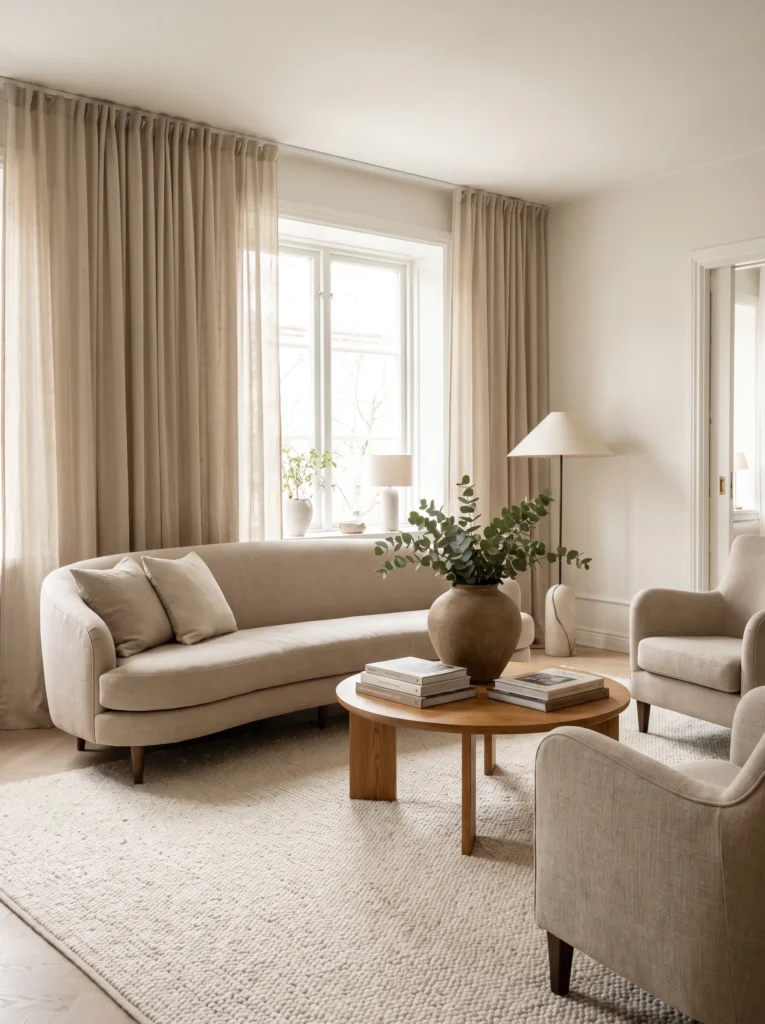
Round Coffee Tables
Round tables are often a better choice for smaller living rooms or homes with young children.
Without sharp corners, they improve movement around the seating area and can make compact spaces feel less crowded.
Square Coffee Tables
Square tables work well when paired with large sectional sofas or seating arranged in an L-shape.
They help create a balanced focal point while keeping everything within comfortable reach.
Oval Coffee Tables
Oval designs combine many of the advantages of rectangular and round tables.
They provide generous surface space while softening the overall look of the room with curved edges.
Choosing the right shape isn’t just a design decision—it’s part of making the room function comfortably every day.

Common Coffee Table Buying Mistakes
Even after taking measurements, a few common mistakes can still lead to disappointment.
Avoid these before making your final decision.
Buying Based Only on Appearance
A coffee table may look stunning in a showroom, but if it doesn’t fit your sofa or room, it won’t feel right once it’s at home.
Always compare its dimensions with your own measurements before placing an order.
Ignoring Everyday Use
Think about how your family actually uses the living room.
Do you regularly eat meals while watching television?
Do children play around the coffee table?
Do you need storage for books, blankets, or remote controls?
Choosing a table that suits your daily routine is just as important as choosing one that matches your décor.
Forgetting About Storage
If your living room often feels cluttered, consider a coffee table with built-in drawers or a lower shelf.
Hidden storage can make a noticeable difference without requiring extra furniture.
Choosing the Wrong Material
Glass coffee tables create a light, airy look but may show fingerprints more easily and require frequent cleaning.
Wood offers warmth and timeless appeal.
Stone creates a luxurious appearance but is usually heavier and less practical to move.
Think about maintenance as well as style before deciding.
Buying Before Measuring the Entire Room
Many people measure only the sofa and forget about everything else.
Before buying, consider nearby armchairs, rugs, media units, and walkways so the coffee table feels balanced within the entire space rather than fitting just one piece of furniture.

One Simple Formula That Works Almost Every Time
If you’re unsure whether a coffee table is the right size, this simple formula can help.
- Length: Around two-thirds the length of your sofa.
- Height: Approximately level with your sofa seat or slightly lower.
- Distance from Sofa: Leave about 40–45 cm (16–18 inches).
- Walking Space: Aim for 75–90 cm (30–36 inches) in main walkways.
- Shape: Choose the shape that complements your seating layout, not just your favourite design.
While every living room is different, these measurements provide a reliable starting point and help prevent the most common sizing mistakes.

Before You Buy: A Coffee Table Checklist
Before you click “Add to Cart,” take a few minutes to work through this checklist.
✓ Have you measured the length of your sofa?
✓ Is the coffee table around two-thirds the length of the sofa?
✓ Will the height sit level with or slightly below your sofa cushions?
✓ Have you left enough space between the sofa and the coffee table?
✓ Can people walk comfortably around the seating area?
✓ Does the shape suit your room layout?
✓ Does the material match your family’s lifestyle and maintenance preferences?
✓ Have you considered whether you need built-in storage?
If you can confidently answer yes to these questions, you’re far more likely to choose a coffee table that still feels right years from now.
Quick Coffee Table Measurement Guide
| What to Measure | Recommended Size |
|---|---|
| Coffee table length | Around two-thirds the length of your sofa |
| Coffee table height | Level with or slightly lower than the sofa seat |
| Gap between sofa and table | 40–45 cm (16–18 inches) |
| Main walking space | 75–90 cm (30–36 inches) |
| Best shape | Match your seating layout rather than following trends |
These measurements are practical guidelines rather than strict rules. Always adjust them to suit your room size and the way your family uses the space.
One Last Check Before You Buy
A coffee table may be one of the smaller pieces of furniture in your living room, but it influences how the entire space functions every single day.
The right one doesn’t just look beautiful in a showroom—it feels natural once it’s in your home. It leaves enough room to move, sits at a comfortable height, complements your seating, and quietly makes everyday life more convenient.
That’s why measuring first is always worth the extra few minutes. Trends change, but a coffee table that’s properly proportioned to your room will continue to look and feel right for years.
When style and practical measurements work together, you won’t just buy a coffee table you’ll like—you’ll buy one you’ll never have to second-guess.