
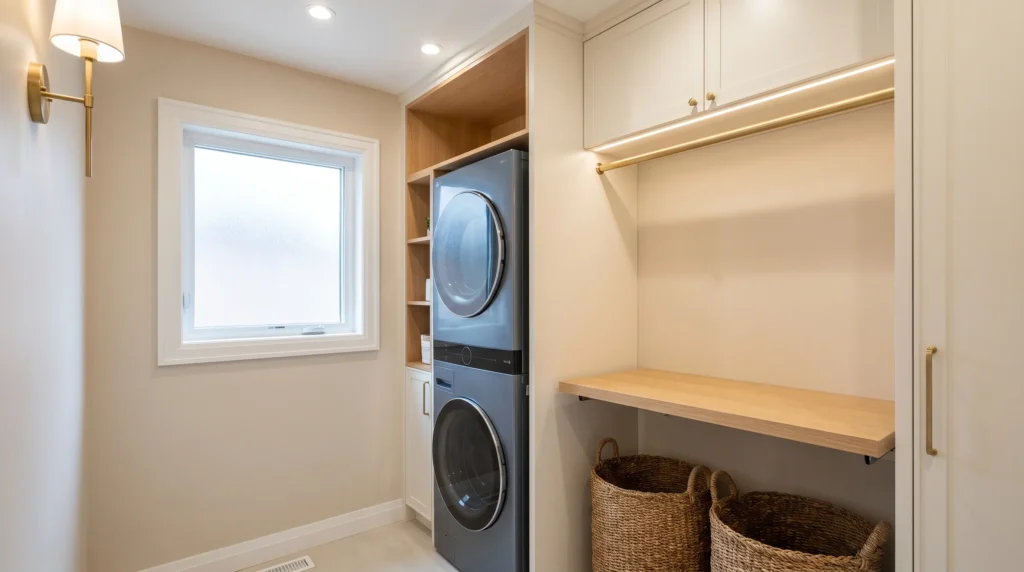
A small laundry room doesn’t have to feel like a compromise. But laundry needs more than a washer and dryer: somewhere to move clothes, store detergent, hang delicates, fold clean laundry. In a generous room those functions spread out; in a compact one, every decision is noticeable — a cabinet opening into the walkway, a shelf blocking the washer, a beautiful countertop with nowhere to hang clothes.
That’s why planning should start with function, not decoration. Get the layout right first; design choices get easy after.
Start With the Space You Actually Have
Measure everything before thinking about storage: room width and length, ceiling height, door width and swing, windows, plumbing connections, outlets, dryer vent, floor drains, pipes and columns. Then measure the appliances — not just the machines, but what happens when doors open, detergent drawers pull out, and you need maintenance access at the back. A room that looks spacious on paper can lose its only walkway to an appliance door.
Choose the Layout Before Buying Storage
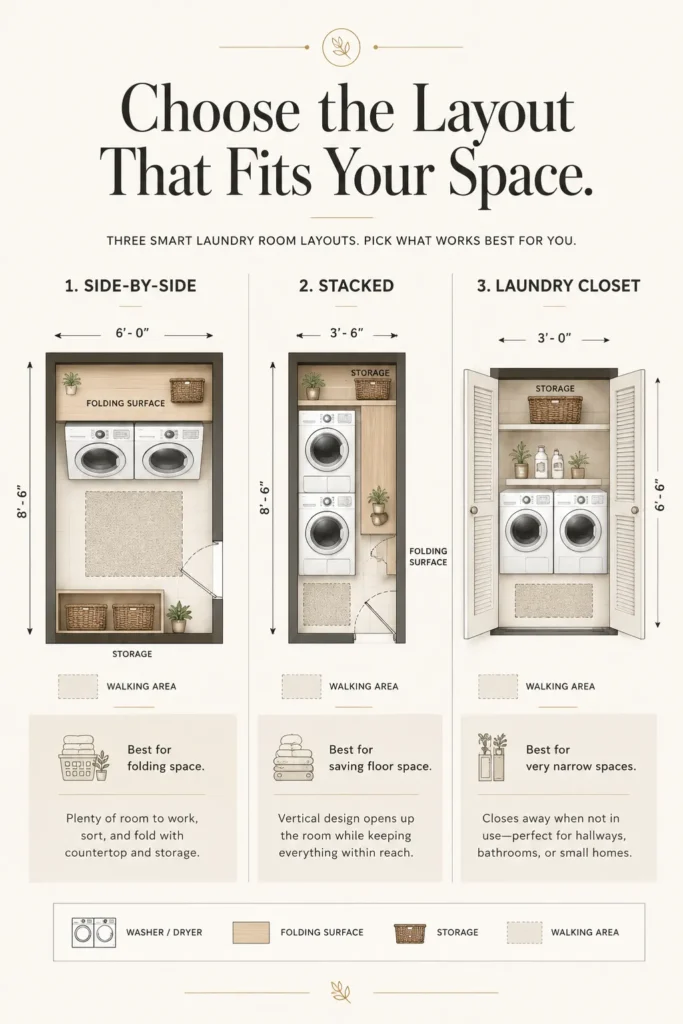
The washer-dryer arrangement determines almost everything else. No universal best — it depends on what you need most.
Side-by-Side
A wider working surface above the machines — valuable if you fold in the room. A continuous countertop makes it feel like a designed utility space, not an appliance collection. The trade-off: more horizontal wall space needed.
Stacked
Frees surprising floor space for a tall cabinet, folding area, drying station, hamper zone, or just walking room. Often the most efficient choice for narrow rooms and laundry closets. Confirm your machines are designed and installed for stacking — don’t assume.
Closet-Style
When the “room” barely fits the machines, the priority shifts from furniture to walls: shelves, cabinets, hooks, compact drying solutions using vertical space. But don’t fill every inch — you still need comfortable access to operate and maintain the machines.
Protect Clearance Before Adding Storage
The classic mistake: seeing an empty wall and thinking “cabinet.” Storage only helps if you can still move. Leave room to open appliance doors fully, load and unload, open cabinets and drawers, carry baskets through, reach plumbing and electrical, and access machines for maintenance. The best laundry room isn’t the one with the most cabinets — it’s the one where everything is reachable without working around something else.
Give Daily Items the Easiest Access
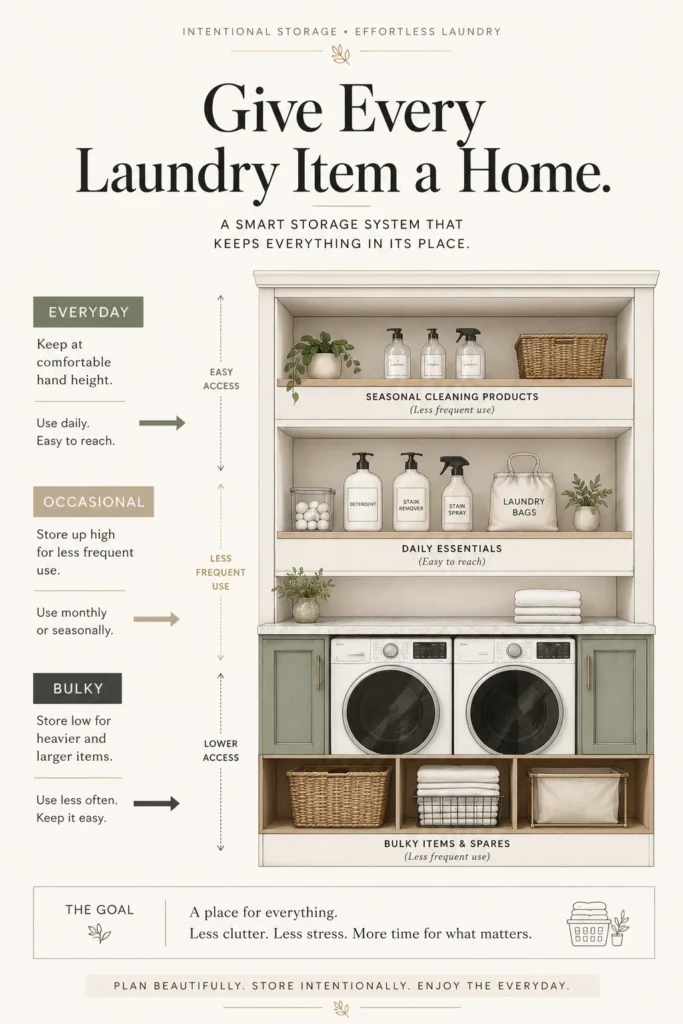
Detergent, stain removers, dryer sheets, hampers: easy reach. Seasonal cleaning supplies and spares: higher up. Bulky or rarely used: least convenient spots. This hierarchy — daily → easiest, occasional → higher, bulky → out of the way — matters most in small footprints, where you can’t make everything equally accessible.
Use Vertical Space Without Heaviness
Tall cabinets above appliances, open shelves for daily supplies, a narrow vertical cabinet for cleaning products. But there’s a difference between using vertical space and filling every wall — too many upper cabinets make a compact room feel enclosed. Mix closed storage, a few open shelves, and intentional empty space.
Plan for the Whole Laundry Routine
A functional room supports the full cycle — sort → wash → dry → fold → hang → store — not just the first two steps. Assign each available zone a purpose so you’re not carrying baskets elsewhere for half the routine.
Don’t Skip a Folding Surface
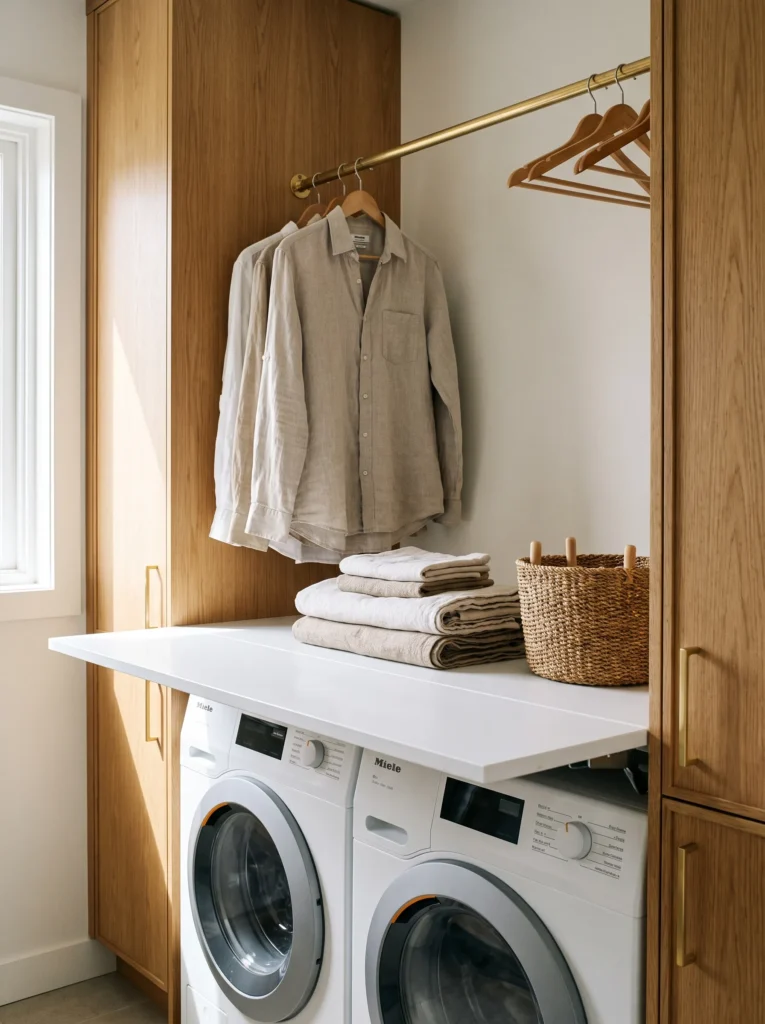
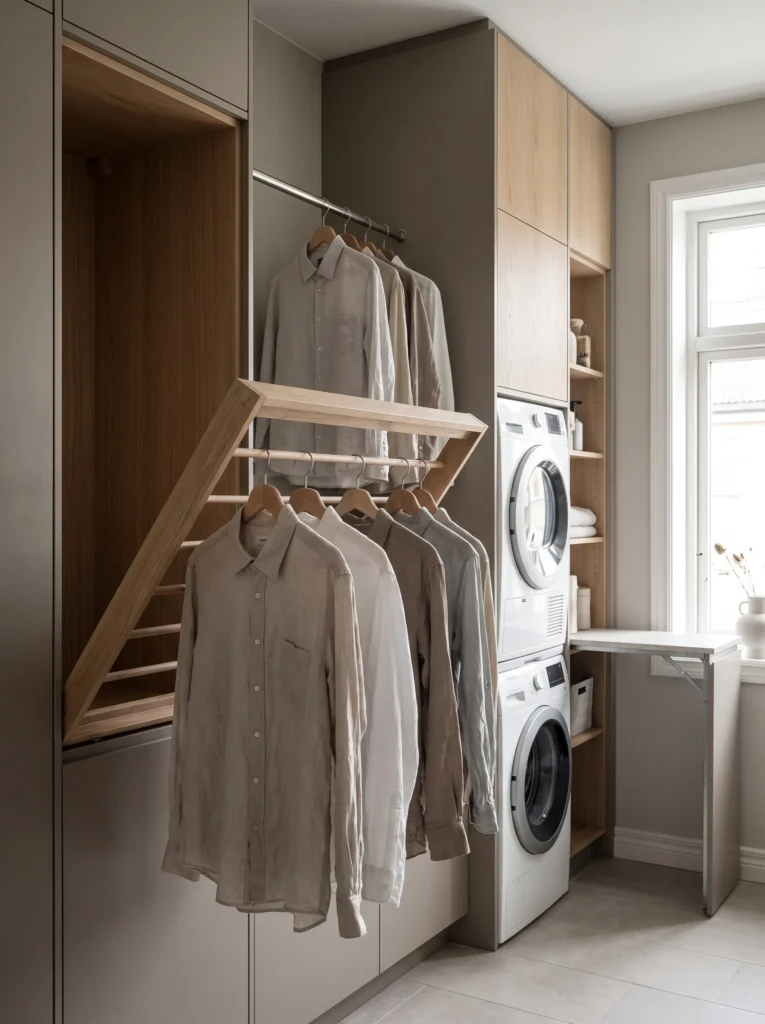
Side-by-side machines: a countertop above them. Stacked: a narrow wall-mounted counter, fold-down table, pull-out surface, or a small shelf at comfortable height. You don’t need a full counter — just somewhere practical to set a basket and fold without balancing on the machines. A fold-down surface disappears when you’re done.
Create a Hanging Spot
Shirts, dresses, delicates, wrinkle-prone pieces need somewhere to hang: a compact rod above the folding surface, between cabinets, beneath a shelf, or along an unused wall. A retractable drying rack folds away when done — easy to overlook during planning, endlessly useful on laundry day.
Give Baskets a Home
Baskets without a home become permanent obstacles. Pull-out hampers in a cabinet hide dirty laundry and ease sorting; slim baskets slide under counters or into tall open shelving. The goal isn’t hiding every basket — it’s keeping them out of the walkway.
Light It Like a Workspace
You need to see clothing labels, stains, detergent measurements, and the back corners of cabinets. One ceiling fixture leaves shadows — combine it with under-cabinet or under-shelf lighting. A window helps enormously: natural light makes a compact utility space feel far less enclosed.
Contain the Cleaning Supplies
Bright plastic bottles on every surface make a small room chaotic. Create one dedicated zone — a shallow cabinet works well without projecting into the room. With kids or pets, secure storage is a safety matter, not just aesthetics. When supplies have a home, the whole room feels calmer.
Choose Finishes for Laundry-Day Reality
Moisture, heat, spills, frequent cleaning: choose a washable paint finish suited to the room’s humidity, wipeable cabinetry, and flooring that tolerates occasional water. None of this means utilitarian — warm wood tones, simple hardware, woven baskets, and good lighting make a compact laundry feel intentional.
Mistakes That Waste Space
Filling every wall with cabinets — more storage isn’t automatically better; leave breathing room.
Forgetting the door swing — check every door’s movement (entrance, appliances, cabinets) before finalizing.
Putting daily items too high — detergent shouldn’t need a step stool; reserve high shelves for occasional use.
Ignoring the folding workflow — great storage still frustrates if there’s nowhere to fold. Where does the basket go after the dryer? Answer that question and the plan changes.
Your Planning Checklist
1. Measure the room and clearances. 2. Choose side-by-side, stacked, or closet layout. 3. Protect the walkway and door swings. 4. Create a folding surface. 5. Store by frequency (daily low, occasional high). 6. Add a hanging/drying solution. 7. Finish with moisture-appropriate surfaces.
The goal isn’t making a small laundry room look bigger — it’s making the space work so well its size stops mattering. Ready to upgrade affordably? Our budget laundry room remodel guide covers 13 ideas under $150.
Quick Answers
Should I stack my washer and dryer in a small laundry room?
Usually yes — stacking frees the most floor space for storage, folding, or walking room. Just confirm your specific models are designed and installed for stacking.
How do I add folding space to a tiny laundry room?
A countertop over side-by-side machines, or a fold-down/pull-out surface for stacked setups. Even a small shelf at the right height changes the workflow.
What is the biggest small-laundry-room mistake?
Filling every wall with cabinets before protecting clearance and workflow. Storage you can’t reach around is storage that works against you.
Affiliate Disclosure: As an Amazon Associate, I earn from qualifying purchases. If you click a link and buy, I may receive a small commission at no extra cost to you. Thank you for supporting my content!