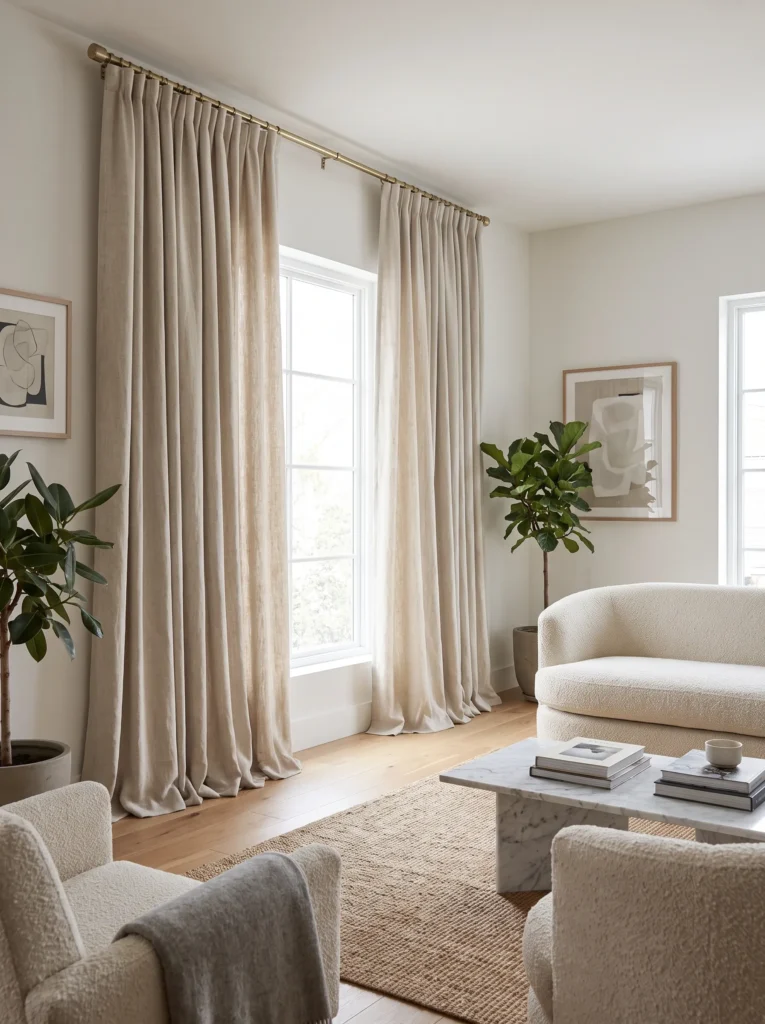
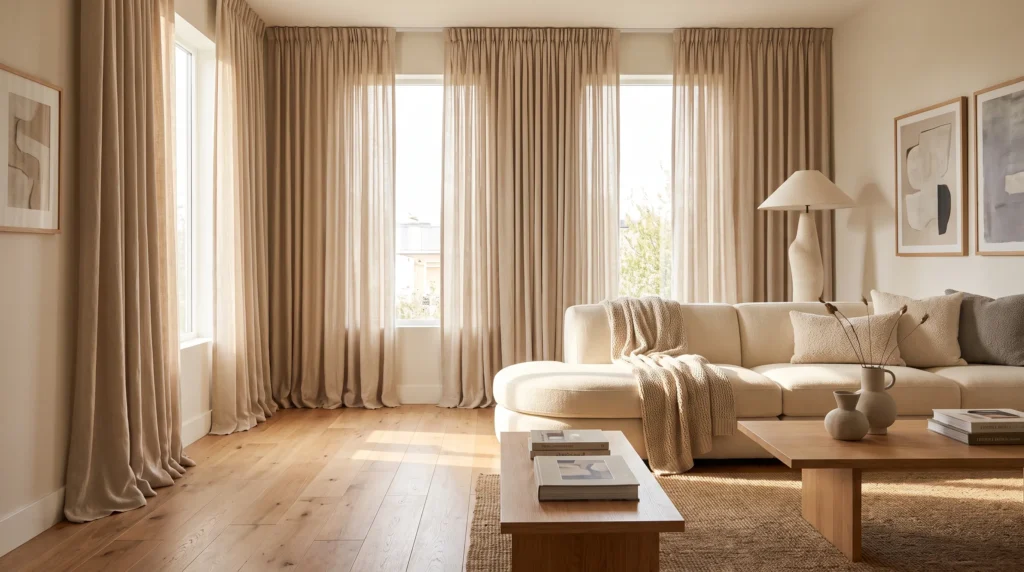
Floor-length curtains gently touching the floor in a modern living room.

Should Curtains Touch the Floor?

Curtains are often one of the last finishing touches in a room, but they have a surprising influence on how polished the entire space feels. The right fabric and color certainly matter, yet one detail makes an even bigger difference: their length.

A curtain that’s just a few inches too short can make a room feel unfinished, while one that’s perfectly proportioned can create the illusion of higher ceilings, larger windows, and a more thoughtfully designed interior.

It’s no surprise, then, that one of the most common decorating questions homeowners ask is: Should curtains touch the floor?

The answer is yes—in most cases, floor-length curtains create the most balanced and timeless look. However, that doesn’t mean they’re the best choice for every room or every lifestyle.

Whether you’re decorating a living room, refreshing a bedroom, or choosing curtains for a busy family home, understanding the different curtain lengths will help you select a style that looks beautiful and works well in everyday life.

Why Curtain Length Makes Such a Big Difference

Floor-length curtains making a living room appear taller and more elegant.

Many people think of curtains as decorative accessories, but designers often treat them as architectural elements.

When curtains are hung correctly, they help frame the window, soften the room, and guide the eye upward. This creates a stronger sense of height and makes the space feel more open.

Curtains that are too short can interrupt this visual flow. Even in a beautifully furnished room, they can make windows appear smaller and ceilings feel lower than they actually are.

The right length, on the other hand, creates continuity between the window and the floor, giving the room a more finished appearance.

This is why professional designers often pay just as much attention to curtain measurements as they do to furniture placement or lighting.

So, Should Curtains Touch the Floor?

For most living spaces, yes.

Floor-length curtains remain the preferred choice because they create clean lines and a balanced appearance that works across many decorating styles—from modern and minimalist to traditional and farmhouse.

That said, “touching the floor” doesn’t always mean the same thing.

Some curtains barely skim the surface, while others intentionally extend beyond it for a softer, more luxurious effect. In homes where easy cleaning and practicality are priorities, a slight gap above the floor may even be the better option.

Instead of asking whether curtains should touch the floor, a better question is:

Which curtain length best suits your room and the way you live?

Once you understand the different styles, choosing the right length becomes much easier.

The Four Curtain Lengths Designers Use

Not all floor-length curtains are designed to hang the same way. The amount of fabric that reaches—or extends beyond—the floor changes the overall look of the room.

Here are the four most common styles and when each one works best.

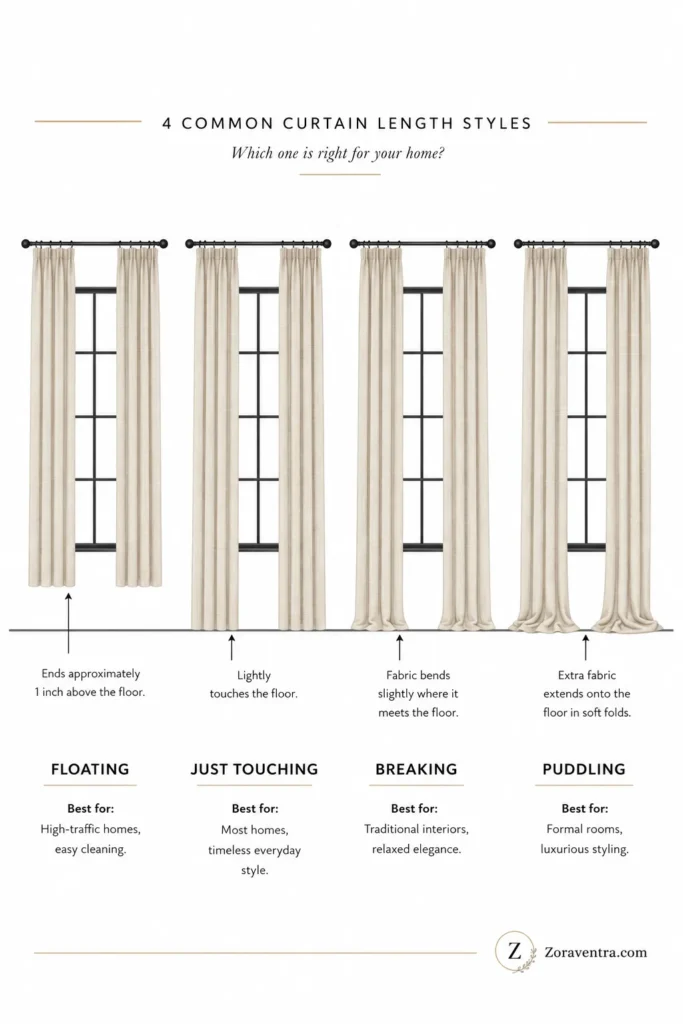
1. Floating Curtains

Floating curtains stop slightly above the floor, usually by about half an inch to one inch.

Although the gap is small, it provides practical benefits.

This style works well for:

  • Busy households
  • Homes with pets
  • Robot vacuum users
  • Moisture-prone areas
  • Easy everyday cleaning

When measured carefully, floating curtains still look tailored while reducing contact with dust and dirt.

2. Curtains That Just Touch the Floor

This is the style many interior designers recommend for everyday living.

The fabric lightly touches the floor without bunching or leaving a visible gap.

It creates a clean, elegant appearance while remaining practical to maintain.

Because it complements both classic and contemporary interiors, it’s often considered the safest choice for homeowners looking for a timeless design.

3. Breaking Curtains

Breaking curtains are slightly longer, allowing the fabric to bend gently where it meets the floor.

This creates a softer, more relaxed look than curtains that hang perfectly straight.

They work especially well in bedrooms, formal living rooms, and spaces where a touch of softness enhances the overall design.

The effect is subtle, adding character without appearing overly dramatic.

4. Puddled Curtains

Puddled curtains extend several inches beyond the floor so the extra fabric gathers naturally.

This style is often seen in luxurious interiors, traditional homes, and elegant formal spaces.

While the look can be beautiful, it isn’t always practical.

Extra fabric tends to collect dust, requires more maintenance, and can be inconvenient in homes with children or pets.

For everyday family living, most homeowners find that curtains which just touch the floor offer a better balance between style and functionality.

4 Common Curtain Length Styles at a Glance

Which Curtain Length Works Best in Each Room?

The best curtain length depends on more than personal style. Each room serves a different purpose, and the way you use the space should influence how your curtains hang.

A formal dining room, for example, has very different needs than a busy laundry room or a child’s bedroom.

Here’s how designers typically approach curtain length throughout the home.

Living Room

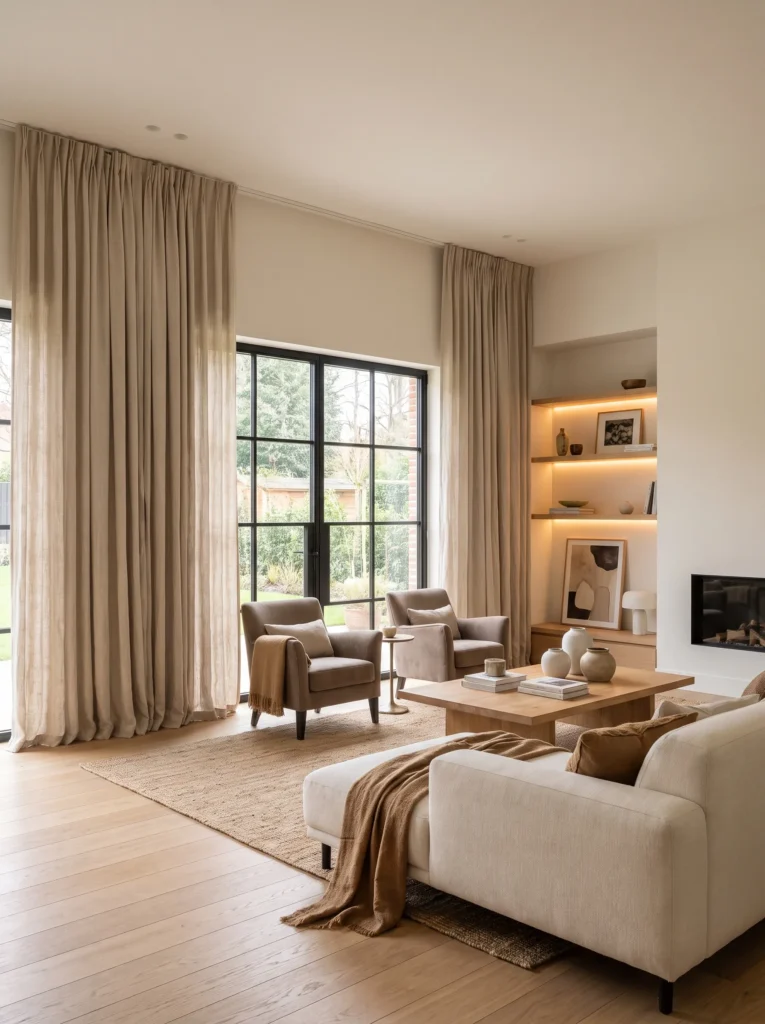
Living room with curtains that just touch the floor.

The living room is where floor-length curtains make the biggest impact.

Since this space is often used for relaxing, entertaining, and spending time with family, curtains help soften the room while framing the windows and drawing attention upward.

For most living rooms, curtains that just touch the floor create the most balanced appearance. They look polished without requiring extra maintenance.

If your living room has high ceilings or a more formal design, curtains with a slight break can add warmth and elegance without overwhelming the space.

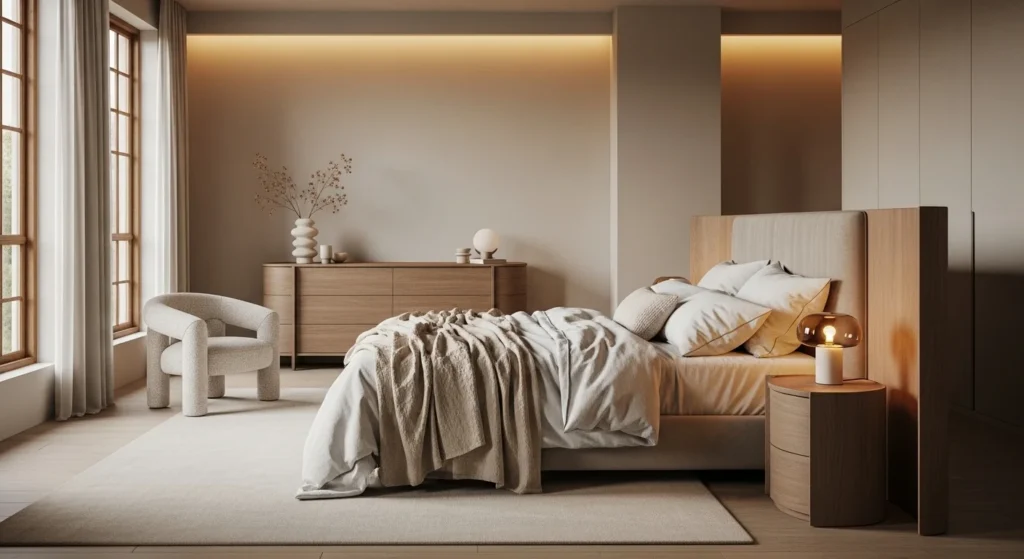
Bedroom

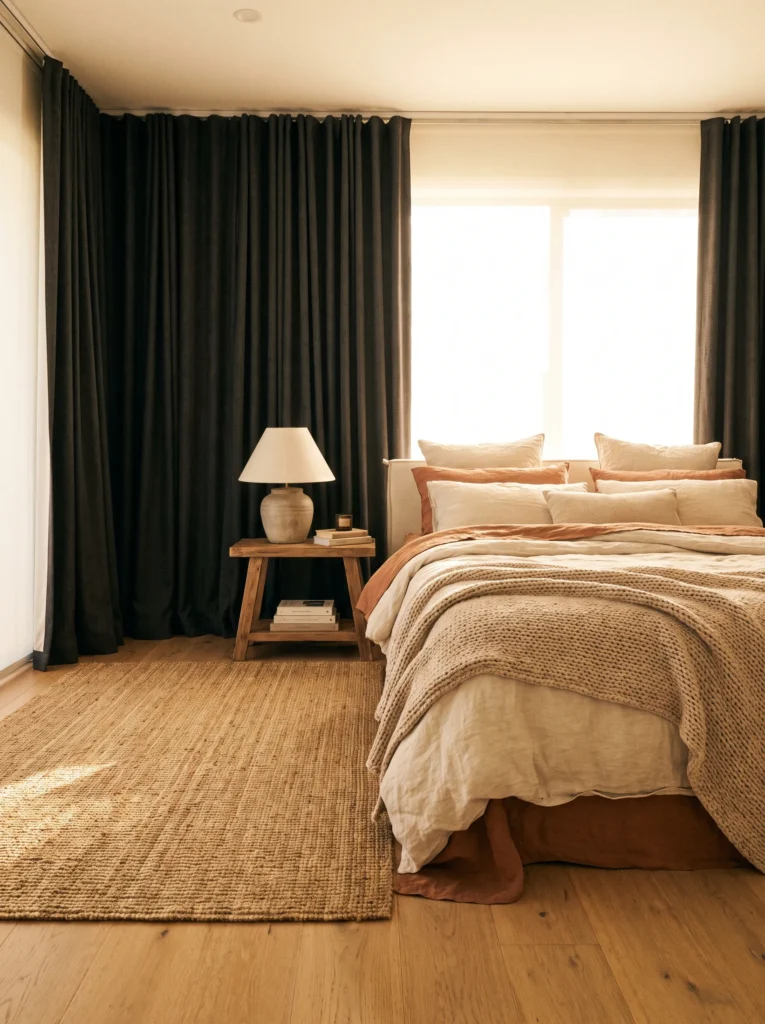
Bedroom with full-length curtains touching the floor.

Bedrooms naturally benefit from softer textures, making them one of the best places for full-length curtains.

Curtains that touch the floor help create a calm, comfortable atmosphere while making the room feel more finished.

If you’re aiming for a luxurious hotel-inspired bedroom, a gentle break in the fabric can add an extra sense of comfort.

However, if your bedroom tends to collect dust quickly or you prefer easier cleaning, curtains that lightly skim the floor provide a similar look with less maintenance.

Dining Room

Dining rooms often have a more formal character than other areas of the home, making floor-length curtains an excellent choice.

Whether your style is traditional, modern, or transitional, curtains that reach the floor create clean vertical lines that complement the furniture and architecture.

Because dining rooms usually experience less daily traffic than family rooms, they can also accommodate curtains with a slight break if you prefer a softer appearance.

Home Office

A home office should feel comfortable while remaining neat and organized.

Curtains that just touch the floor usually provide the best balance between style and practicality.

They create a professional appearance without collecting dust around desk chairs or frequently used work areas.

If your office receives strong sunlight, consider pairing full-length curtains with blinds or shades to give you greater control over natural light throughout the day.

Kitchen

Kitchens are one of the few rooms where floor-length curtains are not always the best choice.

Near sinks, cooking areas, or frequently used doors, shorter window treatments often provide greater safety and convenience.

However, if your kitchen includes large windows away from cooking zones or features patio doors, floor-length curtains can still work beautifully.

The key is making sure the fabric won’t interfere with everyday tasks or become exposed to excess moisture and grease.

When Curtains Shouldn’t Touch the Floor

Although floor-length curtains are the preferred choice in many rooms, there are situations where a different length makes more sense.

Choosing curtains based on how you live is just as important as choosing them based on appearance.

You Have Pets That Like to Play With Fabric

Curious cats and playful dogs can quickly turn long curtains into toys.

If your pets frequently paw at fabric or enjoy sitting near windows, curtains that float slightly above the floor may be a more practical solution.

They still provide a finished appearance while reducing the amount of fabric within easy reach.

You Have Young Children

Families with toddlers often prioritize safety and easy maintenance.

Long curtains that pool on the floor can collect dirt more easily and may become something children pull or play with.

Curtains that just touch—or float slightly above—the floor are usually the better choice for active family homes.

Easy Cleaning Is a Priority

If you vacuum frequently or use a robot vacuum, leaving a small gap between the curtain hem and the floor can make everyday cleaning much easier.

This approach also helps reduce dust buildup along the bottom edge of the fabric.

For many homeowners, this small adjustment offers the perfect balance between style and convenience.

The Room Is Exposed to Moisture

Rooms with frequent moisture, such as laundry rooms or certain bathrooms, may not be ideal for curtains that rest directly on the floor.

Keeping the fabric slightly elevated helps protect it from water damage and makes it easier to keep clean.

In these spaces, practicality should always come before following decorating trends.

Common Curtain Hanging Mistakes

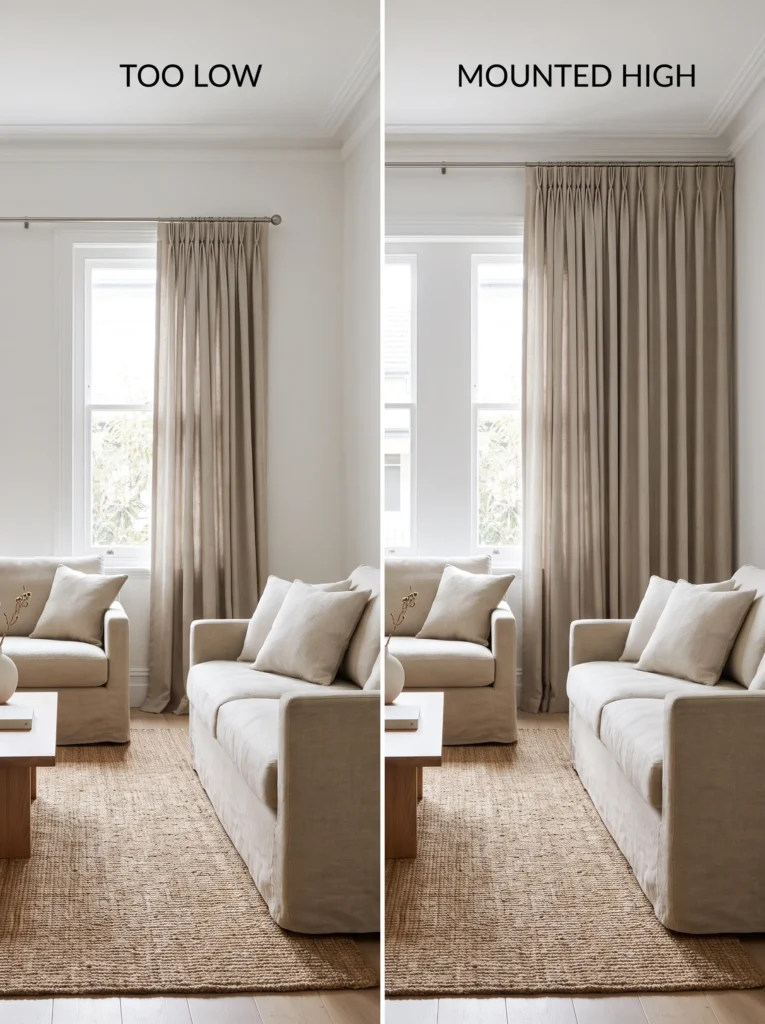
Comparison showing incorrect and correct curtain rod placement.

Even beautiful curtains can look out of place if they’re installed incorrectly.

Fortunately, most mistakes are easy to avoid once you know what to look for.

Hanging the Curtain Rod Too Low

One of the most common decorating mistakes is mounting the curtain rod just above the window frame.

This visually shortens the wall and makes the window appear smaller than it actually is.

Instead, hanging the rod higher can help create the illusion of taller ceilings and larger windows.

Choosing Curtains That Are Too Short

Curtains that stop several inches above the floor often make a room feel unfinished.

Unless there’s a practical reason for shorter curtains—such as in a kitchen or bathroom—full-length curtains usually create a more polished result.

When in doubt, slightly longer is generally better than noticeably shorter.

Forgetting About Curtain Width

Length isn’t the only measurement that matters.

Curtains should also be wide enough to look full when closed.

Panels that are too narrow can appear stretched and fail to provide the soft, luxurious look many homeowners want.

Choosing sufficient fullness helps the curtains frame the window more naturally.

Measuring Before Installing the Curtain Rod

Many people measure curtain length before deciding exactly where the rod will go.

This often results in curtains that are either too long or too short.

Always install—or at least determine—the curtain rod height first, then take your final measurements from the rod to the floor.

Doing so ensures the curtains will hang exactly as intended.

How to Measure Curtains for the Perfect Length

Even the most beautiful curtains won’t look right if they’re measured incorrectly. Taking a few extra minutes to measure carefully can help you avoid costly returns and ensure your windows look professionally finished.

Here’s a simple process to follow.

1. Decide Where the Curtain Rod Will Be Installed

Before measuring your curtains, determine the final position of the curtain rod.

Many designers install the rod several inches above the window frame to create the illusion of taller ceilings. Once you’ve chosen the rod height, measure from that point—not from the top of the window.

2. Measure to the Floor

Using a tape measure, measure from the bottom of the curtain rod to the floor.

This measurement becomes your starting point. From there, you can adjust depending on the curtain style you prefer:

  • Floating: End slightly above the floor.
  • Just touching: Finish exactly at floor level.
  • Breaking: Add a small amount of extra length.
  • Puddling: Add additional fabric for a more dramatic look.

Measuring after the rod is installed provides the most accurate result and helps prevent curtains from ending up too short or too long.

3. Measure Each Side Separately

Floors and ceilings aren’t always perfectly level.

Measure both the left and right sides of the window before ordering curtains. If there’s a slight difference, use the longer measurement or make small adjustments during installation to keep the curtains looking even.

Designer Tips for Beautiful Floor-Length Curtains

Well-styled floor-length curtains with proper fullness and elegant drape.

Once you’ve chosen the right length, a few thoughtful details can make your curtains look even more custom and intentional.

  • Choose curtain panels that are wide enough to create soft, natural folds instead of looking stretched when closed.
  • Hang the curtain rod wider than the window frame so the curtains stack neatly to the sides and allow more natural light into the room.
  • Keep the curtain length consistent throughout open-concept spaces to create a more cohesive look.
  • If you’re unsure between two lengths, it’s usually better to choose the slightly longer option. Curtains can often be hemmed, but fabric that’s too short is much harder to correct.
  • Always check how the curtains look in both daylight and evening lighting, as shadows and fabric drape can slightly change their appearance.

These small finishing touches often make the difference between curtains that simply cover a window and curtains that feel like part of the home’s overall design.

The Takeaway

Floor-length curtains continue to be the preferred choice for most living rooms, bedrooms, dining rooms, and home offices because they create a balanced, polished appearance that works across many decorating styles.

That doesn’t mean every room should follow the same rule. Kitchens, laundry rooms, moisture-prone spaces, and homes with pets or young children may benefit from curtains that float slightly above the floor instead.

Rather than focusing on one “correct” curtain length, think about how the room is used every day. The best curtains are the ones that combine good proportions with practical living.

When you measure carefully, hang the rod at the right height, and choose a length that suits both your home and your lifestyle, your curtains will enhance the room for years to come.

Frequently Asked Questions

Is it outdated if curtains don’t touch the floor?

Not necessarily. While floor-length curtains remain the most popular choice for living spaces, curtains that float slightly above the floor can be a practical option in busy homes, kitchens, or rooms where easy cleaning is important.

Should bedroom curtains touch the floor?

Yes. In most bedrooms, curtains that just touch the floor create a soft, finished look and help make the room feel more relaxing and comfortable.

Are puddled curtains still in style?

Puddled curtains are still used in some traditional and luxurious interiors, but they are less common in everyday homes because they require more maintenance and collect dust more easily.

How high should I hang my curtain rod?

For most rooms, hanging the curtain rod above the window frame helps create the illusion of taller ceilings and larger windows. The exact height depends on your ceiling height and window proportions.

Should curtains touch the floor in a kitchen?

Not always. If the curtains are close to sinks, cooking areas, or high-traffic spaces, keeping them slightly above the floor is often a safer and more practical choice.

Leave a Comment

Your email address will not be published. Required fields are marked *