Minimalist design has a reputation for being calm, uncluttered, and timeless. Yet many homeowners discover that after removing the extra décor, their porch no longer feels relaxing — it feels empty. The difference isn’t the number of decorative pieces; it’s how those pieces work together. A welcoming minimalist porch isn’t created by filling every corner or following strict rules — it’s built through thoughtful choices balancing clean lines with warmth, texture, and comfort. Whether you have a compact front porch, a spacious veranda, or a small apartment balcony, the goal is the same: a space that feels intentional rather than unfinished.
Start With Your Porch’s Purpose
Before choosing furniture, plants, or accents, think about how you actually use the porch: morning coffee spot? Guest greeting? The home’s first impression? A quiet unwind-after-work retreat? The answers shape every decision. A relaxing porch needs different furniture than a curb-appeal porch; a compact balcony needs different solutions than a deep covered porch. Design around the way you live, not trends — then every item earns its place by serving a practical purpose, an aesthetic purpose, or both.
Why Some Minimalist Porches Feel Cold
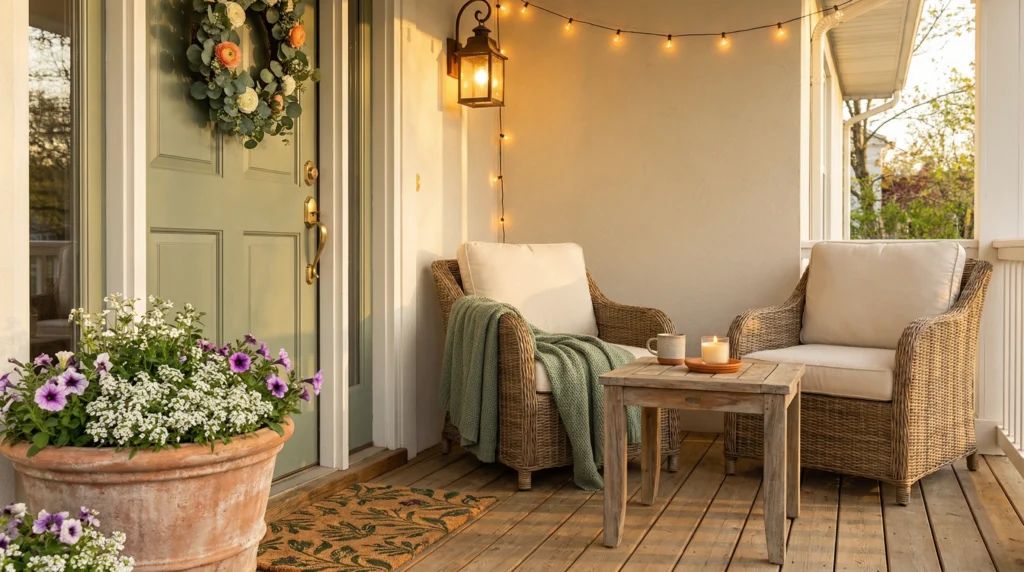
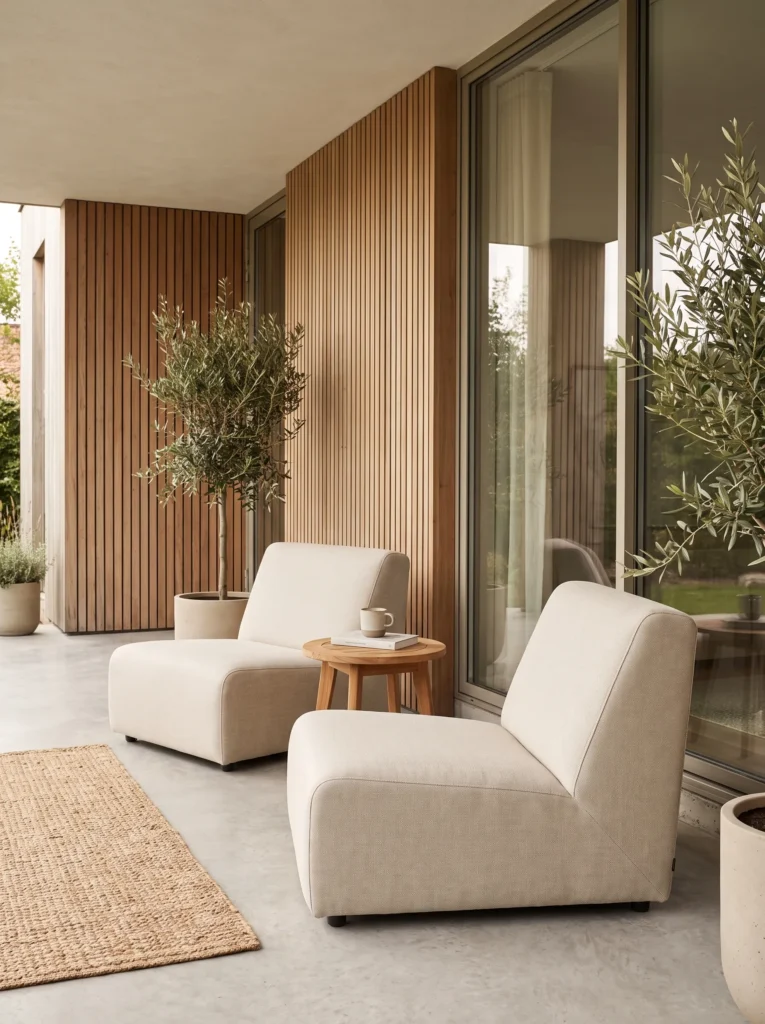
The biggest misconception: fewer items automatically create beauty. In reality, removing décor without replacing it with warmth leaves a porch feeling unfinished. Common causes: relying entirely on white, grey, and black without natural materials; furniture that’s functional but textureless and uncomfortable; seating pushed against walls instead of arranged as a conversation area. Minimalism isn’t having less at any cost — it’s keeping only what contributes to the experience. Two carefully chosen chairs, a textured outdoor rug, and warm lighting often feel more inviting than a porch full of competing accessories.
Build Around One Focal Point
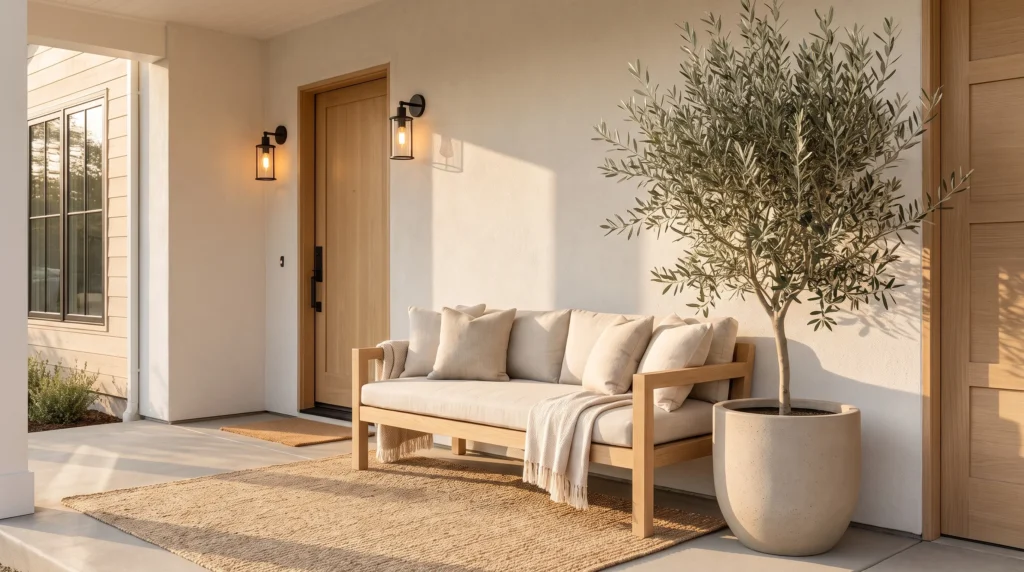
Rather than decorating every corner, choose one element that naturally becomes the center of attention — a pair of comfortable outdoor chairs, a beautiful wooden bench, a statement planter with an olive tree or ornamental grass, a simple bistro table for morning coffee, or a modern outdoor fireplace if space allows. Everything else supports it instead of competing. One focal point creates structure while the rest stays calm.
Choose Furniture That Feels Light, Not Empty
Minimalist furniture isn’t simply smaller furniture. Look for clean silhouettes, quality materials, and proportions suited to the porch: slim frames, open bases, natural finishes — airy yet grounded. Rather than several small chairs or decorative tables, choose fewer pieces comfortable enough for daily use. A single well-made bench with a textured cushion often out-impacts multiple inexpensive pieces competing for space.
Use Natural Materials for Warmth
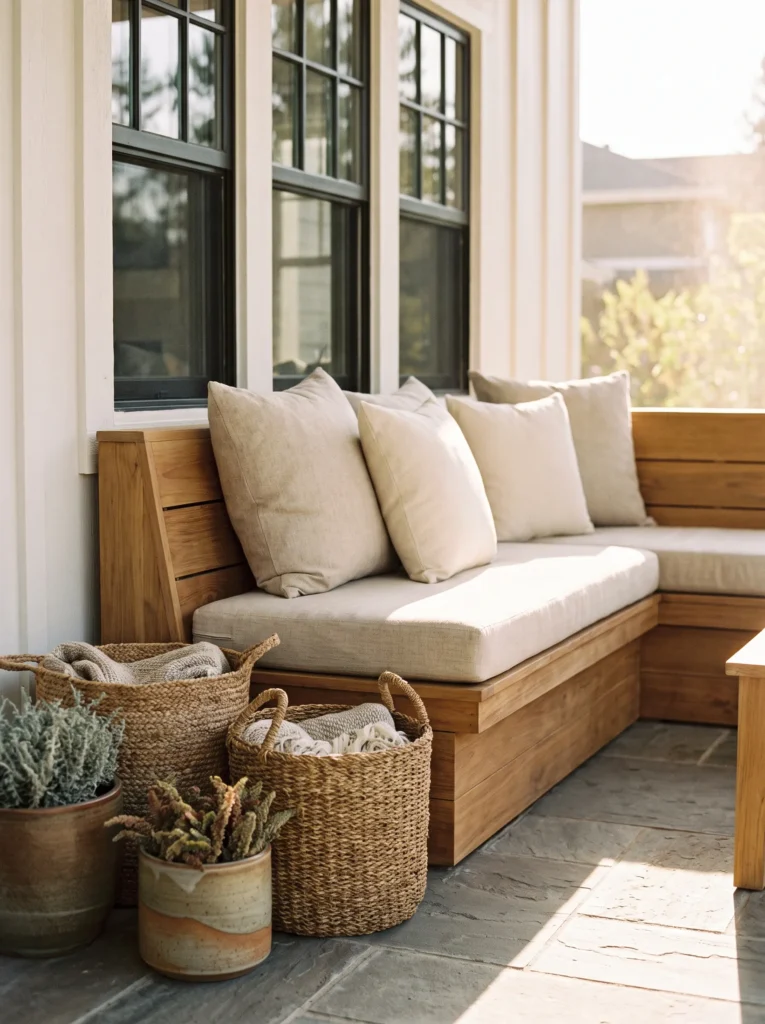
The easiest warmth shortcut: natural materials. Minimalism doesn’t require cold metal and stark white — the most welcoming minimalist spaces pair simple shapes with organic textures. Wood, rattan, stone, linen, cotton, woven baskets bring warmth without visual clutter. A simple teak bench with a neutral linen cushion feels far more inviting than a bright outdoor sofa buried in accessories. The goal isn’t more pieces — it’s materials that naturally create comfort.
Keep the Colour Palette Calm
A minimalist porch needn’t be limited to white and grey — warm neutrals create a softer, welcoming atmosphere while staying clean. Combine warm white, soft beige, sand, taupe, light oak, charcoal as an accent, and sage green through plants. Repeat the same few tones throughout: visual harmony lets textures become the focal point. For subtle seasonal updates, swapping cushion covers or planters is usually enough.
Layer Texture Instead of Décor
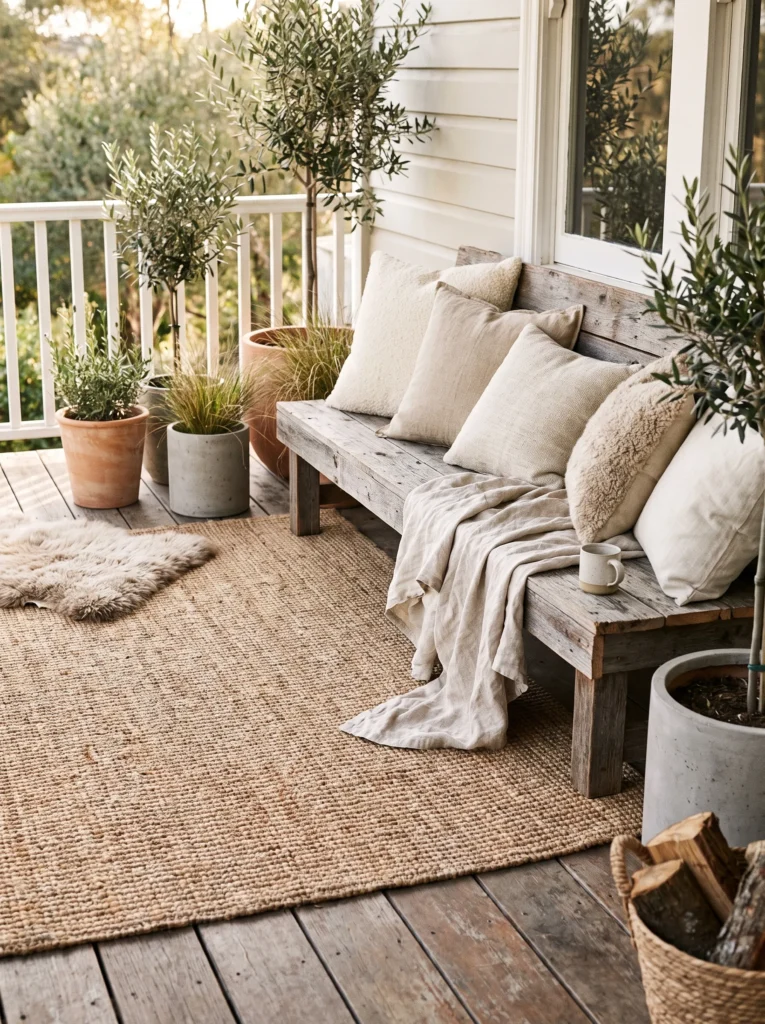
Texture impacts more than additional accessories. Instead of filling shelves with ornaments, layer materials that invite sitting and staying: a woven outdoor rug, linen or textured cushions, a knitted throw for cool evenings, wooden furniture, ceramic or concrete planters. Each element adds depth while the design stays simple and uncluttered. A minimalist porch feels inviting because every piece has a purpose — not because it has more décor.
Let Plants Do the Decorating
Plants are the rare decorative element that fits almost every minimalist porch — colour, texture, and movement with a calm, uncluttered appearance. Rather than many small pots, choose one or two larger planters for stronger visual statements: an olive tree, dwarf citrus, ornamental grasses, lavender, boxwood, or a large fern for shaded porches. Fewer, healthier plants look more intentional than scattered small containers — they become part of the architecture, not just decorations.
Lighting for Atmosphere After Sunset
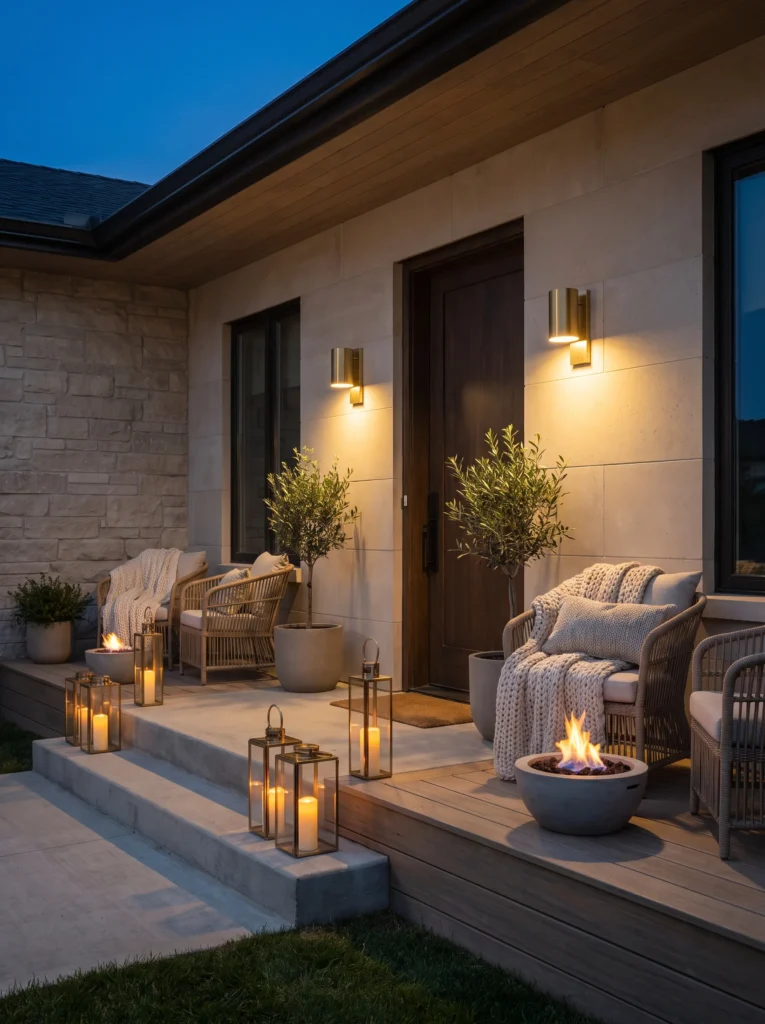
A porch beautiful by day can feel uninviting after sunset with harsh or missing lighting. Warm lighting creates a softer atmosphere than cool white bulbs: wall-mounted sconces, lantern-style lights, sparingly used string lights, LED candles for covered porches, a portable rechargeable table lamp. Build gentle layers of light highlighting seating areas and architectural features — a softly illuminated porch welcomes far more than one blasted by a single bright overhead fixture.
Leave Empty Space on Purpose
The difference between minimalist decorating and simply owning little furniture: intentional empty space. Not every corner needs filling — negative space lets the eye rest and gives each piece room to stand out. Before adding another planter or lantern, ask: does this improve the space, or just fill an empty spot? If the latter, leaving it open creates the stronger design.
Mistakes That Make Minimalist Porches Feel Unfinished
Relying only on black, white, and grey: fine indoors, but outdoors-exclusive use feels flat — add natural wood, woven textures, and greenery for balance without sacrificing simplicity.
Buying small décor instead of quality furniture: several inexpensive accessories rarely match one well-designed chair or bench. On a budget, prioritize everyday-use pieces before decorative accents.
Ignoring comfort: minimalism should never feel uncomfortable. If seating isn’t enjoyable, nobody spends time there — comfortable cushions, supportive seating, and practical side tables out-contribute extra decorations.
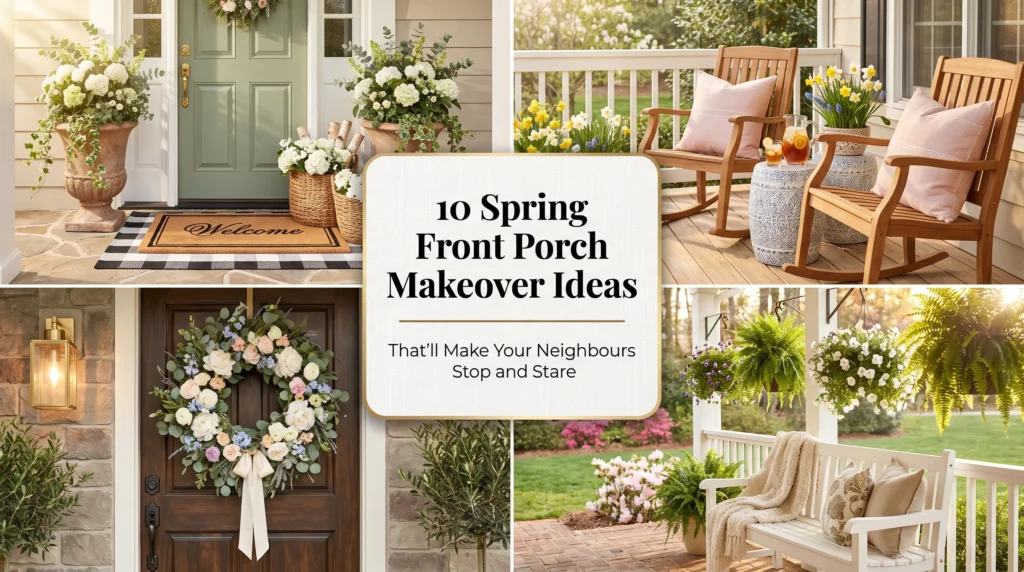
Redecorating every season from scratch: build a timeless foundation; make small seasonal changes with cushions, planters, or a simple wreath. Saves time, reduces clutter, keeps the design consistent. For seasonal porch ideas, see our fall porch, Halloween porch, and Christmas porch guides — or our take on pink porch styling.
Your Designer Checklist
Define the purpose: relaxing, entertaining, or curb appeal — every choice should support it.
Choose one focal point: seating area, statement planter, or beautiful front door — let one feature draw the eye.
Keep the palette simple: two or three main colours repeated throughout for calm cohesion.
Layer natural textures: wood, woven materials, linen, stone, greenery — warmth without clutter.
Add lighting you’ll enjoy: warm outdoor lighting for atmosphere, not just brightness.
Leave room to breathe: purposeful empty space defines successful minimalist design.
Small Changes, Big Difference
You don’t need new furniture or a from-scratch start. The biggest improvements often come from thoughtful adjustments: replacing several small accessories with one larger planter, introducing a textured outdoor rug, switching to warmer lighting, simplifying an overcrowded seating area. Before buying, audit what you own — does each piece serve a purpose, add warmth, complement the rest? If not, removing it may improve the design more than replacing it. Minimalist decorating isn’t about owning less — it’s about making every element count.
Quick Answers
How do you make a minimalist porch feel cozy?
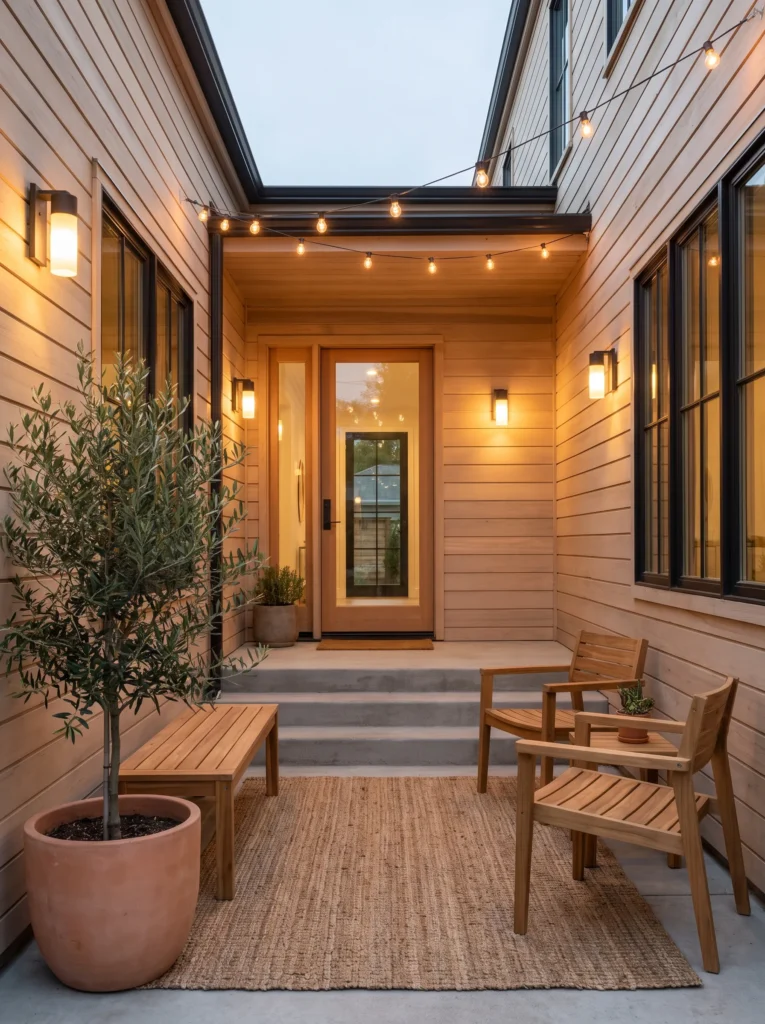
Layer natural textures (wood, woven rugs, linen cushions), add warm lighting, keep a calm warm-neutral palette, and build around one focal point. Warmth comes from materials and light, not from more objects.
What furniture works best on a minimalist porch?
Fewer, better pieces: a well-made bench or two comfortable chairs with clean silhouettes and natural finishes. Prioritize comfort and daily use over decorative quantity.
How do you decorate a minimalist porch for seasons?
Keep the timeless foundation and swap small elements — cushion covers, planters, a simple wreath. No full redecoration needed.
Affiliate Disclosure: As an Amazon Associate, I earn from qualifying purchases. If you click a link and buy, I may receive a small commission at no extra cost to you. Thank you for supporting my content!