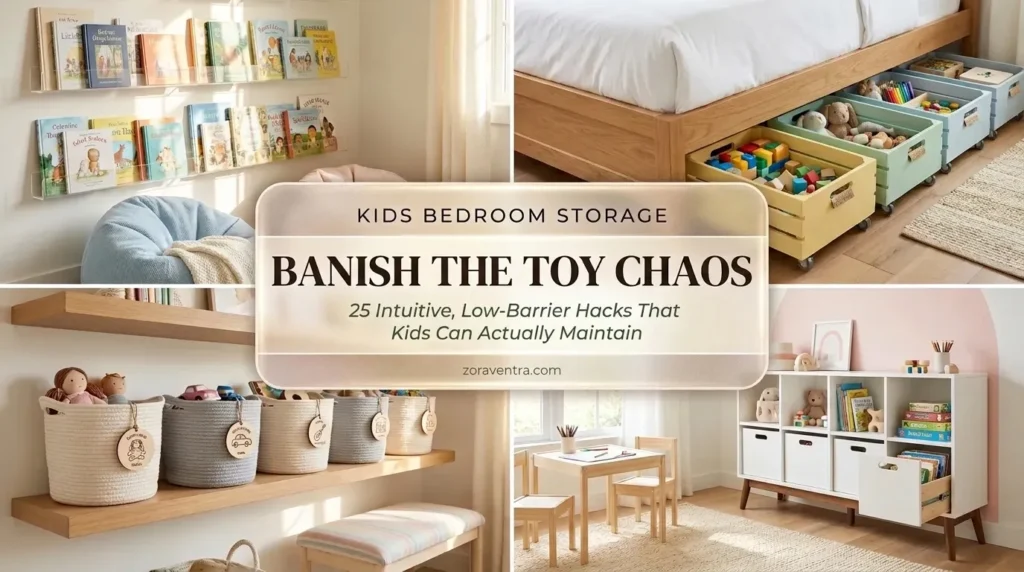
Let’s be honest: walking into your kid’s bedroom feels like stepping onto a plastic-filled battlefield. You spend an hour picking up blocks and puzzle pieces, and by morning it’s exploded again. Purging everything while they sleep is tempting — but there’s a better way.
The secret isn’t fewer toys; it’s intuitive, low-barrier “drop zones.” Kids are visual and short. If putting a toy away means opening a heavy door, unlatching a bin, and stacking perfectly, they won’t do it. Make cleanup effortless and the room practically organizes itself. Twenty-five ways:
1. Forward-Facing Book Ledges
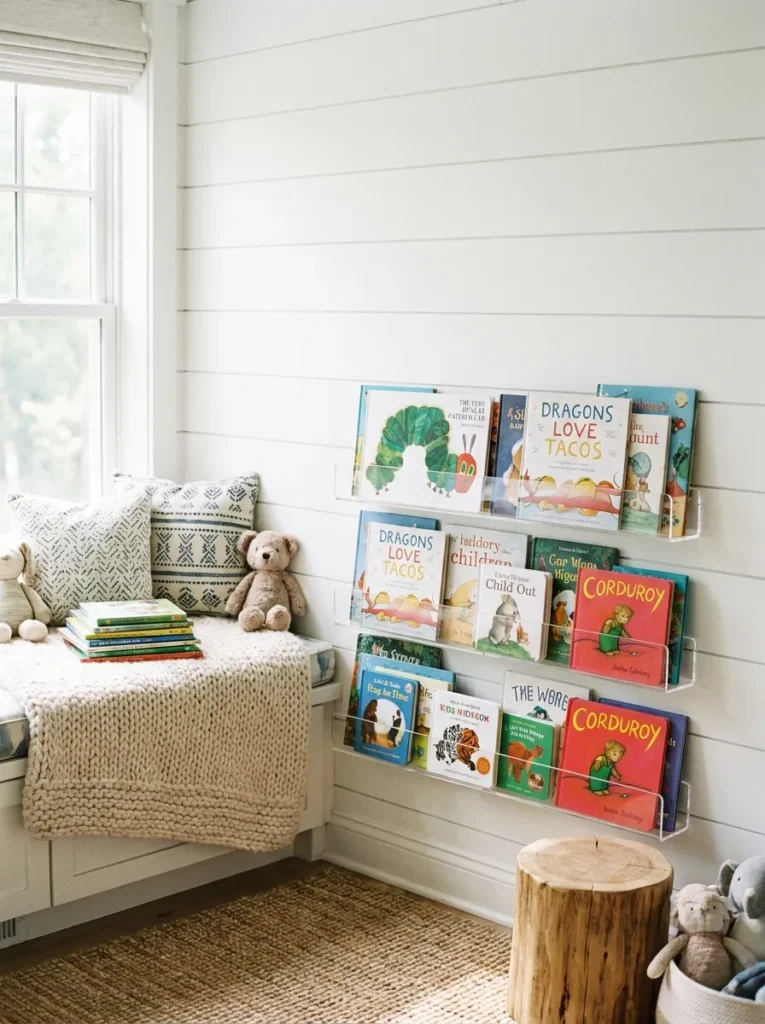
Spine-out bookshelves make kids rip every book off to find the red one. Low floating acrylic ledges display covers forward like wall art — installed inches above the floor, toddlers grab a book and slot it back. The floor book-pile disappears.
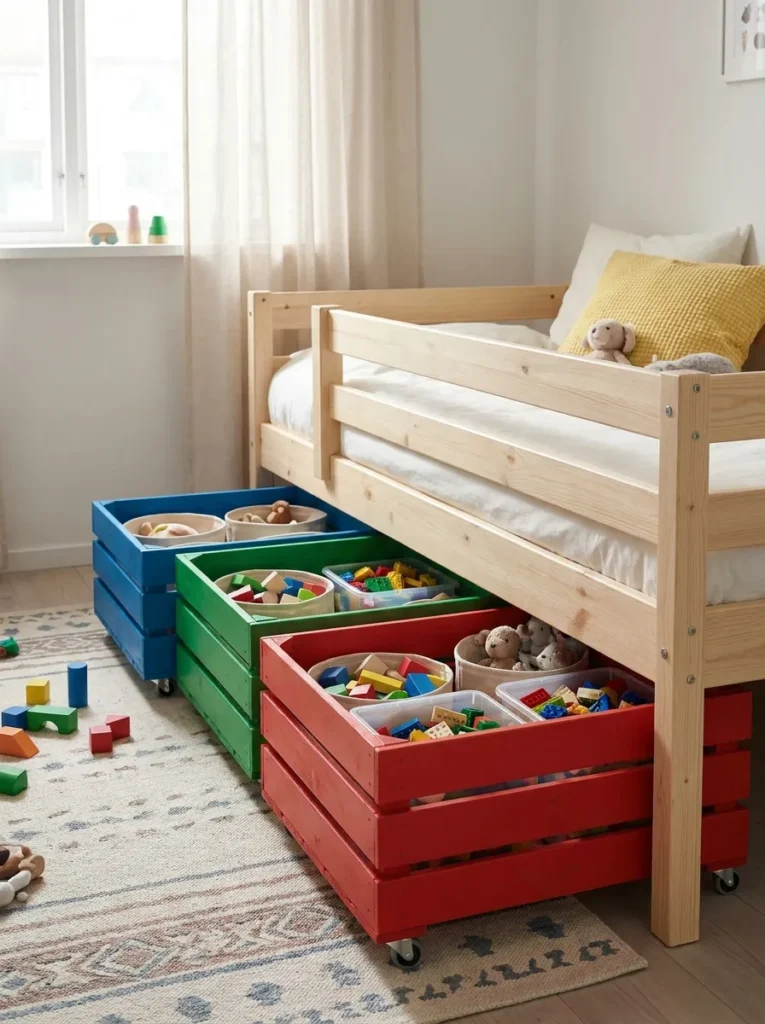
2. Rolling Crates Under the Bed
Under-bed space is a black hole of socks and Legos. Reclaim it: cheap wooden craft crates + four caster wheels + a fun paint color = heavy-duty pull-out bins for Magna-Tiles, train tracks, Lego collections. They roll out without dumping everything across the walkway.
3. Woven Baskets With Picture Labels
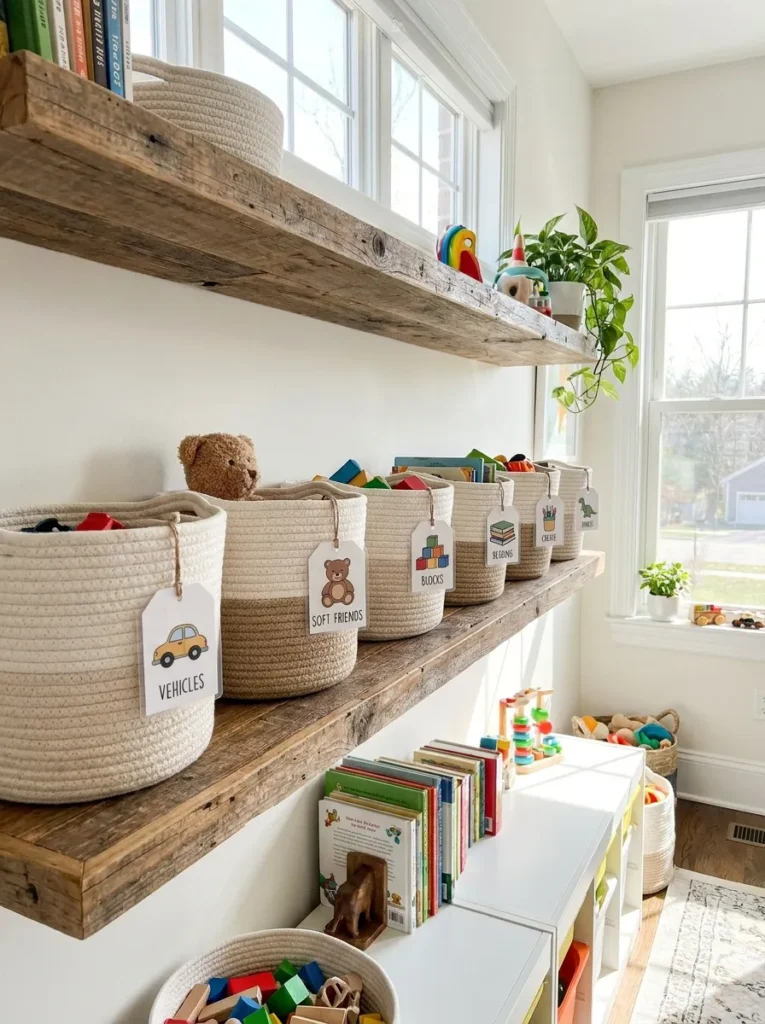
Ditch the cracked clear plastic bins — they look messy even organized. Soft woven seagrass or cotton rope baskets instead, with the critical hack: picture labels. A laminated dinosaur, car, or block tied to the handle. Even a two-year-old knows where things go; cleanup becomes a matching game.
4. Shoe Organizers for Tiny Clutter
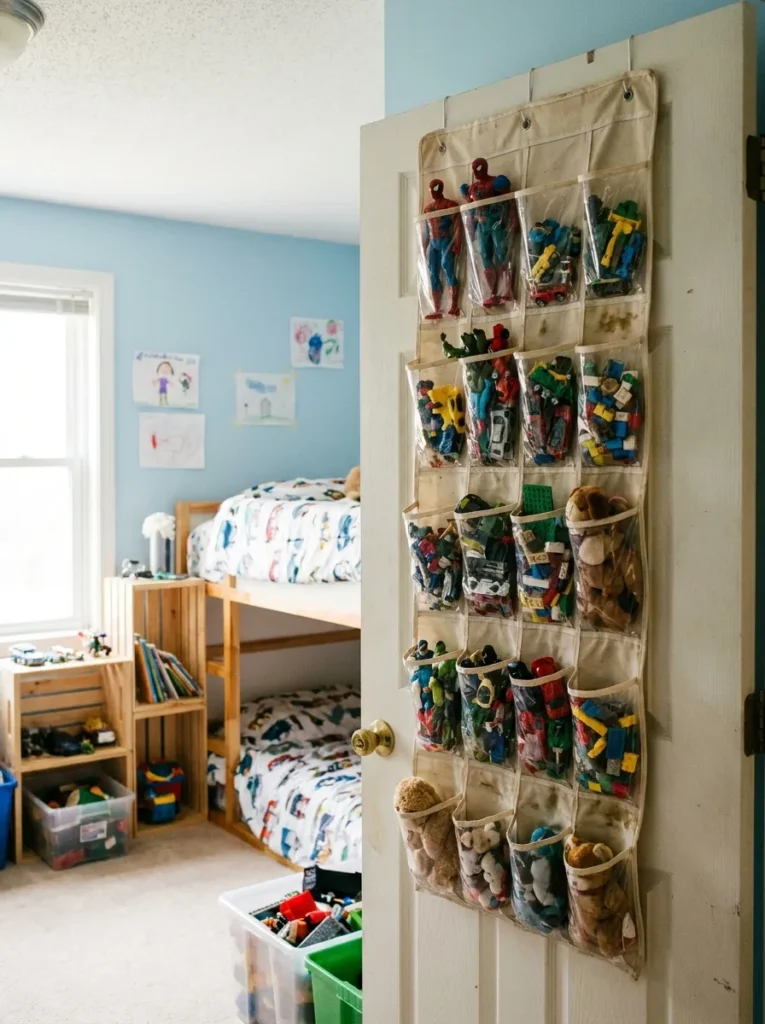
Barbies, action figures, markers — small, numerous, impossible in a deep toy box. Hang a canvas shoe organizer on the bedroom door or inside the closet: each pocket becomes an “apartment” for one figure or marker set. Visible, accessible, off the floor.
5. IKEA Trofast, Elevated
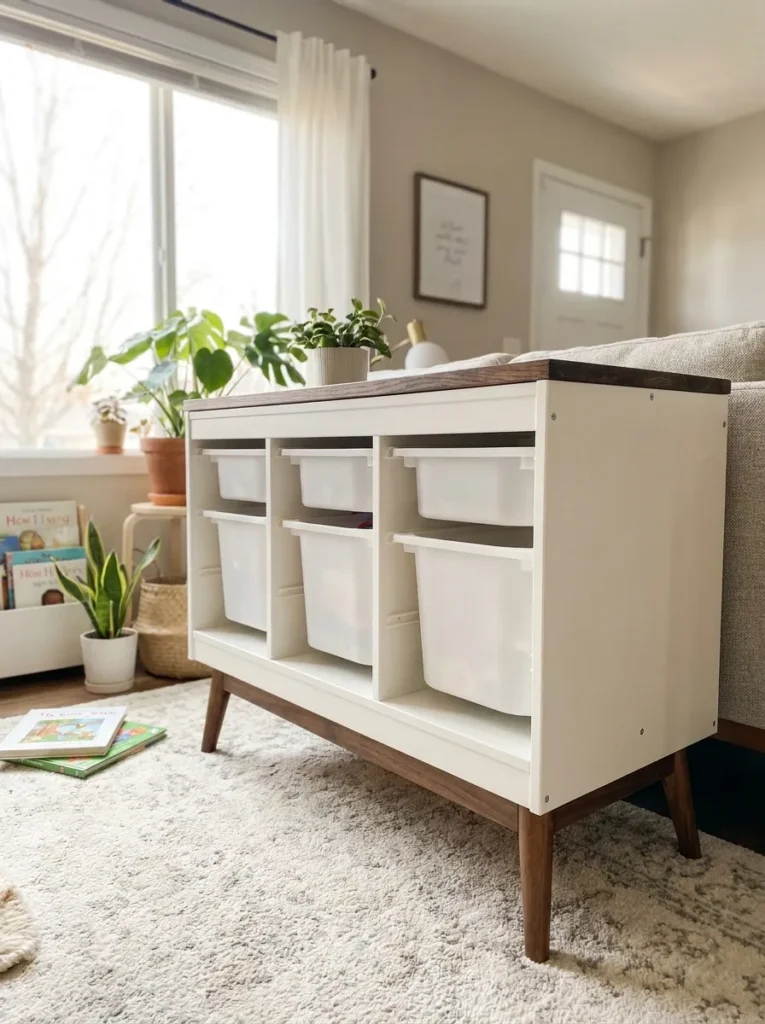
Trofast’s sliding bins are perfect for little hands, but basic pine clashes with nice decor. Paint the frame to match the trim, add mid-century furniture legs to lift it off the floor, top it with stained wood. A basic organizer becomes a beautiful credenza.
6. Window Seat Trunk
Got a window? Place a sturdy long trunk or low cubby unit beneath it, add an upholstered cushion and pillows. Cozy reading nook on top, massive hidden storage below for stuffed animals, blankets, out-of-season clothes. No carpenter needed.
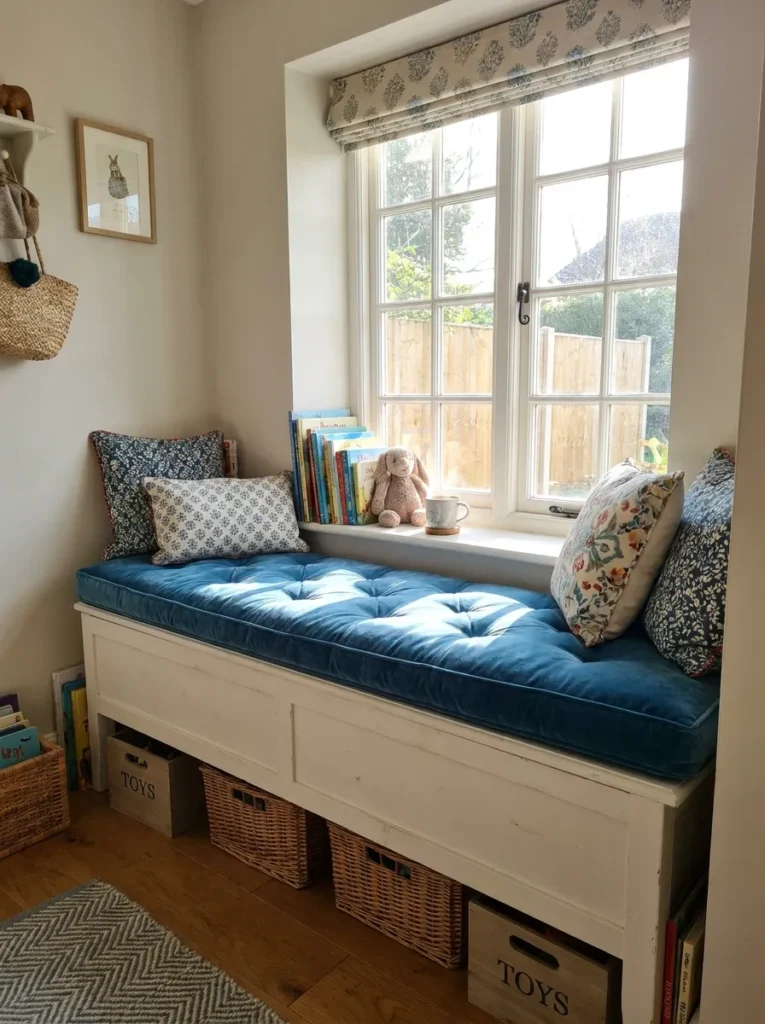
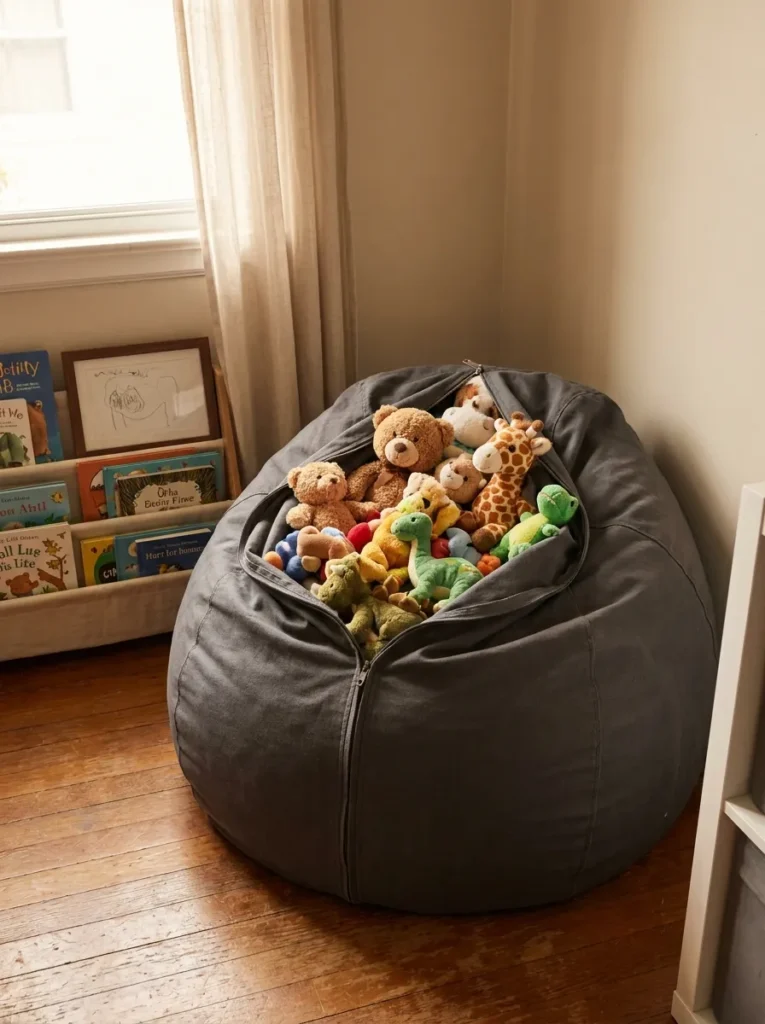
7. The Stuffed Animal Bean Bag
Plushies multiply overnight. Buy a large canvas bean bag cover without filling — stuff it full of the plushie mountain instead. Zips into a functional reading seat, hides the entire collection inside.
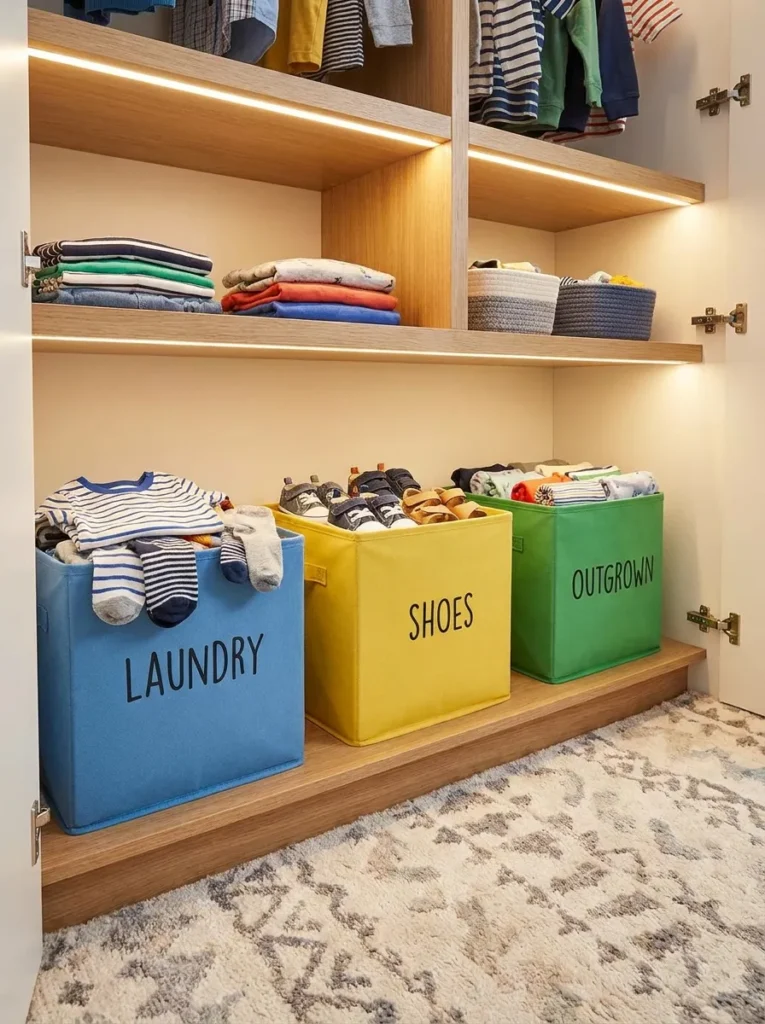
8. Color-Coded Closet Bins
Kid closets waste the void under short hanging clothes. Three big colored bins on the closet floor: blue = dirty laundry, green = shoes, yellow = outgrown. Low-barrier, laundry day gets easier, carpet stays cleaner.
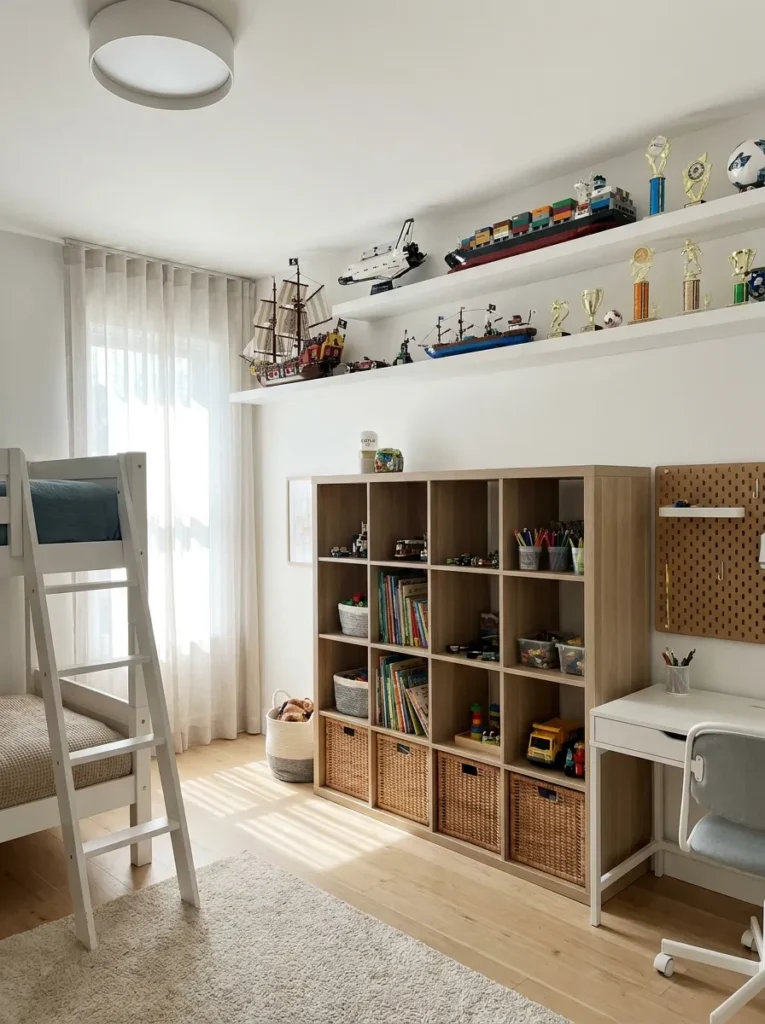
9. High Perimeter Shelves
Zero floor space? Look up. A continuous floating shelf 12–18 inches below the ceiling becomes a display track for built Lego sets, trophies, snow globes — safe from younger siblings, freeing dresser tops.
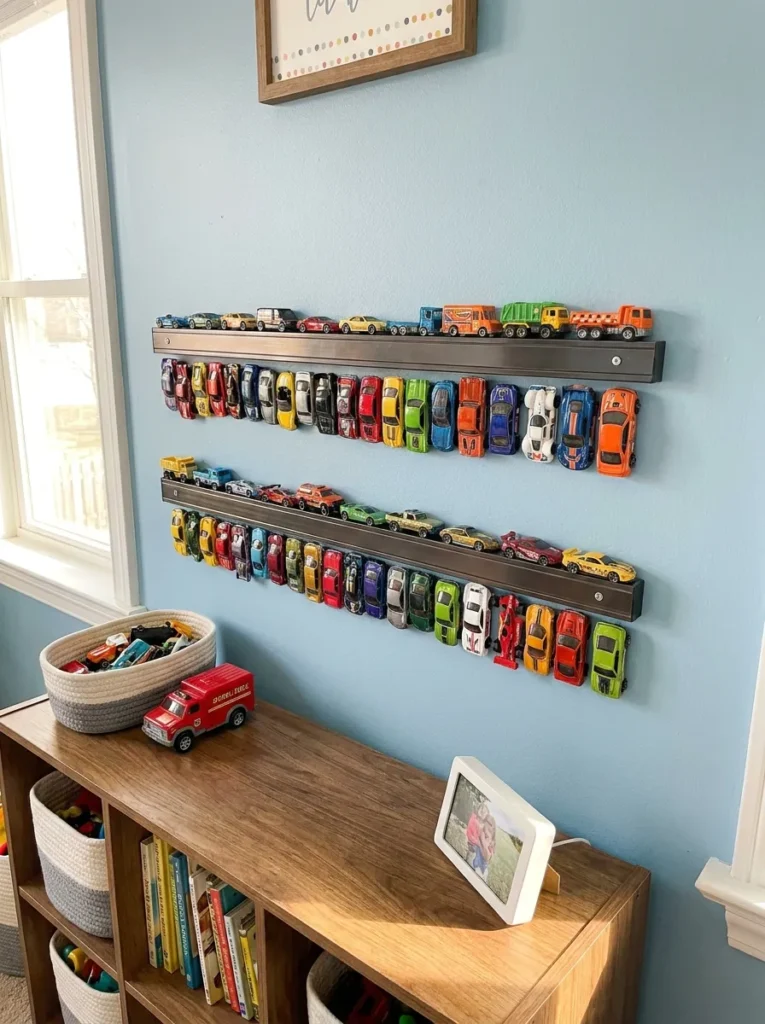
10. Magnetic Strips for Toy Cars
Die-cast cars sink to the bottom of every toy chest — and end up under bare feet. Mount heavy-duty magnetic strips low on the wall: kids “stick” cars up in neat rows. Cleanup becomes a game; the collection becomes 3D wall art.
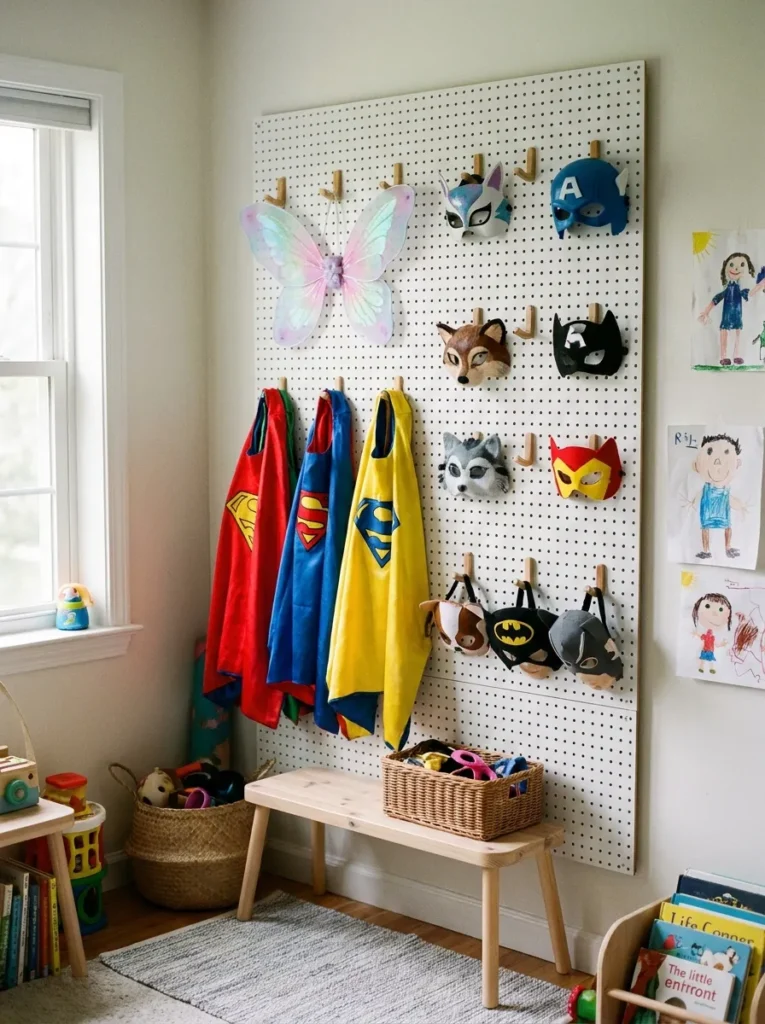
11. Dress-Up Pegboard Wall
Princess dresses and superhero capes never fit on hangers. A large painted pegboard with hooks becomes a forward-facing dress-up boutique: wings on high hooks, crowns on a little shelf, capes dangling. Visual, easy, zero floor space.
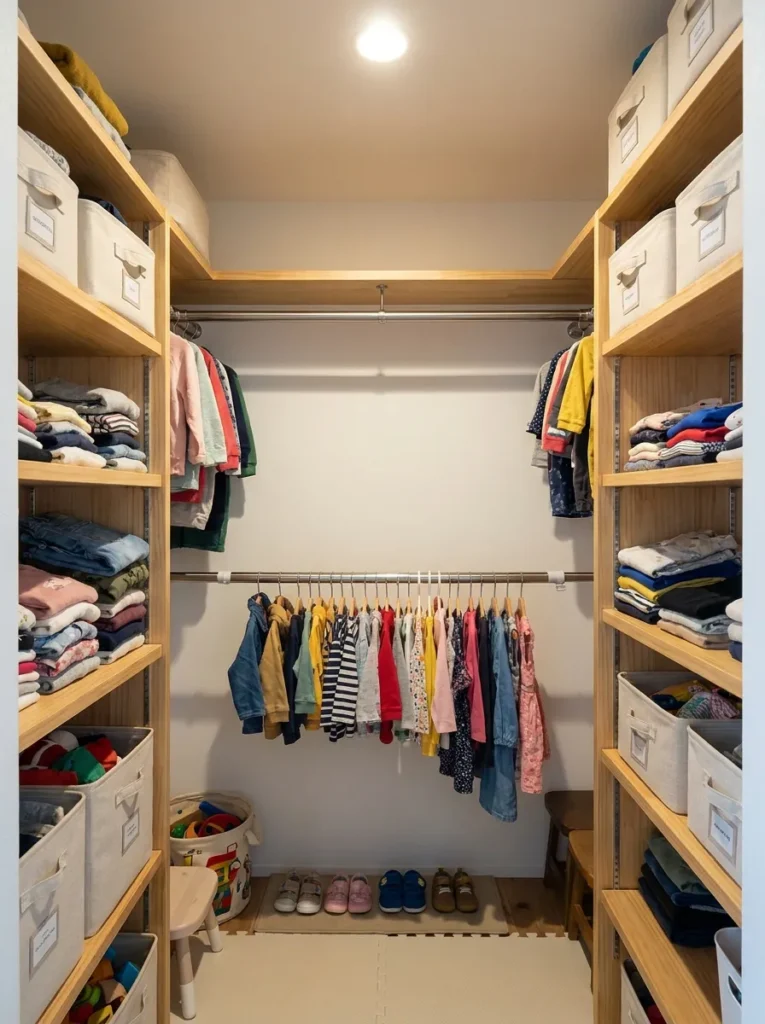
12. Double the Closet With a Tension Rod
Kid clothes need ~3 feet of hanging drop; standard closets waste feet of air below. A heavy-duty tension rod mounted under the existing rod doubles capacity: off-season up top, everyday clothes at kid height so they can dress themselves.
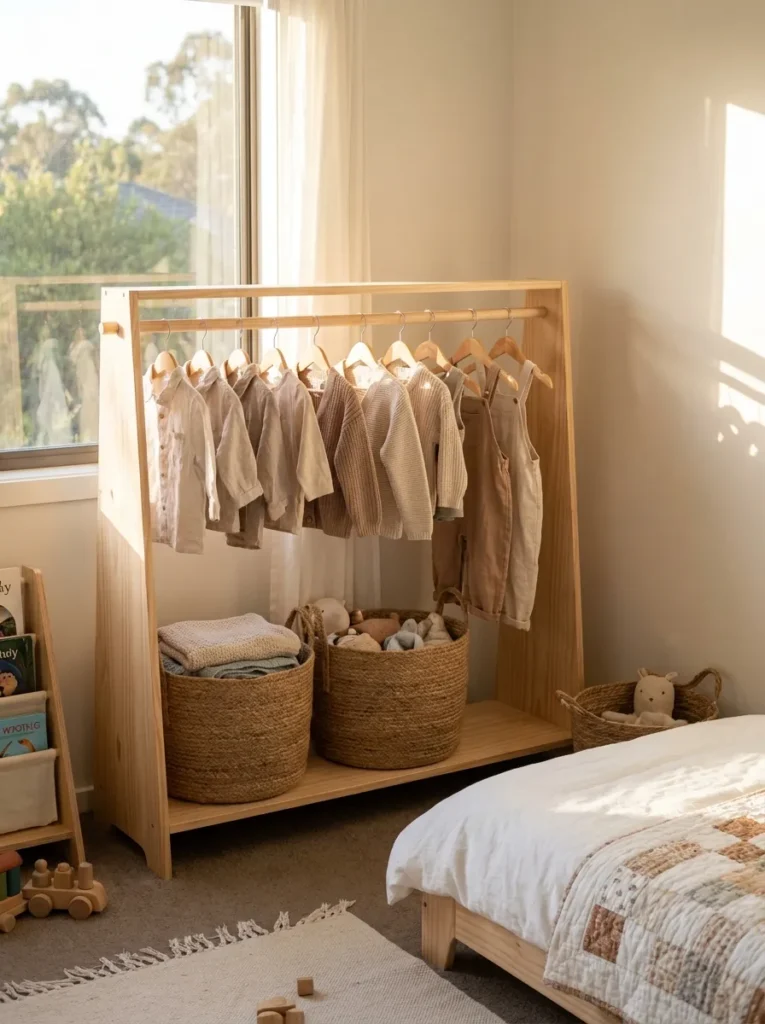
13. Open Montessori Wardrobe Rack
No built-in closet? Skip the bulky armoire — a low wooden open clothing rack keeps a curated weekly wardrobe visible and reachable. Add woven baskets at the base for socks and underwear. Forces minimalism, looks aesthetic.
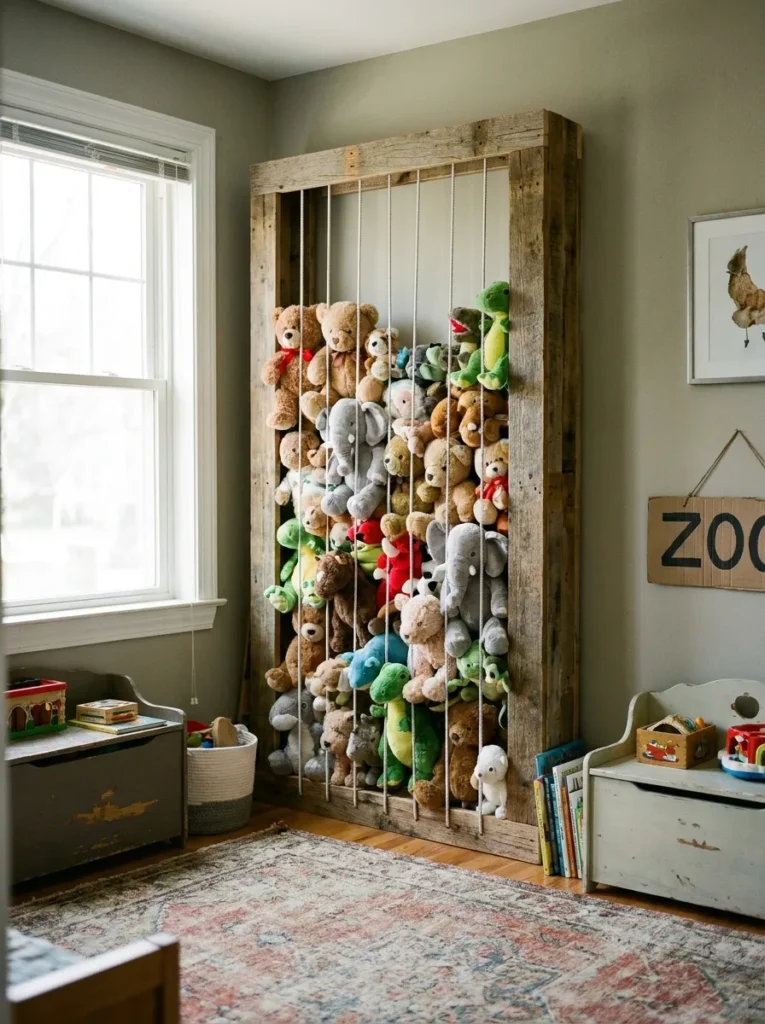
14. The Stuffed Animal Zoo
If hiding plushies in a bean bag causes a revolt, build visibility + containment: a simple 1×2 wood frame with vertical bungee cords. Kids see every “friend” through the cords and shove them back through to tidy. Vertical storage that actually gets used.
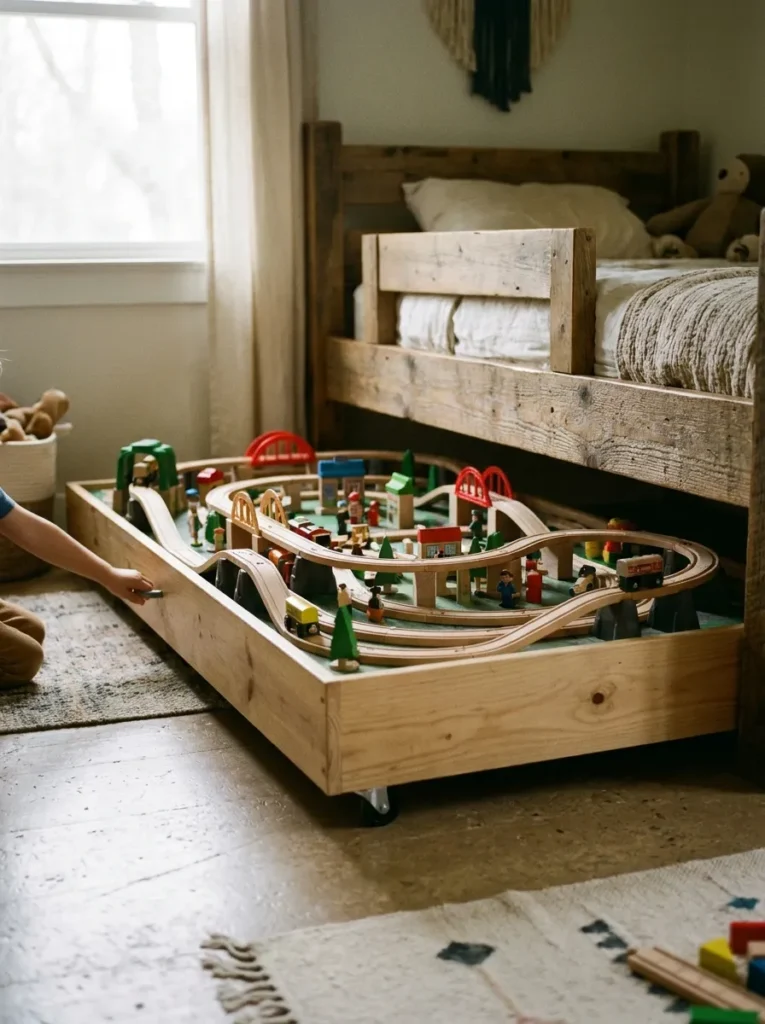
15. Rolling Lego Landscape Board
Kids build Lego cities over days and hate tearing them down. A large plywood sheet with trim edges and furniture casters becomes a rolling build platform — slides under the bed with the creation intact. Clean floor, saved masterpiece.
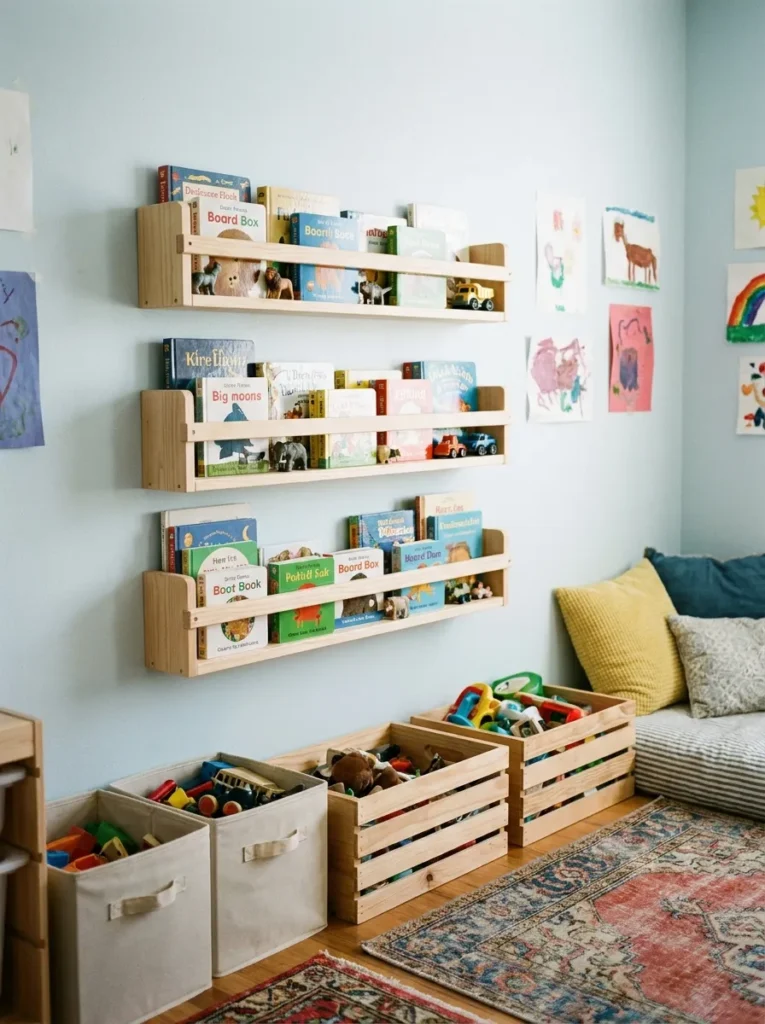
16. Spice Racks as Mini Shelves
Kitchen aisle hack: cheap wooden spice racks mounted at kid eye-level hold small board books, action figures, and art supplies — extending barely 4 inches into the room. Perfect for tight spaces where bookshelves would crowd.
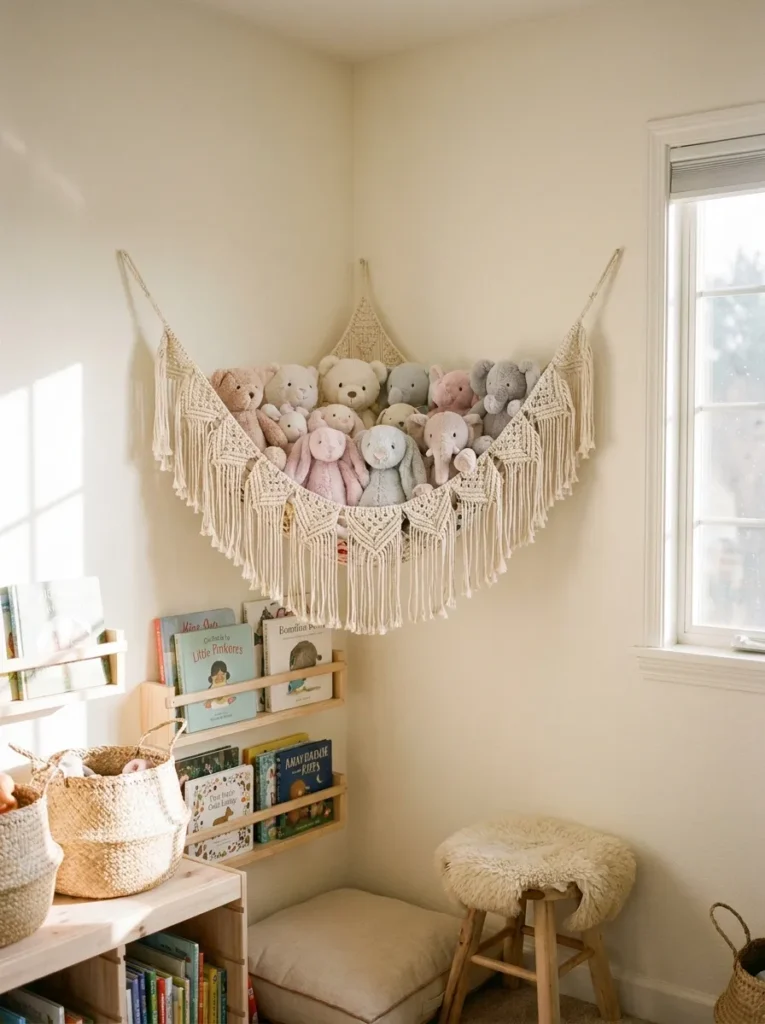
17. Macrame Toy Hammock
Upgrade the saggy nylon corner net: a hand-woven cotton macrame hammock with wooden beads, hung high in an unused corner. Reclaims floor space and turns the plushie pile into a texture-rich design feature.
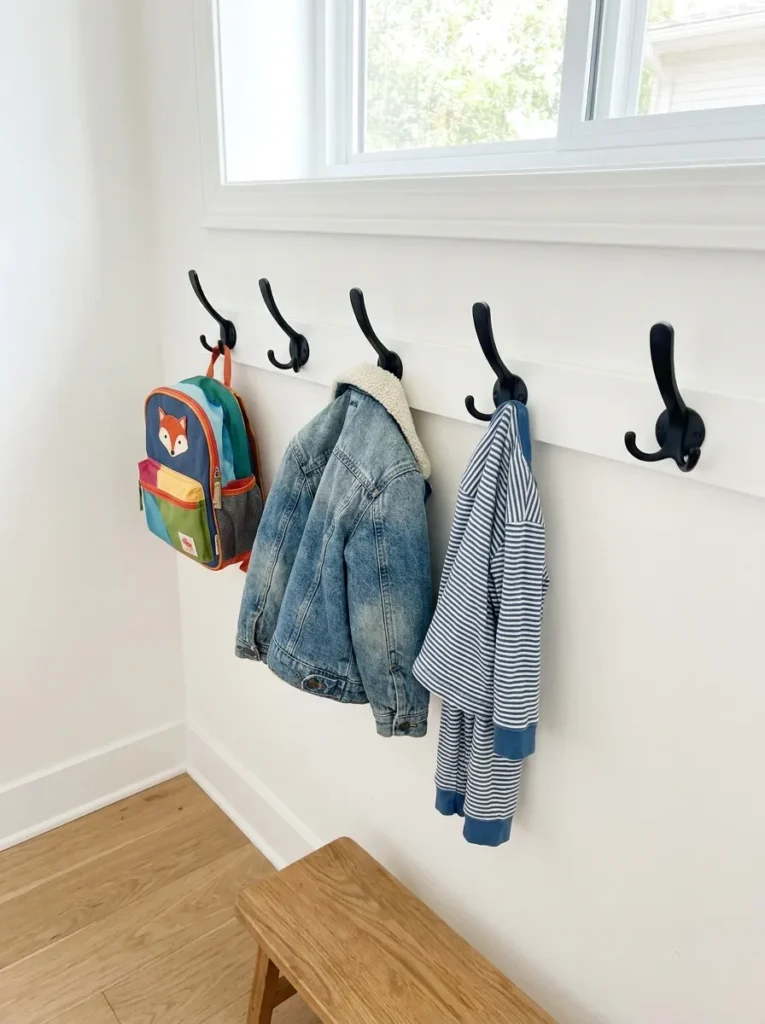
18. Hooks Instead of Hangers
Tiny hangers demand fine-motor precision a tired kid doesn’t have. A row of heavy-duty wall hooks at chest height: backpack, coat, worn-once jeans, pajamas — flung on in half a second. Cleanup friction: zero.
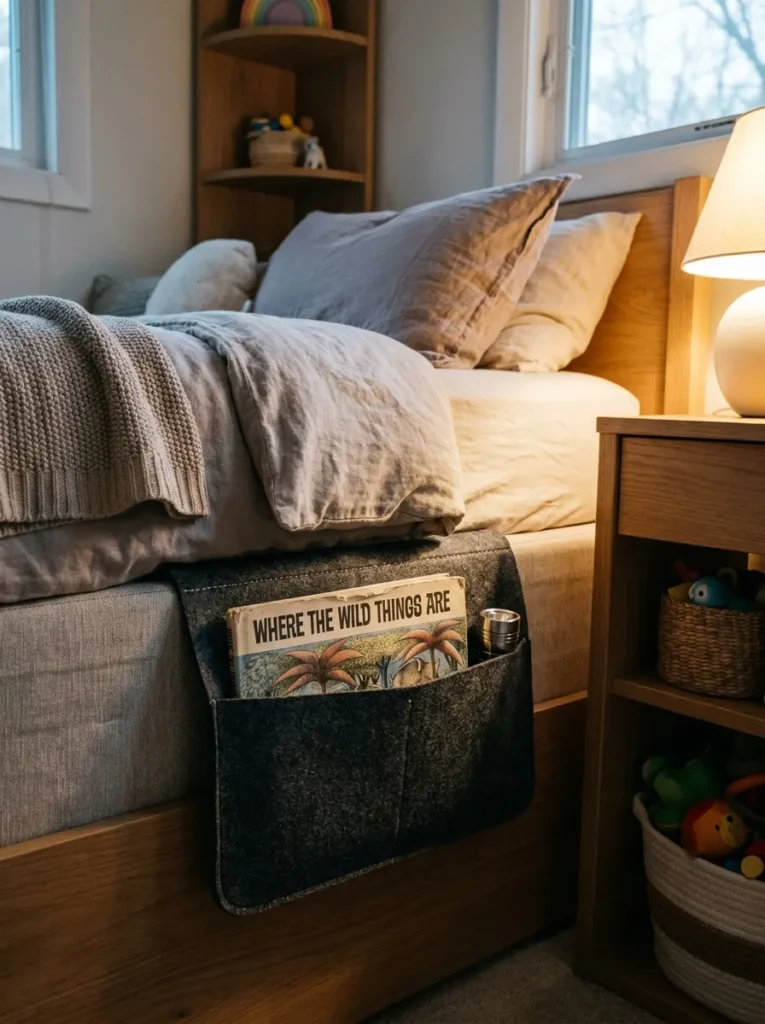
19. Felt Bedside Pockets
No room for a nightstand? Slide a felt bedside pocket organizer under the mattress — pouches hang down the bed’s side holding the nighttime book, water bottle, tablet, flashlight. Zero footprint, mattress stays clear.
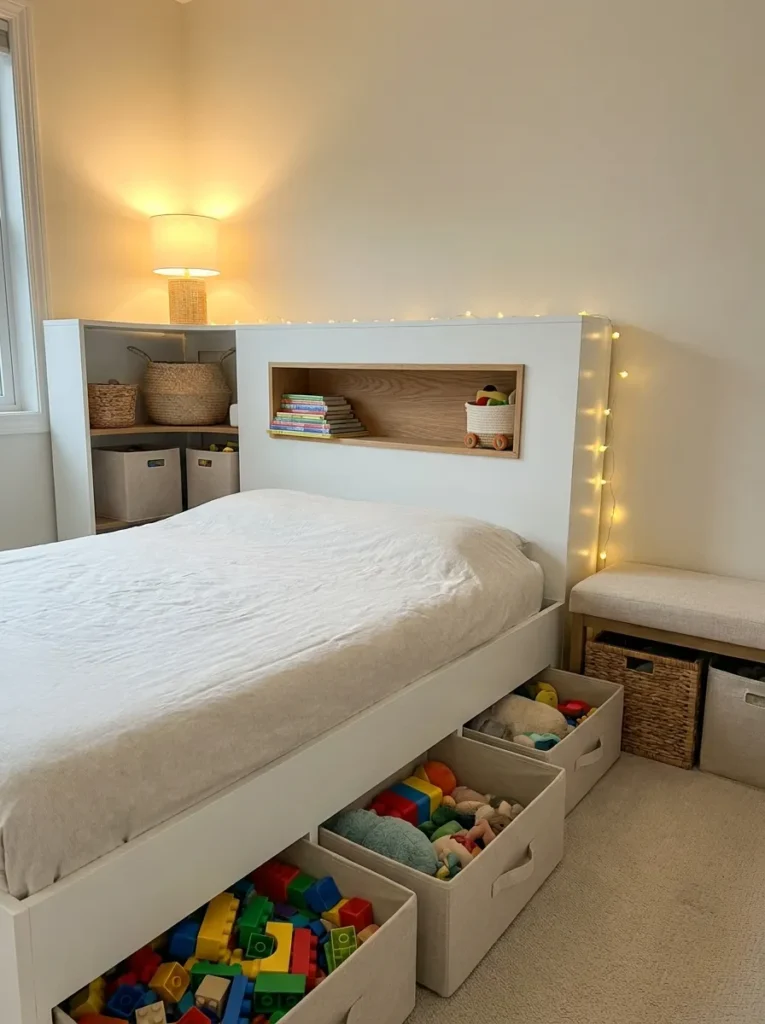
20. Headboard Cubbies
In a narrow room, every piece must earn its place. A platform bed with built-in headboard cubbies stores books, alarm clocks, and treasures right where they’re used — furniture doing double duty.
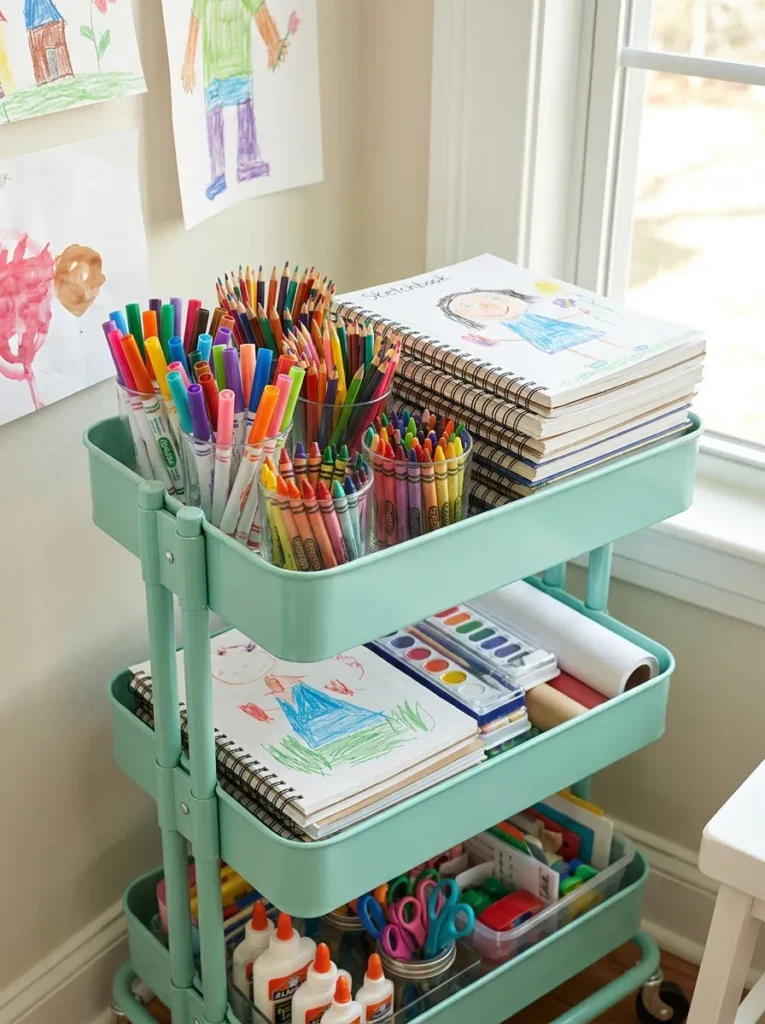
21. Rolling Art Supply Cart
Art supplies spread across every surface? A slim rolling utility cart corrals them — markers, paper, stickers in tiers — and wheels to the table for craft time, then parks in a closet. The mess has a home with wheels.
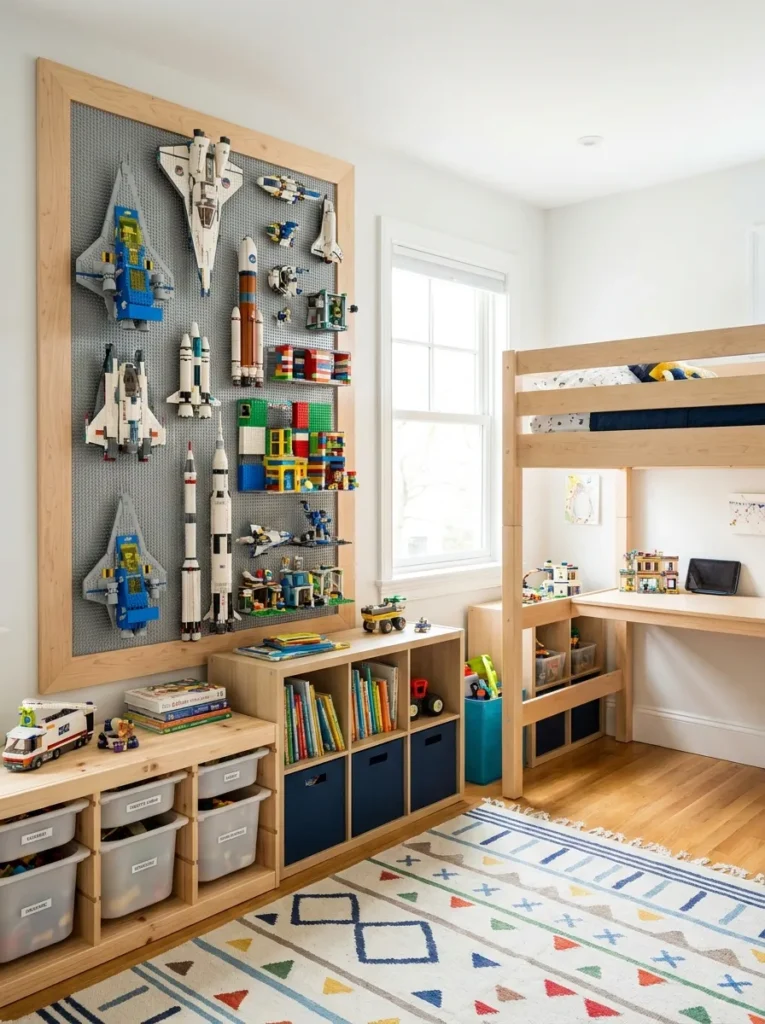
22. Lego Baseplate Wall
Mount Lego baseplates on a wall section and the vertical surface becomes a build zone — creations go up instead of across the floor. Display and storage in one, and cleanup means sticking pieces to the wall.
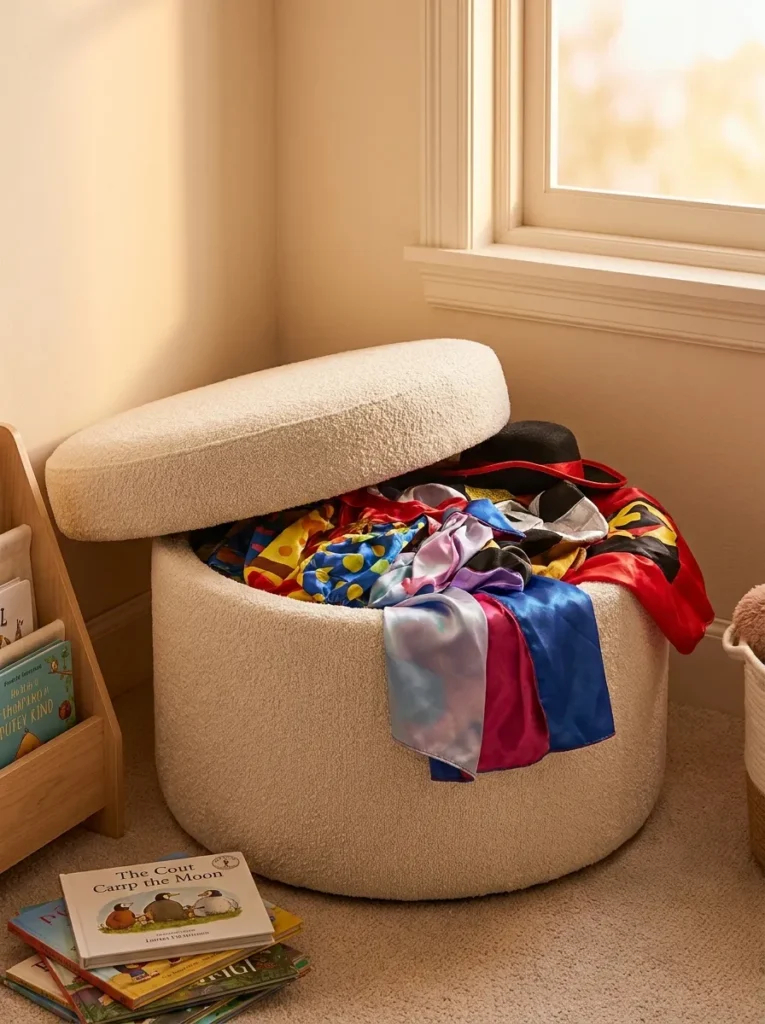
23. Storage Pouf Seating
An upholstered storage pouf is the ultimate double-duty piece: extra seating for friends, hidden compartment for the toy overflow. Looks like decor, works like a bin.
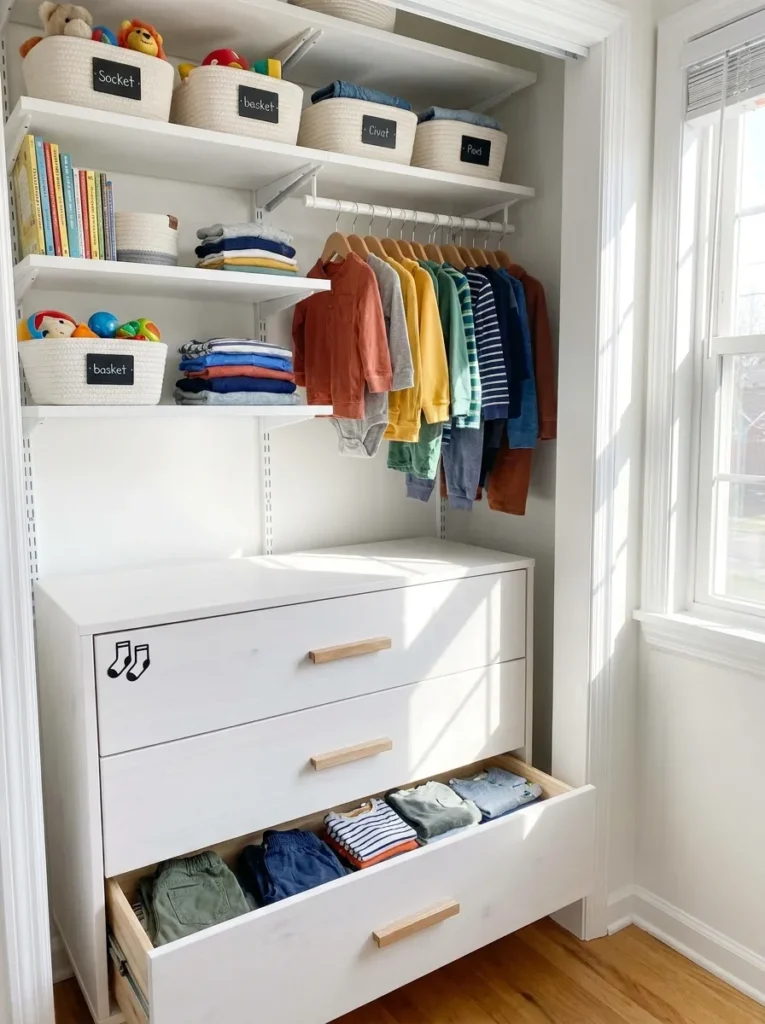
24. Dresser Decals for the Closet System
Extend the color-coded closet idea: picture decals on dresser drawers (shirts, pants, pajamas) let pre-readers put laundry away correctly. The system from idea #8, now drawer-deep.
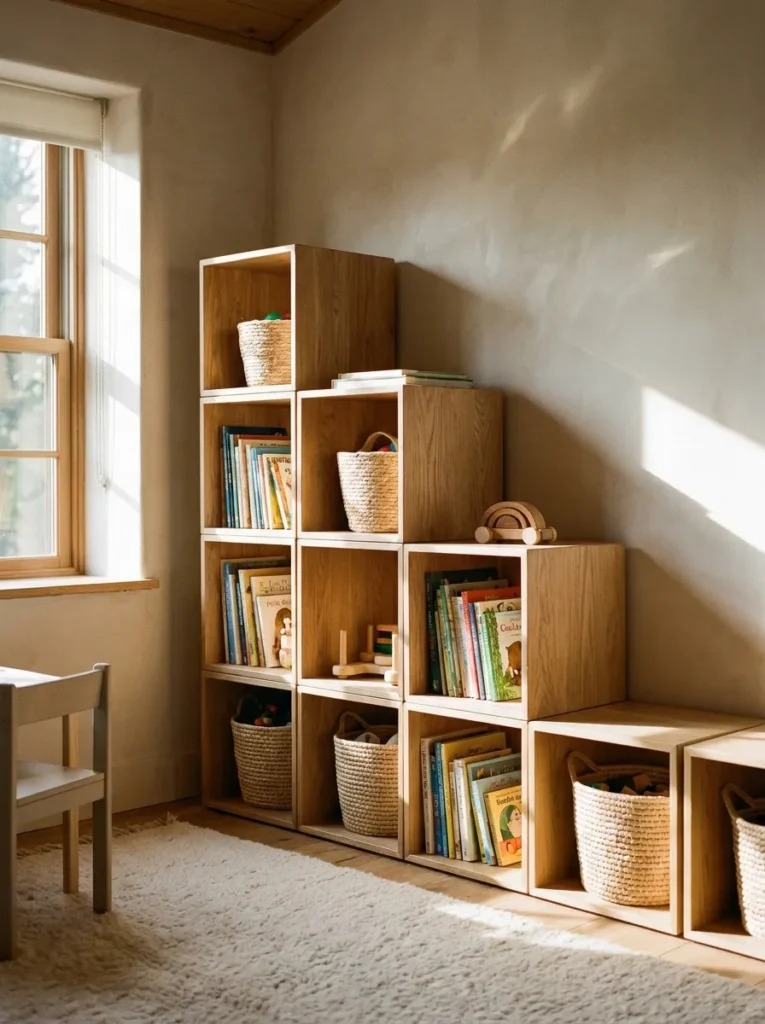
25. Modular Stackable Cubes
Wooden cube shelves that stack and reconfigure grow with the room — tower them, spread them low, add fabric bins inside. Modular beats fixed when kids’ needs change every year.
The Real Secret
None of these work without the underlying principle: make putting things away easier than leaving them out. Low, visual, labeled, one-motion. Get that right and the room stays clean-ish on its own. More kid spaces: our kids reading nook ideas and bunk room ideas.
Quick Answers
How do I get my kids to clean their room?
Lower the friction: open bins at kid height, picture labels instead of words, one-motion drop zones. Kids don’t clean systems that require adult effort.
What is the best storage for small kids bedrooms?
Vertical and under-bed: wall ledges, high perimeter shelves, rolling under-bed crates, over-door organizers. The floor is for playing, not storing.
How do I organize toys without it looking messy?
Swap clear plastic for woven baskets and wooden bins, use picture labels, and group by category. Contained and labeled reads as styled; piled reads as chaos.
Affiliate Disclosure: As an Amazon Associate, I earn from qualifying purchases. If you click a link and buy, I may receive a small commission at no extra cost to you. Thank you for supporting my content!
Shop the essentials: