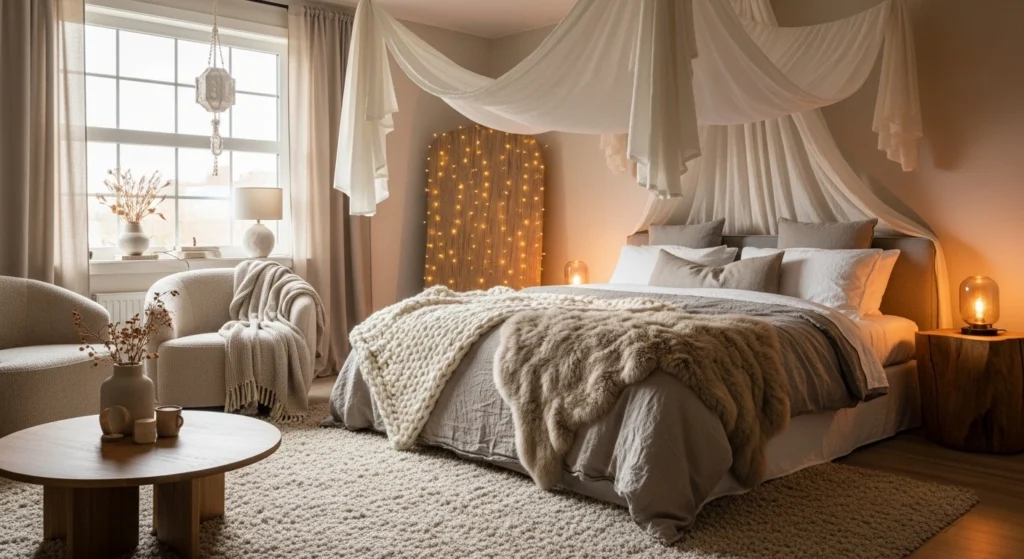

Creating a calm dining room is harder than it looks. Many people start removing decorations, simplifying furniture, and painting everything white — only to discover the room feels cold instead of peaceful. The difference between an inviting minimalist dining room and an empty one isn’t how little you own; it’s how intentionally every piece works together. Natural materials, balanced proportions, and thoughtful lighting create warmth without visual clutter. The secret isn’t just taking things away — it’s what you leave behind: organic textures, sculptural shapes, intentional negative space. Here are 9 ideas that balance simplicity with earthy, grounding warmth.
1. Limewash Walls for Texture
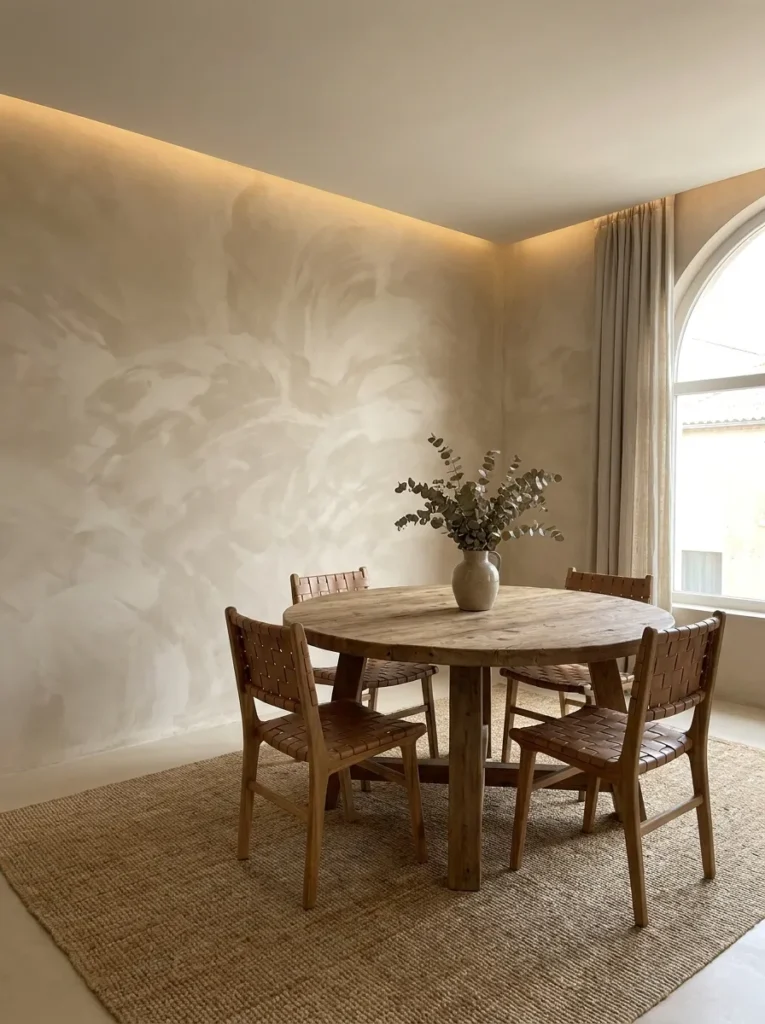
When wall art and décor leave, walls must provide the visual interest — and flat stark white builder paint reads clinical. Instead, apply textured Roman clay or limewash: brushed on in sweeping cloud-like strokes, it creates soft organic movement across the drywall with a suede-like velvety texture that instantly warms a neutral dining room without adding clutter.
2. A Solid Wood or Stone Table
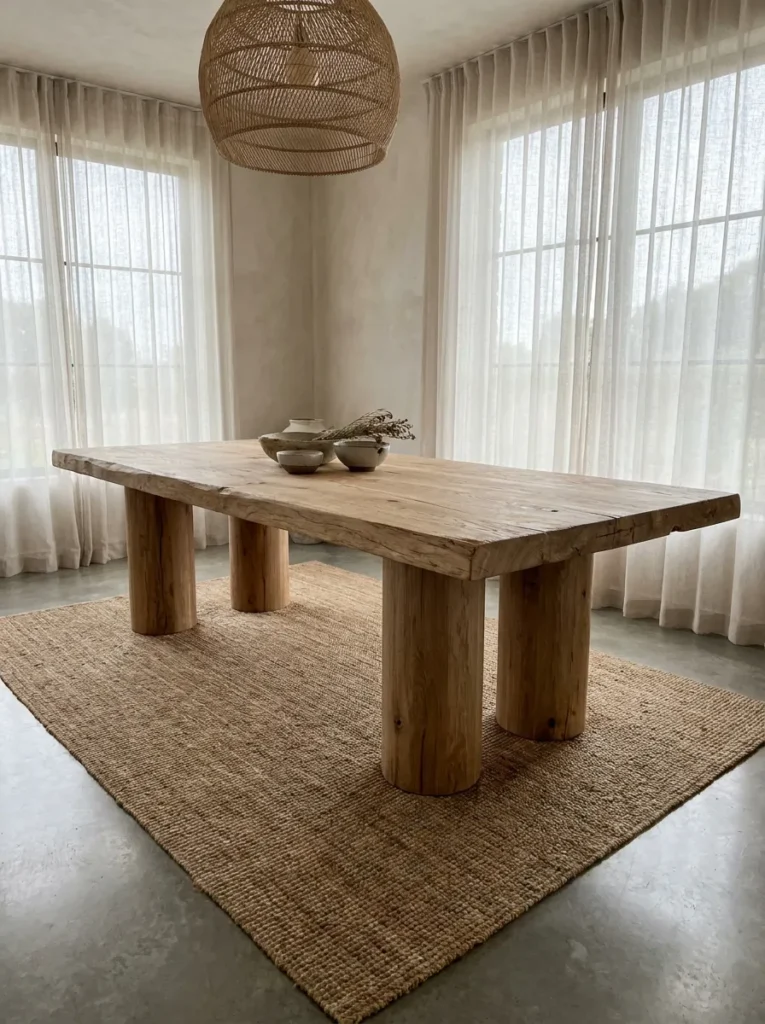
In a minimalist dining room the table is the star — no hiding a cheap flimsy table under runners and centerpieces. Invest in a massive solid piece of nature: oversized raw white oak, rich walnut, or solid tumbled travertine. The natural imperfections in wood grain or porous stone provide the tactile warmth that anchors an organic modern dining room.
Dining Table Sizing Guide
Leave enough clearance to move comfortably: small apartments suit a 36–42 inch round table; standard dining rooms a 60–72 inch rectangle; large open-plan rooms an 84–96 inch rectangle. Keep at least 36 inches between the table edge and walls or furniture (42–48 inches if the room doubles as a walkway). More sizing help: our dining table guide.
3. An Oversized Sculptural Chandelier
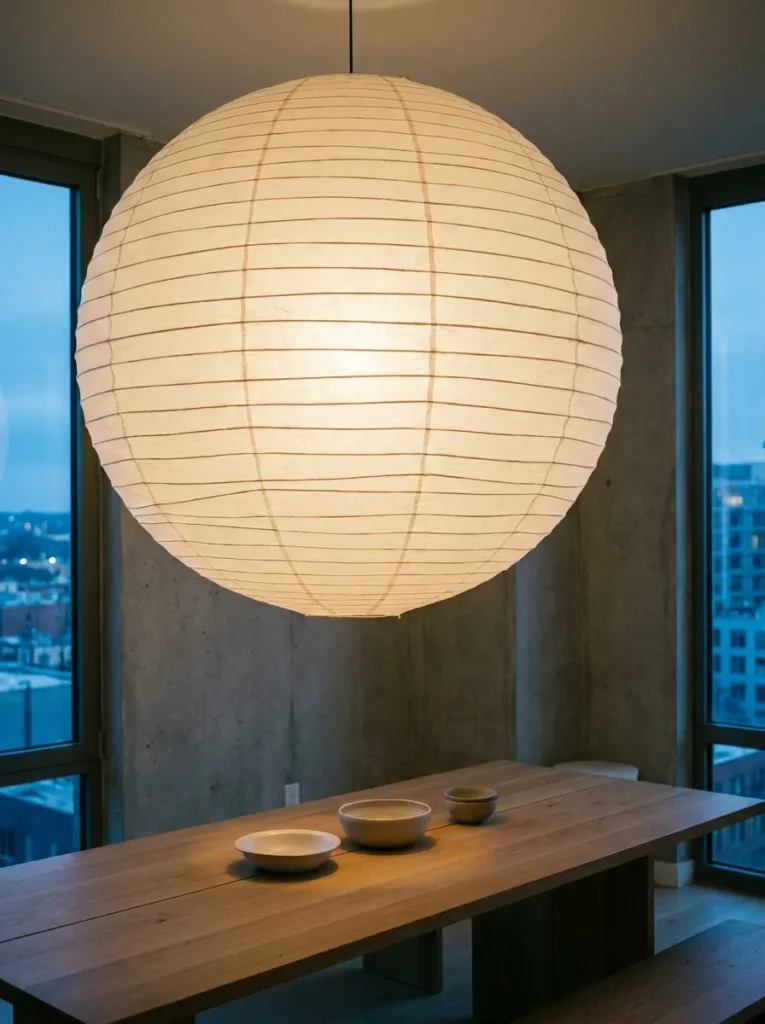
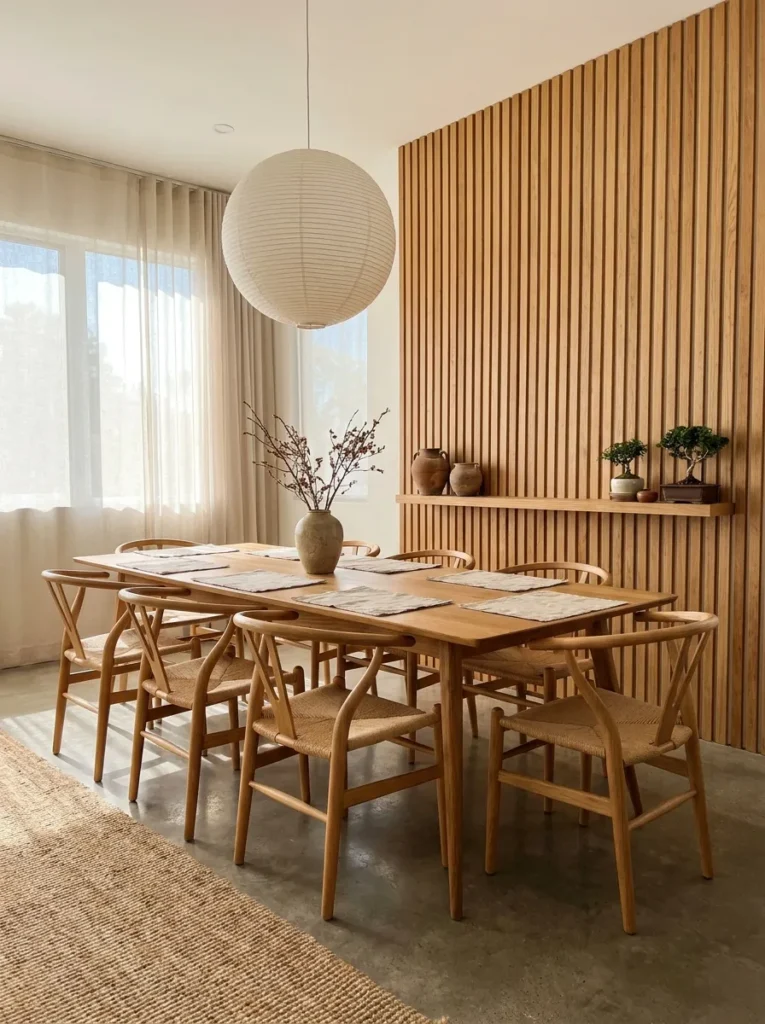
A tiny generic fixture makes a minimal room feel unfinished — fill the empty airspace with intentional art. Hang one oversized sculptural pendant directly over the table: a massive ribbed paper lantern or sweeping white plaster dome. Its sheer scale draws the eye upward, acting as floating sculpture that fills negative space perfectly.
Pendant Height
Hang the pendant’s bottom 30–36 inches above the tabletop with 8-foot ceilings; raise slightly for taller ceilings while keeping it visually connected to the table. The light should frame the dining area as its own intimate zone, not illuminate the whole room.
4. Curved Dining Chairs
Minimalism brings rigid straight lines — square tables, straight walls, flat windows — which can read sharp and aggressive. Soften the architecture with curves: surround a straight-edged table with chairs featuring arched rounded backs or soft curved wishbone frames. Rounded silhouettes break up boxiness and make the space feel human. More chair help: our dining chair guide.
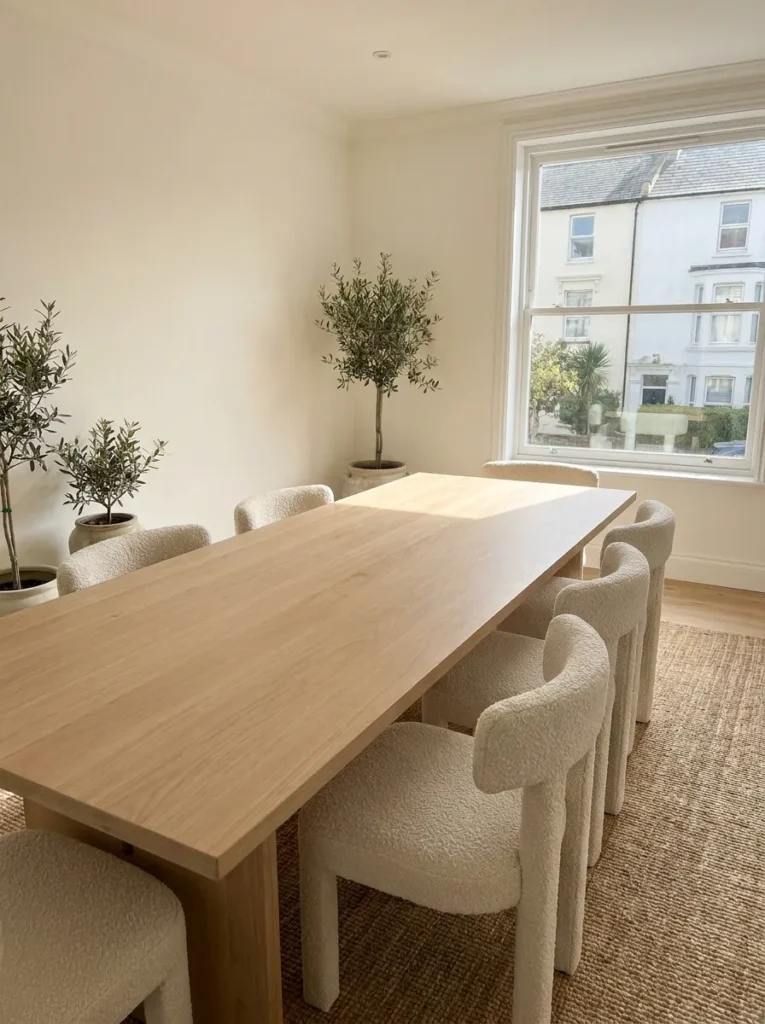
Comfortable Chair Spacing
Allow approximately 24 inches of table width per person for elbow room without an oversized feel, and leave a few inches between chairs rather than crowding them. Breathing room reinforces the calm uncluttered feeling.
5. One Statement Centerpiece
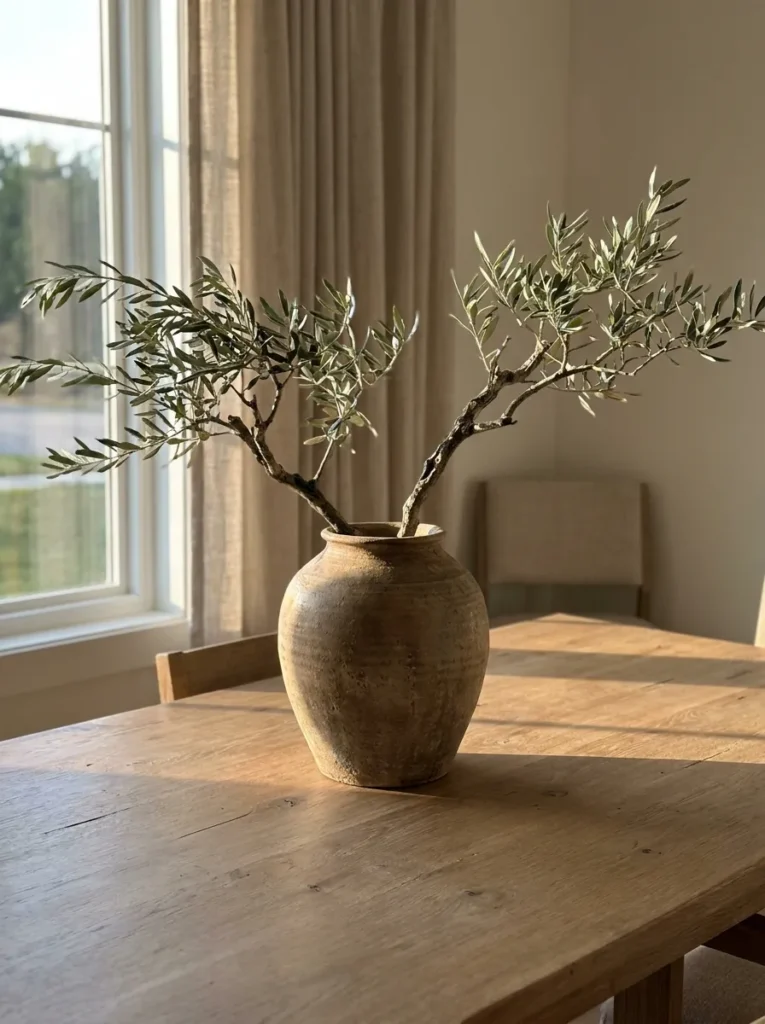
No table runner, four candlesticks, fruit bowl, and tray cluttering the center. Style with strict restraint: a single massive handmade ceramic vessel or rough-hewn wabi-sabi vase filled with one or two oversized reaching botanical branches (olive branches, dried dogwood). One asymmetrical focal point brings life and height while the tabletop stays perfectly clean.
6. A Neutral Textured Wool Rug
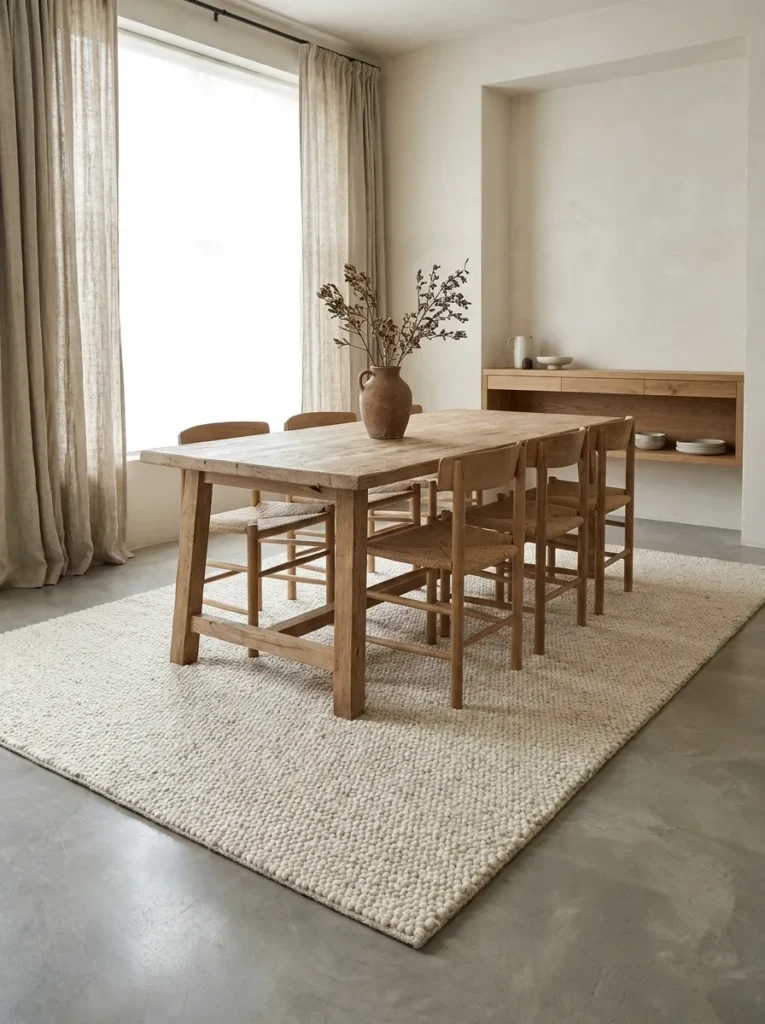
In stripped-back rooms echo is a real problem — bare floors bounce sound, making dining feel cold and loud. Introduce a large neutral area rug: thick hand-knotted wool or textured jute in solid cream or soft sand. Heavy looped texture absorbs sound and grounds the furniture without disturbing visual peace. Skip busy Persian prints here.
Which Table Material Fits Your Lifestyle?
Solid oak: families wanting durability and warmth. Walnut: elegant darker minimalist interiors. Travertine: luxury modern homes with low visual clutter. Glass: very small dining rooms needing visual openness. Solid wood is the safest long-term investment — it ages gracefully; stone makes incredible impact but needs more care.
7. A Japandi Wood-Slat Accent Wall
Blending Scandinavian coziness with Japanese minimalism: install a floor-to-ceiling slatted wood acoustic panel on one accent wall. The repetitive clean vertical lines provide incredible architectural texture and warmth while maintaining strict orderly minimalism.
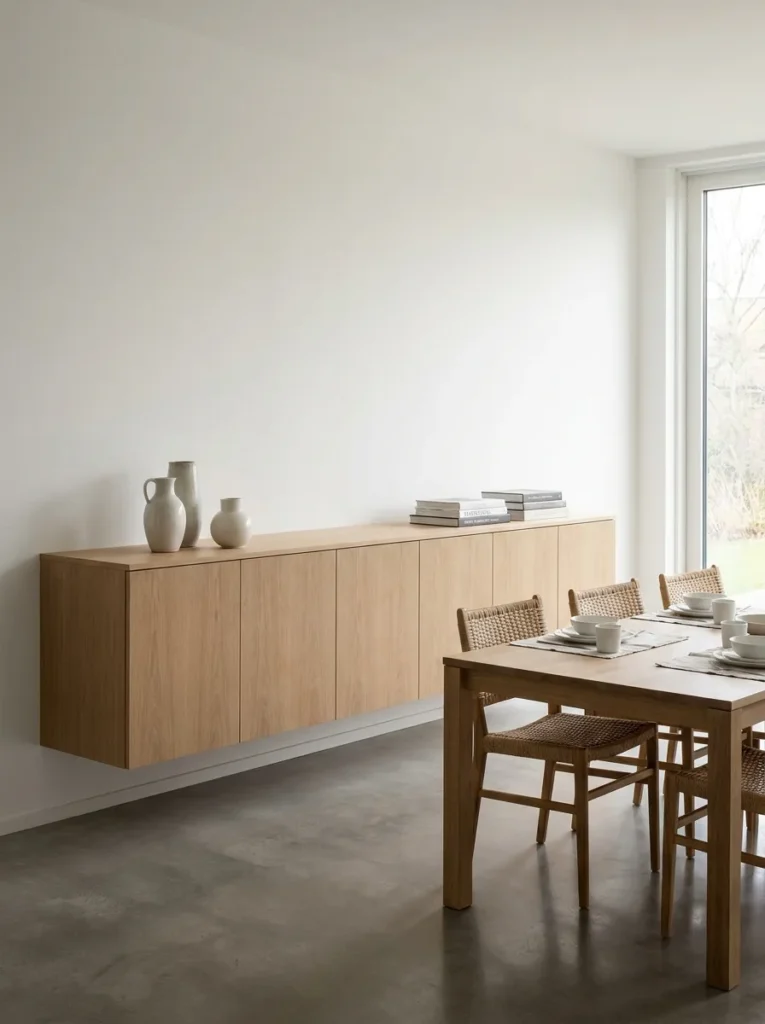
8. A Floating Credenza
No clutter-free dining room without somewhere for placemats, napkins, and serving dishes. A sleek wall-mounted floating credenza hovers a foot off the ground — tricking the eye into seeing a wider, more spacious room — while hiding all utility items behind flat hardware-less doors. Absolute visual silence.
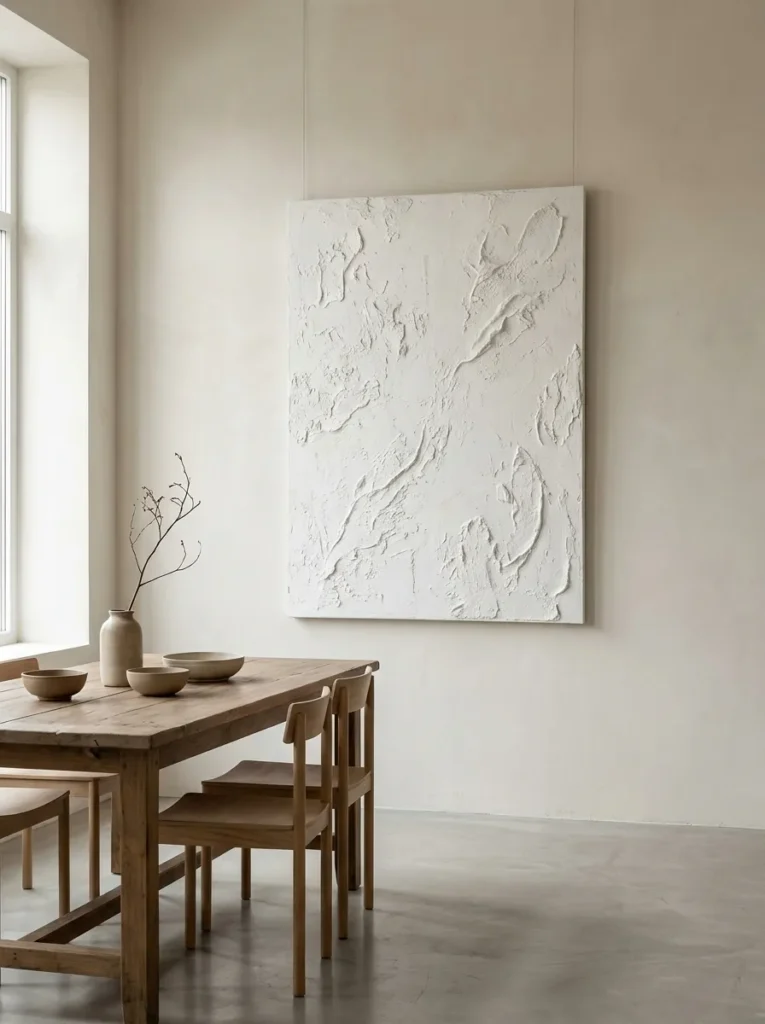
9. One Large-Scale Artwork
Take down the busy gallery wall; hang one massive oversized abstract piece or textured plaster canvas instead. The Rule of One: a single large-scale piece commands the room, creates a striking focal point, and leaves soothing negative space on surrounding walls so the room can breathe.
Is Warm Minimalism Right for You?
It works especially well if you prefer calm clutter-free spaces, enjoy natural materials over trendy décor, want a timeless (not seasonal) dining room, value quality furniture over changing accessories, and like interiors that stay relaxing for years. If you love displaying large collections or constantly changing decorative pieces, a layered eclectic style may suit you better. Warm minimalism shines when every object has a purpose.
Shop the Minimalist Look
You don’t need a sterile empty box — high-quality organic materials and sculptural shapes build the sanctuary. The curated checklist:
- Limewash paint kits: shop limewash paint kits on Amazon — soft velvety movement for blank drywall.
- Sculptural pendant lights: shop sculptural pendant lights on Amazon — an oversized paper lantern or plaster dome to claim the airspace.
- Neutral textured wool rugs: shop neutral wool rugs on Amazon — thick hand-knotted cream to absorb sound and ground the table.
- Sleek minimalist dining chairs: shop minimalist dining chairs on Amazon — curved soft silhouettes to break up hard lines.
- Oversized ceramic vases: shop oversized ceramic vases on Amazon — a single rough-hewn wabi-sabi vessel for the understated centerpiece.
Quick Answers
How do you make a minimalist dining room feel warm?
Layer natural materials (solid wood, wool, stone), add textured walls (limewash), use one sculptural light fixture, and soften hard lines with curved chairs. Warmth comes from texture and material, not from more objects.
What size dining table do I need?
Allow 24 inches of table width per person and at least 36 inches of clearance around the table (42–48 if it’s a walkway). Small apartments: 36–42 inch round; standard rooms: 60–72 inch rectangle.
How high should a dining room chandelier hang?
30–36 inches above the tabletop with 8-foot ceilings; slightly higher for taller ceilings. It should frame the dining zone, not light the whole room.
Affiliate Disclosure: As an Amazon Associate, I earn from qualifying purchases. If you click a link and buy, I may receive a small commission at no extra cost to you. Thank you for supporting my content!