
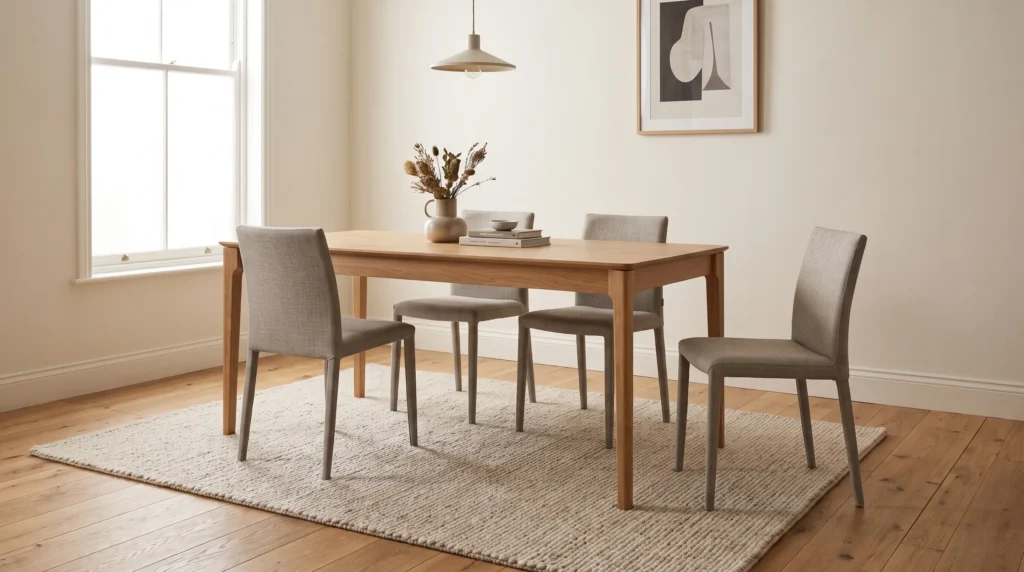
A dining chair can look perfect alone and be completely wrong for your table: seat too high, arms blocking the slide-under, a wide upholstered design crowding a compact dining area, or a narrow chair failing you mid-dinner. Choosing chairs isn’t about finding a style you like — it’s about finding one that works with the table you have. Height, width, depth, arms, materials, and proportions all decide comfort and practicality.
Start With the Table’s Measurements
Measure before shopping online — product photos make almost any chair look compatible. Record: floor to underside of tabletop, tabletop thickness, apron height and position, distance between legs, usable space beneath, and any drawers or supports that could interfere. Armchairs especially need this: arms that clear the table edge can still collide with the apron or tabletop. The table sets the boundaries; the chair must work inside them.
Get the Seat Height Right
You need enough room between seat and tabletop for legs, while arms rest naturally for eating. Too tall makes the table feel low; too short leaves you reaching up. Around 18 inches suits many standard setups — but treat it as a reference, not a rule. The relationship between your actual chair and your actual table is what matters, especially with antique, counter-height, custom, or thick tables. If possible, sit in a similar chair before ordering a full set — a few inches change everything over a long meal.
Check: Does It Fit Under the Table?
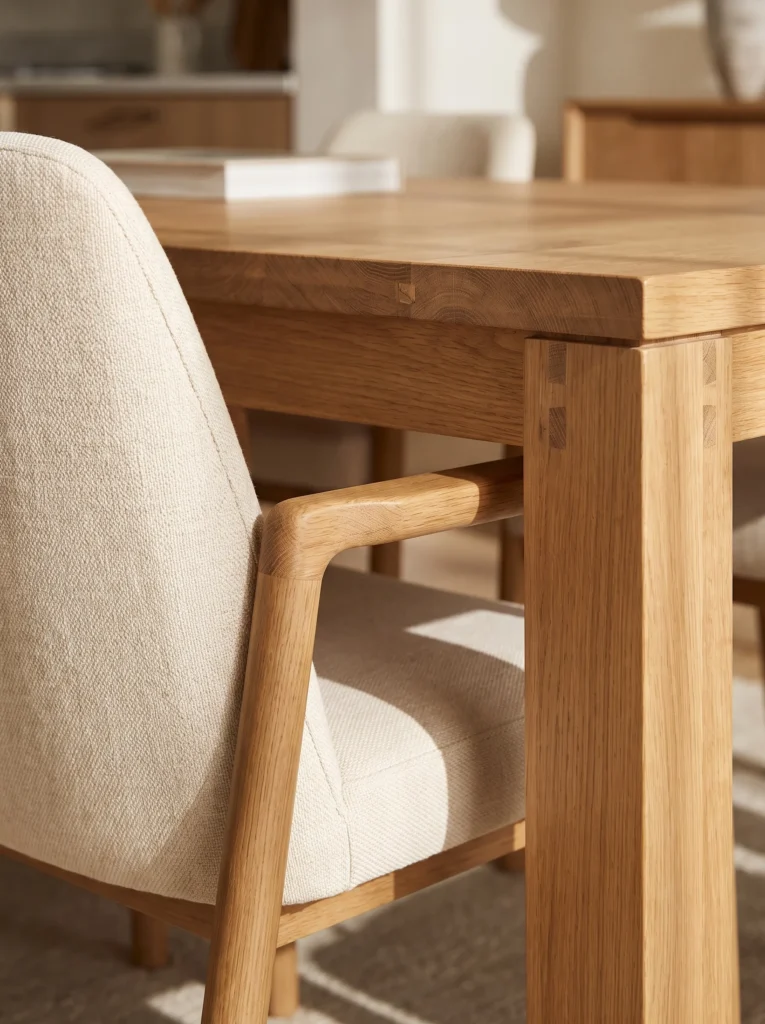
“Fits at the table” and “fits under the table” are different questions. For armchairs, measure the outside width of the arms (not just the seat) against the space between table legs. Check chair depth — deep chairs extend farther into the room than expected. And check the back: if the chair should slide underneath when not in use, the back and frame must clear the tabletop. Answer both questions before buying.
Armless, Armchair, or Bench?
Armless: easiest when space is limited — narrower profile, more chairs around the table, visually lighter, maximum flexibility.
Armchairs: more substantial and comfortable, especially at the ends of a rectangular table; more formal. But arms add width and can block the slide-under — measure them as furniture, not ordinary chairs.
Bench: flexible, casual, lets kids and extra guests squeeze in. Less individual support, less comfortable for long meals without a backrest. Match the choice to how the table is actually used — casual family breakfasts vs. long hosted dinners. Still deciding on the table itself? Our dining table guide covers sizing and shapes.
Match Chair Shape to Table Shape
Matching sets aren’t required — compatibility beats matching. Long rectangular tables accept many chair shapes, but bulky chairs feel heavy. Round tables suit compact-footprint chairs (the curved top already makes a strong central statement). Square tables handle substantial chairs when the room allows. Oval tables love soft curves and rounded backs, though straight lines work too. Deliberate contrast — substantial wood table, lighter upholstered chairs — works as long as proportions stay balanced.
Plan for Chairs in Use, Not Just Pushed In
A chair occupies more room when someone sits in it: it pulls back, someone walks behind, a cabinet door opens, a plate gets carried past. The dining area must work in two conditions — chairs pushed in and chairs in use. Rehearse the everyday movements: pull out, sit, walk behind, carry a dish. These matter more than how the chairs photograph when nobody’s there — especially in open-plan kitchens or near busy doorways.
Choose Materials for Real Life
Wood: practical, wipes clean, visually light with slim frames — but hard seats tire during long dinners.
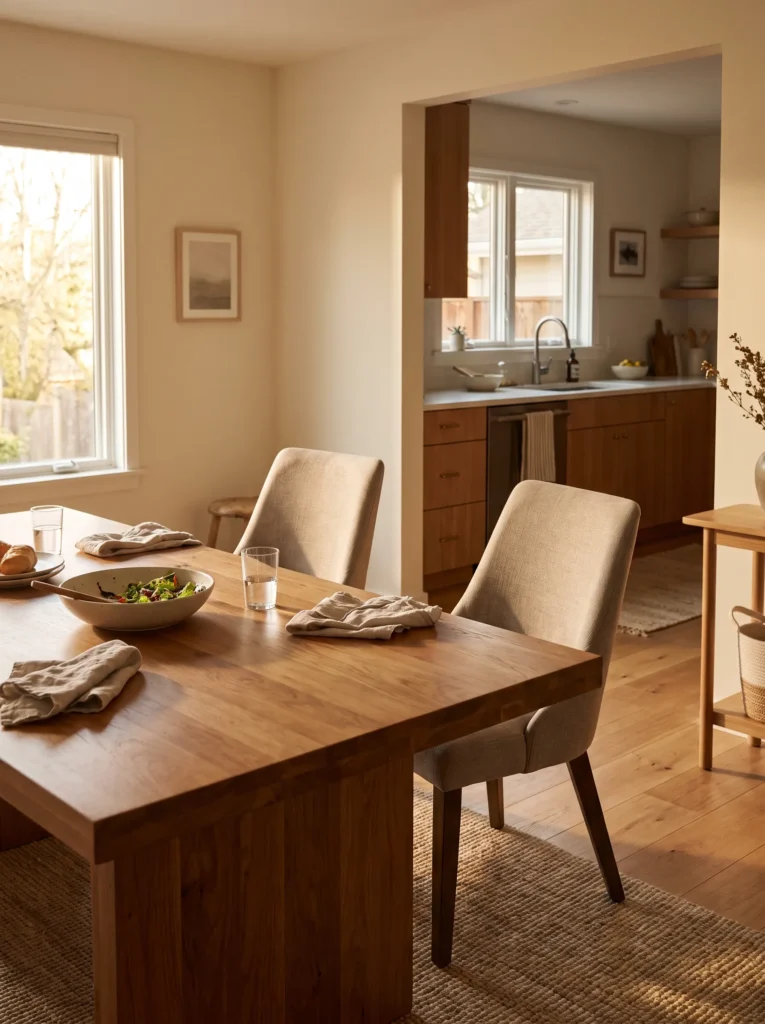
Upholstered: comfortable for long meals, adds texture and color without changing the table — but demands more thought about spills and cleaning.
Performance/easy-clean fabrics: the heavy-use answer — many contemporary chairs pair practical upholstery with refined shapes. The test is simple: can the chair handle how your household actually uses the table? A beautiful chair needing constant protection becomes frustrating fast.
Comfort Beyond the Seat
Check seat depth, back height, back angle, firmness, arm position, edge shape, and overall support. Very deep chairs feel luxurious until shorter users can’t sit back with feet supported. Rigid uprights work for short meals, tire during long ones. With mixed heights at the table, don’t choose for one person’s proportions. Actually sit in the chair — ten minutes teaches more than any product photo.
Mix Without Looking Random
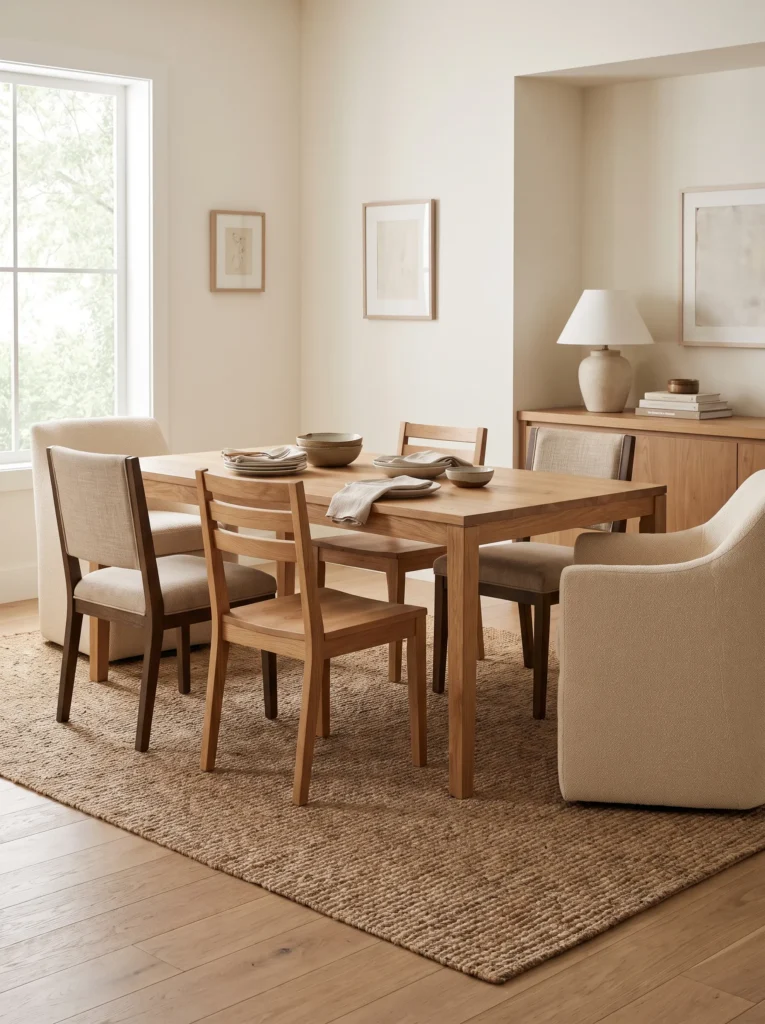
Mixed chairs can feel more personal — just give the differences a connection: similar silhouette, same wood tone, shared upholstery color, similar proportions or visual weight, repeated material. Classic approach: matching armless chairs on the sides, more substantial chairs at the ends. Or one design in varied finishes. Or chairs plus a bench, kept intentional. The goal is differences that look deliberate, not accidental.
Test One Before Buying the Set
Place one chair at your table: check seat-to-tabletop relationship, sit for several minutes, move your legs underneath, pull out and push back, check arm collisions. Then place a second chair beside it — two chairs can each seem narrow alone but crowd together. Check the chair from across the room: does its height overwhelm the table? Block a window? And the real test: would you happily sit there for an entire meal? One test chair prevents an expensive six-chair mistake.
Your Pre-Order Checklist
Seat height comfortable with the tabletop? Required number fits without crowding? Depth leaves room around the table? Arms clear the apron? Leg clearance for knees? Comfortable through a long meal? Material handles your household? Proportions scaled to the table? Chairs pull out without blocking walkways? Table and chairs feel connected without matching exactly? Yeses across the board = a chair that works for more than the photograph.
Quick Answers
What height dining chair do I need?
It depends on your table, not a generic standard — you need comfortable space between the seat and the tabletop underside for legs. Around 18 inches works with many standard tables, but always compare the specific chair’s seat height to your table’s underside clearance.
Can dining chairs have arms?
Yes — they’re comfortable and formal, especially at table ends. Just measure the outside width of the arms against the space between table legs and the apron height, so the chairs can slide in without colliding.
Should dining chairs match the table?
They don’t need to match — compatibility matters more. Keep proportions balanced and give mixed chairs a connecting thread (wood tone, upholstery color, silhouette, or visual weight) so differences look deliberate.
Affiliate Disclosure: As an Amazon Associate, I earn from qualifying purchases. If you click a link and buy, I may receive a small commission at no extra cost to you. Thank you for supporting my content!