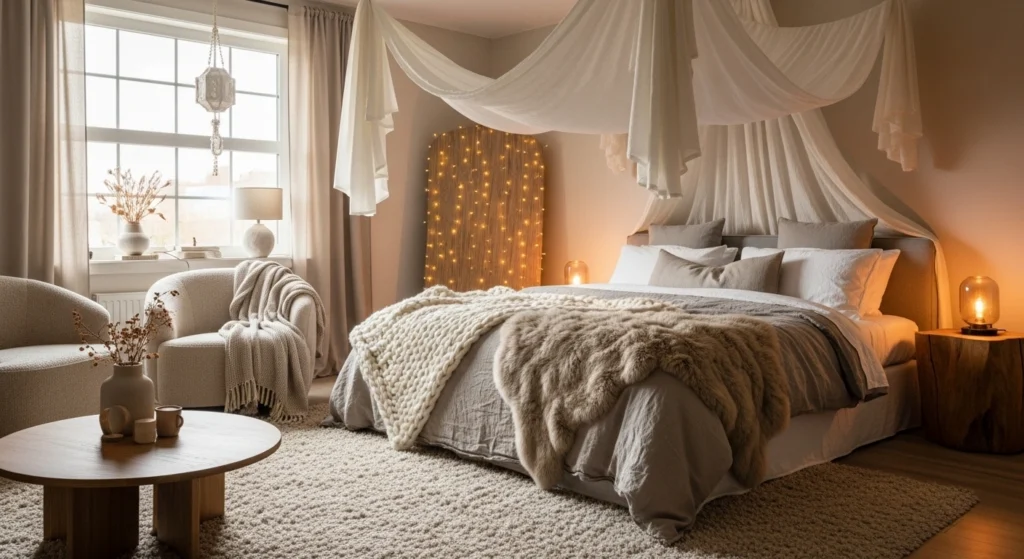
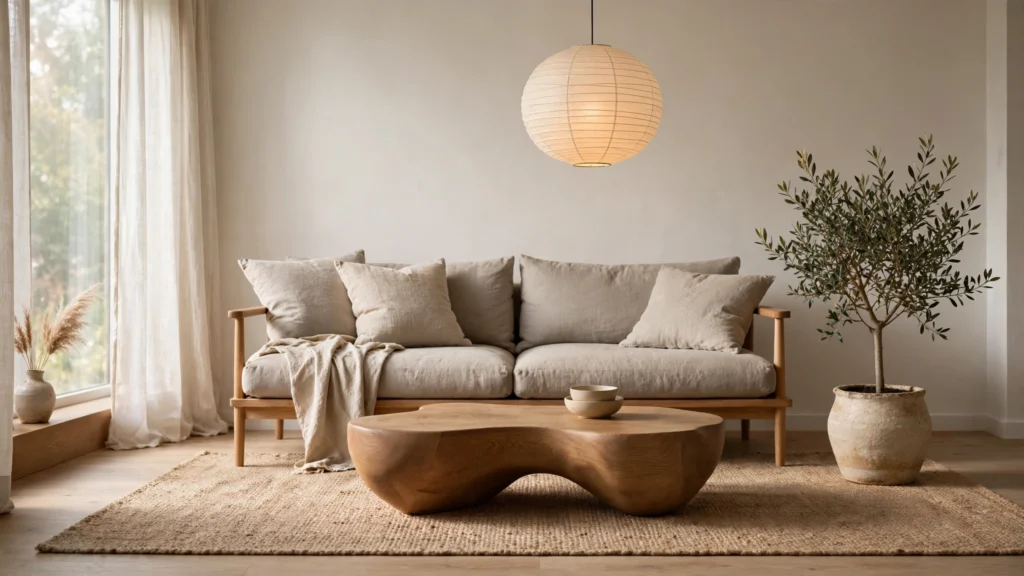
Some rooms you walk into and your shoulders drop. The noise in your head quiets. That’s the Japandi effect — the design blend of Japanese minimalism and Scandinavian warmth that’s been quietly taking over living rooms everywhere.
Japandi takes the best of both worlds: Japan’s love of restraint, natural materials, and beautifully imperfect handmade things, plus Scandinavia’s cozy warmth and livable comfort. The result is a living room that’s minimal but never cold. Here are 17 ideas to bring that calm home.
If you love the less-but-better philosophy, our minimalist luxury living spaces guide goes deeper on elevated simplicity — and these quiet luxury home decor ideas share the same warm, restrained DNA.
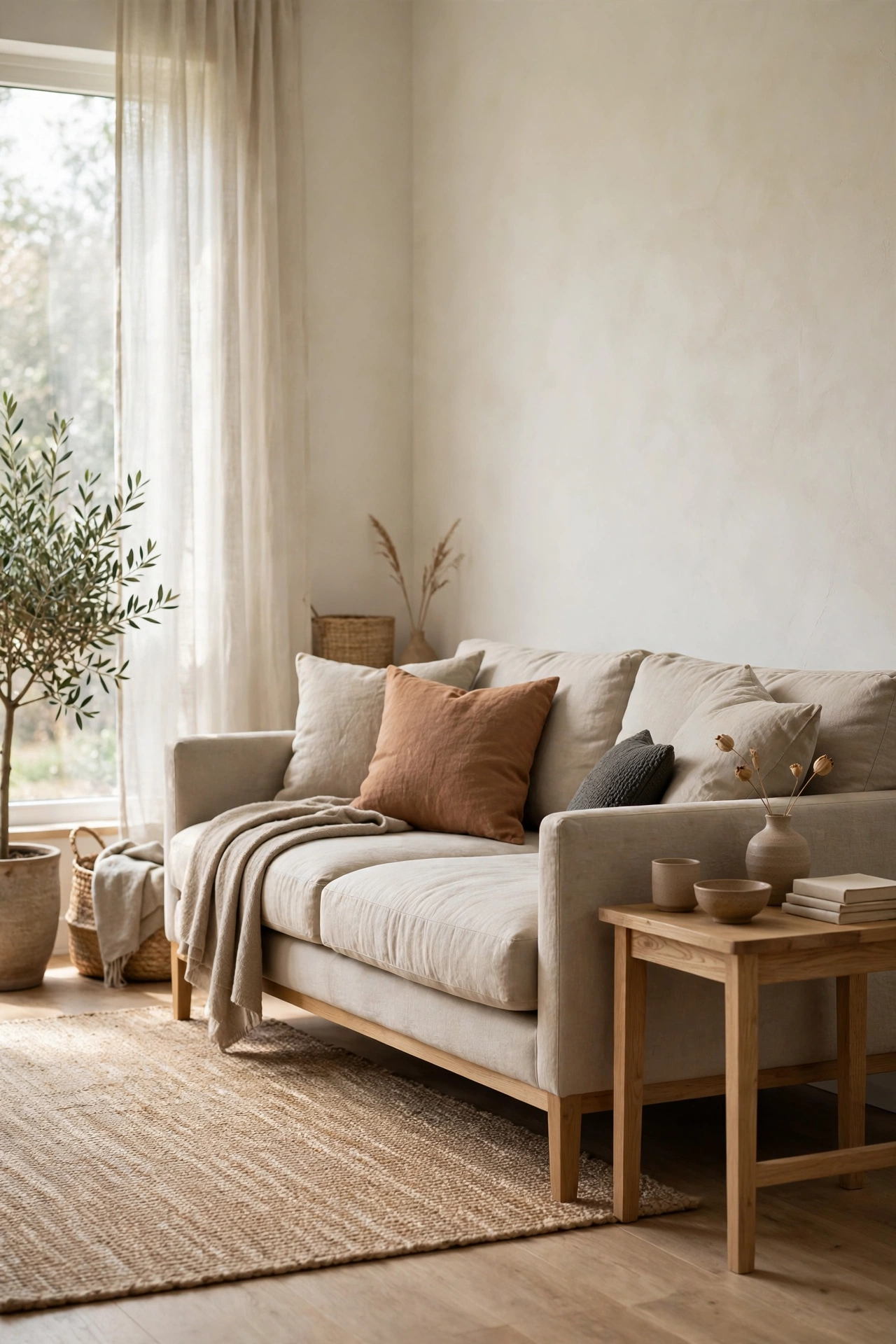
1. Start with a Warm, Quiet Palette
Every Japandi living room begins with color — or rather, the near-absence of it. Think warm white walls, a soft greige sofa, touches of clay, sand, or mushroom, with a whisper of charcoal for grounding. Avoid stark bright white; it reads clinical where Japandi should read calm.
Tip: Build your palette from a natural landscape photo you love — sand, stone, bark, fog — and pull three or four tones from it.
2. Bring the Furniture Down Low
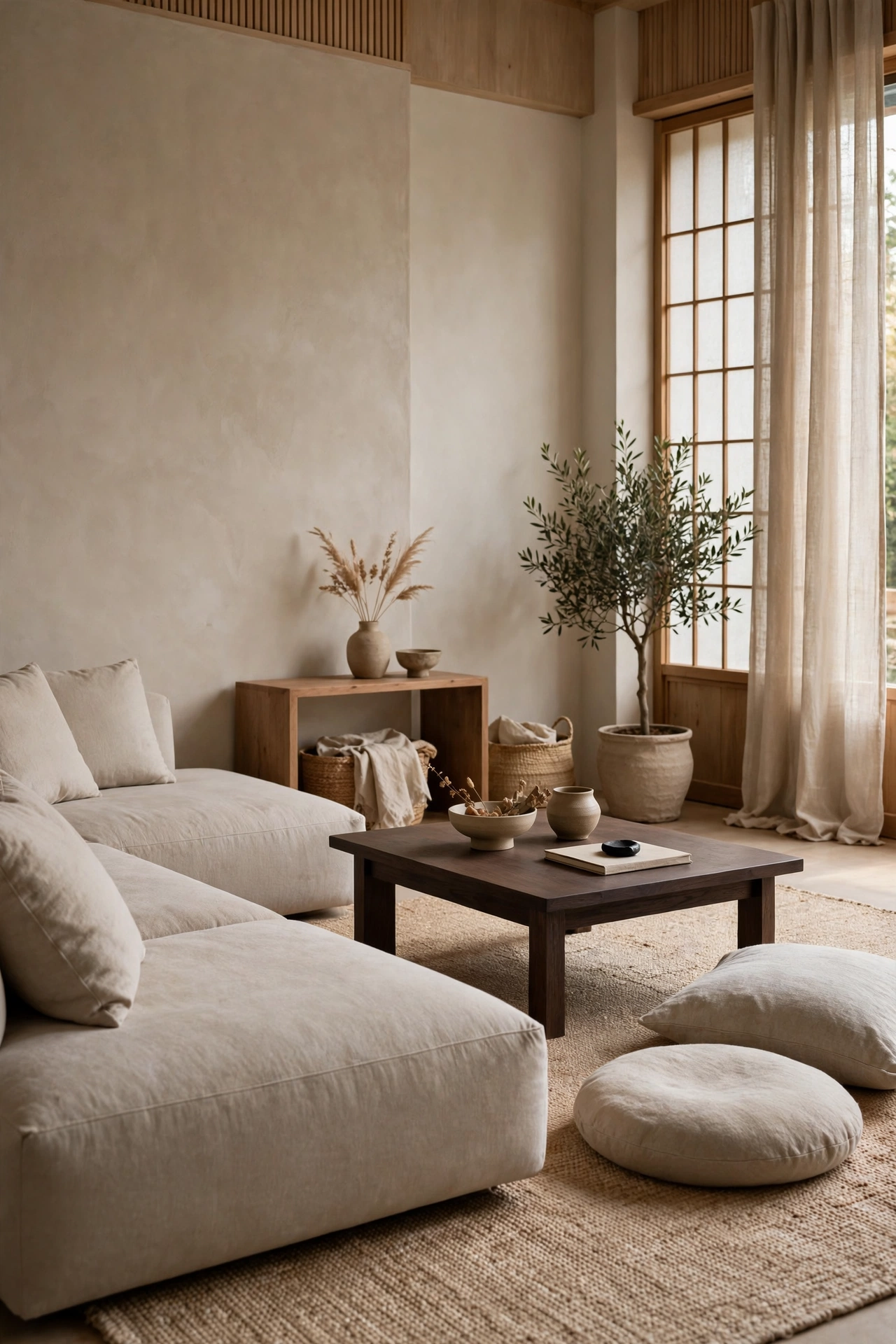
Low seating is one of Japandi’s clearest signatures. A low-profile sofa, a floor cushion or two, and a coffee table that sits closer to the ground make ceilings feel higher and the whole room feel grounded. It’s a subtle shift that changes how a room breathes.
Tip: Aim for a coffee table around 10 to 14 inches high — noticeably lower than standard — to get the effect.
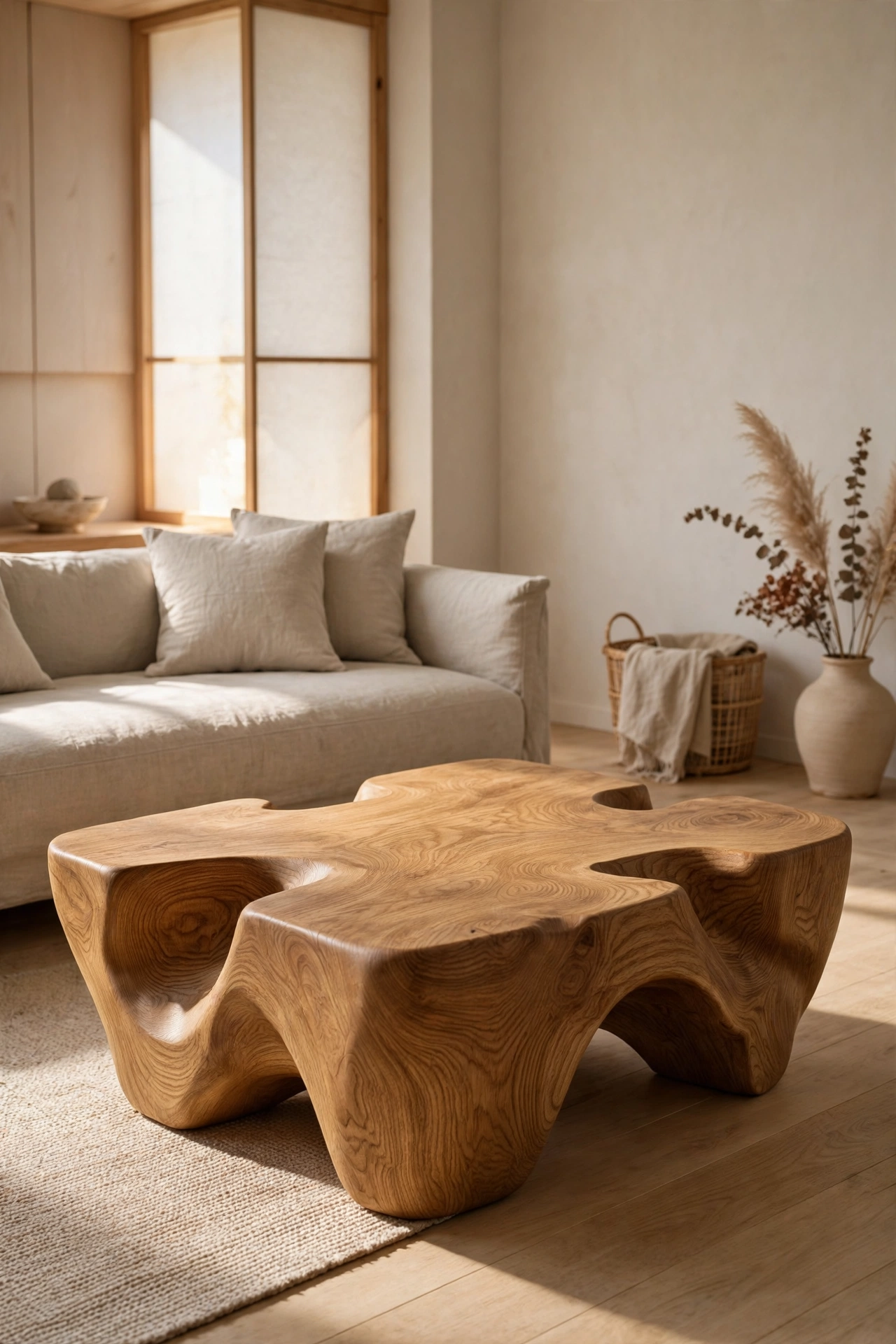
3. Let One Handcrafted Wood Piece Lead
Japandi rooms usually have a quiet focal point, and it’s often furniture rather than art. A sculptural solid-wood coffee table, a carved sideboard, or a live-edge bench gives the eye somewhere to rest. Choose one hero piece and let everything else stay simple.
Tip: Look for visible grain, joinery, or an organic edge — craftsmanship you can see is the whole point.
4. Layer Natural Textures
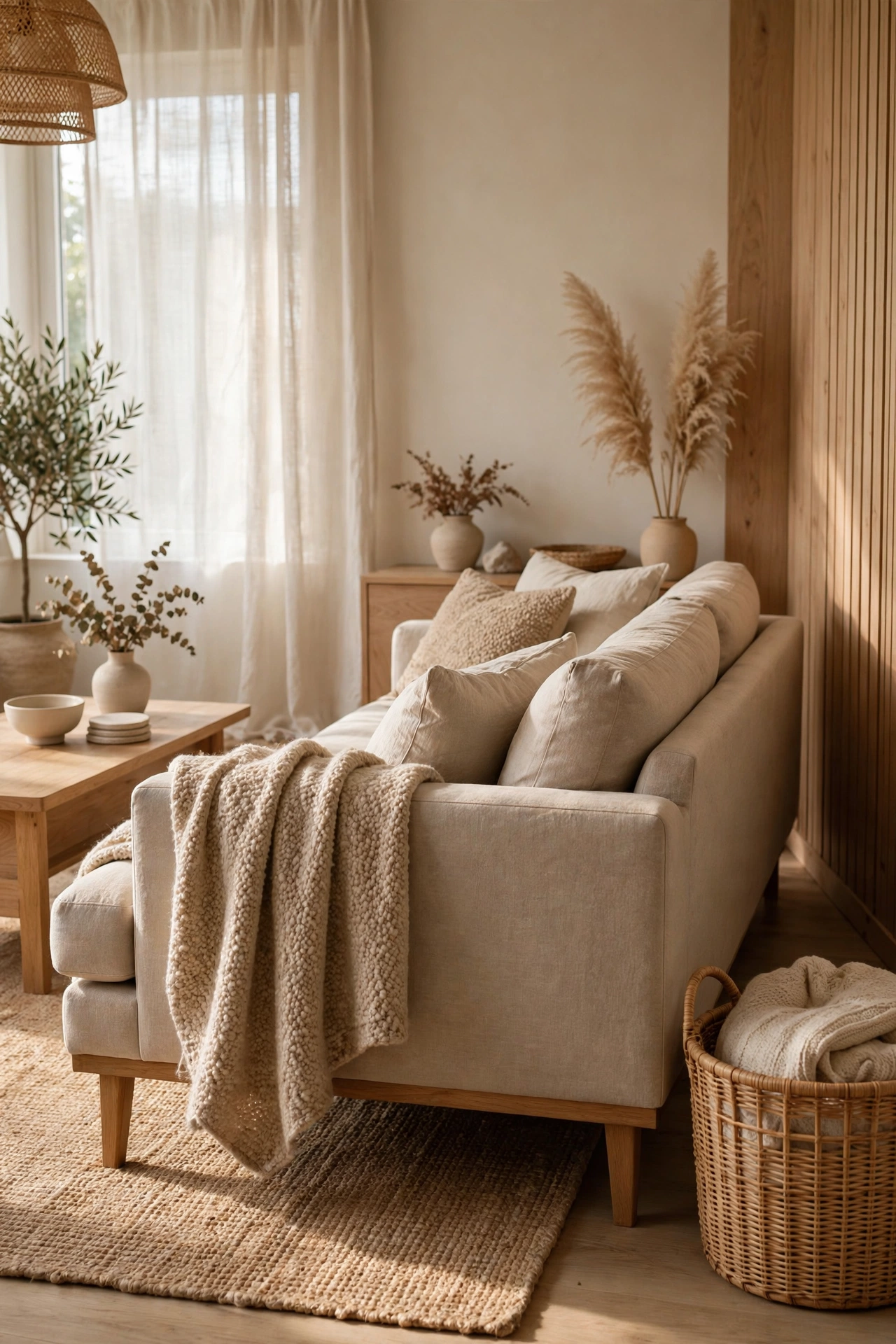
Minimalism stays warm in Japandi because of texture. Linen upholstery, a nubby wool throw, a jute rug underfoot, a rattan basket in the corner — each surface adds depth without adding visual noise. It’s layering you feel more than see.
Tip: Keep all textures in the same tonal family so the layering reads serene rather than busy.
5. Hang a Paper Lantern
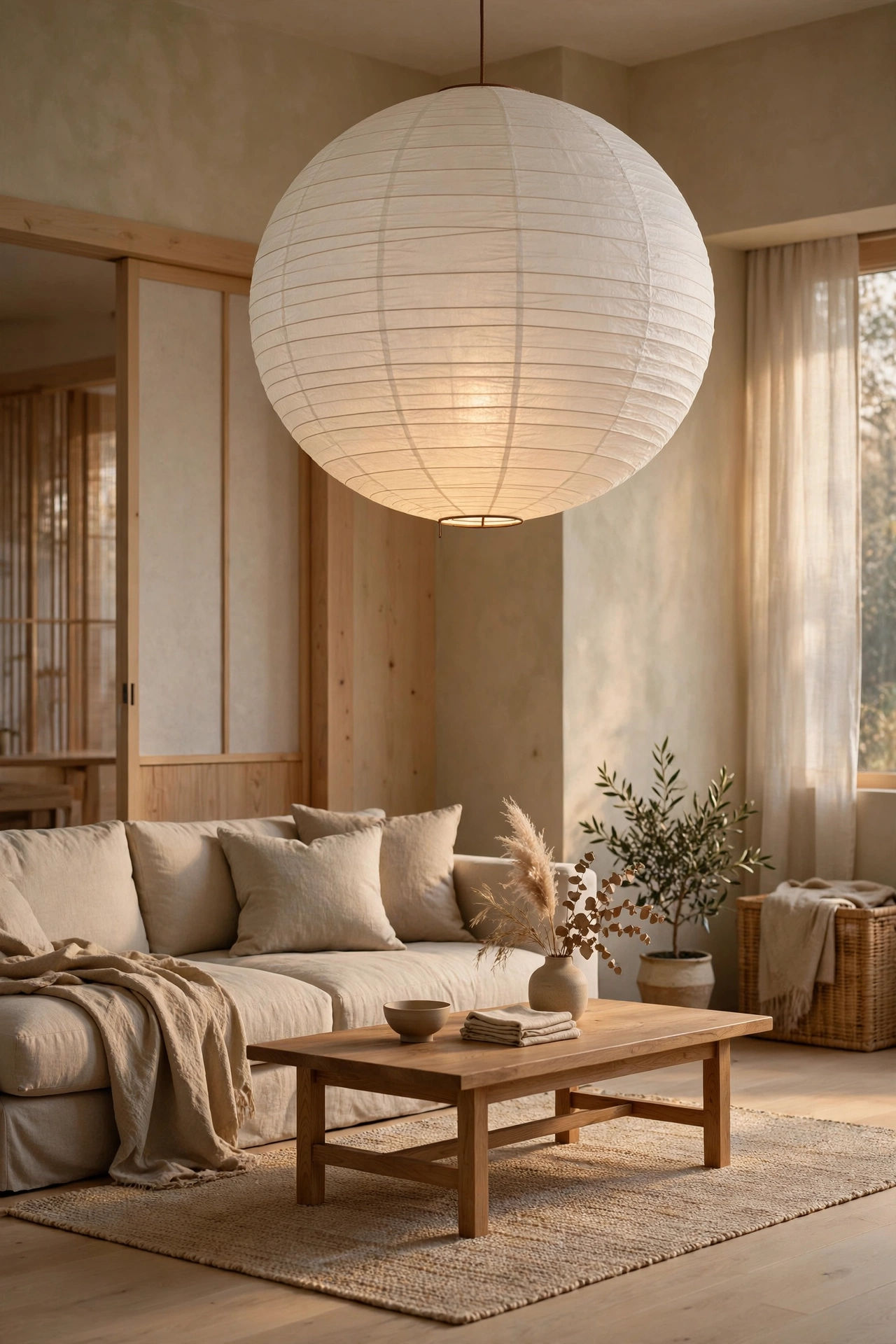
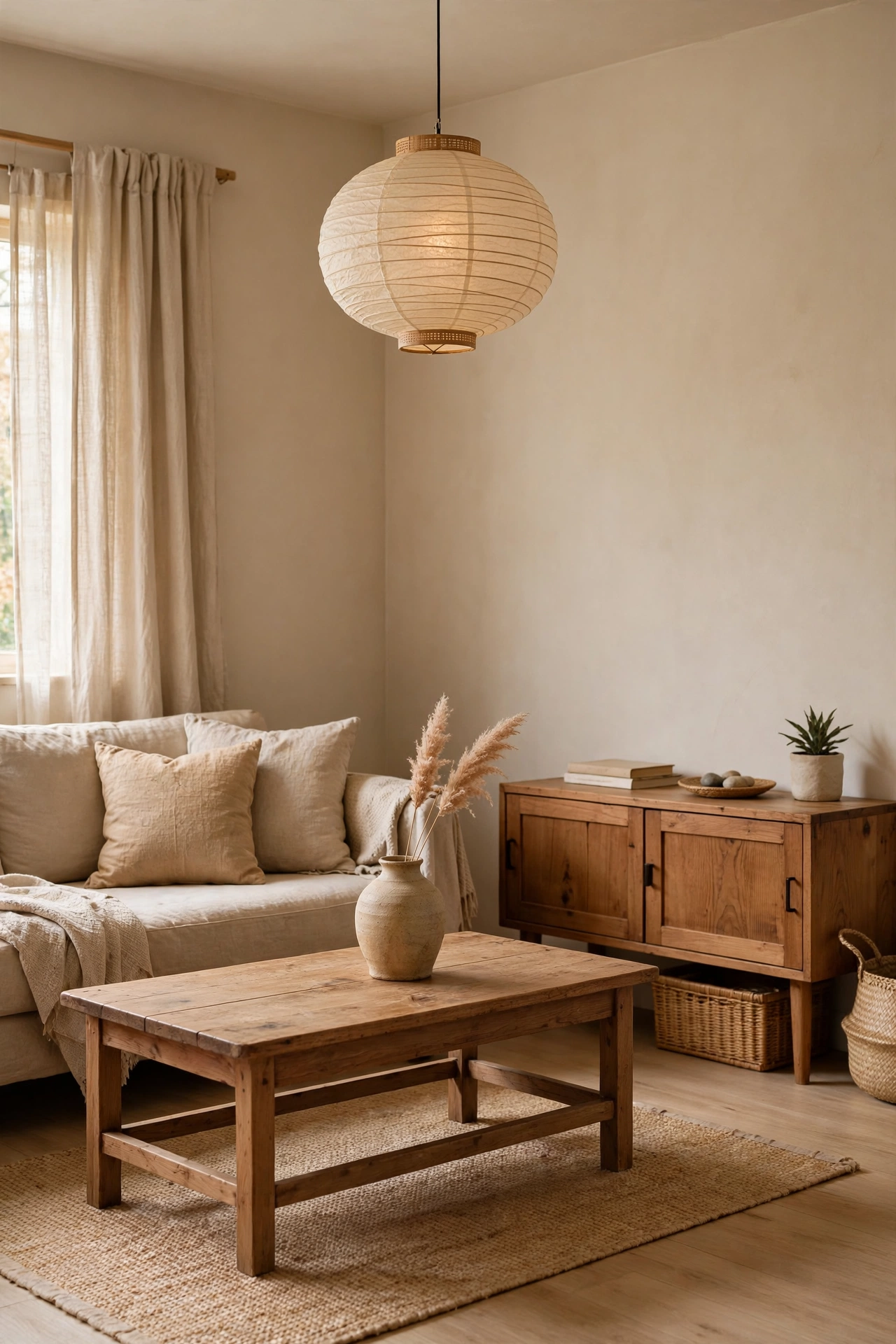
Nothing says Japandi like a paper lantern. The soft, diffused glow it throws is the opposite of harsh overhead lighting, and its sculptural round or oval shape adds art to the ceiling. It’s the single most transformative (and affordable) Japandi swap.
Tip: Hang it lower than you think — just above head height — so the glow pools warmly over the seating area.
6. Lay Down a Natural Fiber Rug
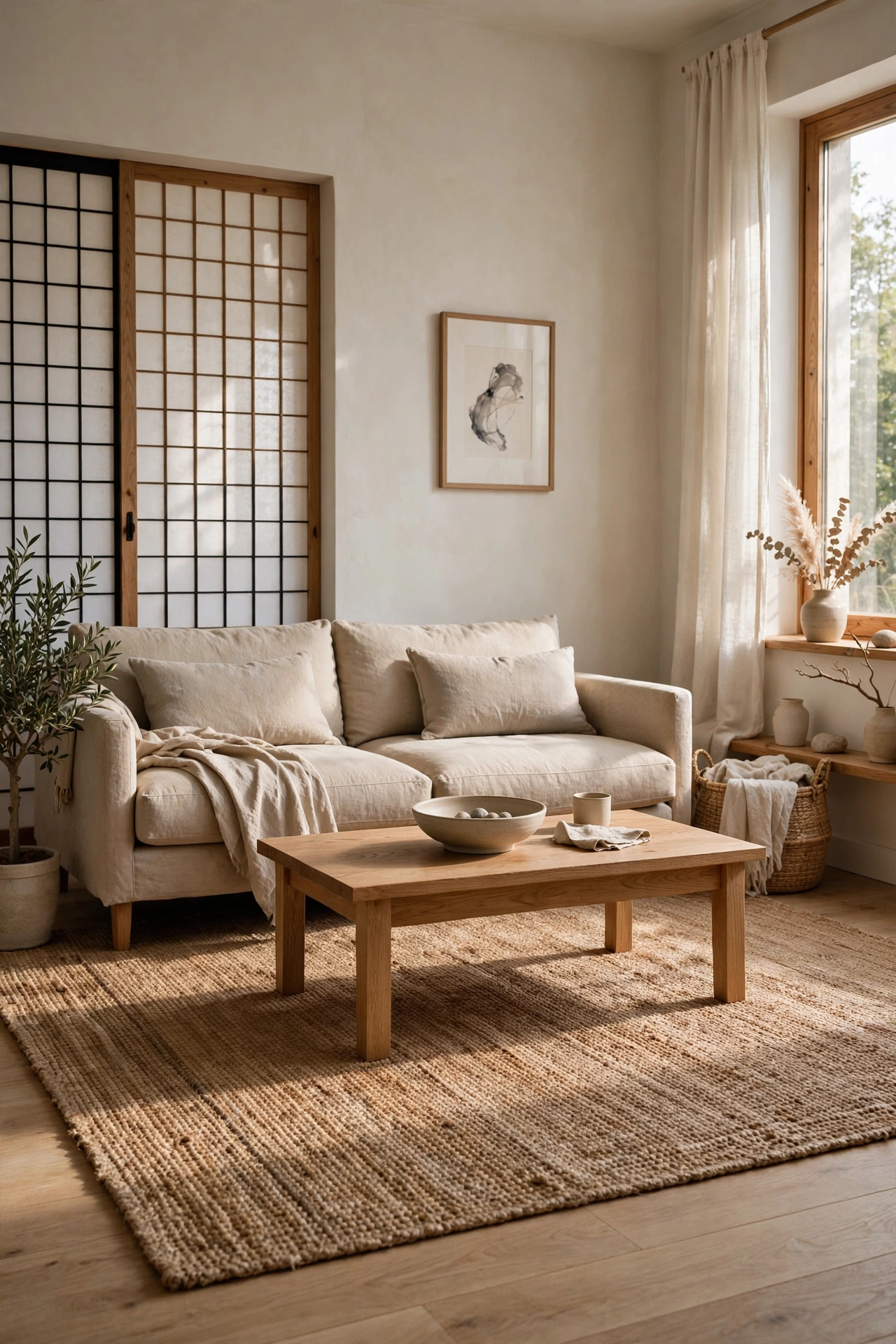
A jute, seagrass, or wool flatweave rug in a natural tone anchors the seating area and adds sustainable warmth underfoot. In Japandi rooms the rug is a quiet foundation, not a statement — let it ground everything else.
Tip: Size it generously: at least the front legs of every seating piece should rest on the rug.
7. Embrace Wabi-Sabi Ceramics
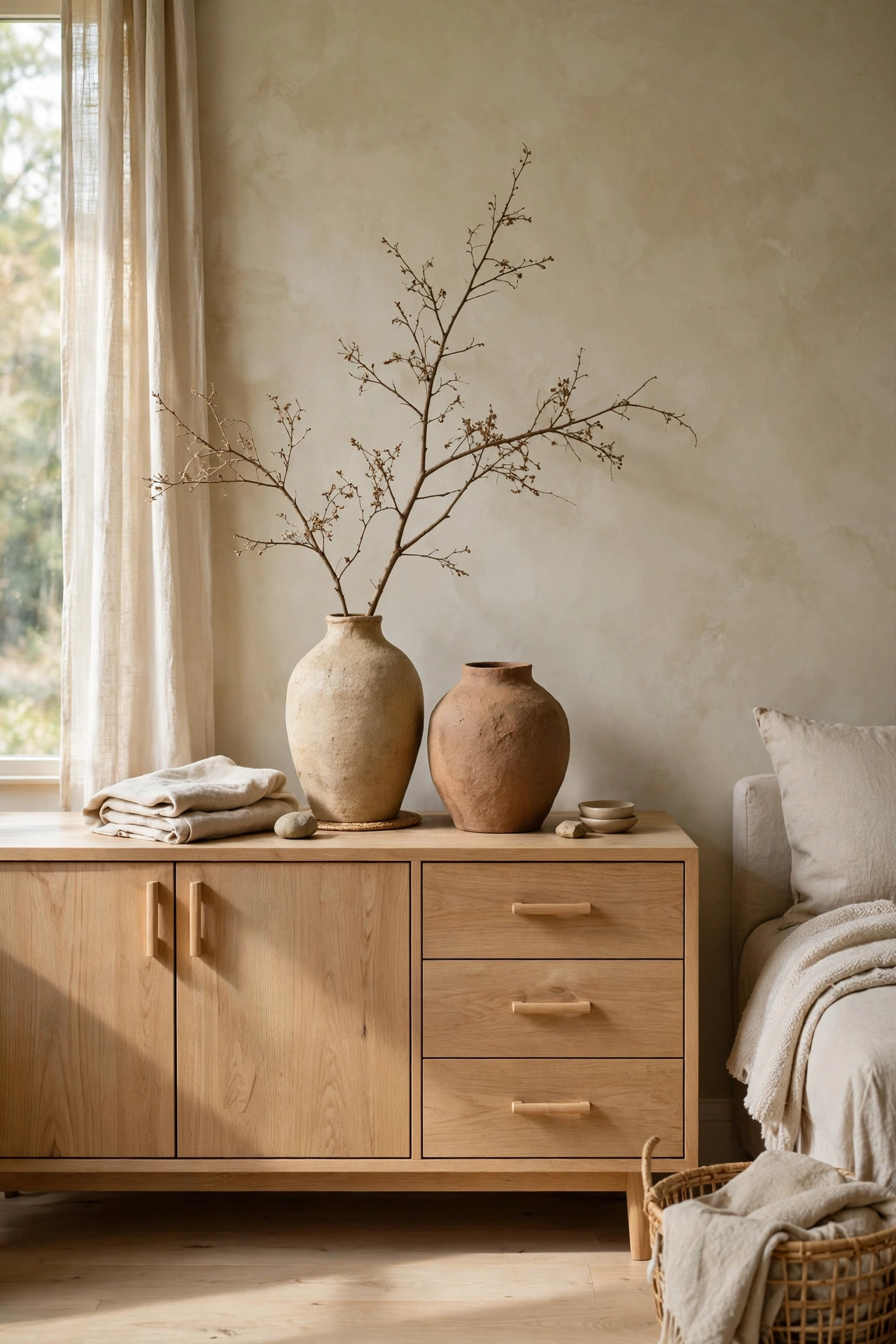
Wabi-sabi — the Japanese love of imperfection — is Japandi’s soul. A handmade ceramic vase with an uneven rim, a matte stoneware bowl, a slightly lopsided mug: these imperfect objects bring warmth and humanity that perfect decor never can.
Tip: Display one or two pieces alone rather than in a group — a single imperfect object gets the attention it deserves.
8. Add One Living Plant
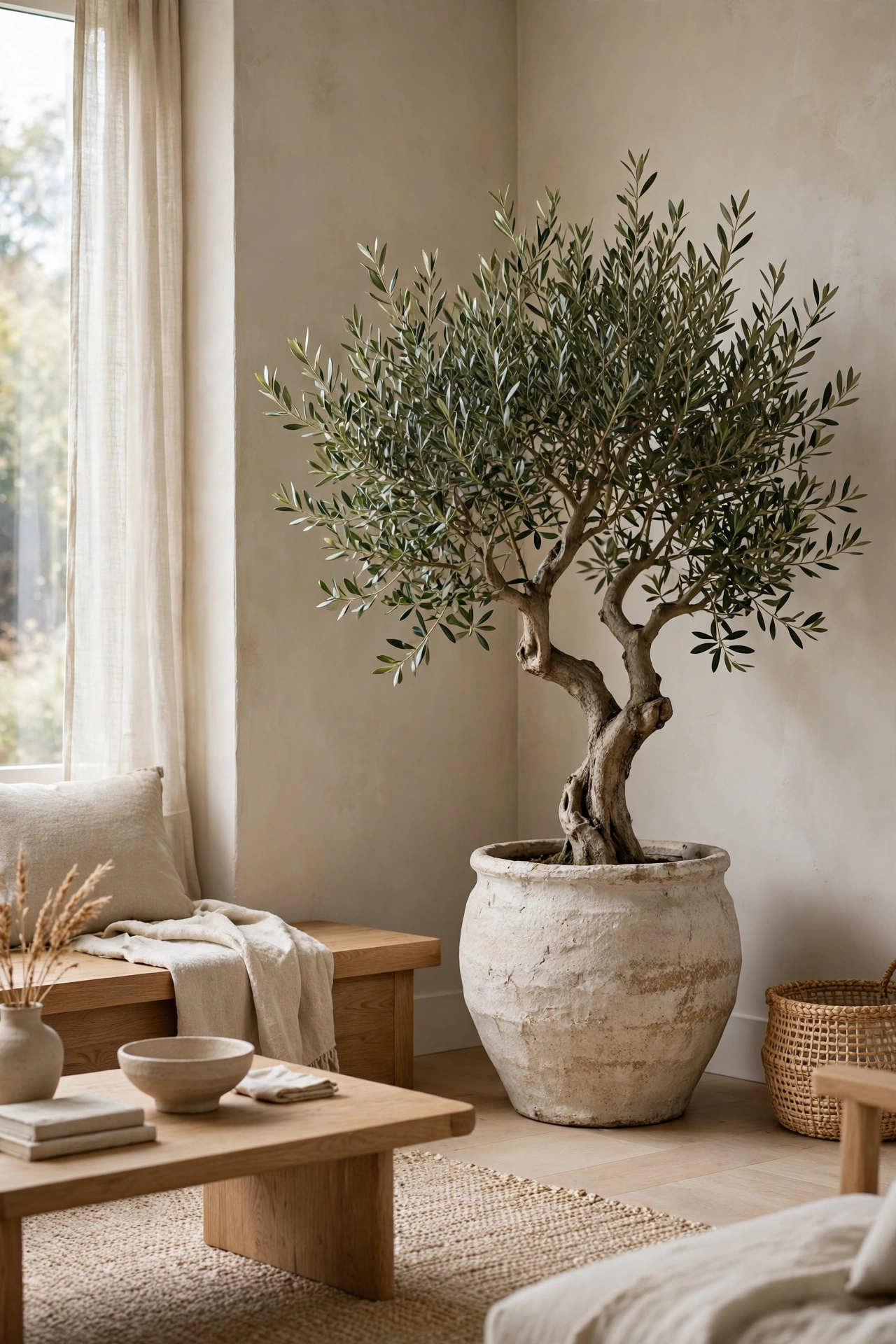
Greenery is non-negotiable in Japandi — it’s the living, breathing counterpoint to all that calm. An olive tree in the corner, a sculptural bonsai on the sideboard, or a tall fiddle leaf fig adds life and soft organic shape.
Tip: One great plant beats five small ones; scale and simplicity matter more than variety here.
9. Leave Some Space Empty
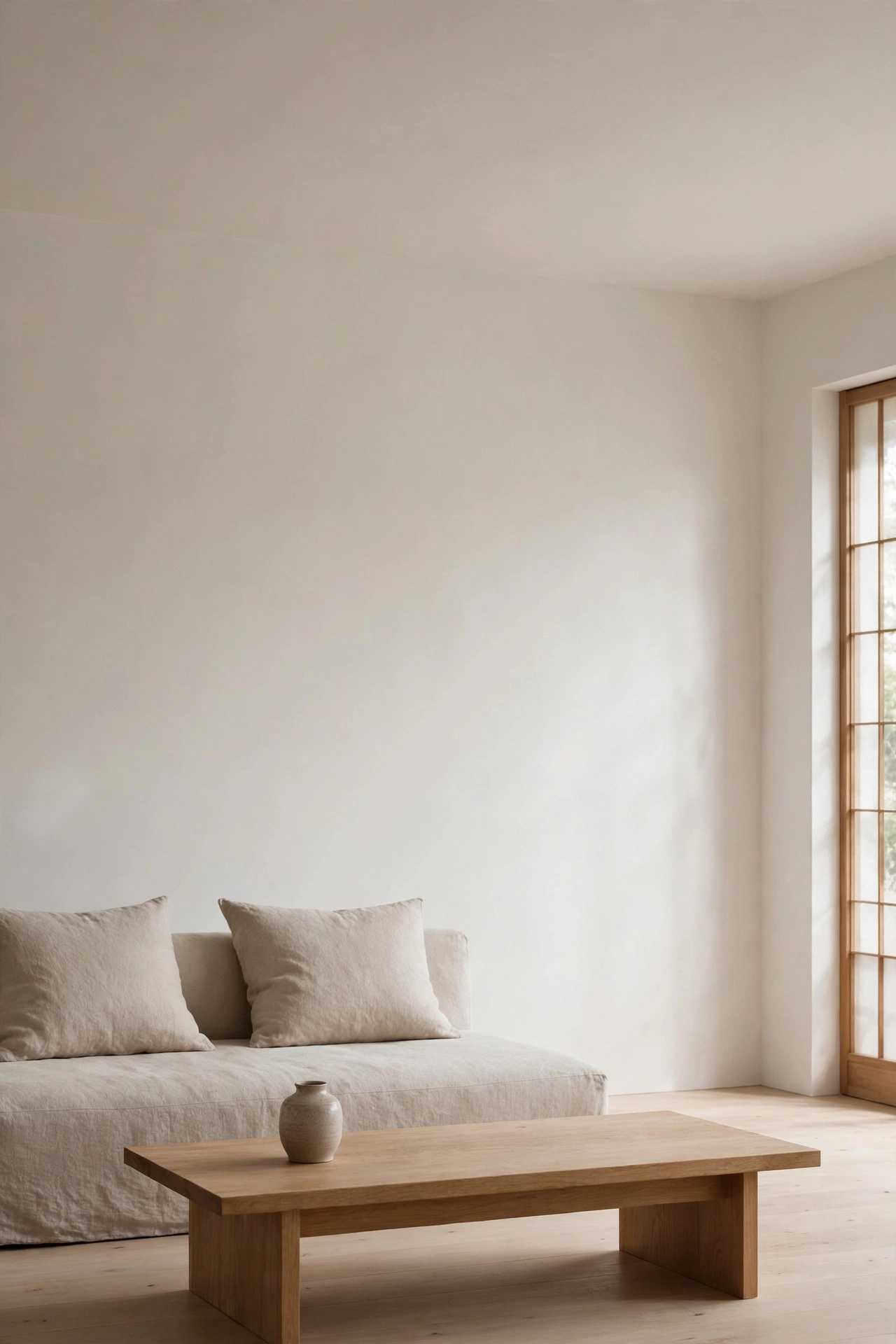
Japandi is as much about what you leave out as what you add. An empty corner, a clear stretch of wall, a coffee table with just one object — negative space is the luxury here. When in doubt, remove something.
Tip: Try the one-in-one-out rule: every new object means something else leaves the room.
10. Mix Light and Dark Wood with Intent
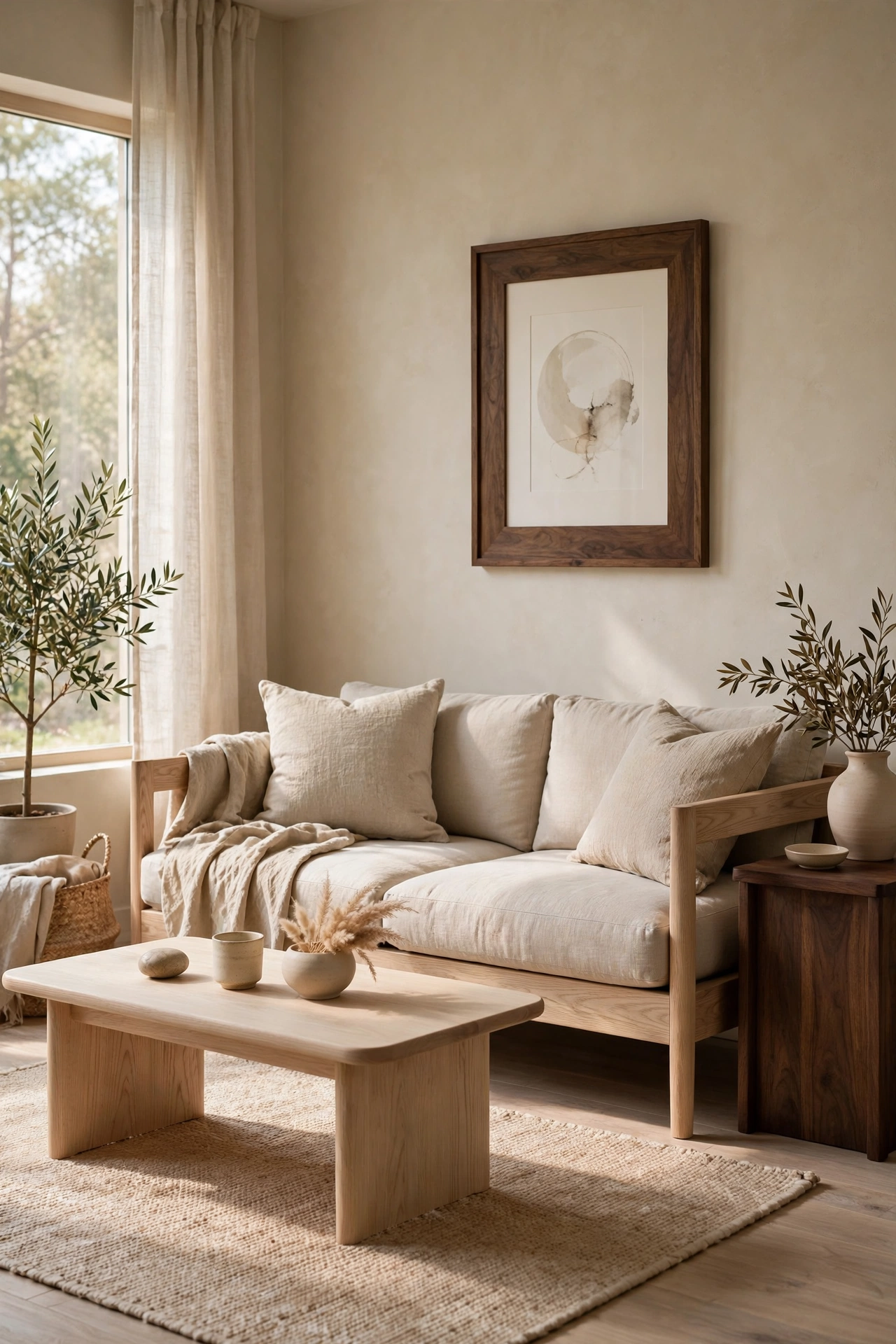
Japandi loves wood in two registers: pale oak or ash for lightness, and a darker walnut or charred tone for depth. The trick is restraint — one primary wood with a single darker accent keeps the mix feeling deliberate.
Tip: Repeat the darker wood at least twice (say, a side table and a frame) so it reads as a choice, not an accident.
11. Choose Linen Curtains
Heavy drapes have no place in Japandi. Sheer or lightweight linen curtains filter daylight into a soft, hazy glow while keeping the room feeling open and airy. They move beautifully too — a little life in a still room.
Tip: Hang them high and let them just kiss the floor; puddling fabric contradicts the clean lines.
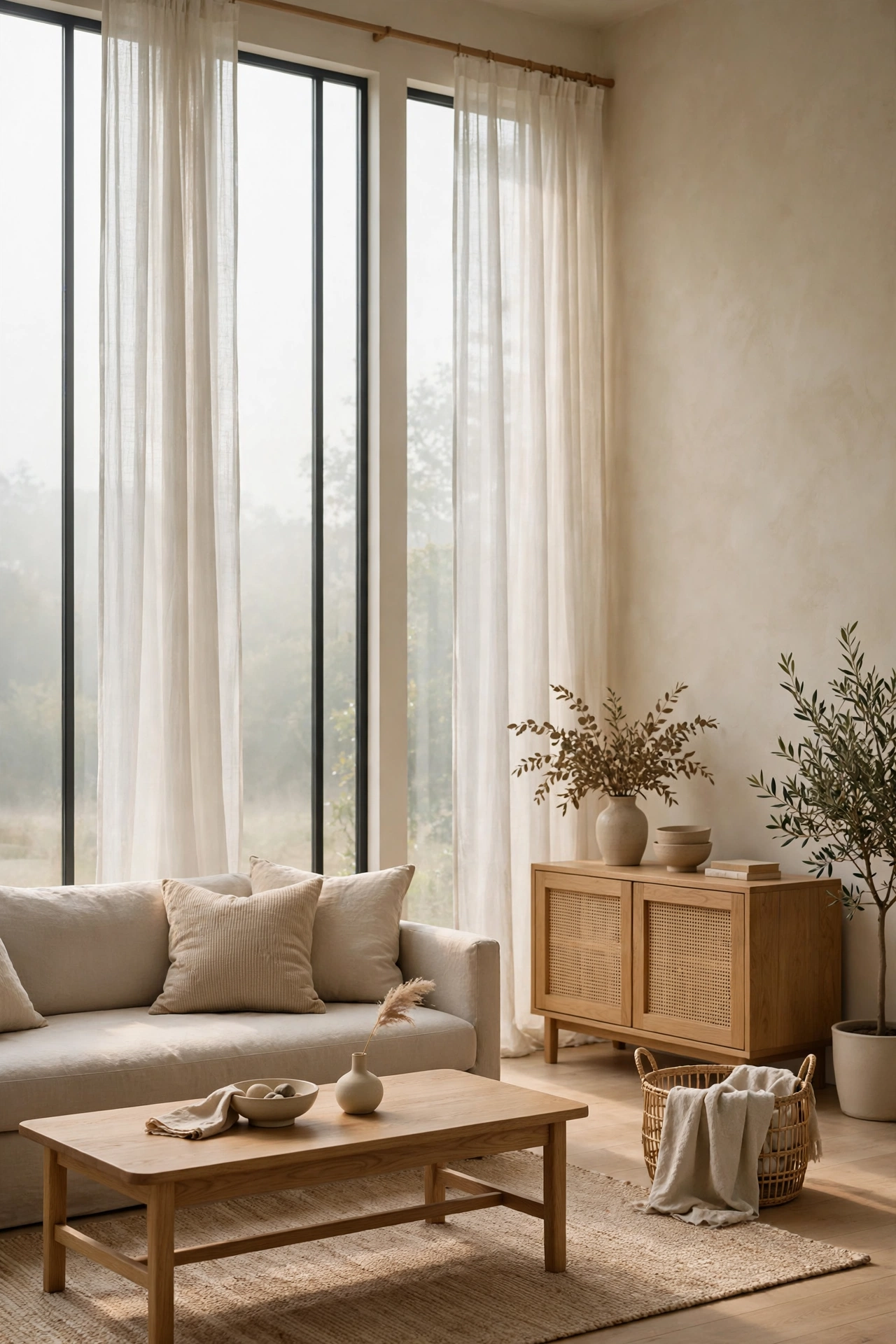
12. Style a Low Shelf with Very Little
Open shelving in Japandi holds a edited few: a stack of art books, one ceramic vessel, a small plant. Every object earns its place. The shelf itself should be simple — light oak or bamboo with clean lines.
Tip: Leave at least a third of each shelf empty; the breathing room makes each object feel considered.
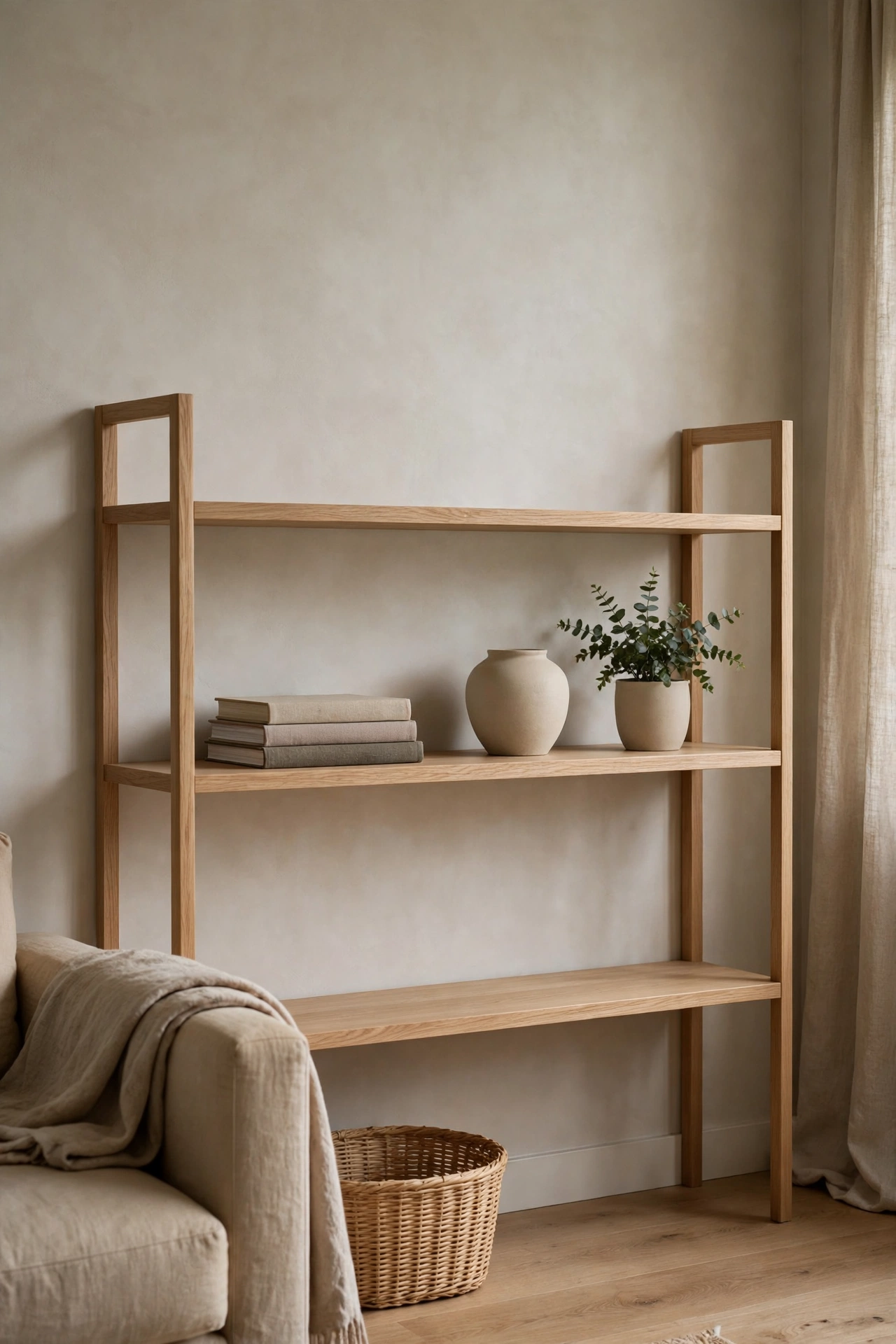
13. Warm Up with a Stone or Plaster Fireplace
If your living room has a fireplace, let it be Japandi’s hearth. A plaster-clad or honed-stone surround fits the material palette perfectly — skip glossy marble or ornate mantels, which fight the aesthetic. No fireplace? A simple candle cluster on the hearth works too.
Tip: Keep the mantel nearly bare: one branch in a vase or a single stone object is enough.
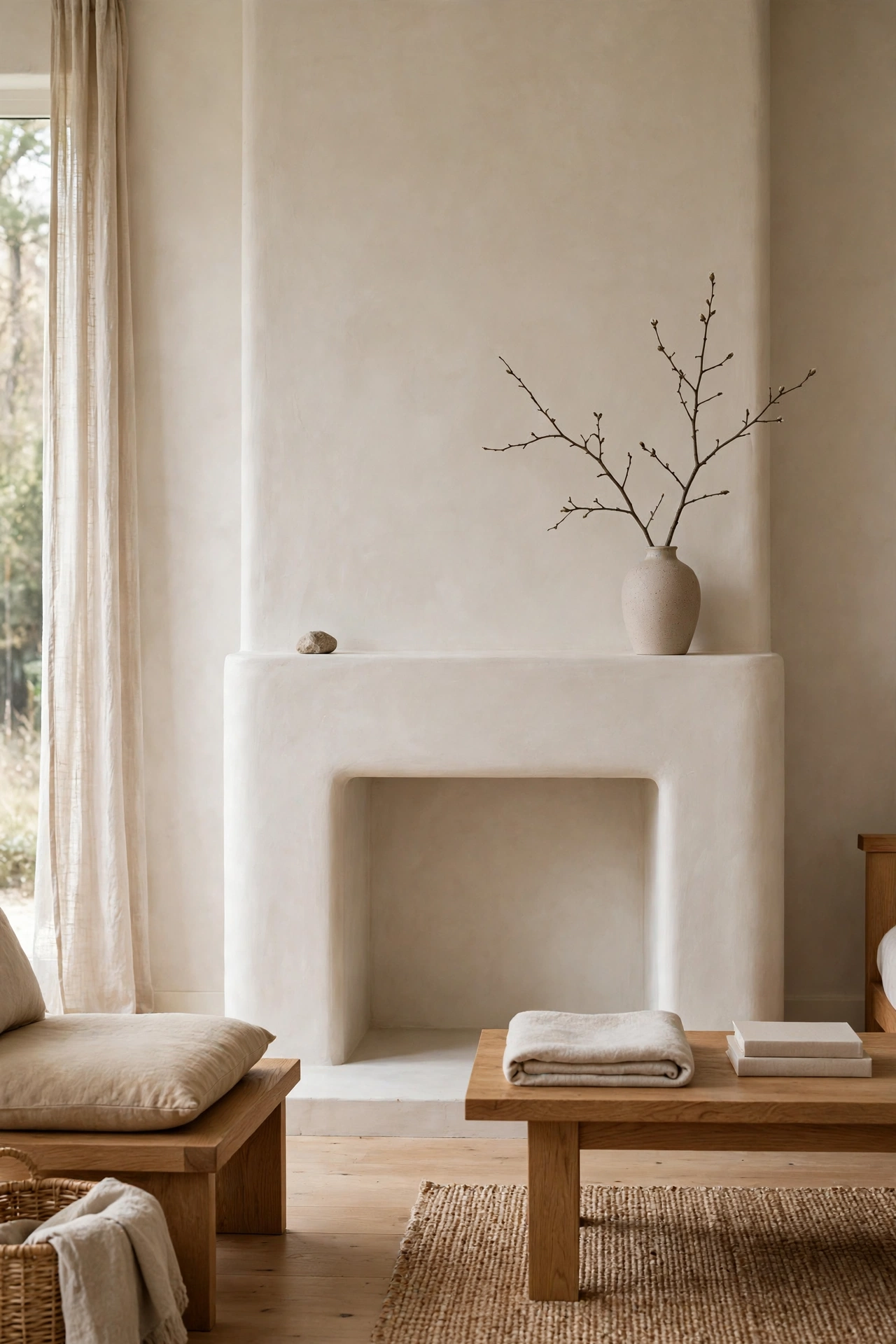
14. Try a Shoji-Inspired Screen
A folding screen with a light wood frame and translucent panels nods to Japanese shoji without turning your living room into a theme park. Use it to soften a corner, hide clutter, or divide an open-plan space with grace.
Tip: Position it where light passes through — backlit panels glow beautifully at golden hour.
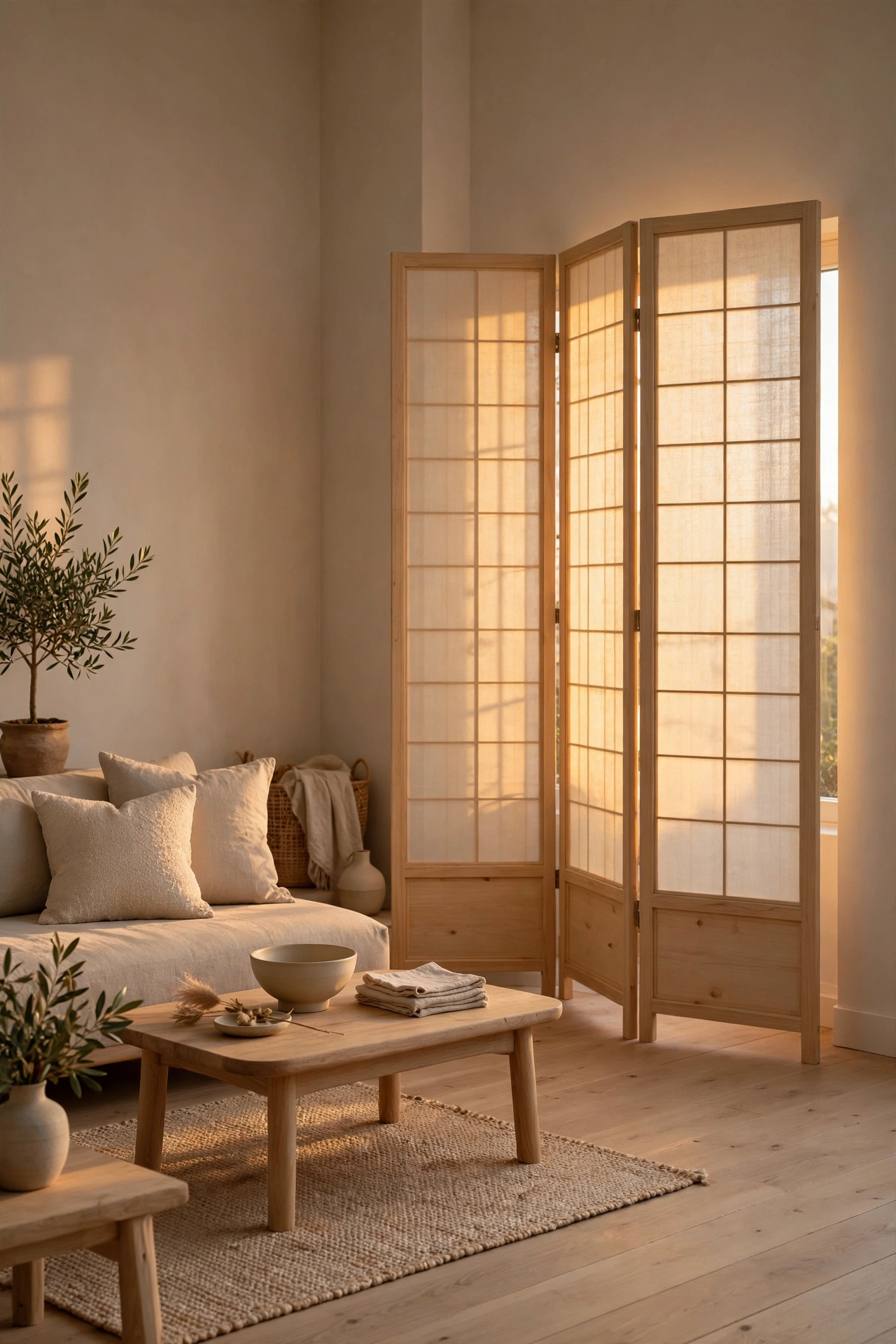
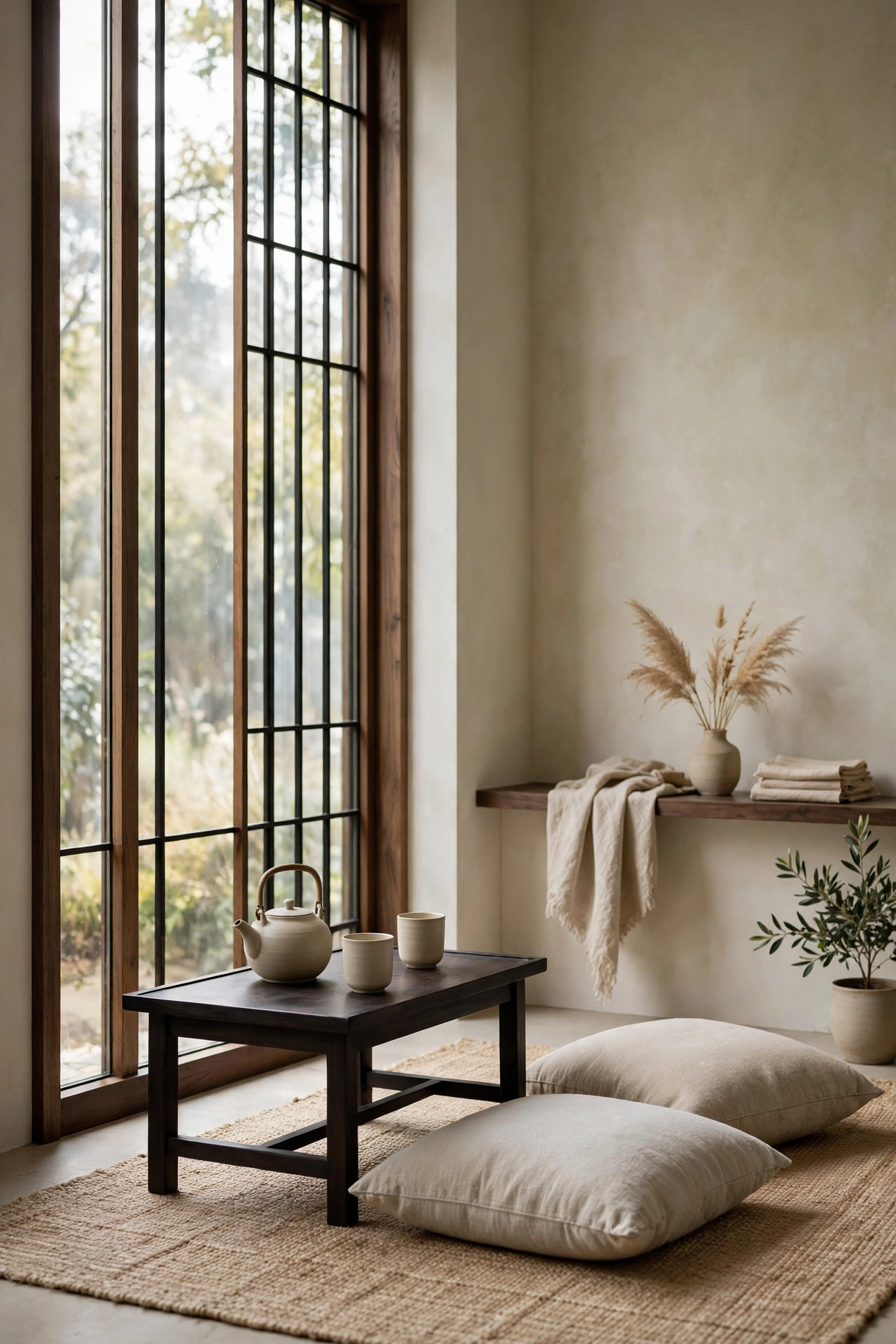
15. Create a Quiet Tea Corner
Carve out a small ritual spot: a low side table, two floor cushions, a simple teapot. You don’t need a full tea ceremony setup — just a corner that invites you to sit, slow down, and be present. It’s Japandi philosophy in furniture form.
Tip: Place it near a window if you can; natural light makes the ritual feel complete.
16. Scale It Down for Small Living Rooms
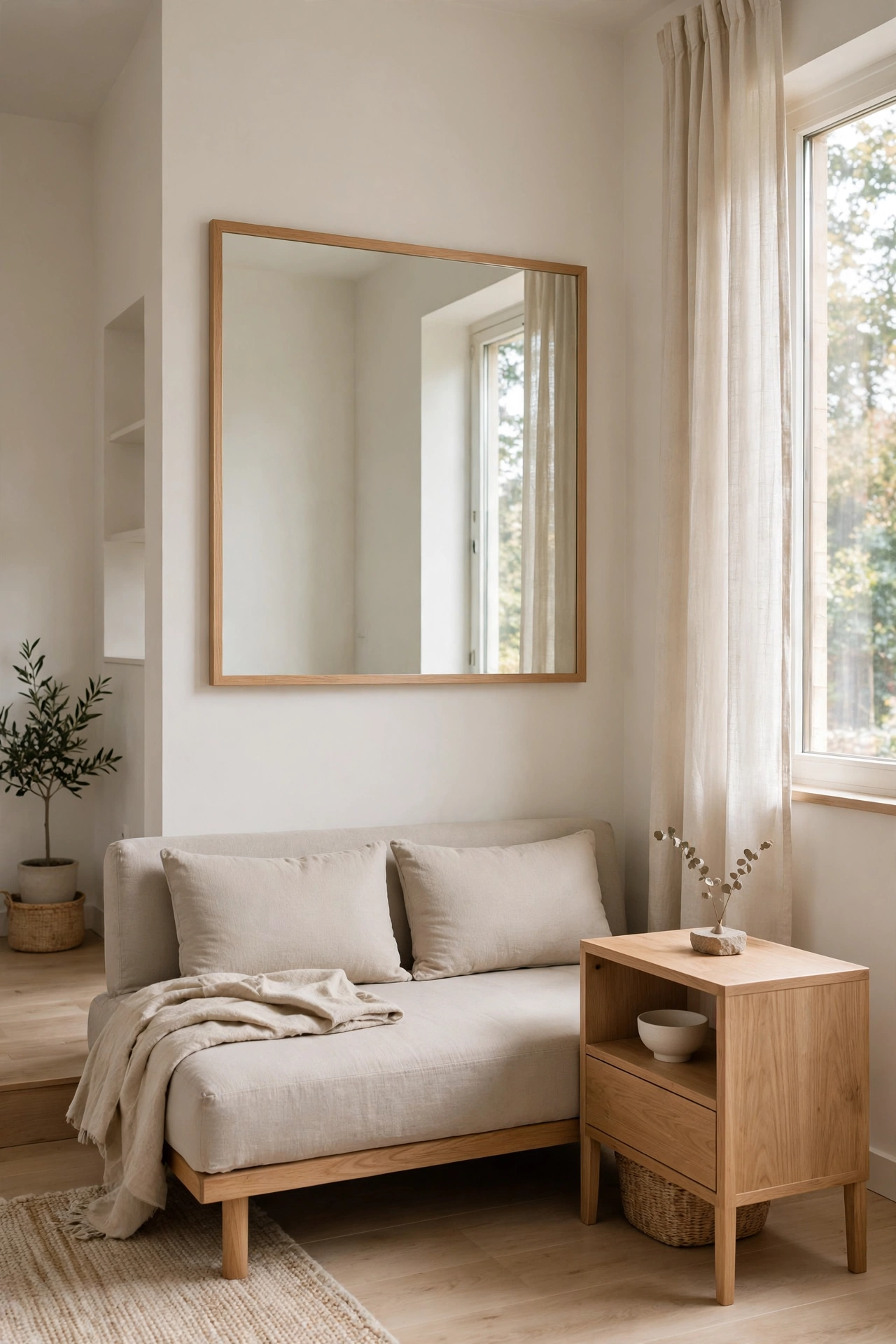
Japandi might be the best style for small living rooms — its love of low furniture, light colors, and empty space makes tight rooms feel larger. Choose a compact low sofa, one multipurpose wood piece, and resist filling every wall.
Tip: A large mirror in a thin wood frame doubles light and depth without adding a single object to dust.
17. Go Budget with Thoughtful Swaps
Japandi doesn’t require designer budgets. Thrift solid-wood furniture and refinish it, swap heavy curtains for linen-look panels, replace overhead lighting with an affordable paper lantern, and edit ruthlessly — restraint is free.
Tip: Start with decluttering and a paper lantern; those two free-or-cheap moves deliver 80% of the transformation.
Quick Answers
What is Japandi style?
Japandi is an interior design style that blends Japanese minimalism with Scandinavian warmth. It combines Japan’s love of restraint, natural materials, and wabi-sabi imperfection with Scandinavia’s cozy comfort and functionality — resulting in calm, warm, uncluttered spaces.
What colors are used in Japandi design?
The Japandi palette is warm and muted: warm whites, soft beiges, greige, sand, clay, and mushroom tones, with charcoal or soft black as a grounding accent. Stark bright whites and saturated colors are avoided in favor of earthy, natural hues.
How do I make my living room Japandi on a budget?
Start with the free stuff: declutter ruthlessly and embrace empty space. Then make high-impact cheap swaps — a paper lantern for overhead lighting, linen-look curtains, thrifted solid-wood furniture, and one handmade ceramic piece. Restraint costs nothing and delivers most of the look.
What’s the difference between Japandi and minimalism?
Minimalism can feel stark and cold; Japandi is minimalism with warmth. It keeps the clean lines and restraint but adds natural textures, warm wood tones, soft lighting, and imperfect handmade objects — so the room feels serene and lived-in rather than austere.