Choosing a toddler’s wardrobe feels overwhelming — but it’s one of the most important furniture decisions you’ll make, because your child may use it daily for years. Appearance matters, but the best wardrobe is also safe, practical, easy to organize, and flexible enough to grow from toddler to school-age. A well-chosen one simplifies routines, reduces clutter, and saves you from replacing furniture too soon.
Think Beyond Today
It’s easy to buy for right now: tiny dresses, small shoes, folded baby clothes — a compact wardrobe seems perfect. But children grow fast. Within a few years those tiny outfits become school uniforms, bigger coats, shoes, books, and hobby gear. Instead of “will this work today,” ask: “will this still work when she’s six or seven?” Long-term flexibility saves money, space, and creates a room that evolves with your child.
Safety Before Style
Toddlers climb, pull, and explore furniture in ways adults don’t expect. Look for: sturdy construction that doesn’t wobble, anti-tip wall anchoring hardware, rounded corners, soft-close doors and drawers (no pinched fingers), smooth easy-clean finishes, and quality hardware that survives years of daily use. Always anchor the wardrobe to the wall per the manufacturer’s instructions — the single most important safety step. For broader kids-room storage thinking, see our kids bedroom storage guide.
Size It for the Room, Not Just the Clothes
Measure the wall carefully and plan around the bed, dresser, toy storage, and play area. Leave room for doors to open fully, comfortable walking paths, window access, and future furniture. A slightly narrower wardrobe with smart internal storage beats an oversized unit that cramps the room. And protect open floor space — toddlers need it for reading, playing, and moving.
Decide What It Must Store
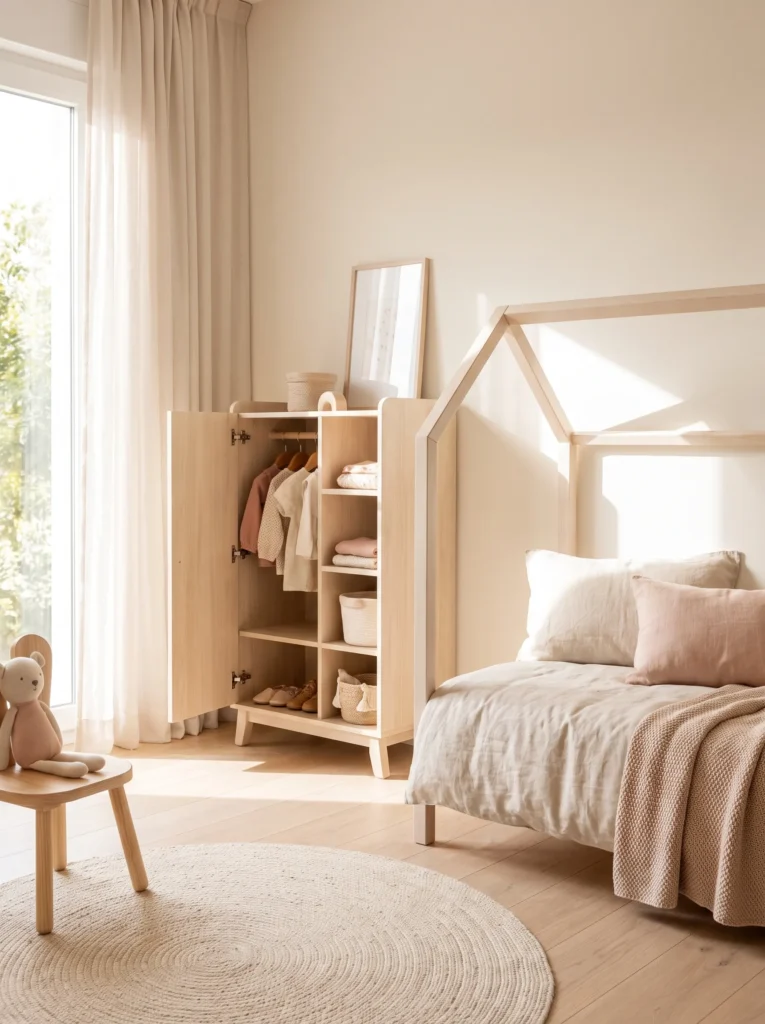
Every family differs: hanging space for dresses and jackets vs. shelves and drawers for folded clothes. Inventory everything — everyday clothing, seasonal coats, shoes, bedding, blankets, accessories, special-occasion outfits, keepsakes, baskets for small items. Planning storage before buying prevents an overcrowded wardrobe three months later.
Choose Adjustable Over Fixed Storage
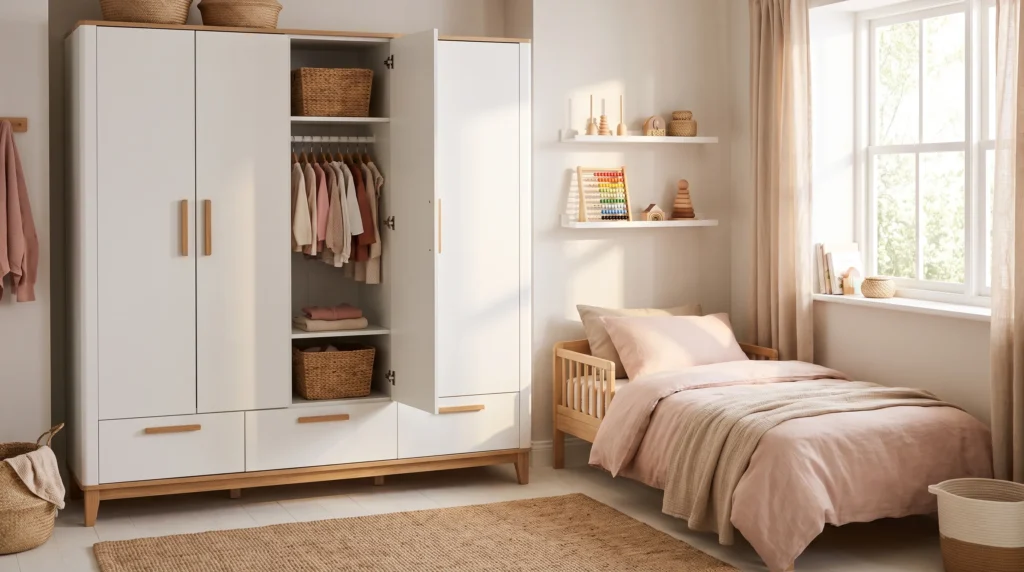
The smartest investment is flexibility. Kids’ storage needs change fast, and adjustable shelves adapt without new furniture. Look for: adjustable shelving, removable hanging rails, optional drawer inserts, space for storage baskets, repositionable shelves as clothing sizes grow. A wardrobe that evolves from baby clothes to school uniforms to books and essentials delivers far more long-term value than decorative details on the outside.
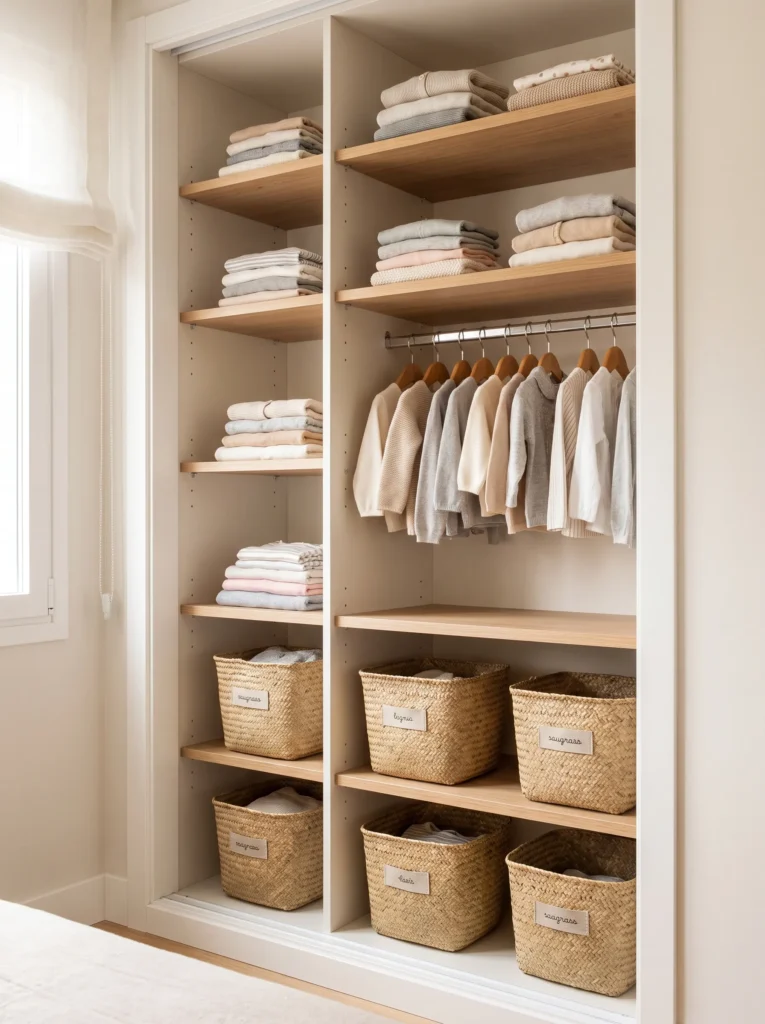
Open or Closed?
Open wardrobes: clothing visible and accessible; encourages kids to participate in choosing and putting away clothes. But they demand constant organization — unneat shelves quickly clutter the room.
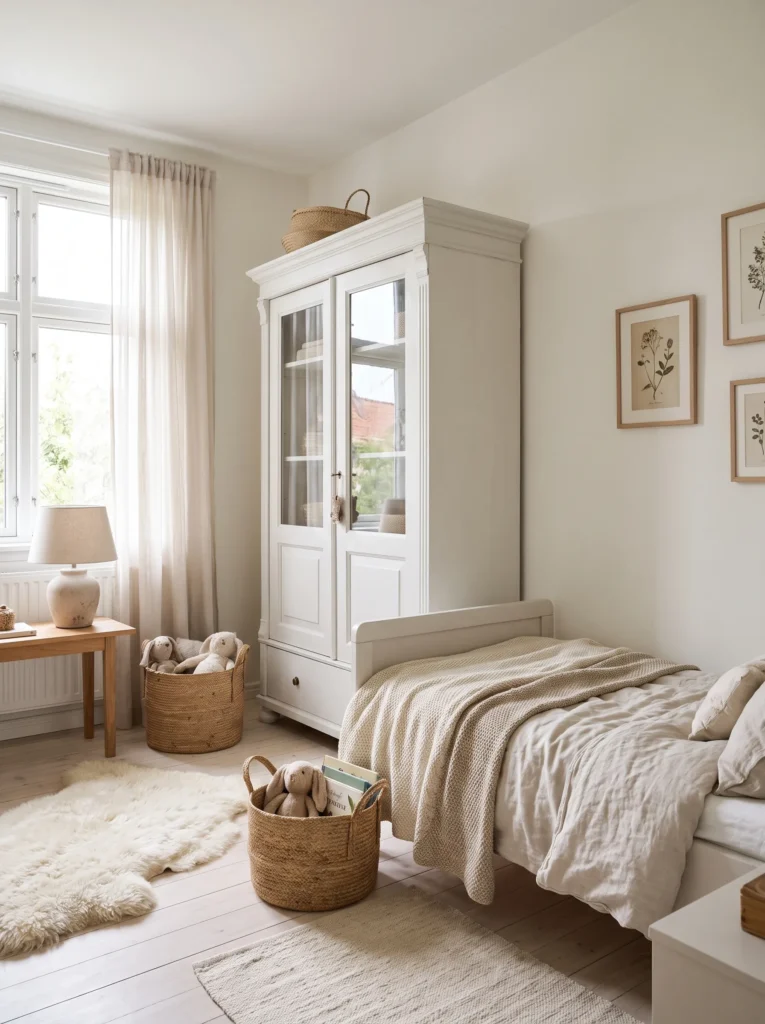
Closed wardrobes: cleaner, calmer appearance; better for small bedrooms where visual clutter shrinks the space; tidying is as fast as closing the doors. For most families, closed storage with adjustable shelving is the most versatile option.
Materials That Survive Childhood
Natural wood brings warmth and durability across many styles. Quality engineered wood balances durability and affordability. Either way, demand finishes that are: easy to wipe clean, scratch- and wear-resistant, durable for frequent use, and smooth with well-finished edges. Easy maintenance keeps it looking good long after the decorating excitement fades.
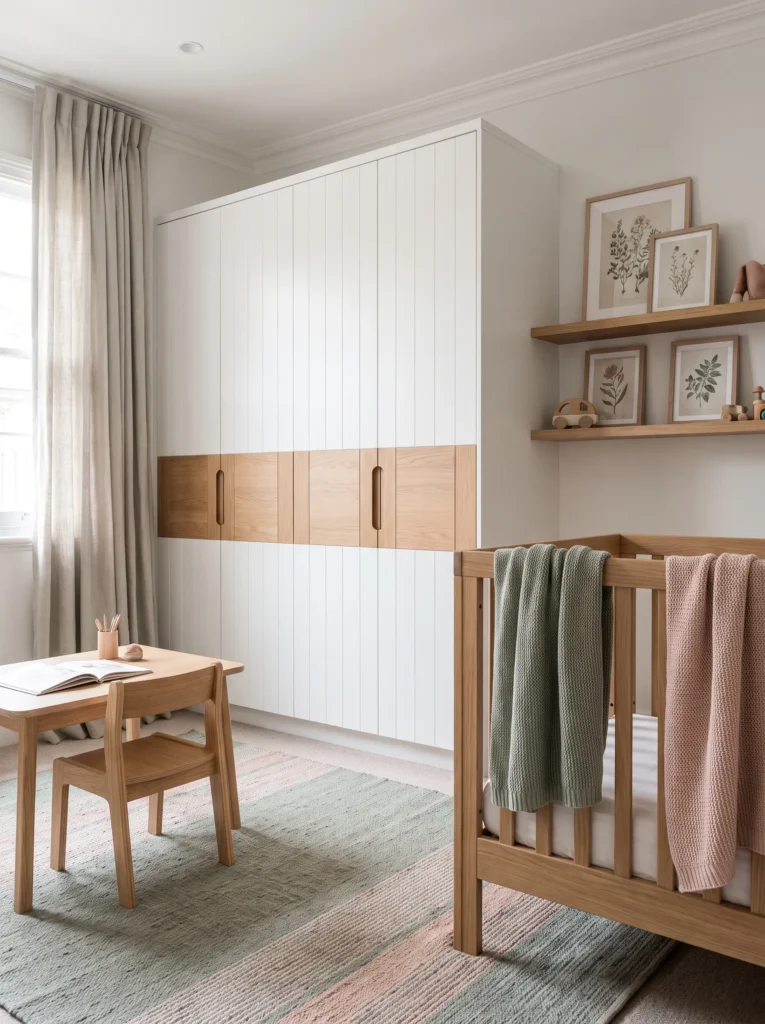
Pick a Style That Grows Up
Hearts, princesses, and cartoon themes charm now and feel outgrown shockingly fast. Instead: a timeless wardrobe (simple white, warm oak, soft sage) that suits a toddler today and a primary-schooler tomorrow — then add personality through easily updated accessories: bedding, wall art, cushions, baskets. The wardrobe stays the dependable foundation while the room evolves around it.
Plan for Independence
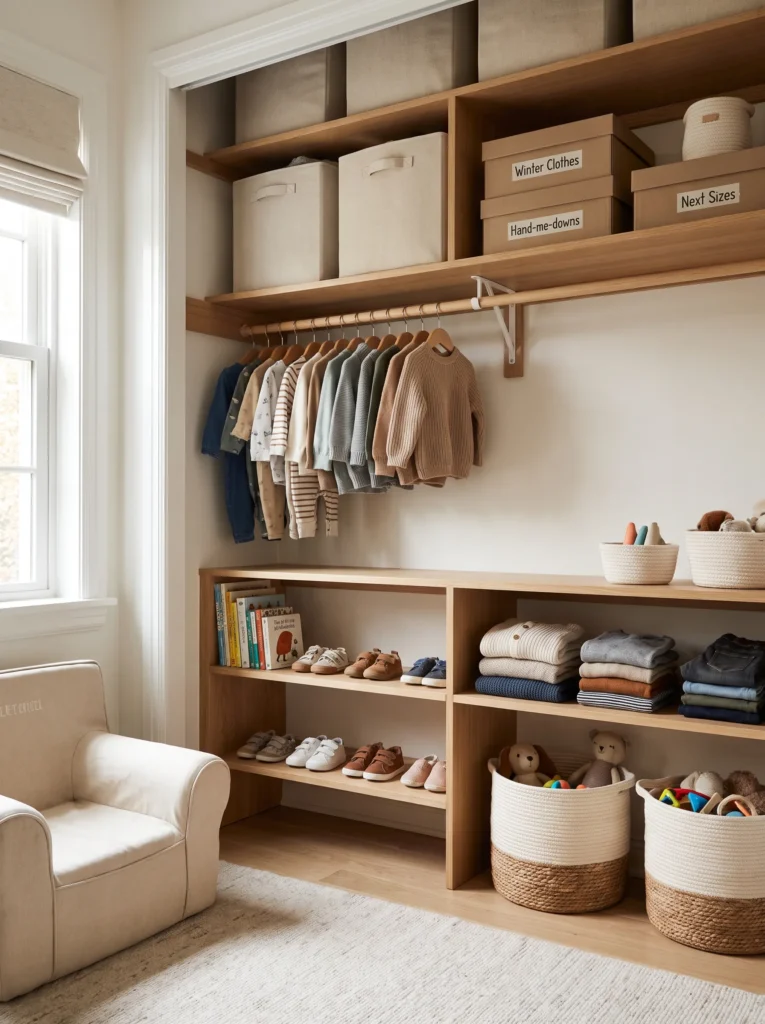
A wardrobe should ease daily routines, not complicate them. Think about what your toddler will access independently in the coming years: lower shelves for everyday outfits, shoes, favorite books, baskets, soft toys; higher shelves for seasonal clothing and keepsakes, safely out of reach. Designing around growing independence creates a bedroom that’s both practical and encouraging.
Mistakes to Avoid
Buying only for today’s needs — spacious now can mean overcrowded in two years; think ahead.
Ignoring the room’s layout — too deep or too wide cramps small bedrooms; measure and protect walkways.
Appearance over function — adjustable shelves and durable finishes outvalue decorative details long-term.
Forgetting safety — no matter how sturdy it looks, anchor it to the wall.
Choosing hard-to-organize interiors — without enough shelves, hanging space, and compartments, even a large wardrobe becomes clutter. Interior planning matters more than overall size.
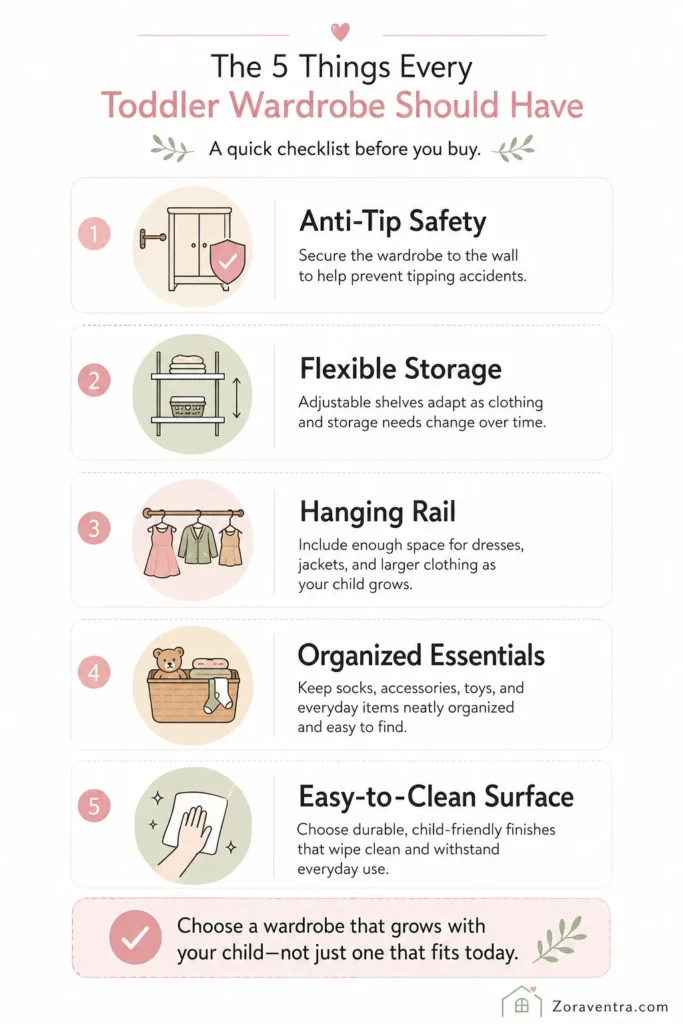
Your Pre-Purchase Checklist
Fits the room without cramping it? Anchors securely to the wall? Adjustable shelves for future needs? Enough hanging space for growing sizes? Room for shoes, blankets, accessories? Durable, easy-clean finishes? Timeless style over short-lived themes? Floor space left for safe play? Ticking every box means a wardrobe that works for years, not months.
Quick Answers
What should I look for in a toddler wardrobe?
Safety first (sturdy, anti-tip anchored, rounded corners, soft-close), then adjustable storage, durable easy-clean finishes, and a timeless design. Interior flexibility matters more than exterior decoration.
Open or closed wardrobe for a toddler’s room?
Closed wardrobes with adjustable shelving are the most versatile — cleaner look, faster tidying, better for small rooms. Open wardrobes encourage independence but demand constant organization.
How big should a toddler’s wardrobe be?
Big enough for adjustable storage that adapts as she grows, but not so big it eats play space. Measure the room, protect walkways and door clearance, and remember: smart interiors beat oversized exteriors.
Affiliate Disclosure: As an Amazon Associate, I earn from qualifying purchases. If you click a link and buy, I may receive a small commission at no extra cost to you. Thank you for supporting my content!