15 Winter Hallway Decor Ideas That Make a Cold, Dark Hall Feel Warm
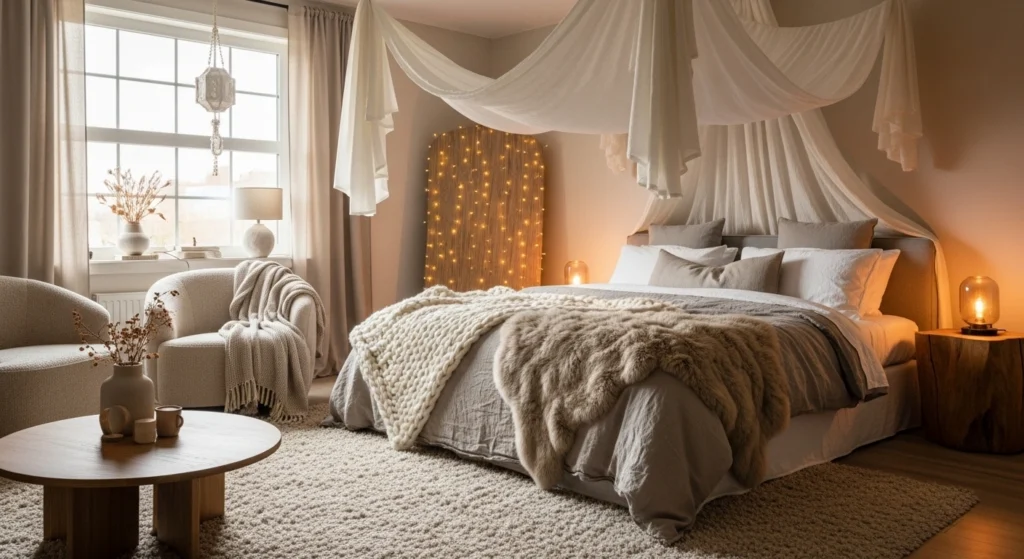
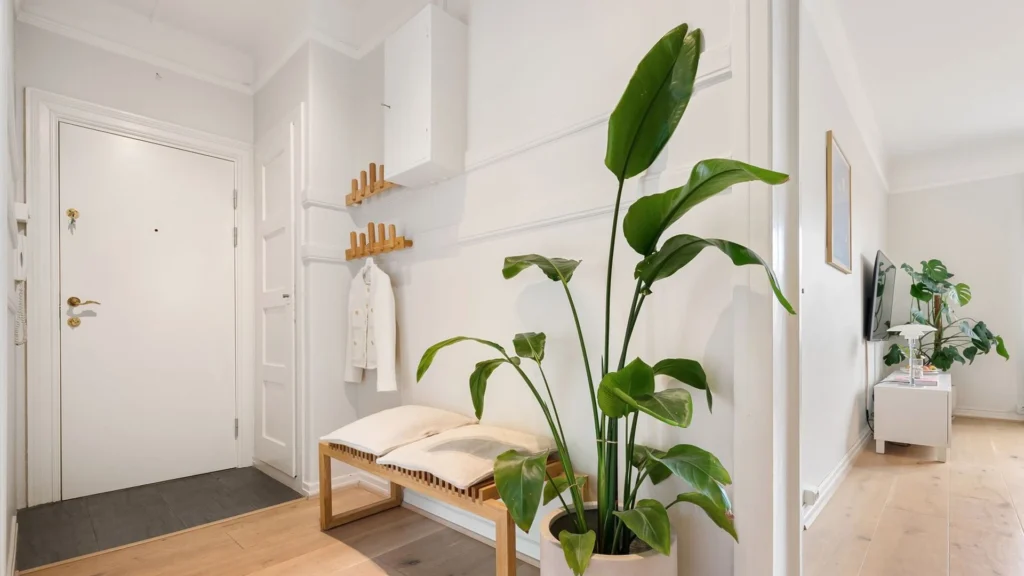
The hallway is the coldest walk in the house in winter — bare floors, one flat ceiling light, and a draught that seems to live in the corridor itself. These winter hallway decor ideas warm it up without a single remodel step: soft layers underfoot, warm light at eye level, and hooks and storage that keep coats and boots from taking over the walk.
Start at the front door and work your way in. A runner that hushes cold wood, a lamp or lantern glowing low, and one green thing by the door change the whole feeling of the walk — and none of it blocks the way through, which is the whole point of a hallway you actually use every day.
For the same warmth through the rest of the house, start with our winter home decor ideas, carry it up the stairs with our winter staircase decor ideas, and finish the arrival at the front door with our winter entryway decor ideas.
1. Lay a Patterned Runner Down the Hall
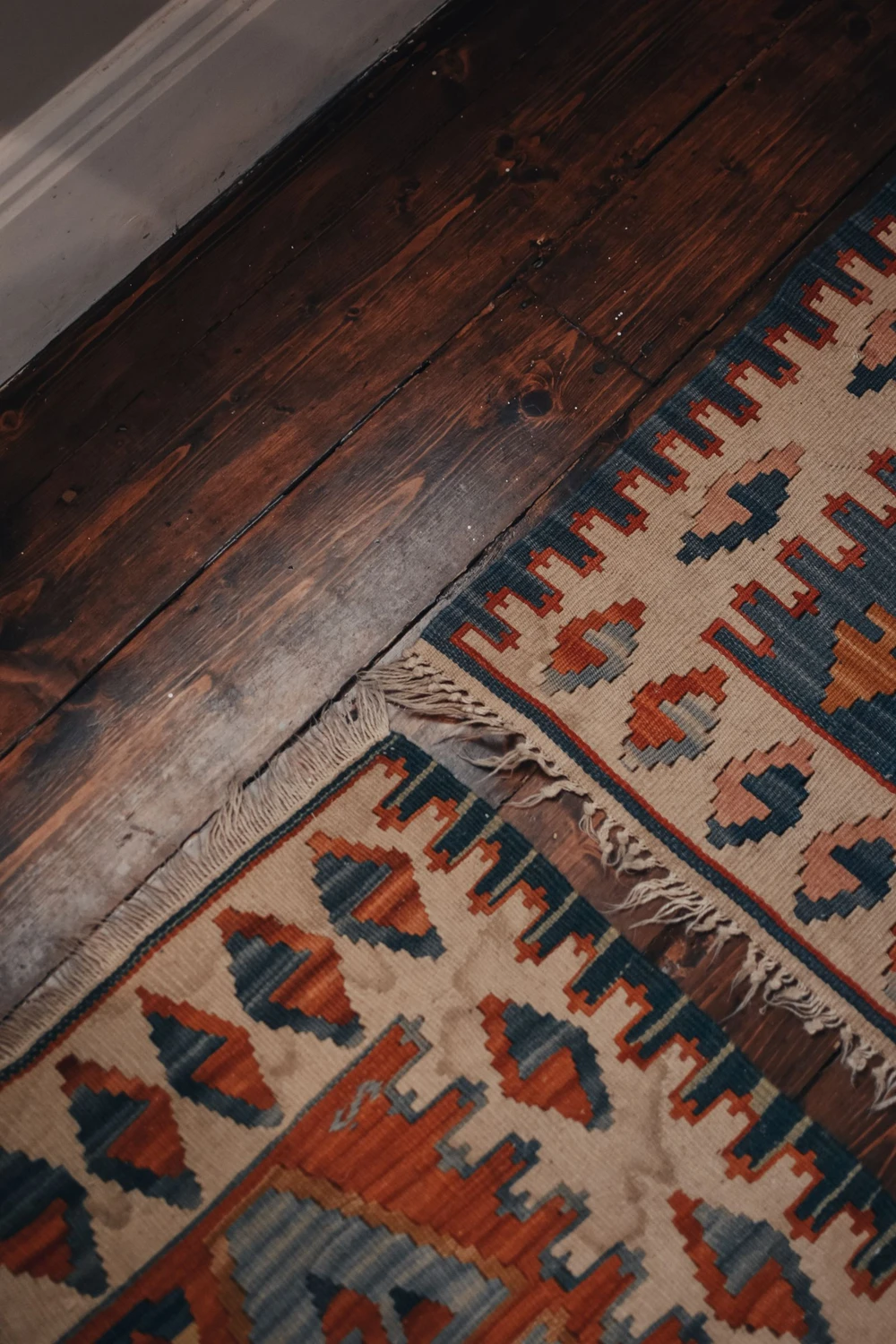
Cold hallways start at the floor. A long runner down the hall warms the first steps of every walk through the house, hushes the wood, and gives the eye a path to follow — the corridor stops being a pass-through and starts feeling like a room. A flat, dense weave in warm rust, navy or soft red suits winter best, and it hides the salt and grit that winter boots drag in.
Choose a pattern with enough warmth in it to hold its own against bare walls, and keep the runner long enough to reach the far door so there is no cold, bare patch of floor at either end. One runner, one calm pattern, and the whole hall feels considered instead of cobbled together.
Tip: Lay a thin non-slip pad under the runner — winter halls get damp from boots, and a rug that creeps across wood is a trip hazard in socks. A low-pile wool runner is the easiest to shake out and the warmest under bare feet.
2. Hang Warm Pendant Lights in a Row
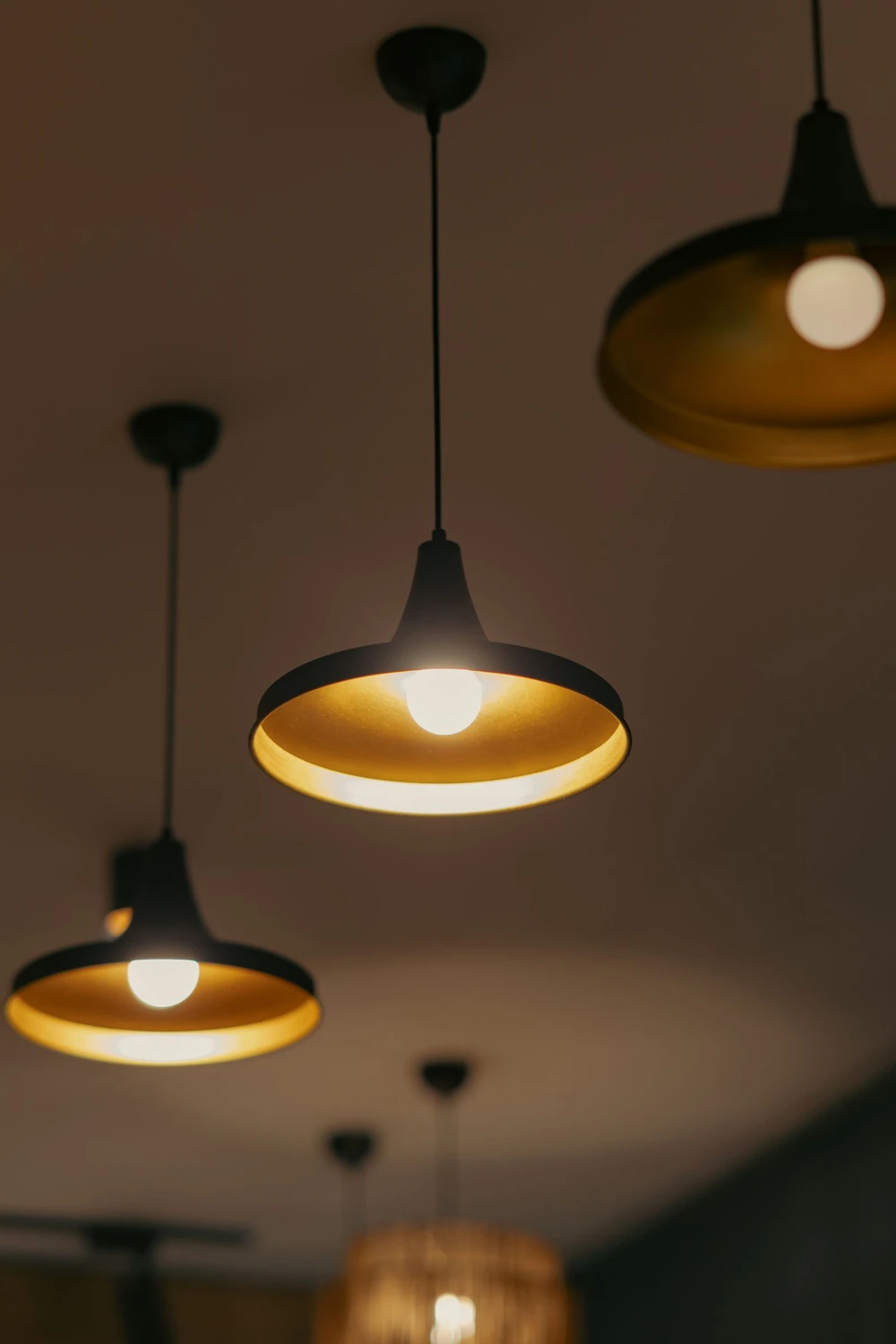
One flat ceiling light makes a hallway feel like a service corridor. A row of small pendant lights hung down the length of the hall gives it a rhythm instead — pools of warm light at intervals, so the walk feels guided rather than lit. Warm-white bulbs are the whole trick here: cool light on a winter hallway feels like an office, warm light feels like home.
Hang the pendants at the same height and keep them simple — a plain metal or glass shade in black or brass does the work without shouting. In a long hall, three small pendants beat one big fitting every time, because the light lands where your feet actually go.
Tip: Put the pendants on a dimmer if you can. Full brightness for coming in with shopping, low and warm for the evening walk to bed — one fitting, two moods.
3. Add Wall Sconces for Light at Eye Level
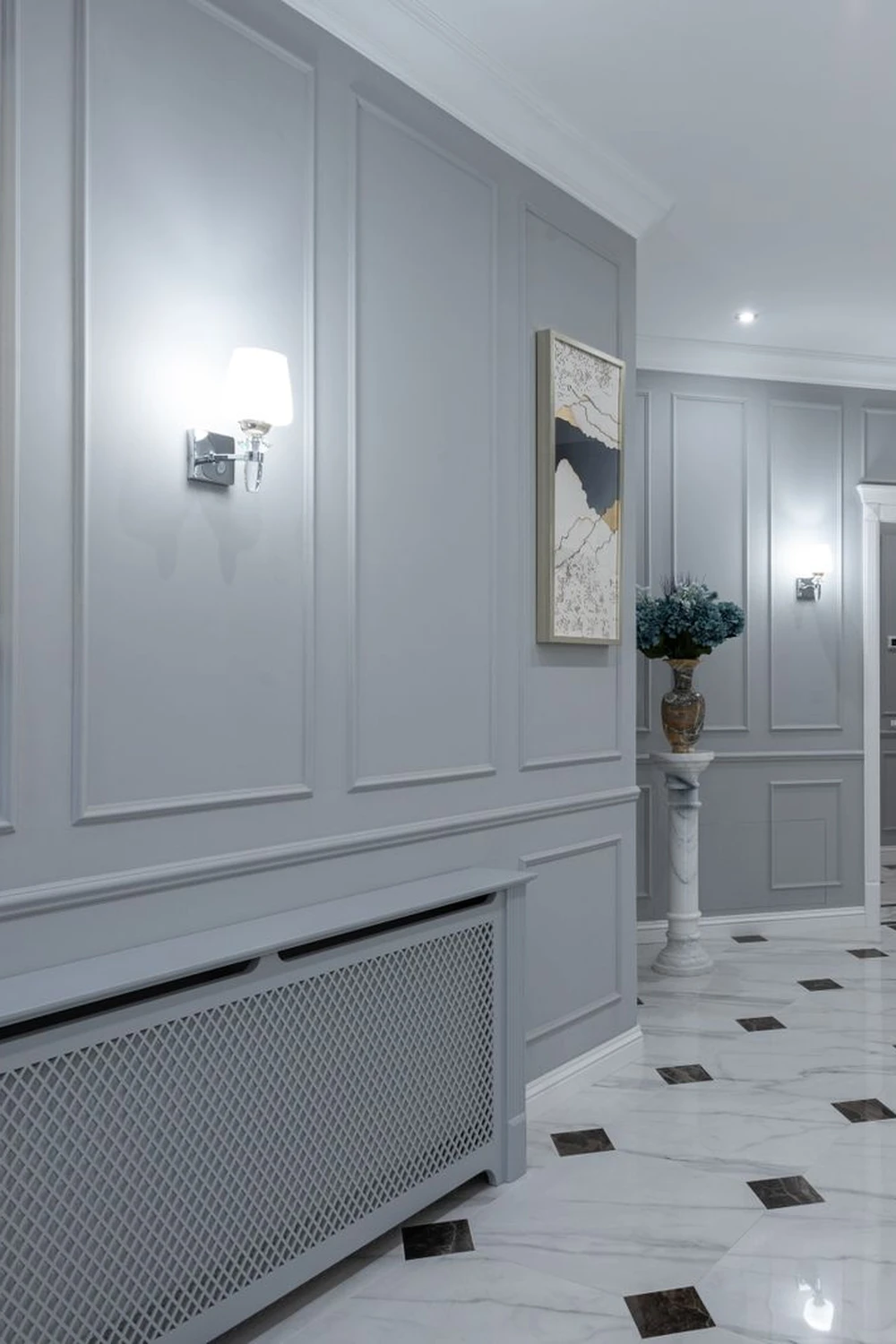
Ceiling light falls on the top of your head; sconces light the walls, and walls are what you actually see in a hallway. A pair of wall lights at eye level throws a warm wash across panelling or paint and makes a narrow hall feel wider and warmer at the same time — the glow lands where the pictures hang and where coats come off.
Keep the sconces slim so nobody brushes past them with a shoulder, and match the pair so the hall reads as one calm space. One sconce on each long wall, or a pair flanking the far door, is all it takes; the hallway does not need a row of them.
Tip: Choose warm-white bulbs around 2700K for sconces. Anything cooler turns the warm wash grey, and the whole point is the golden edge the light leaves on the wall.
4. Hang a Big Round Mirror to Double the Light
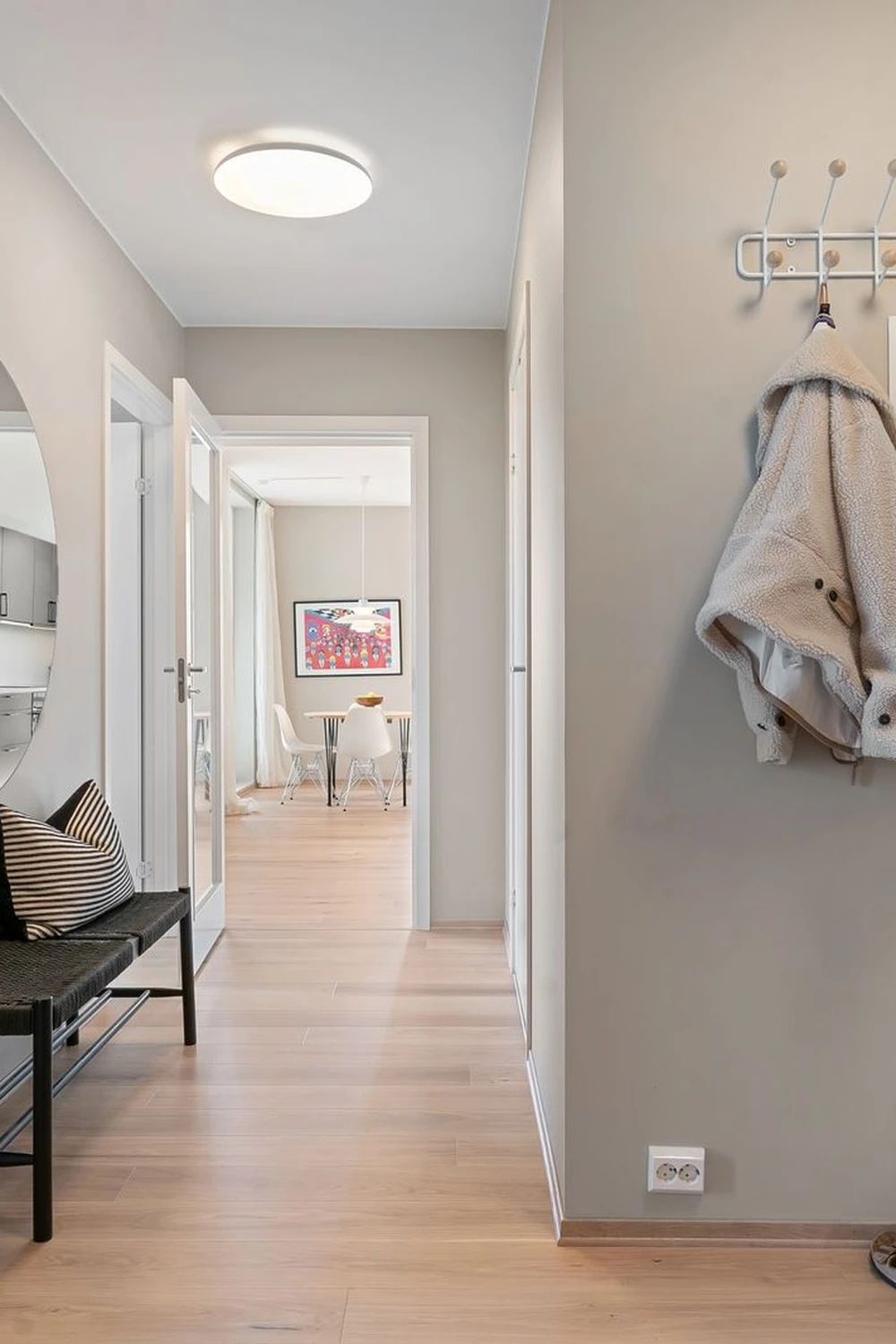
A dark hall has one free light source — whatever daylight reaches it from the rooms at either end — and a mirror is how you spend it twice. Hang a large round mirror on the hall wall opposite the nearest doorway and it throws that light back down the corridor, so the walk starts bright even on a grey afternoon.
Keep the mirror big and plain-framed, and hang it at eye level for someone standing in the hall, not for someone walking past on the flat. A bench underneath with a cushion makes the mirror look intentional rather than stuck on, and it gives you somewhere to sit while boots go on.
Tip: Clean the mirror weekly in winter — a hallway mirror collects dust fast, and a dusty mirror swallows the light it is supposed to double.
5. Put a Bench With Storage by the Door
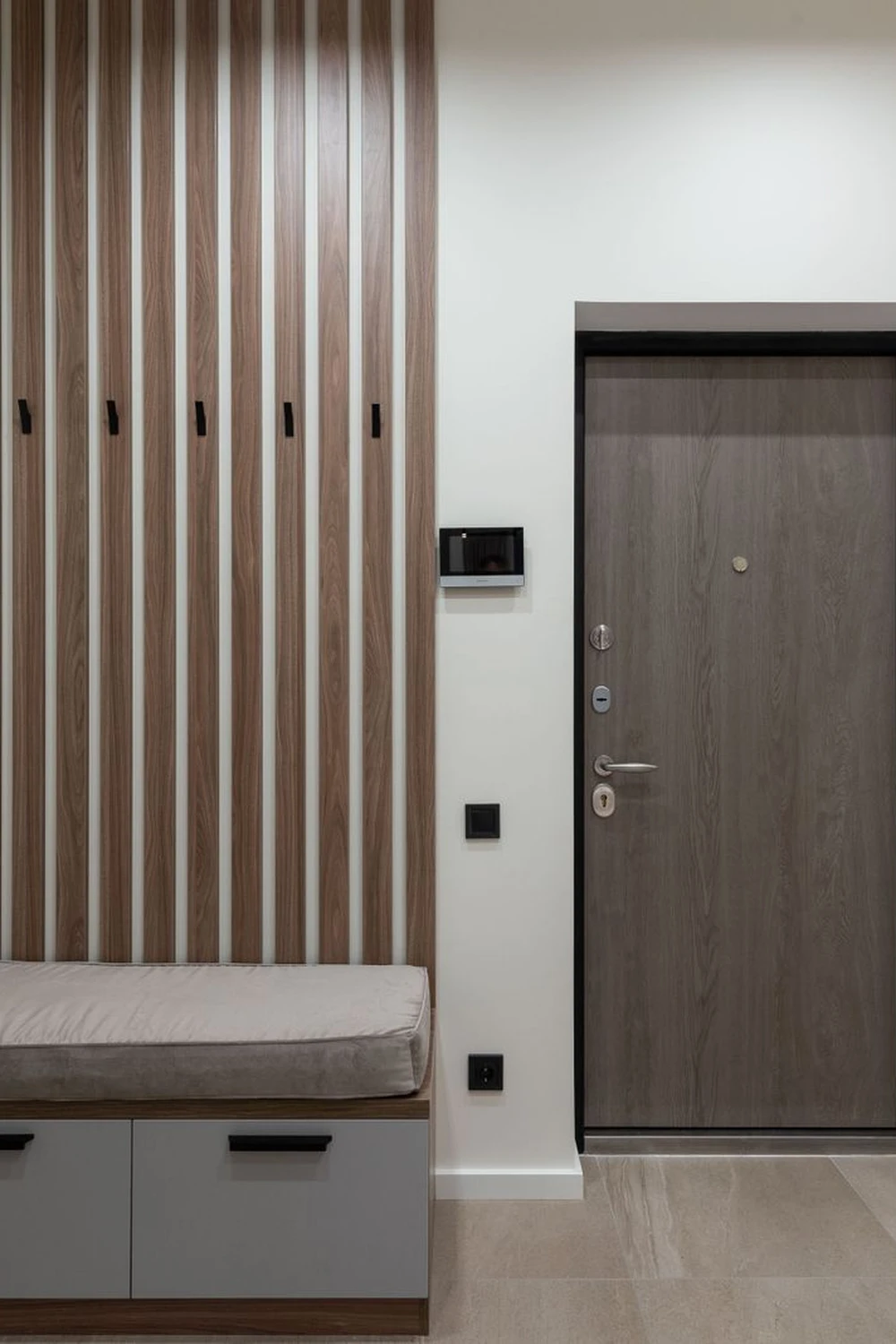
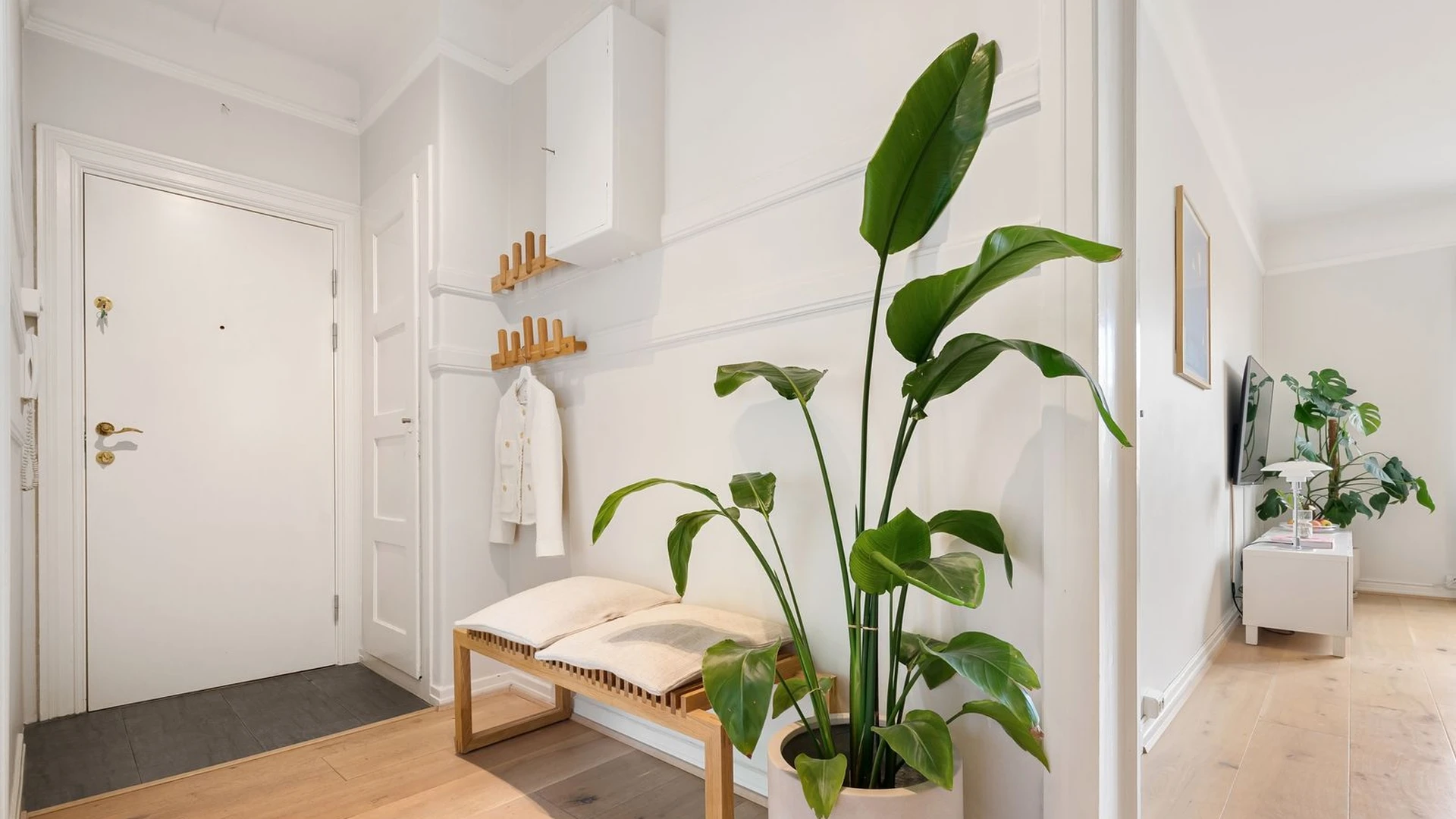
A bench by the door earns its keep a dozen times a day in winter: somewhere to sit and pull boots on, somewhere to set a bag down, somewhere to pause with a hot drink before the walk to the car. A low bench with drawers or baskets underneath does double work — the seat is the warmest thing in the hall at seven in the morning, and the storage swallows hats, gloves and scarves.
Keep the bench slim so it never blocks the walk, and choose a cushion in a warm, washable fabric — cream, rust or soft grey — that can take muddy cuffs and wet coats without complaint. Hooks on the wall above it finish the station and keep the bench top clear.
Tip: Slide a pair of slippers under the bench and keep them there all winter — warm feet at the front door change the whole walk through the house.
6. Give Coats a Proper Rail, Not the Banister
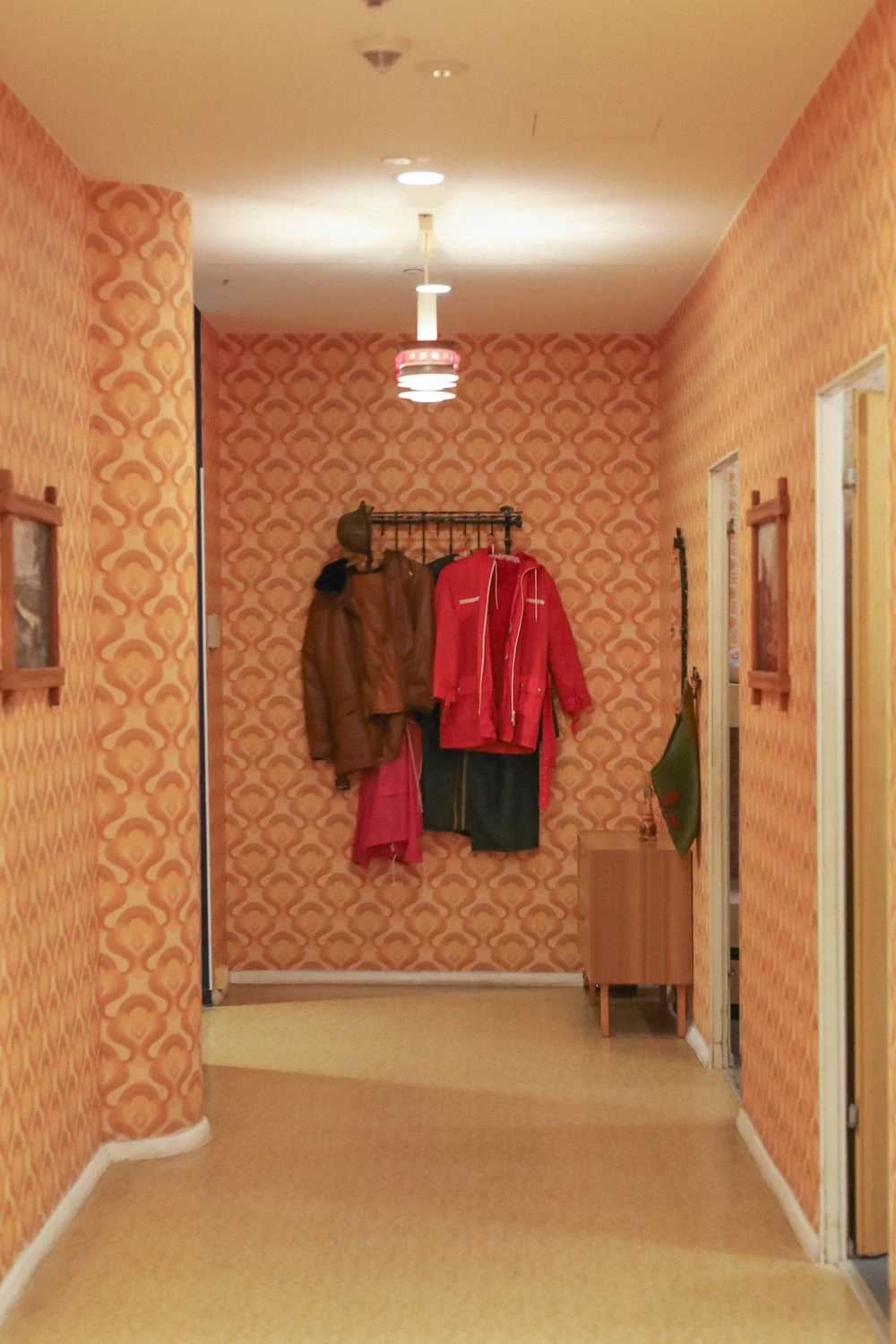
Winter coats have to live somewhere, and the wall by the door is where they always end up — so give them a proper home instead of letting them colonise the banister and the bench. A sturdy rail with a hook per person keeps the walk clear, the draught from the door at bay, and the hall free of the avalanche of outerwear that usually owns it.
Hang the rail at a height everyone in the house can reach, and leave one hook empty — the empty hook is what stops the pile-up, because there is always somewhere for the next coat to go. A wooden peg rail suits the season: it looks warm, it holds weight, and it never looks as cold as a bare metal rack.
Tip: Put the rail on the wall opposite the main walk, not on the wall the door swings against — coats swinging over the threshold are a trip hazard, and the rail works just as well a step away.
7. Keep Shoes on a Slim Open Rack
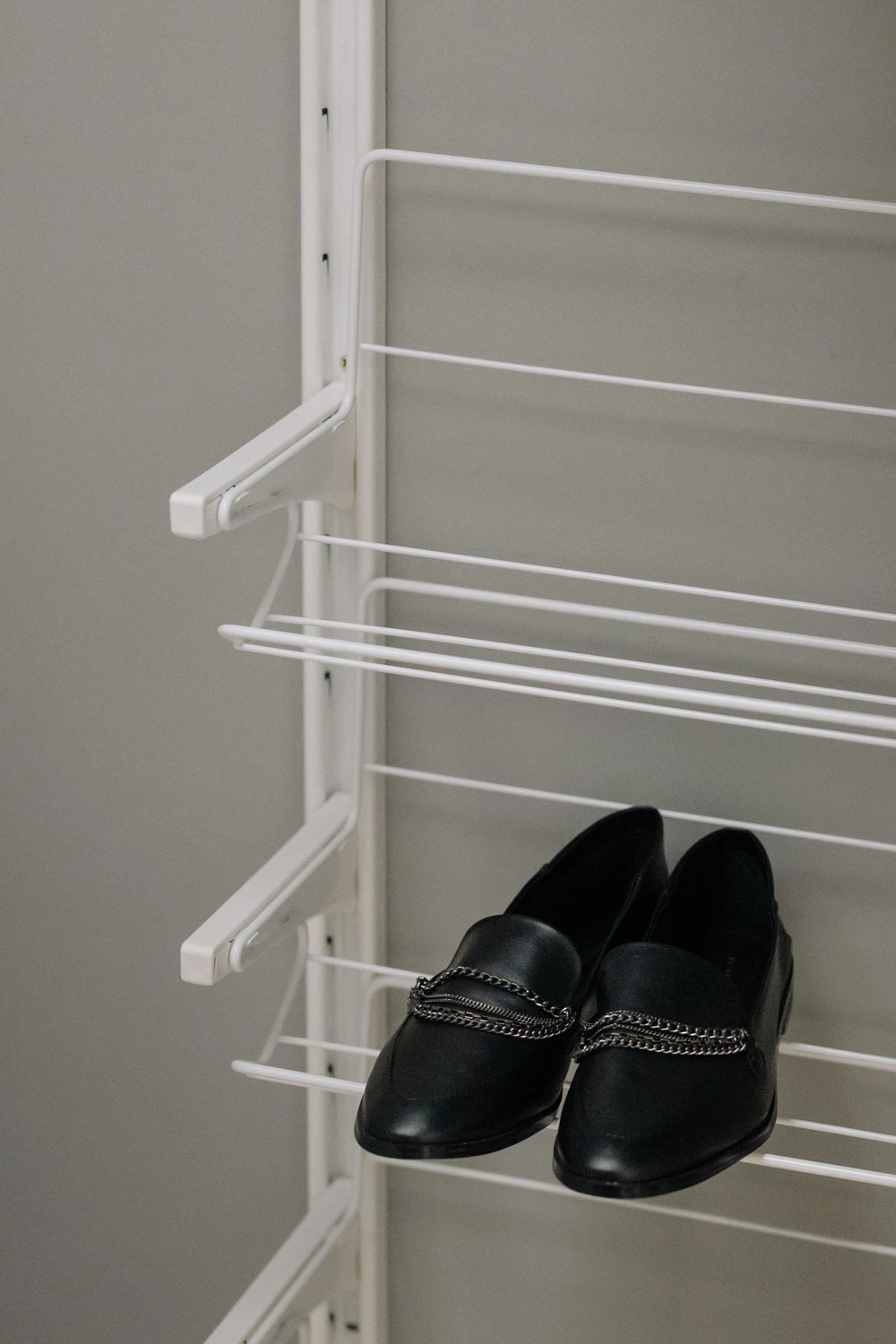
Winter shoes multiply fast — boots, trainers, slippers, the pair that came in wet yesterday — and a hallway floor full of them is the fastest way to make the walk feel cold and chaotic. A slim open rack against the wall holds one pair per person where you can see them, and the open wires let wet soles dry instead of stewing in a closed cupboard.
Keep the rack narrow and low so it never eats into the walk, and set a rule the whole house can keep: one pair per person on the rack, the rest by the back door. A rack that is half empty looks tidy; a rack that is overflowing looks like a pile with shelves.
Tip: Put a boot tray under the bottom shelf in the wettest weeks — it catches the melt and the grit, and you can tip it out in seconds instead of mopping the hall floor.
8. Dress a Slim Console at the Turn
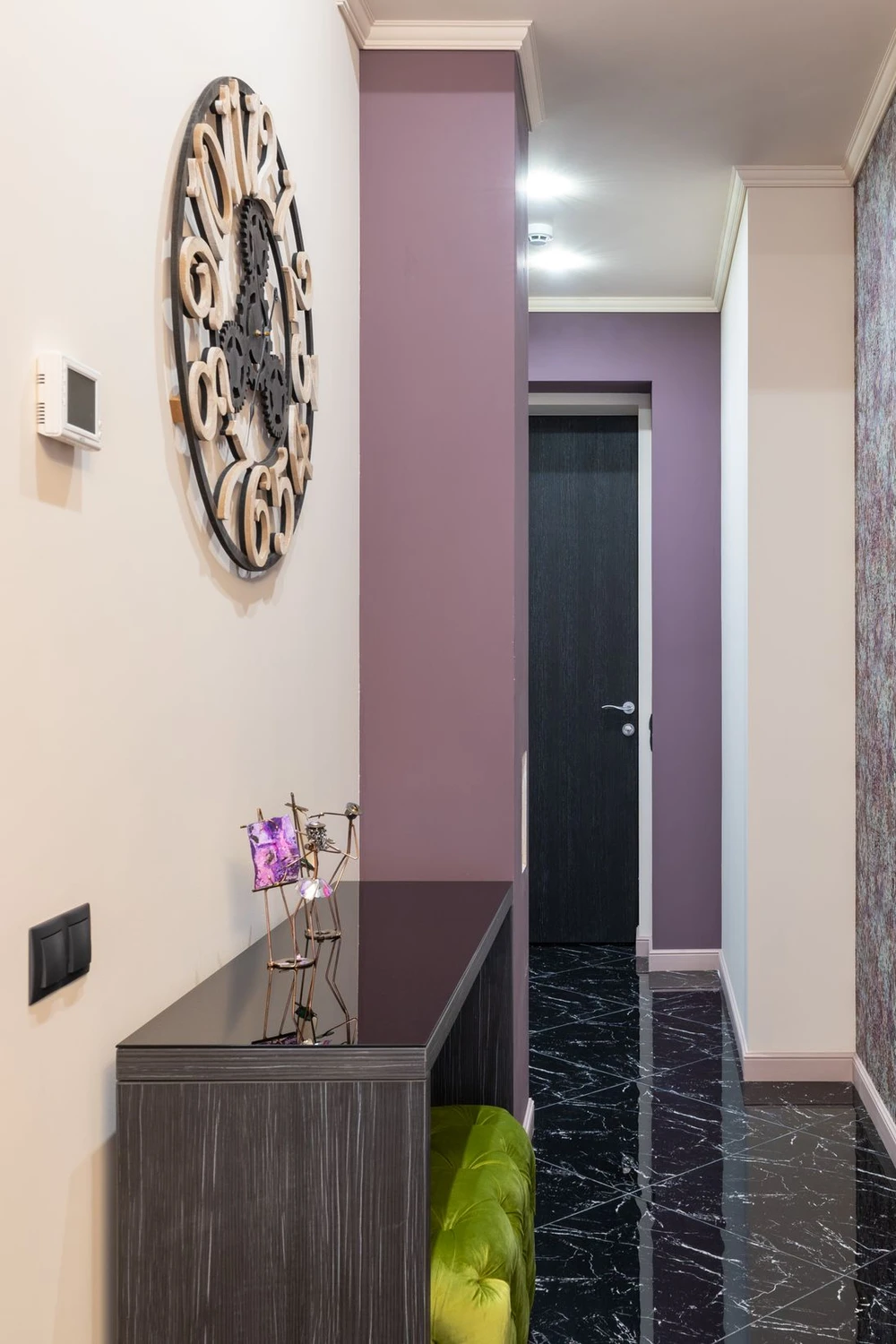
Every hallway has a turn or a flat stretch where a slim console fits, and in winter that little table is the warmest surface in the corridor. A clock above it, one small object on top and nothing else — the restraint is the point. The console gives the hall a destination for the eye, so the walk feels like it is going somewhere instead of just passing through.
Choose a console no deeper than a handspan so it never narrows the walk, and keep the top nearly empty: a small vase, a candle lantern, done. The wall above it does the decorating — a big clock or one framed print is all it needs.
Tip: Use the console as the hallway’s landing strip — keys in a small dish, post in a tray — and the hall stops collecting clutter on every other surface.
9. Hang a Few Small Prints Along the Wall
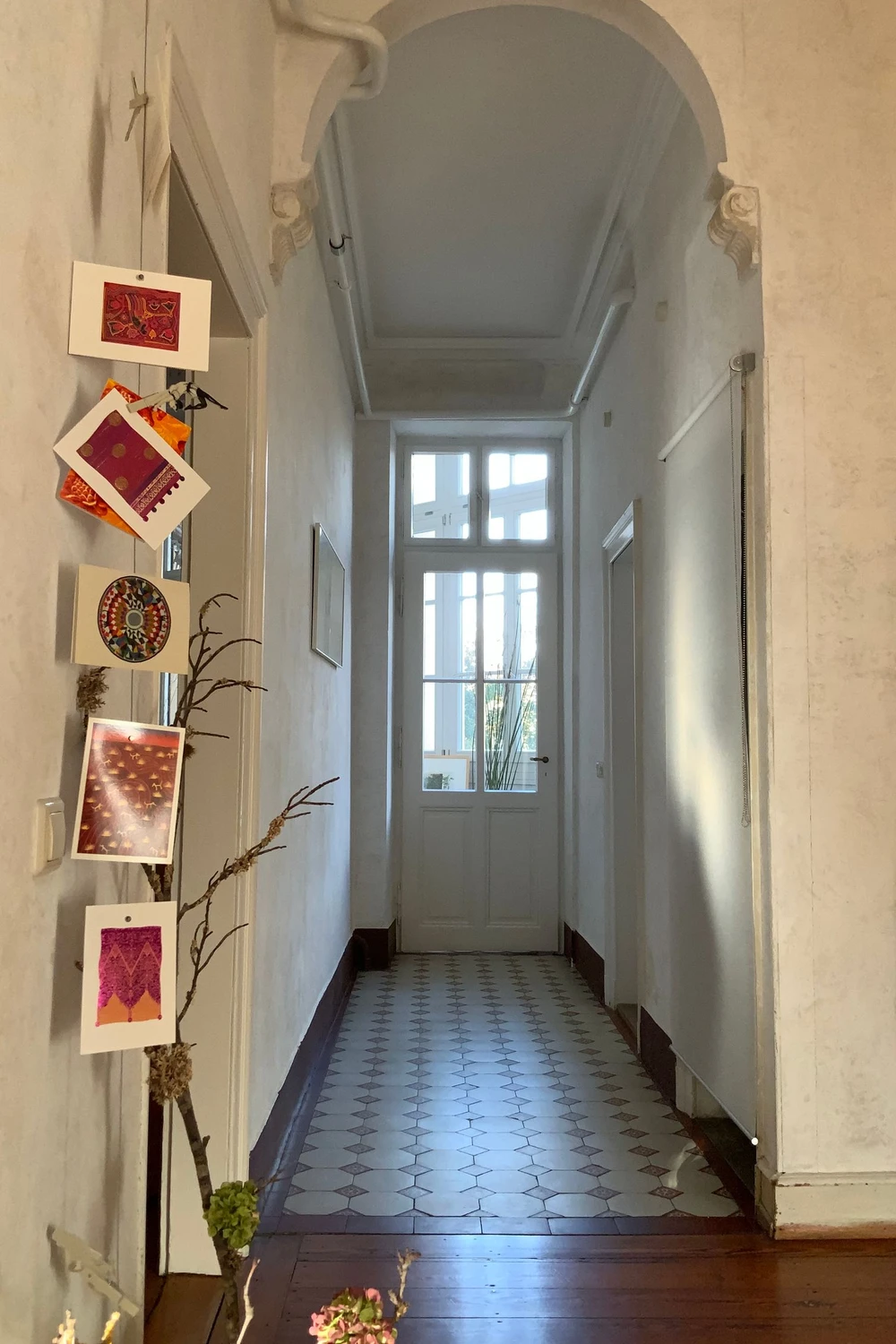
Bare hallway walls show every scuff from bags, boots and hands, and they do nothing for the cold. A loose run of small prints hung along one wall — art cards, textile prints, little framed sketches — hides the scuffs, adds the warmth paint never manages, and turns the walk into a tiny gallery instead of a tunnel.
Hang them at one height in a loose line rather than a strict grid, and mix the sizes a little so it looks collected rather than measured. Warm colours suit the season best: rust, ochre, deep red and gold against a pale wall read as warmth even before the heating comes on.
Tip: Hang prints on the wall you face as you walk in, not the one behind you — art you never see is decoration for the wall, not for the walk.
10. Set Dried Stems in a Vase on the Console
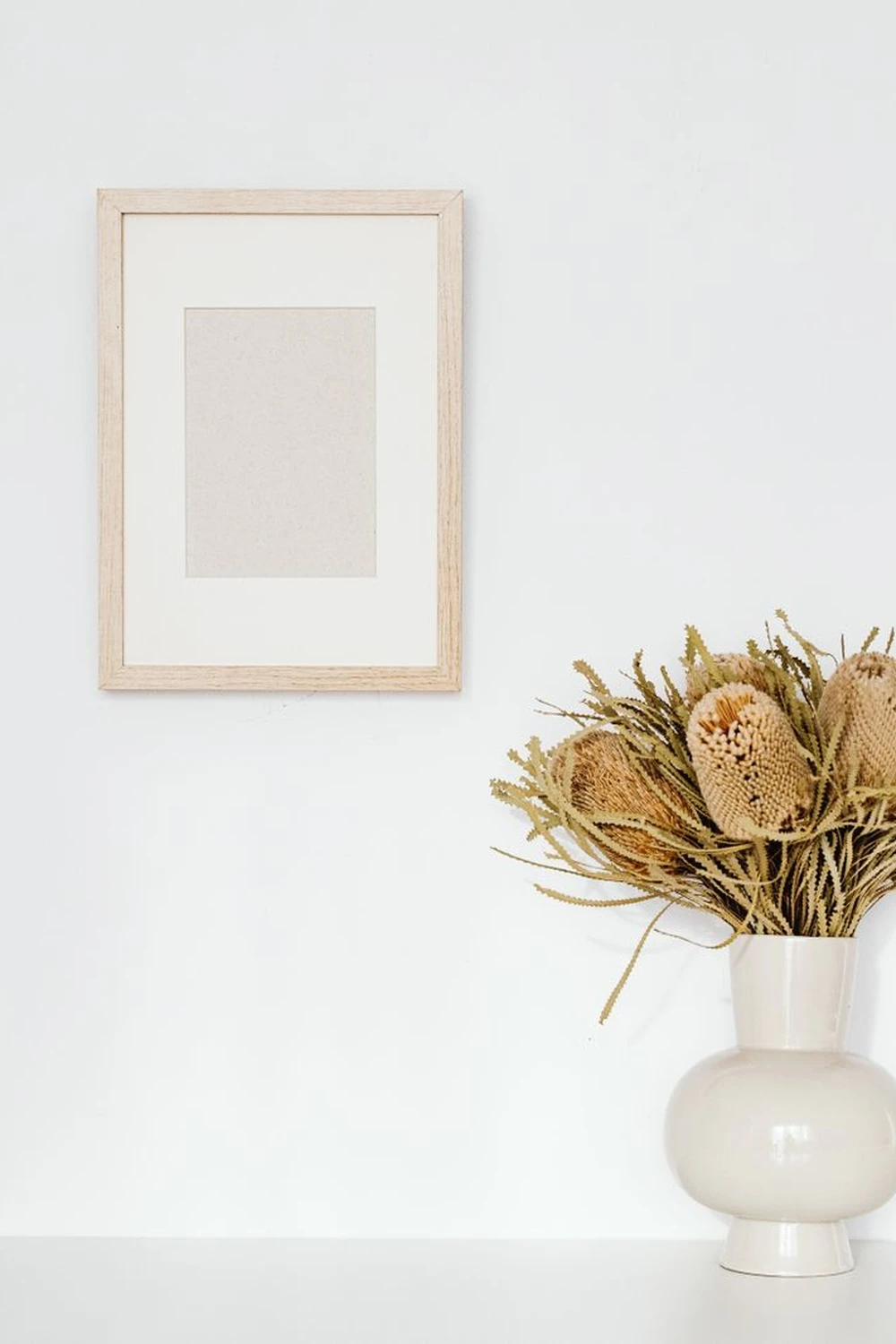
Everything outside is bare in winter, so a little dried texture in the hall feels like a deliberate act of warmth — and unlike fresh flowers, it never needs watering in a cold corridor. A vase of dried stems on the console gives the hallway height and softness without anything that wilts by January, and the pale golds and creams catch the lamplight beautifully.
Choose stems with some structure — banksia, dried grasses, eucalyptus — and keep the vase simple and heavy so it never topples when someone brushes past with a coat. One vase is enough; a hallway console is not a flower shop.
Tip: Give dried stems a gentle shake outside once a month — they shed a little dust, and a dusty vase is the one thing that makes a clean hall look tired.
11. Set a Lantern on the Hall Window Sill
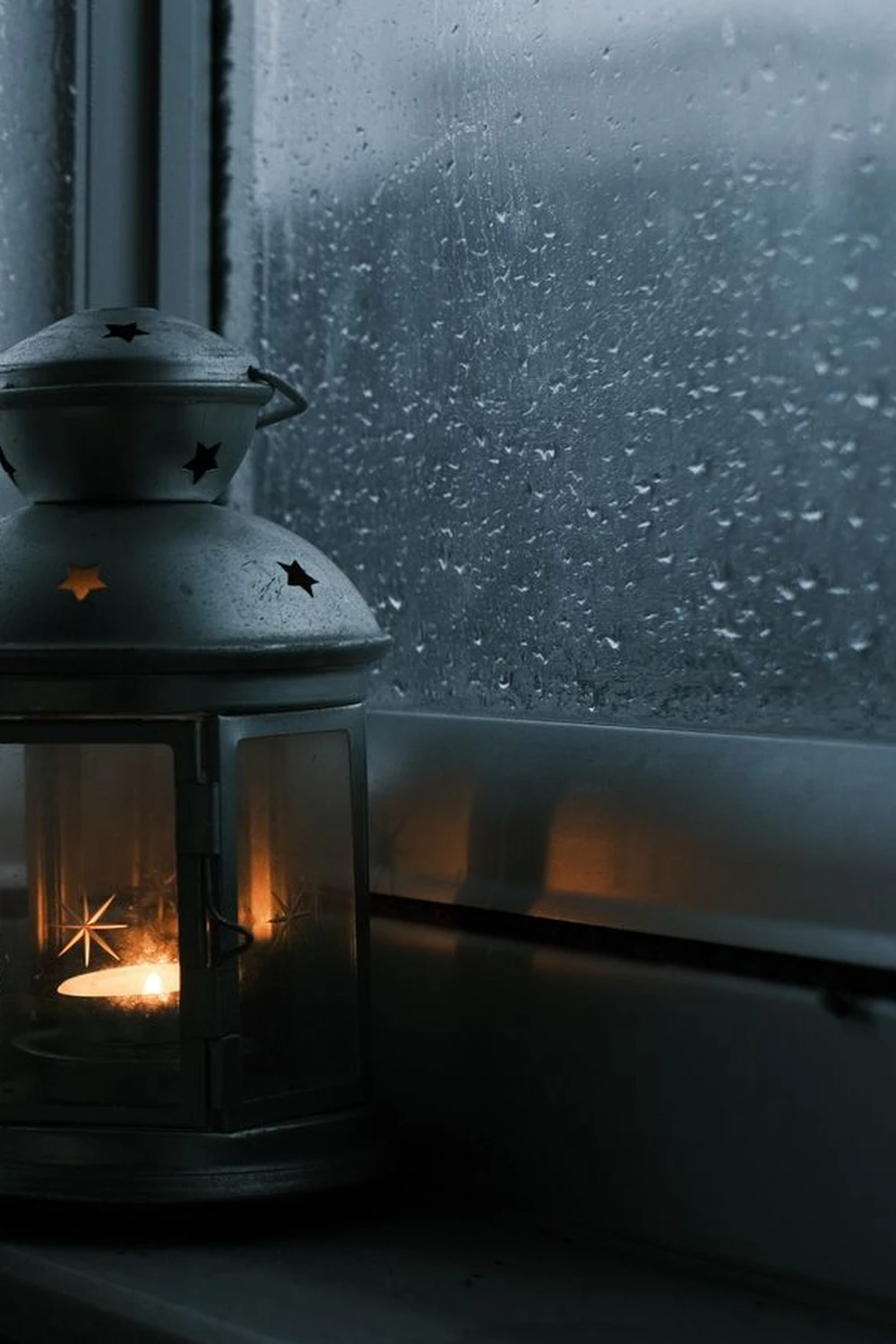
If your hallway has a window — even a small one — its sill is the best lantern spot in the house. A lantern with a candle inside catches the low winter light all afternoon and glows from behind when the flame is lit, so the hall gets a lit line at eye level exactly where the walk feels darkest.
Use a sturdy lantern with glass panels so the flame is protected from the draught that always runs down a hallway, and set it where its light catches the wall rather than the glass. One lantern is the decoration here — the flame does the work, and anything else on the sill is clutter.
Tip: Use a battery pillar candle inside the lantern on busy mornings — the same warm glow, no flame to remember, and it switches itself off on a timer.
12. Keep One Real Candle Burning in the Evening
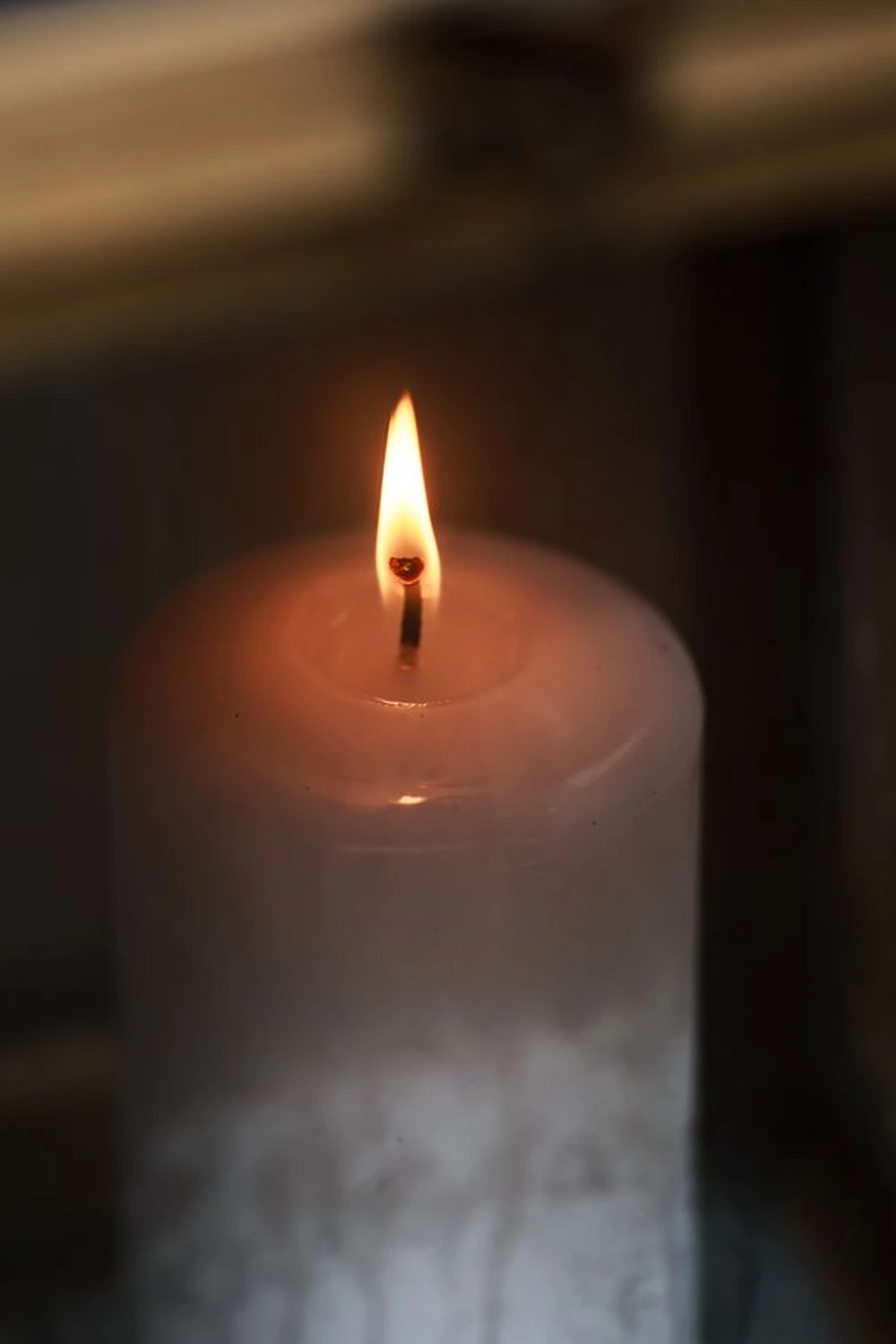
Winter evenings end early, and a hallway lit only by its ceiling bulb feels like a service corridor. One real candle in a wooden lantern on the console gives the hall a second, lower light that flickers against the walls and makes the whole walk feel sheltered — one flame does more for the mood than a whole row of ceiling spots.
Keep the candle in a lantern or a deep holder so the flame is sheltered from the draught, and light it at the same time every evening so it becomes part of the routine rather than a special occasion. A plain pillar candle in a warm cream or beeswax tone suits the season better than anything scented or coloured.
Tip: Never leave a lit candle unattended in a hallway, and keep it a full step away from coats, scarves and the runner — the glow should be the only thing that catches.
13. String Warm Fairy Lights Along the Wall

Fairy lights are not just for the tree. A single strand of warm-white lights run along the top of the hallway wall — or draped along a picture rail — gives the corridor a soft golden edge all evening, and it costs less than leaving the ceiling light on. The trick is restraint: one strand, warm white, and no colours.
Fix the strand with tiny clear clips so the wire nearly disappears and the lights look like they are floating, and let it follow the line of the wall rather than sagging in loops. On a timer, the lights come on at dusk without anyone remembering, and the hall is already warm when the front door opens.
Tip: Use battery fairy lights on a timer for a hallway with no nearby socket — no trailing cable across the walk, and the lights switch themselves off at bedtime.
14. Keep One Hardy Plant by the Door
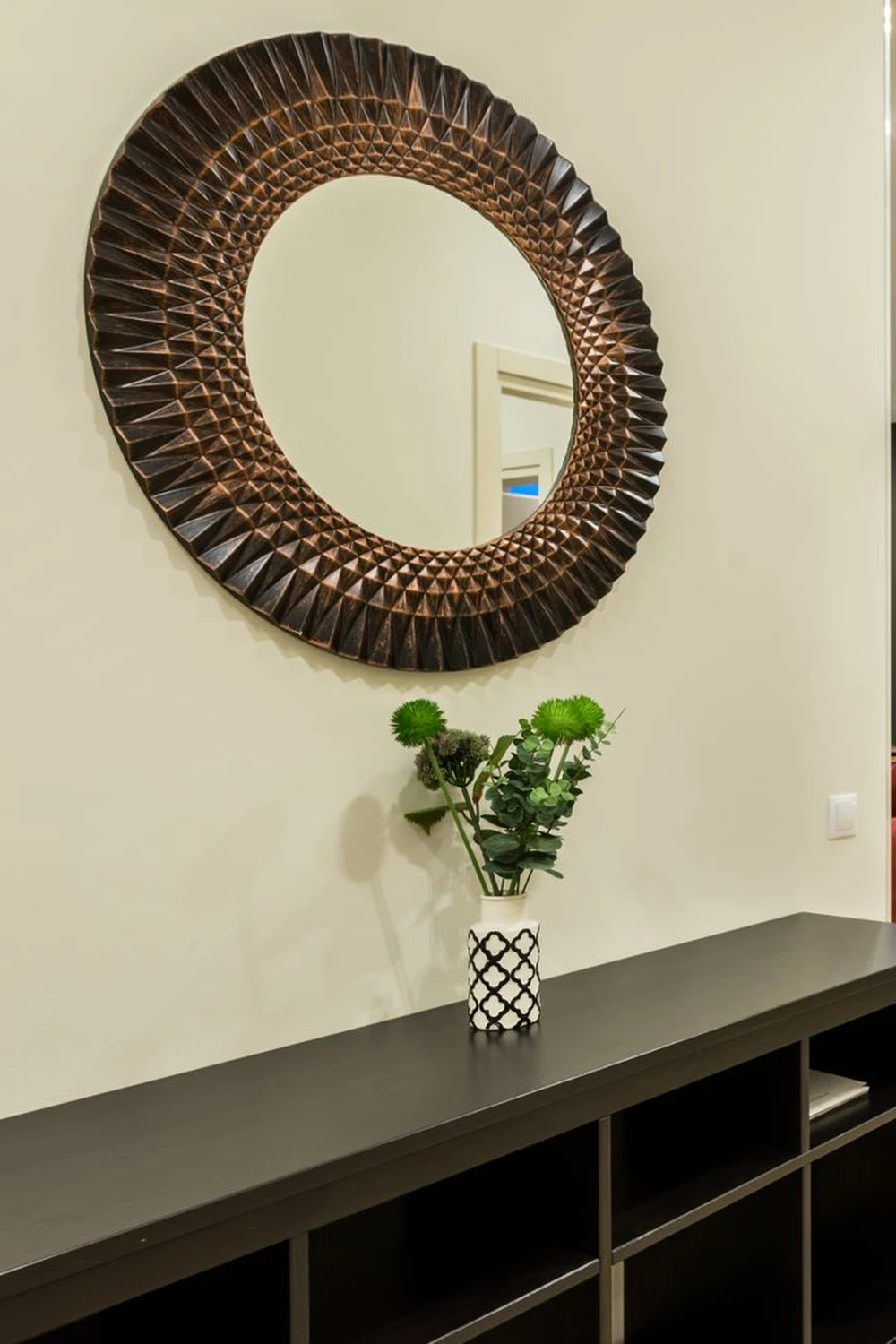
Everything outside is bare in winter, so a little green by the door feels like a deliberate act of warmth. One hardy plant on the console — a small evergreen, a trailing pothos, a vase of green stems — gives the eye something living to land on before the walk, and the greenery softens the hard edges of doors and skirting.
Pick a plant that forgives a cold, draughty hall and low light, and keep it in a heavy pot so it never topples when someone brushes past with a bag. Terracotta and woven baskets suit the season better than bright plastic, and they hold the warmth of the room in a way cold ceramic never does.
Tip: Water sparingly in winter and keep the pot a hand’s width from the coldest wall — roots pressed against an icy hallway wall are the fastest way to lose a plant in January.
15. Start With a Doormat That Earns Its Keep
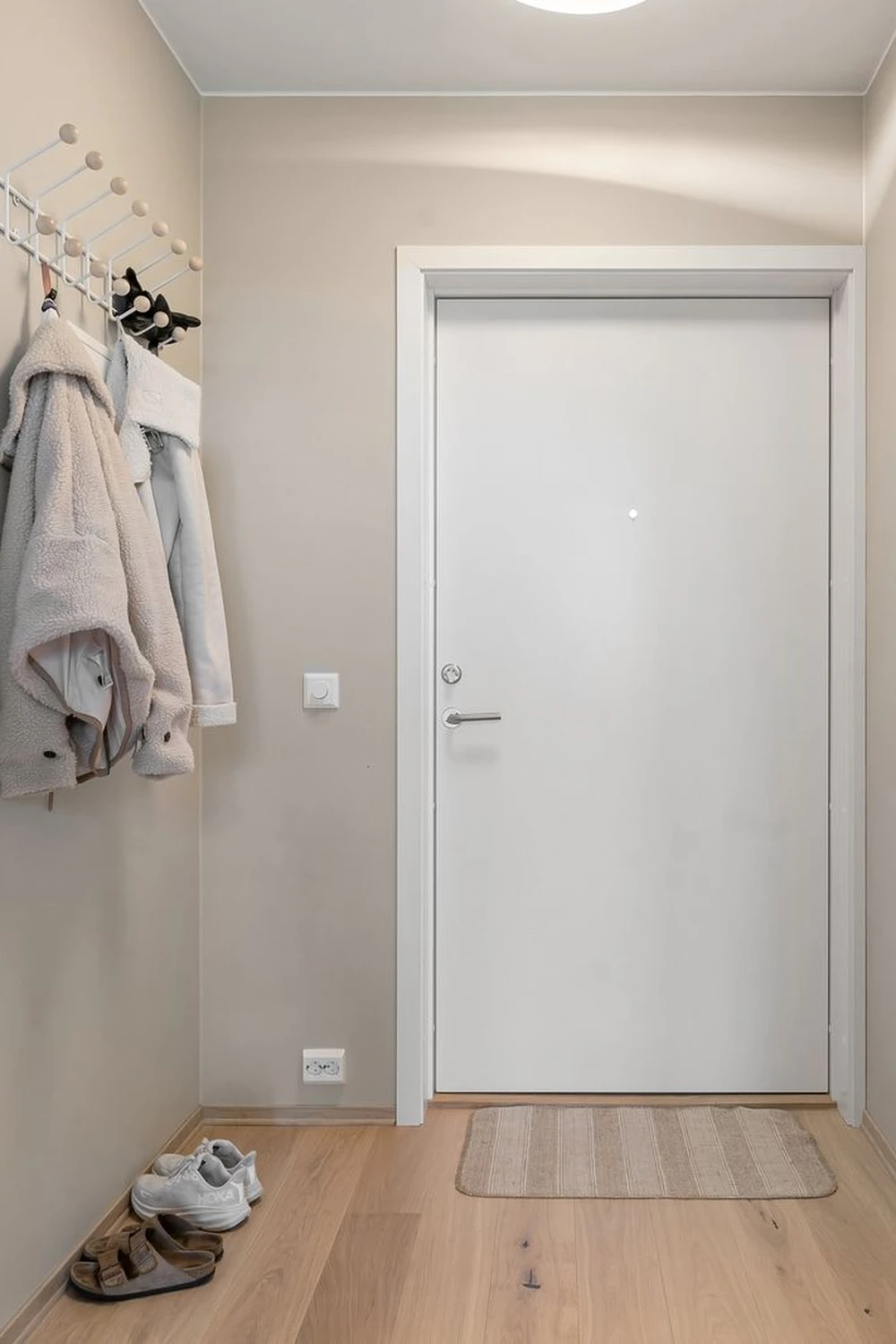
The doormat is the first thing winter touches in your house, and the cheapest way to make the hallway feel cared for. A thick, plain doormat in a warm neutral — no slogans, no jokes — catches the grit before it reaches the runner, and it tells everyone who walks in that this is a house that is looked after.
Choose a mat as wide as the door and deep enough for two full steps, so boots actually get wiped instead of just stepping over it. Coir or a heavy woven mat works best in winter: it scrapes off the salt and grit, and it shakes out in seconds.
Tip: Shake the mat out every couple of days in the wettest weeks — a mat full of grit stops catching anything, and the grit it misses ends up ground into the runner.
Winter Hallway Checklist
| Warm it up | What to do | Why it works |
|---|---|---|
| Underfoot | Runner + non-slip pad, doormat at the door | Warm feet and quiet floors from the first step |
| Light | Pendants, sconces, one lantern, fairy lights on a timer | Warm pools of light instead of one flat ceiling bulb |
| Reflection | One big mirror opposite a doorway | Doubles the daylight the hall already gets |
| Storage | Bench with drawers, coat rail, slim shoe rack | Coats and boots stop colonising the walk |
| Life | One hardy plant, dried stems in a vase | Green and texture against bare winter walls |
| Glow | One real candle in a lantern in the evening | A low flicker makes the whole hall feel sheltered |
Read Next
If your hallway is feeling warmer already, keep going: our winter entryway decor ideas dress the front door itself, our winter staircase decor ideas carry the warmth up the stairs, and our winter home decor ideas pull the whole house together for the cold months.
Frequently Asked Questions
Can I decorate a narrow hallway without blocking it?
Yes — keep everything flat to the walls. A slim runner, wall sconces, a big mirror and a narrow console no deeper than a handspan all warm the hall without taking a step of walking space. Skip floor-standing furniture and anything that sticks out past the skirting.
What colour makes a dark hallway feel warmer?
Warm neutrals do the most work: cream, soft rust, warm grey and honey wood tones, with the warmth coming from the light as much as the paint. Warm-white bulbs around 2700K matter more than any paint colour — cool light makes even a warm-painted hall feel grey.
How do I keep a hallway runner from slipping?
Lay a thin non-slip pad underneath and choose a low-pile, flat-weave runner — deep pile creeps more and trips more. In the wettest weeks, check the pad when you shake the mat out; damp pads lose their grip first.
What lighting is best for a hallway with no windows?
Layer it: a warm pendant or two for the walk, sconces at eye level for the walls, and one low glow — a lantern or fairy lights — so the light comes from more than one height. A big mirror opposite the brightest doorway helps too, even when the only daylight is borrowed from the next room.
How do I keep winter coats and shoes tidy in a small hall?
Give everything a fixed home and a fixed number: one hook per person with one hook left empty, one pair of shoes per person on a slim open rack, and hats and gloves in the bench drawers. The empty hook and the half-empty rack are what keep the system working — full storage just becomes a pile with shelves.