
15 Winter Entryway Ideas (Cozy From the First Step Inside)
Winter arrives at the front door first. It comes in on wet boots, hangs itself on the nearest hook, and drops slush all over the floor before you have even taken your coat off. That is why the entryway matters more in winter than at any other time of year — it is the room that takes the weather so the rest of the house does not have to.
These winter entryway ideas are all about that job: catching the snow, warming the light, and giving every coat, boot, and umbrella a place to live until spring. No big renovation, no holiday takeover — just an entrance that works hard in the cold and still feels welcoming when you walk in from the dark.
If you are carrying the winter feeling right through the house, start outside with our winter front porch decor, and if you want a festive version of this same room, our Christmas entryway decor keeps it seasonal without taking over. For the autumn version of the same space, our Thanksgiving entryway decor shows how the room changes with the seasons.
1. Start With a Boot Tray for Snowy Boots

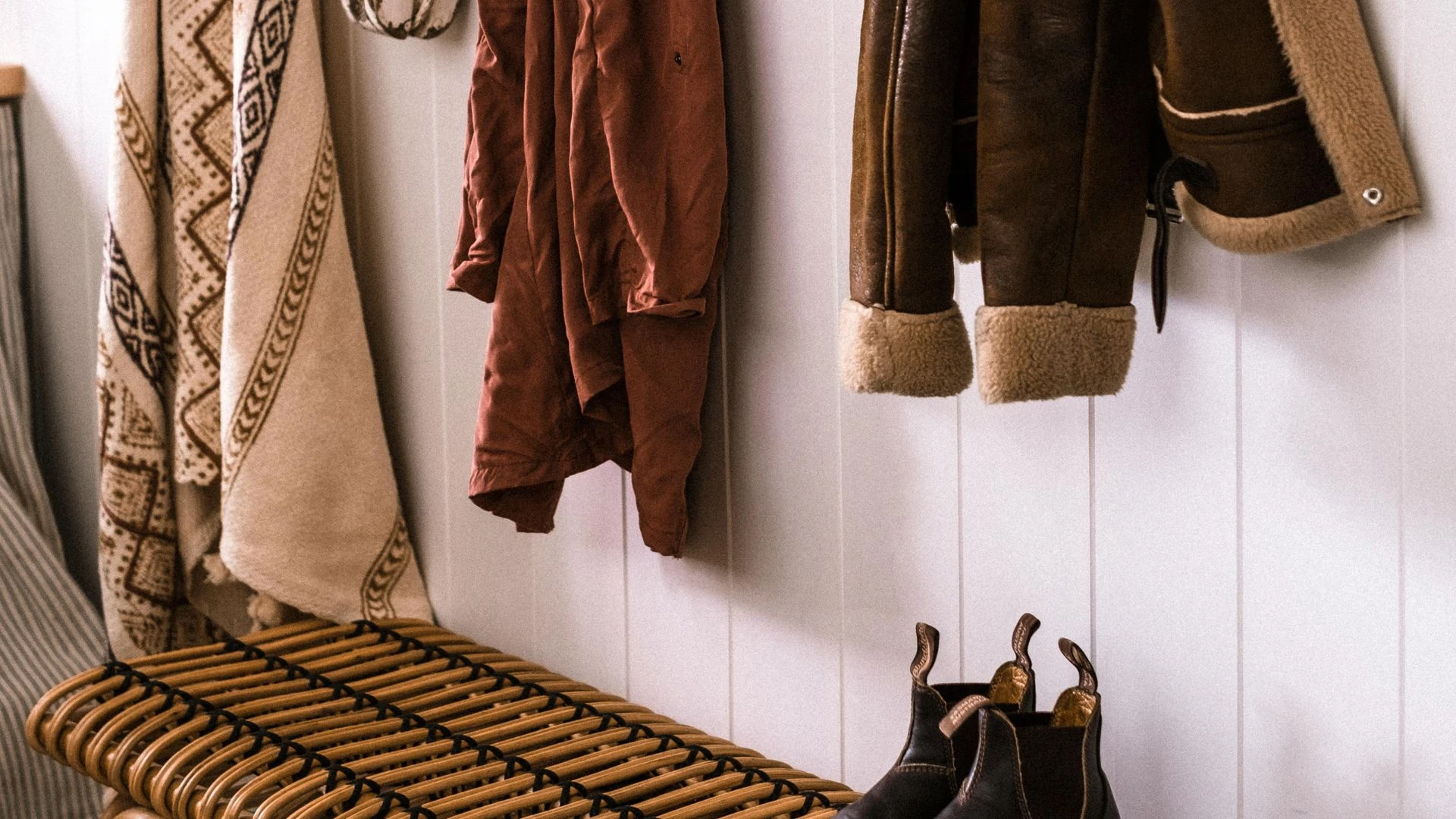
The single most useful thing in a winter entryway is a place for wet boots to land. A low tray with a raised edge — a rubber boot tray, a shallow metal tray, or even a large baking sheet in a pinch — catches the snow as it melts instead of letting it soak into the floor. Put it right inside the door, where boots come off without a second thought.
Keep the tray to one pair per person and the habit sticks. When the tray is full, the overflow goes to the closet; when it is empty, the floor stays dry. A patterned doormat underneath adds grip and catches the grit that the tray misses.
Tip: Stuff wet boots with newspaper overnight so they dry their shape back — and empty the tray every evening, or the meltwater just refreezes into a puddle by morning.
2. Hang Sturdy Iron Hooks for Everyday Coats
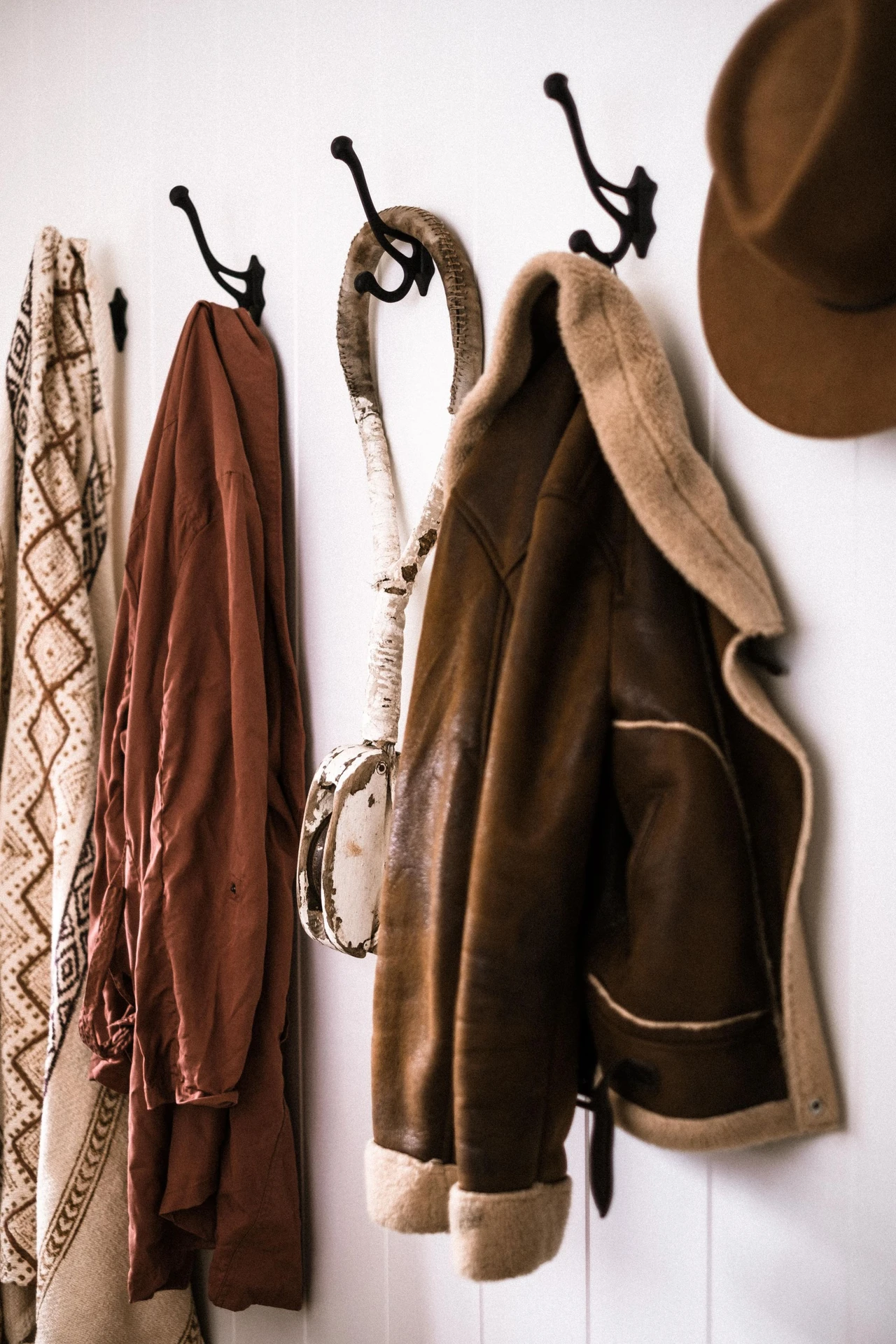
Winter coats are heavy, and flimsy hooks bend under them by February. A row of solid iron hooks, screwed into studs or a wooden rail, holds a wool coat, a scarf, and a hat on a single hook without sagging — and it looks better for it. Black iron against a white wall is a classic pairing that suits almost any entryway.
Space the hooks about a foot apart so coats can breathe and dry instead of bunching into a damp pile. One hook per person, at a height everyone in the house can reach, ends the daily argument about whose coat is on the floor.
Tip: Add one lower hook for children and one spare hook by the door for the coat a guest is wearing — visitors should never have to drape theirs over a chair.
3. Give Every Person Their Own Hook
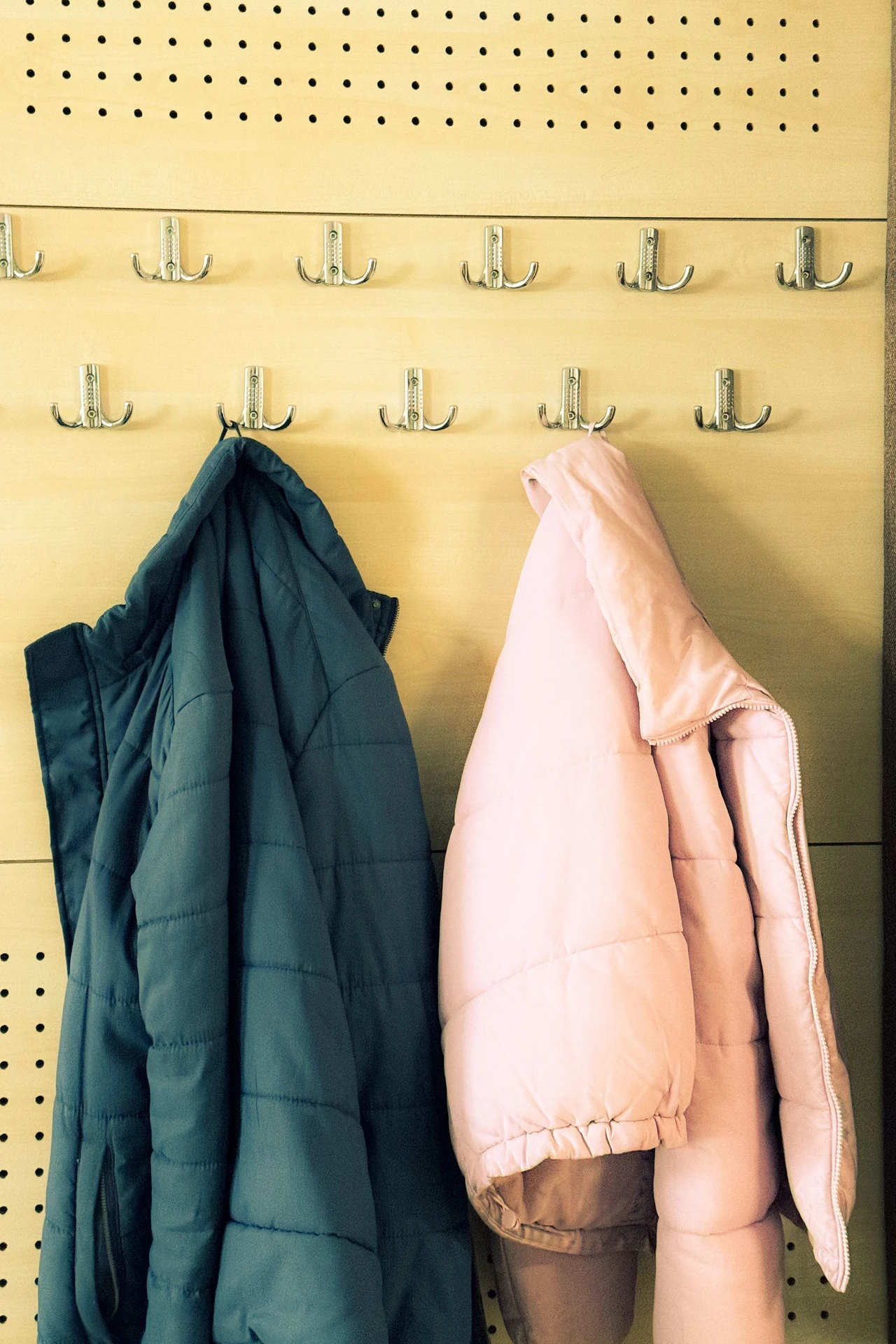
When every coat shares one hook, nobody can find theirs in the morning. A pegboard wall or a long rail with a row of identical hooks gives each person in the house a named spot — and winter mornings run on that kind of small certainty. Padded coats, which are bulky and slide off single pegs, stay put on double-prong hooks.
Keep the row at shoulder height for adults and add a second, lower row for children so their coats are not dragging on the floor. The wall behind takes the wear, so choose a wipeable surface like painted wood or pegboard rather than bare plaster.
Tip: At the start of the season, take every coat off the hooks and put back only the ones being worn this winter — the rest go to the closet, and the wall stops looking like a coat shop.
4. Add a Bench to Sit and Lace Up

Winter boots do not go on standing up — not gracefully, anyway. A simple wooden bench by the door turns the morning boot routine from a wobble into a sit-down moment, and it gives bags and shopping a place to wait while hands are free. Wood warms a cold entryway in a way metal and plastic never do.
Choose a bench that is deep enough to sit on comfortably but slim enough to leave the walkway clear — about a foot deep is usually right. A woven rug in front of it catches the drips and gives cold feet somewhere soft to land.
Tip: Keep a small basket under the bench for hats and gloves, so the seat itself stays clear for sitting and never becomes a shelf.
5. Build One Corner That Does It All
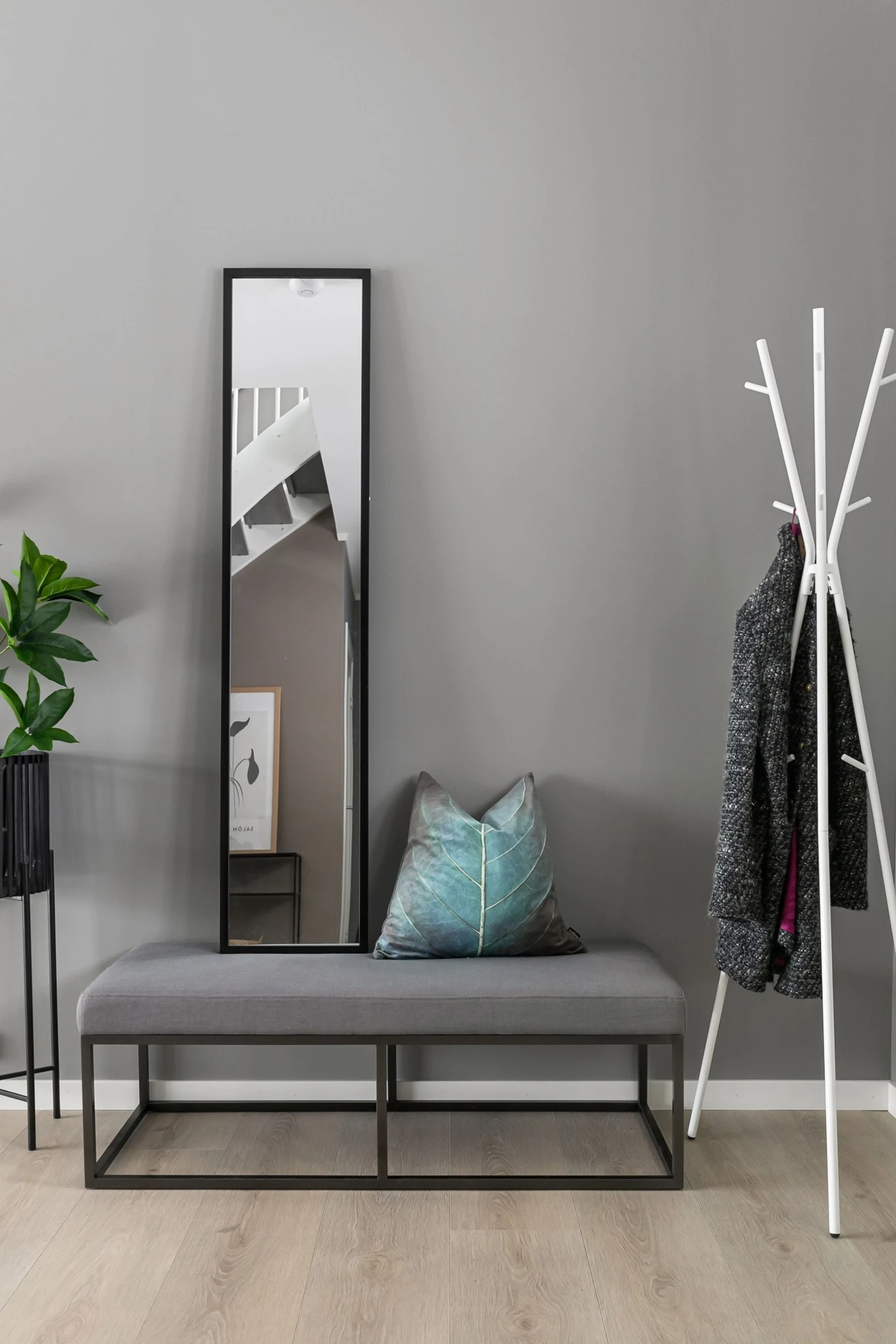
If your entryway is short on space, stop trying to spread the jobs around and give one corner all of them: a bench to sit on, a tall mirror to check yourself before leaving, and a slim coat stand for the coat you are wearing today. Together they form a complete winter station in about three feet of wall.
Keep the pieces slim and the palette calm — grey, white, and one green plant — so the corner reads as tidy rather than crowded. A single cushion in a winter leaf print is enough pattern; the rest should stay plain and practical.
Tip: Lean the mirror rather than hanging it if you rent — it is stable against the bench, and you can take it with you when you move.
6. Hide the Bulk Behind Built-In Cupboards

Winter brings bulk — thick coats, spare blankets for the car, the sled that has to live somewhere — and open hooks show all of it. A tall built-in cupboard with a few brass pegs on its side hides the bulk behind flat doors, and the room instantly looks calmer. Dark doors against a pale wall make the cupboard look like architecture, not storage.
Inside, fit one shelf at the top for out-of-season things and a rail at hanging height for the coats in rotation. The bench beside it is where boots get laced, and the pegs on the cupboard side hold the coat you will grab tomorrow.
Tip: Put a small hook inside each cupboard door for the dog lead, the spare keys, and the torch — the things you hunt for in the dark on a winter evening.
7. Turn a Closet Into a Shoe Station

Most entryway closets are wasted space: one rail, one shelf, and a pile of shoes on the floor. Filling the closet with shallow wooden shelves turns it into a proper shoe station, with a pair per shelf and no more digging through a heap in the dark. A wooden peg rail on the wall beside it holds the jacket you reach for every day.
Keep the winter boots on the lowest shelf, where drips do not matter, and the lighter shoes higher up. Leave one empty shelf on purpose — it is where the boots go when they come in wet, and it stops the pile from starting again.
Tip: Line the lowest shelf with a washable tray so melting snow never reaches the wood, and wipe it down once a week.
8. Hang a Round Mirror to Catch the Light

Winter light is low and short, and a dark entryway makes the whole house feel colder. A round mirror opposite a window or beside the door bounces what light there is around the room, and it gives you a last look before you step out into the cold. A slim wooden shelf underneath holds the small things — keys, a candle, a vase of eucalyptus — without needing a whole table.
Round suits an entryway better than square: no sharp corners to catch a shoulder in a narrow space, and the soft shape warms up plain white walls. Keep the shelf clear of clutter or the mirror just reflects mess.
Tip: Use LED candles on the shelf instead of real ones by the door — they give the same glow without a flame near coats and scarves.
9. Style a Console Table for Winter
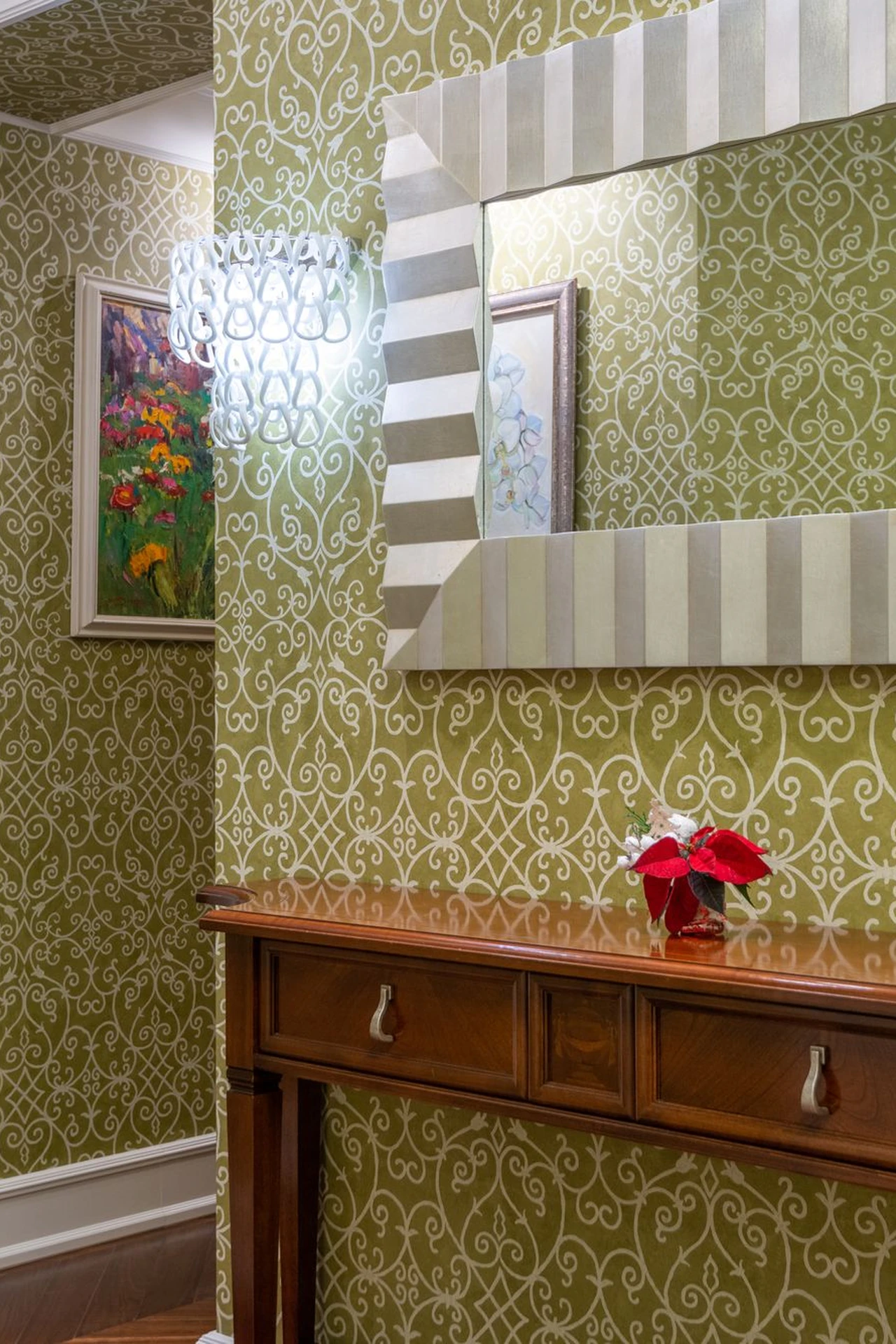
A console table is the entryway’s worktop, and winter gives it a job: somewhere for gloves, the post, and the keys that otherwise end up on every surface in the house. A table with drawers hides the small winter clutter — spare gloves, lip balm, the ice scraper — while the top stays dressed with one plant and one tray.
Patterned wallpaper behind the table makes the whole corner feel finished, even when the table itself is simple. A large mirror above it doubles the light and lets you check your hat and scarf before the door closes behind you.
Tip: Put a small tray on the console for keys and sunglasses, and make it the only place keys are ever allowed to live — the morning search ends the day you enforce it.
10. Hang a Dried Winter Wreath Inside

A wreath does not have to live on the front door. A dried wreath of white grasses, cotton stems, and baby’s breath hung on an interior door brings winter inside without a single pine needle on the floor — and it lasts the whole season, because nothing in it is trying to stay alive.
Keep the palette pale and the shape loose: bleached grasses and cotton read as frost, not as a holiday decoration, so the wreath works from the first cold snap right through to spring. Hang it from a simple hook or a ribbon loop, and it will not mark the door.
Tip: Give a dried wreath a gentle shake outside once a month to keep the dust off, and keep it away from radiators, which make the grasses brittle.
11. Light a Lantern by the Door
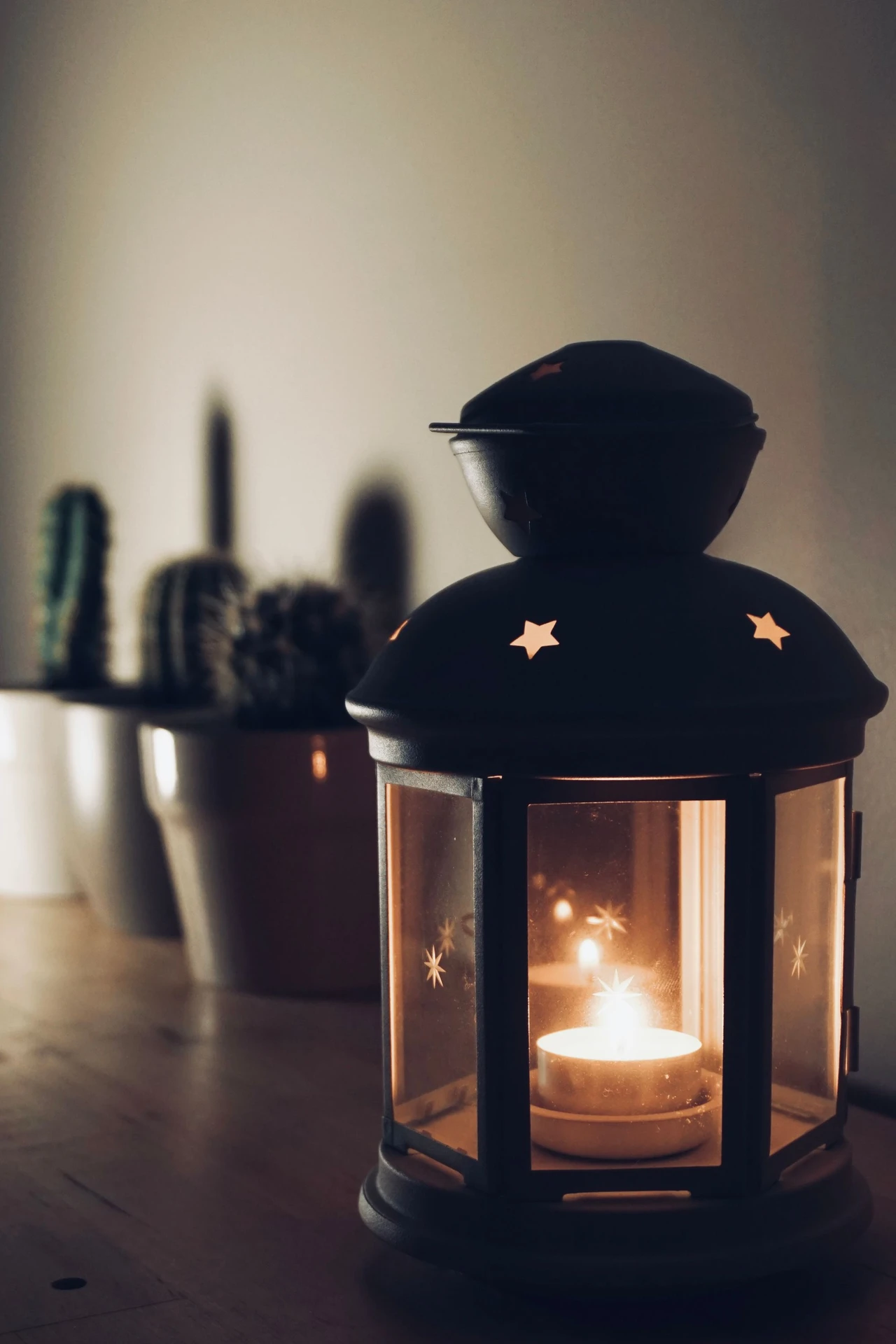
Winter evenings start at four o’clock, and the entryway is the first room you walk into in the dark. A lantern on the console or the floor by the door gives the room a warm pool of light that says you are home — and it is far kinder than the ceiling light blazing on. A black metal lantern with star cutouts throws a soft pattern across the wall.
Use a flameless LED candle inside it for everyday evenings, and save a real candle for the nights you are sitting nearby. The lantern can move, too: from the console to the bench to the floor by the boot tray, wherever the dark corner is.
Tip: Put the lantern on a timer so it is already glowing when you come home — the house feels warm before the heating has even caught up.
12. Give Umbrellas a Proper Home
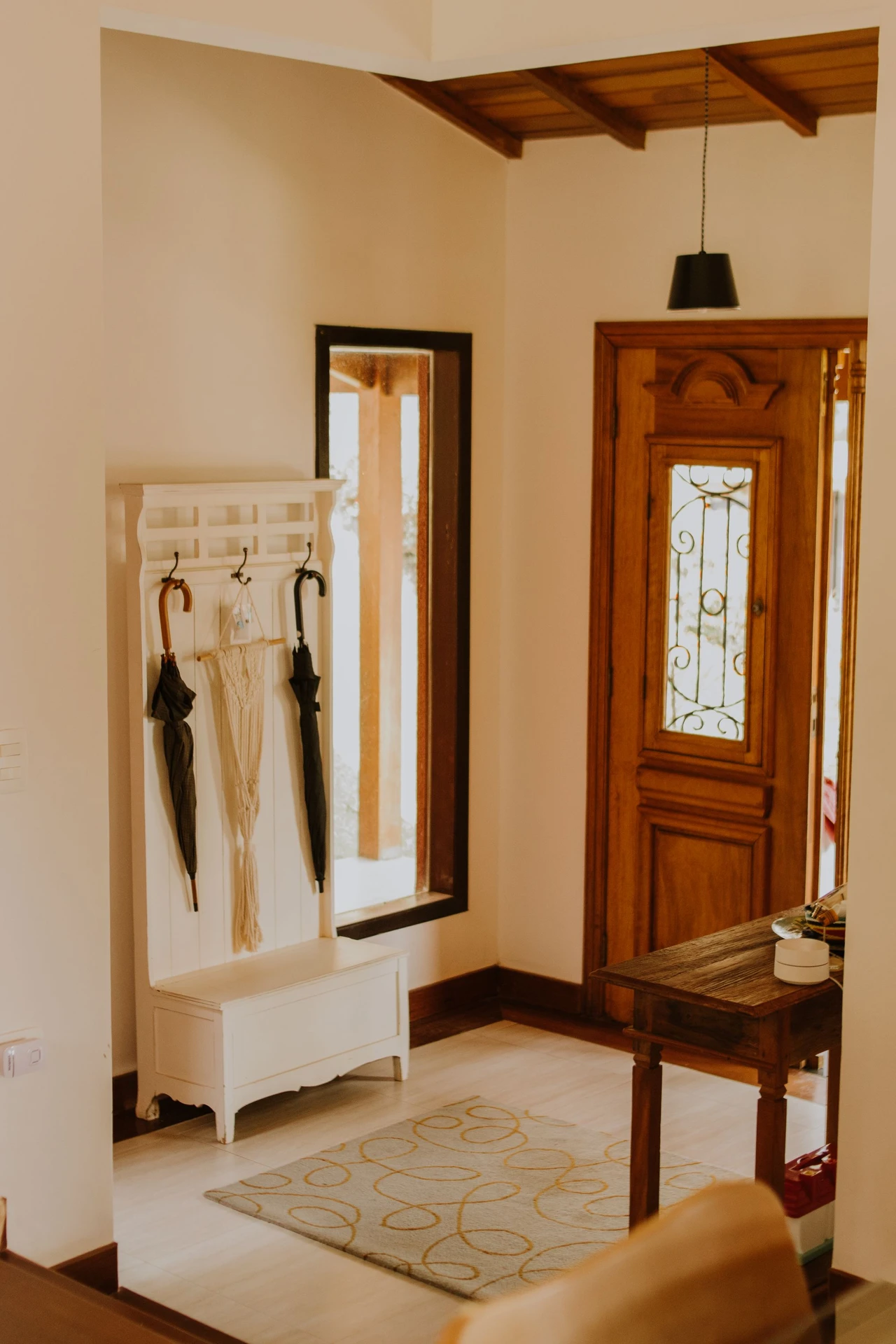
Winter rain and sleet mean umbrellas, and umbrellas left leaning in a corner fall over, drip everywhere, and get forgotten. A hall tree with hooks for umbrellas and a bench underneath keeps them upright, dripping where it does not matter, and visible enough to grab on the way out. The bench doubles as the place to sit and pull boots on.
Hang each umbrella by its handle on its own hook, and keep a small drip tray or folded towel on the bench beneath. Two umbrellas are enough for most households — one per adult — and the spares can live in the car.
Tip: Open a wet umbrella for an hour when you get home so it dries fully before you close it — a closed wet umbrella is how mildew starts.
13. Keep a Freestanding Coat Stand for Guests

Wall hooks are for the household; guests need somewhere of their own. A freestanding coat stand by the door takes the coats and bags of anyone who visits without anyone having to move their own coat first — and when the house is quiet again, it folds back against the wall or holds the dog lead and the shopping bags.
Choose a stand with a heavy base so a wet winter coat cannot tip it, and put it where the evening light falls — a black stand against a warm wall looks sculptural even when it is empty. Keep its hooks free rather than loading it with the family’s overflow.
Tip: In a small entryway, a coat stand beats a wall rail for guests, because it can be moved out of the way when no one is visiting.
14. Warm the Room With a Plant and a Floating Console
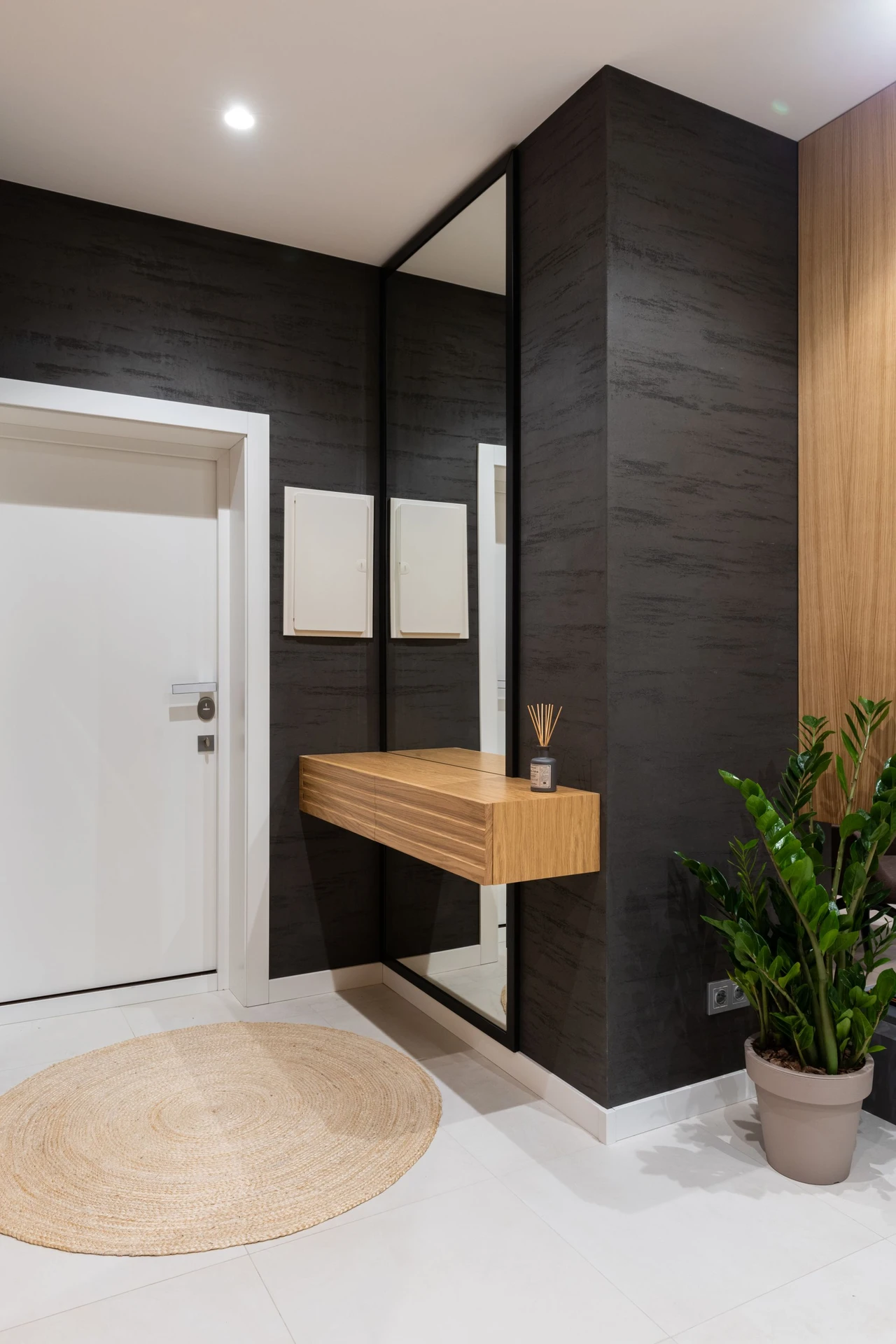
Winter entryways can feel bare and cold, all hard floors and closed doors. One large green plant changes that in an afternoon: it softens the corners, adds life to a room that is mostly passed through, and makes the space feel cared for rather than just functional. A hardy plant that tolerates low light and the odd cold draught is the right choice by a front door.
Pair it with a floating wooden console and a tall mirror, and the room gains warmth without losing floor space — the round woven rug underneath ties the three pieces together and gives the floor a soft landing for cold feet.
Tip: Water a front-door plant less in winter than in summer, and keep it a step away from the door itself so the cold air does not shock it every time the door opens.
15. Let a Sideboard Swallow the Winter Clutter

The last idea is the one that keeps all the others working: a sideboard with drawers and cupboards right by the front door. Gloves, scarves, the spare torch, the ice scraper, the letters that need posting — everything winter throws at the entrance has a drawer to disappear into, and the top stays calm with candles, a bowl for keys, and a vase of flowers.
A wooden sideboard warms up pale walls and hard floors, and a woven rug in front of it marks the spot where shoes come off. It is the biggest piece in this list, but in a room that works this hard in winter, it earns its floor space.
Tip: Give each drawer a job and label it inside the drawer — gloves, hats, car things — so the sideboard stays organised past the first week of January.
A winter entryway is not about buying a whole new room. It is about the cold-weather systems — a tray for wet boots, a hook for every coat, a bench to sit on, and a warm light by the door — that keep the snow outside and the welcome inside. Pick three or four of these ideas, start with the boots, and let the rest of the room follow.
Read next: more winter front porch decor for the outside of the same entrance, Christmas entryway decor if you want a festive touch, and Thanksgiving entryway decor for the autumn version of this room.
How do I stop snow and mud from spreading past the entryway?
Give boots a landing zone right inside the door — a boot tray with a raised edge on top of a washable doormat — and make taking boots off at the door a house rule. A second, thicker rug just past the tray catches whatever the first one misses, and the rest of the house stays clean.
What should every winter entryway have?
Four things: a boot tray for wet footwear, a sturdy hook per person for coats, a bench or chair to sit on while lacing boots, and a warm light by the door. Everything else — mirrors, wreaths, sideboards — makes the room prettier, but those four make it work.
How can I make a small entryway feel warmer in winter?
Focus on texture and light, not furniture. A thick rug, a wooden bench, warm-toned bulbs, and one green plant make a small entryway feel sheltered rather than cramped — and a mirror opposite the door bounces the low winter light around the room.
How do I stop cold draughts coming in under the front door?
Fit a draught excluder strip or a fabric draught stopper along the bottom of the door, check the seal around the frame, and hang a heavy curtain on a rail just inside the door for the coldest months. A thick rug by the door also helps, by blocking the cold air that pools at floor level.
Can I hang a wreath indoors, or will it dry out?
Yes — a dried wreath of grasses, cotton, and baby’s breath is made for indoors and lasts all winter, because nothing in it needs water. Keep it away from radiators and direct heat, give it a gentle shake outside once a month, and it will still look fresh in spring.