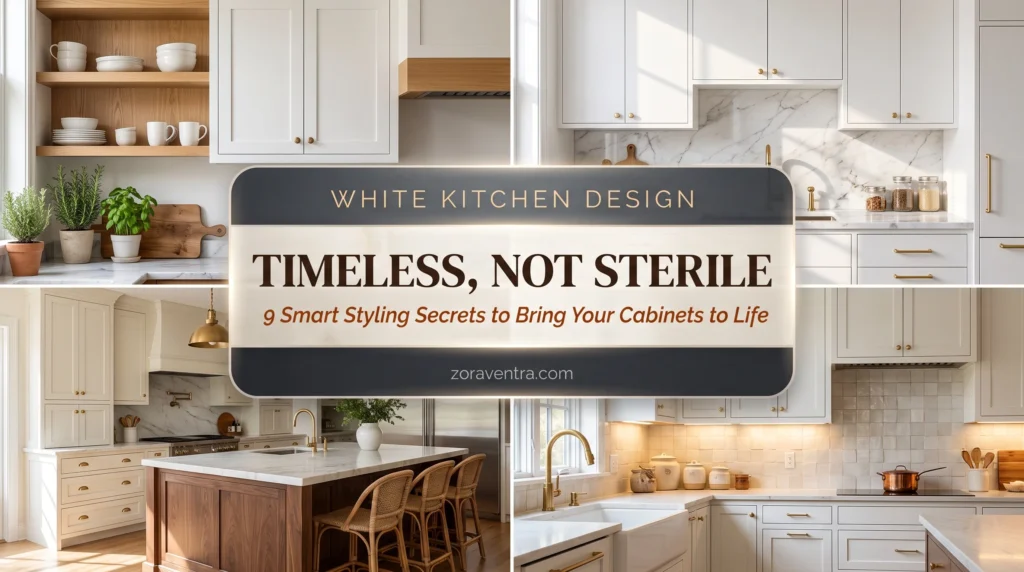
White kitchens have stayed popular for decades — and they keep getting the same criticism: cold, flat, too perfect to live in. But white cabinets aren’t what make a kitchen feel sterile. It’s everything around them. The most inviting white kitchens layer warmth through natural materials, varied textures, thoughtful lighting, and considered finishes. White becomes a backdrop that makes the room brighter, calmer, more welcoming. Here’s how to get there.
The One-Warm-Thing Rule
Stand in the room and look around. Everywhere your eyes land, there should be at least one warm element: a wooden shelf, a woven pendant, a stone countertop, a bowl of fruit. Designers never rely on white alone — they balance it with natural texture so the space feels layered, not lifeless. Every new addition gets a job: bring warmth.
1. Pick the Right White Paint
The biggest mistake: a stark blue-toned “hospital white.” Look for creamy, warm undertones — Benjamin Moore White Dove or Sherwin-Williams Alabaster have subtle gray-yellow drops that reflect light without blinding. Soft and welcoming instead of a harsh gloss wall.
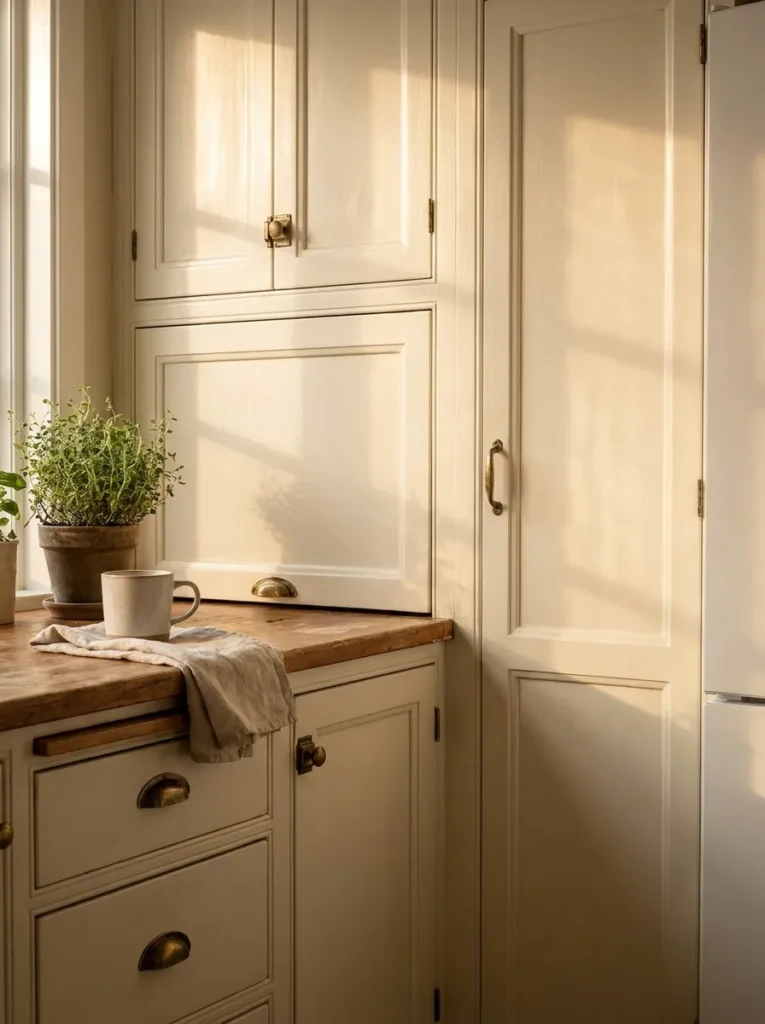
Warm White vs. Cool White
Warm whites (cream, beige, soft yellow undertones) feel relaxed and inviting. Cool whites (blue/gray undertones) look crisp and modern but can feel stark without much natural light. North-facing or dim kitchen? Go warm. Bright sun-filled space? You can handle cooler whites.
2. Add Raw Wood Accents
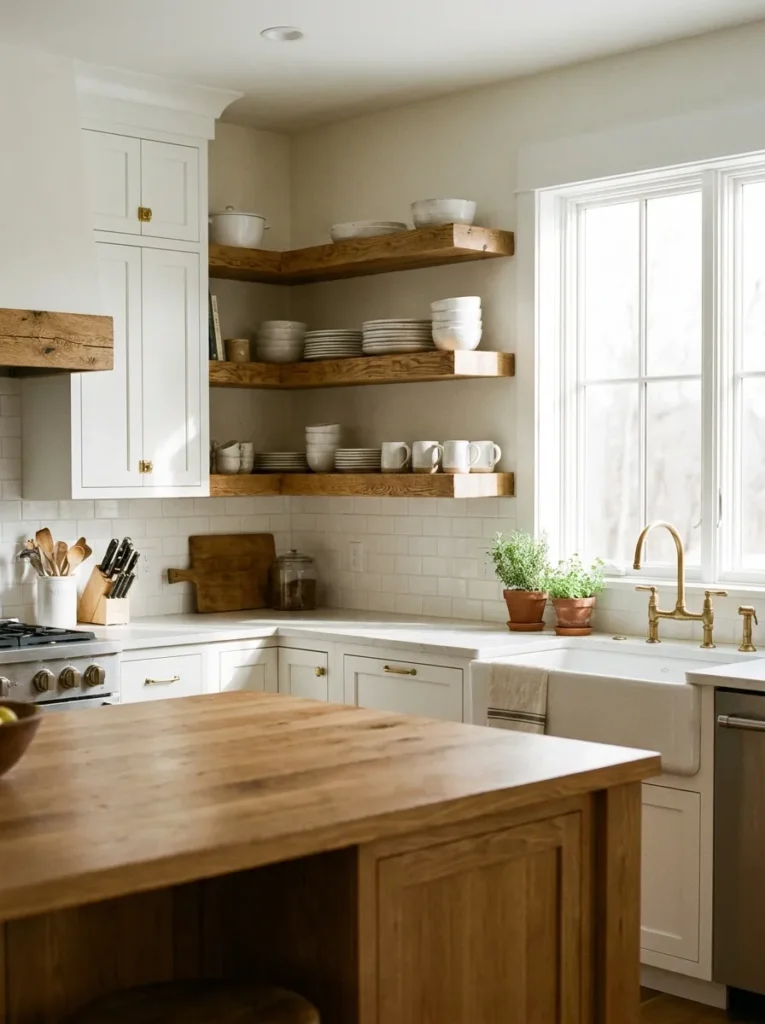
The guaranteed anti-cold move: organic material. Swap a few uppers for thick raw oak floating shelves, or choose a butcher block island top. The wood’s natural grain breaks up the sea of white doors and gives the room a lived-in soul.
Countertops: The Cabinet’s Partner
Don’t choose the countertop separately — it’s what decides whether white feels warm or sterile. Butcher block brings instant coziness (farmhouse, Scandi). Marble is timeless elegance. Quartz gives similar beauty with easier maintenance. Darker soapstone or quartz grounds the room and makes white cabinetry pop.
3. Black Hardware for Contrast
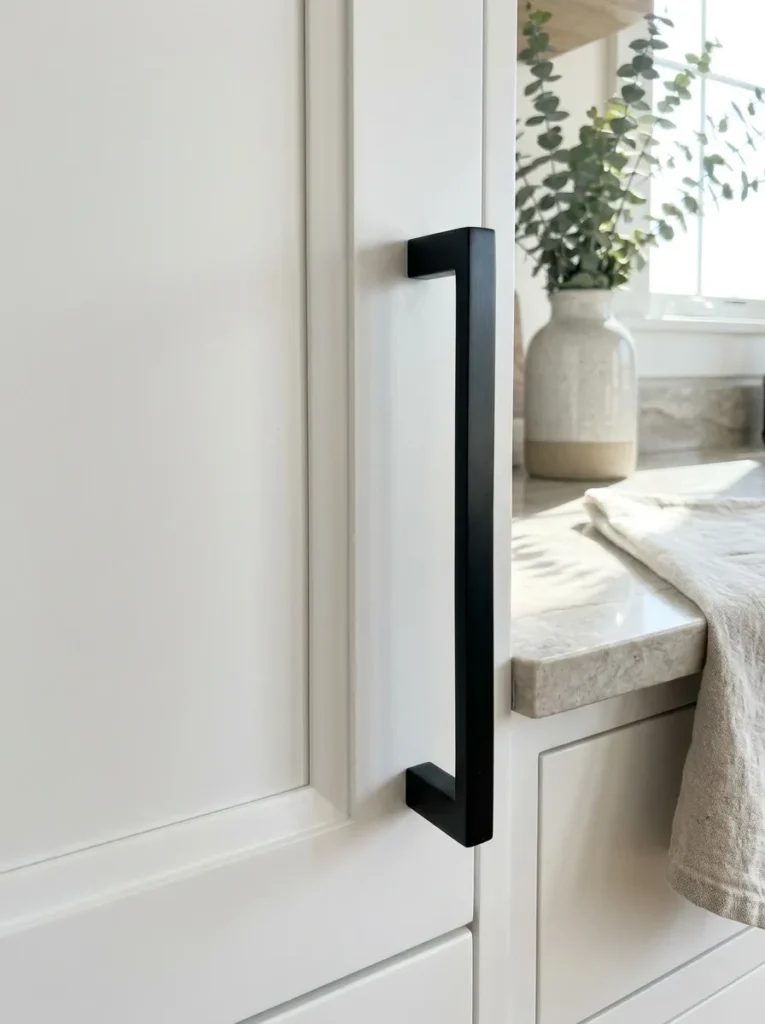
White without contrast looks washed out. Oversized matte black bar pulls or minimal black knobs act like punctuation on a blank page — architectural, grounding, instantly custom. The simplest upgrade with the biggest visual payoff. Anchor the doors: matte black cabinet pulls and knobs.
4. Or Brass for Warmth
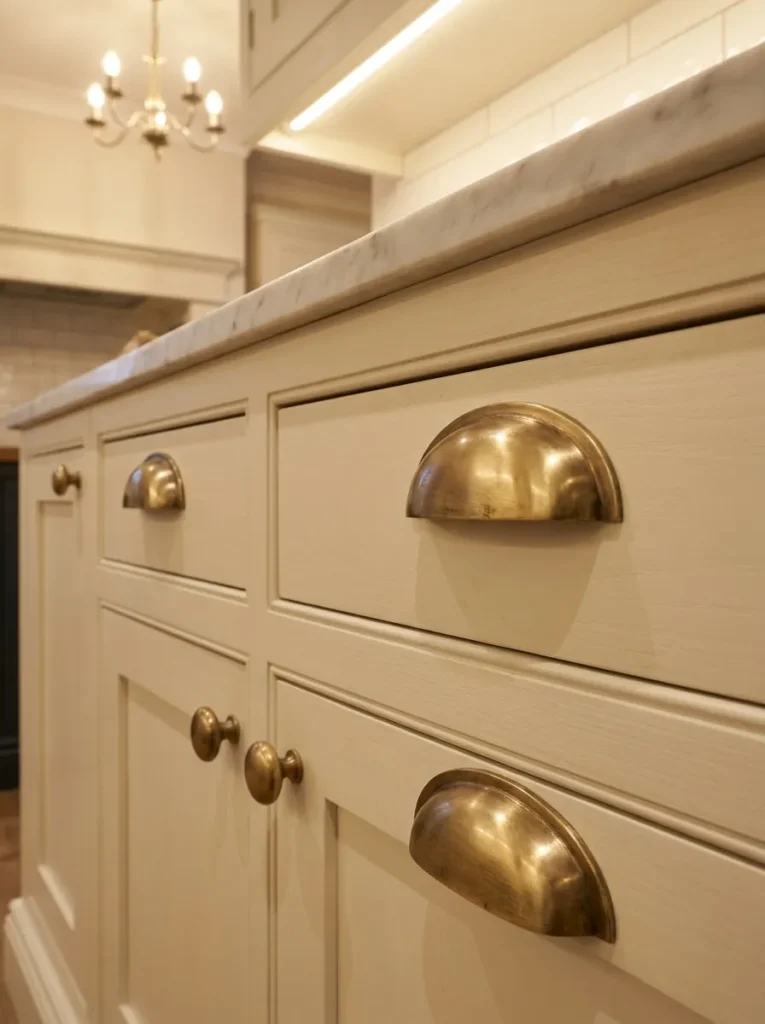
Black too edgy? Unlacquered brass or gold hardware warms white paint directly — golden tones reflect light with vintage elegance. Unlacquered brass develops a natural patina over time, so the kitchen ages like a historic estate instead of a showroom.
Cabinet Finish Matters Too
Matte reads soft and contemporary; satin is the forgiving everyday family-kitchen pick (durable, refined); semi-gloss reflects more light and wipes clean easiest. Satin is the designer favorite for balancing both.
5. Break It Up With Glass Doors
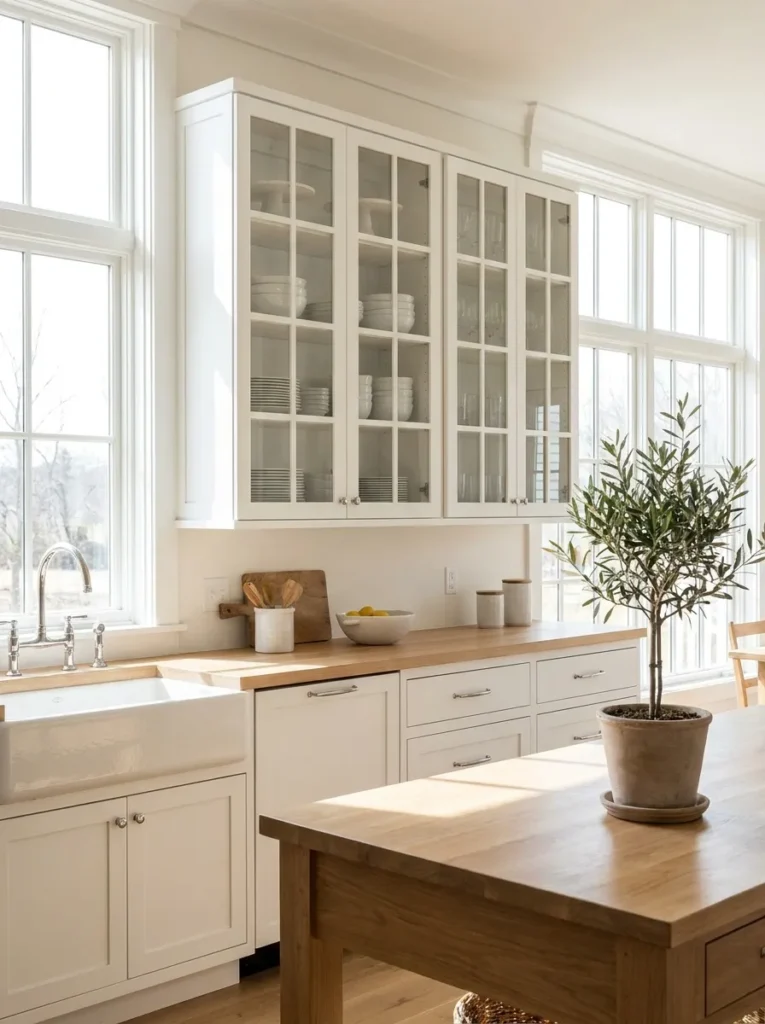
A solid wall of white uppers can feel like a drywall block. Swap the center panels of two or three upper doors for clear or fluted glass — the eye travels into the cabinet, and styled glassware or white plates inside keeps it airy and breathable.
6. Go Two-Tone (White + Wood)
Can’t choose between white and wood? Keep uppers crisp white so the top half feels light and expansive; run natural white oak or rich walnut on the base cabinets or island. Heavy natural texture below, bright sightlines at eye level — the best of both.
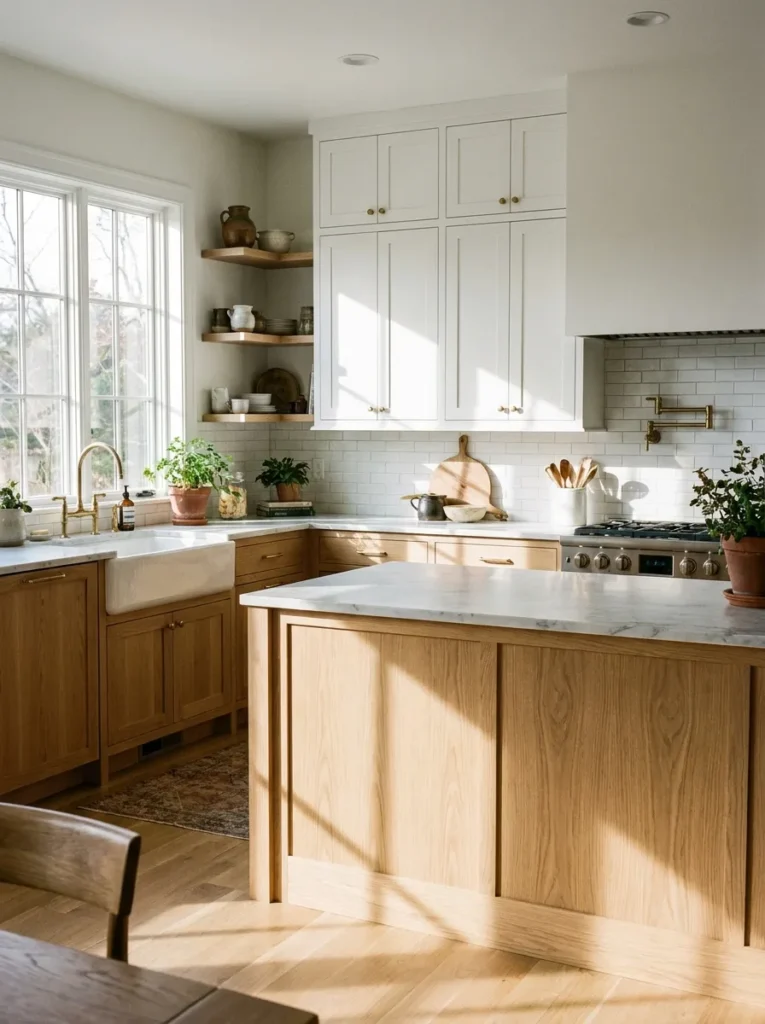
7. Texture in the Backsplash
Smooth flat white cabinets need a backsplash with something to say. Skip flat machine-made subway tile — handmade white zellige with rippled imperfect edges, or 3D fluted ceramic, catches under-cabinet lighting in a hundred ways and keeps white-on-white from going flat. More options: our subway tile pattern guide and colorful backsplash ideas for white cabinets.
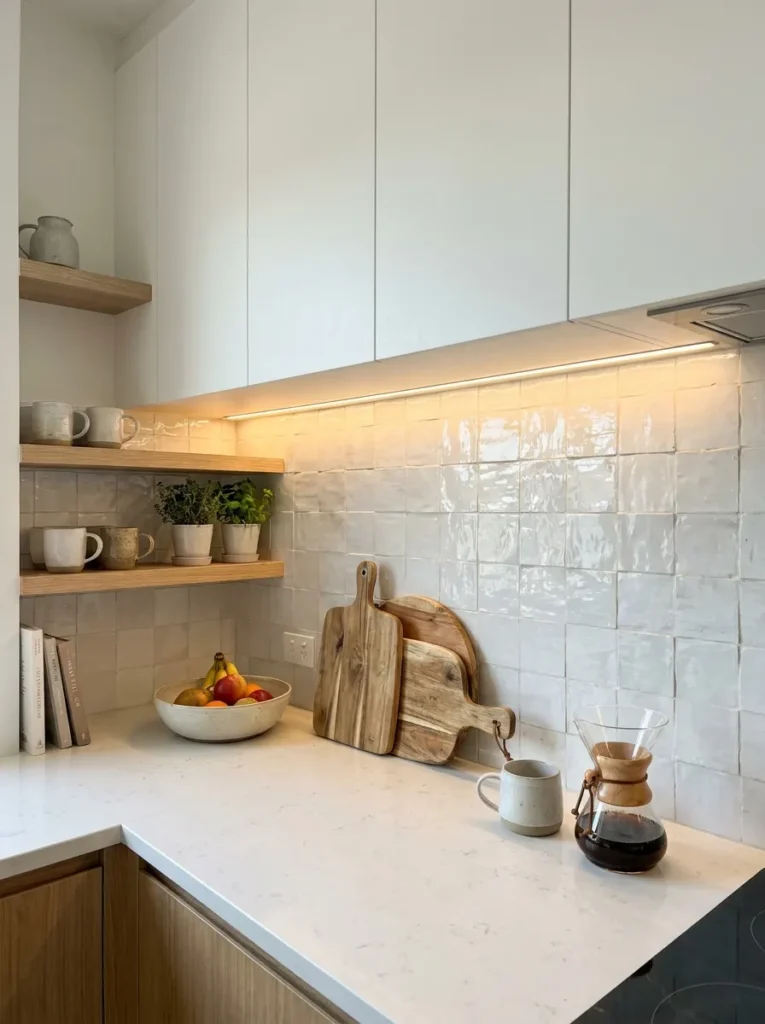
8. The Trim Trick (Budget Shaker)
Flat 90s slab doors look cheap painted white — unless you add trim first. Nail thin MDF strips around the outer edges of each door to create a shaker-style frame, then paint. The recessed panel catches natural shadows; the white highlights architecture instead of flat board.

9. Ground It With a Runner
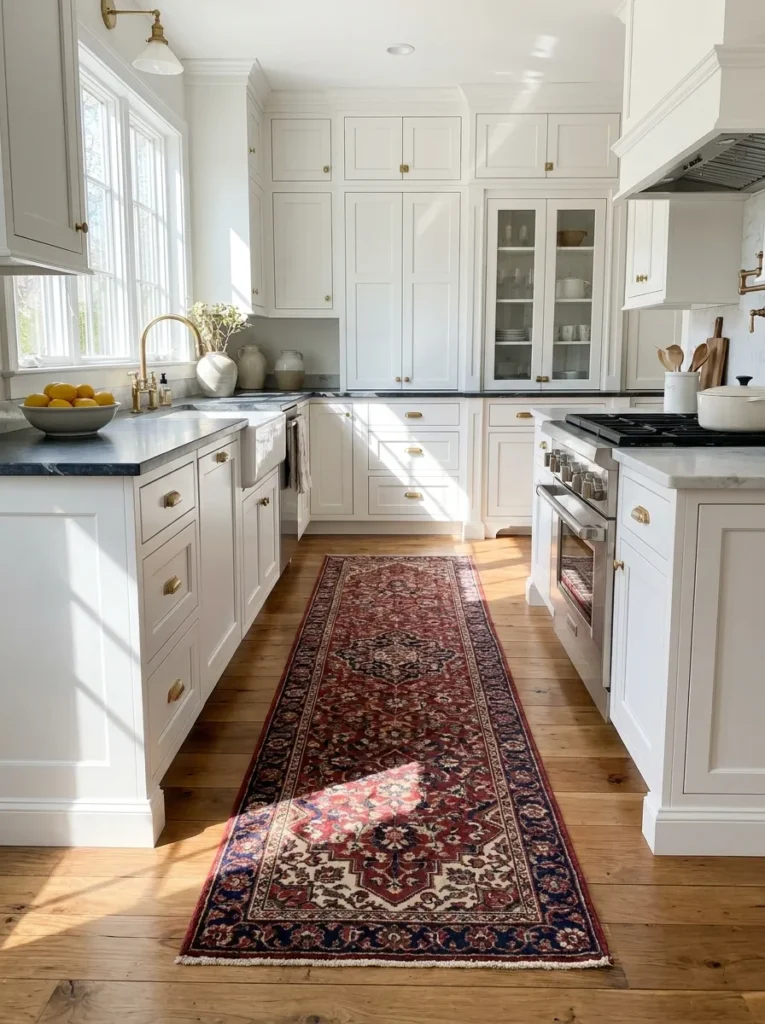
The easiest farmhouse fix: a long vintage-style runner between sink and island in deep reds, navies, or terracotta. It softens the room’s acoustics, warms the floor, and injects personality into the pristine canvas. Warm the floor: washable vintage-style kitchen runner rug.
The Balance Rule
White kitchens feel best when contrast arrives gradually. Don’t combine black hardware + black counters + black lighting + dark floors all at once — pick one or two dark elements and let wood, woven texture, and soft fabric bridge the rest. When in doubt, add texture before adding another color.
Weekend Upgrades
Raw wood floating shelves to replace a block of uppers and display ceramics. Oversized woven rattan or aged brass pendants over the island to draw the eye up. Small moves, warm room.
Quick Answers
What is the best white paint for kitchen cabinets?
Warm whites with creamy undertones — Benjamin Moore White Dove and Sherwin-Williams Alabaster are designer favorites. Avoid stark blue-whites.
How do I make white cabinets look less sterile?
One warm element in every sightline: wood shelves, brass hardware, textured backsplash, vintage rug, woven lighting. Warmth comes from layers, not the cabinet color.
Should kitchen hardware be black or brass with white cabinets?
Black = modern architectural contrast. Brass = warm timeless luxury. Both work; pick based on the room’s overall temperature.
Affiliate Disclosure: As an Amazon Associate, I earn from qualifying purchases. If you click a link and buy, I may receive a small commission at no extra cost to you. Thank you for supporting my content!