
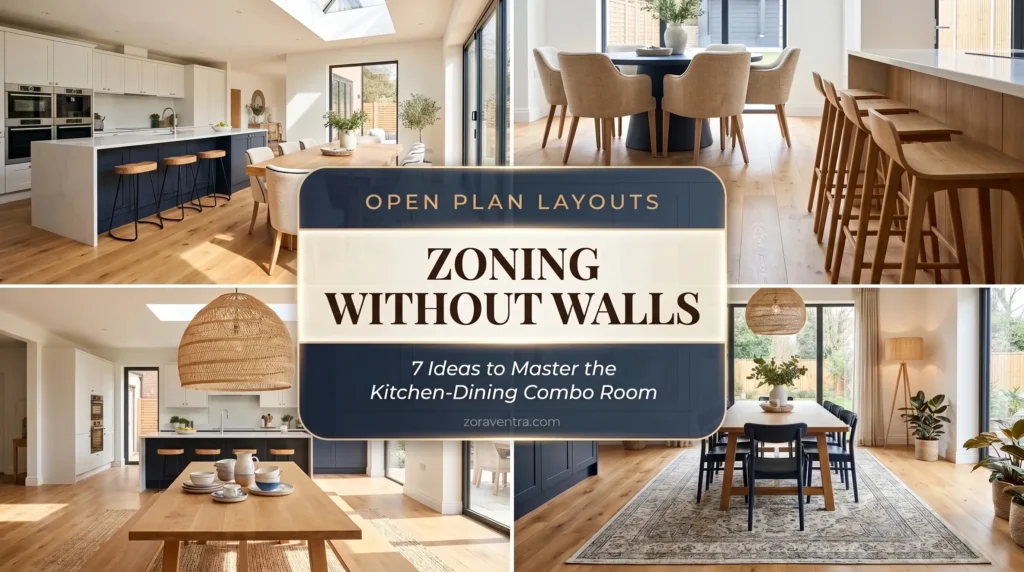
You love the idea of a spacious airy home perfect for entertaining — but decorating one giant boxy room can leave you paralyzed. Without walls to dictate where one room ends and another begins, the dining table floats aimlessly next to the stove, and the space feels either chaotic or like a cluttered furniture showroom. The secret of every breathtaking open-plan transformation: the designer didn’t match every piece — they mastered “zoning without walls.” Zoning uses visual anchors to create distinct purposeful areas that flow together. Here are 7 ideas to separate your spaces elegantly.
1. Use the Island as a Divider
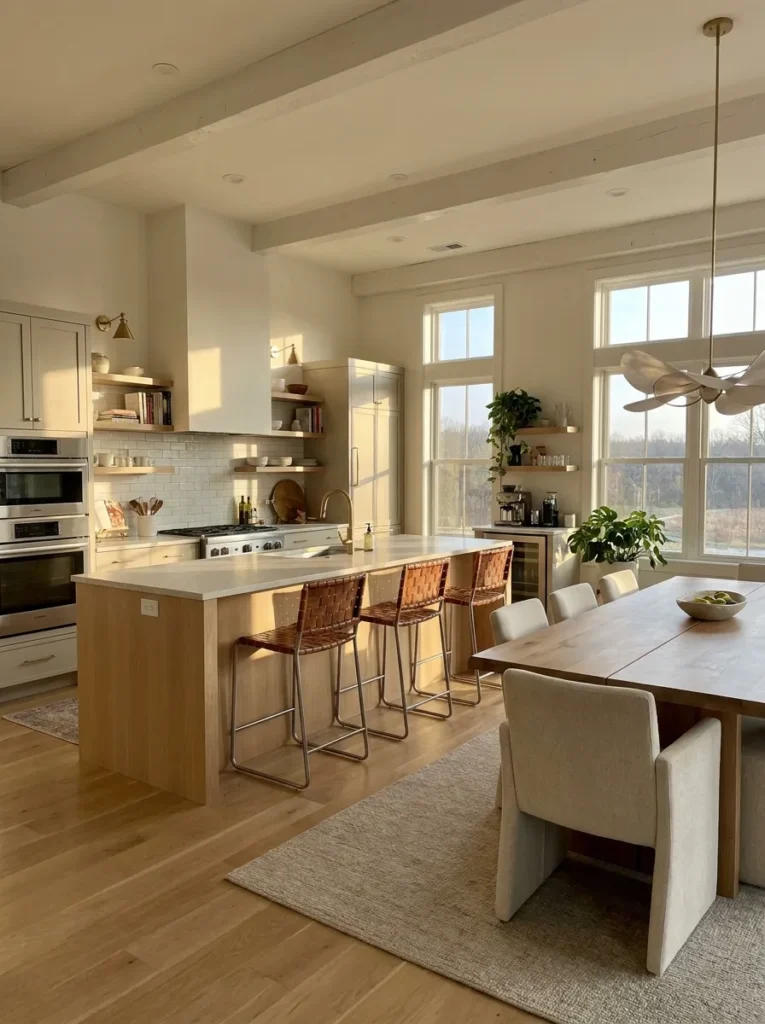
Remove structural walls, replace them with a functional boundary: a modern open-plan kitchen island. A large beautifully styled island is a natural physical divider between your prep zone and dining space — a visual speedbump. Position it so island seating faces the dining room: a conversational bridge between the chef and the guests.
2. Ground the Table With a Rug
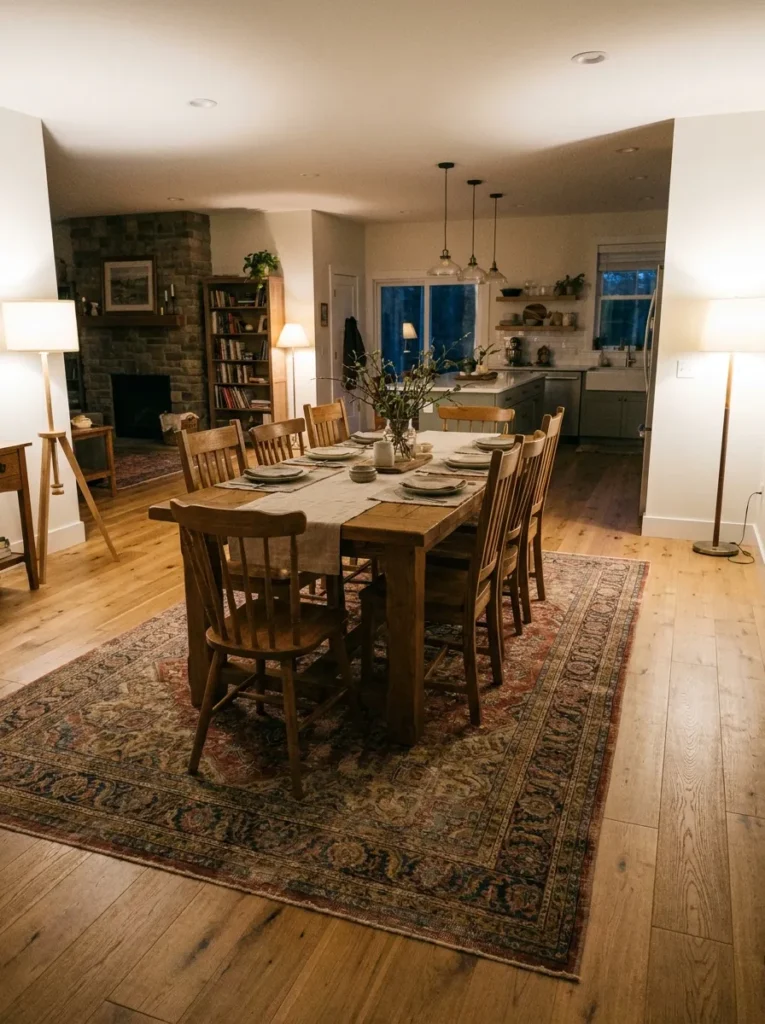
The biggest zoning mistake: leaving the dining table floating on a sea of continuous hardwood. It looks temporary. Anchor the dining zone with a large washable rug (spills will happen near the kitchen) extending at least 24 inches past pulled-out chairs. The rug draws a “room” on the floor that immediately separates dining from kitchen workspace. Sizing help: our rug size guide.
3. Claim the Ceiling With Statement Lighting
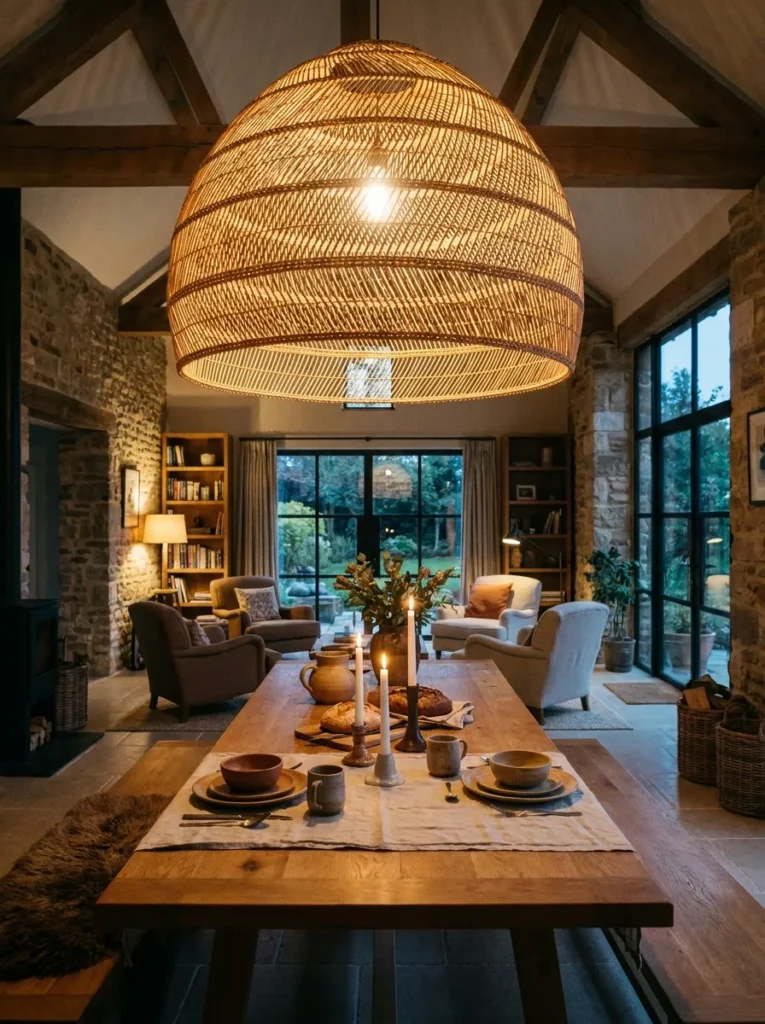
Just as a rug defines the floor, lighting defines the ceiling — a grid of recessed lights makes a large room feel like a commercial office. Drop a massive oversized statement pendant or linear chandelier directly over the dining table’s center. Dim the kitchen lights, turn on the dining pendant: a “curtain of light” makes the dining area feel intimate and separate, walls or no walls.
4. Carry One Color Palette Through Both Zones
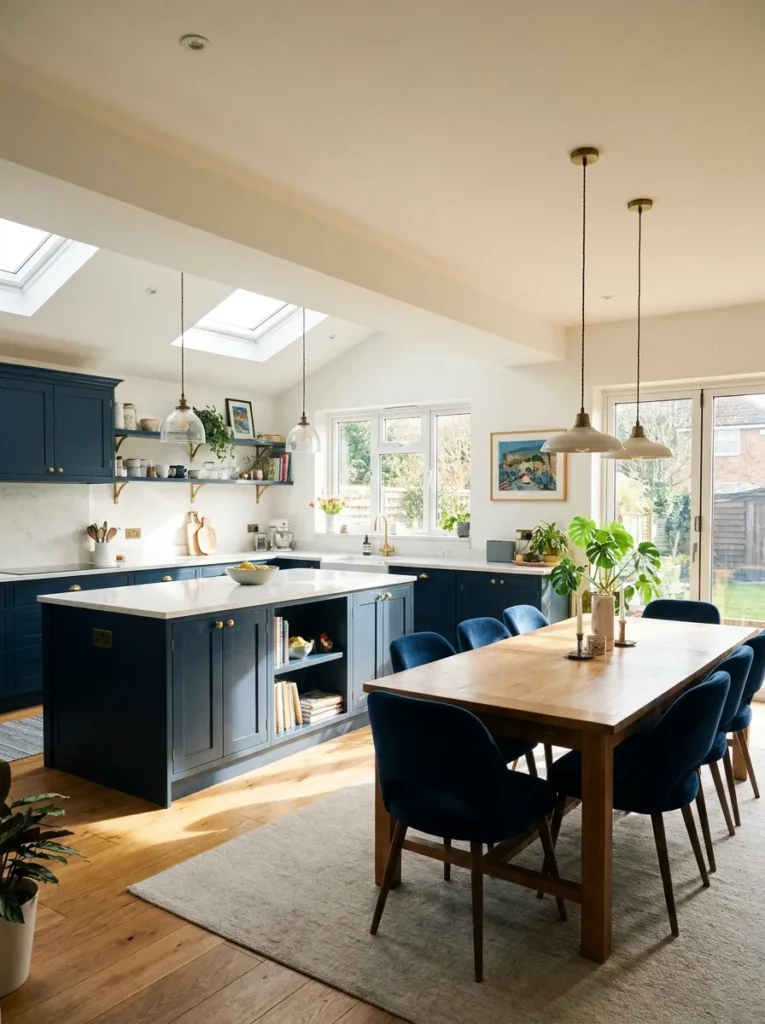
Zones should feel distinct yet still talk to each other — an ultra-modern cold kitchen next to a rustic farmhouse dining room reads disjointed and chaotic. The fix: carry a strict color palette through both spaces. Deep navy lower cabinets in the kitchen? Navy table runner or navy velvet dining chairs in the dining space. This color repetition creates a professionally designed, balanced flow.
5. Coordinate (Don’t Match) the Seating
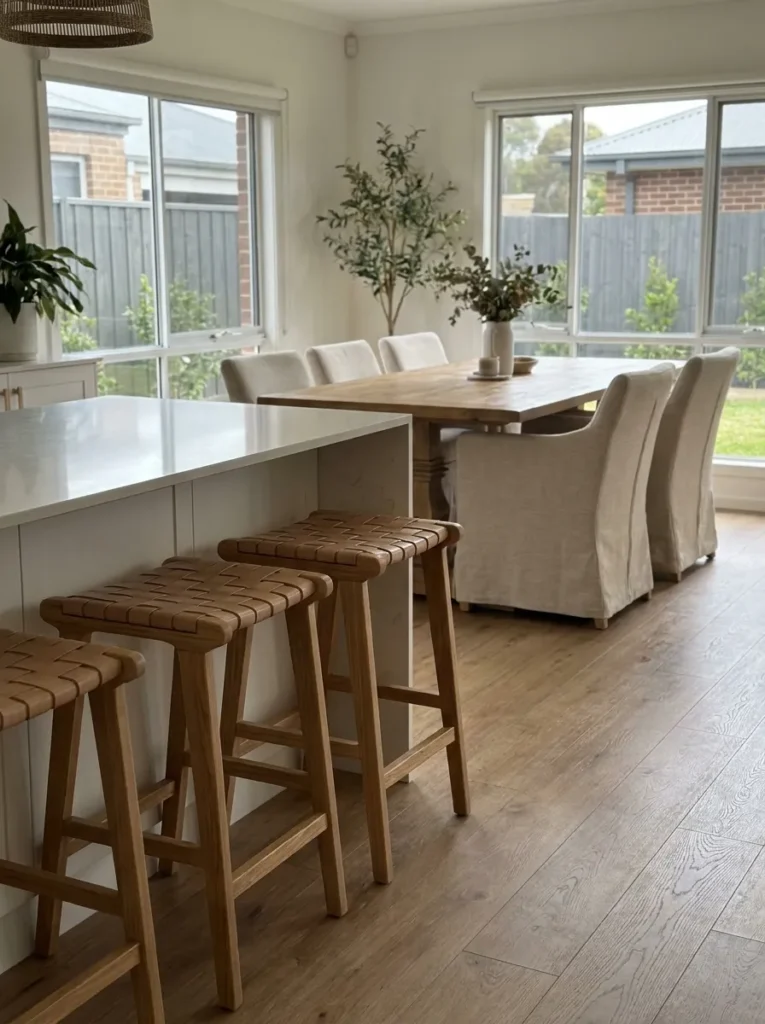
Island bar stools and dining chairs usually share the same sightline. Perfectly matching looks like a cheap catalog set; completely clashing looks messy. Align materials to complement rather than compete: heavy upholstered linen dining chairs pair with backless minimalist wood island stools. The contrast in visual weight keeps the room layered and collected.
6. Map the Walkways First
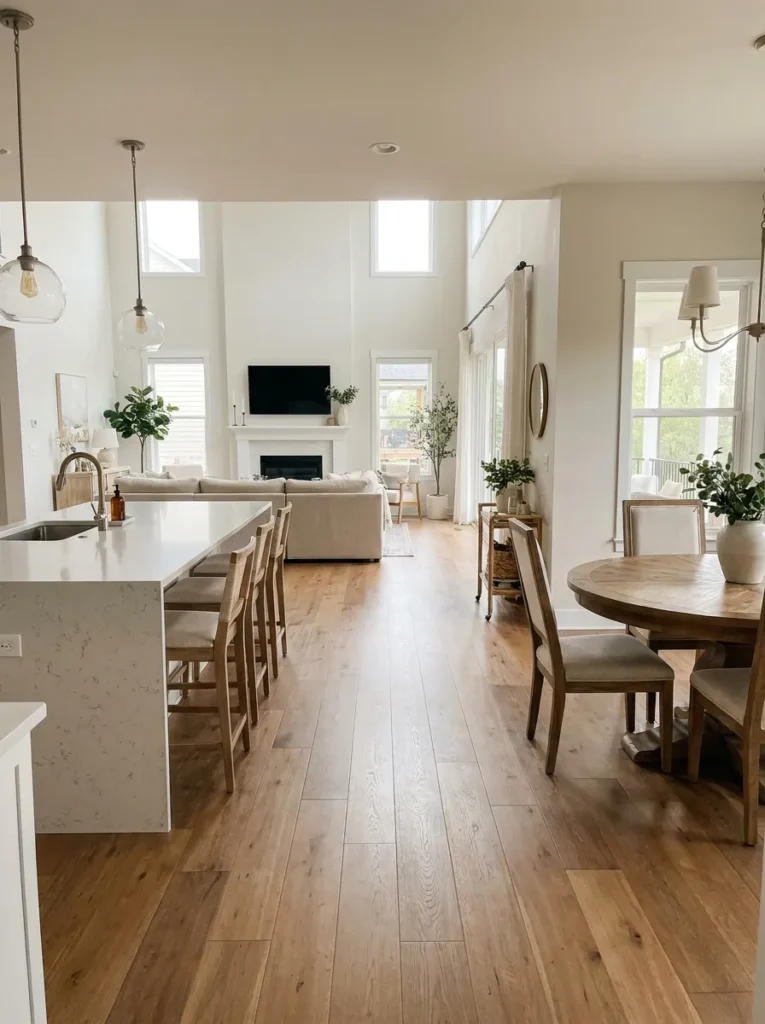
Furniture placement dictates how people move. If guests squeeze sideways between a bar stool and a dining chair to reach the fridge, the layout has failed. Establish a clear 36-to-48-inch main traffic artery: the path from living room, past the dining table, into the kitchen stays completely unobstructed — no furniture corners, no decorative floor plants in the lane.
7. Use a Peninsula for Small Spaces
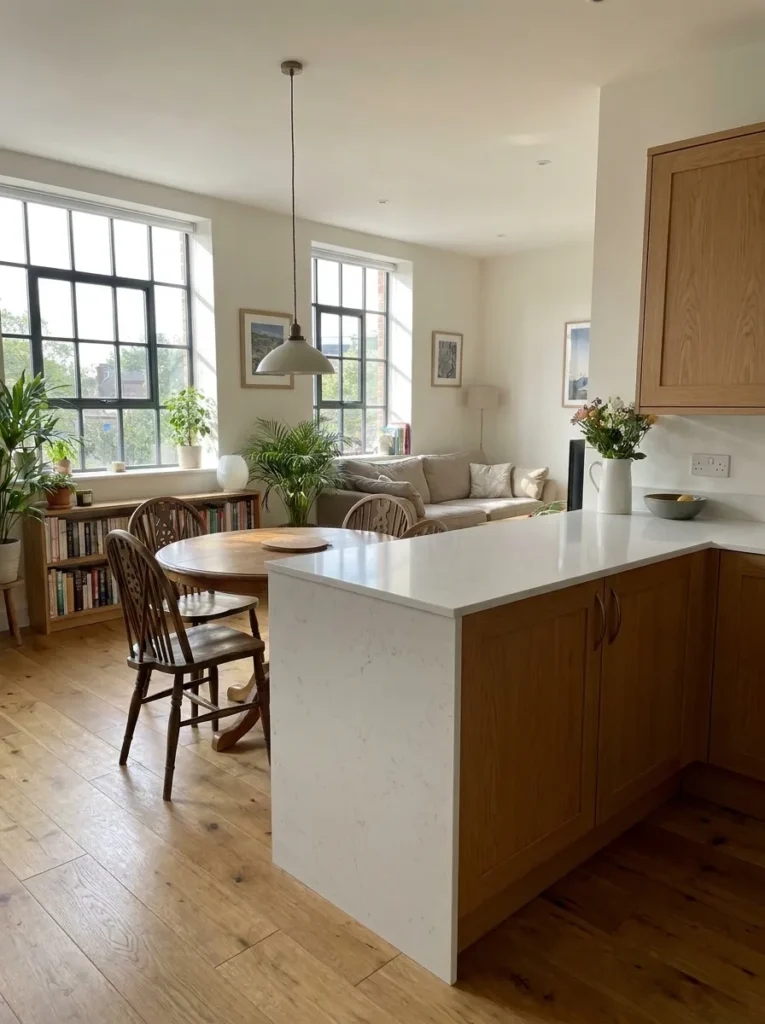
No room for a floating island or a 10-foot table? Use a peninsula instead: attached to the wall, it boxes in the kitchen zone without needing walkways on all four sides. Back a small round dining table against the peninsula’s outer edge to maximize floor space — one of the smartest tricks for tight open-plan kitchen-dining-living combos.
Shop the Zone
No drywall needed — just the right visual anchors. The foundational checklist:
- The airspace anchor: shop statement pendant lights on Amazon — a massive oversized pendant or linear chandelier to drop a visual canopy over the dining table.
- The floor boundary: shop washable area rugs on Amazon — a large 8×10 or 9×12 machine-washable rug to ground the dining chairs and protect hardwood from spills.
- The transitional seating: shop backless bar stools on Amazon — sleek backless stools that complement (not perfectly match) the dining chairs.
- Cohesive hardware: shop cabinet hardware on Amazon — matching matte black or unlacquered brass pulls and fixtures to weave both spaces together.
For more layout ideas, see our L-shaped kitchen guide and dining room makeover ideas.
Quick Answers
How do you separate an open plan kitchen and dining room?
Use zoning: a kitchen island as a physical divider, a large rug under the dining table, a statement pendant over the table, one shared color palette across both zones, and a clear 36–48 inch traffic path.
What size rug for a dining table in an open plan space?
Large enough to extend at least 24 inches past pulled-out chairs — typically 8×10 or 9×12. Choose washable near the kitchen, since spills will happen.
Should bar stools match dining chairs in an open layout?
No — perfectly matching looks catalog-cheap. Coordinate complementary materials instead (e.g., heavy upholstered dining chairs with backless wood island stools) so they share a sightline without competing.
Affiliate Disclosure: As an Amazon Associate, I earn from qualifying purchases. If you click a link and buy, I may receive a small commission at no extra cost to you. Thank you for supporting my content!

Pingback: 10 Dining Room Makeover Ideas: Ditch the Formal & Embrace the Everyday - zoraventra.com