Designing your baby’s nursery is one of those once-in-a-lifetime projects — it’s the room where your little one will sleep, dream, and spend their very first days. So it deserves more than a crib pushed into a corner and a couple of things off a registry checklist.
The nurseries that make you stop mid-scroll aren’t necessarily the most expensive ones. They’re the most thoughtful. Every piece feels intentional, every texture feels right, and the whole room feels calm and welcoming — both for the baby and for the parents who’ll be spending plenty of sleepless hours there too.
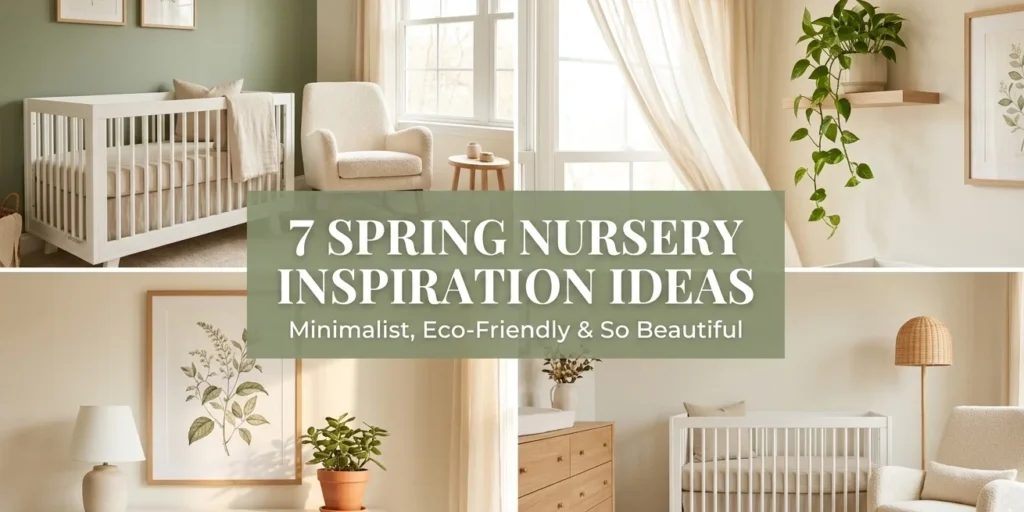
This list of 7 spring nursery inspiration ideas covers everything you need to create a room like that — from a soft neutral color palette to the nursery essentials that actually matter — whether you’re starting from scratch or just refreshing what you have. If you love nature-inspired rooms, our butterfly nursery ideas take the same calm approach with a gentle butterfly motif. And since nurseries turn into big-kid rooms fast, it’s worth thinking early about kids bedroom storage solutions that actually work and setting up a cozy corner like the ones in our reading nook ideas for kids — small decisions now that make the room grow with your child.
Let’s create something beautiful.
1. Start With a Soft, Neutral Palette
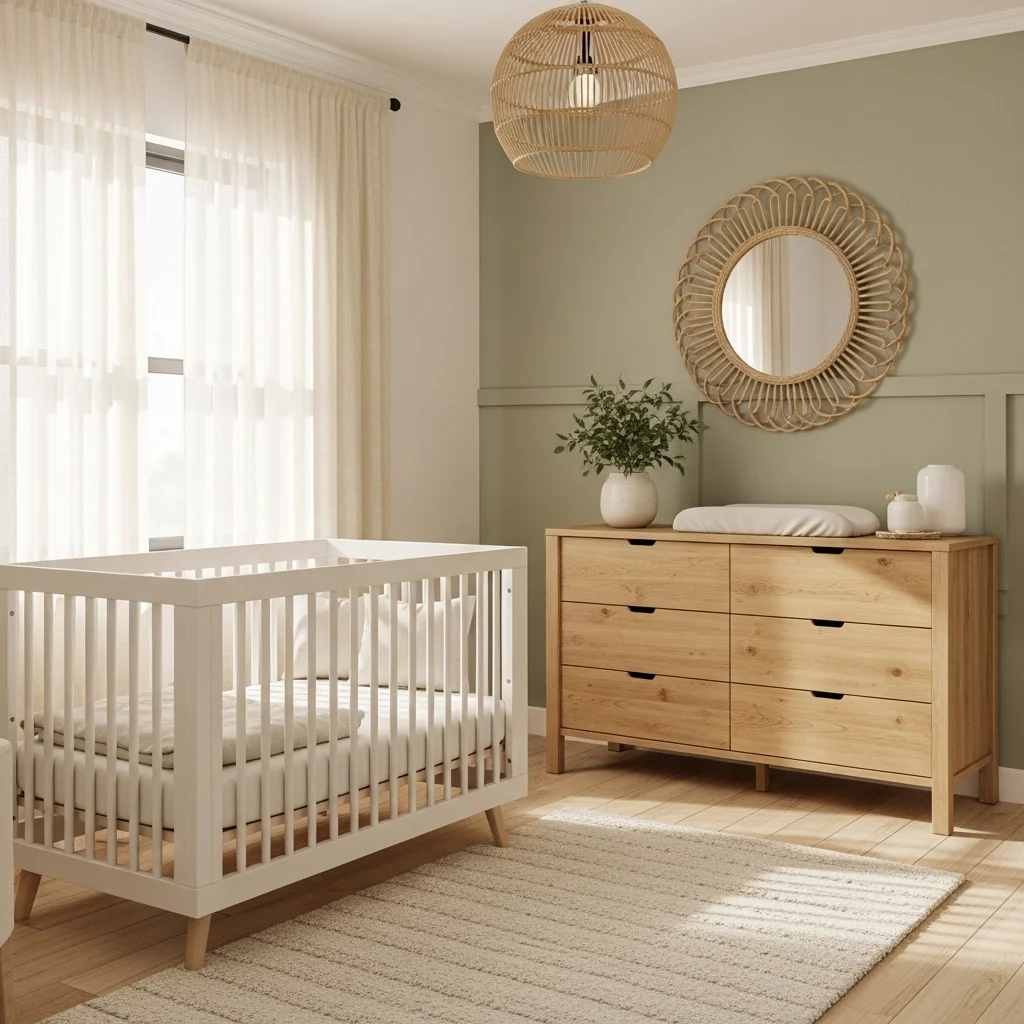
The single most important decision you’ll make in the nursery is the color palette. Warm cream, linen beige, dusty sage, gentle warm white, pale blush — these soft, warm neutrals create a calm, soothing atmosphere that helps babies settle, and they look genuinely elegant rather than babyish.
A neutral palette is also the most forgiving approach. It works with every furniture finish — white, natural wood, rattan, gray — and lets you layer in seasonal touches without ever needing a full overhaul. A bunch of fresh flowers on the dresser, a floral cushion, a botanical print on the wall: these little spring moments pop against a quiet backdrop in a way they simply can’t against a busy, colorful wall.
Start with the walls — a soft warm white, the palest sage, or a gentle beige all work beautifully — then build outward. Choose furniture that complements rather than competes, layer in your textiles, and add personality slowly. A well-done neutral nursery is one of the most sophisticated rooms you can design.
2. Keep It Minimal — Less Really Is More
The minimalist nursery keeps winning for one simple reason: it works. A room with less in it feels calmer, cleaner, and more peaceful — exactly what a baby’s room should feel like.
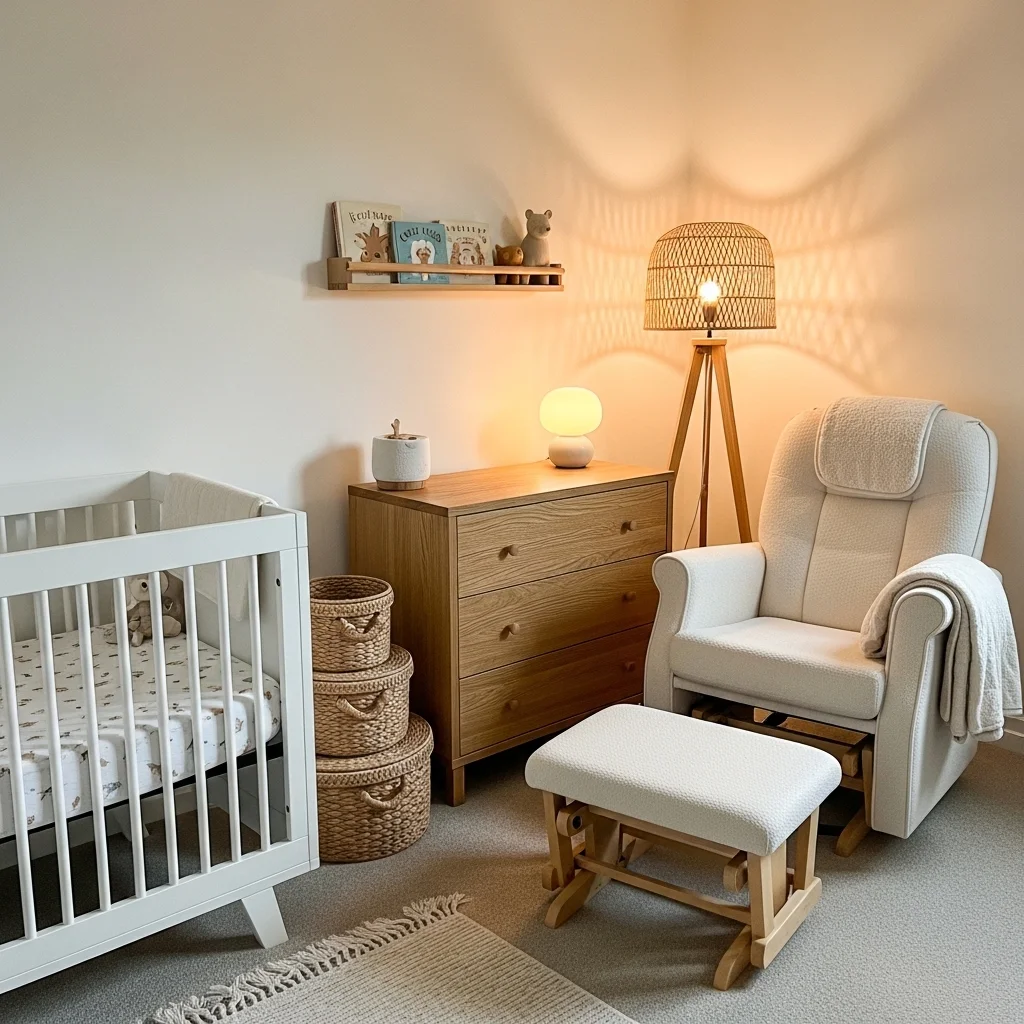
Minimalist doesn’t mean cold or clinical. It means intentional. Every piece of furniture earns its place. The nursery essentials are all there — the crib, a dresser or changing table, a comfortable feeding chair, good lighting, smart storage — but nothing extra gets added without a good reason.
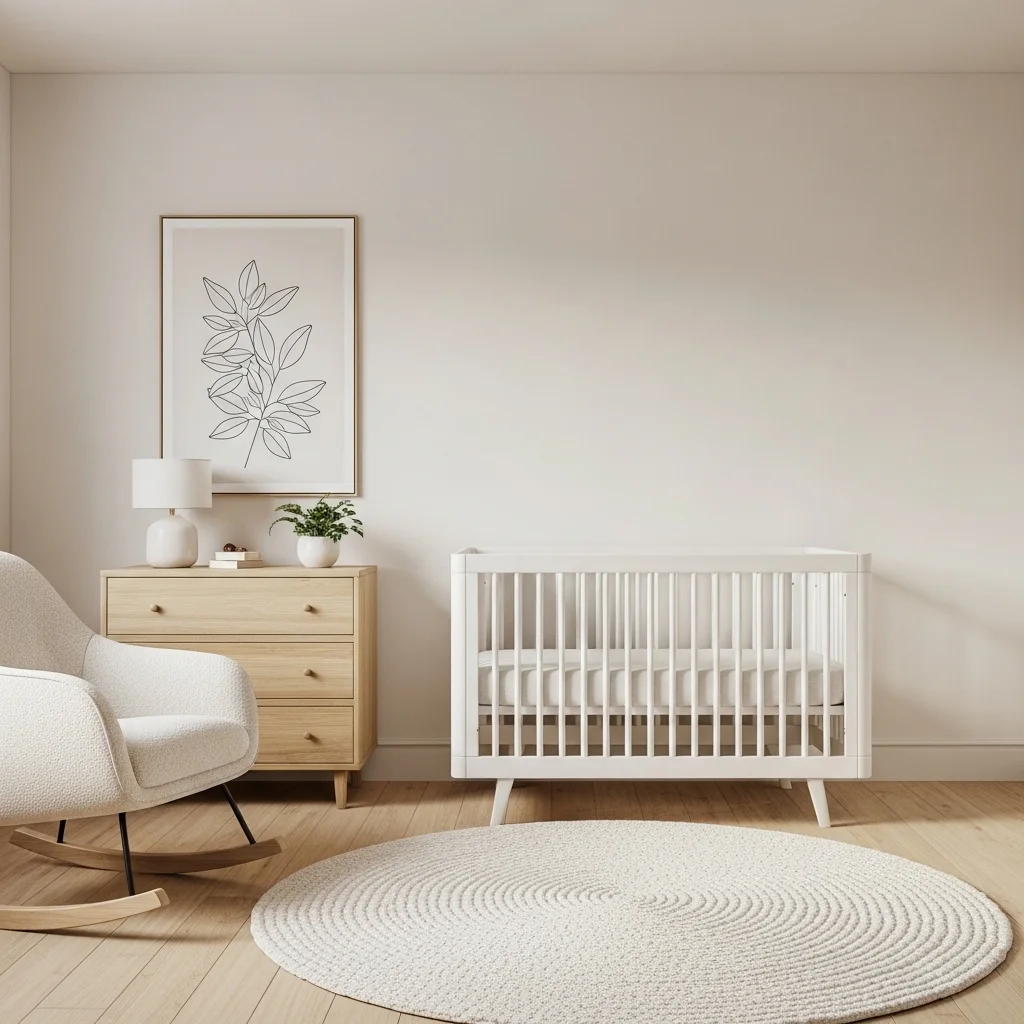
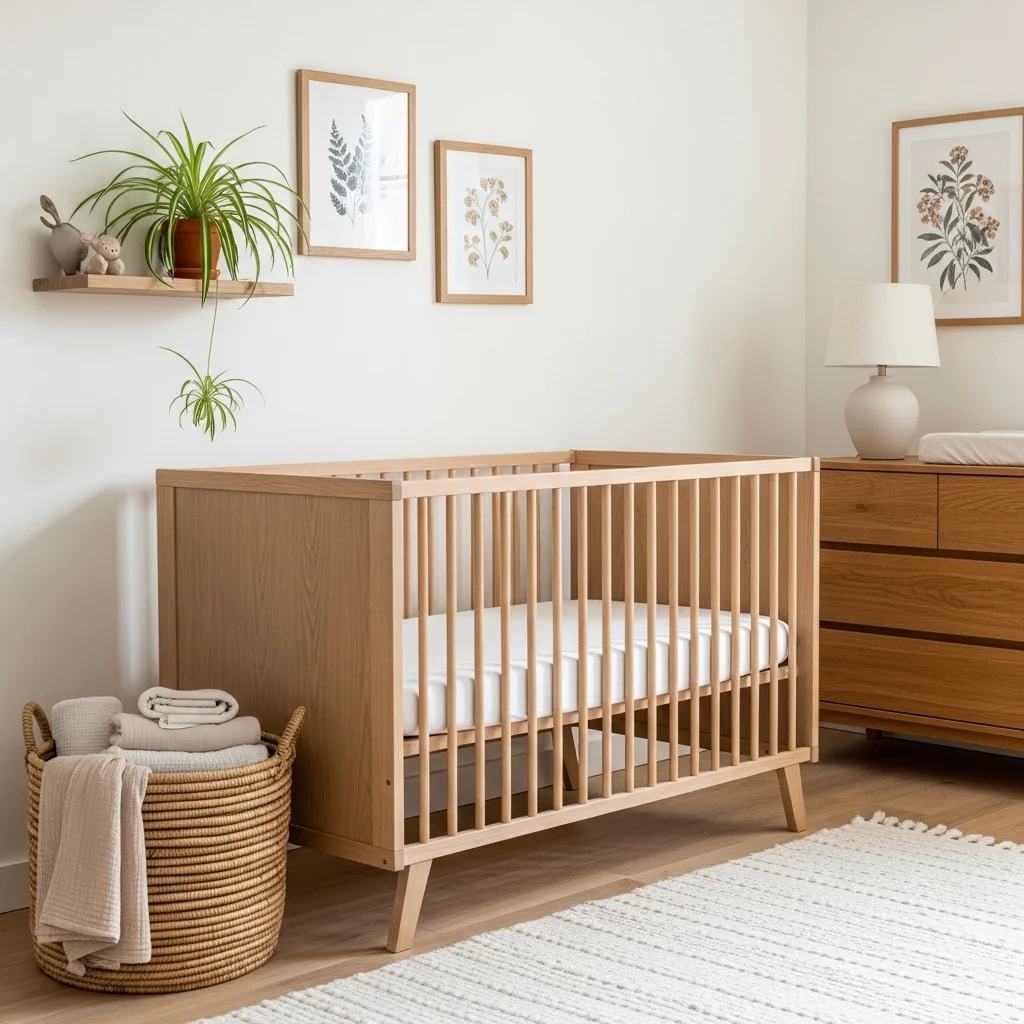
The formula that looks best right now: clean-lined white or natural wood furniture, soft neutral walls, one beautiful piece of wall art as the focal point, a textured rug underfoot, and one or two plants or botanical touches for life and color. That’s genuinely all it takes. The restraint is what makes it look so intentional.
There’s a practical bonus too — buying fewer, better pieces is easier and less expensive than filling a heavily decorated room. Choose quality over quantity every time, and you’ll end up with a room that makes you feel peaceful just walking into it.
3. Choose Bedding That’s Beautiful and Baby-Safe
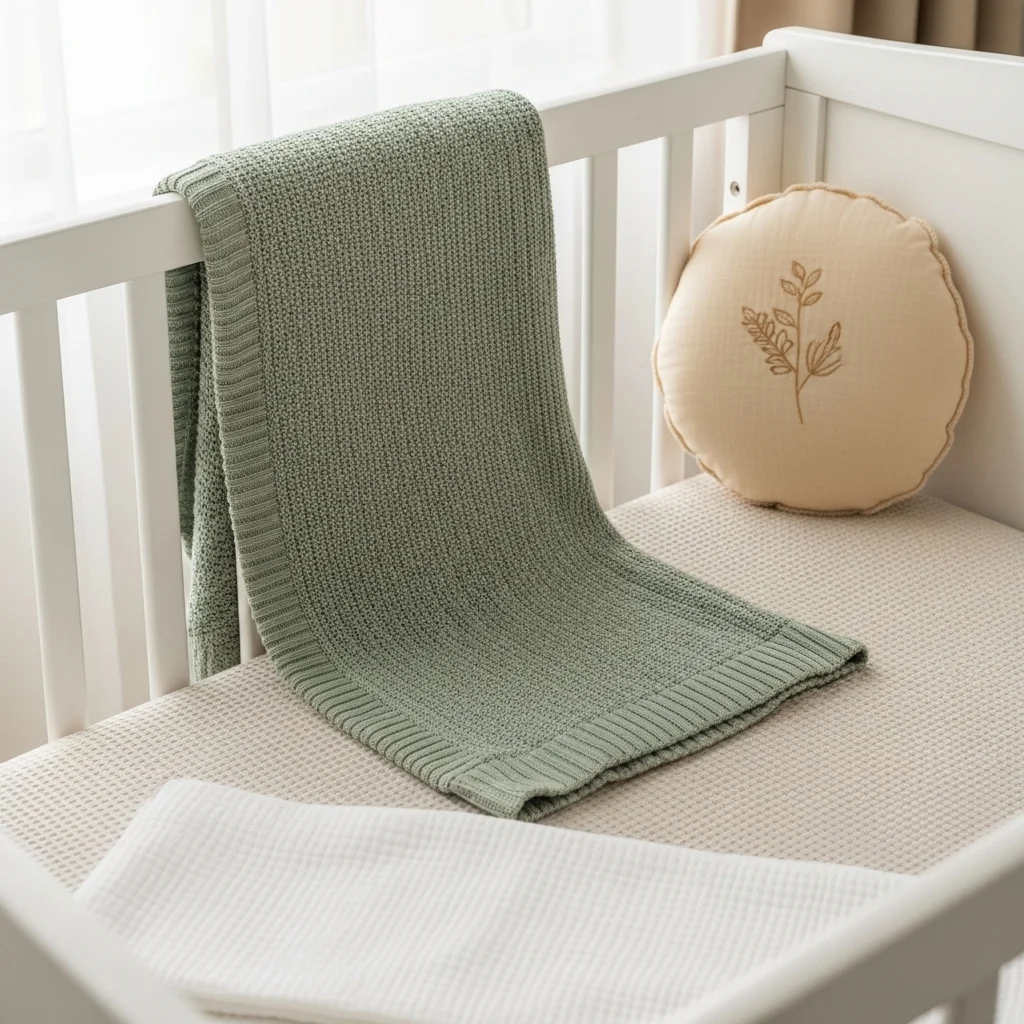
Your baby will spend more time in their crib than anywhere else in the room, so bedding matters more than almost any other decision. The sweet spot: neutral bedding in natural, organic fabrics — beautiful to look at and gentle on sensitive skin.
Think fitted crib sheets in organic cotton or bamboo in warm white, oat linen, soft blush, or pale sage. A simple knit or waffle-weave blanket in the same neutral family for cozy layering. Subtle texture — a gentle waffle, a fine stripe, a muted botanical print — rather than loud, busy designs.
For safety, keep the actual sleep space minimal: a well-fitted sheet on a firm mattress is all a baby needs. Keep decorative quilts, bumpers, and loose items out of the sleep space. Do the styling around the crib instead — a canopy above, a soft mobile overhead, and your calm neutral bedding as the base everything builds on.
Organic cotton or bamboo also fits naturally with the eco-friendly approach so many parents are choosing now — which brings us to the next idea.
4. Make Eco-Friendly Choices
More families are choosing eco-friendly nursery decor — not just because it looks beautiful, but because it’s better for their child’s health and kinder to the planet their baby will grow up on.
The lovely surprise is that sustainable materials tend to be the most beautiful ones: natural wood, organic cotton, hand-woven rattan, linen, bamboo, and wool all have a warmth and texture that mass-produced synthetics can’t match.
In practice, that looks like a crib in sustainably sourced solid wood with non-toxic, water-based finishes; GOTS-certified organic cotton bedding; a hand-woven rattan or natural cotton rug; a beeswax or soy candle on the dresser; a few real, non-toxic indoor plants; and water-based, low-VOC paint on the walls — especially important in a room where a baby breathes all day and night.
Even wall art can be part of it — prints on FSC-certified paper from independent artists, framed in natural wood rather than plastic. Every small choice in this direction adds up to a room that’s genuinely better for your baby, in ways that go far beyond how it looks.
5. Bring Spring Inside With Botanicals and Natural Light
Spring energy in a nursery feels hopeful and alive: soft greens, warm natural light, gentle florals, botanical touches. For a baby experiencing everything for the first time, being surrounded by that kind of warm, natural beauty is a wonderful thing.
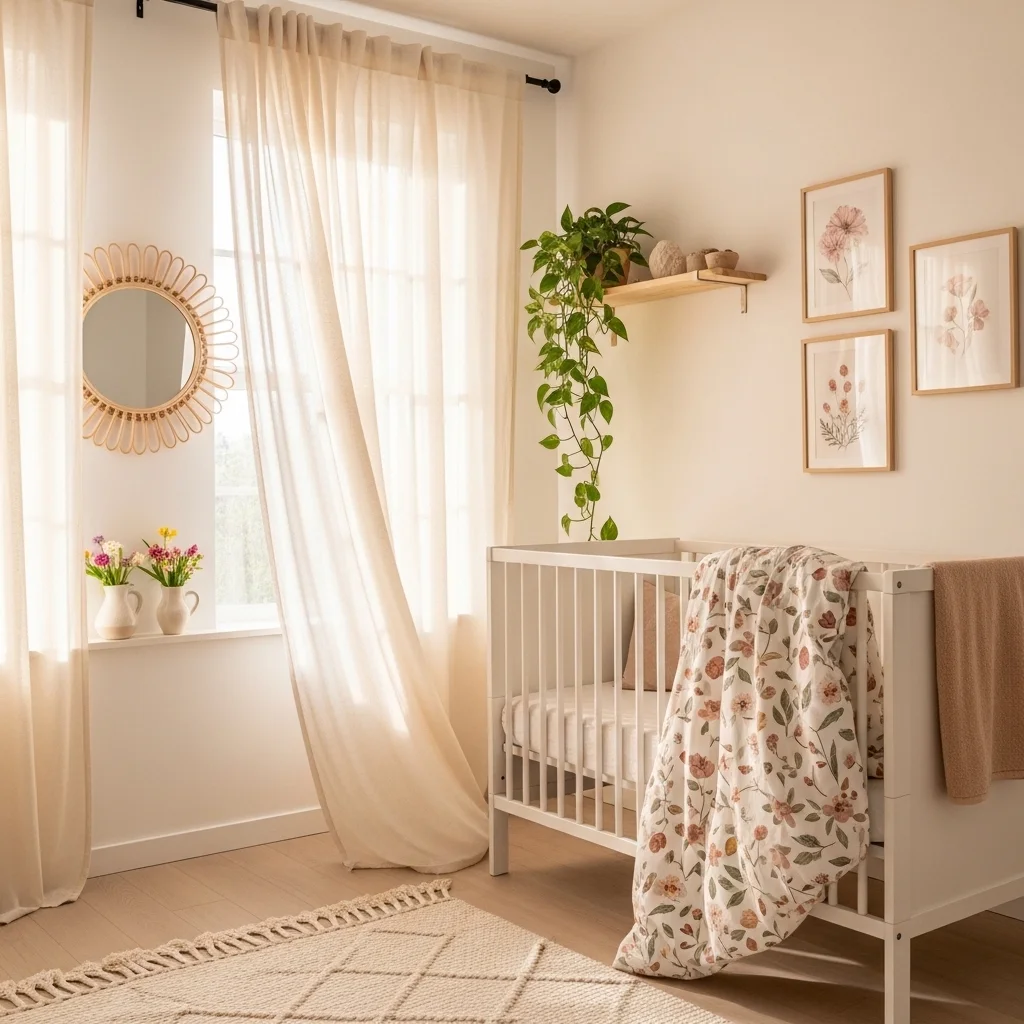
Start with light. Sheer white or cream curtains that let morning sunlight filter through softly are the foundation — natural light is free, beautiful, and the best thing in any room.
Then layer in botanical elements: a trailing pothos or small leafy plant on a shelf, soft botanical prints on the wall (watercolor wildflowers, simple leaf outlines, a gentle bird-and-blossom design), bedding or a cushion with a subtle spring print in muted tones, and a wicker or rattan element — a basket, a mirror frame, a small stool — for organic texture.
This approach works for every style and never dates, because it’s rooted in nature rather than a theme. It just makes the room feel alive.
6. Pick One Piece of Wall Art You Love
The right art gives a nursery its soul — it tells a story about who lives there and what the people who made this room care about.
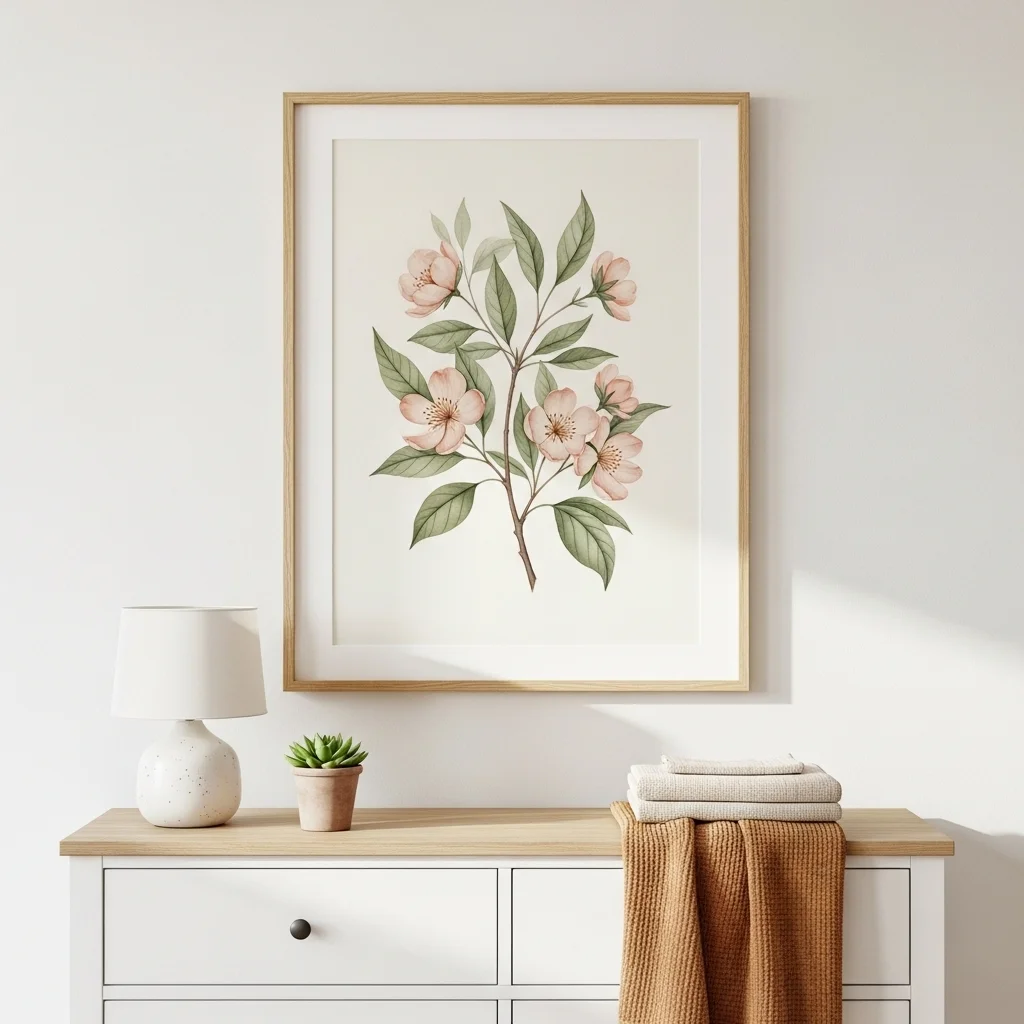
The best nursery art right now feels artistic, personal, and considered: large-scale botanical illustrations in muted earthy tones, abstract watercolors in a soft spring palette, simple animal portraits in a Scandinavian line-art style, or a hand-lettered quote in elegant thin script.
For maximum impact, choose one larger statement piece instead of several small ones scattered around the room. A single well-chosen print in a beautiful frame — hung at the right height above the dresser or beside the crib — anchors the whole room. Natural light wood, thin black metal, or a simple white float frame all work without competing with the art.
Downloadable prints from independent artists are an affordable way to get something original for very little money — and great art grows with your child in a way themed character prints can’t.
7. Get the Essentials Right First
Before the art goes up and the plants go on the shelf, get the fundamentals right — no amount of styling fixes a room where they aren’t working.
The crib is the most important purchase you’ll make: current safety standards, adjustable mattress heights, solid non-toxic materials. A convertible crib that grows from infant to toddler to junior bed is one of the smartest investments you can make.
The feeding chair or glider is the second most important piece — you’ll spend many hours in it at all hours of the night, so prioritize comfort. A boucle glider or a simple linen-covered rocking chair can look beautiful and feel genuinely supportive.
Smart storage keeps the room calm: a dresser with deep drawers, woven baskets for blankets and toys, a small caddy for diaper changes, a wall-mounted shelf for books and meaningful objects. Keep everything within arm’s reach of where you’ll use it, and the room will function beautifully at 3 a.m.
Finally, lighting: a warm, dimmable overhead light for daytime, and a very soft, warm night light for feeds and changes in the dark. Harsh overhead lighting makes nighttime routines harder than they need to be.
Good Principles to Keep in Mind
Safety comes first, always. Every aesthetic decision is secondary to safety. The crib, mattress, paint, and bedding should all meet current safety standards.
Buy less, buy better. Five genuinely beautiful, high-quality pieces will always look — and function — better than twenty mediocre ones.
Design for the parents too. You’ll spend enormous amounts of time in this room. If the chair is uncomfortable or the lighting is harsh, the room will feel frustrating no matter how beautiful it looks.
Neutral and timeless beats trendy. A nursery built on a solid neutral foundation can evolve with a new piece of art, a different cushion, or a seasonal plant — no redesign needed every year.
Spring is always available. Fresh flowers on the dresser, a trailing plant on the shelf, sheer curtains letting the light in — these work in January just as beautifully as in April.
Quick Answers
Is a neutral nursery safe for a newborn?
Yes — what matters for safety is the furniture, paint, and bedding meeting current standards (a firm mattress, a well-fitted sheet, non-toxic finishes), not the color scheme. Soft neutrals actually support calm sleep routines, which is a genuine plus in those early months.
What’s a realistic budget for a spring nursery refresh?
If you already have the big pieces, a meaningful refresh can cost very little. Paint is the cheapest transformation, then textiles (a new crib sheet, a throw, a rug), one piece of wall art, and a plant or two. Start with the walls and the crib area — that’s where your eye lands — and add layers over time.
Can I pull this off in a small nursery or a shared room?
Absolutely — the minimalist approach is made for small spaces. Stick to the essentials (crib, changing spot, feeding chair, one storage piece), keep the palette light to make the room feel bigger, and use vertical space: a wall shelf, a hanging plant, art above the dresser. Fewer pieces in a small room always looks better than squeezing in more.
Will a spring nursery still work when my baby becomes a toddler?
That’s the whole point of building on neutrals. Swap the crib for a toddler bed, change the art, add a small table or reading corner — the foundation stays the same. The room grows with your child instead of needing a full redo every couple of years.
Final Thoughts
Designing a nursery is one of the most personal creative projects most parents take on. There’s no single right way to do it. But this framework — a beautiful neutral palette, a considered minimalist approach, organic and eco-friendly choices, wall art that means something, and the essentials that truly work — will hold up beautifully for years.
Start with the essentials. Add the layers slowly. Choose things you genuinely love. A room made with real care — even a simple one — will be more beautiful and more meaningful than anything on a showroom floor.
Your baby is going to love it. And so are you.