
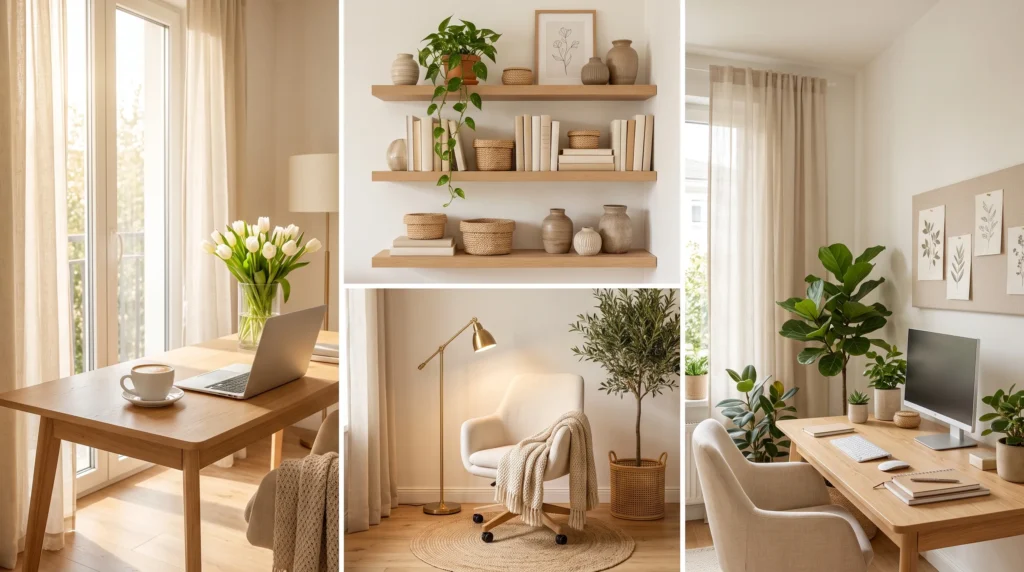
A home office should be a place where you can think clearly, stay organized, and actually enjoy your work. But most of us end up with a room that slowly collects mismatched furniture, tangled cables, and piles of paperwork — and even when everything technically works, the space can still feel heavy and uninspiring.
Spring is the perfect excuse to change that. As the days get longer and natural light fills our homes again, small updates — lighter fabrics, a plant or two, reorganized shelves, a better desk position — can completely lift the mood of a room. And once your workspace feels fresh, other hardworking corners of the house deserve the same treatment: these spring laundry room decor ideas prove a seasonal reset doesn’t have to cost much.
The best home offices aren’t the most expensive ones — they’re designed around the person using them. A well-placed desk, a supportive chair, thoughtful lighting, and a calm palette matter more than the latest furniture trends. If comfort is your starting point, these cozy home office ideas will help, and if your space needs more than decorating, these home office remodel ideas show what a bigger refresh can look like.
Whether you work remotely full-time, run your own business, study from home, or just need a place to stay organized, the nine ideas below will help you build a workspace that feels bright, calm, and productive — this spring and well beyond it.
Start with How You Actually Work
Before buying anything, spend a few minutes noticing how you use the room. Do you spend eight hours at a desktop, jump between video calls, sketch, write, or wrestle with paperwork? Each way of working benefits from a slightly different layout, storage setup, and lighting plan — and the prettiest office in the world won’t help if it fights your routine.
Watch the light, too. Notice where the sun falls from morning to evening, where glare hits your screen, and which corner stays brightest. Designing around the room you have prevents the expensive mistakes people make when they decorate first and observe later.
Finally, name what’s actually bothering you — the cluttered desk, the missing storage, the corner that always feels dark. Fixing those everyday frustrations beats buying accessories every single time.
1. Position Your Desk for the Best Natural Light
Nothing changes a home office faster than getting the desk position right. Instead of pushing it against whichever wall happens to be free, try placing it near a window — slightly to the side rather than facing it directly or sitting with your back to it. Side light brightens your workspace evenly and keeps glare off your monitor.
Beyond visibility, a window connection makes the room feel calmer and more open — watching the weather change or trees move outside brings a quiet sense of life into the room. Short on sunlight? Put your desk in the brightest spot you’ve got, keep the surrounding walls light, and hang a mirror opposite the window to bounce daylight deeper into the space.
2. Choose a Light, Cohesive Color Palette
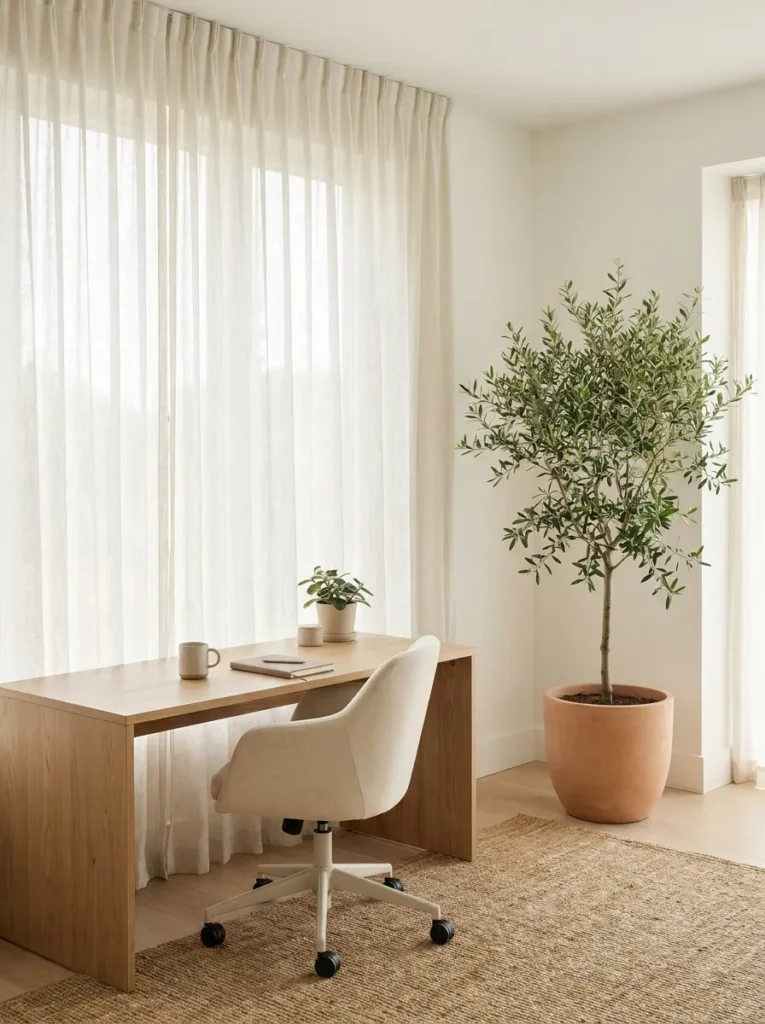
Spring light can make heavy winter colors feel flat and dark, so lighten the overall palette. Warm white, soft beige, light greige, or gentle ivory on the walls reflect daylight without feeling clinical, and they pair beautifully with natural wood furniture.
Add seasonal color through things that are easy to swap — cushion covers, a desk mat, ceramic planters, or artwork in muted sage, dusty blue, or soft terracotta. Stick to one or two accents and let neutrals do the heavy lifting. Restraint keeps the room feeling calm on your busiest days and makes it easy to update again next season.
3. Add Greenery That Softens the Room
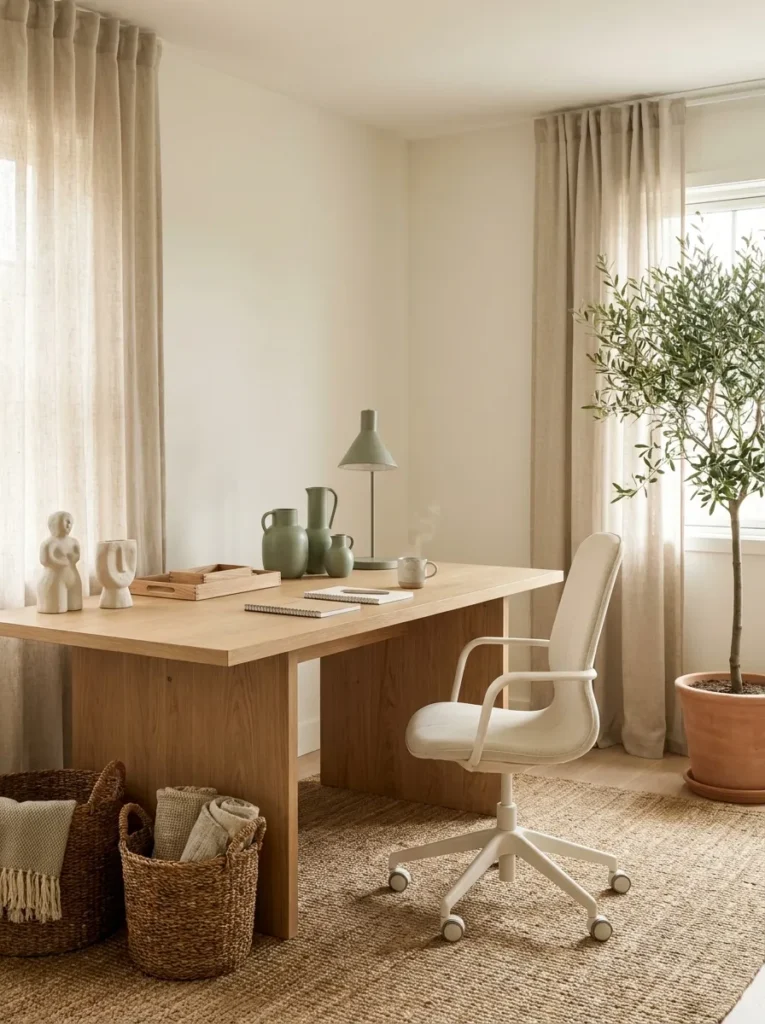
Plants bring natural color and soften the straight lines of desks and shelves — even one well-placed plant changes how a workspace feels. Match the plant to your light: bright rooms can handle an olive tree or fiddle leaf fig, while lower-light corners suit snake plants, pothos, ZZ plants, and peace lilies.
Fresh flowers are the easiest spring touch of all — tulips or daffodils on the desk take seconds to arrange and invite little seasonal updates through the year. Rather than scattering small pots across every surface, give one statement floor plant and one tabletop arrangement room to breathe.
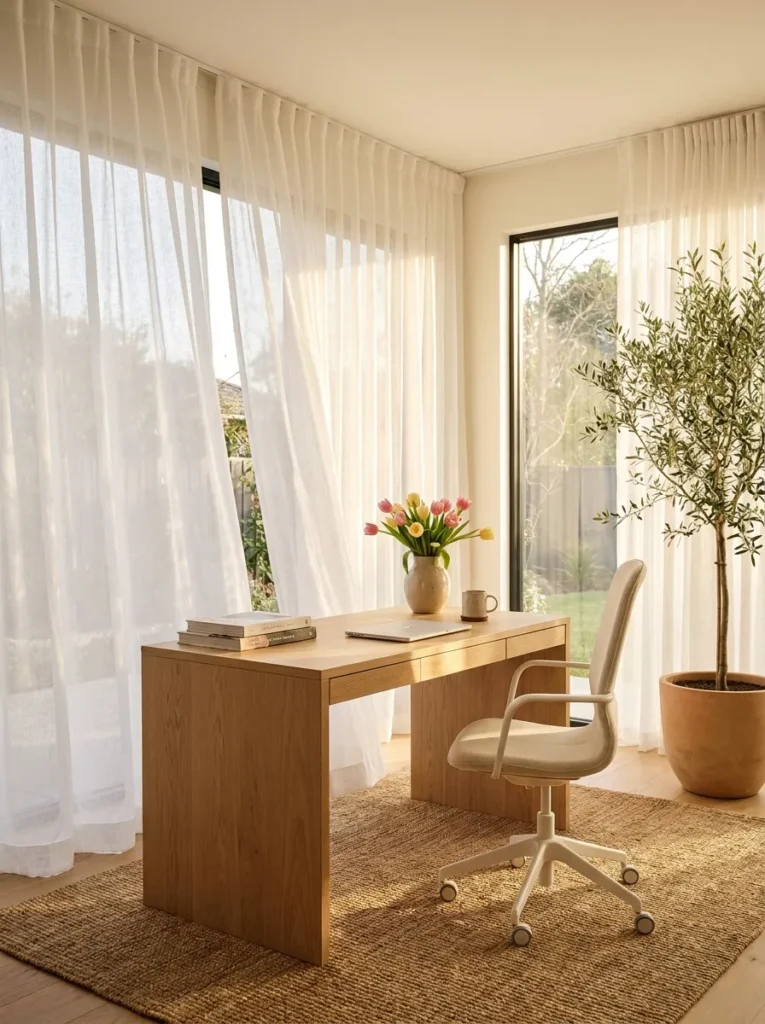
4. Swap Heavy Curtains for Sheer, Airy Fabrics
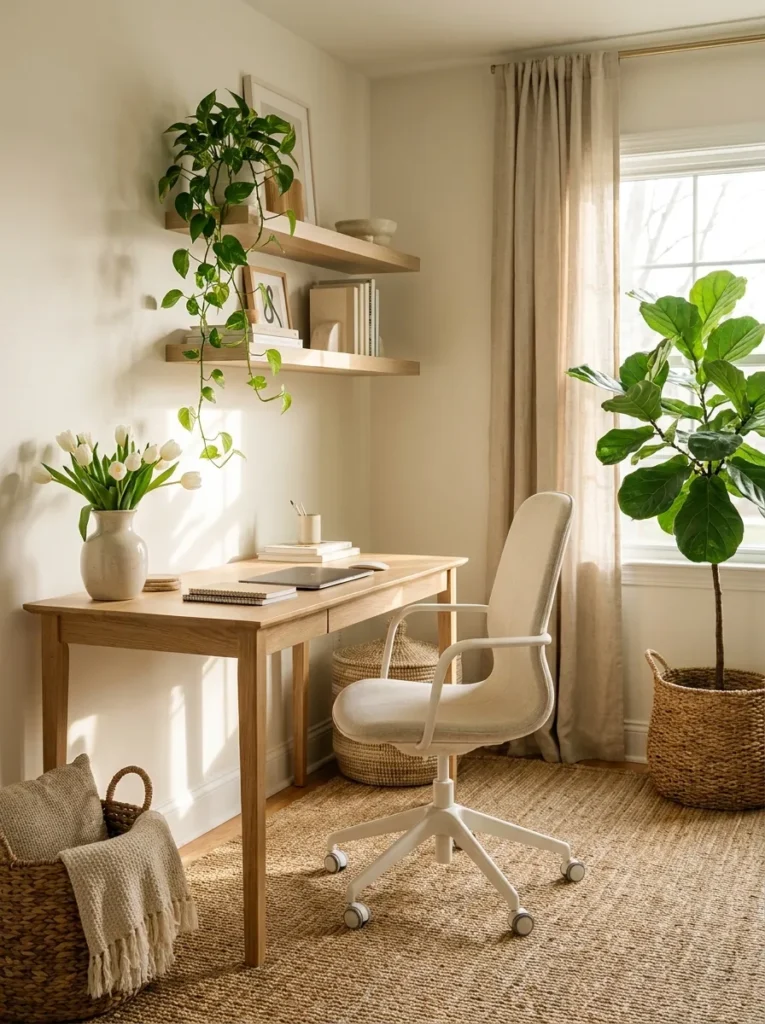
Winter-weight drapes block the very daylight spring brings back. Sheer linen or lightweight cotton panels filter light gently, keep your privacy, and make the whole room feel softer as the sun moves through during the day.
On a budget, simply pull existing curtains wider or switch to lighter panels. Hanging the rod a few inches above the frame makes windows look taller and the room feel bigger — and in ivory or oatmeal, the fabric disappears so the light becomes the feature.
5. Set Up Storage That Stays Tidy
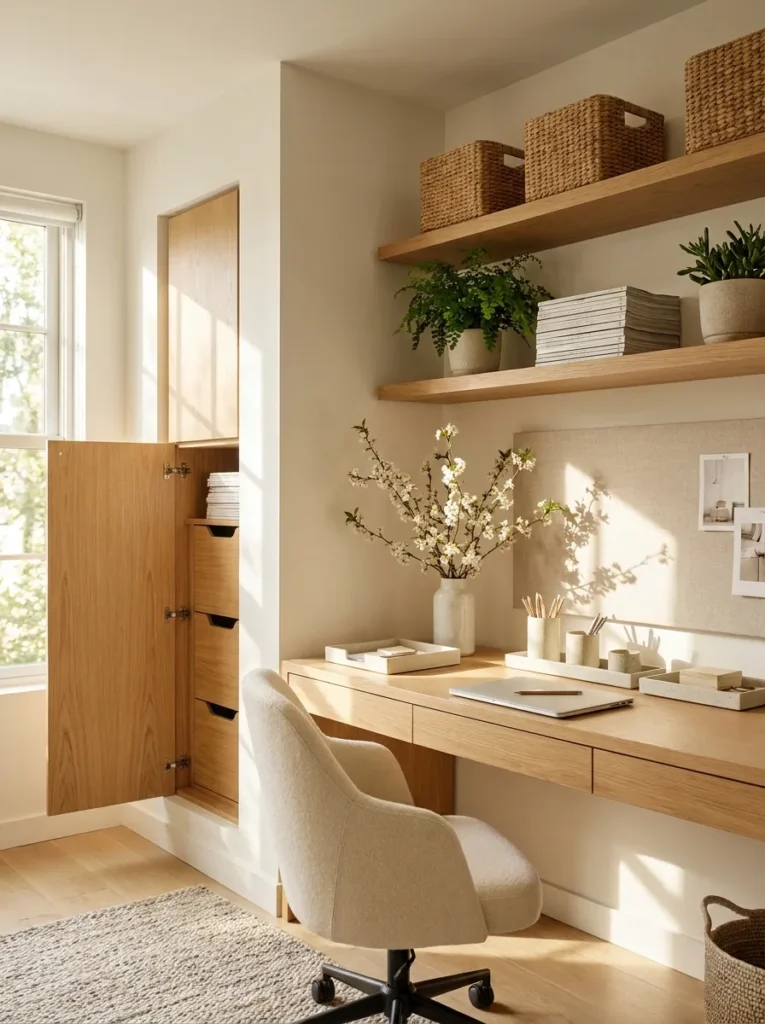
A calm office isn’t empty — it’s just easy to find things in. Keep only daily essentials on the desk (a notebook, laptop, lamp, pen holder, maybe a plant) and give everything else a home nearby: floating shelves for books and reference materials, closed drawers for cables and paperwork, and matching baskets to group the odds and ends.
If your office shares space with another room, closed storage matters even more — cabinets with doors let the workspace blend into your home instead of looking like a traditional office. And before buying another organizer, declutter first: when every item has a purpose and a place, the room practically maintains itself.
6. Choose a Chair That Supports You in Style
Your chair is the hardest-working piece of furniture in the room, so comfort comes first — adjustable height, real lumbar support, and breathable upholstery that lasts through long days. Today’s ergonomic chairs come in soft woven fabrics and performance linen that look warm and homey instead of corporate.
A cream, oatmeal, or light gray chair ties a spring palette together beautifully alongside natural wood and subtle brass or matte black accents. Can’t replace yours? A supportive seat cushion or lumbar pillow buys a lot of comfort for very little money.
7. Layer Your Lighting
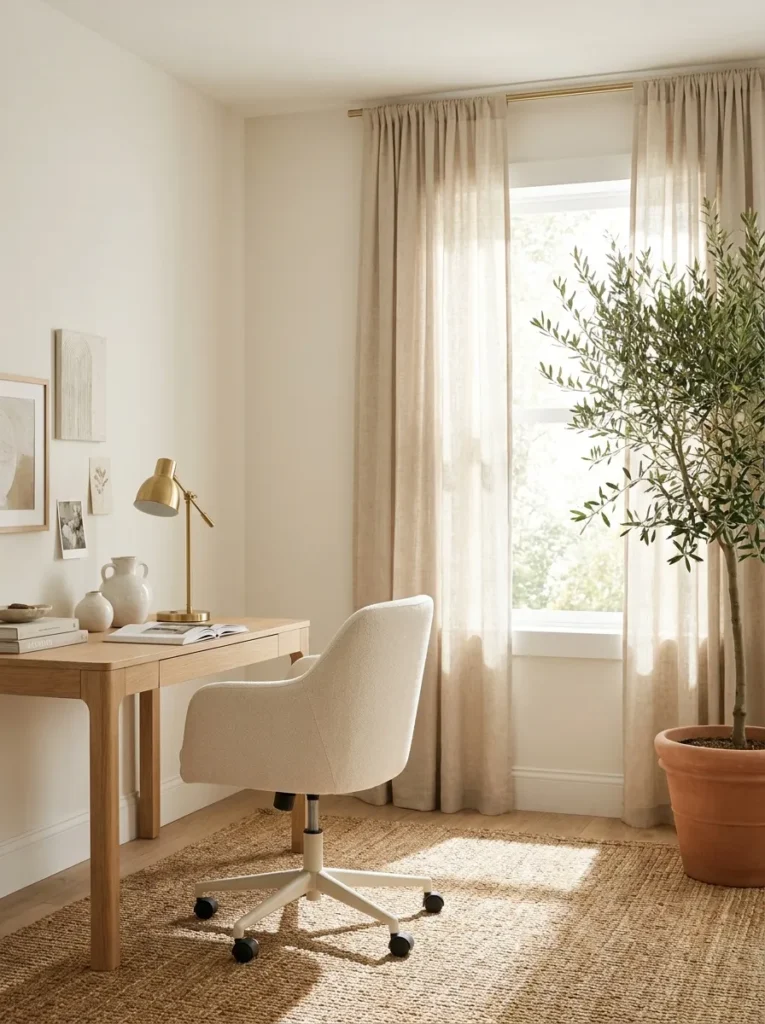
One ceiling fixture rarely carries a whole workday. Build lighting in layers: daylight when you can get it, an adjustable desk lamp for focused tasks like reading and writing, and a floor or table lamp for warm ambient light in the evenings.
Aim for warm-white bulbs (around 2700K–3000K) and position lamps to avoid screen glare. Bonus: lighting doubles as décor — brass, matte black, wood, and linen shades all sit comfortably in a spring scheme while making the room a place you’re happy to linger in after hours.
8. Style Open Shelves with Balance
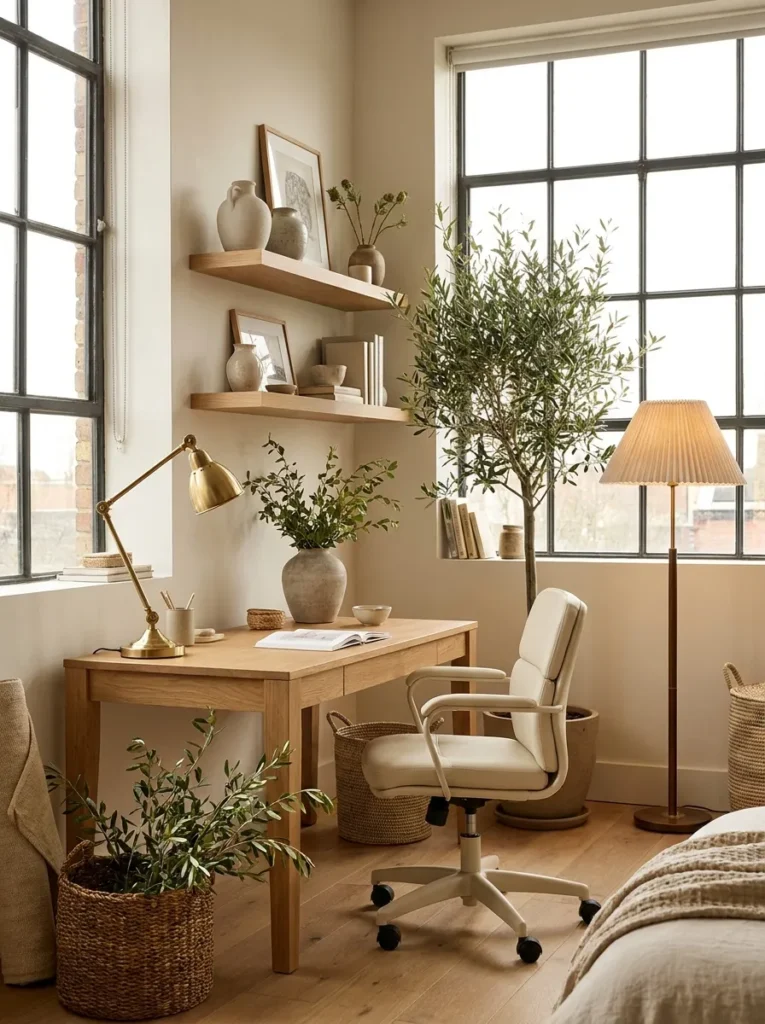
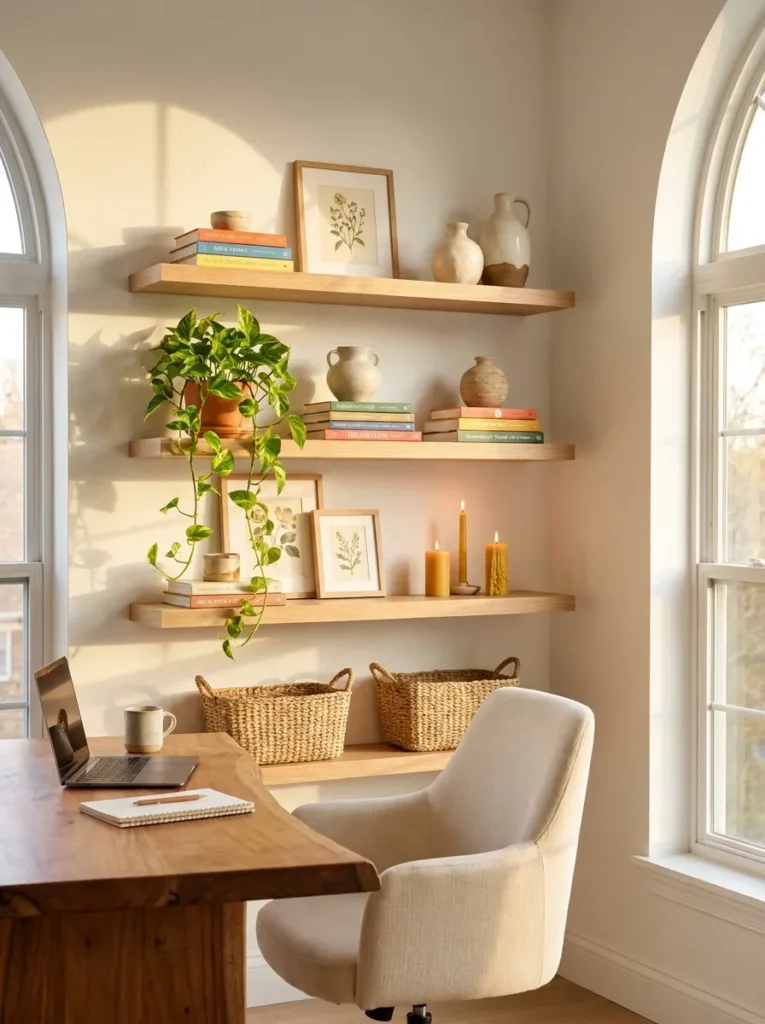
Shelves work best as part storage, part display. Put the practical items you reach for daily in place first, then add personality — a ceramic vase, framed artwork, a trailing plant — varying heights and leaving pockets of open space so each piece can breathe.
Keeping the palette consistent (neutral book covers, natural baskets, matte ceramics, wood finishes) pulls everything together and keeps the room feeling calm rather than cluttered. Think of shelves as a small window into your interests — interesting, but still doing their job.
9. Finish with Personal Details That Inspire You
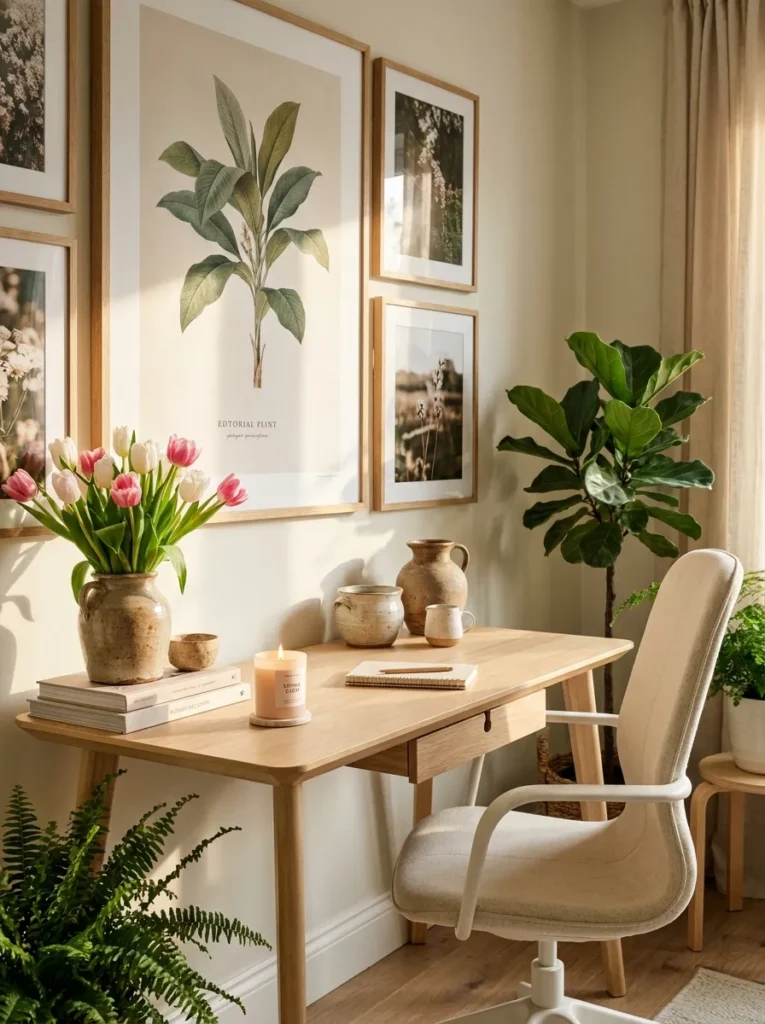
The last layer is the one that makes the room yours: artwork you love, a framed travel photo, handmade ceramics, books that shaped your work. A small vase of tulips or ranunculus on the desk keeps the season present without a redesign.
A lightly scented candle or reed diffuser adds a final subtle touch. Then do a last pass — everything left should be useful or genuinely loved, or it goes. The most inviting offices are rarely the most expensive ones; they’re the ones designed around the person who uses them every day.
Common Home Office Decorating Mistakes to Avoid
Most decorating disappointments come from small details, not big decisions. Run through this quick checklist before calling your workspace done.
Choosing Style Over Comfort
A beautiful office you can’t sit in for eight hours isn’t beautiful for long. Lock in an ergonomic chair, a monitor at the right height, and a desk that fits your work before spending a cent on décor.
Blocking Natural Light with Furniture
Big bookcases and cabinets in front of windows undo your best lighting. Keep windows clear, and choose sheer linen curtains over heavy blackout drapes during the day.
Using Too Many Spring Colors
Six pastels in one room reads as chaos, not spring. Pick one or two accents and let neutrals carry the rest — a restrained palette stays enjoyable long after the season ends.
Crowding Every Shelf
Leave breathing room between books, baskets, and décor. Empty space is part of the design — it lets your favorite pieces stand out instead of competing for attention.
Leaving Clutter on Display
Chargers, sticky notes, and paperwork undo a beautiful room fast. Baskets, drawer organizers, and cable management keep everyday essentials handy without the visual noise.
Relying on One Overhead Light
Combine daylight, a desk lamp, and warm ambient light instead of depending on a single ceiling fixture. Your eyes will notice the difference by late afternoon.
Decorating Before Fixing Real Problems
An uncomfortable chair or overflowing storage won’t be solved by new artwork. Fix the practical problems first, then decorate — accessories should enhance a workspace, not compensate for one that doesn’t work.
Quick Answers
What are the best colors for a spring home office?
Start with warm neutrals — warm white, soft beige, light greige, or ivory — which reflect daylight without feeling stark. Then add one or two seasonal accents like sage green, dusty blue, or soft terracotta through easy-to-swap pieces such as cushion covers, planters, or artwork.
How can I refresh my home office for spring without buying new furniture?
Swap in lighter curtains or simply pull them wider, add a plant or a bunch of fresh flowers, reorganize your shelves, move your desk nearer the brightest part of the room, and clear every surface. These free or cheap changes usually make the biggest difference.
Which plants do well in a low-light home office?
Snake plants, pothos, ZZ plants, and peace lilies all tolerate lower light and need minimal care. If your office gets plenty of sun, you can go bigger with an olive tree, fiddle leaf fig, or bird of paradise.
How do I keep my home office from getting cluttered again?
Keep only daily essentials on the desk, give everything else a designated home in drawers, cabinets, or baskets, and end each day with a two-minute reset. Closed storage hides the everyday mess between tidy-ups so the room stays calm all week.
Final Thoughts
Refreshing your home office for spring isn’t about following every seasonal trend or replacing perfectly good furniture. Start with the elements that have the greatest impact — natural light, desk placement, comfort, and organization — then add fresh greenery, lighter textiles, and a few carefully chosen accents.
Take your time, make changes gradually, and choose pieces that genuinely improve your daily routine. A workspace designed with intention will always feel more inviting than one simply following the latest decorating trend. Happy decorating!