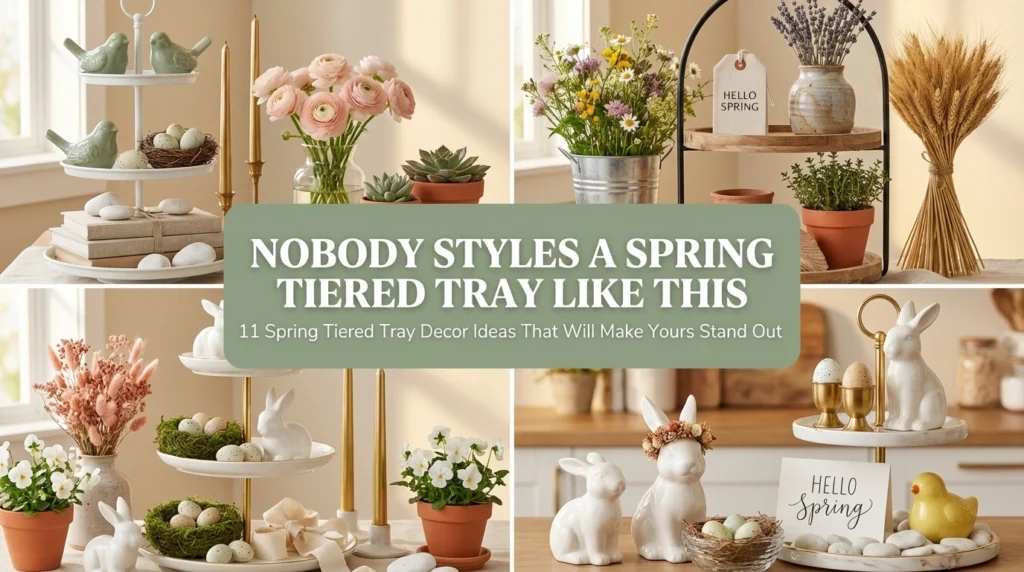
Styling a tiered tray for spring is one of the most addictive little projects in home decor. The tray itself is the most forgiving surface in your home: small enough to restyle in ten minutes, cheap enough to refresh on any budget, and charming enough to become the most talked-about corner of the room.
These eleven ideas will help yours stand out — and they travel well. The same palette works in our spring kitchen counter decor ideas and spring console table decor ideas, the tricks scale down to spring bathroom decor ideas for a powder room, and shelves get the same treatment in our spring living room shelf decor ideas.
1. Choose Your Colour Palette First
The difference between a beautiful tray and a forgettable one is decided before you place a single object. Pick two or three spring colours and commit completely — sage, cream, and blush; butter yellow, white, and natural linen; lavender, terracotta, and warm wood. Anything that does not belong to the palette stays off the tray.
This one habit is free, takes five minutes, and makes everything look curated rather than collected. It also photographs beautifully, which matters if Pinterest is your thing.
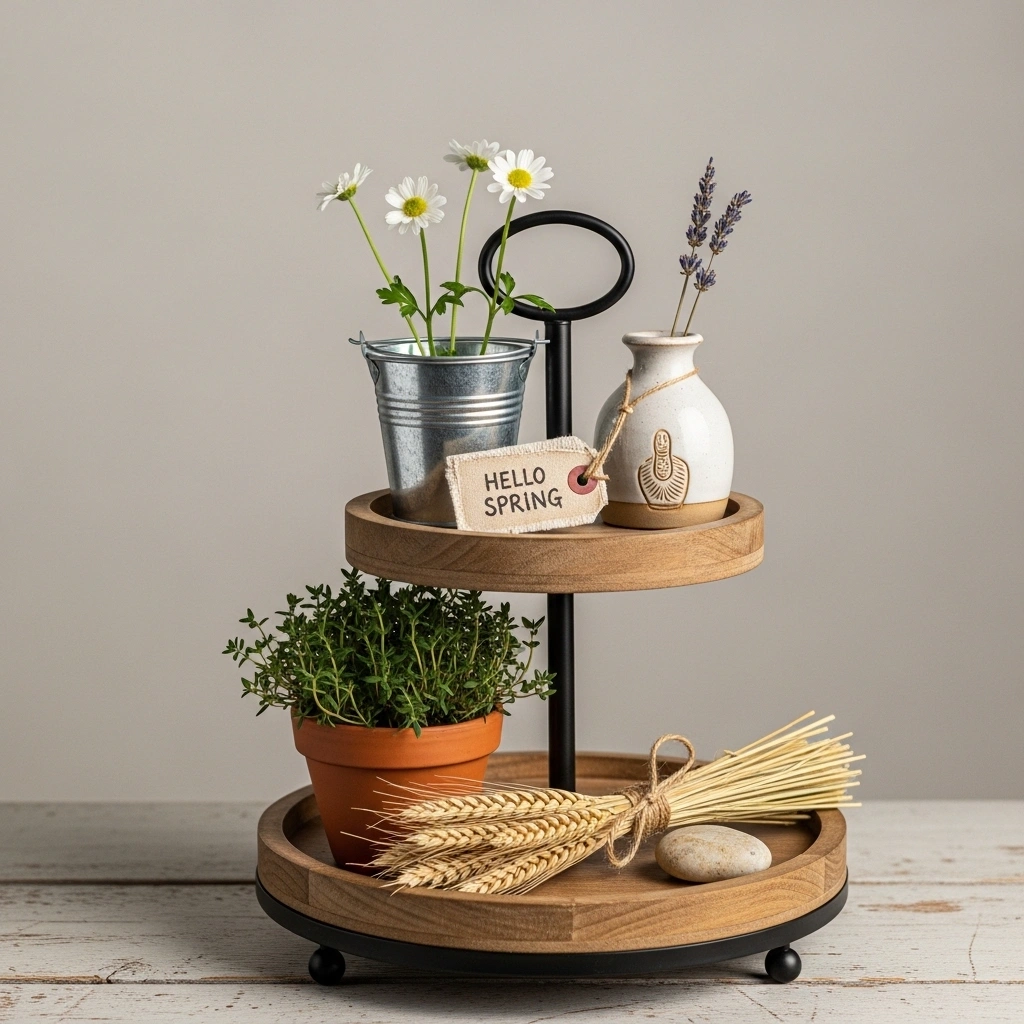
2. Go Farmhouse
The farmhouse look never really leaves the spring rotation, and it costs almost nothing: worn wood, galvanized metal, hand-thrown clay, natural linen, dried botanicals. Nothing should look too perfect — the charm is in pieces that feel gathered slowly over time.
A slightly uneven clay pot, a dried lavender bundle tied with jute leaning to one side, a handwritten tag that is not quite straight — imperfection is the whole point here.
3. Keep Easter Restrained
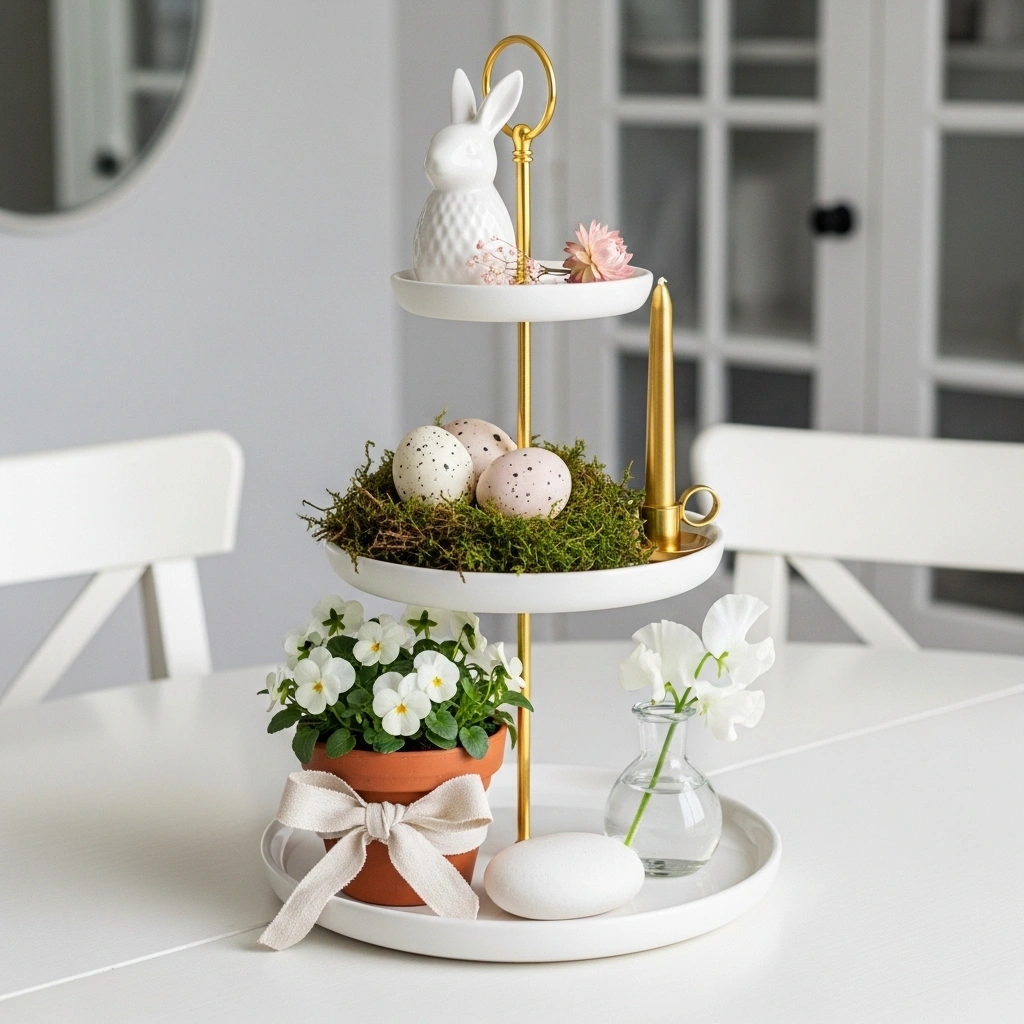
Easter is the strongest single theme for a spring tray, but only with restraint. Choose speckled ceramic eggs over bright plastic ones, a small clay or white bunny over a neon one, fresh moss in a dish over synthetic grass.
One or two Easter pieces surrounded by natural spring elements keeps the tray seasonally relevant without looking like a party-supply aisle. These restrained displays also tend to earn the most saves.
4. Give Each Tier Its Own Bloom
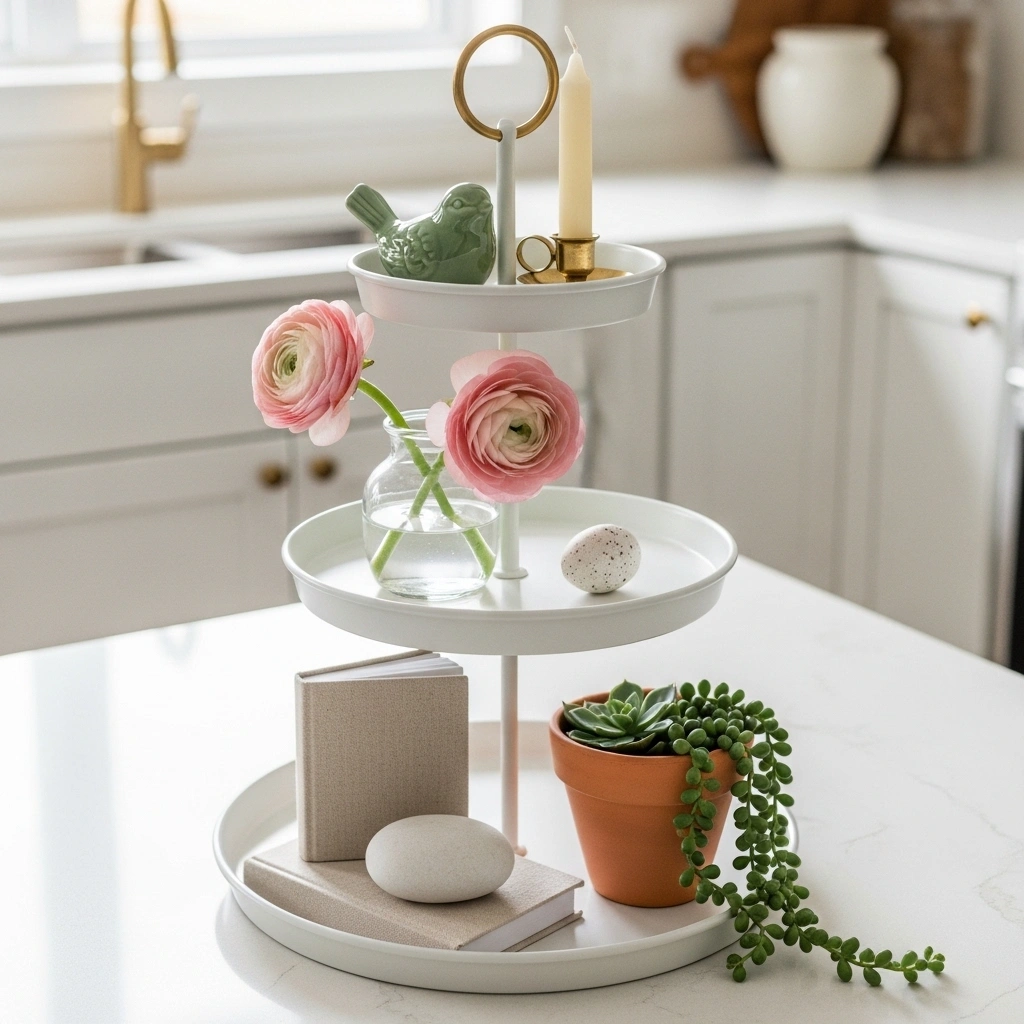
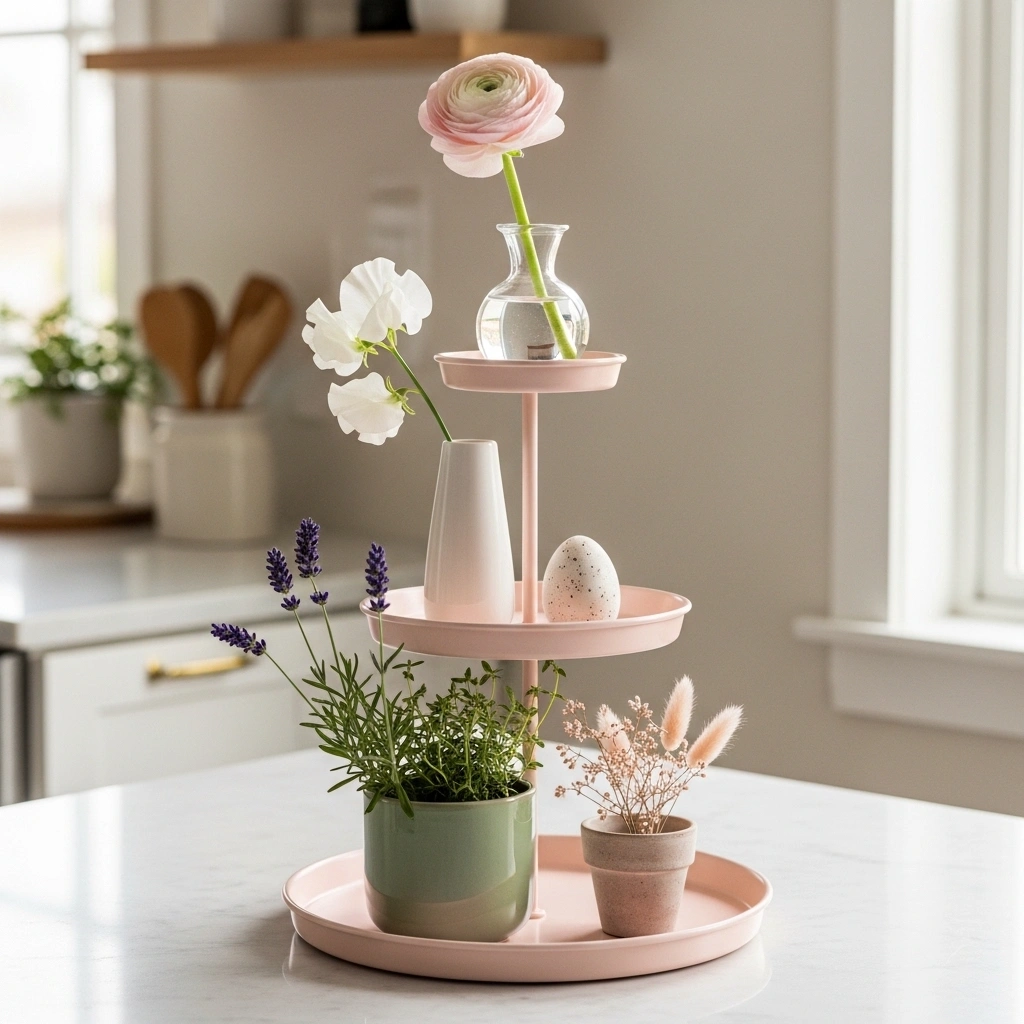
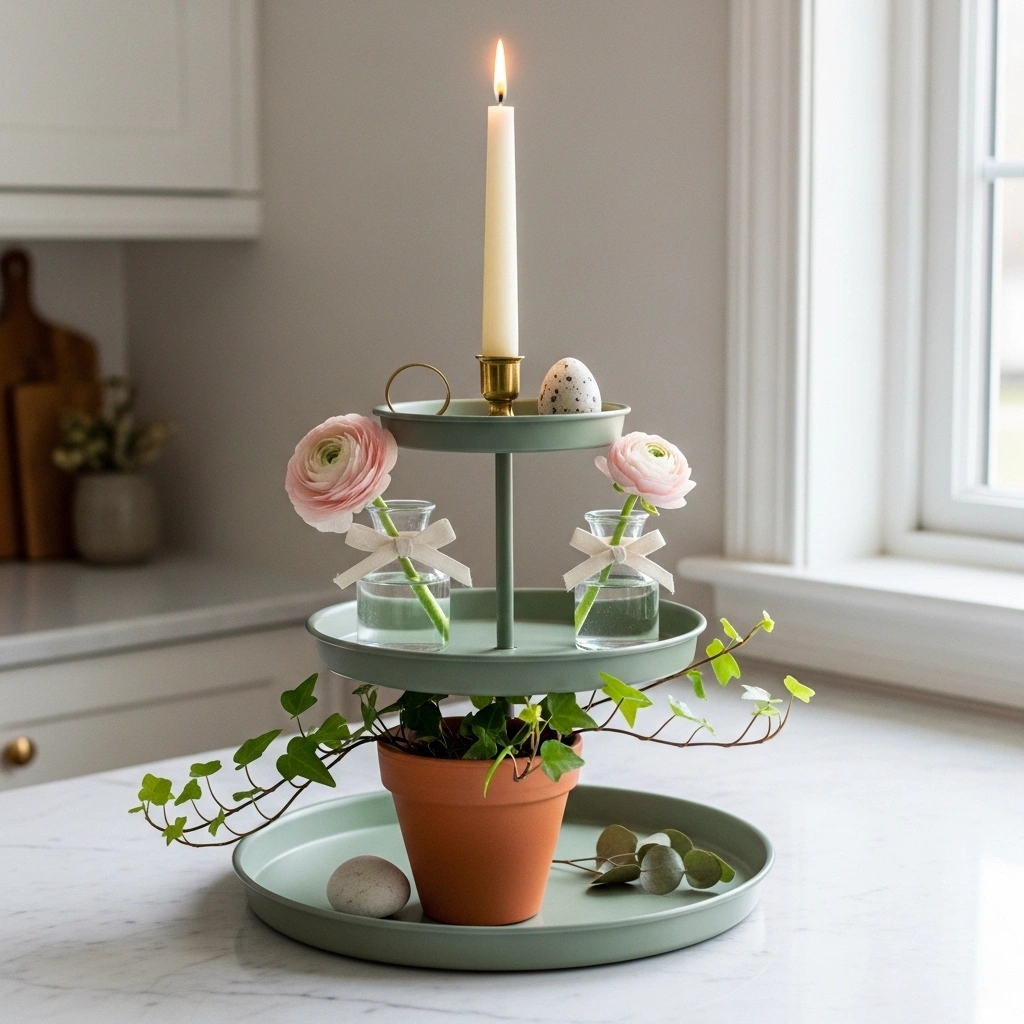
Fresh flowers are the fastest way to make a tray feel alive, but the rules differ from a normal arrangement: use one bloom type per tier. A blush ranunculus up top, a white sweet pea in the middle, a sprig of lavender at the bottom. Variety across the tray, calm at each level.
Mixing fresh and dried across tiers adds a collected feel, and keeping one flower colour across all three tiers — all white, all blush — is the most elegant option of all.
5. DIY What You Can
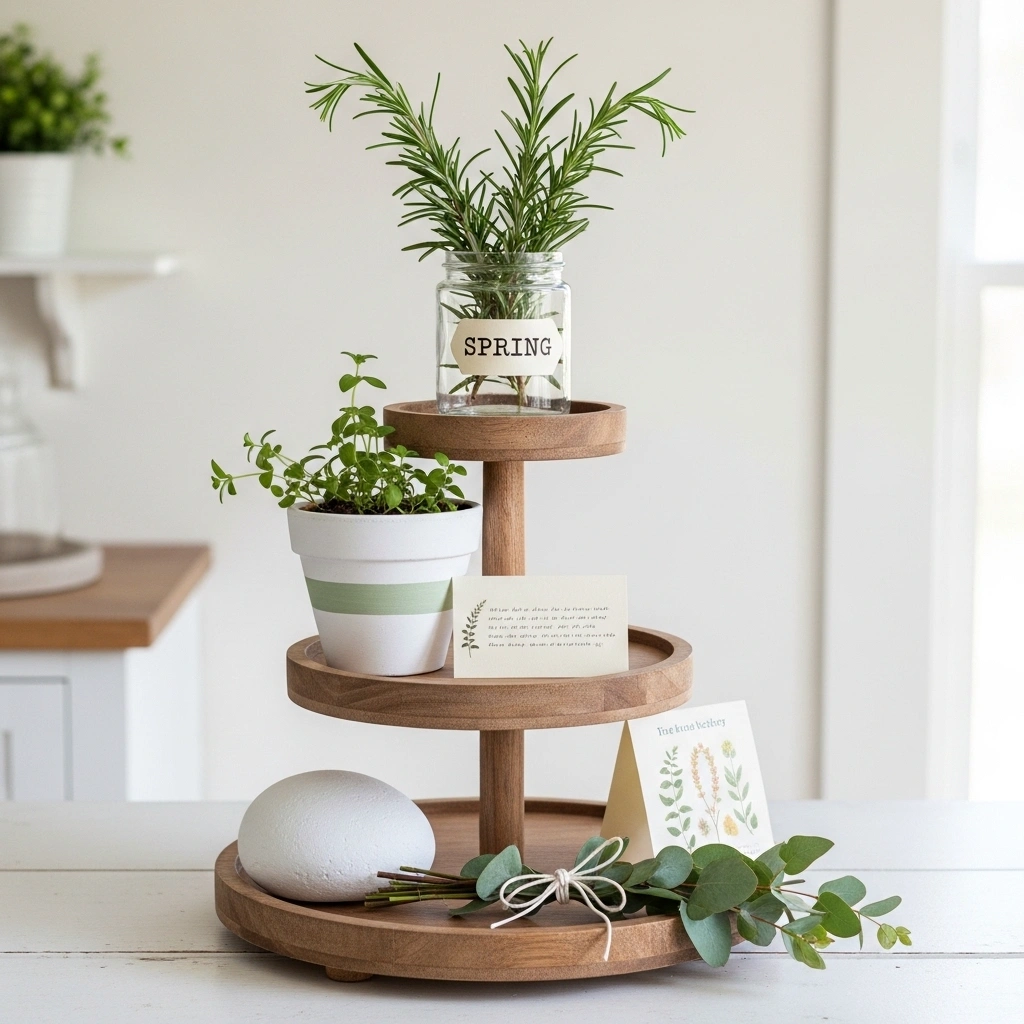
You do not need to buy anything new. A glass jar with a hand-stamped label becomes a canister; herbs in a painted terracotta pot become a living botanical; a home-printed botanical illustration folded into a card becomes miniature art; a garden stone painted white becomes a smooth accent.
Handwritten details — a tiny tag, a botanical label, a chalkboard marker — add a personal quality no purchased item can match. DIY trays are also among the most-saved on Pinterest, because they promise readers can do exactly the same.
6. Style on a Budget
The prettiest trays are rarely the priciest. Shop your own home first: a ceramic from the windowsill, a candle from the bathroom, a small plant from another shelf, stems from a grocery bunch, a folded linen square as a base layer.
And the most powerful budget move costs nothing: edit. Remove everything outside your palette, and the ordinary objects left behind suddenly look cohesive and considered.
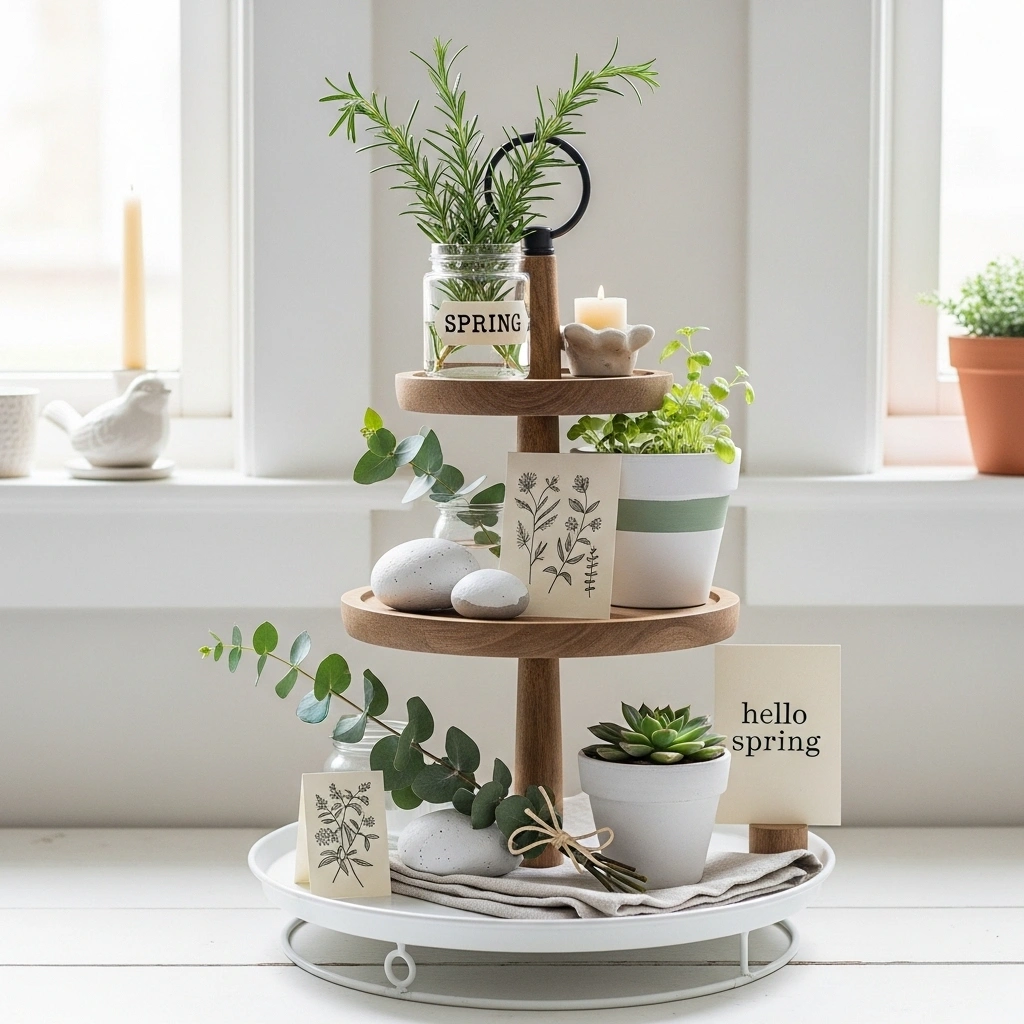
7. Use the Hero-Support-Finish Rule
Most cluttered trays come from filling each tier with whatever fits. Instead: one hero object, one supporting object, one finishing touch per tier — three objects maximum. The hero is the tallest or most dominant piece; the support relates through colour or material; the finish is small and grounding — a stone, a tiny pot, a single egg.
Give each tier its own story: the top creates height, the middle carries the seasonal moment, the bottom grounds everything with heavier, natural materials.
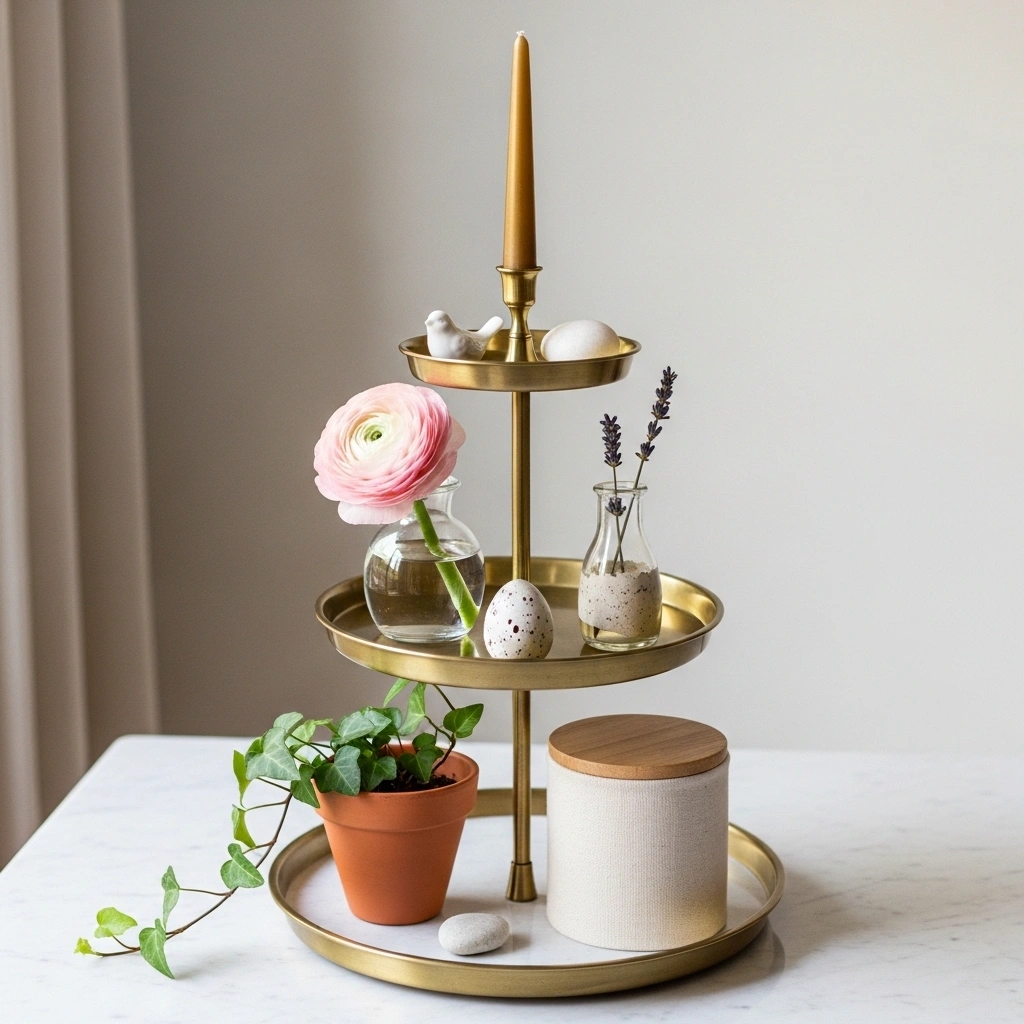
8. Add Something Fresh
The gap between “styled” and “magazine shot” is almost always fresh elements: a single bloom in a tiny glass, a small living plant, a sprig of herbs beside a candle, eucalyptus laid flat on the bottom tier. Nothing makes a tray feel alive like something living.
Place the freshest piece at eye level — usually the middle tier — where it draws the eye first. Rotate it weekly from a grocery bunch and the tray stays seasonal all spring for very little money.
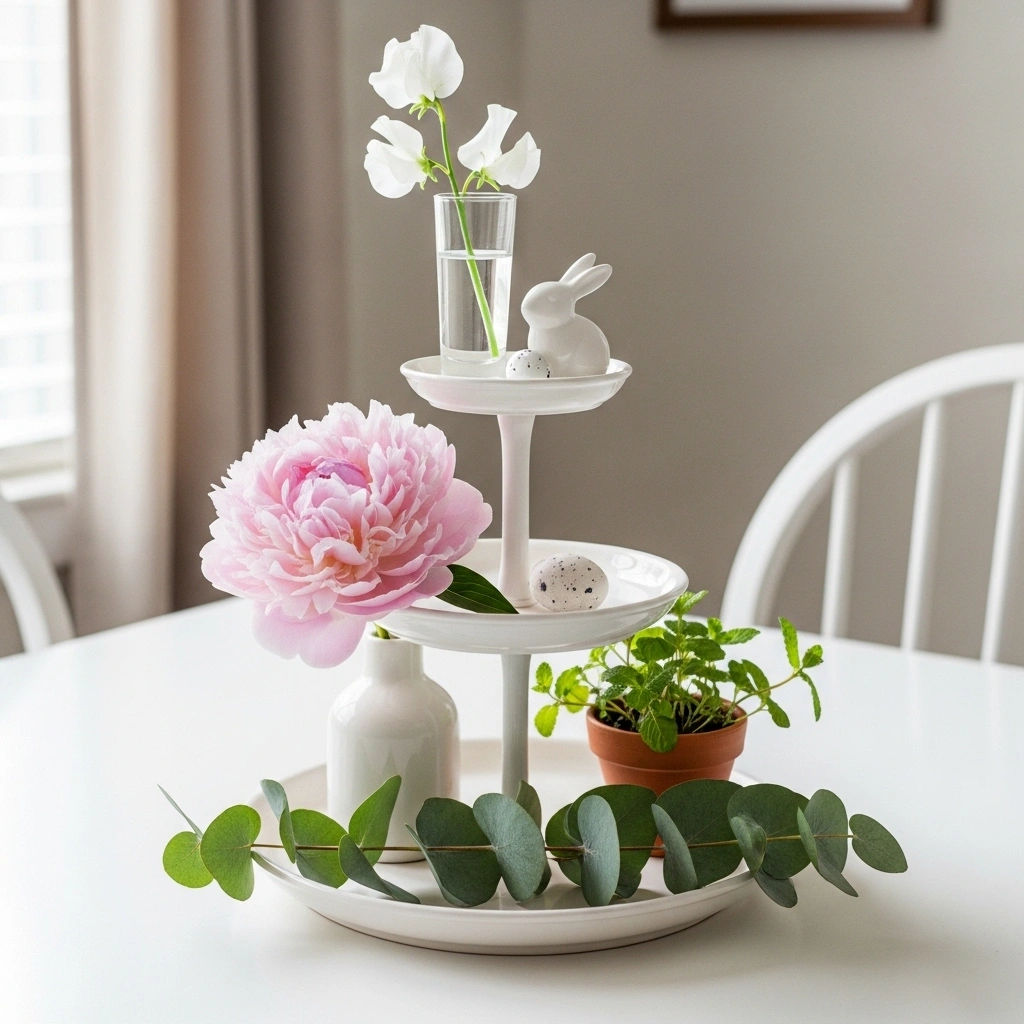
9. Style One Tray for Every Room
One well-styled tray can move between rooms. Built on a neutral palette — cream, sage, white, linen, terracotta — it works on a kitchen counter, a dining table, a coffee table, and an entryway alike.
Keep one slot per tier free for a room-specific fresh touch — rosemary in the kitchen, a peony on the dining table — and the tray feels tailored everywhere without a full rebuild.

10. Add a Little Charm
Some trays are simply irresistible: one playful figurine (a bunny, a bird, a lamb), one unexpected pop of colour inside the palette, and one handmade or handwritten element. That is the formula.
Trays that tell a tiny story — a bunny beside a nest of eggs, a bird beside a small branch — get far more engagement than pretty-but-random arrangements. Stories make people stop scrolling.
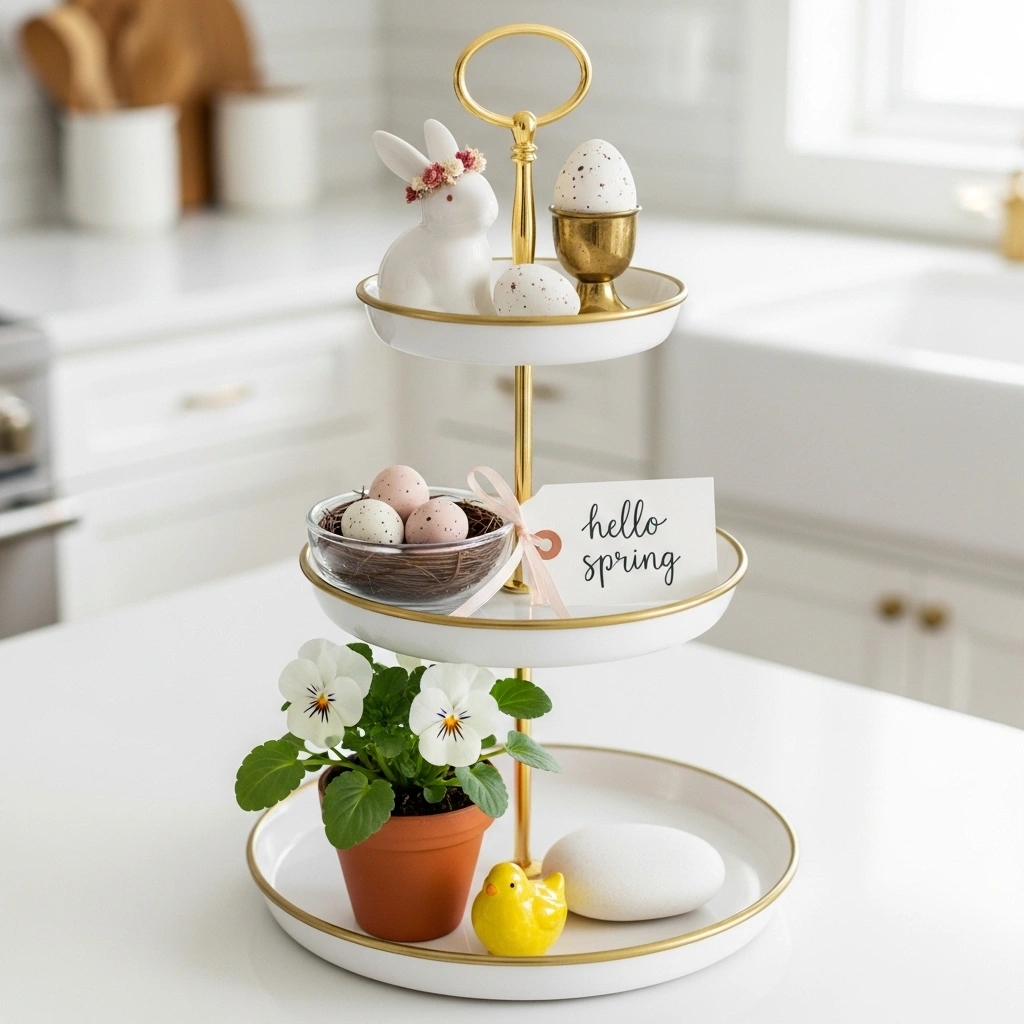
11. Finish With Micro-Details
The last five percent is where the magic happens. Step back three feet and check: does each tier have a clear hero? Is there height variation? Is something living on the tray? Is there one small pocket of empty space?
The final touch is usually the smallest and cheapest: a fresh sprig tucked by a candle, a smooth stone at the front edge, a handwritten label on a plain jar, a linen ribbon around a terracotta pot.
Five Golden Rules for Any Tiered Tray
These work every time:
Palette before placement. Two or three colours chosen first; everything must pass the palette test.
Three objects per tier, maximum. One hero, one support, one finish.
Vary height in every tier. One taller piece beside a lower one creates rhythm; flat looks unintentional.
Add one living element. A flower, a plant, an herb — one living thing makes the whole tray feel seasonal.
Leave one breath of empty space. A small gap makes everything around it look more deliberate.
Quick Answers
What should I put on a tiered tray for spring?
Start with a two-to-three colour palette, then layer: something tall (a taper candle or branch), something natural (moss, eggs, a stone), something living (a bloom or small plant), and one seasonal accent like a bunny or a handwritten tag.
How many items go on each tier?
Three maximum: one hero, one supporting piece, and one small finishing touch. More than three looks cluttered; fewer than two looks unfinished.
How do I decorate a tiered tray on a budget?
Shop your home first — ceramics, candles, plants, and grocery-store stems — and lean on DIY touches like stamped labels and painted stones. The cheapest upgrade is editing: remove anything outside your palette and the rest instantly looks cohesive.
Where should I put my spring tiered tray?
Anywhere with a flat surface: kitchen counter, coffee table, dining table, entryway console. Style it on a neutral palette and it can rotate between rooms all season — just swap one fresh element to suit each spot.
Final Thoughts
A tiered tray is one of the happiest styling projects in your home — ten minutes, almost any budget, and a result worth showing every guest.
Choose your palette, place your heroes, add something living, and finish with the small details. Step back and look. If it makes you smile, it is exactly right.