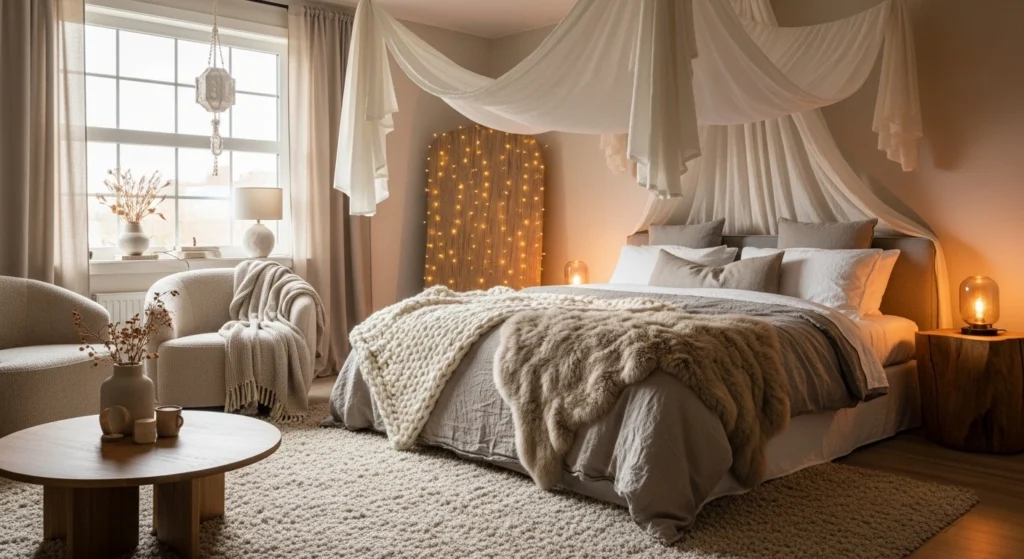
A spare bedroom can be one of the most useful spaces in a home, but it often becomes a catch-all for things that don’t have another place to go. An old desk ends up in one corner, boxes occupy the closet, and the room remains mostly unused.
Turning that space into a home office doesn’t require an expensive renovation. The biggest improvements usually come from giving the room a clear purpose, choosing furniture that fits the available space, and making a few affordable changes that improve comfort and organization.
A successful budget home office makeover should also feel like it belongs in the home: a comfortable desk, supportive chair, practical storage, good lighting, and home office desk decor ideas that cost very little. And when the room needs a seasonal refresh, spring home office decor ideas layer neatly over the same budget principles.
Find the Room’s Biggest Problem First
Before choosing paint colors or filling an online cart, figure out why the room isn’t working. Is it mainly storage? Too much furniture? Is the best natural light going unused? A crowded room needs decluttering and better storage before it needs new furniture; an almost-empty one may only need a desk, chair, and lamp. Identify the biggest limitation first, and the budget will spend itself in the right places.
Decide How Much of the Room Becomes an Office
A spare bedroom doesn’t have to become an office from wall to wall. If guests still visit, the office can share the space with a daybed, sleeper sofa, or compact guest bed — but design around the most frequent use, not the occasional one. If guests come twice a year, the room shouldn’t be styled as a guest room for the other 363 days. A compact desk on one wall, a dresser pulling double duty as office storage, and an open center keep the room flexible, and fewer furniture pieces keep the budget lower.
Choose the Desk Around the Way You Work
The desk is one of the most important purchases, but bigger isn’t automatically better. A laptop worker needs little more than a compact surface; two monitors, notebooks, and speakers need considerably more. Watch depth as well as width — a desk that fits along the wall but juts too far into the room will make a spare bedroom feel cramped. Note where the window, outlets, and door are. A simple desk with the right proportions beats an expensive one that overwhelms the room.
Make the Chair Worth the Budget
A home office chair is where a rock-bottom price becomes a false economy. If you’ll sit there for hours, comfort and adjustability matter more than looks: upright support, feet resting on the floor, and a height that works with the desk. A supportive upholstered chair can work in a bedroom-style office, and an existing comfortable chair needs no replacement. The test isn’t how the chair looks; it’s whether you can sit in it through a normal work session. Small ergonomic fixes punch above their weight: a monitor stand or sturdy riser for screen height, real legroom, and lighting that doesn’t cause eye strain.
Use Existing Storage Before Buying More
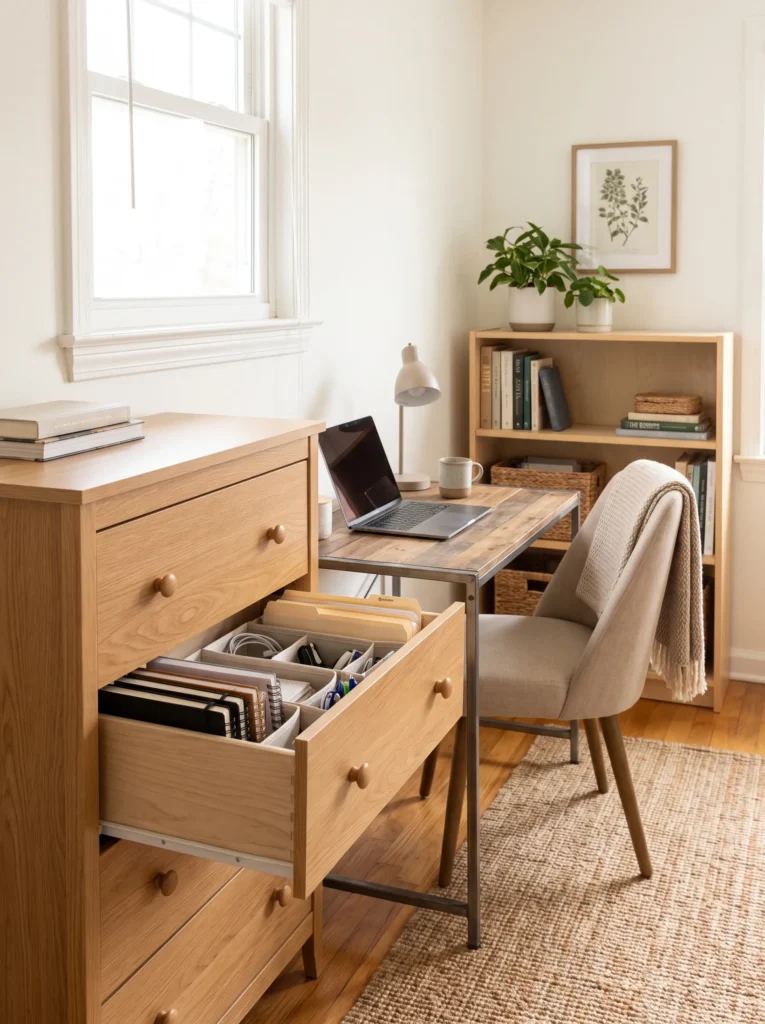
Before buying storage, audit what the room already has. A bedroom dresser can hold stationery, paperwork, and chargers; a bookshelf takes books and folders; the closet can become office storage with a little organization. Keep daily supplies within reach and occasional items in drawers, baskets, or the closet — that also keeps the office from looking crowded. If you must buy, size to the room: a narrow shelving unit beats a deep cabinet in a small spare bedroom. Give equipment a permanent home too: the printer on a small shelf instead of the desk, chargers in one drawer, documents in a simple filing system that’s easy to maintain after a busy workday.
Let Natural Light Do the Work
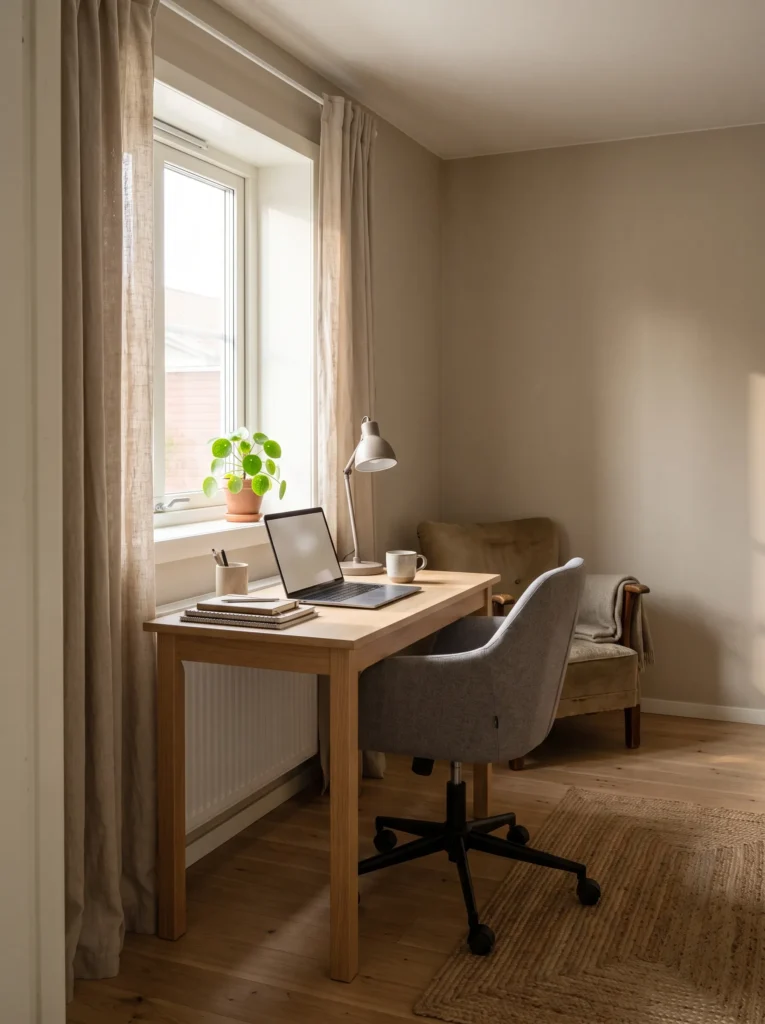
A window is a free upgrade — use it. Position the desk so natural light reaches the workspace without glaring on the screen; placing the desk perpendicular to the window usually controls reflections best. Light-filtering curtains soften strong daylight and add privacy without darkening the room, and if the existing curtains or blinds already work, there’s no need to replace them. Good daylight makes a small office feel more open, so decide the desk position around the window first.
Add Task Lighting for Evenings
Natural light won’t carry you past sunset. A simple desk lamp gives focused light without electrical work — aim it at the work surface, not your eyes or the screen. If the ceiling fixture is harsh, a warmer bulb can make the room more comfortable and more residential, which matters when the space doubles as a guest room. Lighting doesn’t need to be a decorative project; its first job is to make the workspace easier to use.
Create a Clear Work Zone
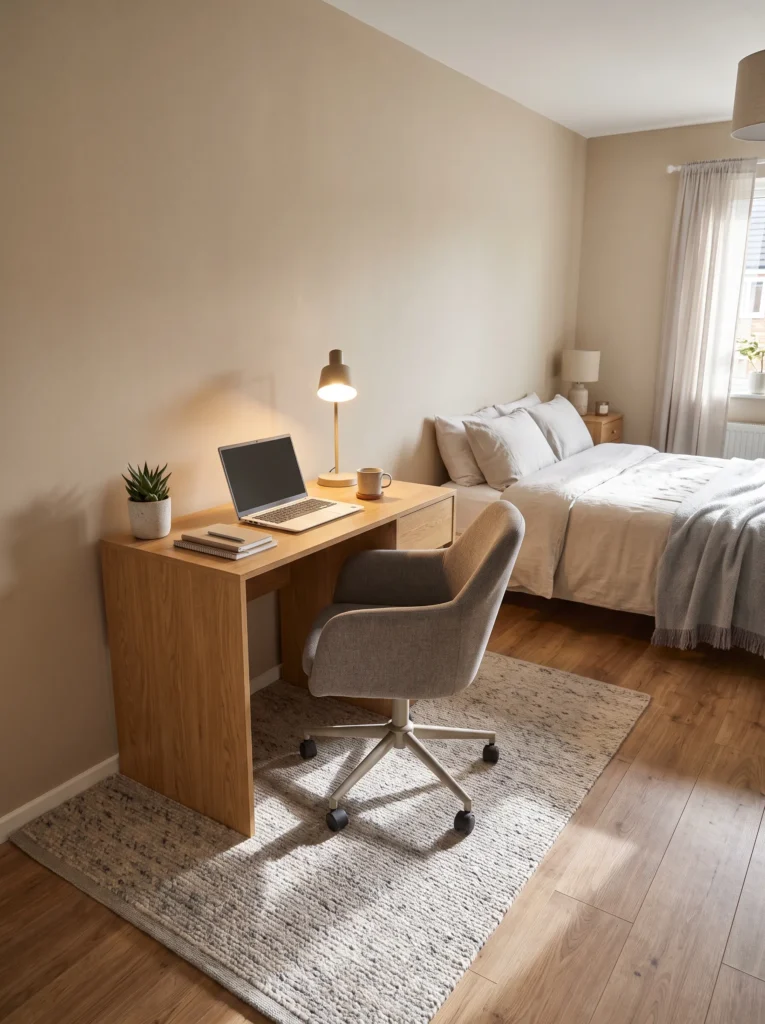
A dedicated work zone makes the room feel intentional. The desk doesn’t need the center of the room — against a wall it leaves more floor space and creates a natural boundary between working and non-working areas. A rug can define the zone, and even without one, keeping the desk, chair, lighting, and storage visually connected does the same job. The one rule: don’t scatter office equipment around the bedroom. When the work pieces stay together, it’s easier to mentally clock out.
Keep the Desk Visually Quiet
A budget office still looks polished when the desktop is controlled. Keep frequently used items within reach and move the rest into drawers, shelves, or nearby storage. Mind the cables: a few loose cords can make a tidy desk look unfinished, so use clips, ties, or routing channels to guide wires to the back of the desk. A clear surface, a task lamp, a computer, and one or two useful accessories look more sophisticated than a desk crowded with decorative organizers.
Make the Room Feel Like Home
A functional office doesn’t have to lose the warmth of a bedroom. Soft curtains, a small plant, framed artwork, or a comfortable accent piece make the room inviting, and for a tight budget, start by shopping your own home — moved artwork, a plant, or a spare lamp can change the room without a new shopping list. Paint is another cheap lever: a light neutral brightens a small room, while a deeper tone on one wall defines the desk backdrop. But if the existing walls are in good shape, a fresh layout and better lighting may be change enough.
Think About the Video-Call Background
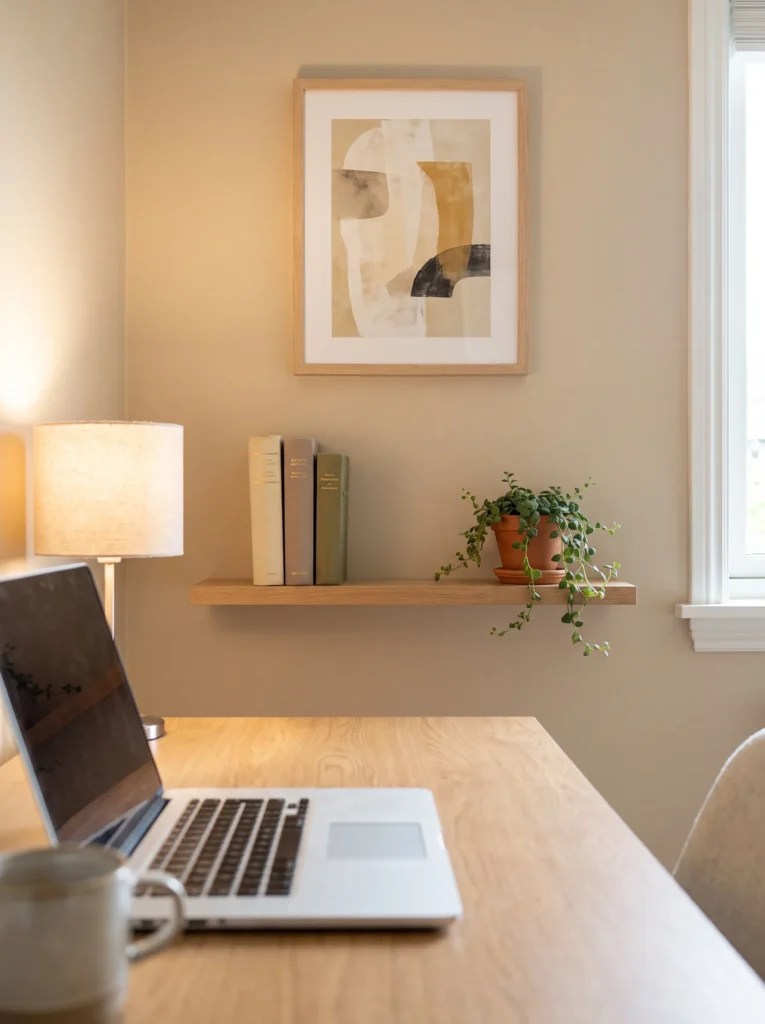
If you work remotely, the wall behind the desk is part of your workspace. A clean, uncluttered background beats a heavily decorated one: a small piece of artwork, a narrow shelf, a plant, or a simple book arrangement adds personality without competing for attention on camera. Before buying anything, sit at the desk and check what the camera actually sees — a wall that looks empty from across the room can look perfectly balanced on screen, and rearranging existing items usually beats buying new décor.
Spend Where It Counts
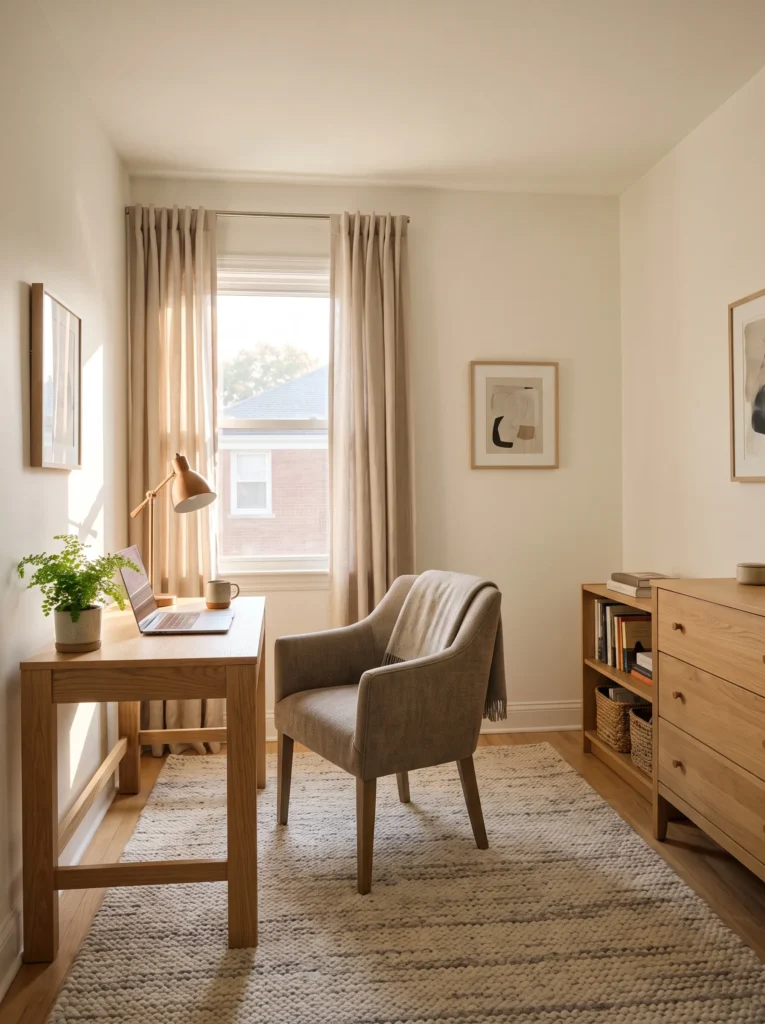
When funds are limited, spend in daily-impact order: comfort and ergonomics, desk and workspace, lighting, storage and organization, decorative finishing touches. A comfortable chair beats wall art; a properly sized desk beats matching accessories. Skip what solves no real problem: expensive decorative furniture, elaborate shelving, and anything bought from a photo without measuring. You don’t have to do it all at once either — set up the essentials, work a few days, and notice where lighting falls short, cables annoy, or the layout cramps; those observations guide the next purchases better than any plan.
The Before-and-After Difference
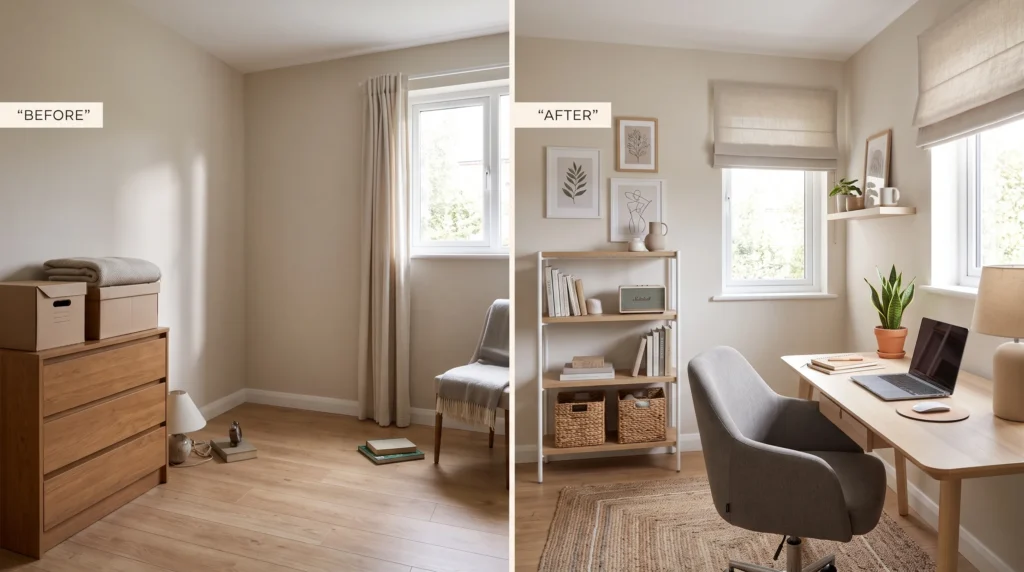
The most noticeable change doesn’t come from expensive furniture — it comes from the room finally having a clear function. Before: storage boxes, leftover furniture, open floor space. After: a dedicated desk, comfortable seating, accessible storage, appropriate lighting, and breathing room around each piece. A finished room lets you sit down and start working, find supplies without digging, work comfortably for hours, take video calls without a distracting background, and step away without the room feeling like a workstation. Get there with simple moves: clear unnecessary furniture, give the desk a deliberate position, control visible clutter, improve the lighting, use existing furniture well, and add a few warm details. If the room has been sitting unused, it may not need a makeover at all — just a clear purpose and a layout built around how you actually work.
Quick Answers
How much does a spare bedroom home office makeover cost?
It depends on what you already own, but the strategy matters more than the total: reuse furniture first, spend on the chair, desk, and lighting, and add the rest in phases. Many rooms are transformed with little more than a right-sized desk, a supportive chair, a task lamp, and better organization.
Can a spare bedroom be both an office and a guest room?
Yes. Keep one clearly defined work zone — a compact desk on one wall — and let a daybed or sleeper sofa handle occasional sleeping. A dresser can serve as both bedroom and office storage. Design around the most frequent use: if guests come twice a year, the other 363 days belong to the office.
Where should the desk go in a spare bedroom?
Close to the window but perpendicular to it, so daylight reaches the desk without glaring on the screen. Place it against a wall to define the work zone, near an outlet, and check what the camera sees from the chair if you take video calls.
What should I skip when the budget is tight?
Matching furniture sets, decorative upgrades, and elaborate shelving bought before the fundamentals are covered. Never buy from a photo alone — measure depth and floor space first, since a desk that looks beautiful online can be useless in a small room.