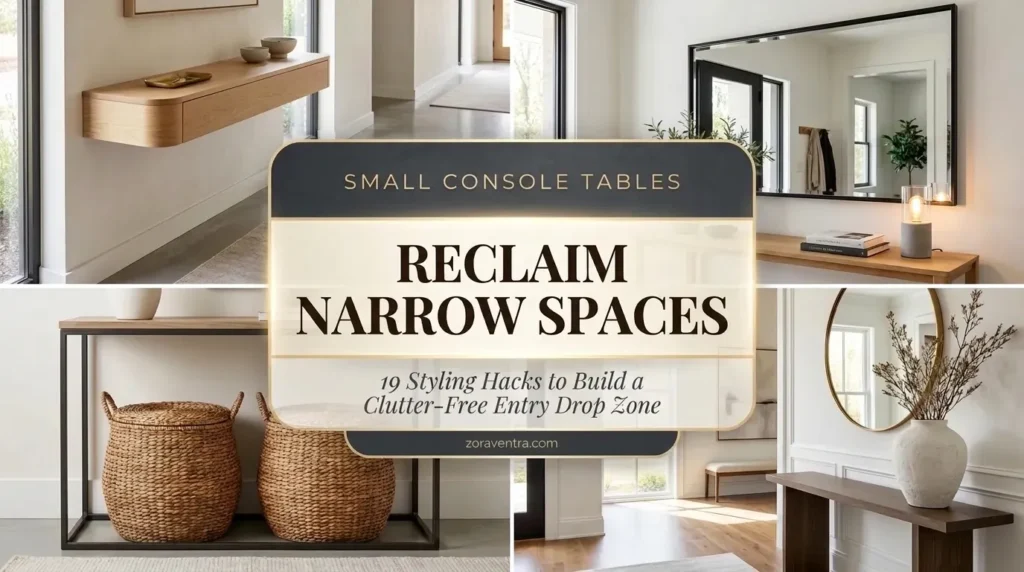
The classic tight-space frustration: walking through your front door and immediately bumping your shoulder against bulky furniture, tripping over loose shoes, dropping keys into a chaotic pile on the nearest flat surface. In a narrow entryway, cramped hallway, or tiny living room, it feels like a choice between functional storage and open clearance. But a slim console table isn’t a space-eating obstacle — it’s a deliberate architectural anchor. The table you place by the door sets the design tone for your entire home the second anyone crosses the threshold. By maximizing vertical wall space and building hidden containment systems, you create a productive drop zone that keeps daily essentials sorted without obstructing foot traffic. Here are 19 ideas for narrow spaces.
1. Floating Ledges for Zero Footprint
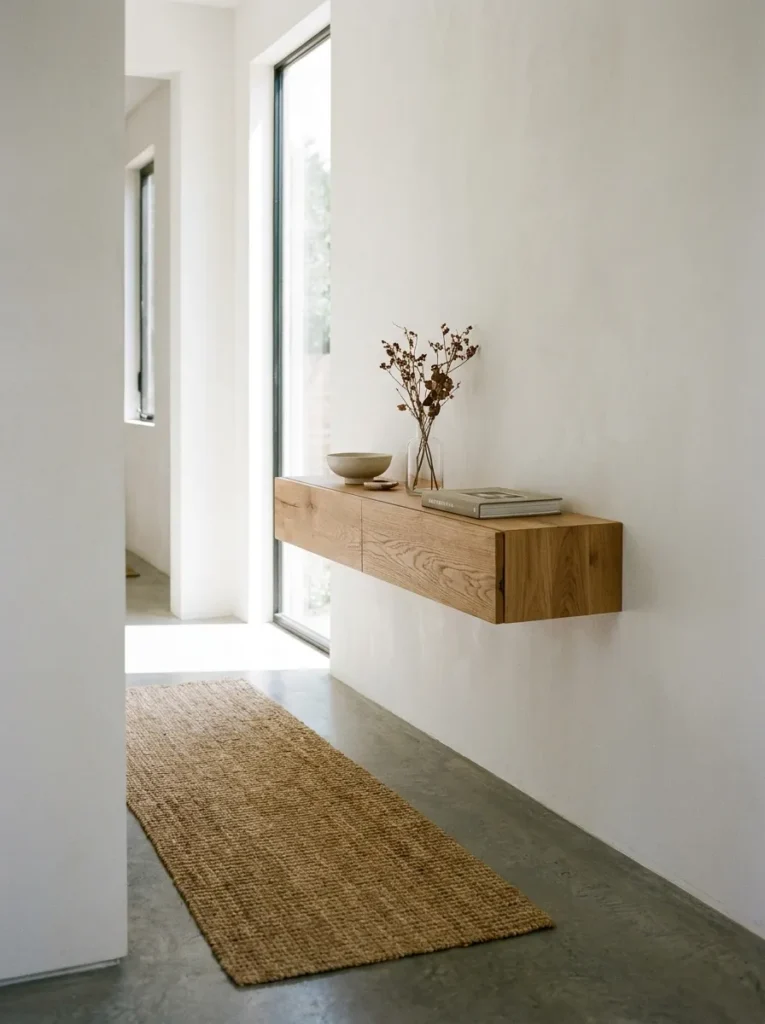
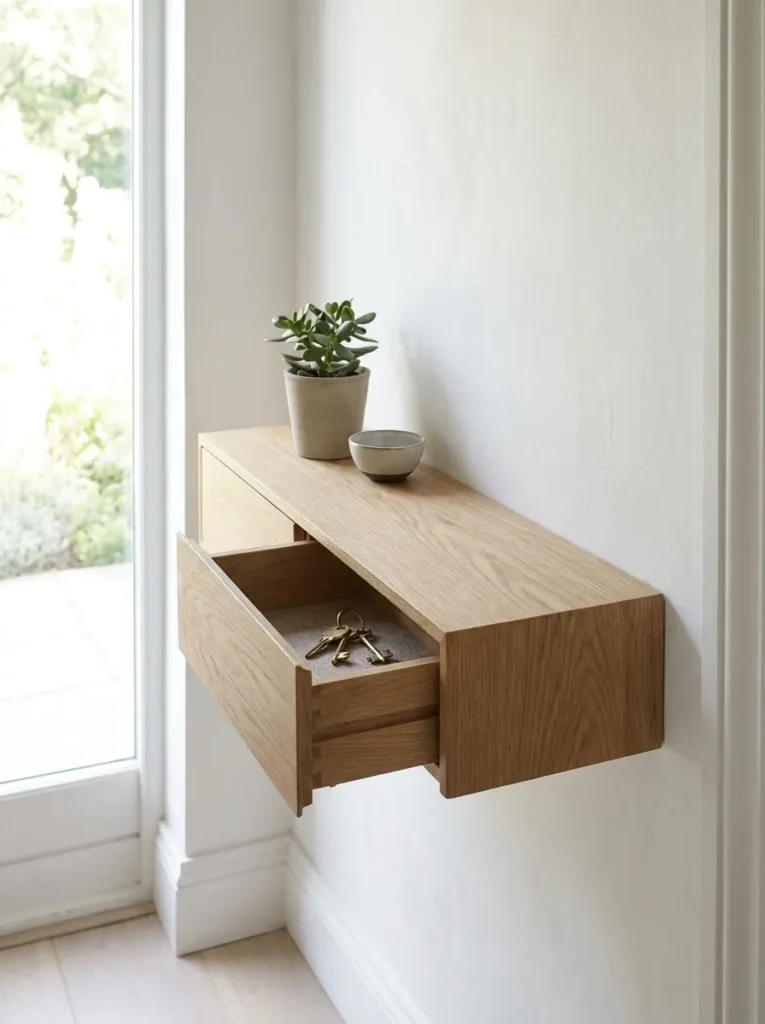
When floor space is measured in inches, furniture legs crowd narrow walkways and trap dust along baseboards. Secure a thick wood ledge directly into wall studs with heavy-duty hidden steel brackets — a floating console with no legs. The floor plane stays entirely unobstructed, creating the illusion of a wider hallway with a sturdy, sleek surface for mail and daily essentials.
2. Oversized Wall Mirrors for Narrow Hallways
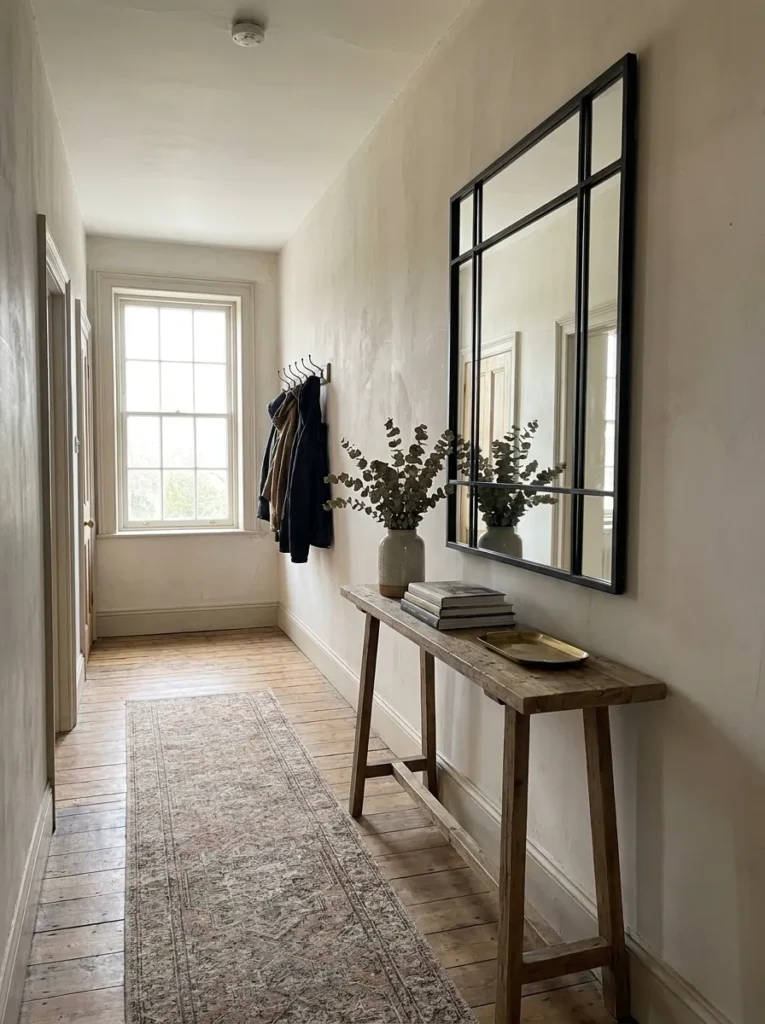
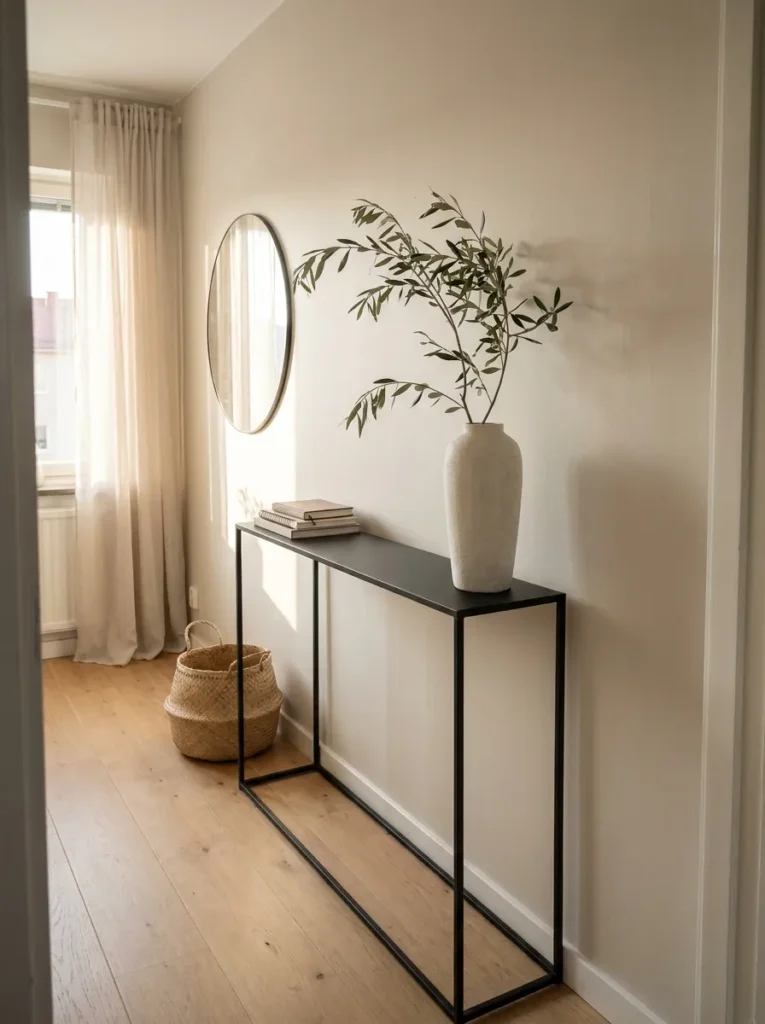
Dark narrow corridors feel claustrophobic with bare, flat walls. Hang a massive rectangular or arched mirror above the console — at least 80% of the console’s length. Taking the glass high up the wall catches light from adjacent rooms and reflects it across the hallway, visually doubling a tight entry’s perceived width.
Mirror Proportions
Mirrors brighten narrow hallways, but proportion matters: ideally two-thirds to three-quarters of the console’s width. Much smaller feels disconnected; oversized creates a dramatic focal point reflecting more natural light. Modern homes suit clean black or oak frames; traditional homes benefit from brass, antique gold, or softly curved wood.
3. Woven Baskets Under the Table
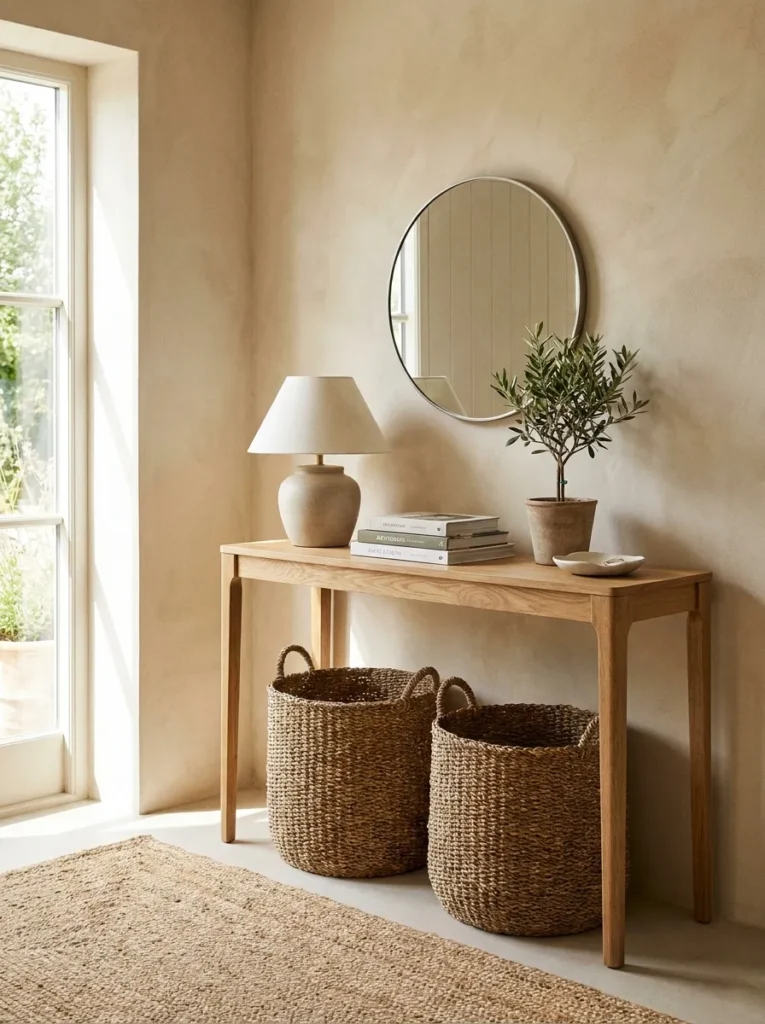
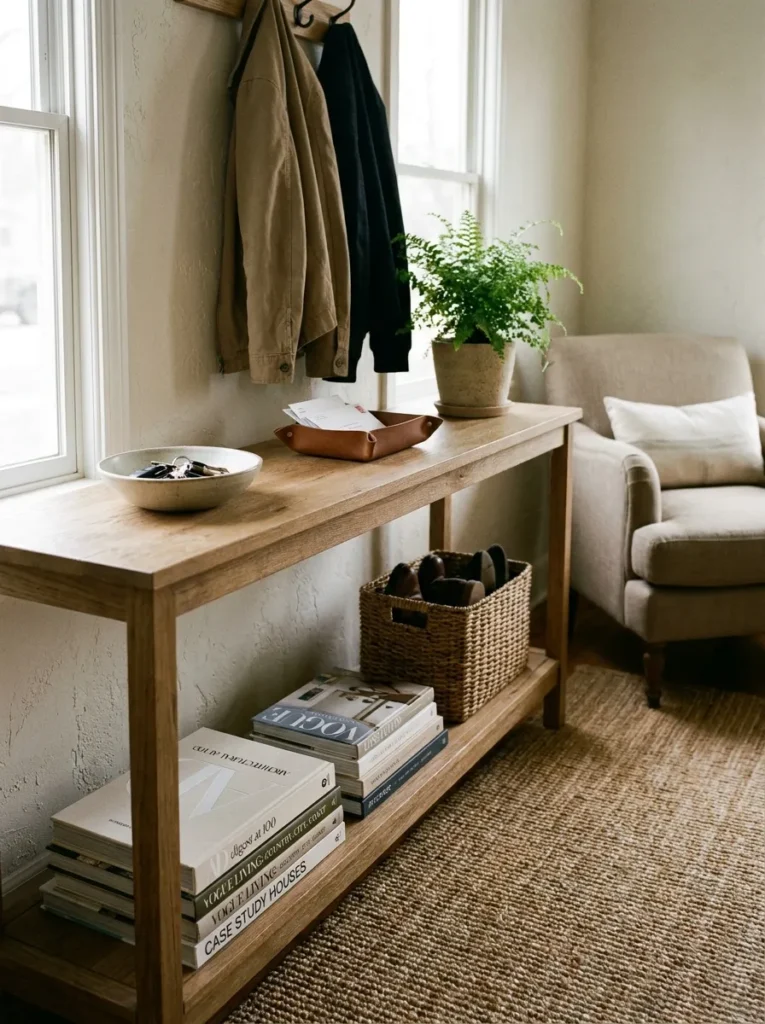
Shoes, umbrellas, and dog leashes loose on the floor make small rooms feel instantly cluttered. Use the negative space beneath the table deck: slide two large matching woven seagrass or heavy canvas baskets underneath. Deep bins create an intuitive low-barrier drop zone that conceals everyday clutter while adding rich natural texture to the wall’s lower half.
The Designer’s Styling Formula
Designers work in layers, not random objects: one tall anchor (mirror, artwork, oversized vase), one medium-height piece (stacked books, sculptural bowl, lantern), one smaller accent with personality. Then step back and leave some empty surface visible — negative space is what makes a styled console look calm and intentional instead of busy.
Choosing the Right Height
Most homes suit a console between 30 and 34 inches tall. With artwork or a mirror above, leave roughly 6 to 8 inches between the tabletop and the wall piece’s bottom edge — visual balance that keeps the display connected as one composition.
4. The Rule of Three
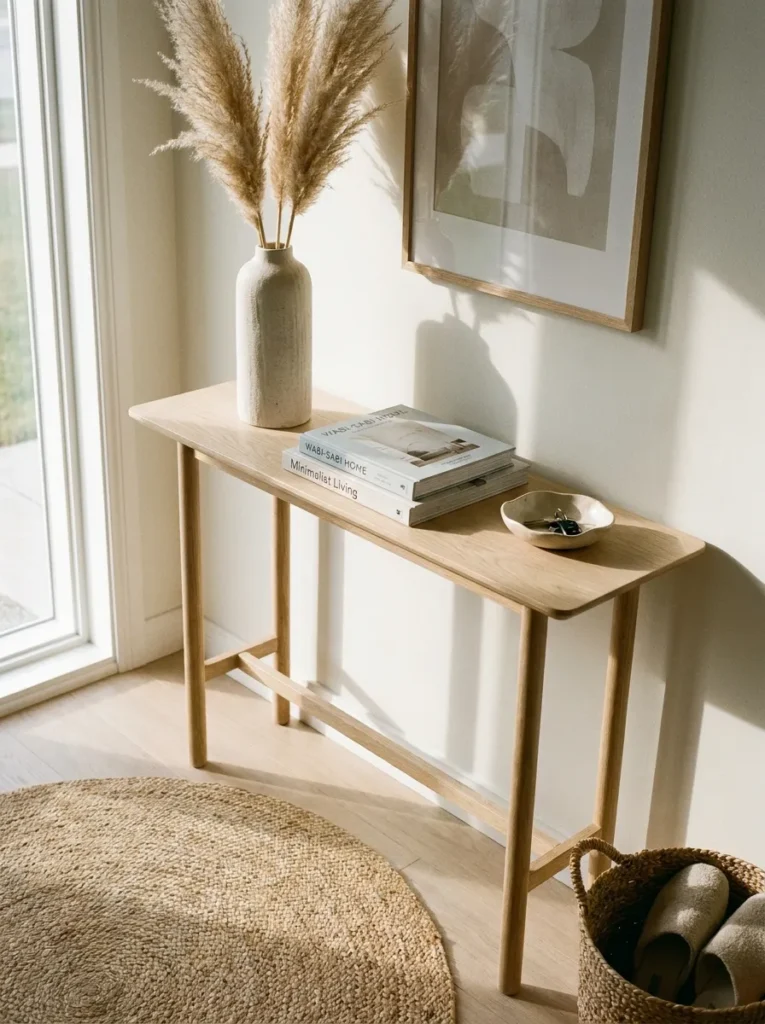
Symmetrical rows of matching frames and tchotchkes crowd a small surface without a design focus. Style with only three items of varied heights in an asymmetrical triangle: a tall element (single botanical branch in a vase) on one side, a medium item (two stacked decorative books) in the center, a low item (small key bowl) on the other. Clean visual line, zero clutter.
5. One Sculptural Vessel
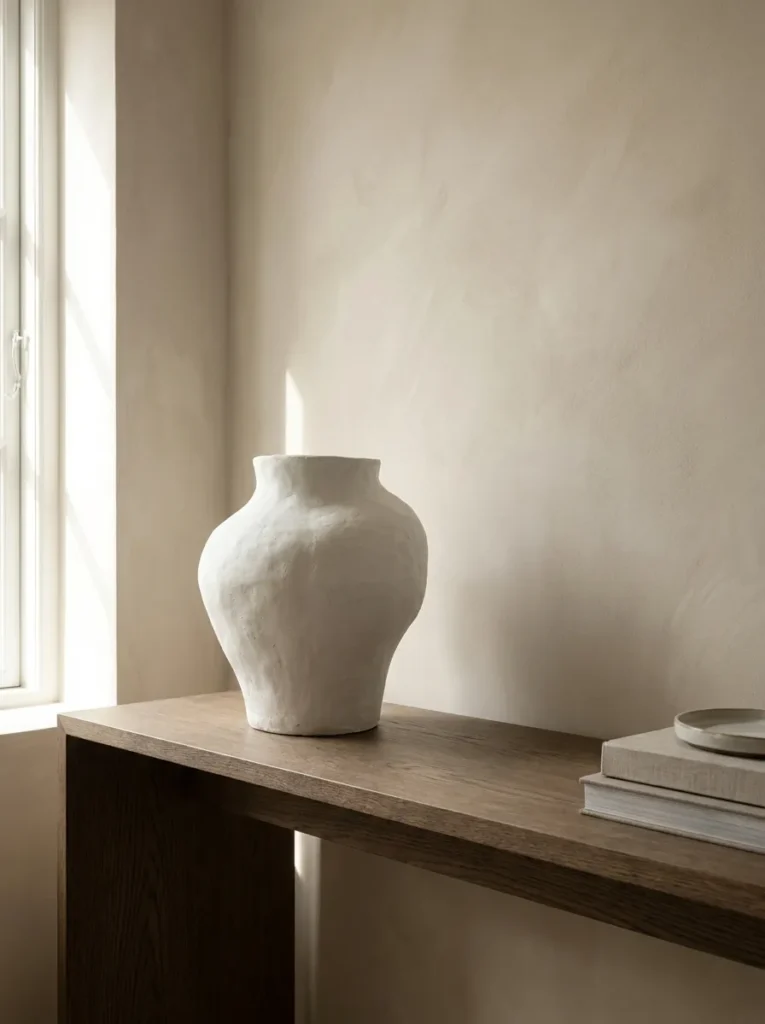
For a quiet-luxury look, skip loud colors and multi-piece arrangements. Luxury is scale, negative space, and premium textures: one oversized handmade ceramic or rough-hewn stone vessel in warm sand, charcoal, or plaster white, placed on one side of a clean hardware-free console with the remaining two-thirds of the tabletop completely bare. Deliberate empty space commands attention — curated and expensive.
6. Raw Earthy Textures
Sterile white walls plus a basic glass console can feel cold and clinical. Anchor warmth with natural materials: a light oak or warm cedar console, a shallow unglazed clay tray for keys, a small linen runner, handmade ceramic pots. The fusion of raw organic textures brings physical calm to the daily entry routine.

7. Slim Metal and Raw Timber
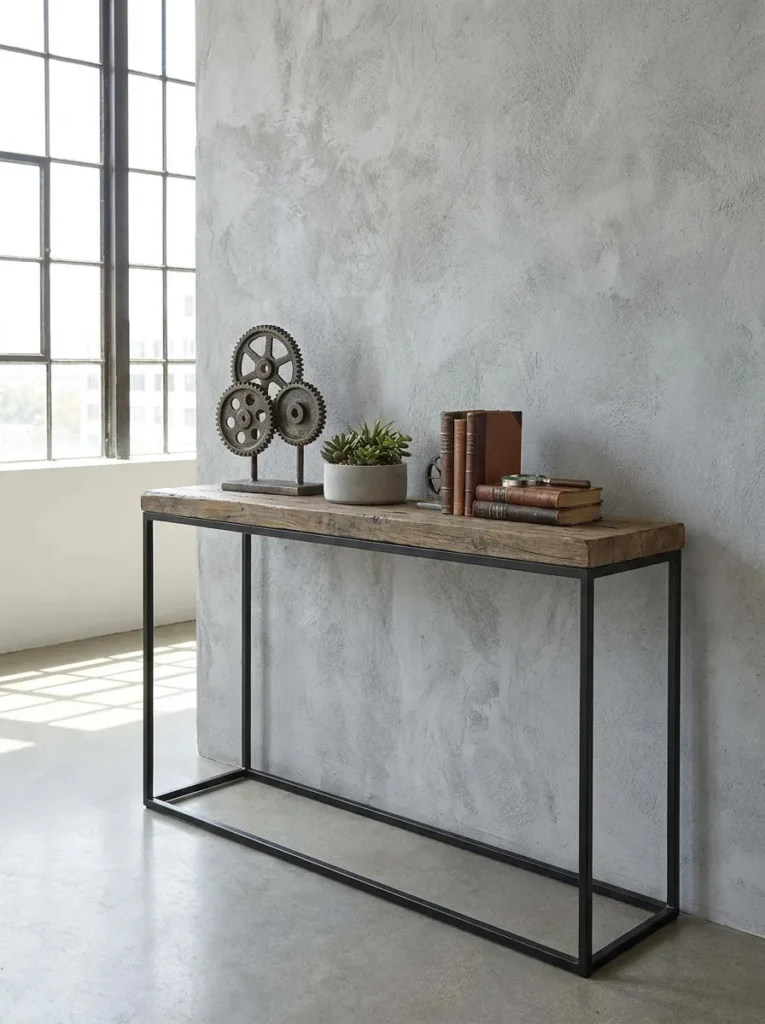
Plain uncharacterful hallways need visual depth that generic furniture can’t provide. Try an ultra-slim matte black iron frame topped with reclaimed live-edge wood: clean geometric metal lines against raw imperfect timber injects character and vertical structure into a blank wall without extending into the foot traffic path.
8. Behind the Sofa
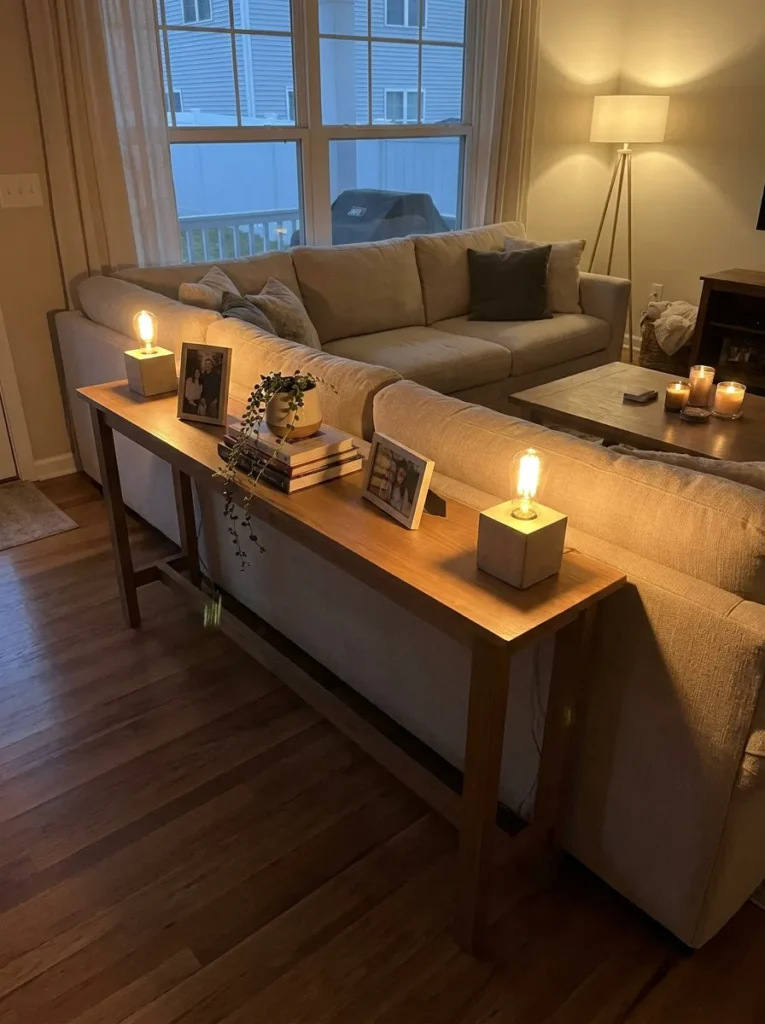
In tight open-concept apartments, wall placement can block doorways or vents. Position an ultra-narrow console parallel to the back of a floating couch, tabletop sitting one inch below the sofa cushions’ top line. A dedicated drop zone for drinks, books, or a small lamp — an empty void becomes a functional feature. For more entryway storage thinking, see our entryway storage guide.
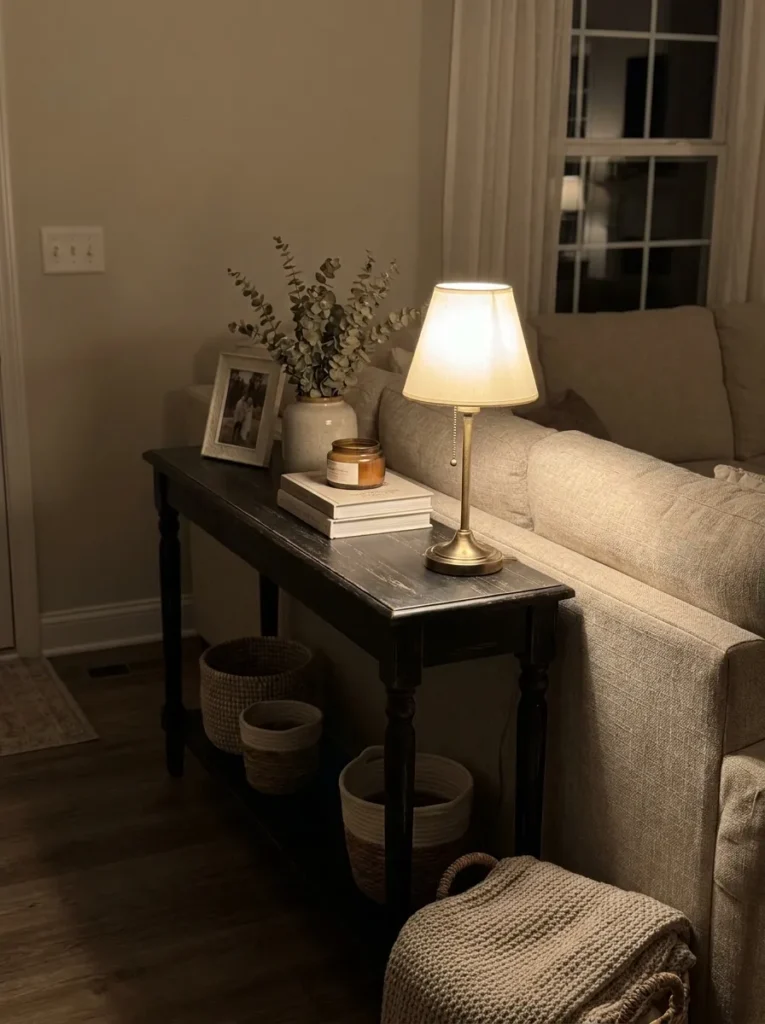
9. Thrifted Table Upgrades
No showroom budget needed: source a secondhand outdated wooden console, sand off the glossy varnish, wipe clean, and apply two coats of matte charcoal or deep olive chalk paint. Swap dated pulls for modern matte black bar hardware. A simple weekend DIY that modernizes the silhouette for a fraction of retail cost.
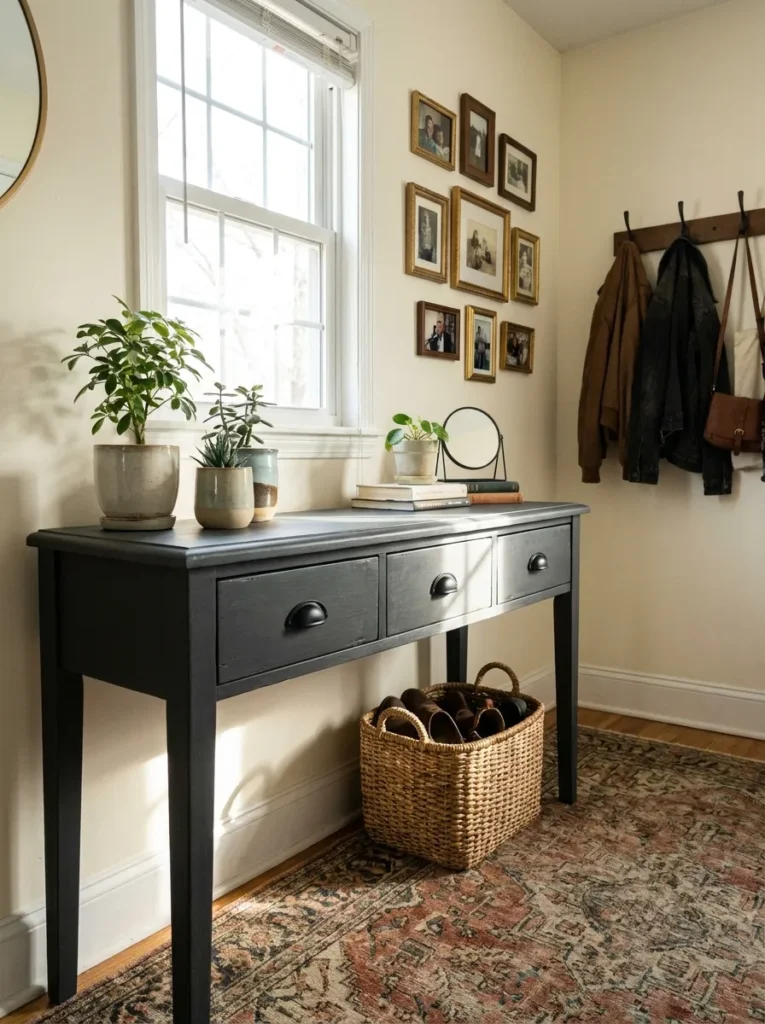
10. Catch-All Entryway Bowls
When household members scatter mail, sunglasses, receipts, and coins across every surface, you lack a boundary line. Place one intentional catch-all — a shallow marble, brass, or turned wood bowl, deep enough for a wallet and keys but small enough to limit accumulation — right by the doorway. Everyone drops pocket contents in on entry; the rest of the home’s surfaces stay clear.
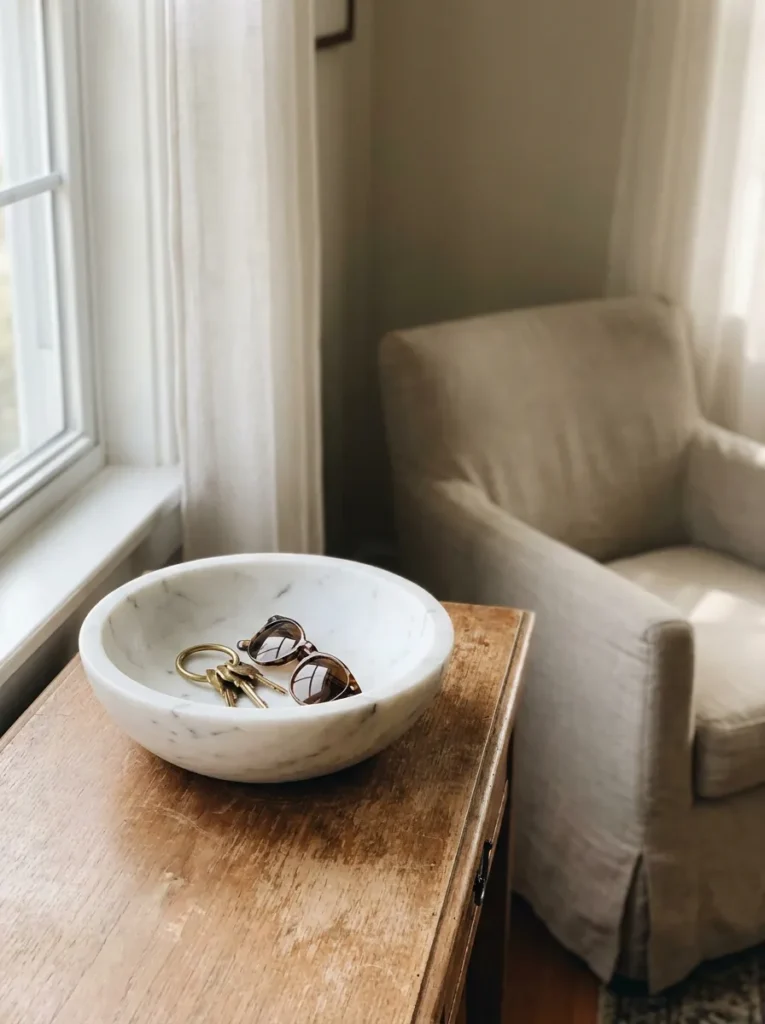
What Should Actually Stay on a Console?
A console works best serving both decoration and daily life. Limit permanent items to essentials: a catch-all tray, a lamp or vase, one decorative object reflecting your style. Everything else — mail, bags, receipts, chargers — gets hidden storage underneath or in drawers. When every item has a purpose, the entryway feels welcoming instead of chaotic.
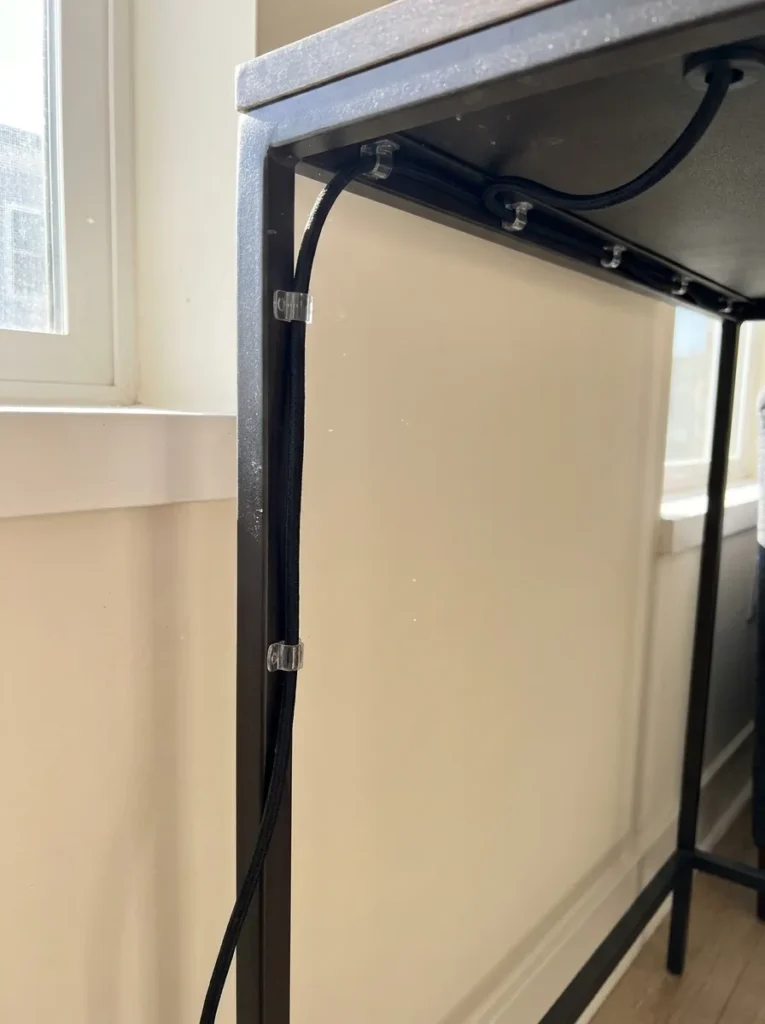
11. Hidden Wire Pathways
Even a beautifully styled tabletop looks messy with a lamp cord dangling to the baseboard outlet. Adhere clear cable clips or a self-adhesive J-channel raceway along the back of the rear table leg; route the lamp wire tightly inside, securing slack to the floor line. Power strips hide inside a cord management box tucked in an under-table basket. Technical mess, gone.
12. Renter-Friendly Styling
No drilling in a rental? Rely on vertical layering that rests on the floor: an ultra-slim console with a flush back edge sitting flat against the baseboards, plus a lightweight large framed art print leaning on the tabletop, its base anchored with heavy-duty adhesive strips. Architectural depth, zero wall damage.
13. Clear Acrylic Consoles
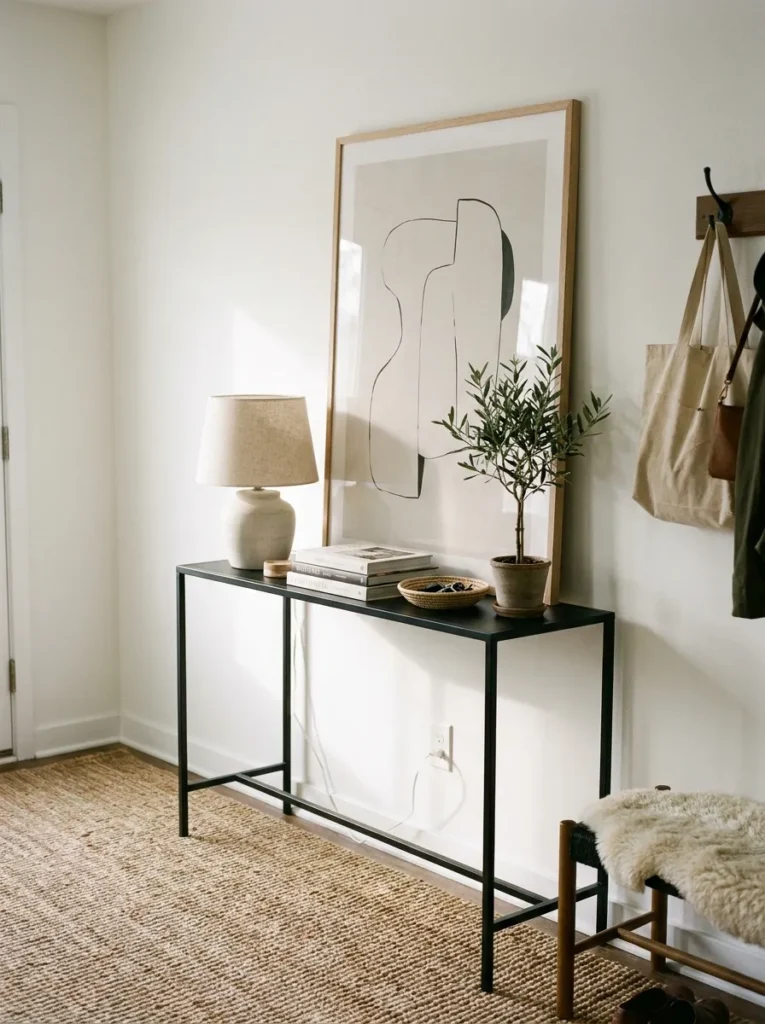
Exceptionally dark or narrow entries can feel blocked by dark solid wood or heavy metal. A clear glass or polished acrylic waterfall console has almost zero visual weight — you see straight through to the baseboards and flooring behind, so the walkway appears completely open, light, and airy.
14. Tucked Ottomans for Seating
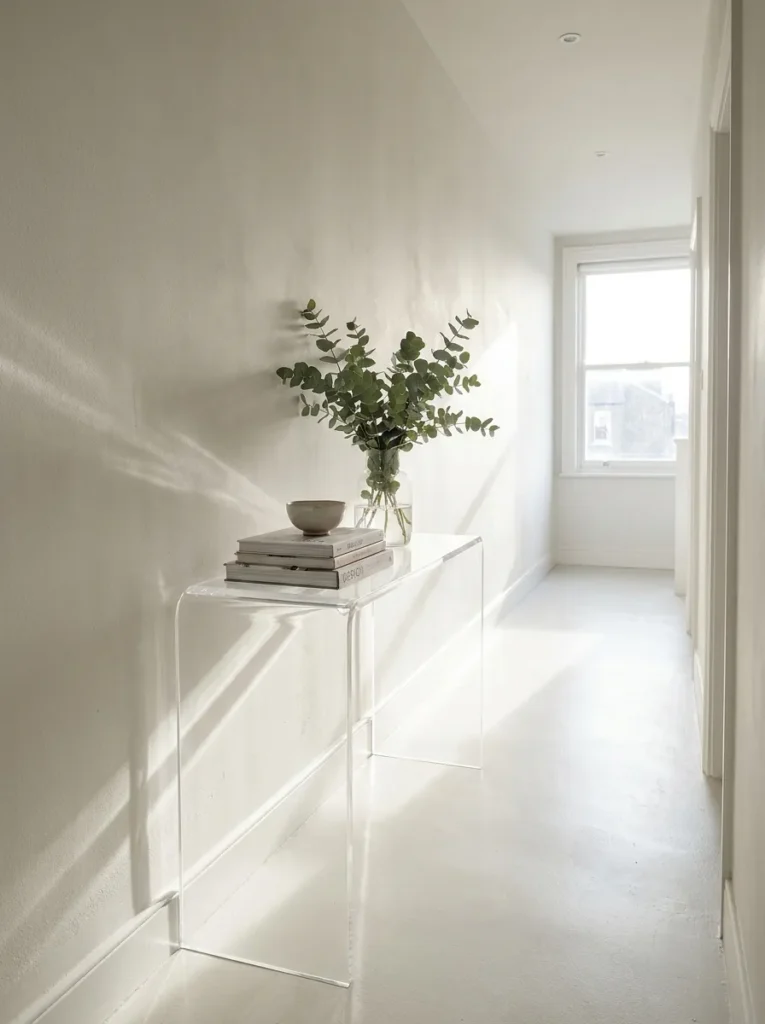
Entries need a sit-down spot for shoes, but a separate bench plus a console overcrowds small floor plans. Slide two small matching cylindrical boucle ottomans or structured stools into the empty space beneath the table deck: tucked away they sit flush and keep the traffic path clear; glide one out for instant comfortable seating.
15. Symmetrical Wall Sconces
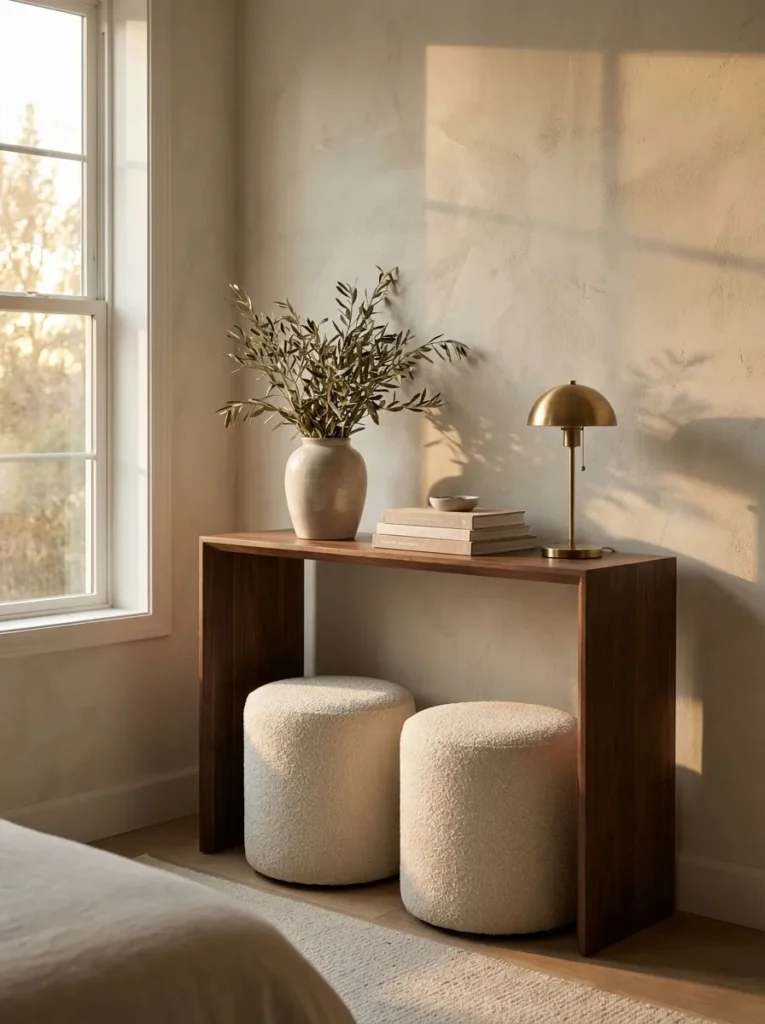
Bulky table lamps eat half a narrow console’s depth. Move lighting off the tabletop: mount two identical plug-in wall sconces symmetrically on either side of the central mirror at eye level, washing the entry in warm balanced glow. Wall-mounted lighting reclaims 100% of your surface area while framing the decor geometrically.
16. Stacked Books on the Lower Shelf
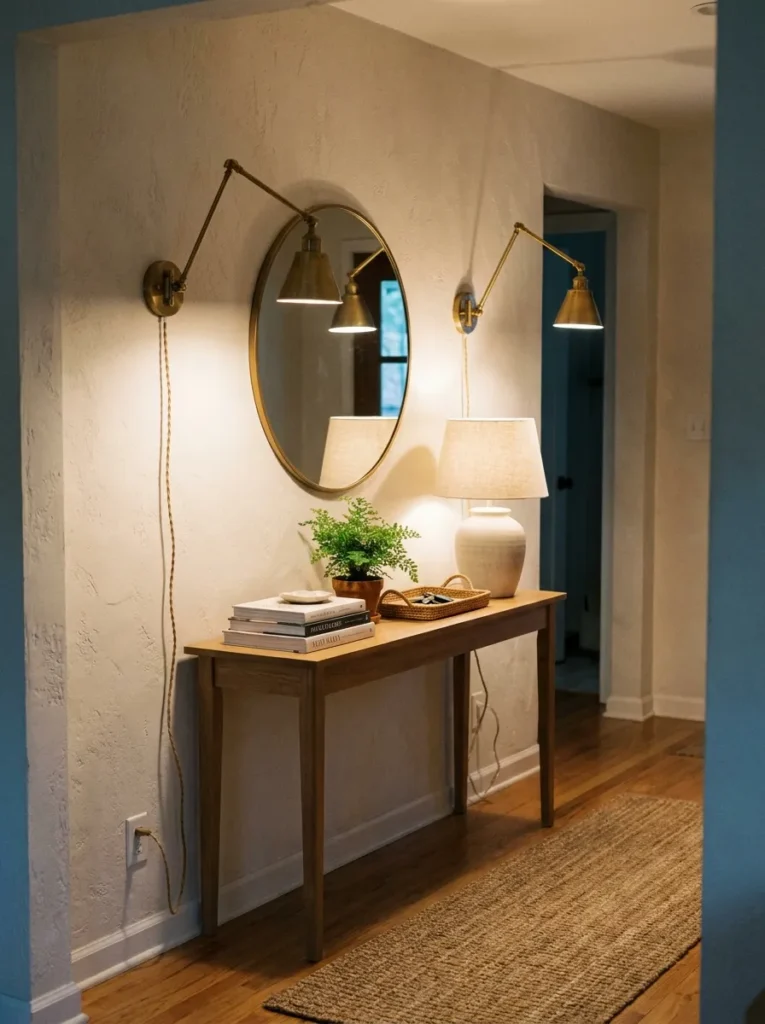
A bare lower shelf wastes texture and personality. Stack four or five large art, design, or travel books flat, grouped by spine color; top with a small heavy object like a brass geode or ceramic bowl. The horizontal layout grounds the furniture’s base while keeping the primary tabletop clear of paper clutter.
17. Tall Botanical Branches
On 8-to-10-inch-deep consoles, round bouquets spill over edges, block walkways, and tip when brushed. Use a slender tall cylindrical vase with just one or two long structural branches — fresh eucalyptus, dried palm spears, budding quince — reaching straight toward the ceiling. Organic movement and height with zero outward expansion into the traffic lane.
18. Matching Table-End Lamps
On longer consoles behind sofas or along living room walls, a single off-center lamp leaves the opposite end looking empty. Place two identical small-scale modern concrete or ceramic lamps on the outer edges — twin placement frames the console, anchors the horizontal axis, and diffuses light evenly across the seating area.
Choosing the Right Lamp Size
Oversized lamps overwhelm slim consoles; tiny ones disappear. Choose lamps roughly one-third the height of the mirror or artwork behind them. Slim ceramic, stone, or linen-shade lamps give soft lighting without taking over the tabletop.
19. Floating Consoles With Hidden Drawers
For the ultimate minimalist presentation, hide loose mail, pens, and passports completely: choose a wall-mounted floating ledge with a seamless handle-free integrated pull-out drawer. From the front it’s a clean block of floating timber; the hidden drawer sweeps daily clutter out of sight instantly, maintaining total visual silence in the entry.
Common Styling Mistakes
Filling every inch of the tabletop instead of leaving breathing room. Using accessories all the same height. Choosing artwork or mirrors much narrower than the console. Ignoring hidden storage and letting everyday clutter build. Forgetting lighting, which makes entries feel darker than they are. Even beautiful furniture feels unfinished when the styling is out of proportion.
Quick Answers
How deep should a console table be for a narrow hallway?
As slim as you can find — 8 to 12 inches is ideal for tight walkways. Floating ledges work even better since they free the floor plane entirely. Keep at least 30 inches of clear walking path in front of the table.
What size mirror goes above a console table?
Two-thirds to three-quarters of the console’s width, hung 6 to 8 inches above the tabletop. Oversized mirrors (up to 80% of the console length) create drama and reflect more light in dark corridors.
How do I style a console table without clutter?
Follow the designer’s formula: one tall anchor, one medium piece, one small accent — then leave empty surface visible. Give everything else (mail, chargers, clutter) hidden storage underneath or in drawers.
Affiliate Disclosure: As an Amazon Associate, I earn from qualifying purchases. If you click a link and buy, I may receive a small commission at no extra cost to you. Thank you for supporting my content!