An entryway has a difficult job: hold the things you reach for constantly without making the first room you see feel cluttered. Adding more storage isn’t always the answer — a row of hooks makes coats easy to grab, but twelve coats on those hooks makes the space look crowded. Storage only works when it makes items easier to manage without giving everything a permanent place in plain sight.
The better approach: decide which belongings deserve easy access and which belong behind a door, inside a drawer, or in a container. As a general rule, frequently used items should be accessible, while visually distracting or rarely used items should be contained or hidden.
The Rule: Accessibility vs. Visual Clutter
Before buying another cabinet, basket, or storage bench, look at what’s accumulating. Most of it falls into three groups: things you use every day, things you use occasionally, and things that never found a proper home.
Daily essentials deserve convenient storage — but that doesn’t mean exposed. A drawer for keys and sunglasses is as practical as an open tray; a closed shoe cabinet keeps everyday footwear within reach without turning the floor into a display. The goal is accessibility with visual quiet.
A useful way to decide: weigh how often you use an item against how disruptive it looks visible:
Everyday keys (daily, low impact) → keep accessible.
One everyday bag (daily, medium impact) → open hook or designated spot.
Several handbags (occasional, high impact) → closed or contained storage.
Everyday shoes (daily, high impact) → accessible but contained.
Mail and paperwork (daily, high impact) → drawer or concealed organizer.
Seasonal accessories (occasional, high impact) → hidden or secondary storage.
Frequency alone shouldn’t determine what stays visible. Something can be accessed daily and still benefit from being hidden.
What Should Stay Visible?
The best candidates for open storage: items you use frequently, can keep reasonably tidy, and benefit from arm’s reach.
Daily Essentials
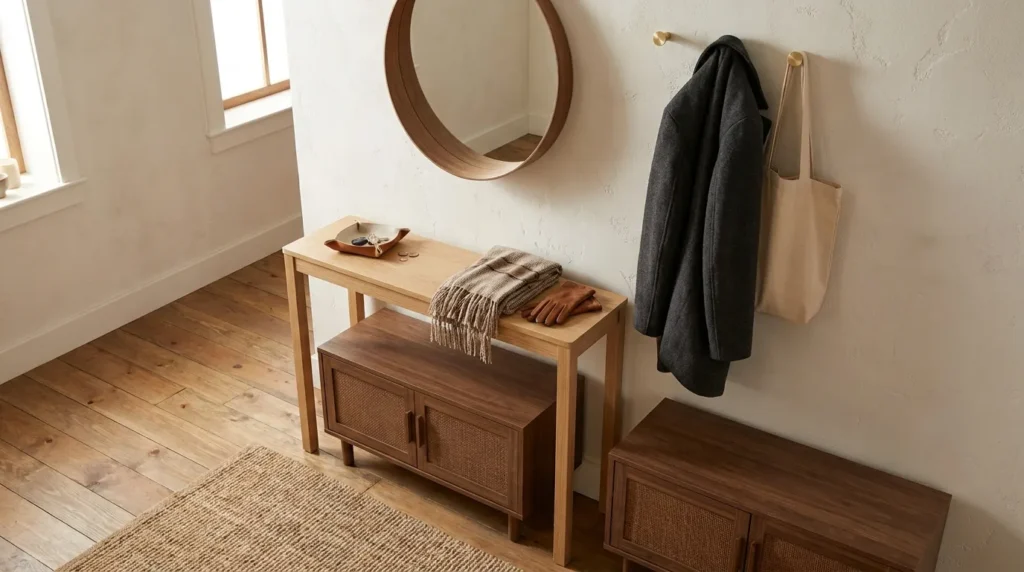
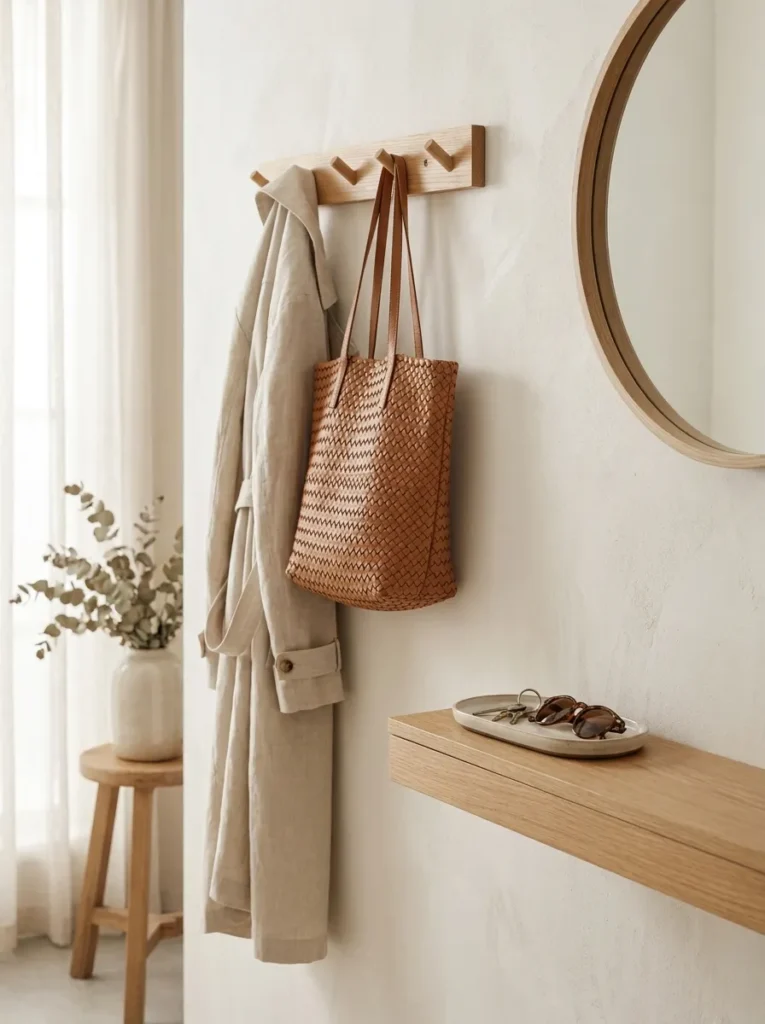
Keys, an everyday bag, a frequently worn jacket, an umbrella — hooks, a small tray, or one open shelf make these grabbable without opening a cabinet. The key word: limit the quantity. One or two coats on a hook look intentional; a dozen competing for the same wall never will.
Functional Pieces That Look Good
Some storage earns its visibility: a simple peg rail, woven basket, wooden bench, attractive catchall tray. They work when they have a defined purpose — not when they become the “drop anything here” zone. Same for decor: a mirror, small plant, or artwork stays visible because it contributes to the room.
Keep the Display Deliberate
A console with a key tray, a lamp, and one decorative object feels useful and lived-in. The same console with receipts, sunglasses, packages, mail, chargers, and three bags feels overwhelmed. Visible storage should feel selected, not accumulated.
What Should Be Hidden?
Excess Shoes
The pair you wear daily can stay accessible; every pair in the household doesn’t need the entryway floor. A closed shoe cabinet or designated shelf keeps footwear nearby without making it the room’s dominant feature.
Mail and Paperwork
A small drawer, concealed compartment, or file system near the entry keeps paperwork accessible without a permanent mail pile on the console.
Seasonal Accessories
Winter hats, gloves, heavy outerwear — keep only the current season’s items in prime spots; the rest moves to a closet or higher storage until needed.
Extra Bags
One frequently used bag on a hook is practical. Every reusable tote, backpack, and occasional handbag visible “just in case” is visual clutter. Group the rest in a drawer, cabinet, or single container.
Cleaning and Pet Supplies
Leashes, grooming supplies, cleaning products may live near the entrance, but they don’t need to star in the room’s presentation. A cabinet, drawer, or lidded basket keeps them close and quiet.
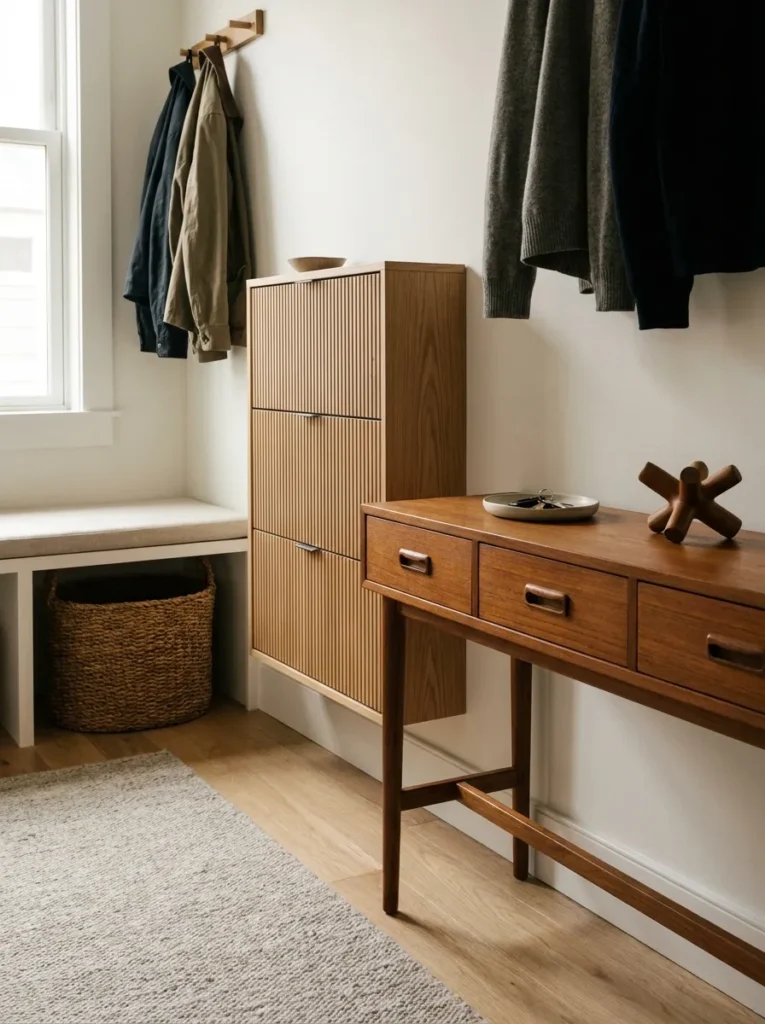
Open vs. Closed: Which Works Better?
Neither wins by default — it depends on the item. Open storage wins when speed and visibility help: hooks for coats, a shelf for the everyday bag, a tray for keys. Closed storage wins as quantities grow: a cabinet holds several pairs of shoes without a footwear exhibition; drawers swallow mail, sunglasses, spare keys.
A useful rule: if you need to see it to remember where it is, consider open storage. If seeing it makes the room look messy, consider closed. And there’s a middle ground — baskets, lidded containers, fabric bins keep frequently accessed items reachable while reducing visual noise.
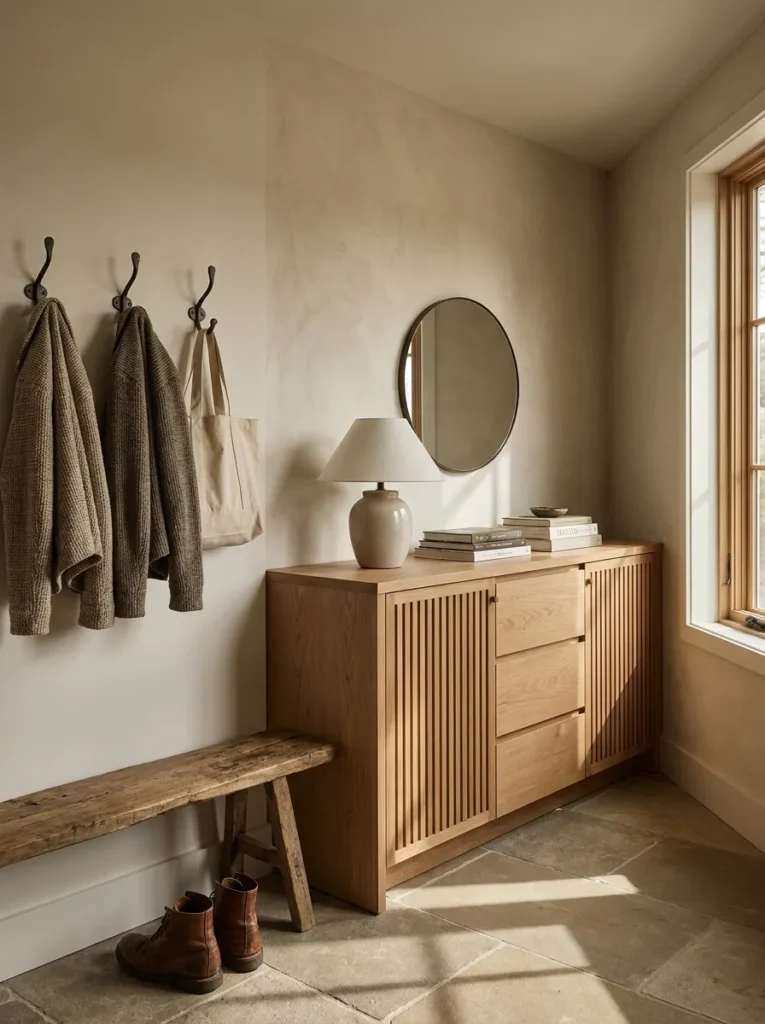
The Frequency Test
Unsure whether something earns a permanent spot? Don’t ask if it’s useful — almost everything is useful sometimes. Ask how often you actually use it:
Every day: highly accessible — open or convenient drawer.
Several times a week: nearby, but contained rather than displayed.
Occasionally: closed storage.
Seasonally: secondary storage if space is limited.
Rarely or never: it doesn’t need an entryway spot at all.
Organize around how you actually live, not everything you might possibly need.
Don’t Let Baskets Become the Clutter
One basket for scarves looks intentional; five baskets of unrelated items in different shapes and colors is a different kind of clutter. Before adding another, ask what goes inside. If the answer is “a little bit of everything,” the belongings need defined homes — not another container. Give each basket one specific category: winter accessories, reusable bags, pet supplies.
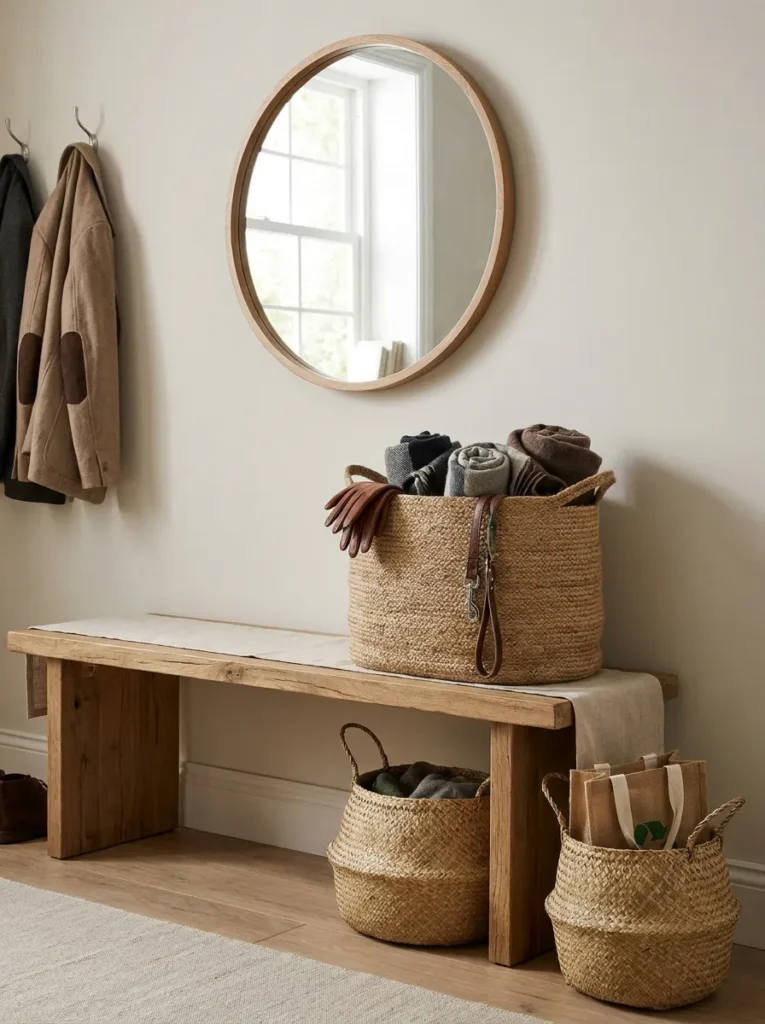
How Much Should Stay Visible?
You don’t need to hide everything — over-concealing makes the space feel controlled and inconvenient. Aim for a clear visual hierarchy: a mirror above the console, one small tray for daily essentials, one or two bags on hooks, a single category basket, closed storage for the rest. The number of visible objects should reflect the space’s size — a tiny entryway can handle three or four visible categories; a larger one still benefits from one focal point, not five storage walls.
Small Entryways: Discipline Matters More
Less room for visual separation means more discipline. Prioritize vertical space without crowding walls: a short row of hooks, a narrow shoe cabinet or closed bench, a small tray or shallow drawer for keys. The mistake: exposing everything because there’s no room to hide it. Limited floor space makes contained storage even more valuable.
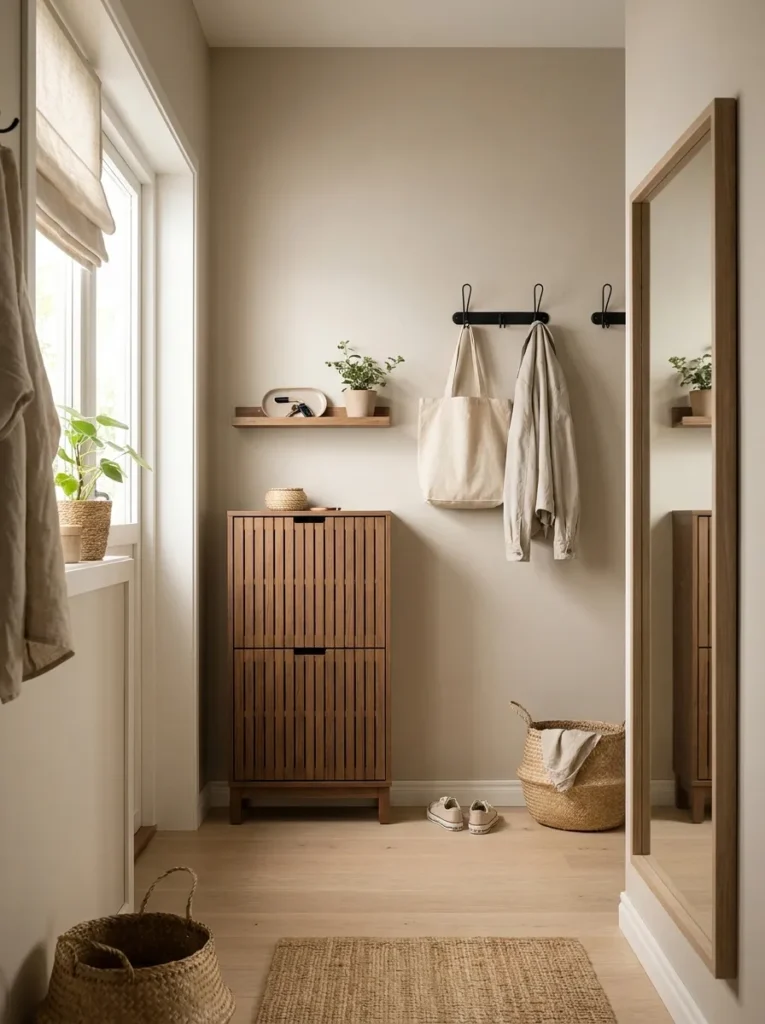
Before You Buy Another Organizer
When the entryway feels messy, the reflex is to buy storage. First, diagnose: shoes covering the floor → better shoe storage, not another decorative basket. Console buried in mail → a drawer or paper organizer. Coats overflowing the hooks → too many coats in the most visible spot. Ask three questions: What do I use every day? (easiest access) What creates the most visual clutter? (contain first) What doesn’t belong here? (move it out).
The goal isn’t making the entryway hold everything — it’s making what belongs there easy to find, easy to use, and easy to put away. Sizing the furniture right helps too: see our entryway bench size guide.
Quick Answers
What should I keep in my entryway?
Daily essentials (keys, one bag, one coat, everyday shoes), contained mail, and a few deliberate decorative pieces. Everything else — seasonal gear, excess shoes, extra bags — belongs in closed or secondary storage.
How do I hide clutter in a small entryway?
Closed shoe cabinet or storage bench, one drawer for mail and small items, lidded baskets by category. Contained storage matters more, not less, when space is tight.
Should entryway storage be open or closed?
Open for speed and visibility (hooks, key tray), closed for volume and visual calm (shoe cabinet, drawers). The rule: if you need to see it to find it, open; if seeing it looks messy, closed.
Affiliate Disclosure: As an Amazon Associate, I earn from qualifying purchases. If you click a link and buy, I may receive a small commission at no extra cost to you. Thank you for supporting my content!