Introduction
Outdoor fairy garden ideas have a way of changing how a space feels without changing much at all. A small corner can suddenly feel thoughtful, and a quiet detail can make the whole yard feel alive.
The mistake most people make is trying to fill every space — more decor, more color, more elements. But real magic feels subtle. It feels natural. And it leaves room to breathe.
These nine ideas are simple, budget-friendly, and built around a calm, minimalist approach. If you are short on space, start with a fairy garden in a pot — a complete little world fits inside one container. Shady corners work beautifully too, with the right shade-tolerant plants, and most of these builds lean on recycled or eco-friendly materials you may already have around the house. To dress up the edges, a few seasonal spring planters tie the whole look together.
1. A Stone Path That Quietly Guides the Eye
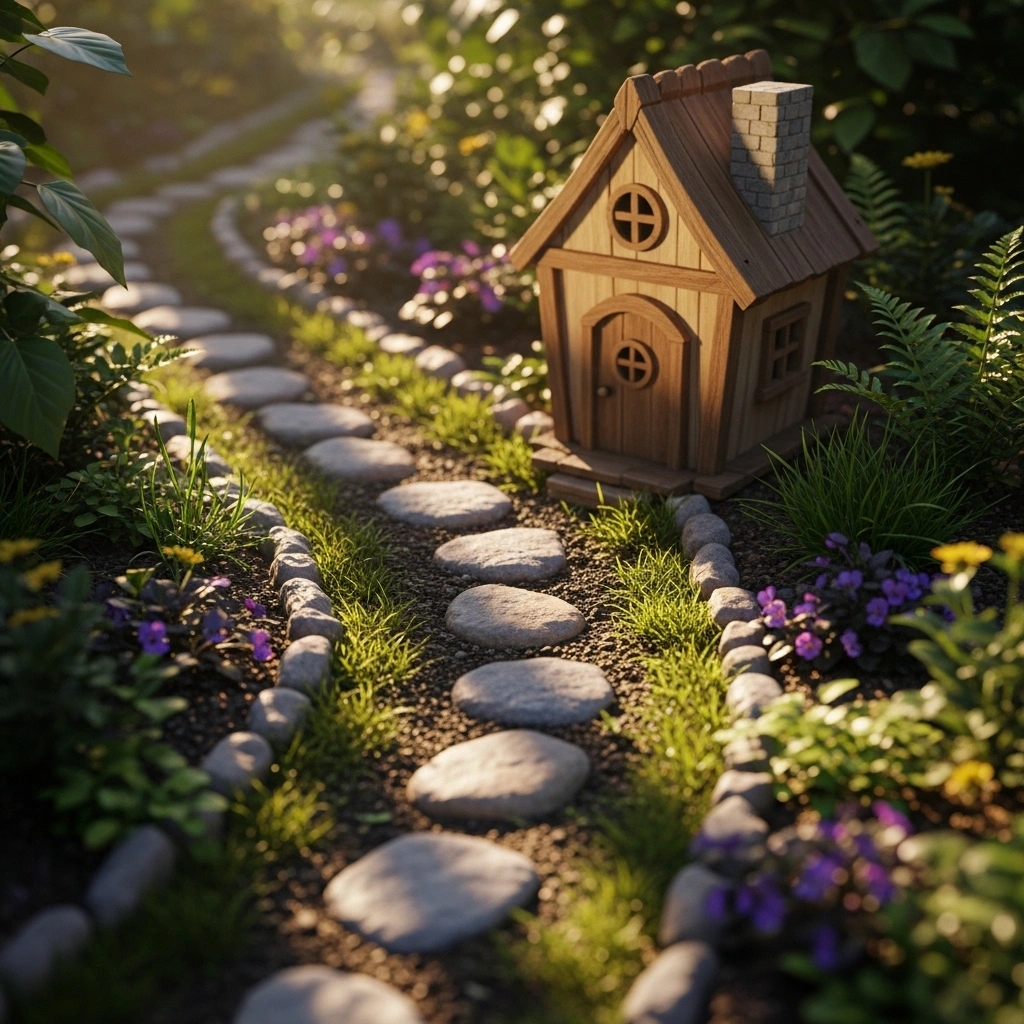
A well-placed path can completely change how a fairy garden feels.
Rather than scattering pieces at random, give the eye somewhere to go. A slightly uneven stone path adds movement and a hint of mystery, as though it leads somewhere hidden.
Place a small fairy house for garden at the end of the path. Keep the surroundings simple so the house holds the focus.
2. A DIY Fairy House That Blends Into the Garden
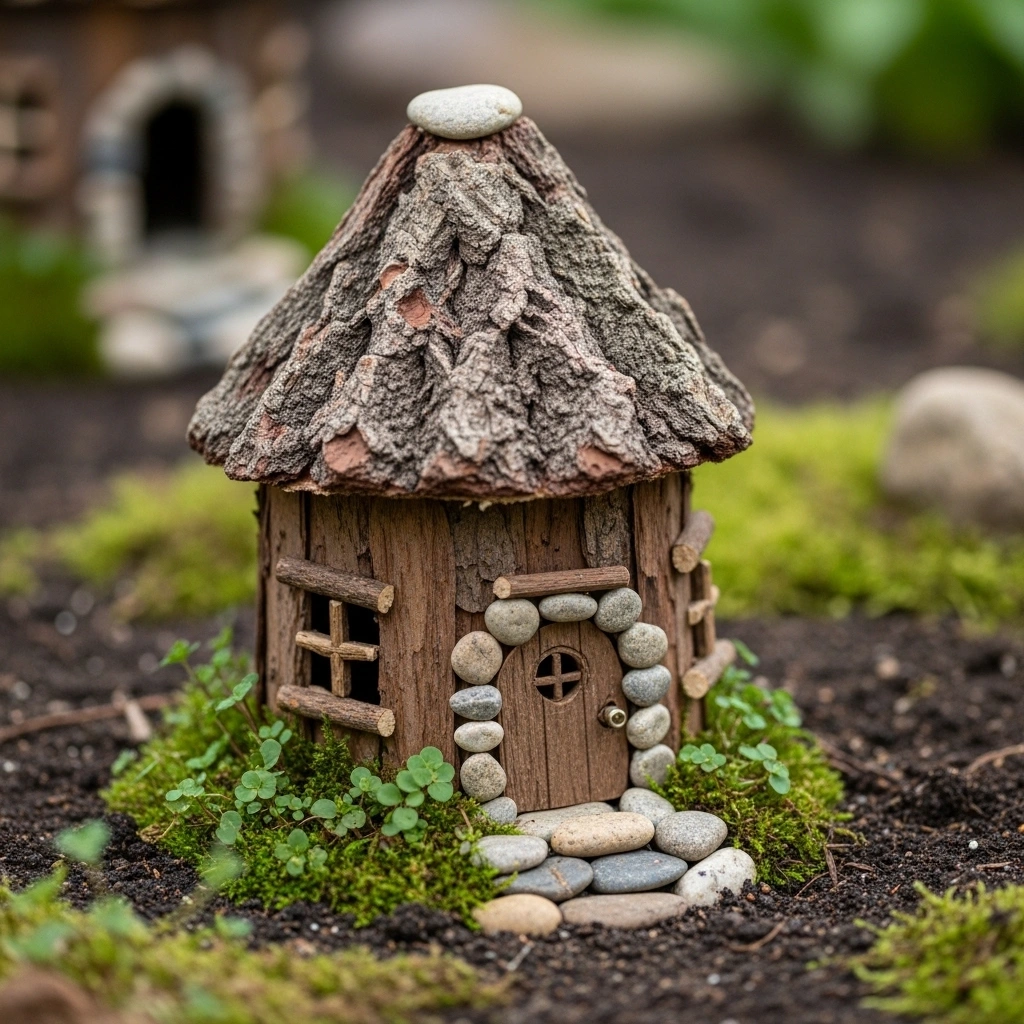
The most beautiful handmade houses do not look handmade at first glance.
Bark, twigs, and rough stones come together into a little house that looks like it grew right out of the ground. Small imperfections in shape and texture only make it more believable.
Keep the area around it simple so the house becomes the quiet focal point.
3. A Tiny Pot Fairy Garden for Small Spaces
You do not need a big yard to make something feel complete.
A single pot can hold an entire scene. One plant, one path, and one focal piece is enough for a balanced, charming composition.
Keep it minimal — the container itself does half the decorating work for you.
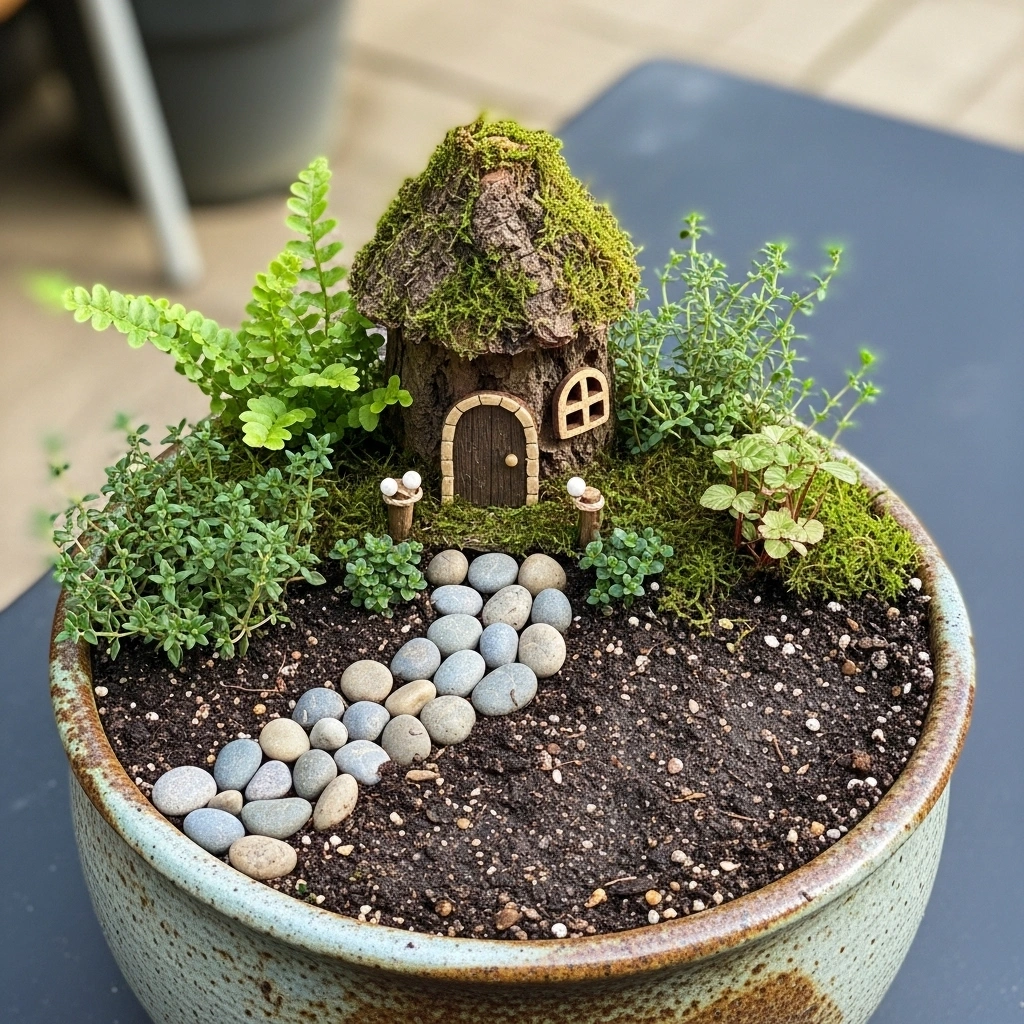
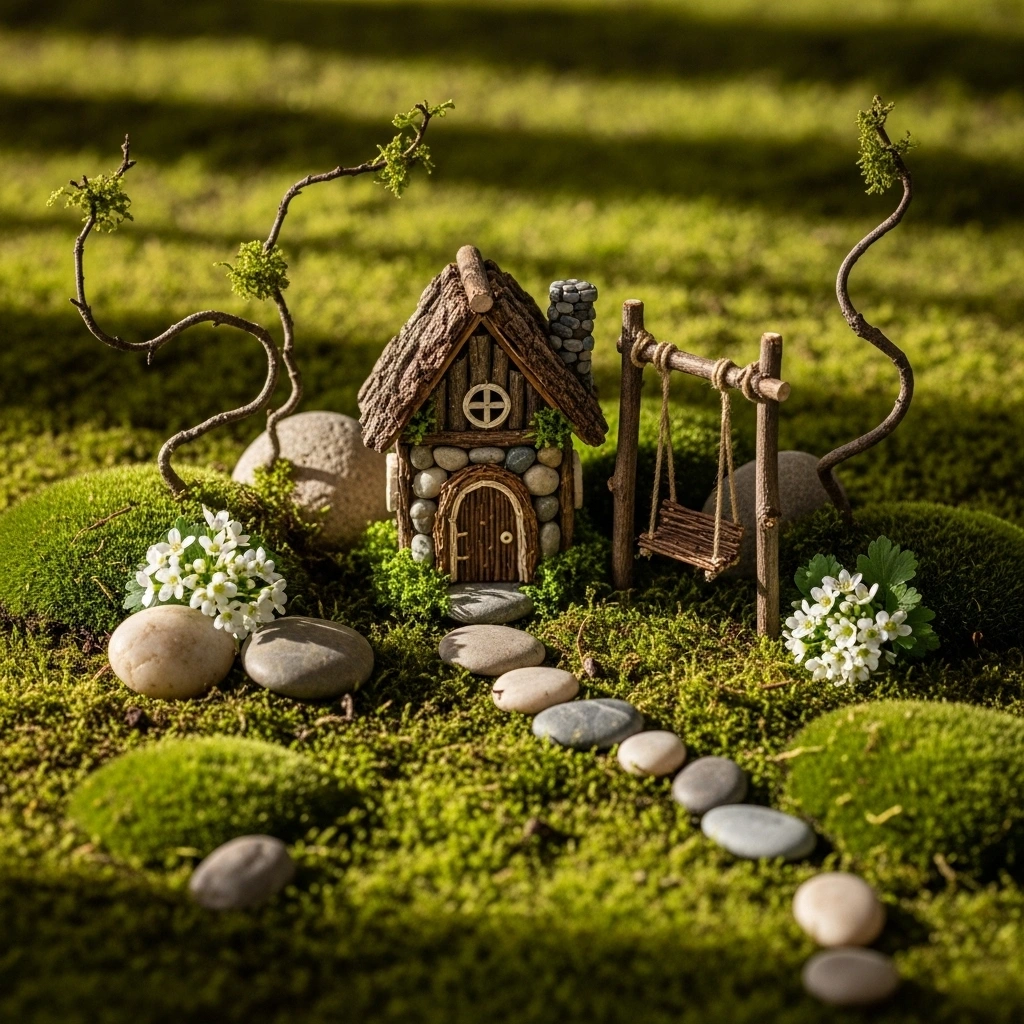
4. A Moss-Covered Fairy Garden
Moss softens everything it touches.
It smooths sharp edges and creates a calm, grounded feeling that is hard to get from gravel or mulch alone.
Keep the layout simple and let the texture do the work.
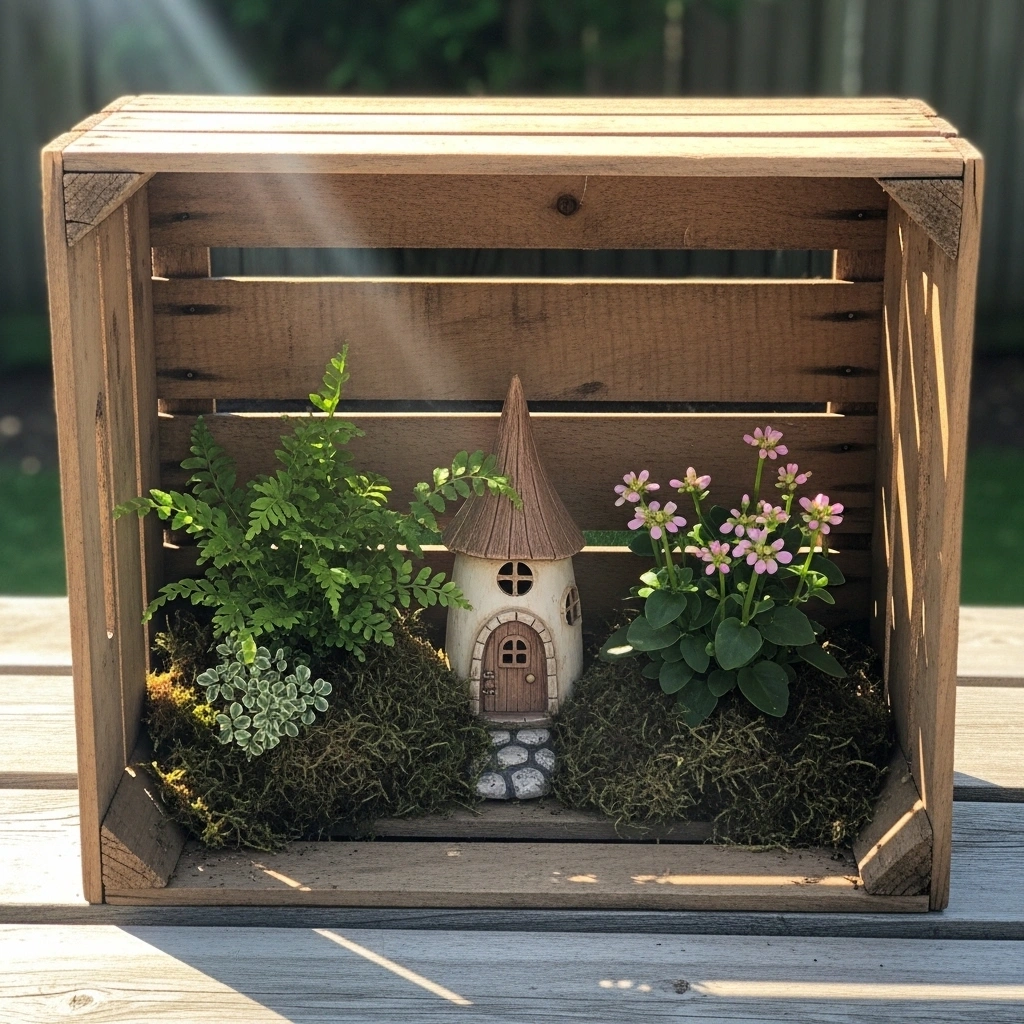
5. A Wooden Crate Garden
Some fairy gardens feel more intentional with a simple base.
A wooden crate frames the scene naturally. It adds structure while keeping the overall look light and uncluttered.
Do not overcrowd it — a few elements with breathing room is all it needs.
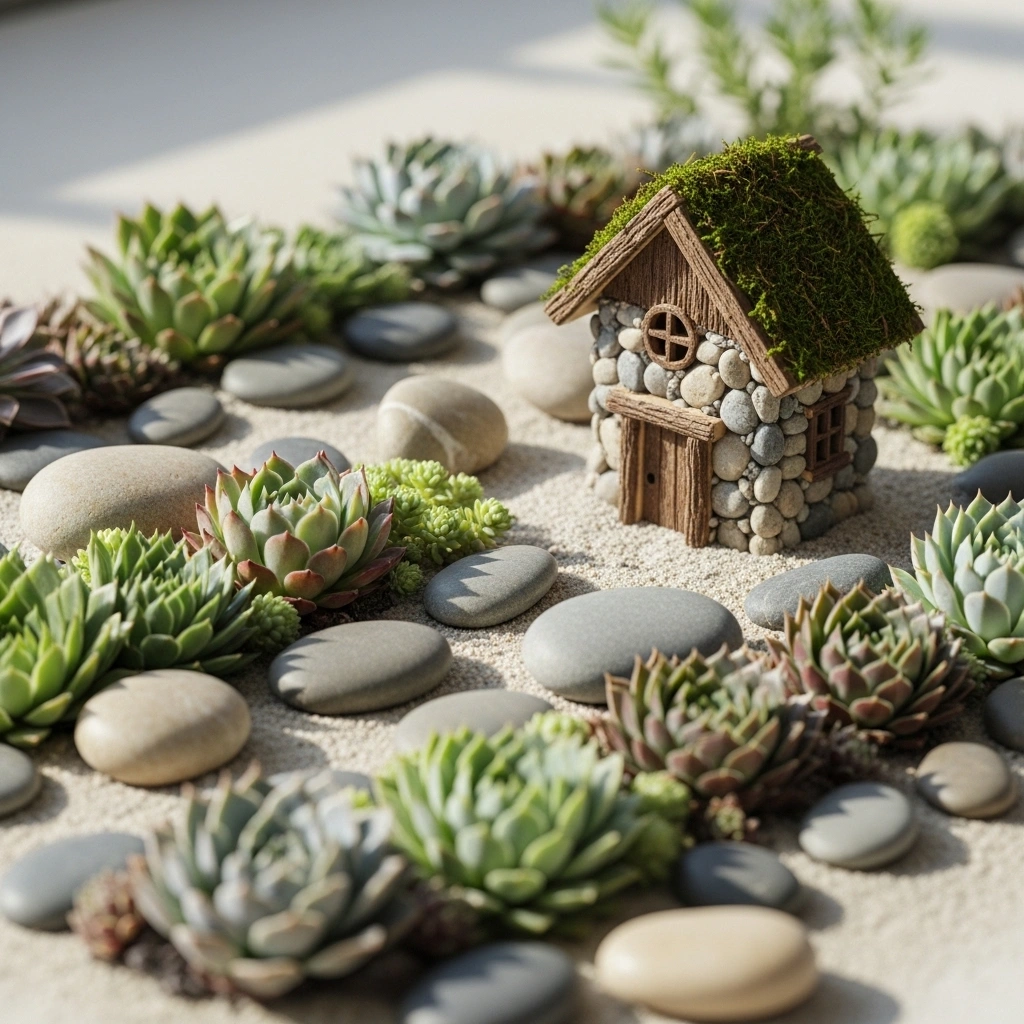
6. Pebbles and Succulents for a Modern Look
Not every fairy garden has to look rustic.
Pebbles and succulents give a cleaner, more modern feel that is still unmistakably magical. The look is calm, fresh, and easy to maintain.
Keep the spacing intentional and uncluttered.
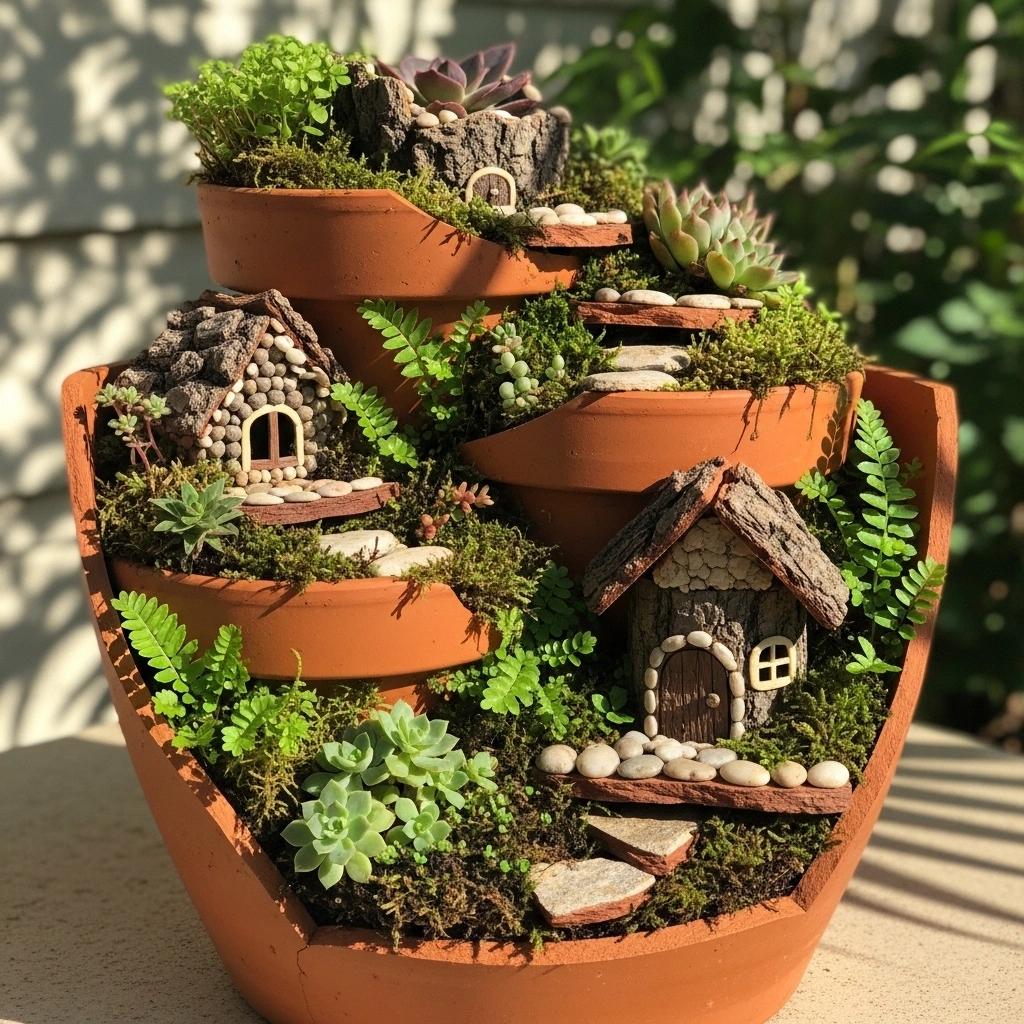
7. A Broken Pot Garden
A broken pot does not belong in the trash.
Layer the pieces to create depth and movement — the cracks and edges become part of the design instead of flaws to hide.
Let every chip and edge stay visible. That is where the character lives.
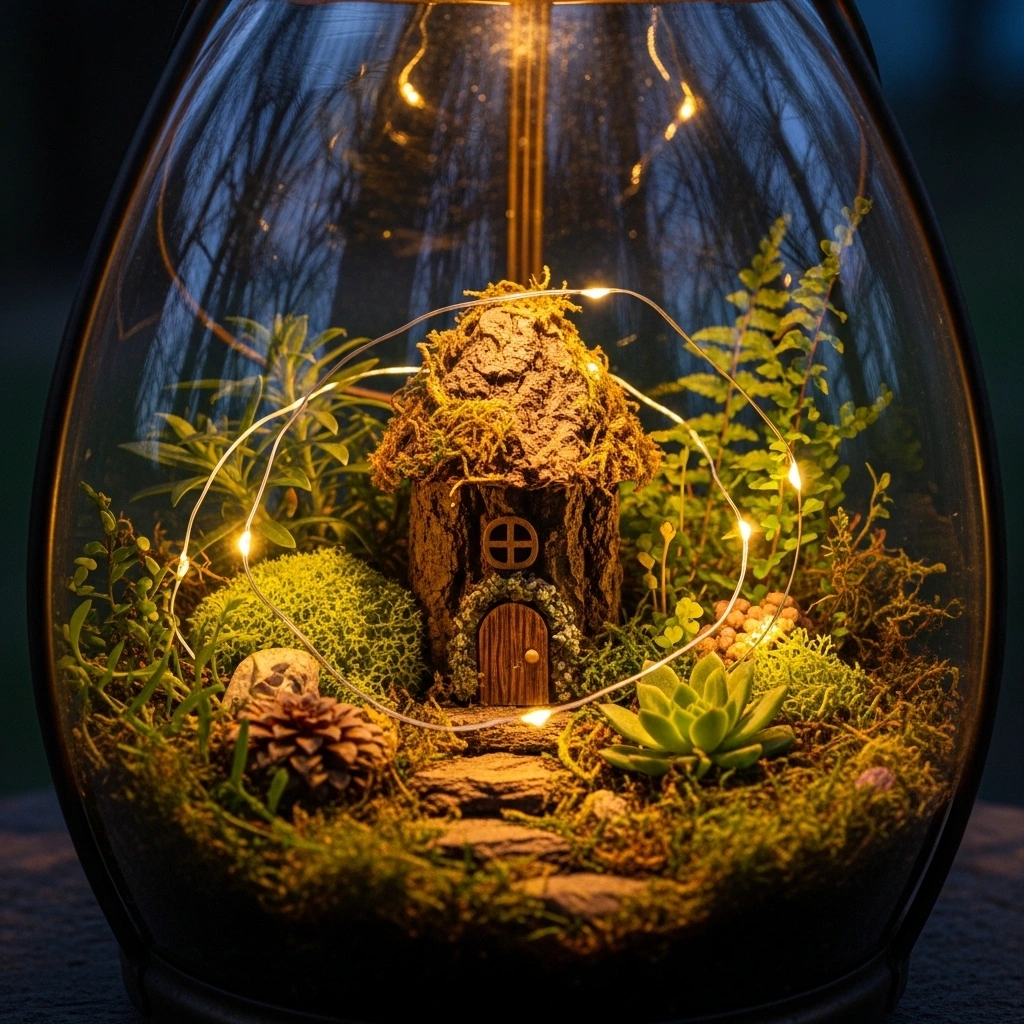
8. A Lantern Fairy Garden for Nighttime Magic
Light changes everything.
A lantern setup gives a soft glow that makes the garden feel magical after sunset. Subtle by day, completely transformed by night.
Keep the light warm and minimal — a little goes a long way.
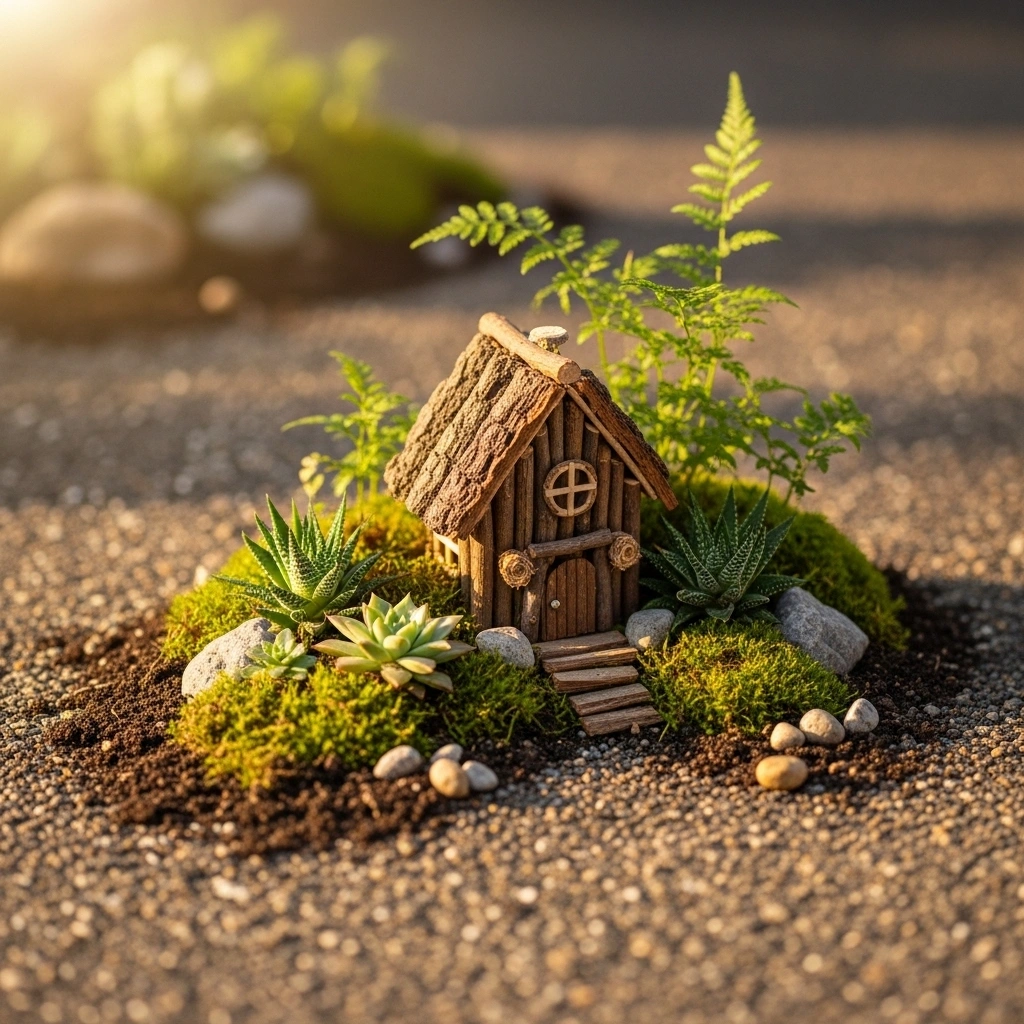
9. A Quiet, Minimal Fairy Corner
Sometimes the strongest ideas are the simplest.
One corner, one focal point, and room for the eye to rest. It feels calm and intentional rather than staged.
Leave space. That is where the magic builds.
Quick Answers
What do I need to start an outdoor fairy garden?
Less than you would think: a spot or container with drainage, potting soil, a small house or focal piece, natural materials like stones, moss, and twigs, and plants suited to your light. Begin with three to five elements — you can always add more later.
What items look best in a fairy garden?
Tiny houses, pebble or gravel paths, miniature fences or bridges, small lanterns, and a living ground cover like moss or creeping thyme. Mixing a few crafted pieces with natural materials keeps it from looking like a toy set.
How do I make my fairy garden last outdoors?
Choose weather-resistant pieces like resin houses or sealed wood, or lean on natural materials that age gracefully. Make sure water can drain, and place the garden somewhere sheltered from harsh downpours. Bring fragile decorations inside for the winter.
What plants work well in a fairy garden?
Moss, sedum, small succulents, creeping thyme, dwarf mondo grass, and tiny ferns all stay in scale. For shade, miniature hostas and ferns thrive; for sun, succulents and thyme handle the heat well.
Conclusion
The best outdoor fairy garden ideas do not try to impress — they create a feeling.
A quiet path. A small detail. A corner that feels slightly different from the rest of your yard.
Start small, keep it simple, and let it grow naturally.
Because when a garden feels real…
That is when it becomes unforgettable.