
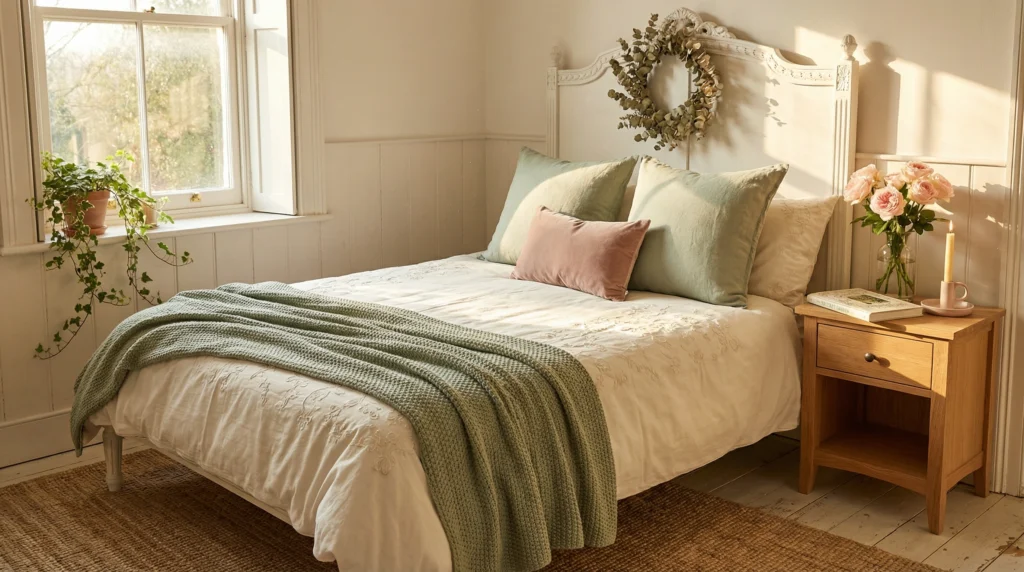
Spring cottage bedroom ideas are having a real moment — and for good reason. There is something about a bedroom that feels like a countryside house with the window cracked open and something blooming just outside that makes ordinary days feel softer. The trick is balance: too much floral and the room feels cluttered, too rustic and it feels like a costume. Done well, it is warm, layered, and genuinely restful. These nine ideas walk you through the whole look, from colour and bedding to the small finishing touches that make it sing. If you are planning a broader seasonal update, they pair naturally with a full spring bedroom refresh; the bedside details also work beautifully alongside these spring nightstand styling ideas, and if you love the softer side of the palette, the pastel spring bedroom ideas offer even more gentle colour inspiration.
1. Start With This Colour Combination
Most cottage bedrooms go wrong before a single piece of furniture moves — the colour is off. Too pink and it reads juvenile; too green and it reads cold; too white and it reads stark. The combination that actually creates the cottage feeling balances all three: muted, nature-inspired tones in a ratio where each colour looks more beautiful because of the ones beside it.
Think dusty blush rose instead of bright pink, warm sage instead of emerald, vintage cream instead of stark white. Then ground the whole palette with warm natural wood — an oak bed frame, a wood-topped nightstand, a woven rattan mirror — so it has weight and never tips into sweetness.
Choose these muted tones and your grounding woods before you touch anything else. It is the single most important decision in the room.
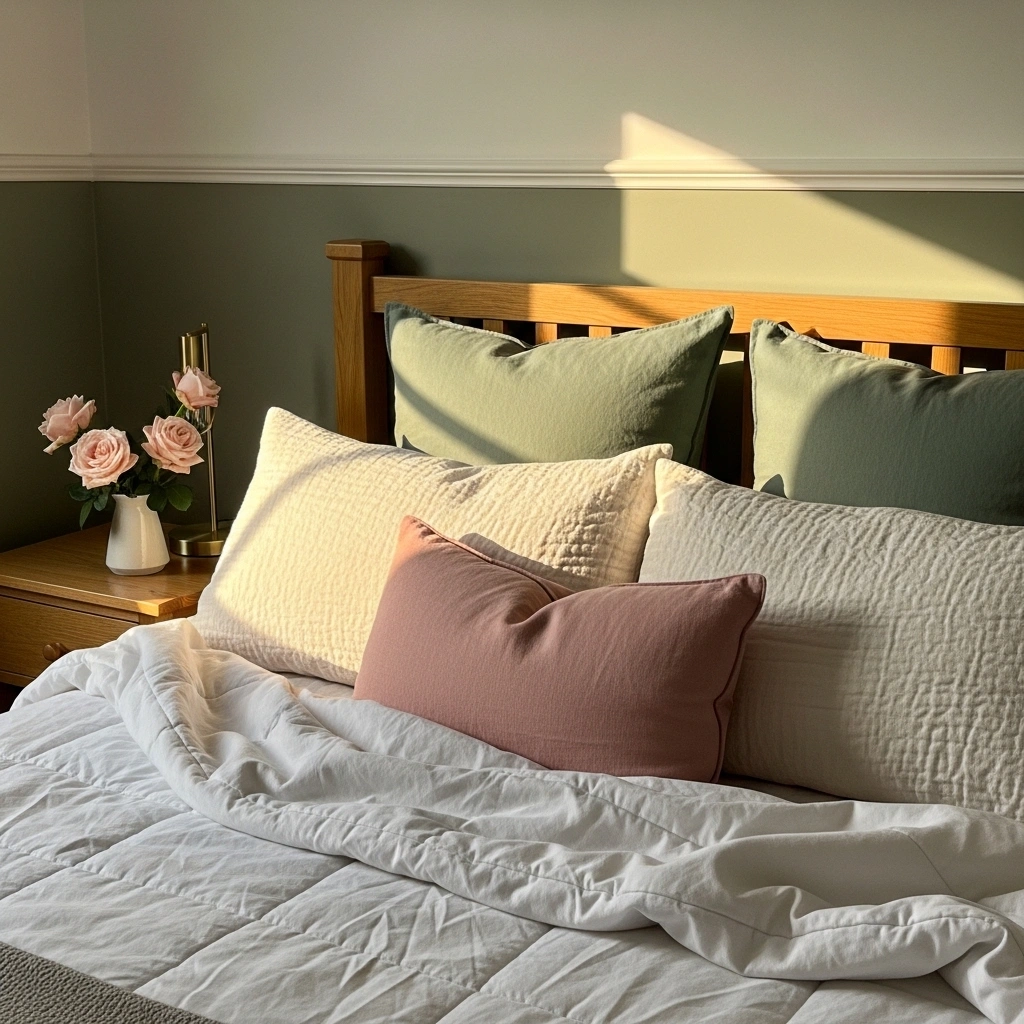
2. Layer Your Bedding Until the Bed Looks Irresistible
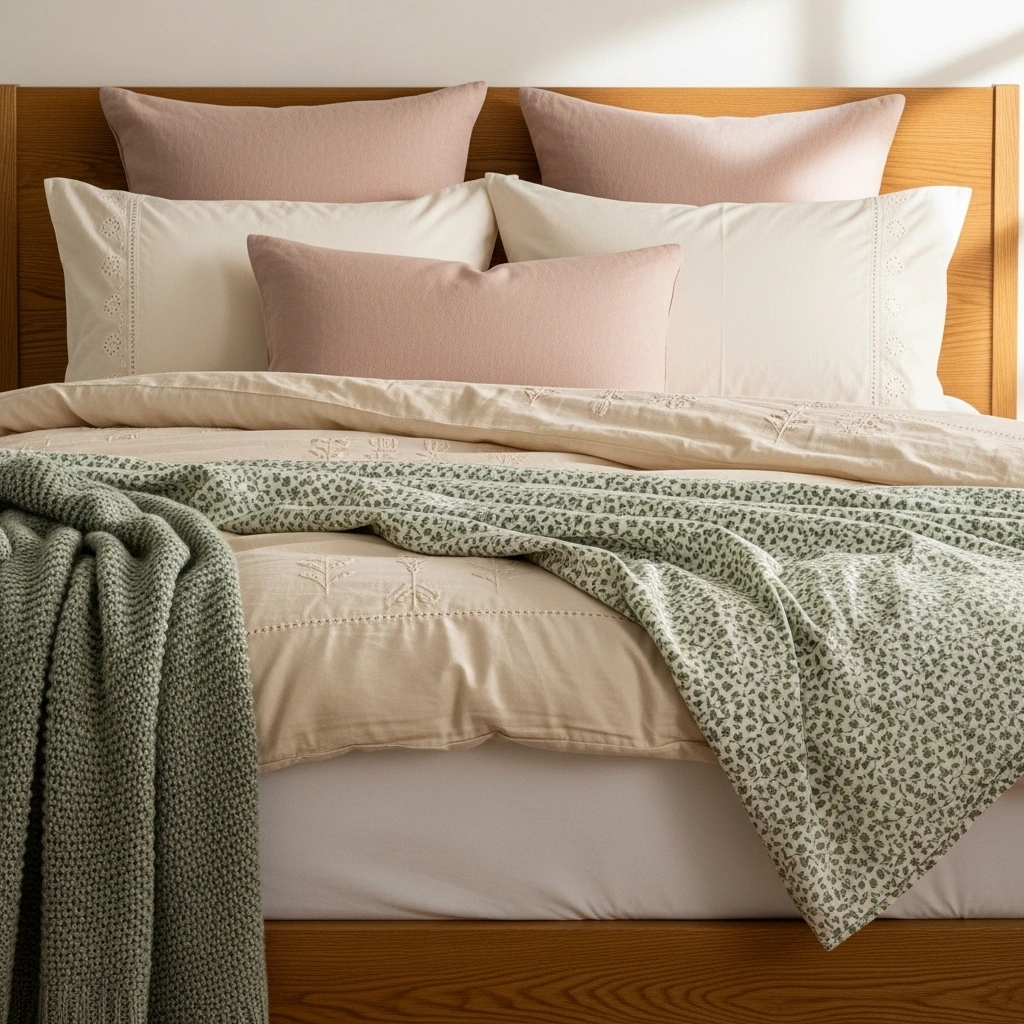
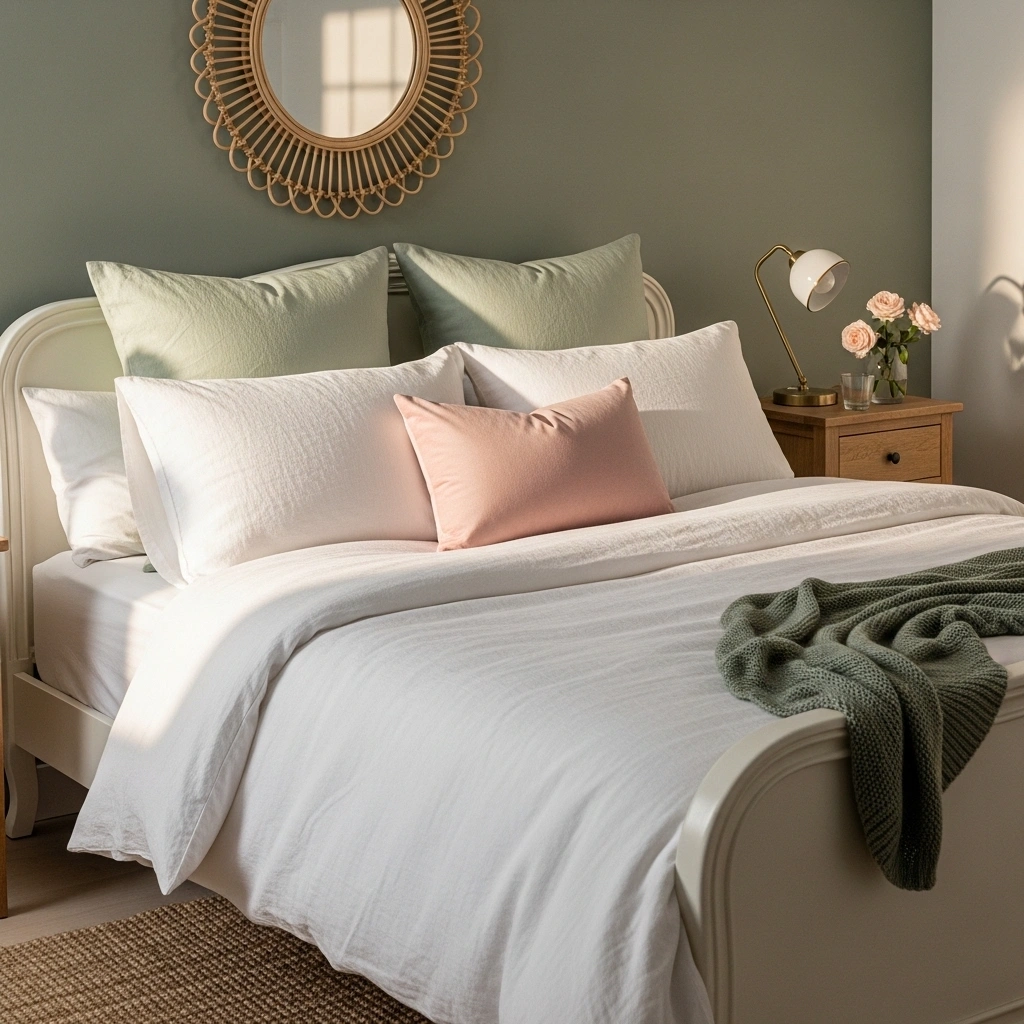
A cottage bed is not made, it is built — layer by layer, texture by texture. Start with a white or cream cotton base (fitted sheet and pillowcases), add a quilted or embroidered duvet for soft surface texture, fold a lightweight floral or botanical coverlet across the lower third, and finish with a casually draped sage or blush throw on one corner.
Mixing three slightly different whites — a bright white sheet, a warm cream duvet, a vintage-white embroidered pillowcase — adds a subtle tonal variety that looks far more interesting than one flat white. And keep the pillows slightly imperfect: one tilted, one throw at a natural angle. That lived-in looseness is what separates a cottage bed from a showroom one.
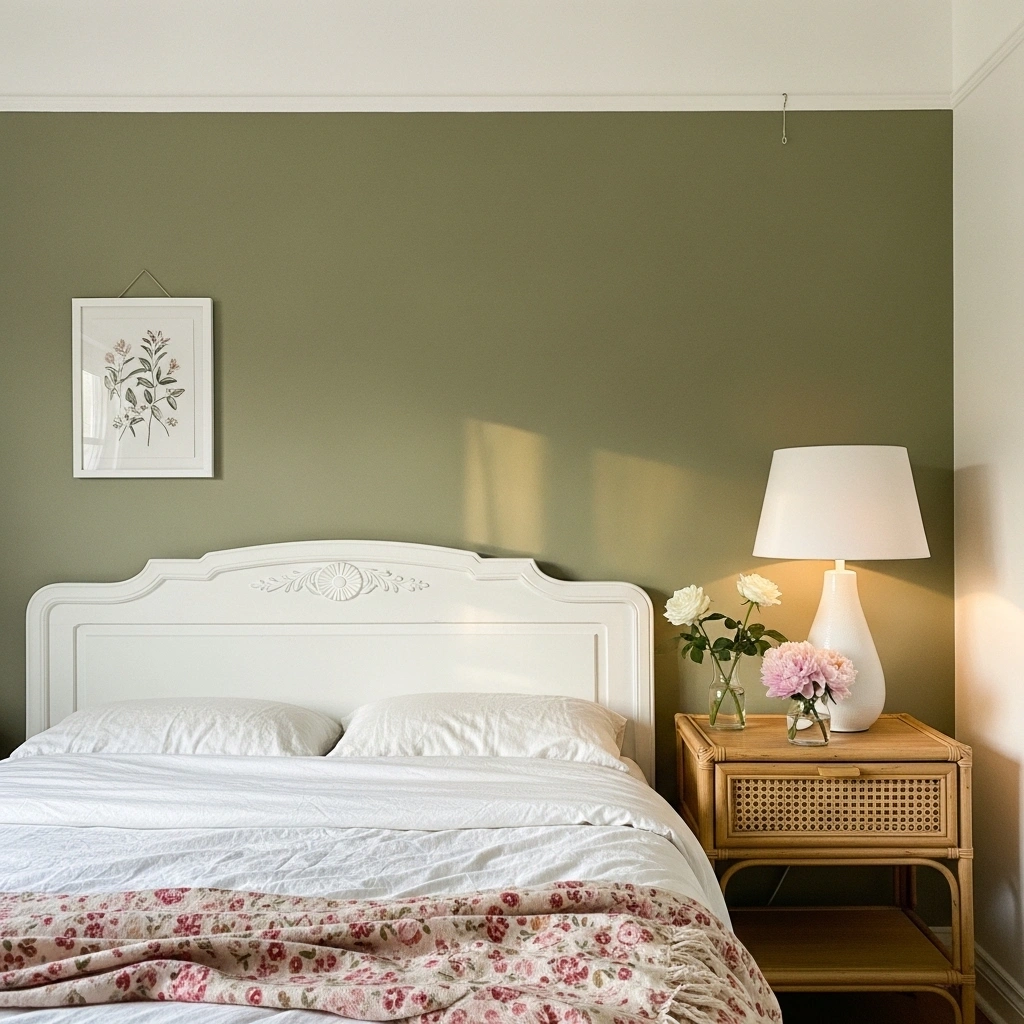
3. Paint One Wall Sage Green
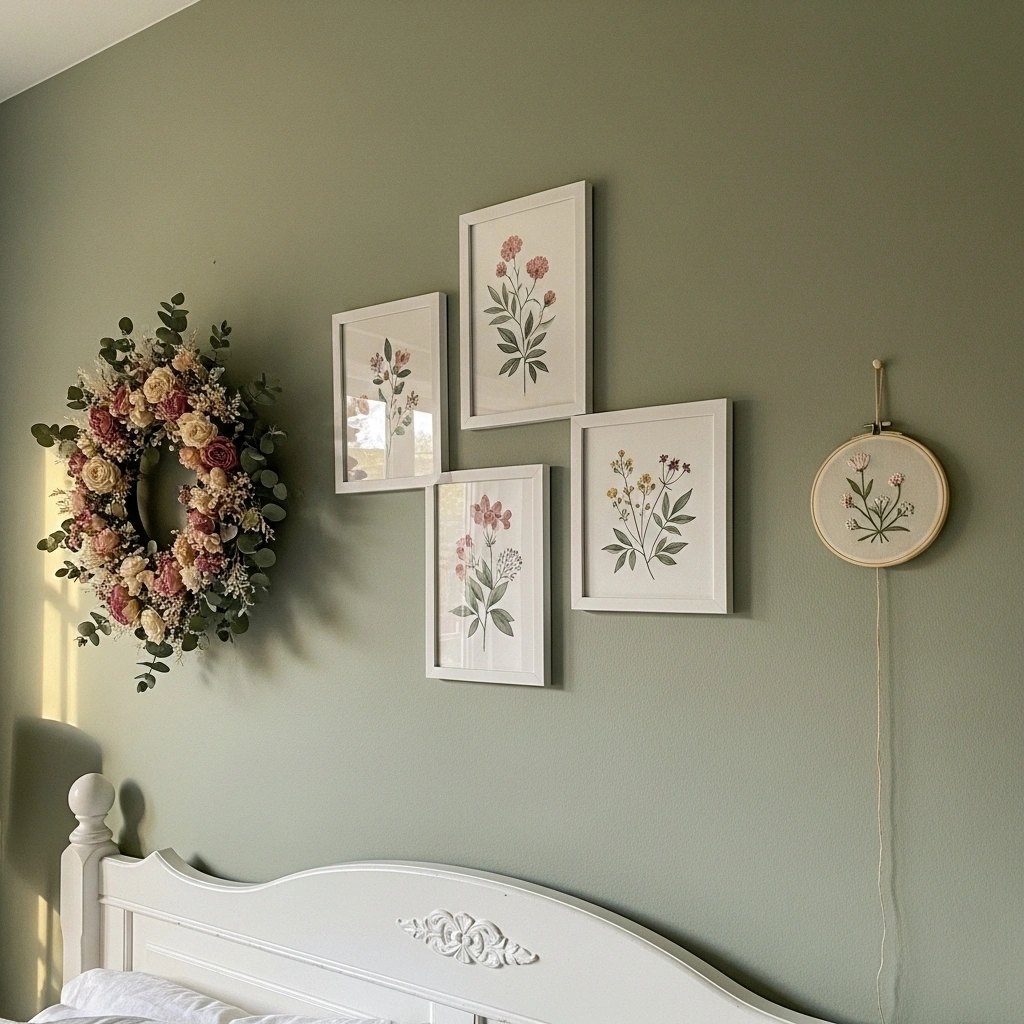
If you do one thing, do this. A single sage green wall — ideally behind the headboard — is the most transformative and most affordable change you can make. It brings the garden indoors, makes white bedding look crisper, warms up wood furniture, and gives blush accents something sophisticated to play against.
One painted wall beats four: the contrast with the remaining cream or white walls creates the depth and architectural interest a cottage room needs. And mind the undertone — warm sage with a hint of grey or brown reads cottage; cool sage with a blue cast reads contemporary.
4. Let Florals Be the Hero — Just One of Them
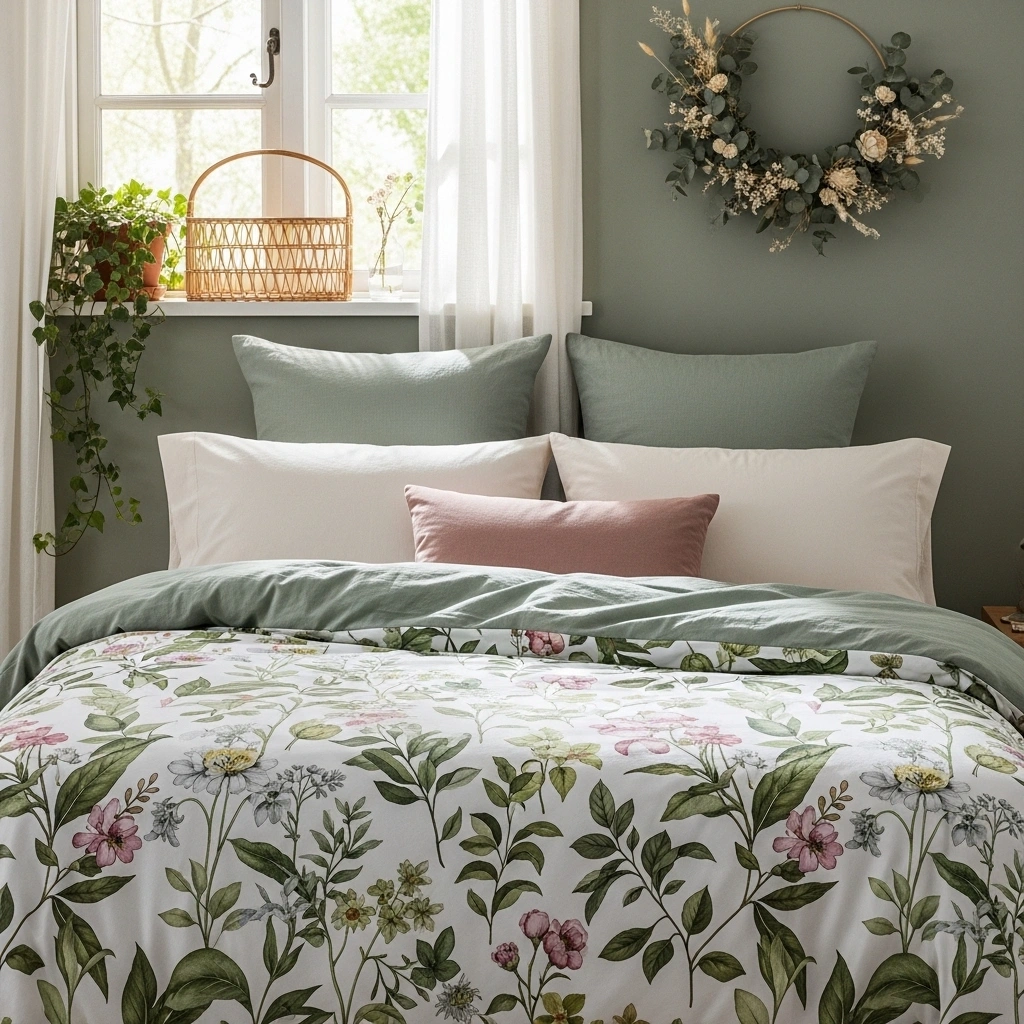
Florals are the soul of the cottage look, but restraint is everything. Choose one large-scale botanical pattern as the hero — a duvet cover, a pair of curtains, or one big piece of art — and surround it with plain companions in the same palette. A floral duvet with plain sage euro pillows and cream pillowcases, for instance. A small-scale gingham or vintage chintz can work as a quiet second pattern as long as the colours match.
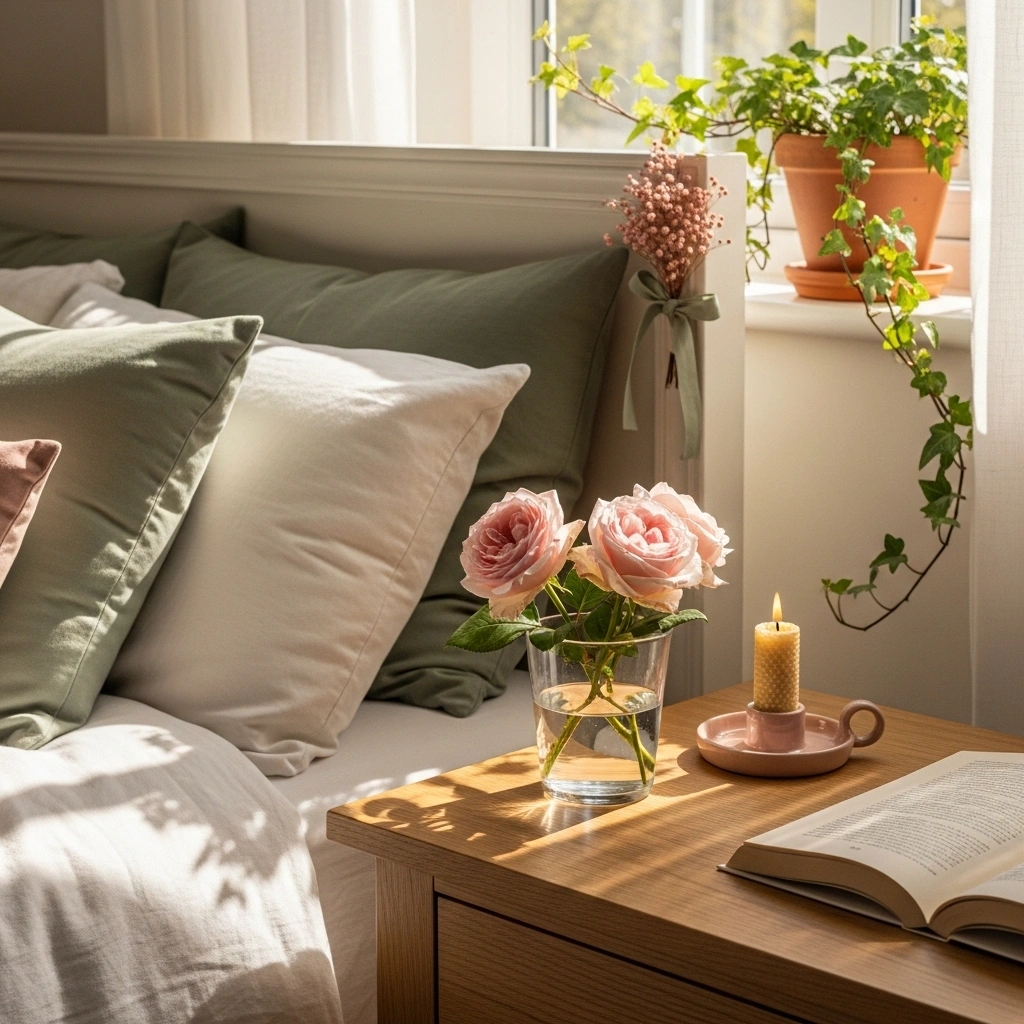
Then pair the printed florals with real ones. A vase of garden roses on the nightstand, a trailing ivy on the windowsill, a dried wreath above the bed. Living botanicals make the printed pattern feel like part of one continuous garden.
5. Balance Pink and Green So It Feels Romantic, Not Girlish
Pink and light green is the defining cottage pairing, but the proportions decide whether it feels romantic or nursery-like. Put light green on the large surfaces — the accent wall, the main throw, the euro pillows — and keep blush pink to the small, soft things: one accent pillow, a posy of flowers, a candle, a ceramic dish.
Warm natural materials — rattan, raw linen, unpolished brass, natural wood — keep the combination grounded, and one darker note (a deep green velvet cushion, an aged brass lamp base, a visible wood floor) stops the room from feeling too uniformly sweet.
6. Style the Corners, Not Just the Bed
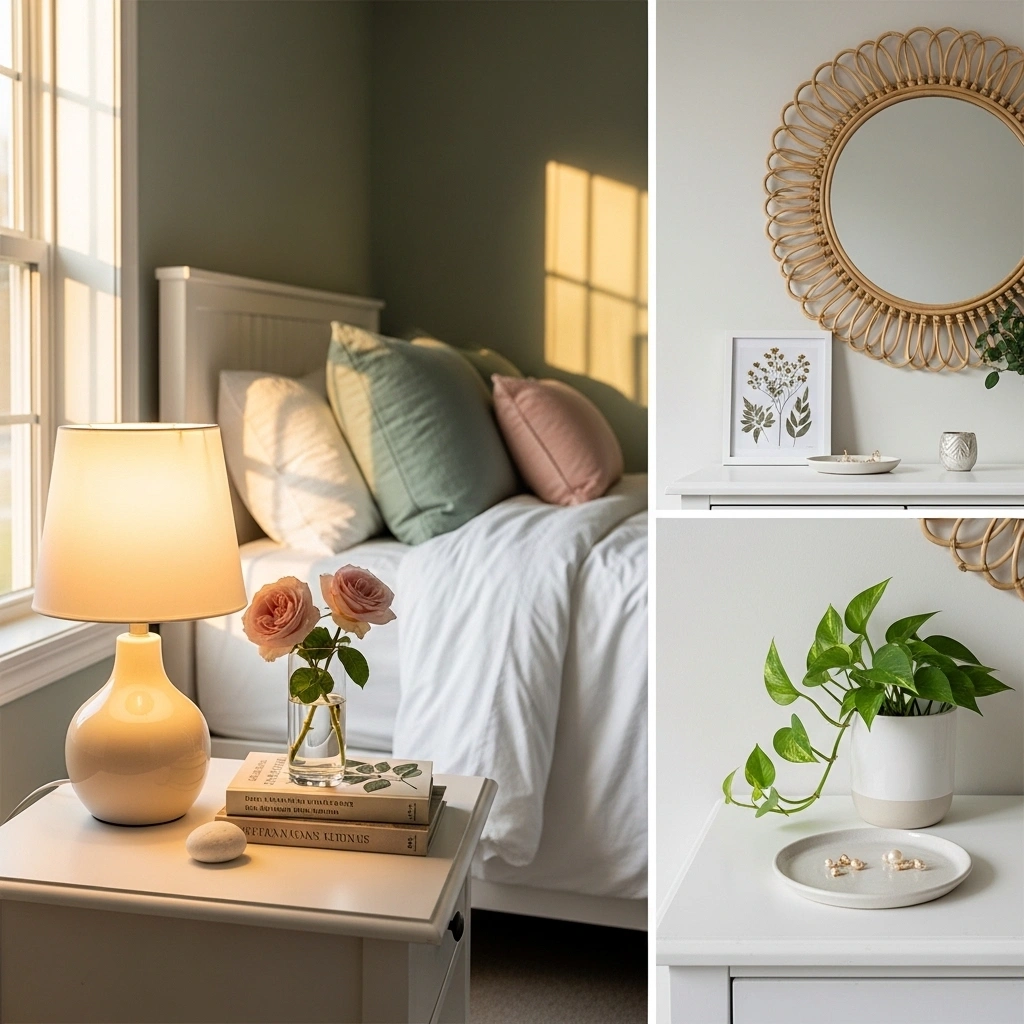
A cottage bedroom is made in the corners. Give the nightstand, the dresser top, and the wall above the headboard each their own small vignette — two or three objects tied to the bed’s palette. A nightstand with a small ceramic lamp, a slim vase of garden roses, and a stack of two books. A dresser with a round rattan mirror, one framed botanical print, and a trailing plant. Above the bed: a botanical print or small gallery, a dried flower wreath, and one personal piece — a framed photo, a vintage plate, an embroidered hoop.
Include at least one genuinely vintage piece with a bit of patina — a thrifted frame, a weathered box — for the gathered-over-time quality that new decor alone cannot fake. And put something living on every major surface; it is what makes the room feel alive rather than merely styled.
7. Let Real Plants Carry the Green
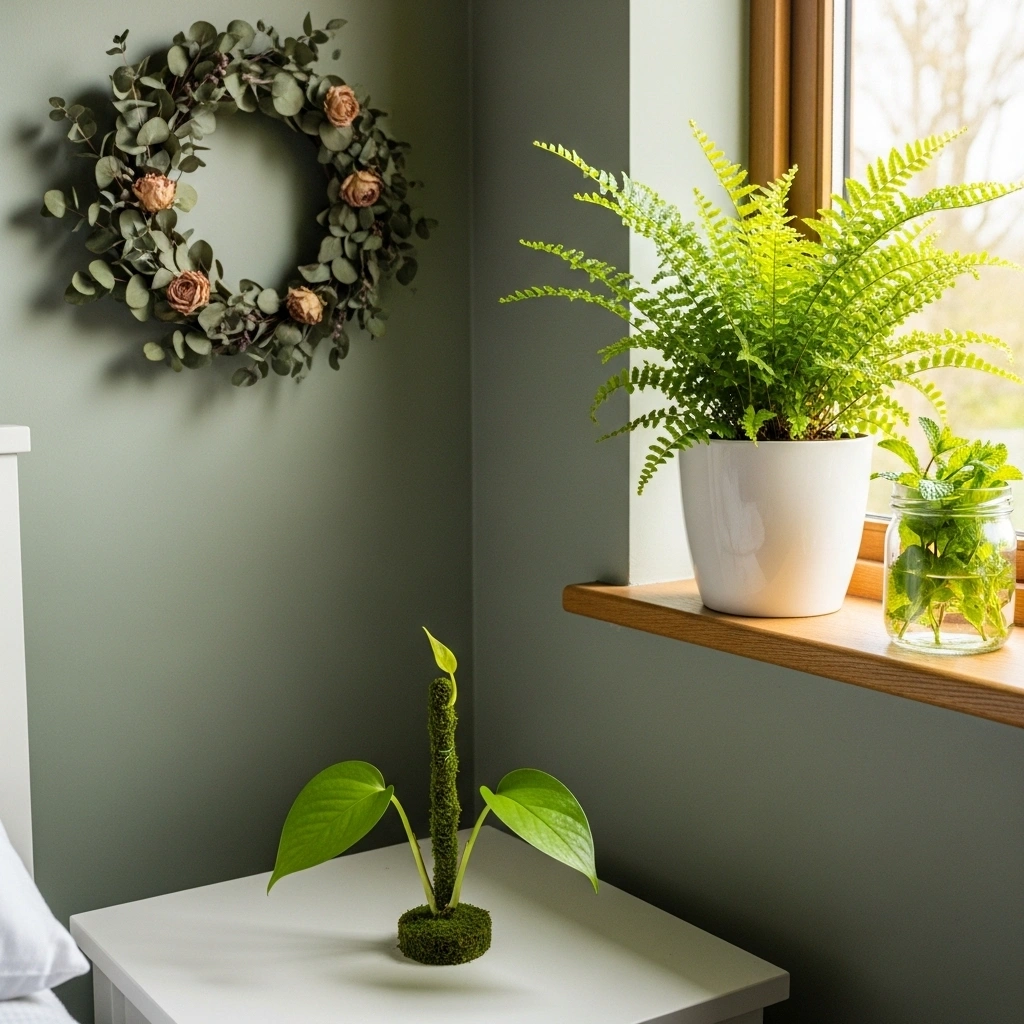
Paint and textiles give you green; plants give you life. A trailing ivy in a terracotta pot on a high shelf, a compact fern on the windowsill, a pothos climbing a tiny moss pole on the bedside table, a cutting of eucalyptus in a slim vase, or a jam jar of fresh mint or rosemary that scents the room at the same time.
Mix living plants with dried botanicals — a dried eucalyptus wreath beside a living trailing plant, a lavender bundle next to a fresh fern. That fresh-and-dried layering is what makes a cottage bedroom feel tended and loved rather than decorated.
8. Treat Your Walls as a Backdrop Worth Waking Up To
Bare walls are the one thing holding most cottage bedrooms back. The aesthetic is built on warmth and layering — bare walls read as unfinished, not minimal. Three deliberate pieces fix it: a botanical print or small gallery as the anchor at eye level from the bed, a living or dried botanical at wall level (a wreath, a wall planter, a trailing plant on a high shelf), and one personal, unexpected piece — a framed photograph, a vintage plate, a handwritten quote.
The only rule: keep everything in the same colour story — sage, blush, cream, warm wood — and the wall reads as one cohesive backdrop.
9. Finish With the Details You Feel More Than See
The difference between a beautiful cottage bedroom and one you never want to leave is the sensory layer. Fresh garden roses on the nightstand, swapped weekly. A light botanical linen spray misted over the pillowcases each morning. A real beeswax candle — blush, peony-scented — on the dresser. A favourite novel left open on the nightstand. A small dried posy tied with ribbon and tucked into the headboard.
Soft linen under your hands, the smell of flowers and beeswax in the morning air, botanicals wherever your eye rests. That is the room.
Five Golden Rules for Every Spring Cottage Bedroom
These work every single time. No exceptions.
Muted tones always beat saturated ones. Dusty blush, warm sage, vintage cream.
Layer textures within the same colour family. Matte linen beside velvet beside embroidery.
One floral pattern as the hero. A single botanical surrounded by plain companions.
Add living botanicals on every major surface. Nightstand, windowsill, wall.
Imperfection is the point. A tilted pillow, a casually draped throw.
Quick Answers
What colours work best in a spring cottage bedroom?
Muted, nature-inspired tones: dusty blush rose, warm sage green, and vintage cream, grounded with warm natural wood. Keep saturated brights out — they read modern, not cottage.
How do I keep a cottage bedroom from looking cluttered?
Edit ruthlessly. One hero floral pattern, plain companions, breathing room between objects, and odd-numbered groupings. Layering should feel gathered, never crowded.
What is the cheapest way to get the spring cottage look?
Paint one wall sage green, layer the cream bedding you already own, add a small bunch of market flowers each week, and hunt one vintage piece with patina at a thrift store. Scent — a linen spray or beeswax candle — does more than you would expect.
Can I mix patterns in a cottage bedroom?
Yes, with discipline: one large-scale botanical as the hero and everything else plain. A small gingham or ticking stripe can join in as a quiet second pattern if it shares the palette.
Final Thoughts
A spring cottage bedroom is not about perfection or matching sets. It is about building a space so warm, soft, and botanically alive that walking in each morning feels like a small privilege.
Choose your muted colours. Layer your textures. Add living plants. Tuck the dried posy into the headboard. Open the window and let the spring air in.
If it makes you not want to leave — it is exactly right.