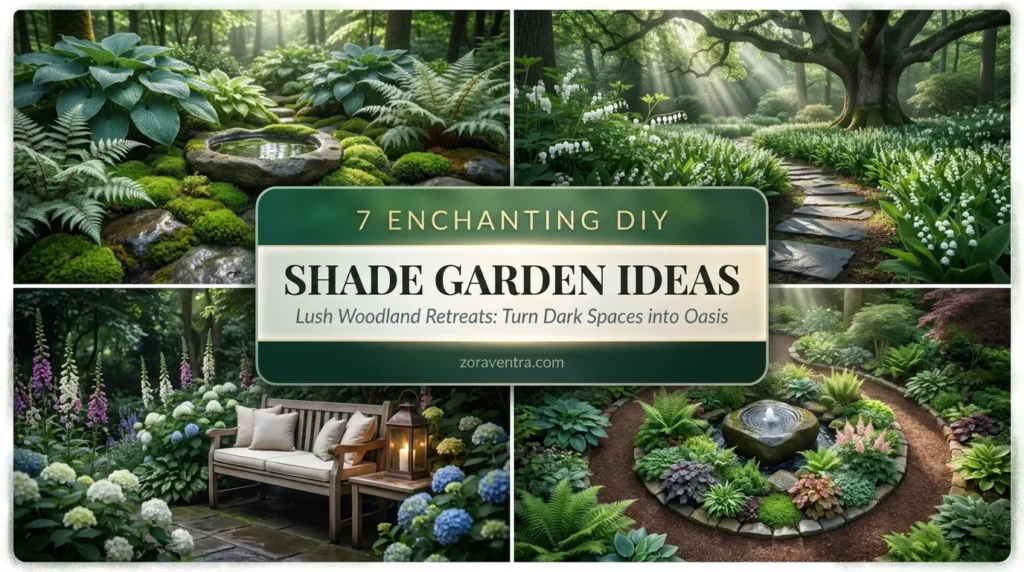
A shady backyard feels like a problem — dark, bare, hard to grow anything in. But with the right approach it becomes the most beautiful part of the garden: a lush, moody woodland retreat that feels like a secret garden. Seven ideas for real backyards, including small ones:
1. Plan the Woodland Layout First
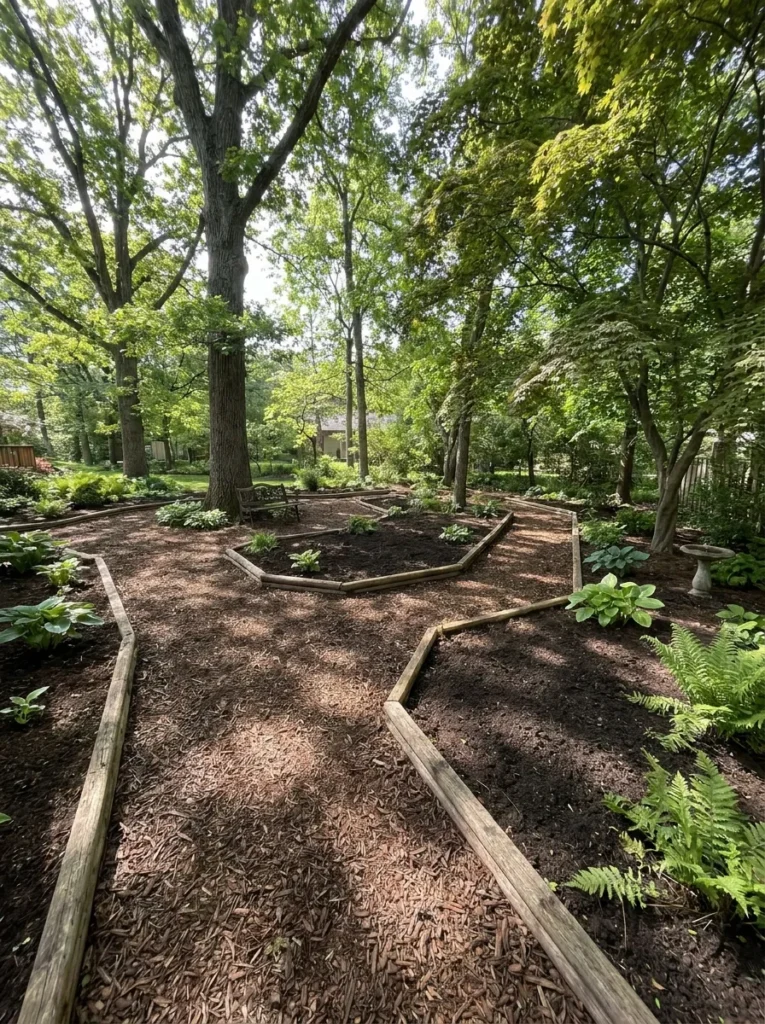
The biggest shade-garden mistake is planting randomly. Start with structure: gentle curving paths of mulch or stepping stones, then defined planting zones. Wood chips or shredded bark are affordable, natural, and retain moisture in dry shade — and the layout makes everything feel intentional.
2. Pick Plants That Actually Like Shade
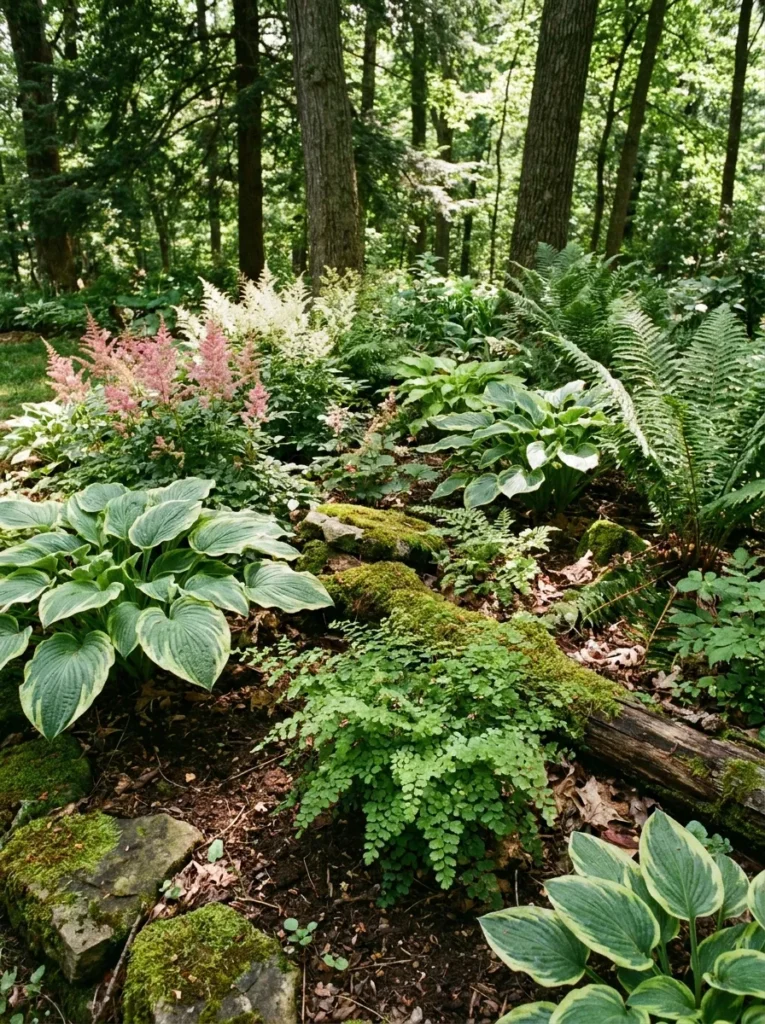
Success in shade is plant selection: hostas for bold foliage, ferns for feathery texture, astilbe for colorful plumes. They thrive in low light and create the lush layered look that makes shade gardens magical. Mix leaf shapes and heights for interest. Realistic artificial agave plants: artificial agave plants fill the darkest corners where even shade plants struggle.
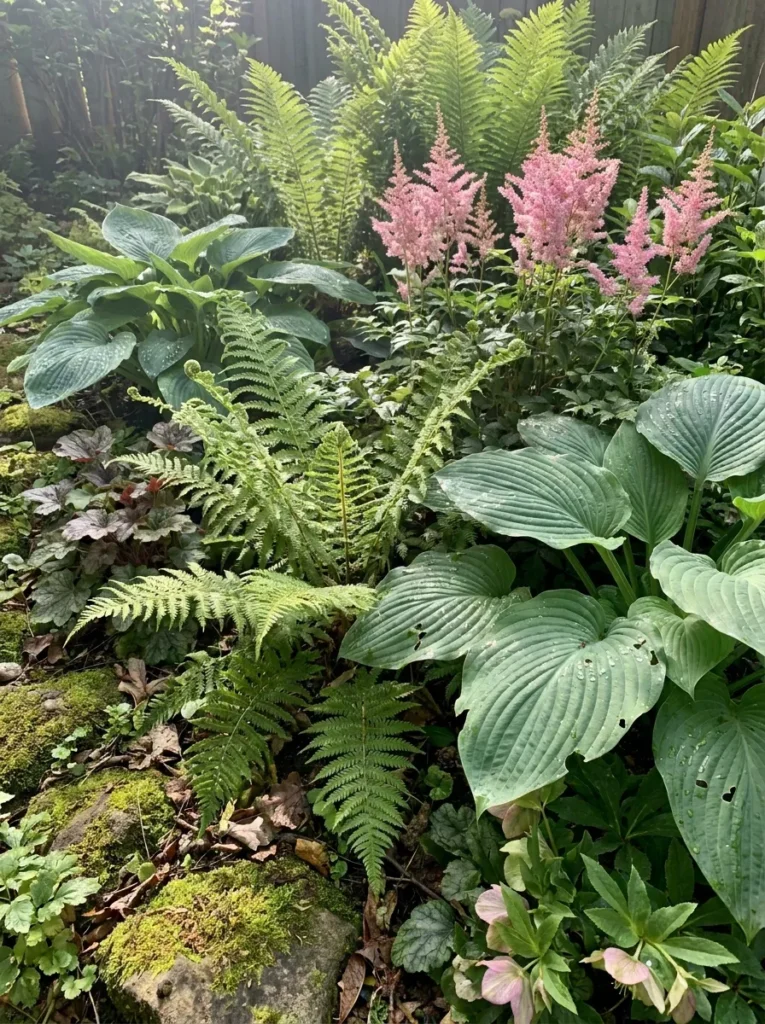
3. Layer Like a Woodland
Flat planting bores the eye. Copy the forest floor: tall ferns or small shrubs at the back, medium hostas and astilbe in the middle, low groundcovers (sweet woodruff, ajuga) at the front. Even a small garden feels lush and professionally designed. Artificial lavender flowers: artificial lavender flowers add color to deep shade spots.
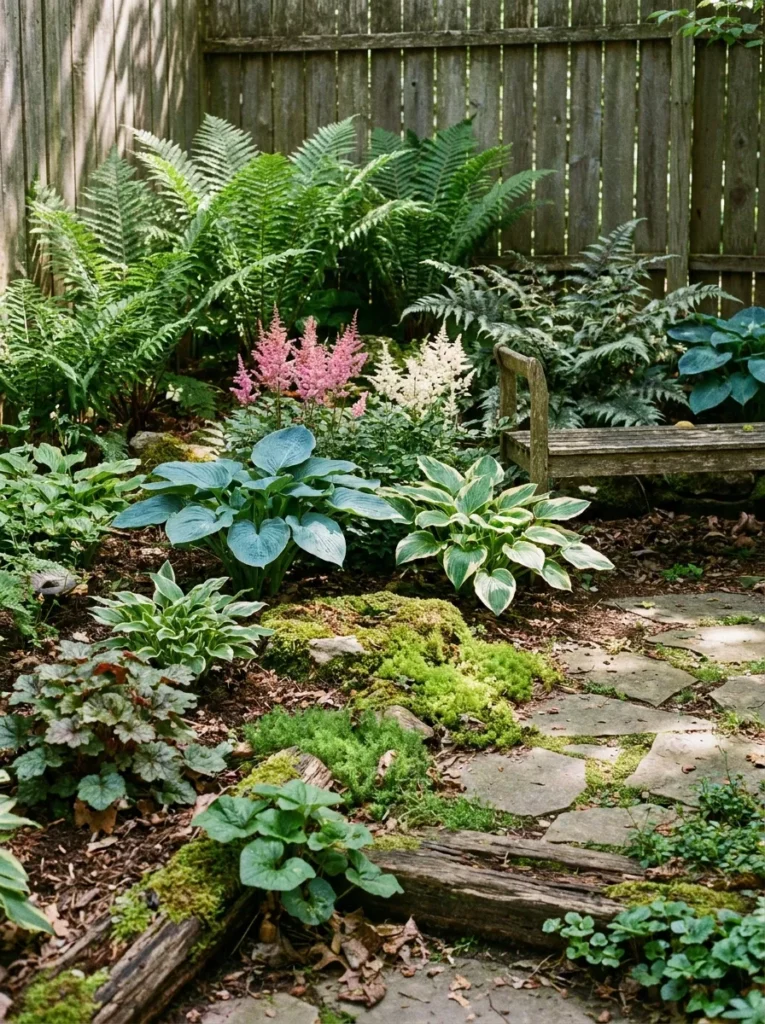
4. Add Hardscaping
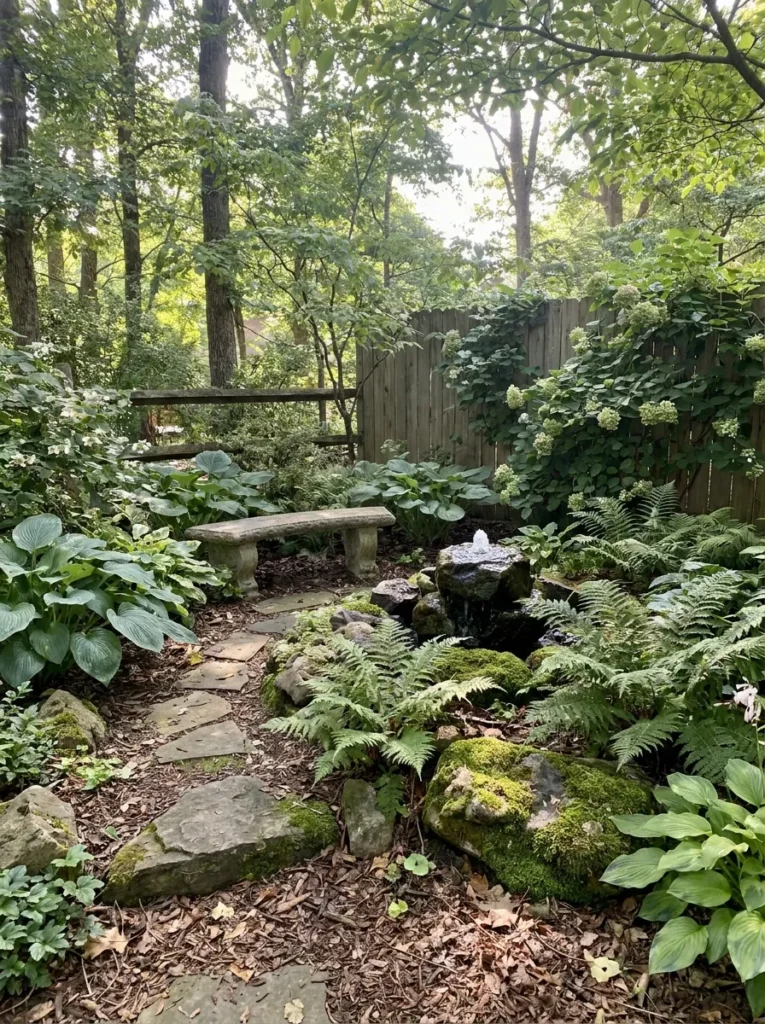
Plants alone don’t make a garden room. Stepping stone paths, low stone borders, a small seating area — these define the space, guide the eye, and create a sense of journey through the shade.
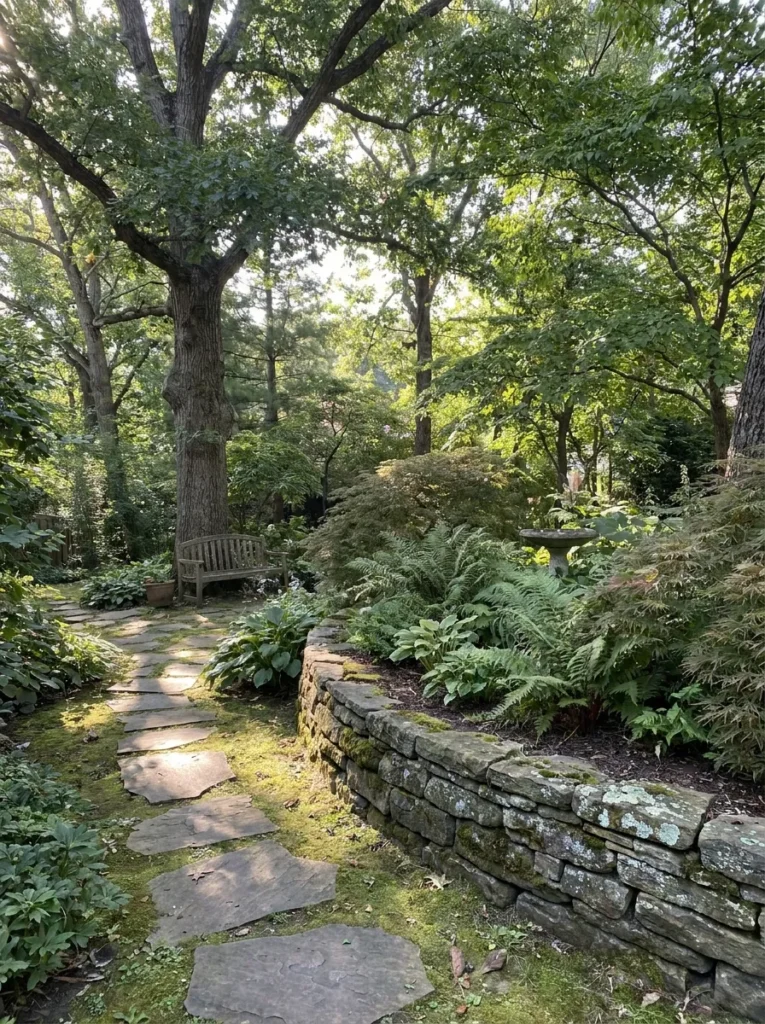
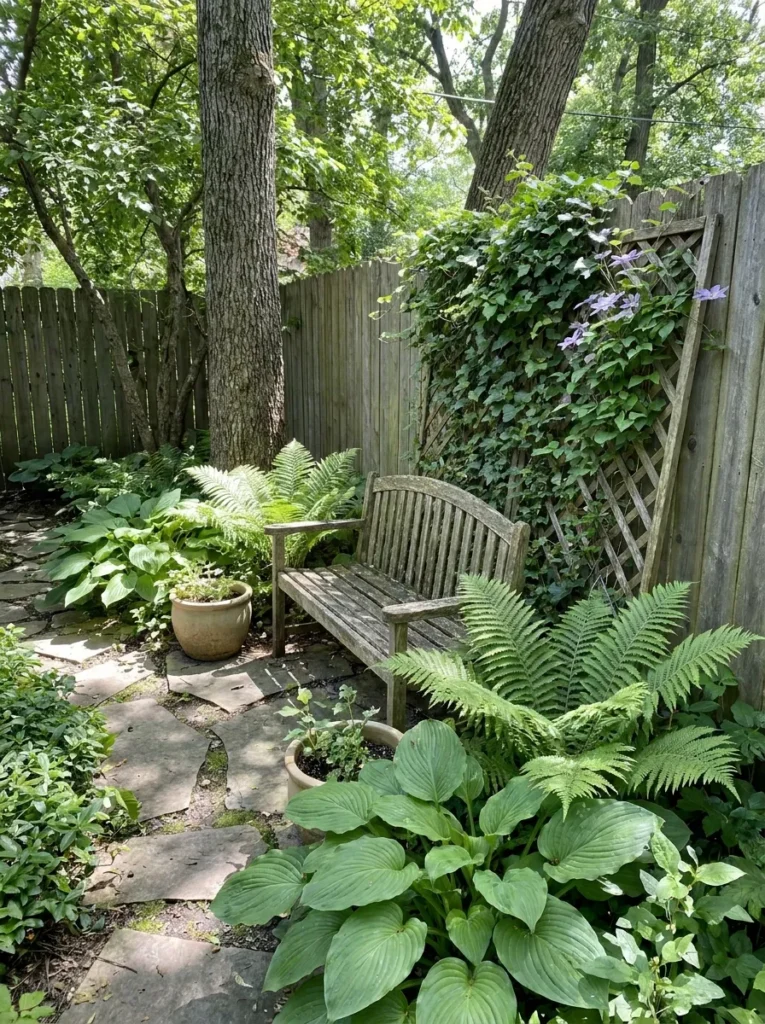
5. Small Yard? Go Up and Cluster
Tiny backyards can still feel magical: a small trellis with climbing hydrangea for height, clustered pots of ferns and hostas, and a bench nestled among the plants — a cozy reading or meditation spot in the green.
6. Choose Low-Maintenance Perennials
Hostas, astilbe, bleeding heart, Japanese painted fern — once established, they need little beyond occasional watering and dividing every few years. They get more beautiful every season while you do less.
7. Give Every Corner a Focal Point
A small water feature, a sculptural planter, a comfortable bench — one centerpiece surrounded by layers of hostas and ferns turns a forgotten corner into a destination.
Your 5-Step Shade Transformation
1. Assess light (morning sun vs. deep shade). 2. Improve soil with compost and leaf mold. 3. Install paths and borders. 4. Plant in tall-medium-low layers. 5. Mulch generously. Start small, plant in groups, be patient — one or two seasons to a cool green sanctuary.
More garden wins: our budget flower bed ideas and low-maintenance front yard landscaping.
Quick Answers
What grows best in a shady backyard?
Hostas, ferns, astilbe, bleeding heart, and Japanese painted fern. They’re reliable, low-maintenance, and return bigger every year.
How do I make a dark backyard look good?
Structure first (paths, borders, seating), then layered shade-loving plants, then one focal point per zone. Light-colored foliage and mulch brighten deep shade visually.
Can I have a garden with almost no sun?
Yes — deep shade suits hostas, ferns, and groundcovers beautifully. Improve the soil with compost, mulch heavily, and use hardscaping and seating to carry the design where plants can’t.
Affiliate Disclosure: As an Amazon Associate, I earn from qualifying purchases. If you click a link and buy, I may receive a small commission at no extra cost to you. Thank you for supporting my content!