

11 Christmas Tree Skirt Ideas That Finish the Tree
The tree is up, the lights are on, the ornaments are hung — and the bottom still looks unfinished. That bare metal stand, the tangle of the light cord, the water reservoir peeking out: a Christmas tree skirt is the one small piece that hides all of it and makes the whole tree look done. These Christmas tree skirt ideas cover every style, from classic red to a woven basket, so you can pick the one that suits your tree, your room, and your budget.
Every idea below works with a real or artificial tree, and none of them needs sewing skills unless you want them to. Work through the list, notice which fabrics and colours keep catching your eye, and choose the skirt that ties your tree to the rest of the room. A skirt is a small purchase, but it is the finishing touch you will notice every single time you walk past the tree.
If the tree itself still needs work before you dress the base, our Christmas tree decorating ideas will help you get the lights and ornaments right, our small Christmas tree decorating ideas are made for trees in tight corners and flats, and our Christmas living room decor ideas show how to carry the festive feeling through the whole room.

1. Go Classic with a Red Skirt
There is a reason the red tree skirt never goes out of style: it works with almost every ornament colour, it reads as Christmas from across the room, and it grounds a green tree the way a rug grounds a sofa. A plain red skirt with a simple embroidered border, like holly leaves stitched around the edge, is the safest choice you can make — it will still look right next year, and the year after that, when the ornament theme has changed completely.
Red also does practical work. It hides the tree stand and the water reservoir of a real tree, it catches fallen needles before they reach the floor, and it gives the gifts a rich backdrop that makes even plain brown-paper wrapping look considered. If your tree is heavily decorated, keep the skirt simple; if your tree is minimal, let the skirt carry a little more detail, like embroidery or a braided edge.
Tip: Choose a red with a warm, slightly deep tone rather than a bright post-box red — it photographs better, it sits more comfortably next to gold and wood tones, and it looks expensive even when it is not.

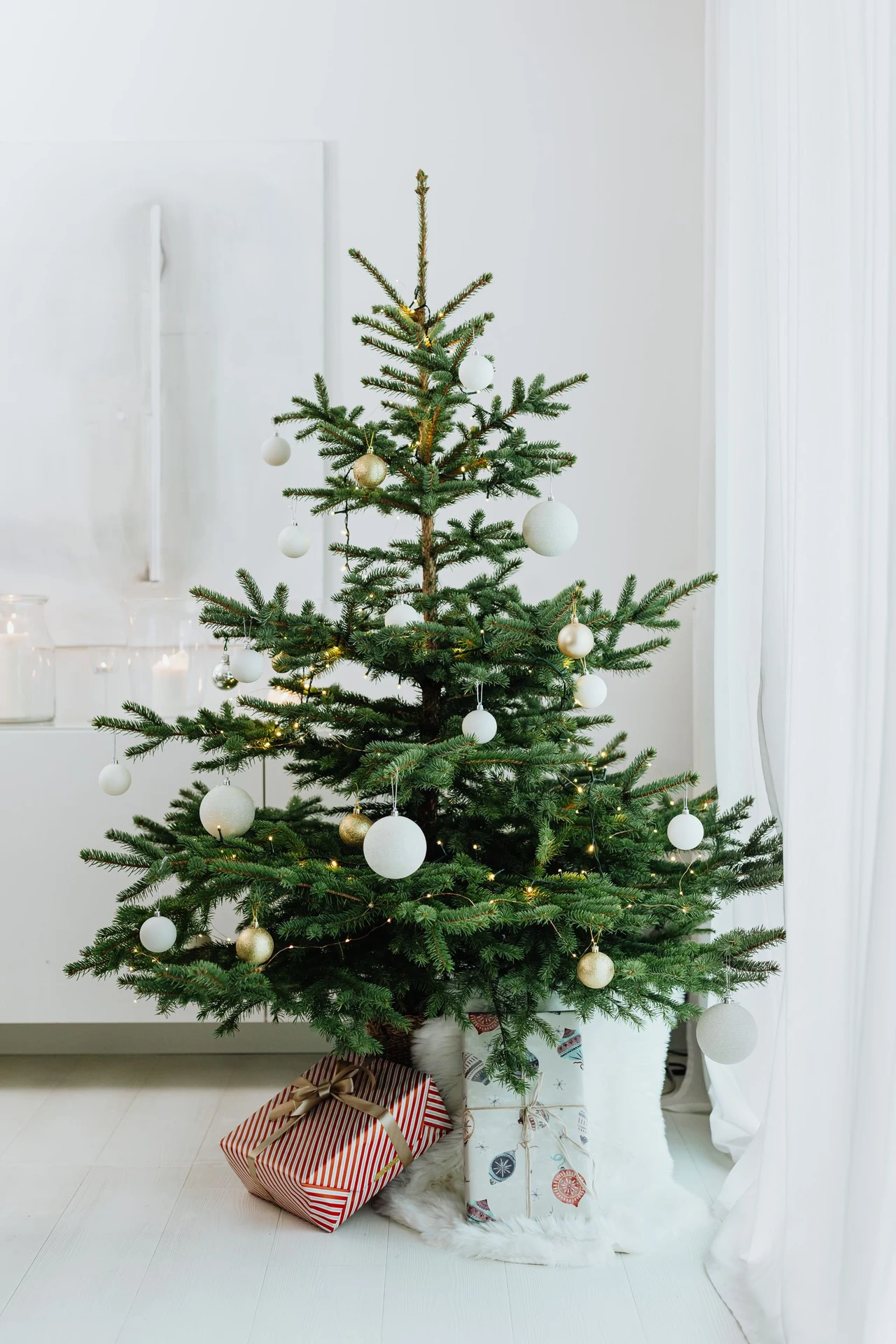
2. Soften It with White Faux Fur
A white faux fur skirt does for a Christmas tree what a soft blanket does for a sofa: it makes the whole scene feel warmer without adding any colour to argue with. The fur reads as fresh snow, so it suits white-and-gold trees, silver trees, and trees decorated in cool tones, and it is especially kind to a small tree in a pale room, where a dark or patterned skirt would feel heavy.
The texture is the whole point, so let it show. Keep the skirt spread wide rather than bunched under the branches, and set the gifts on top of it rather than behind it — the contrast between the soft white fur and the wrapped gifts is half the charm. Faux fur also forgives a lot: a few fallen needles disappear into it, and a quick shake outside in January takes care of most of the mess.
Tip: If you have a real tree, put a plain cotton sheet or a plastic tray under the fur skirt first — it catches the water drips and the sap, and the fur stays clean enough to fold away and use again next year.
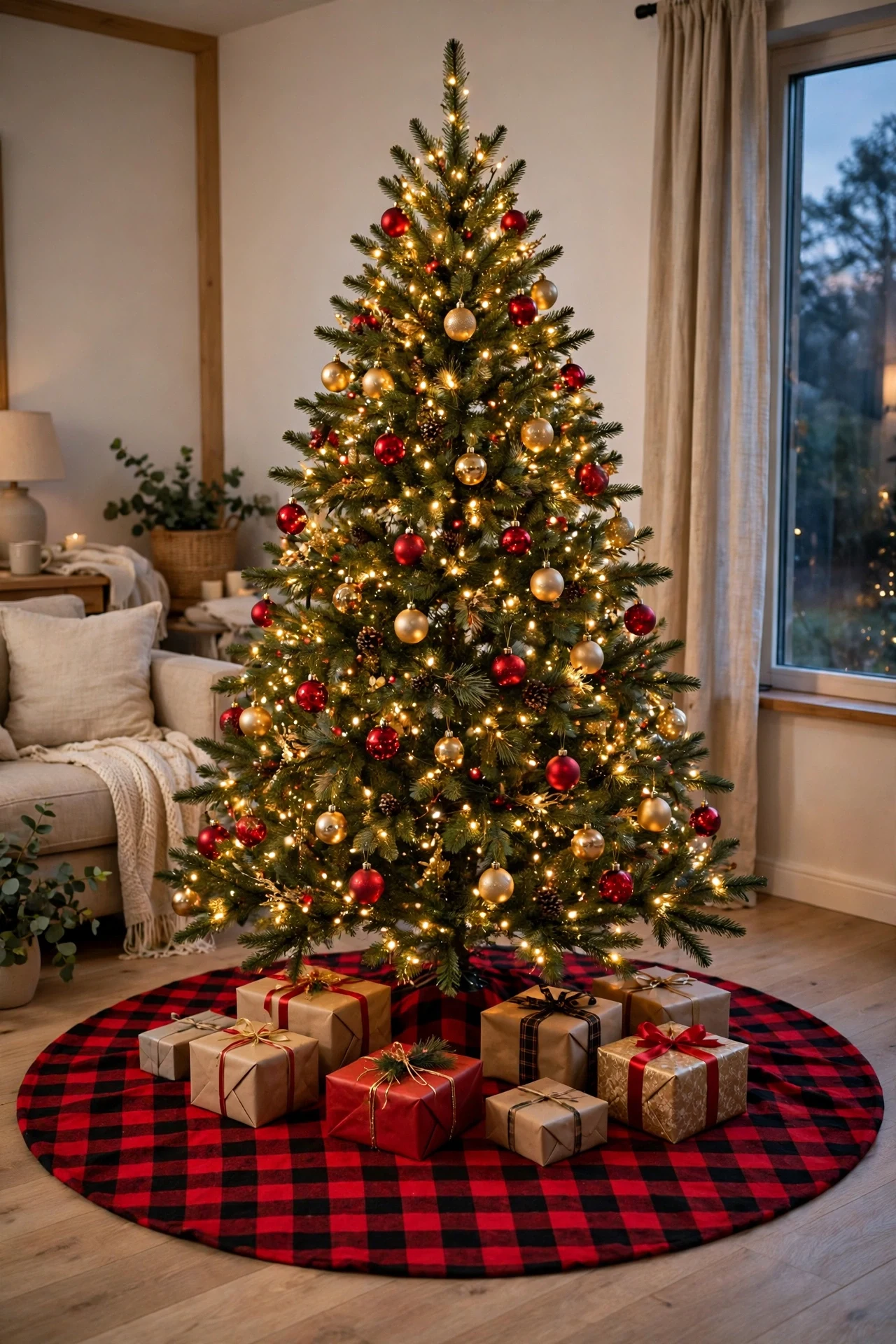
3. Keep It Cosy with Red Buffalo Plaid
Red and black buffalo plaid is the cabin Christmas in one piece of fabric: warm, unfussy, and instantly familiar. It suits a tree decorated in red and gold, a tree with wooden ornaments, and any room that already has plaid throws or cushions. The big check pattern is bold enough to hold its own under a full tree, and it hides fallen needles and scuffs better than any plain fabric.
Plaid is also one of the easiest skirts to live with. It is usually made from a sturdy cotton or flannel that washes well, it does not show creases from a year in storage, and it looks just as good slightly rumpled as it does freshly ironed. If your living room leans modern, a plaid skirt is the one traditional piece that warms the room up without pulling the whole scheme backwards.
Tip: Match the scale of the check to the size of your tree — a big, bold check suits a tall tree, while a smaller check looks better under a tabletop or apartment-size tree, where a large pattern would overwhelm the base.
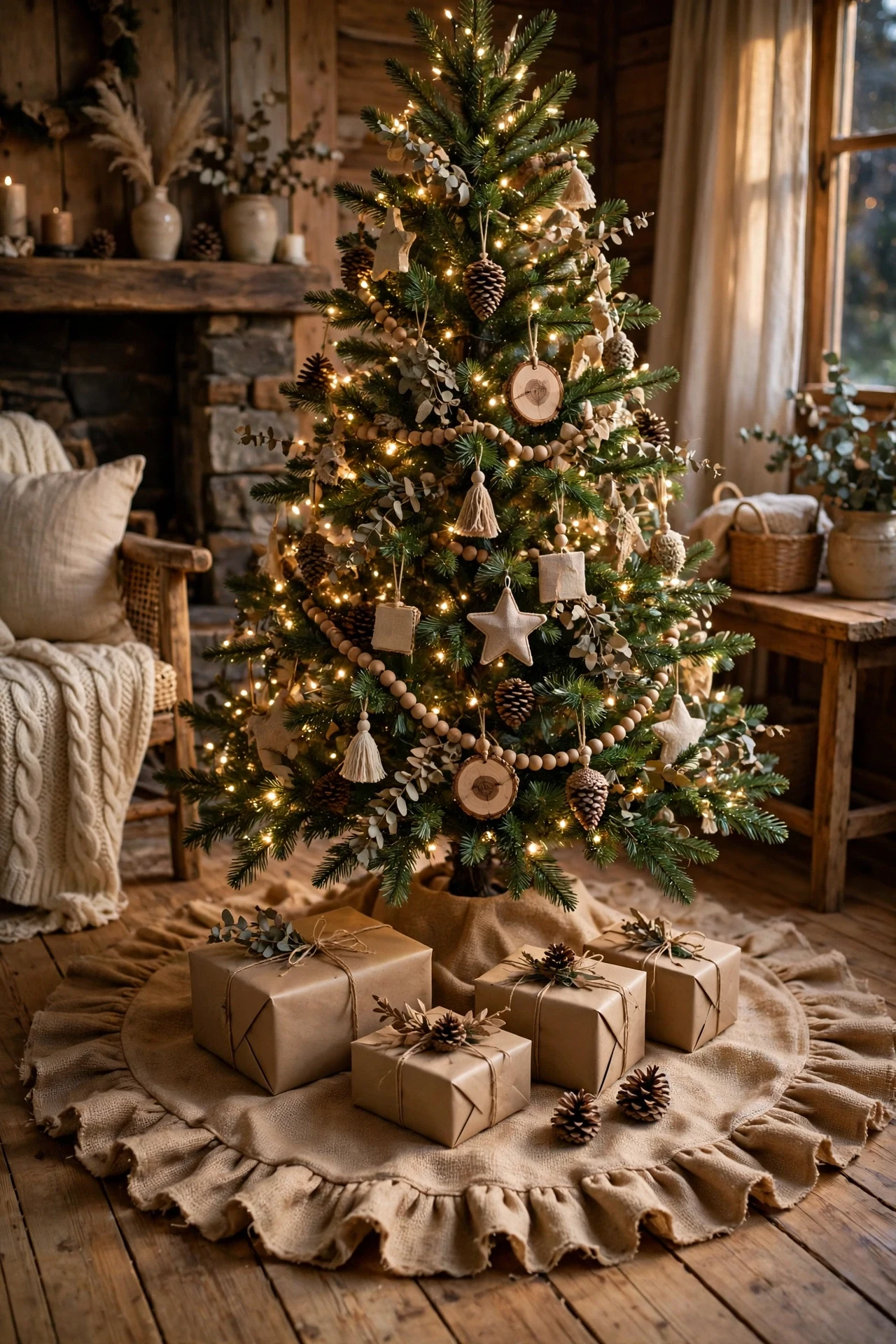
4. Go Rustic with Natural Burlap
Burlap is the tree skirt for anyone who loves a natural, handmade Christmas. The loose weave and the warm tan colour sit beautifully with wooden ornaments, dried orange slices, pinecones and kraft-paper wrapping, and the ruffled edge that most burlap skirts have adds a soft, gathered shape that a flat fabric skirt cannot match.
Because burlap is so neutral, it lets the tree do the talking. It works with a rustic tree, a Scandinavian-style tree with white and wood ornaments, and a tree that mixes in eucalyptus and dried foliage. It is also one of the cheapest skirts to buy, and one of the easiest to make: a length of burlap, a gathered hem, and a simple tie is all it takes.
Tip: Burlap sheds fibres when it is new, so give it a good shake outside before you put it under the tree, and keep it away from the water reservoir of a real tree — wet burlap smells musty and takes a long time to dry.
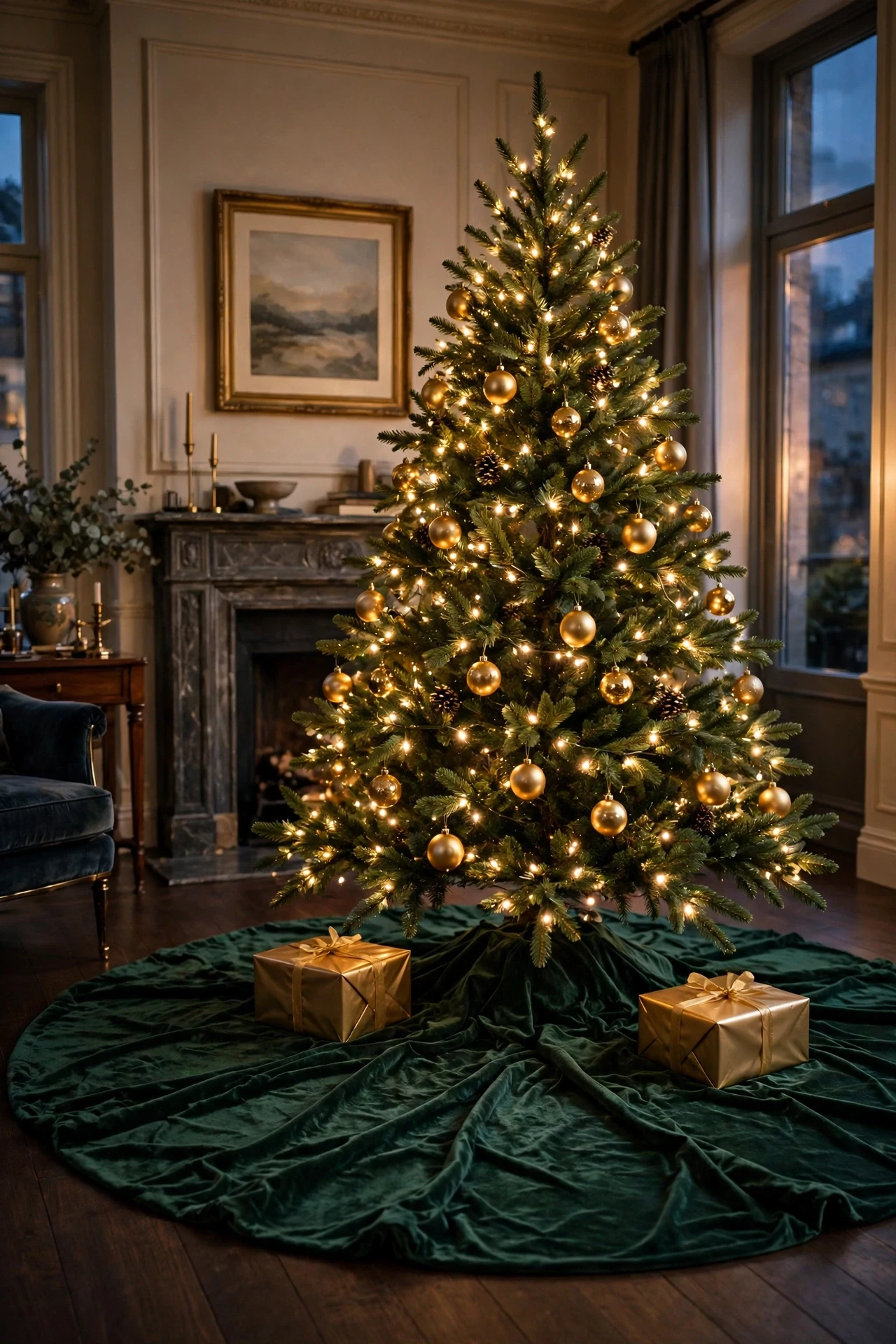
5. Add Drama with Deep Green Velvet
If your Christmas style leans elegant rather than rustic, a deep green velvet skirt is the most grown-up choice on this list. The fabric catches the light in soft folds, so the base of the tree looks rich even before the gifts go on it, and the dark green makes gold baubles and warm white lights glow in a way that a pale skirt never will.
Velvet also pairs beautifully with the rest of an elegant living room — a velvet armchair, dark wood, brass candlesticks, a marble fireplace. Keep the gifts in gold, cream or deep green wrapping and the whole corner of the room will look like it was styled in one go. Velvet is a heavier fabric, so it drapes well and stays put, which matters when the tree is in a busy part of the room.
Tip: Velvet shows every crease from storage, so hang the skirt in a steamy bathroom for ten minutes before you lay it out, or run a clothes steamer over it — the folds will relax and the sheen will come back.
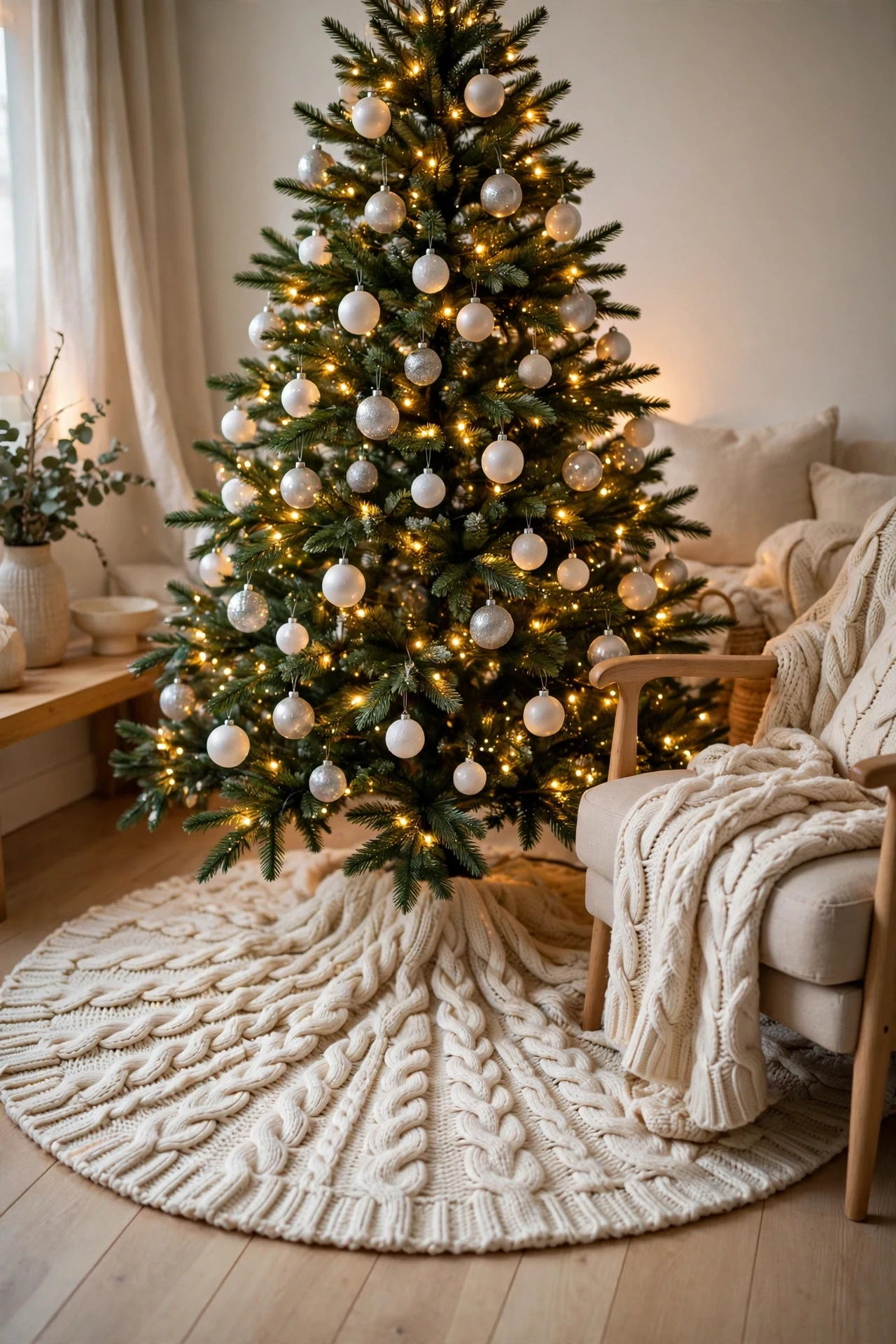
6. Knit One In with a Chunky Cable Knit
A chunky cable-knit skirt is the cosiest idea here, and the one that most looks like it was made with love rather than bought in a hurry. The thick cream knit, with its raised cables and soft texture, echoes a favourite jumper — and if you already have knitted throws or cushions in the room, the skirt ties the whole seating area together.
Knit skirts suit white-and-silver trees best, but they also work with a tree decorated in soft pastels or natural wood tones. The pale colour keeps a small room feeling light, and the texture gives the eye something to rest on at the base of the tree, where a flat fabric can look a little plain. If you can knit, this is a lovely slow project for November evenings; if you cannot, the ready-made versions are widely available and worth the price.
Tip: A knit skirt is thick, so check that it does not push the tree stand off balance — lay it flat, set the stand on top of it rather than under it if the stand is wobbly, and keep the centre of the skirt smooth so the stand sits level.
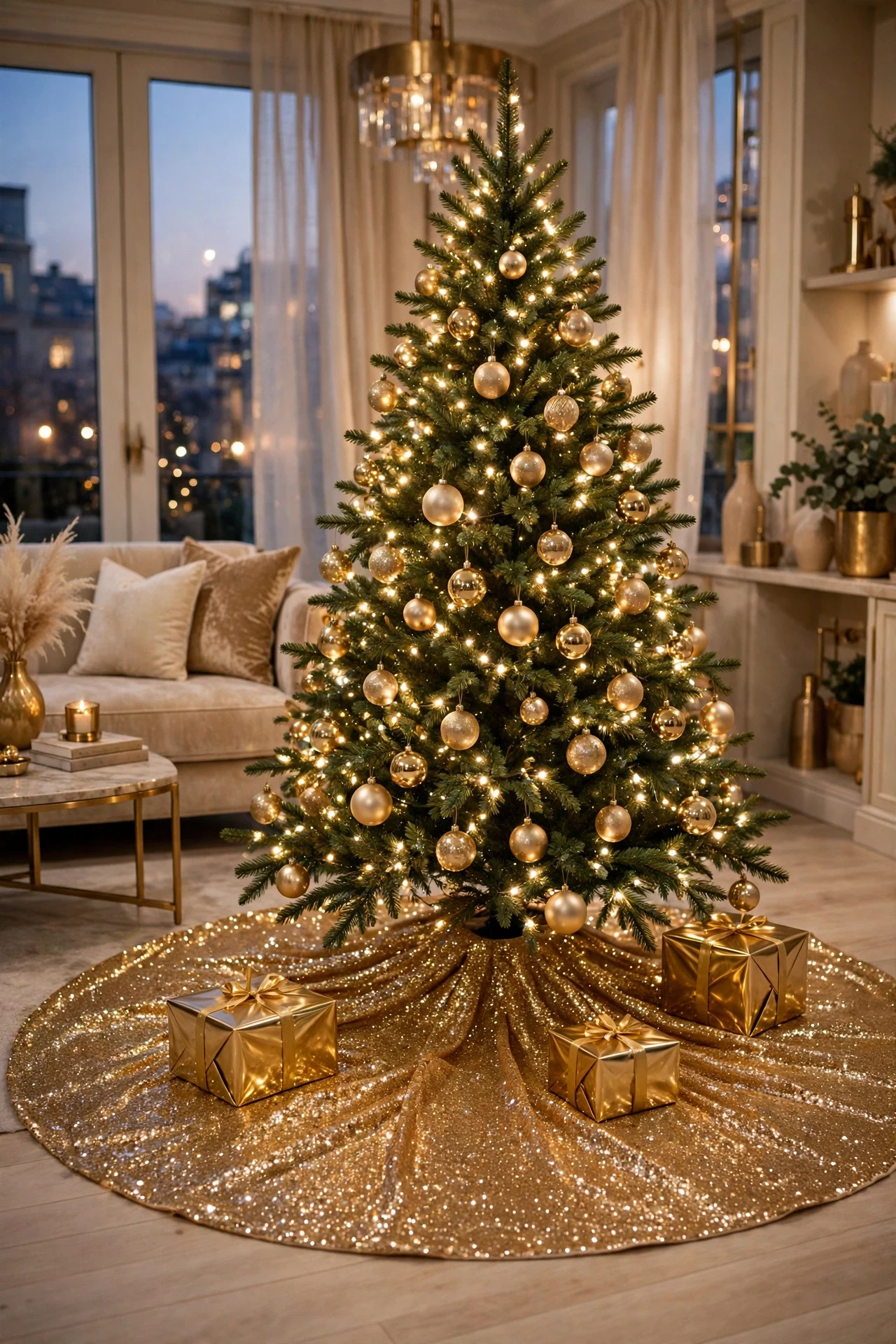
7. Go Glam with a Gold Sequin Skirt
Some trees are meant to sparkle, and a gold sequin skirt is the base they deserve. The sequins catch the fairy lights and throw tiny glints across the floor, so the bottom of the tree glows instead of disappearing into shadow. It is the right choice for a gold-and-champagne tree, a black-and-gold tree, or any tree where glamour is the point.
A sequin skirt is a statement, so let it be the star at the base and keep everything else simple: plain gold wrapping paper, a few metallic gifts, no competing patterns. It is also surprisingly practical — sequins wipe clean, they do not show fallen needles, and the skirt folds flat for storage. If a full sequin skirt feels like too much, look for one with sequins only on the outer ring and plain fabric in the centre, where the stand sits.
Tip: Sequin skirts can snag on rough bark or on the metal feet of a tree stand, so lay a thin cotton cloth under the centre of the skirt first — it protects the sequins and stops the skirt sliding on a polished floor.
8. Make It Homely with a Quilted Patchwork Skirt
A quilted patchwork skirt is Christmas nostalgia in fabric form: red, green and cream squares, a little stitching, a pattern that looks like it came from a grandmother’s sewing box. It suits a farmhouse living room, a tree with handmade ornaments, and any home where Christmas is about warmth and memory rather than matching sets.
The patchwork pattern is forgiving in a way plain fabrics are not. A coffee stain, a pine-needle mark, a small scuff from a gift box — all of it disappears into the pattern. It also gives you a natural colour palette for the rest of the room: pick out the red for the ribbon, the green for the garland, the cream for the wrapping paper, and the whole room will feel coordinated without any effort.
Tip: If you sew, a patchwork skirt is a wonderful way to use up leftover Christmas fabric — cut the squares in autumn, stitch them together in November, and the skirt will carry a little piece of every Christmas you have made things for.

9. Swap the Skirt for a Woven Basket Collar
Not every tree needs a skirt. A woven basket collar — a low, round basket that sits around the base of the tree like a plant pot — does the same job with a completely different look: structured instead of soft, natural instead of festive, and much easier to keep tidy. It suits a tree in a modern or Scandinavian room, a tree with a slim profile, and anyone who finds a fabric skirt always ends up bunched and crooked.
The collar hides the stand completely, it never needs ironing, and it will not slide across a wooden floor. Layer it over a plain fur or cotton skirt if you like the soft edge underneath, or let it stand alone for the cleanest look. Seagrass, rattan and wicker all work; choose the weave that matches the baskets and storage you already have in the room.
Tip: Measure the tree stand before you buy — the collar needs to be wider than the stand’s feet, with a little room to spare, or the stand will sit on the rim and wobble. A collar that is too small is worse than no collar at all.

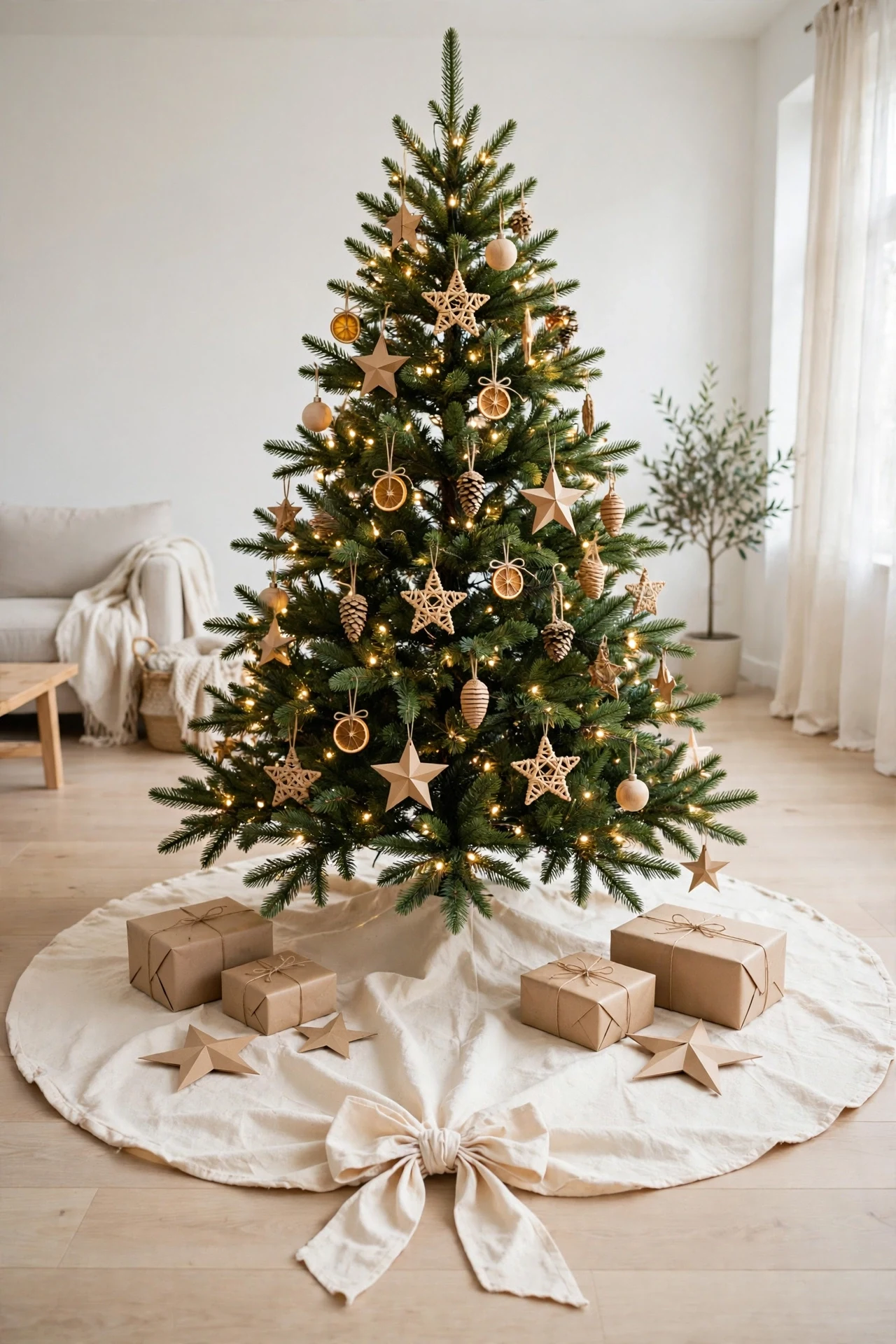
10. DIY a No-Sew Drop-Cloth Skirt
A drop cloth — the plain cotton cloth painters use — makes a beautiful tree skirt for almost no money and no sewing at all. Cut a circle, cut a slit to the centre, tie it closed at the front with a big fabric bow, and you have a soft, natural skirt that looks far more expensive than the few pounds it cost. The unbleached cotton suits a handmade tree with paper stars, dried oranges and kraft-paper gifts.
The best part of a drop-cloth skirt is how easy it is to make your own. Dye it with tea for a warmer tone, stamp a simple pattern around the edge with a potato stamp, or leave it plain and let the tree be the decoration. It washes well, it folds small, and if it gets stained in January you can simply make another one next year.
Tip: Wash and dry the drop cloth before you cut it — it shrinks a little on the first wash, and you want the finished skirt to be the size you planned, not a size smaller. Iron it once, then cut, and the edges will stay neat without any hemming.
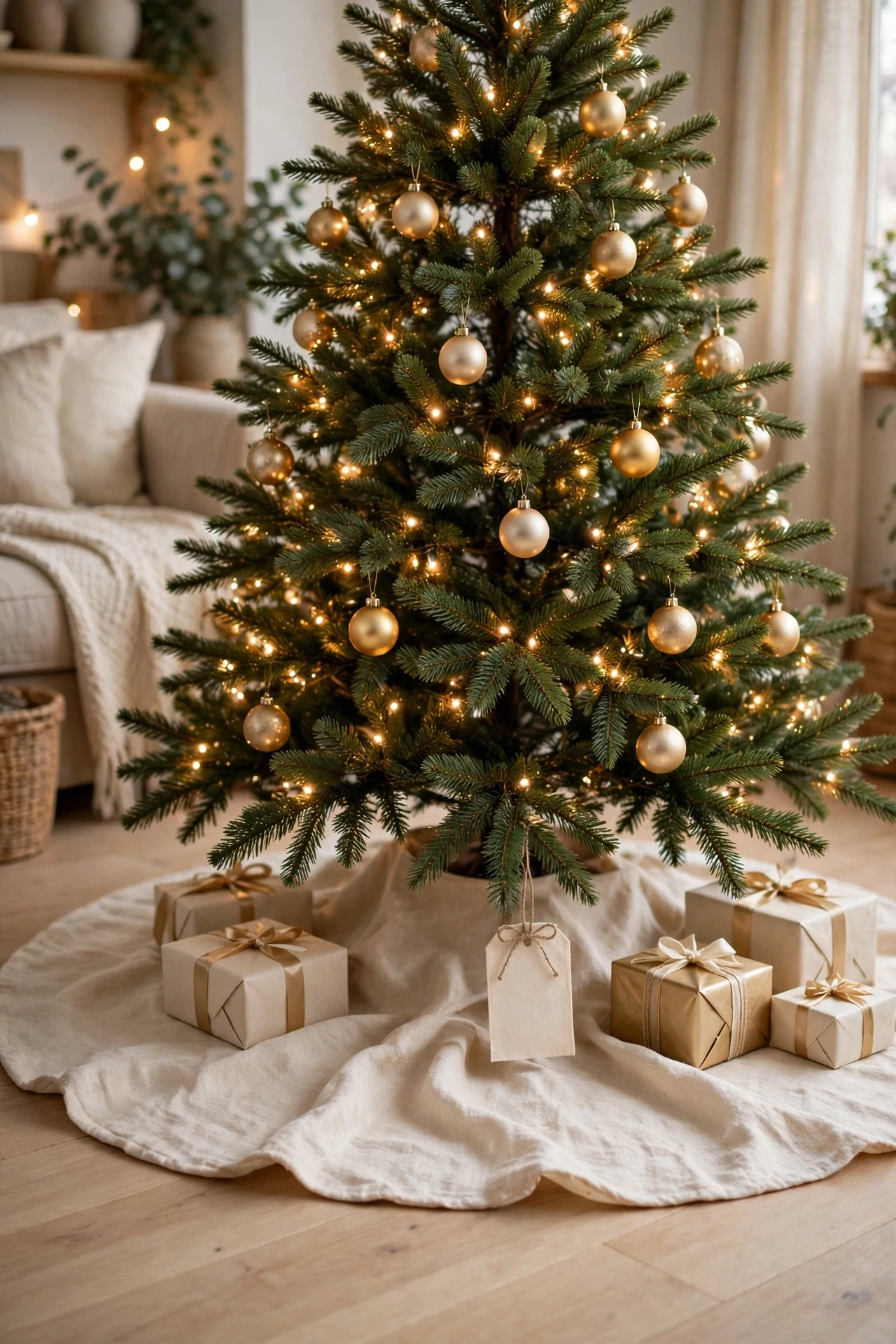
11. Make It Yours with a Personalised Tag
The simplest way to make a plain skirt feel special is a small personal touch: a blank kraft tag tied to the edge of the skirt with twine, ready for a family name, a year, or a short message. It turns an ordinary cream linen skirt into a keepsake, and it costs almost nothing. Tie one tag on the front where everyone can see it, or tie a tag for each person in the family around the edge of the skirt.
A personalised tag also solves a real problem: it marks the skirt as yours, and it gives children a little job on decorating day — writing the tag and tying it on is a small ritual they will remember. Keep the tag blank in the photograph and write on it with a permanent pen at home, so the ink never smudges on the fabric.
Tip: Use a tag made from thick card or thin wood rather than paper — paper tears when it catches on the branches, while card and wood survive being packed away and can be reused year after year.
What Size Tree Skirt Do You Need?
The right skirt is wider than the widest branches, so it reads as a deliberate circle rather than a scrap of fabric peeking out. Measure the tree at its widest point, then pick a skirt at least that wide — a little wider is better than a little narrower, because a skirt that disappears under the branches looks like a mistake.
| Tree height | Skirt diameter to look for |
|---|---|
| Tabletop, up to 90 cm | 60–75 cm |
| Small, 120–150 cm | 90–100 cm |
| Medium, 180–210 cm | 120–135 cm |
| Tall, 240 cm and up | 140–150 cm |
Before You Buy: A Quick Checklist
Run through this list before you order or make a skirt, and you will only buy once:
- Measure the tree at its widest point, and the tree stand across its feet.
- Pick a fabric you can clean — washable cotton and polyester cope with sap, needles and spills; velvet and fur need more care.
- Check the skirt has an opening or a slit, so it fits around the trunk without lifting the tree.
- Match the skirt to the room, not just the tree — it should sit happily with your rug, sofa and curtains.
- If you have a real tree, put a waterproof tray or sheet under the skirt to catch drips.
- Keep the receipt until the tree is up — a skirt that looks right in the shop can look wrong under your own tree.
What size Christmas tree skirt do I need?
Measure the widest spread of the branches and choose a skirt at least that wide — for a medium tree of 180–210 cm, that usually means a skirt of 120–135 cm across. A skirt slightly wider than the tree looks generous and finished; a skirt narrower than the branches looks like it was bought for a smaller tree.
How do I keep a tree skirt from bunching up?
Lay it flat and smooth it out from the centre before you put the gifts on it, and use the gifts themselves to hold the edge down — a heavy gift at each quarter of the circle keeps the skirt in place. If the skirt still slides on a polished floor, a thin non-slip rug pad underneath will hold it still all season.
Can I use a tree skirt with a real tree?
Yes, and you should — a skirt hides the water reservoir and catches fallen needles. Just put a waterproof tray or a plastic sheet under the skirt first, keep the fabric away from standing water, and check the reservoir daily so the skirt never sits in a puddle. Washable fabrics like cotton and polyester are the easiest choice for a real tree.
What can I use instead of a tree skirt?
A woven basket collar is the most popular alternative — it hides the stand, never needs ironing, and suits modern rooms. A large round rug, a folded throw, a galvanised metal tub, or a big wicker basket will all do the same job. The rule is the same either way: it must be wider than the stand and wider than the lowest branches.
How do I clean a fabric tree skirt?
Shake it outside first to drop the needles, then follow the label — most cotton and polyester skirts machine-wash on a gentle cycle, while velvet, fur and sequins need a spot clean or a dry cleaner. Always let the skirt dry fully before you fold it away, or it will smell musty when you open the box next December.
Read Next
Keep the festive feeling going through the rest of the house: our Christmas tree decorating ideas cover the lights and ornaments, our small Christmas tree decorating ideas are made for trees in tight spaces, and our Christmas living room decor ideas show how to carry the look through the whole living room.