
The tree is the heart of Christmas at home. It’s where the presents land, where the photos happen, and where everyone ends up gathered on Christmas Eve with a warm drink in hand. When the tree looks good, the whole house feels festive.
The good news? A designer-looking tree is not about spending more — it’s about order and layering. Lights first, then ribbon or garland, then ornaments from big to small, then the finishing picks and topper. Once you know the sequence, every theme on this list becomes easy.
These ideas sit inside a bigger plan, too: pair your tree with the rest of our Christmas decor ideas for the whole house, and style the room around it with these Christmas living room decor ideas so the tree feels like the star of a finished scene. Here are 15 ways to decorate your tree like a designer — without the designer price tag.
1. Go Classic with Red and Gold
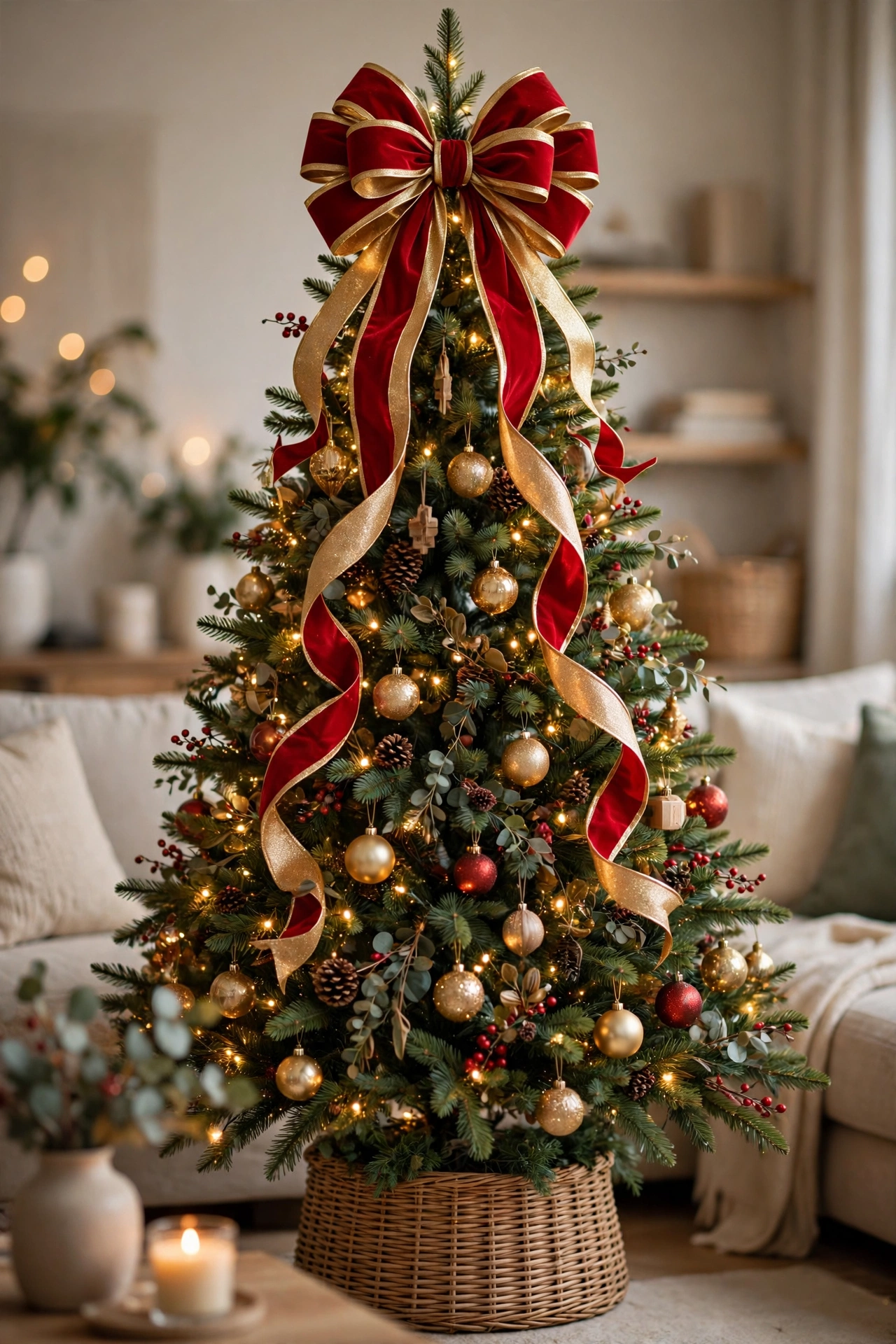
Some combinations become classics because they never fail. Deep red and warm gold against dark green branches is Christmas in its most timeless form — rich, warm, and instantly festive. Start with warm white lights, add red ornaments in a mix of matte and shiny finishes, then layer in gold for the glow.
Keep the ratio roughly two reds to one gold so the tree reads red first. Finish with a gold star or angel on top and a red or plaid tree skirt below. This is the theme to choose when you want zero risk and maximum nostalgia.
Tip: Mix ornament sizes — large reds deep inside the branches, medium and small golds toward the tips — for instant depth.
2. Cascade Ribbon Like a Designer
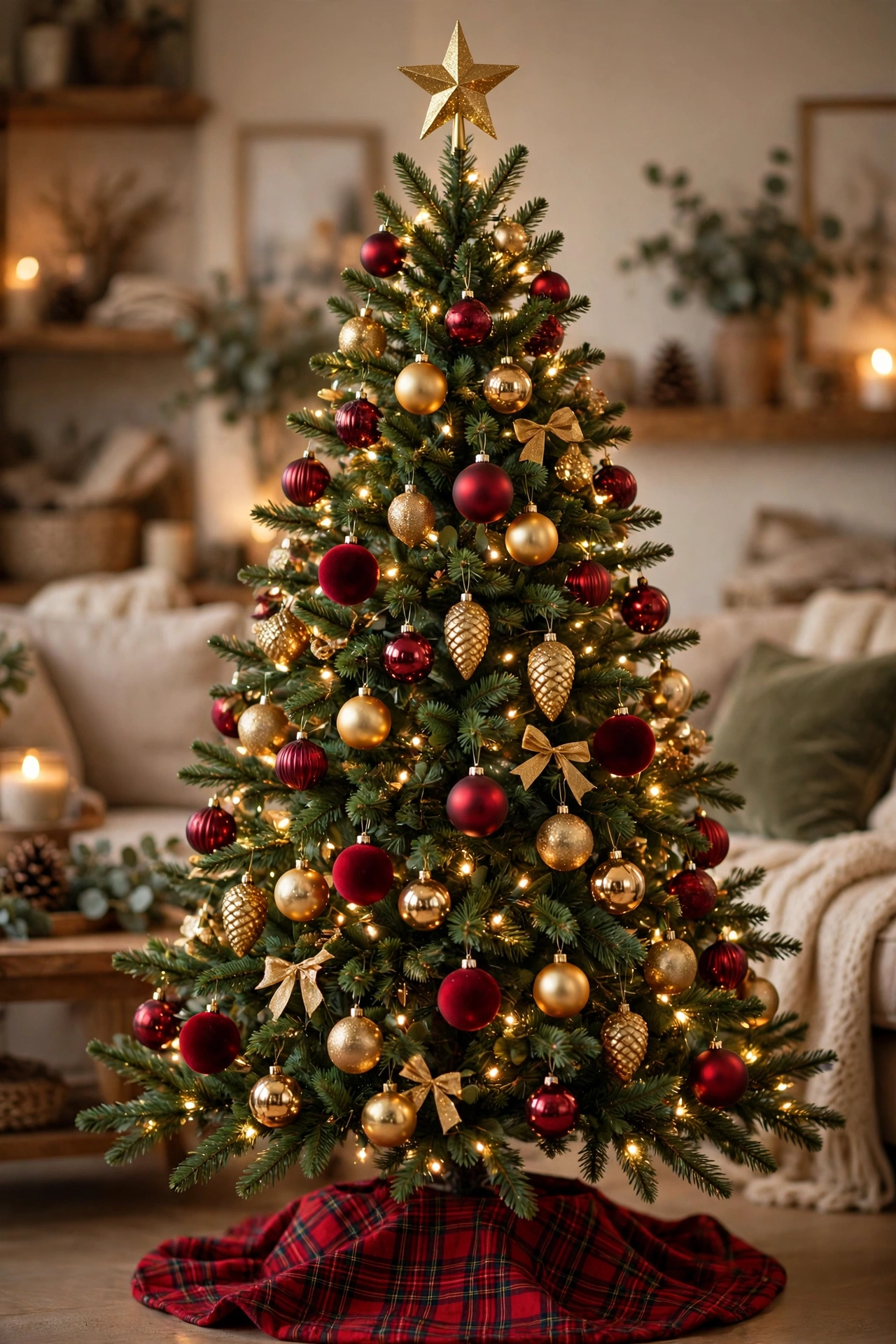
If you’ve ever wondered why store-display trees look so full and expensive, this is the secret: ribbon goes on before the ornaments, and it travels vertically. Cut wired ribbon into strips, tuck the top into the tree near the trunk, let it billow out over a branch, then tuck it back in further down — creating soft vertical waves from top to bottom.
Wired ribbon is non-negotiable here; it’s what holds the billow. Use one wide ribbon (2.5 to 4 inches) in a single color or pattern, and repeat the cascade in evenly spaced columns around the tree. Then add ornaments over and around it.
Tip: Plan on roughly 10 feet of ribbon per foot of tree height for full, lush cascades.
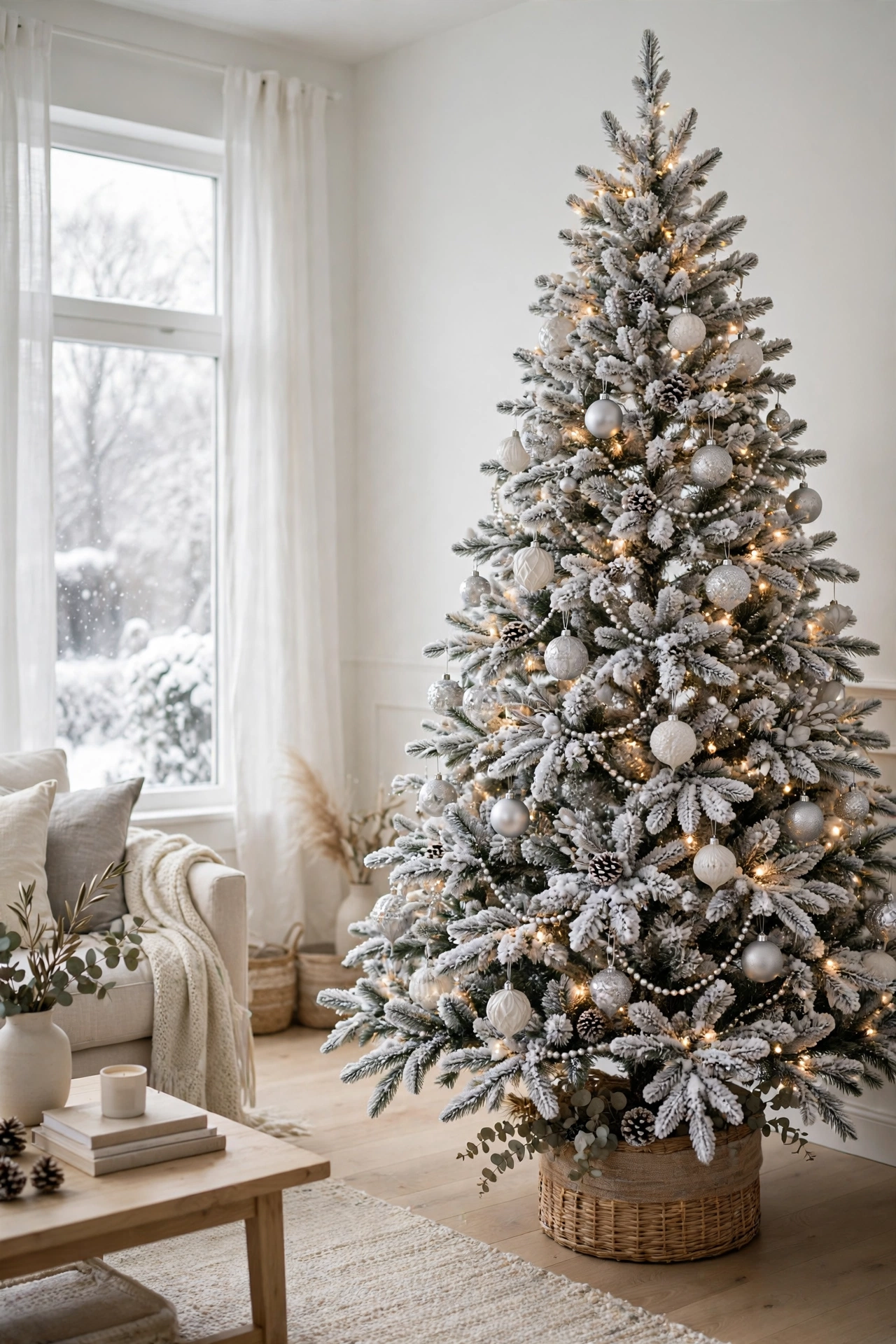
3. Try a Flocked Snowy Tree
A flocked tree — branches dusted with white “snow” — turns your living room into a winter scene before you’ve hung a single ornament. The white coating softens the green, makes colored ornaments pop, and looks magical with warm lights glowing through it.
Decorate it two ways: keep it wintry with silver, white, and icy blue ornaments, or lean into contrast with classic red berries and cardinals against the snow. Either way, use fewer ornaments than usual — the flocking itself is doing half the decorating.
Tip: Flocking sheds. Set the tree up where it will live, decorate in place, and give it a gentle shake outside first if it’s new.
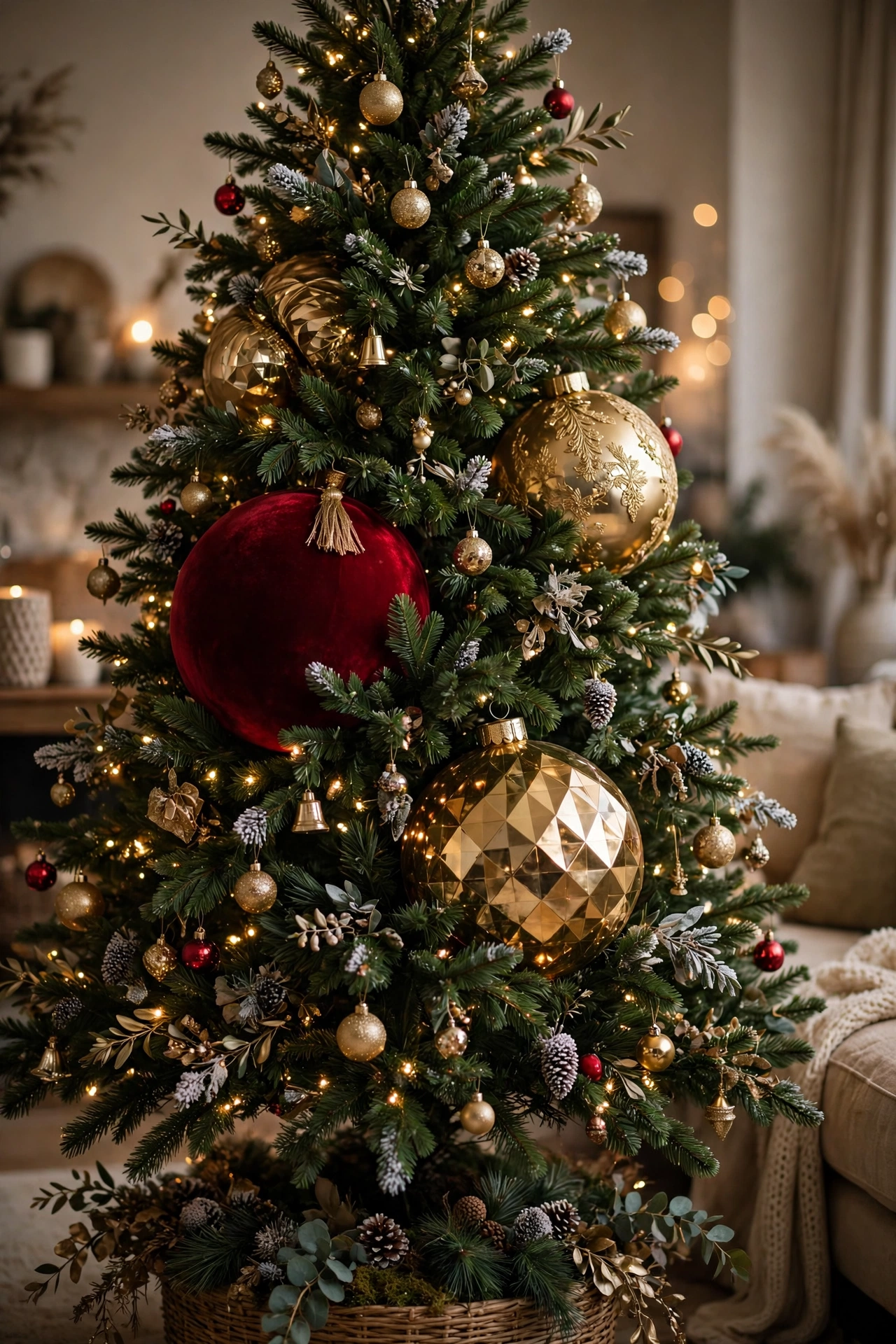
4. Add Oversized Ornaments for Drama
Scale is the fastest way to make a tree look professionally styled. Most of us hang only small and medium ornaments, which can read flat. Add a set of oversized baubles — 4 to 6 inches across — placed deep in the branches and spaced evenly around the tree, and everything suddenly looks intentional.
Fill in around the big pieces with your regular ornaments, working from large inside to small at the tips. Stick to your color palette for the oversized pieces so they anchor the theme rather than fight it.
Tip: Shatterproof oversized ornaments are worth it — they’re light enough for real branches and safe around kids and pets.
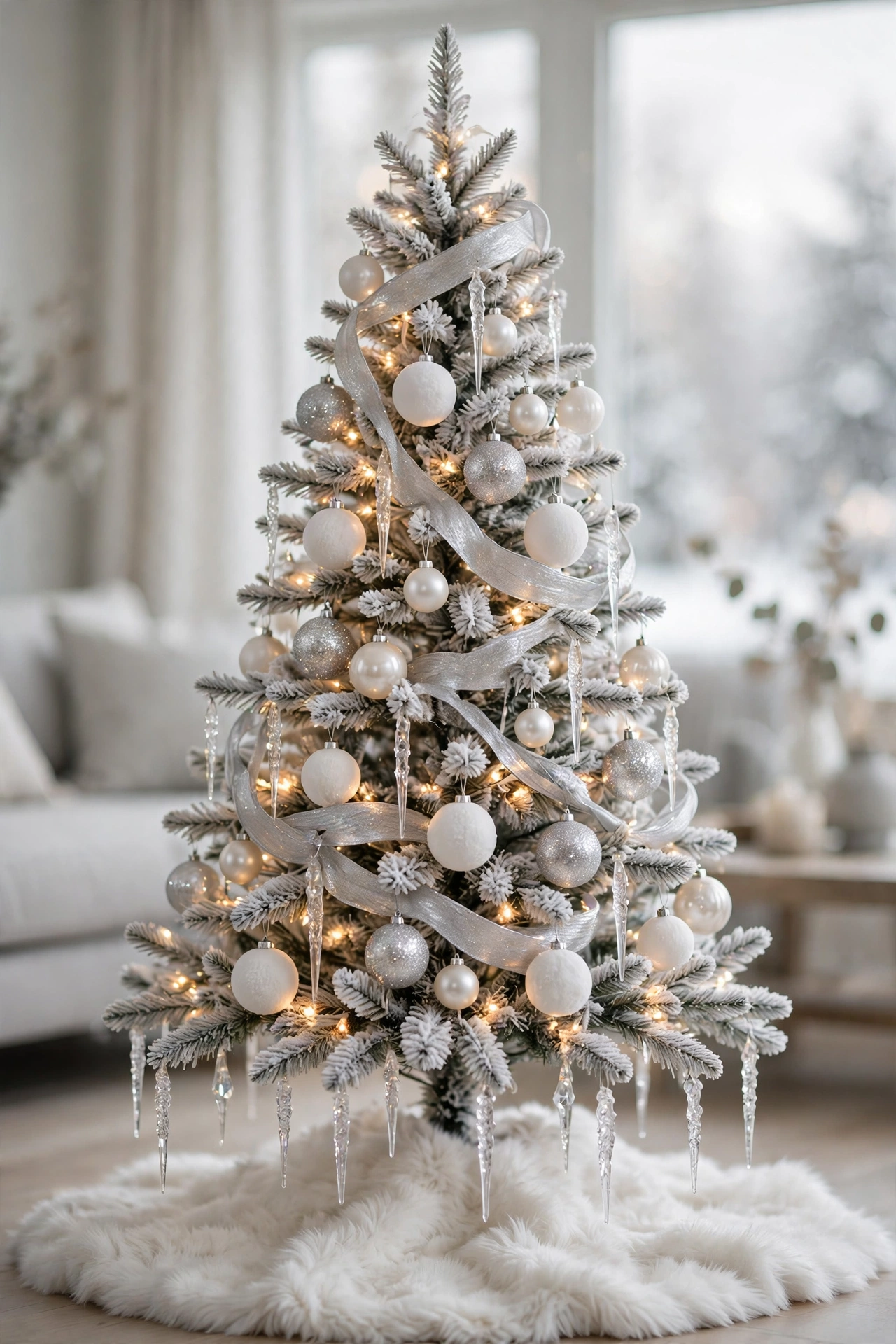
5. Do a White and Silver Winter Glow
For a tree that feels like fresh snow at dusk, go all in on white and silver. White ornaments in matte, pearl, and glitter finishes, silver ribbon or tinsel garland, and crystal-style drops create a monochrome tree that’s anything but boring — the interest comes from texture.
Use warm white lights rather than cool ones to keep the look glowing instead of icy-blue, unless your room is very modern. A white faux-fur tree skirt completes the snowdrift effect at the base.
Tip: Add a few clear glass ornaments — they catch the light like ice and keep the palette airy instead of heavy.
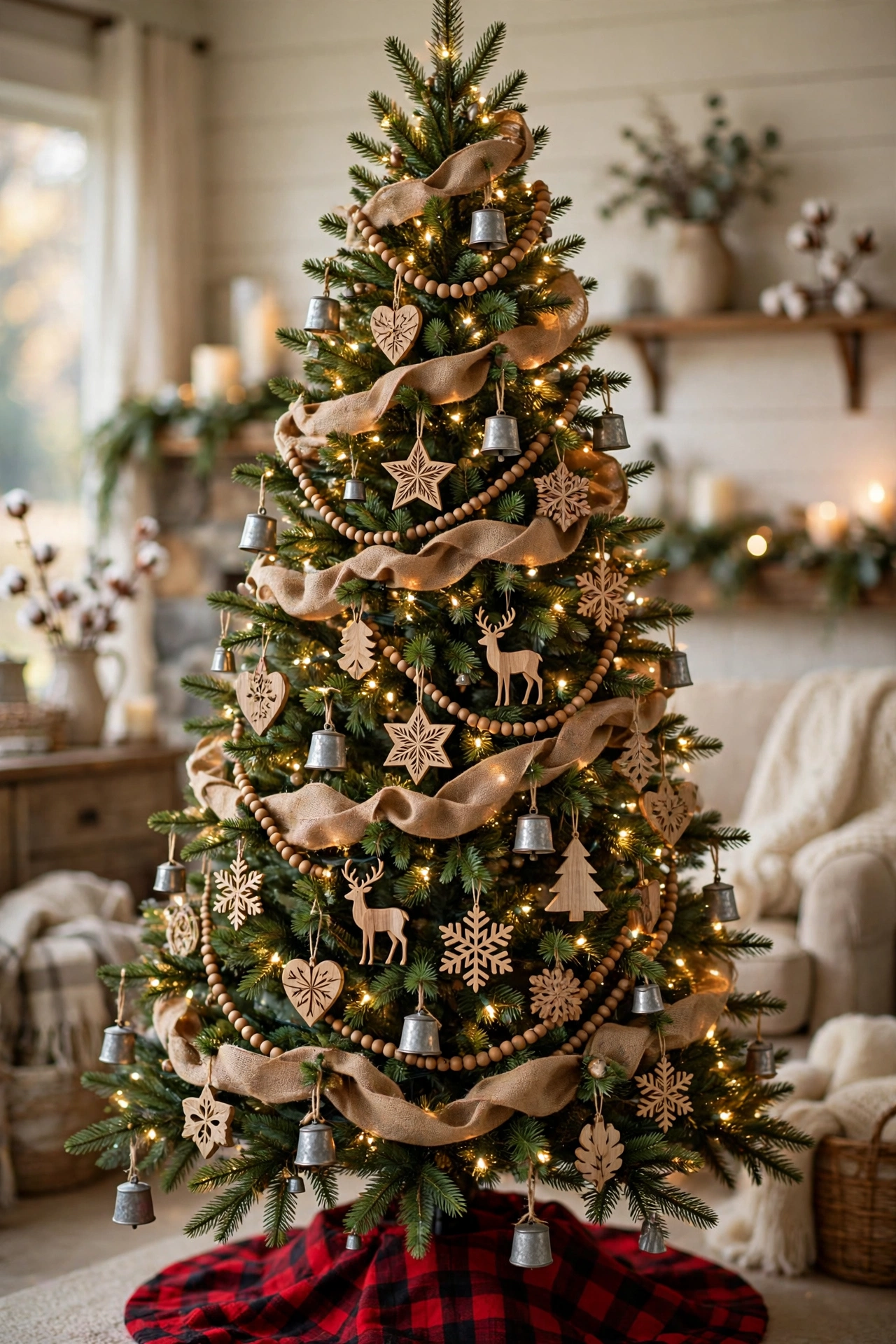
6. Rustic Farmhouse with Burlap and Wood
The farmhouse tree is warm, humble, and full of texture. Swap shiny garland for burlap ribbon, hang wooden bead garlands and carved-wood ornaments, and add galvanized metal accents — little buckets, stars, and bells — for that collected-over-time feel.
Plaid is your pattern here: a plaid tree skirt, a few plaid ribbon cascades, or plaid ball ornaments tie the whole theme together. Keep colors muted — cream, tan, barn red, and sage — so nothing looks too new or too perfect.
Tip: Weave in a few sprigs of cotton stems or dried oranges for an authentic, handmade touch that costs almost nothing.
7. Go Glam with Metallics
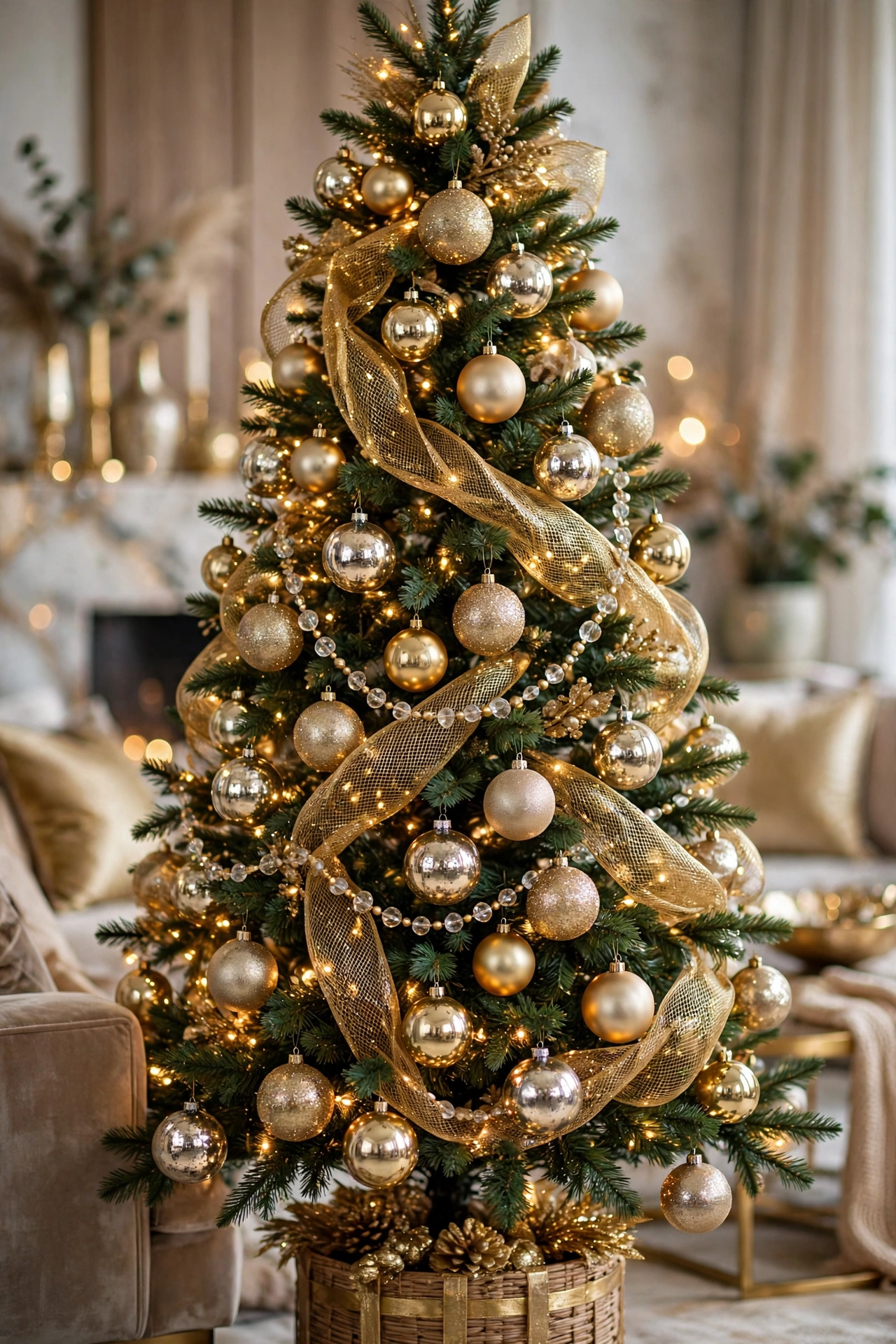
Gold, champagne, and a little sparkle: the glam tree is pure celebration. Layer metallic ornaments in mixed finishes — shiny, matte, glitter, and mercury glass — and weave in champagne ribbon or gold mesh for a tree that catches light from every angle.
Keep the base color story tight. All-gold is stunning; gold with cream feels softer; gold with black accents is dramatic and modern. Add crystal garland or beaded strands instead of tinsel for grown-up shimmer.
Tip: Glam trees love extra lights — go brighter than usual so the metallics actually sparkle at night.
8. Tuck In Picks, Sprays and Florals
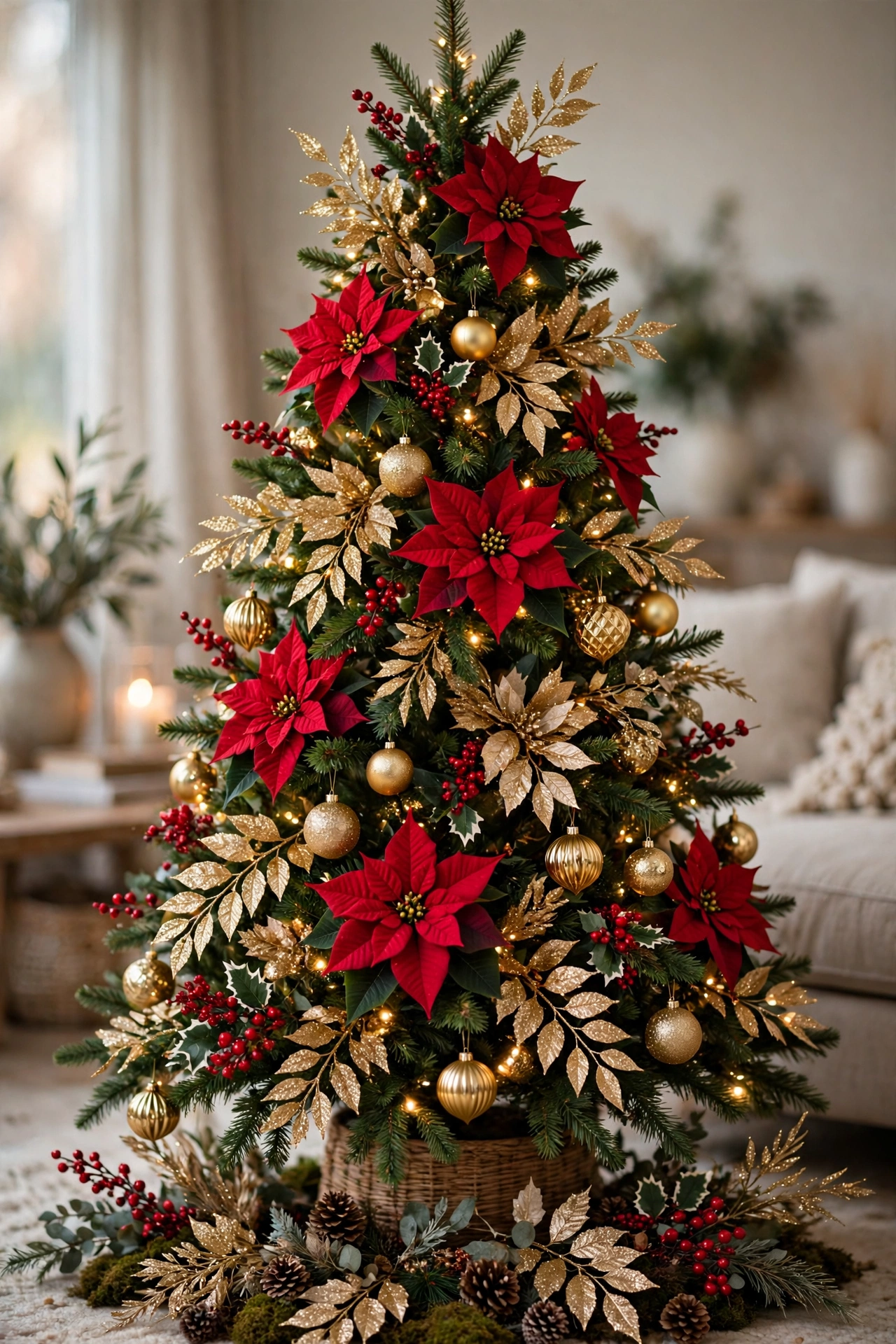
Those floral stems and glittery sprays you see in the craft store — picks — are the designer’s filler of choice. Tucking poinsettia picks, berry sprays, glitter branches, and eucalyptus stems into the gaps of a tree adds fullness, color, and height in minutes.
Work after your ornaments are on. Push picks in at an angle, pointing slightly upward like natural growth, and distribute them evenly — a dozen picks can transform a sparse tree. Match the pick colors to your theme: red poinsettias for classic, gold leaves for glam, frosted pine for woodland.
Tip: Buy picks in odd-numbered bundles and cluster two or three together in bare spots rather than scattering singles.
9. Woodland Tree with Pinecones and Berries
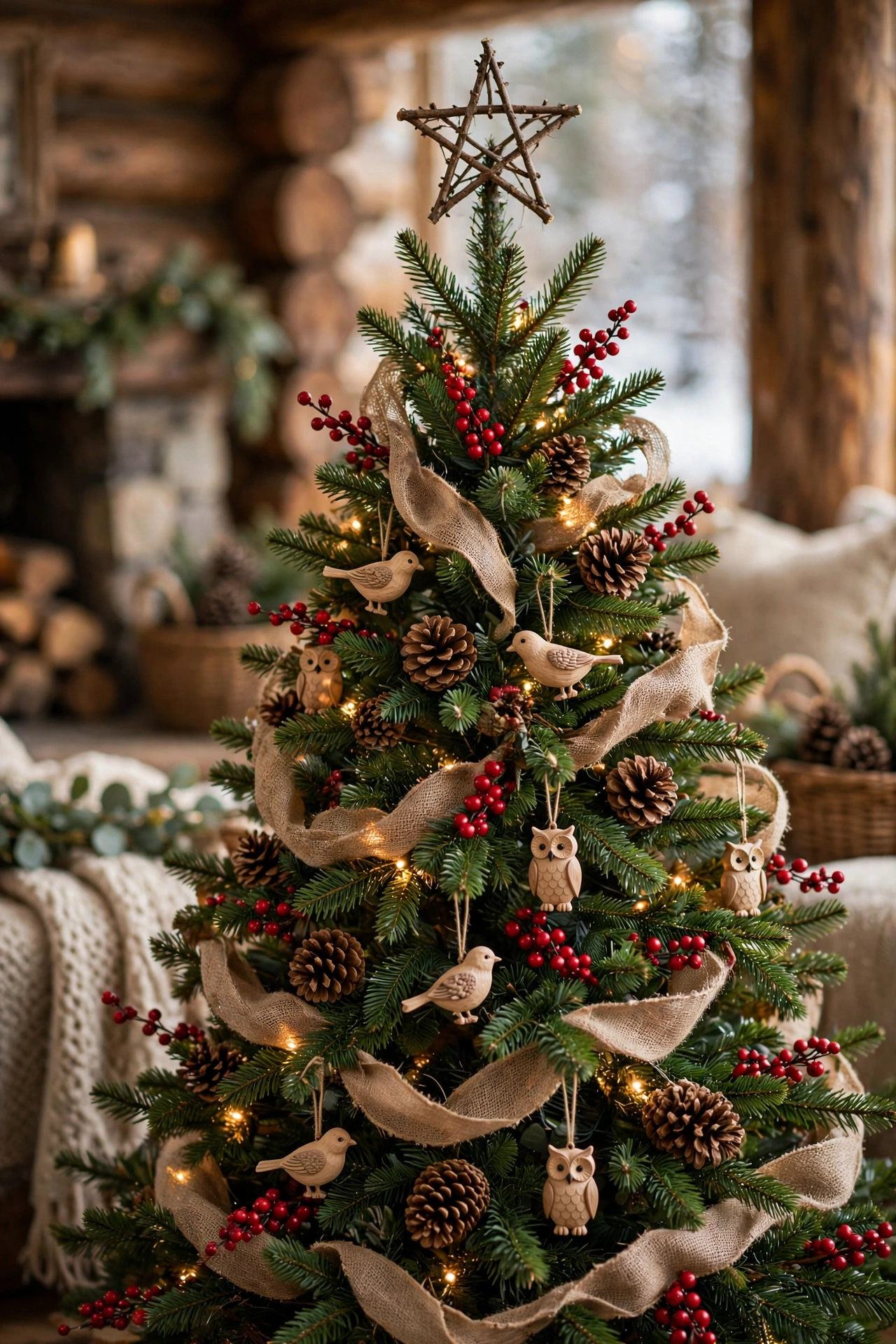
Bring the forest indoors with a tree decorated the way nature would: pinecones (plain, frosted, or lightly gilded), clusters of red berries, burlap or linen ribbon, and ornaments shaped like birds, owls, deer, and acorns.
This theme loves a real or very realistic tree, and it pairs beautifully with a flocked one too. Add warm white lights only — colored lights break the spell — and finish with a star made of twigs or a simple burlap bow on top.
Tip: Bake foraged pinecones at 200°F (95°C) for 30 minutes before using them to remove sap and any stowaways.
10. Blush Pink and Rose Gold Romance
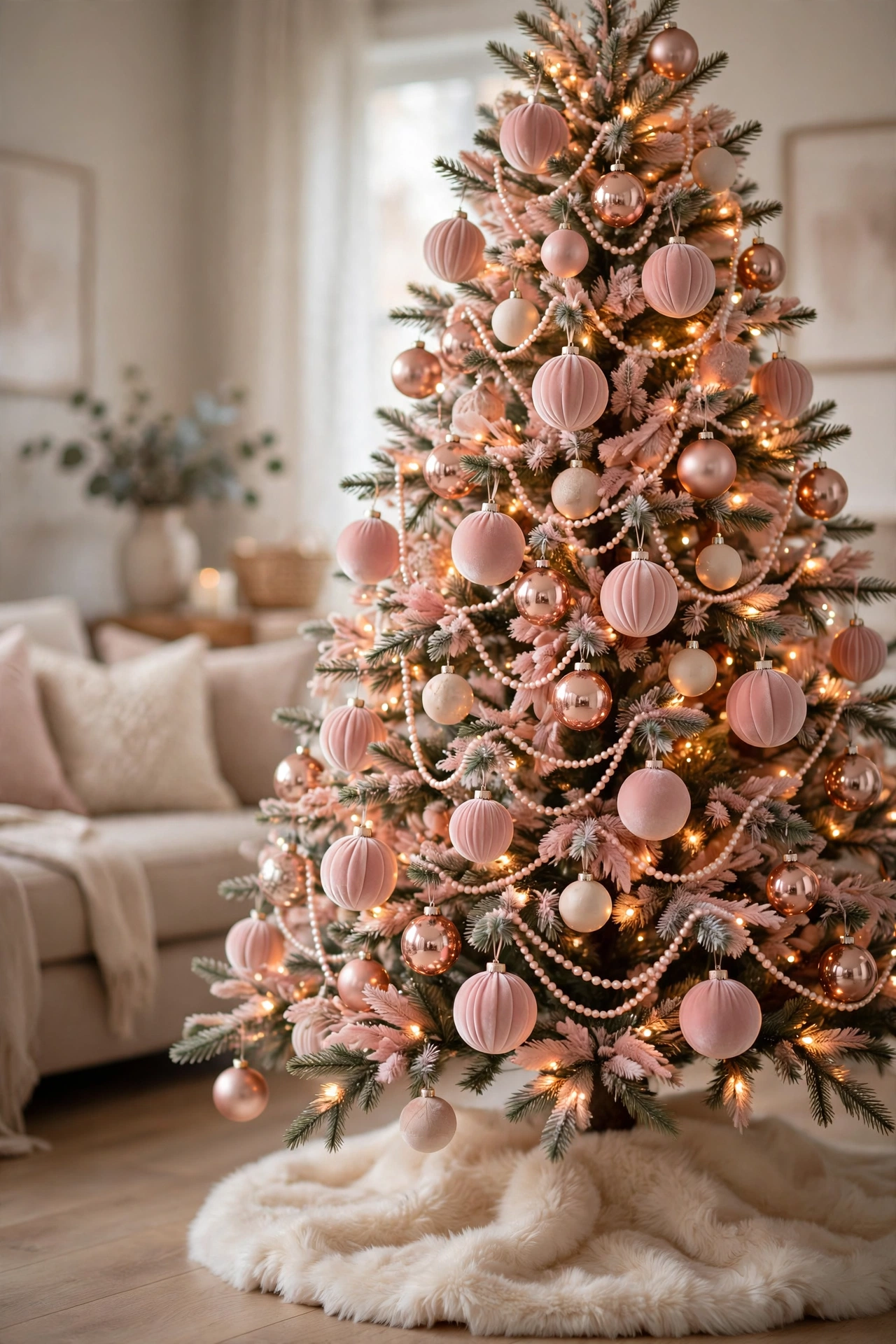
Soft, romantic, and quietly glamorous: blush pink ornaments with rose gold and cream accents make a tree that feels like a winter wedding. This palette flatters warm lighting and looks especially lovely in living rooms with neutral sofas and gold accents.
Balance the sweetness with texture — velvet-finish pink ornaments, pearl strands, and a few clear or champagne pieces to keep it sophisticated. A cream faux-fur skirt or rose gold mesh at the base finishes the look.
Tip: Anchor the palette with about a third of the ornaments in cream or ivory so the pink reads as an accent, not a flood.
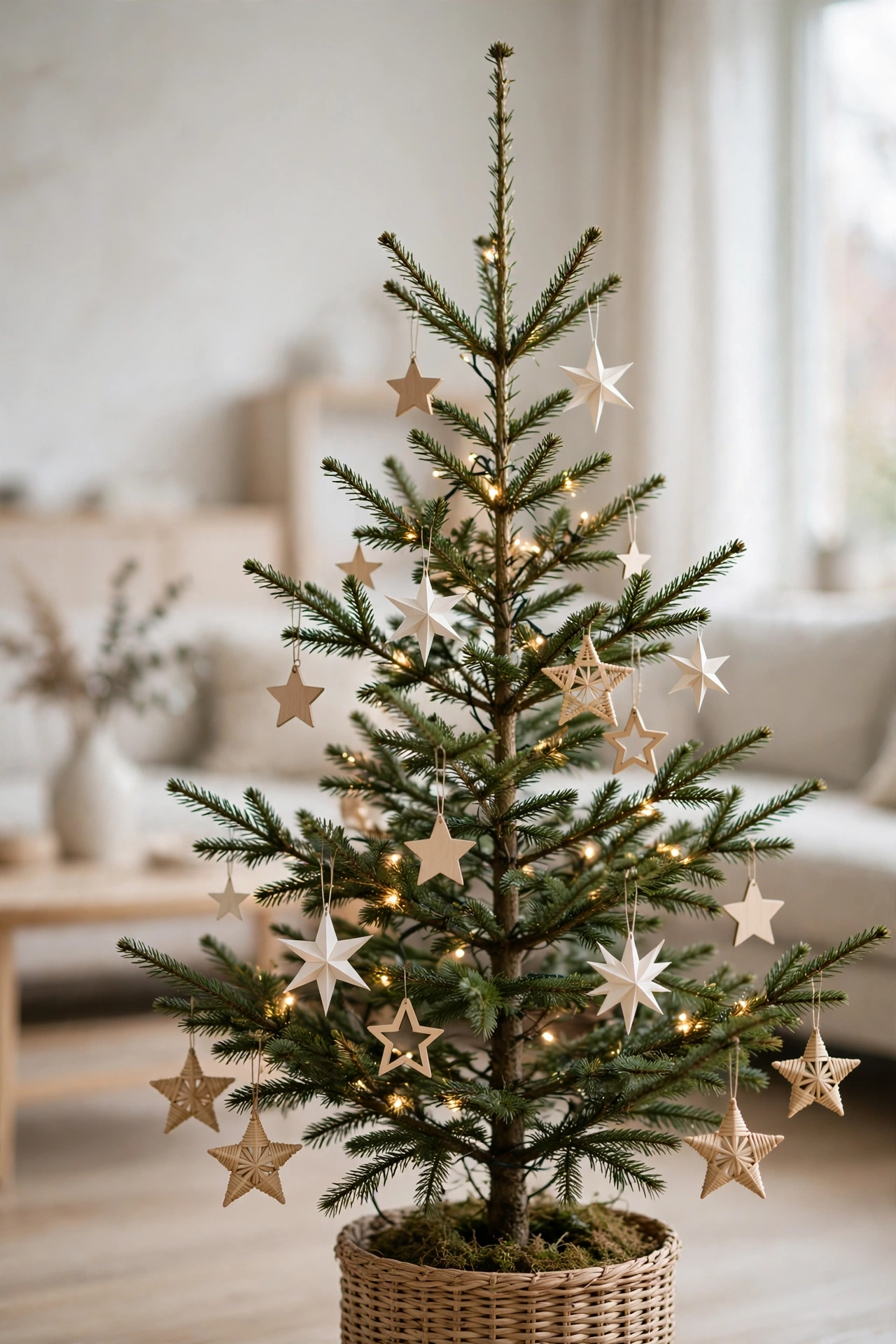
11. Minimalist Scandinavian Tree
The Scandinavian approach proves a tree doesn’t need to be loaded to be beautiful. Choose a smaller set of simple ornaments — white, natural wood, paper stars, straw shapes — and leave breathing room between them so the green of the tree is part of the design.
Warm white lights, no garland, and a simple woven basket or plain linen skirt keep it calm. This theme suits small spaces, modern homes, and anyone who finds traditional trees visually overwhelming.
Tip: Restraint is the whole point — box up ornaments into a “yes” pile of about 30 pieces and put everything else away.
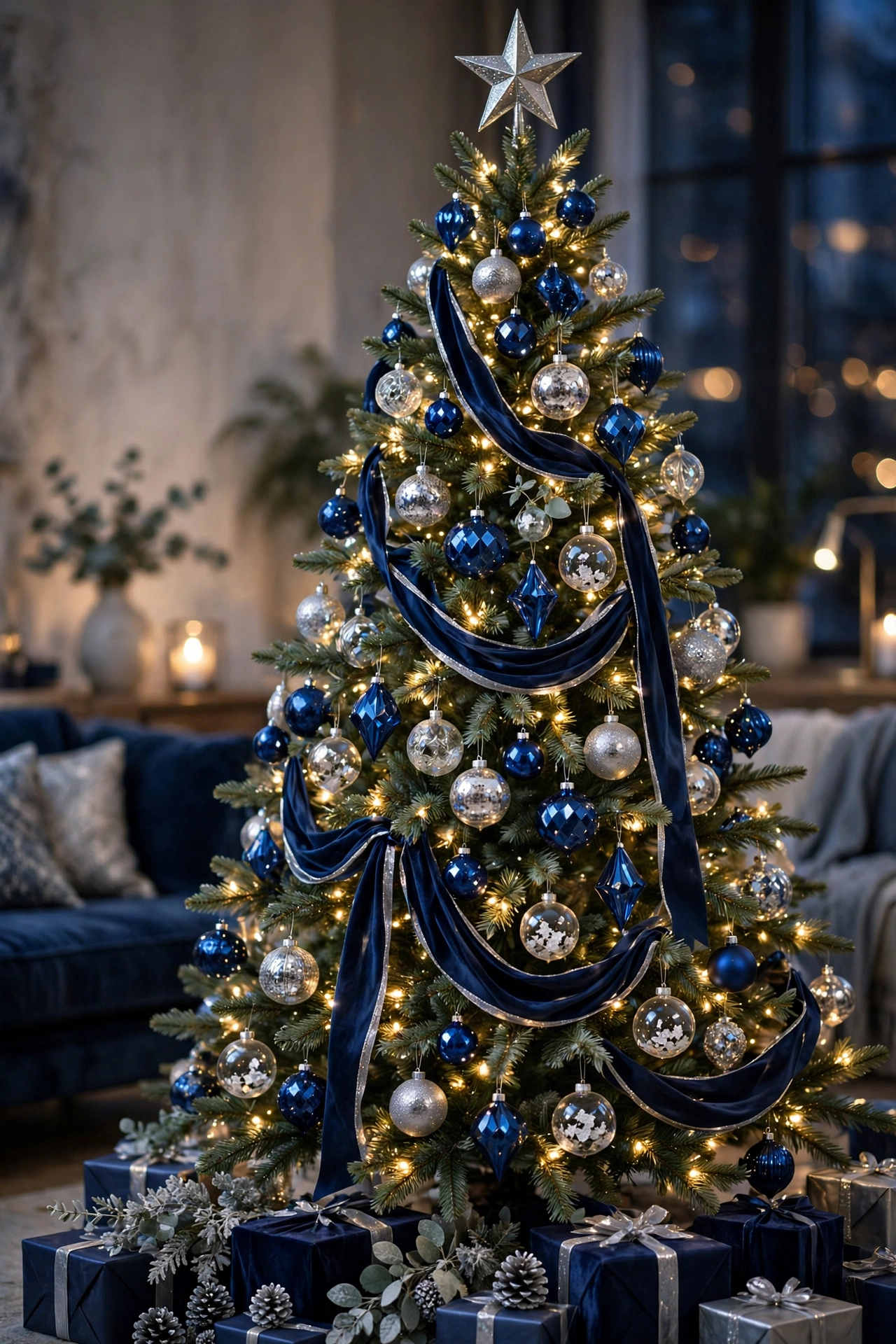
12. Blue and Silver Jewel Tones
Rich sapphire and navy ornaments against silver create a tree that feels like midnight on Christmas Eve — elegant, cool, and a little unexpected. Blue is a natural partner for green branches and glows beautifully next to warm white lights.
Use at least two shades of blue (deep navy plus a brighter sapphire) so the tree has movement, and break it up with silver and clear ornaments. A silver ribbon cascade or star topper keeps the wintry theme crisp.
Tip: A few peacock-feather picks or teal accents add a jewel-box richness that takes this theme from pretty to stunning.
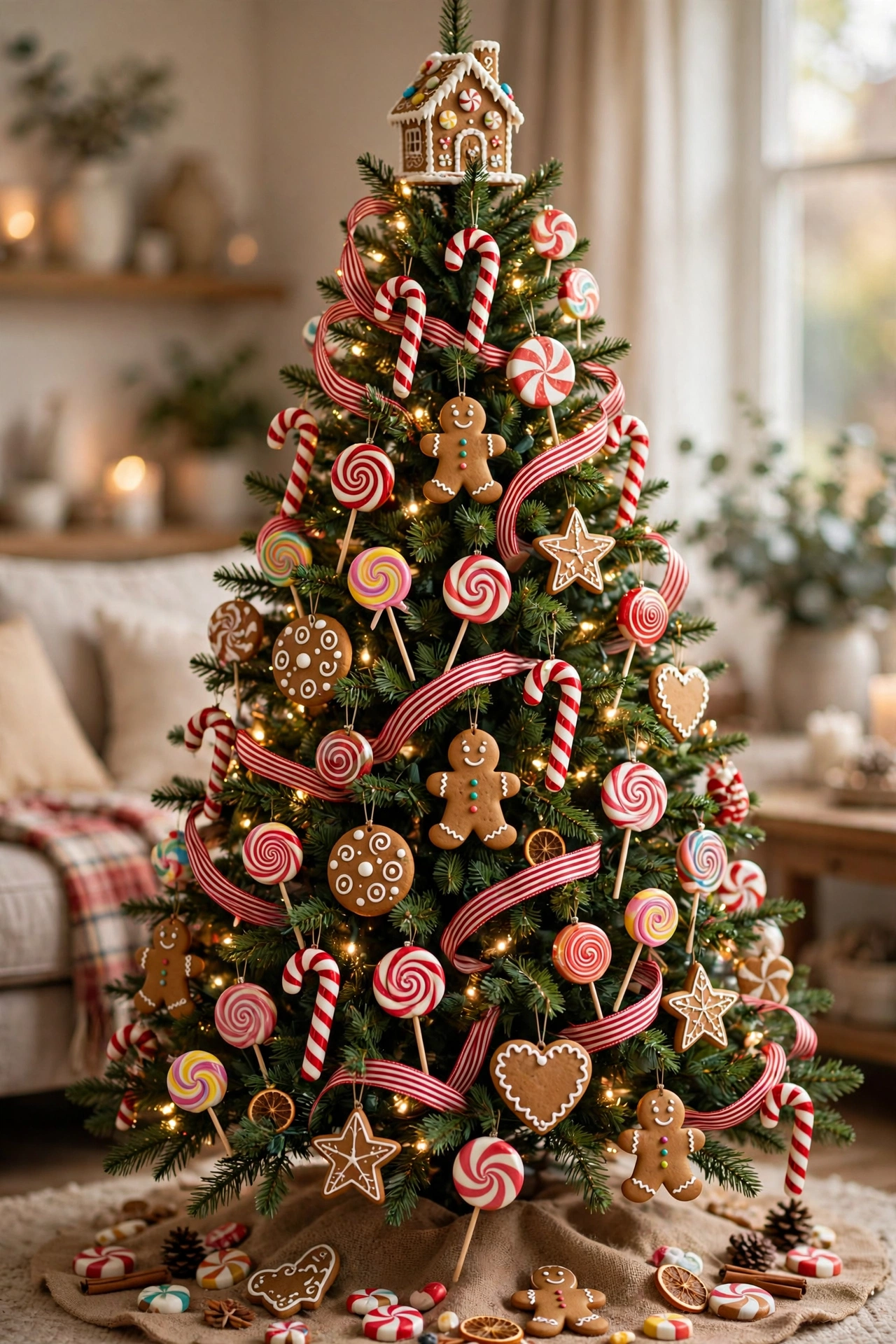
13. Gingerbread and Candy Sweet Tree
For pure joy — especially with kids in the house — decorate the tree like a gingerbread house. Candy ornaments, faux lollipops and candy canes, gingerbread-cookie shapes, and red-and-white striped ribbon turn the tree into the most fun spot in the house.
Keep a white or cream base in the mix (lights, some plain ornaments) so the candy colors pop instead of clashing. Real candy canes hooked over branches are cheap, edible, and charming — just replace any that get nibbled.
Tip: Put breakable heirloom ornaments on a different tree or shelf — this theme invites little hands to explore.
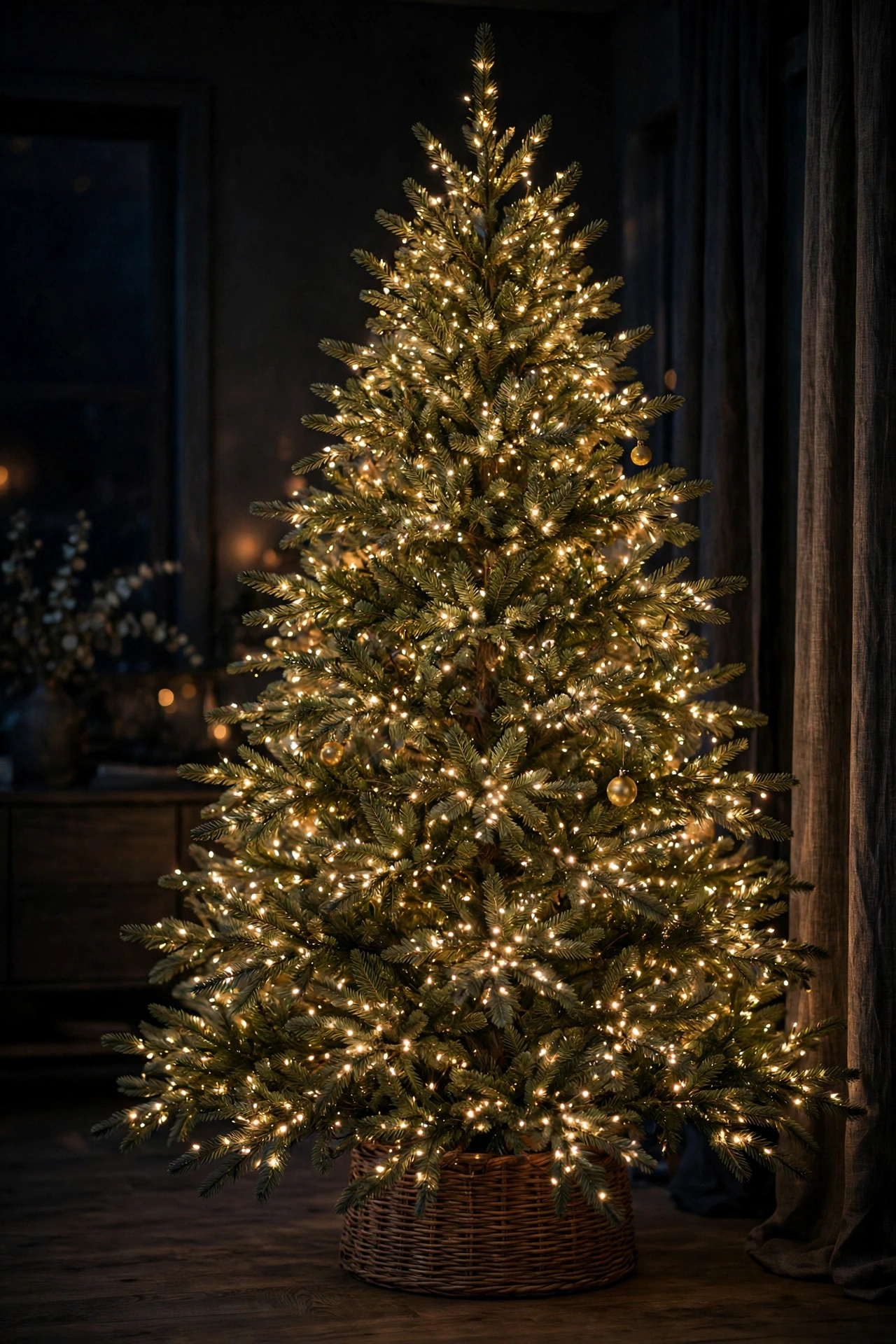
14. Light It Like a Pro
Whatever theme you choose, lighting makes or breaks it. The rule designers use: at least 100 lights per foot of tree height — a 7-foot tree wants 700 lights, which sounds like a lot until you see the difference. Well-lit trees glow from the inside instead of looking dotted.
Weave the strand in and out along each branch, from trunk to tip, rather than circling the outside of the tree. This puts light deep in the tree, creating depth and making ornaments sparkle. Add lights before anything else, and check the effect with the room lights off.
Tip: Mix one strand of larger “globe” bulbs among standard mini lights for a layered, high-end glow.
15. Finish with a Statement Topper and Collar
The top and bottom of the tree are the two spots most people forget — and the two that make it look finished. Trade the expected star for an oversized bow, a burst of picks and sprays arranged like a fountain, a rustic twig star, or a cluster of ornaments wired together at the crown.
At the base, swap the skirt for a tree collar — a woven basket, galvanized ring, or wooden box that hides the stand and gives the tree a clean, furniture-like finish. Collars also keep pets out of the water reservoir and presents looking tidy.
Tip: Whatever topper you choose, repeat one of its materials or colors at the base so the tree reads as one designed piece, top to bottom.
Quick Answers
What order do you decorate a Christmas tree in?
Lights first, then ribbon or garland, then ornaments from largest to smallest, then picks and sprays to fill gaps, and the topper last. This order keeps ornaments visible and prevents snagging decorations on branches as you work.
How many ornaments do I need for a Christmas tree?
A good guide is about 10-12 ornaments per foot of tree for a full look — roughly 70-85 for a 7-foot tree — plus ribbon and picks. Minimalist trees can use half that. Always place large ornaments first, deep in the branches, and fill in with smaller ones.
How much ribbon do I need for a Christmas tree?
For full designer-style cascades, plan on about 10 feet of wired ribbon per foot of tree height — around 70 feet for a 7-foot tree. For a lighter touch with a few swags, half that amount is plenty. Always choose wired ribbon so the billows hold their shape.
What are the most popular Christmas tree themes?
Classic red and gold, flocked winter white, rustic farmhouse, glam metallics, and woodland are perennial favorites. Blush pink, blue and silver jewel tones, and minimalist Scandinavian trees have grown fast in recent years. The best theme is the one that matches your room’s existing colors.
How do I make my Christmas tree look fuller?
Fluff every branch first, then layer: extra lights woven deep inside, ribbon cascades, large ornaments placed near the trunk, and floral picks tucked into any gaps. A sparse tree usually isn’t missing ornaments — it’s missing these filler layers.