
19 Christmas Basement Decor Ideas for a Warmer Downstairs
A basement at Christmas is either the warmest room in the house or the room everyone forgets. It has the space for the big tree, the long sofa, the film nights and the games table — but it also has the low light, the cold floor and the feeling of being a storey away from the celebration. These Christmas basement decor ideas close that gap, one warm layer at a time, so the downstairs feels like a proper part of Christmas instead of an afterthought.
Nothing here needs a renovation or a big budget. Work through the list in order — tree first, then light, then the soft layers — and the room will feel finished by the time you reach the last idea. Every suggestion is easy to undo in January, and every one of them works in a basement that is a family room, a den, or just the place where everyone ends up after dinner.
If the rest of the house needs the same treatment first, our winter basement decor ideas keep the room cosy all season long, our Christmas bedroom decor ideas carry the festive feeling upstairs, and if the downstairs ever becomes a guest room, our basement bedroom makeover ideas show how to turn it into a proper bedroom.
1. Start with the Tree
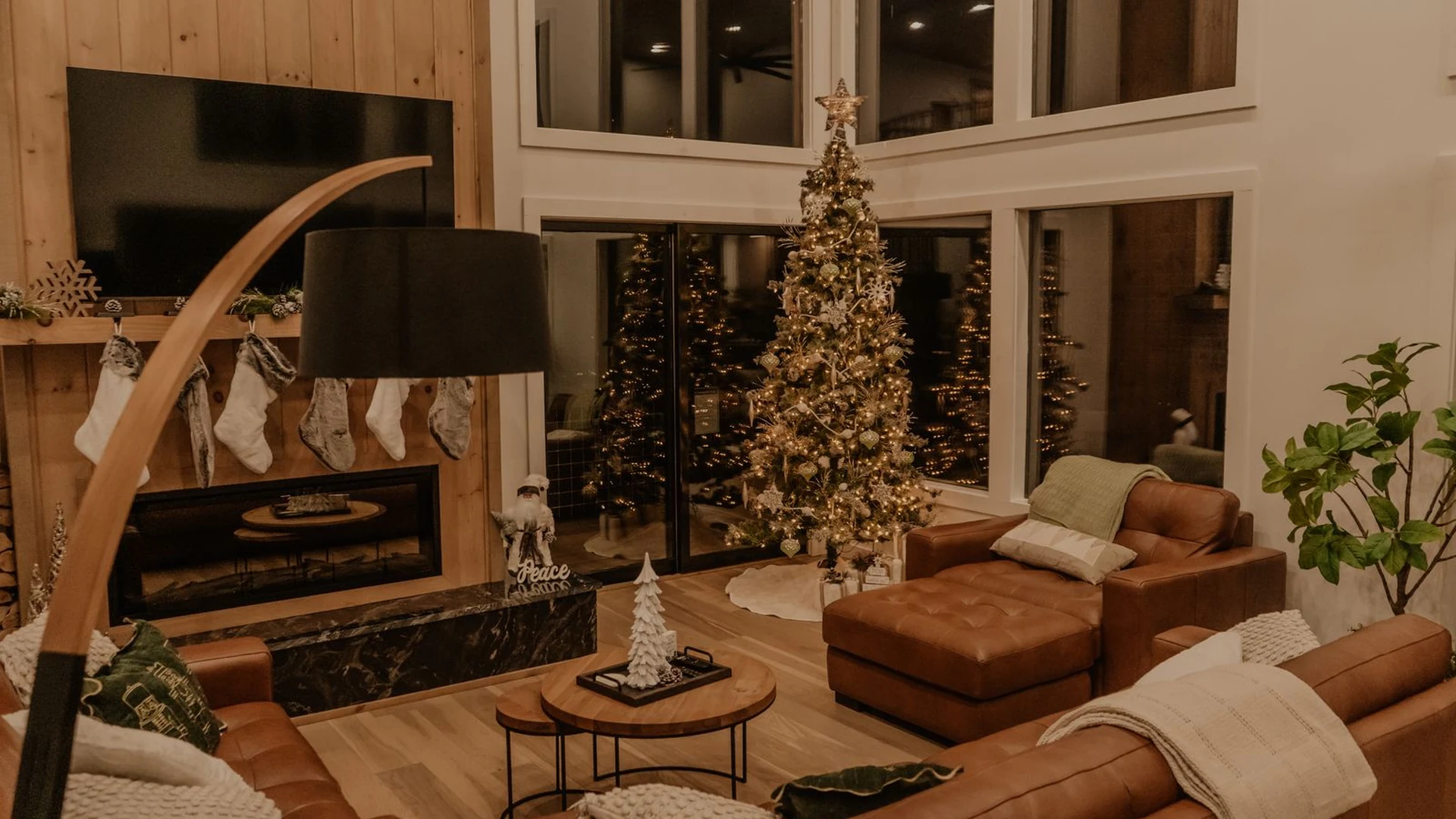
Everything else in the room hangs off the tree, so put it up first and let it set the tone. A basement can take a fuller tree than an upstairs room because the ceiling is often lower but the floor space is bigger — go wide rather than tall, and let the branches fill the corner instead of fighting the ceiling. Flocked branches in gold and neutral tones look warm under basement lighting, which is usually softer and warmer than the light upstairs.
Place the tree where it can be seen from the sofa and from the top of the stairs, so it greets people on the way down. That one placement decision does more for the room than any other single thing: the tree becomes the reason to come downstairs, not just another decoration waiting to be noticed.
Tip: Put the tree on a low, sturdy platform if the ceiling is tight — even a few inches of lift makes the topper sit better and keeps the lower branches clear of the floor.
2. Hang the Stockings on the Mantel
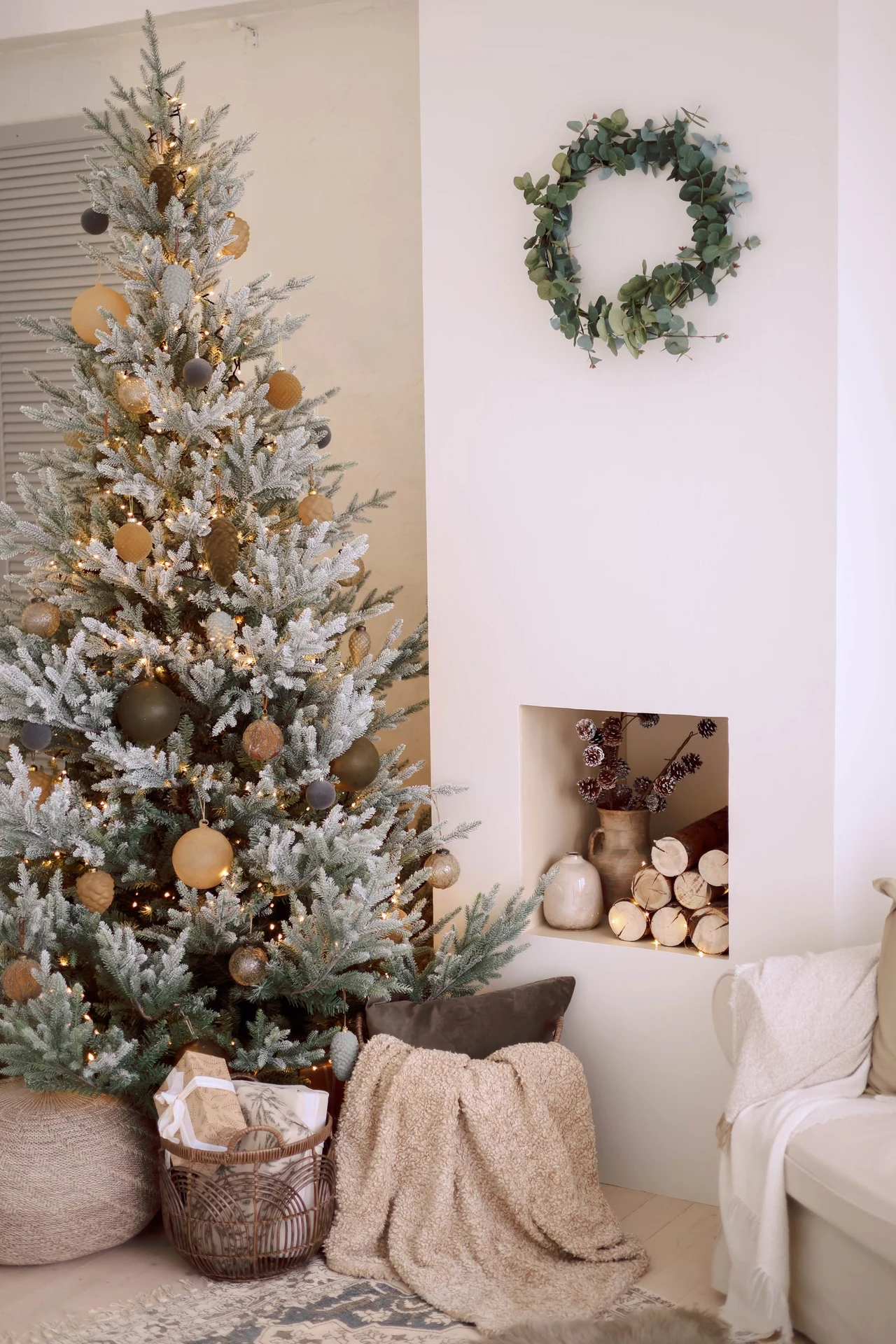
Stockings are the quickest way to make a basement fireplace feel like a Christmas fireplace. One stocking on the mantel says the room is decorated; a row of them says the family actually gathers here. Hang them from the mantel itself, not from a hook on the wall, so they sit at the height where everyone can see them from the sofa.
If the basement has no working fireplace, the mantel shelf still works — hang the stockings from the shelf and let them be the decoration. Keep them simple and in one colour family so they read as a set rather than a jumble, and leave a little space between each one so they hang straight instead of bunching together.
Tip: Use stocking holders that grip the shelf rather than adhesive hooks — basement walls and mantels are often painted brick or stone, and adhesive hooks do not hold well on them.
3. Pick a Full, Frosted Garland
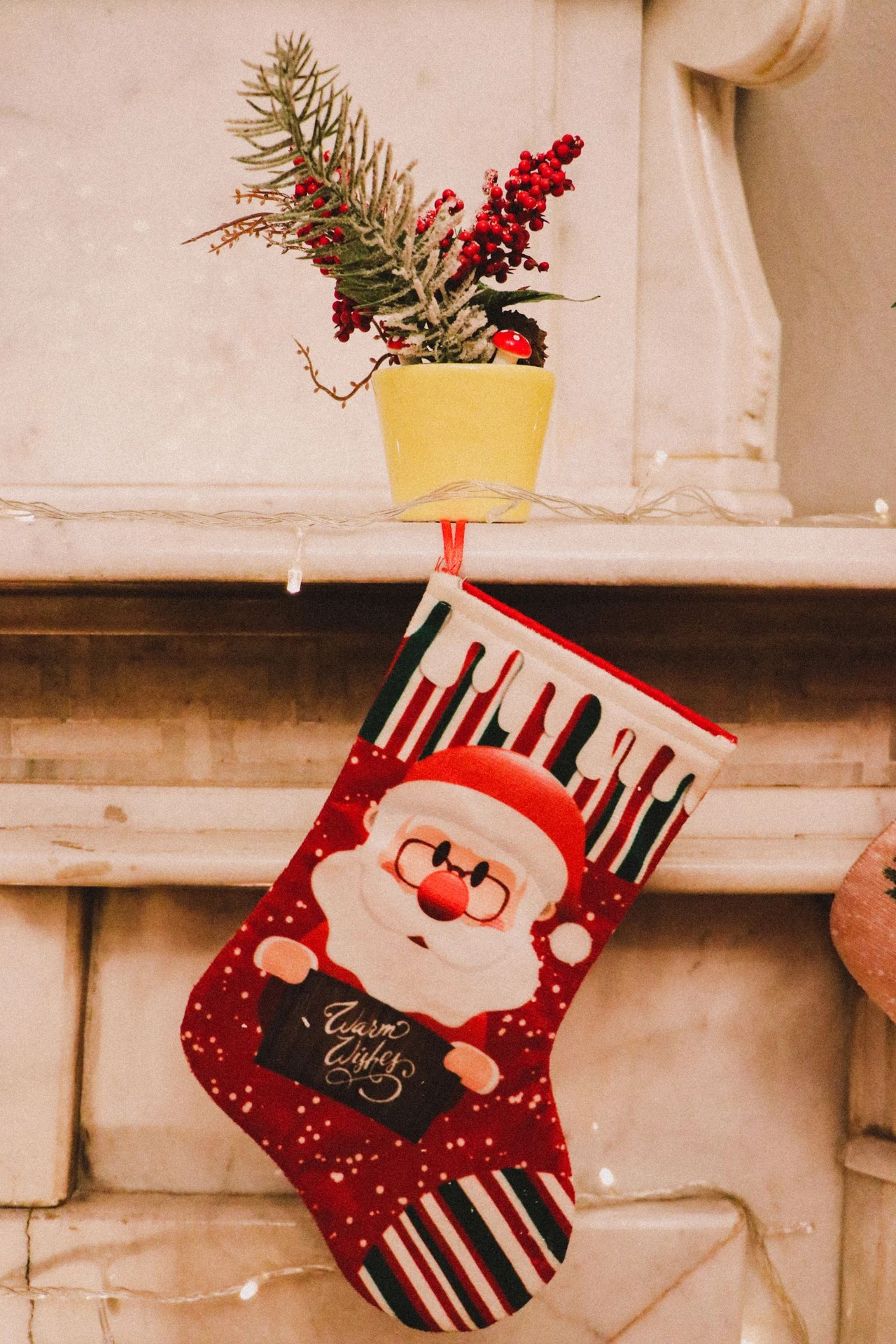
A garland is only as good as its fullness, and in a basement — where the light is low — a thin garland disappears. Choose the fullest frosted garland you can find, one with pinecones and red berries worked into it, and judge it by how it looks from across the room, not from two feet away. The frosted tips catch the fairy lights and lift the whole thing out of the shadows.
Run it along the mantel, the top of a bookshelf, or the stair rail, and let it drape rather than pulling it tight. A garland that sags gently in the middle looks generous; one pulled taut looks like a wire with leaves on it. Weave a string of warm fairy lights through it before you hang it — it is far easier to light on the floor than on the wall.
Tip: Fluff every branch outward before you hang the garland, then fluff it again once it is up — the second fluff is the one that makes it look twice as full.

4. Set Up a Hot Chocolate Station
A hot chocolate station is the basement’s answer to the kitchen — a small corner that says stay a while. All it needs is a tray, a few mugs, a jar of cocoa, and something sweet to drop in. Star-shaped marshmallows, a candy cane to stir with, and a sprig of pine on the tray are enough to make it feel like Christmas rather than just a drinks tray.
Put the station on a side table or a low shelf near the seating, not across the room, so nobody has to get up and cross the cold floor for a refill. Keep the mugs on the tray and the cocoa in a jar with a lid — basement air is damper than upstairs, and an open jar of cocoa goes stale faster than you would expect.
Tip: Make the station self-serve with a small kettle nearby — the person who wants a second mug should not have to go upstairs for hot water.

5. Build a Festive Vignette
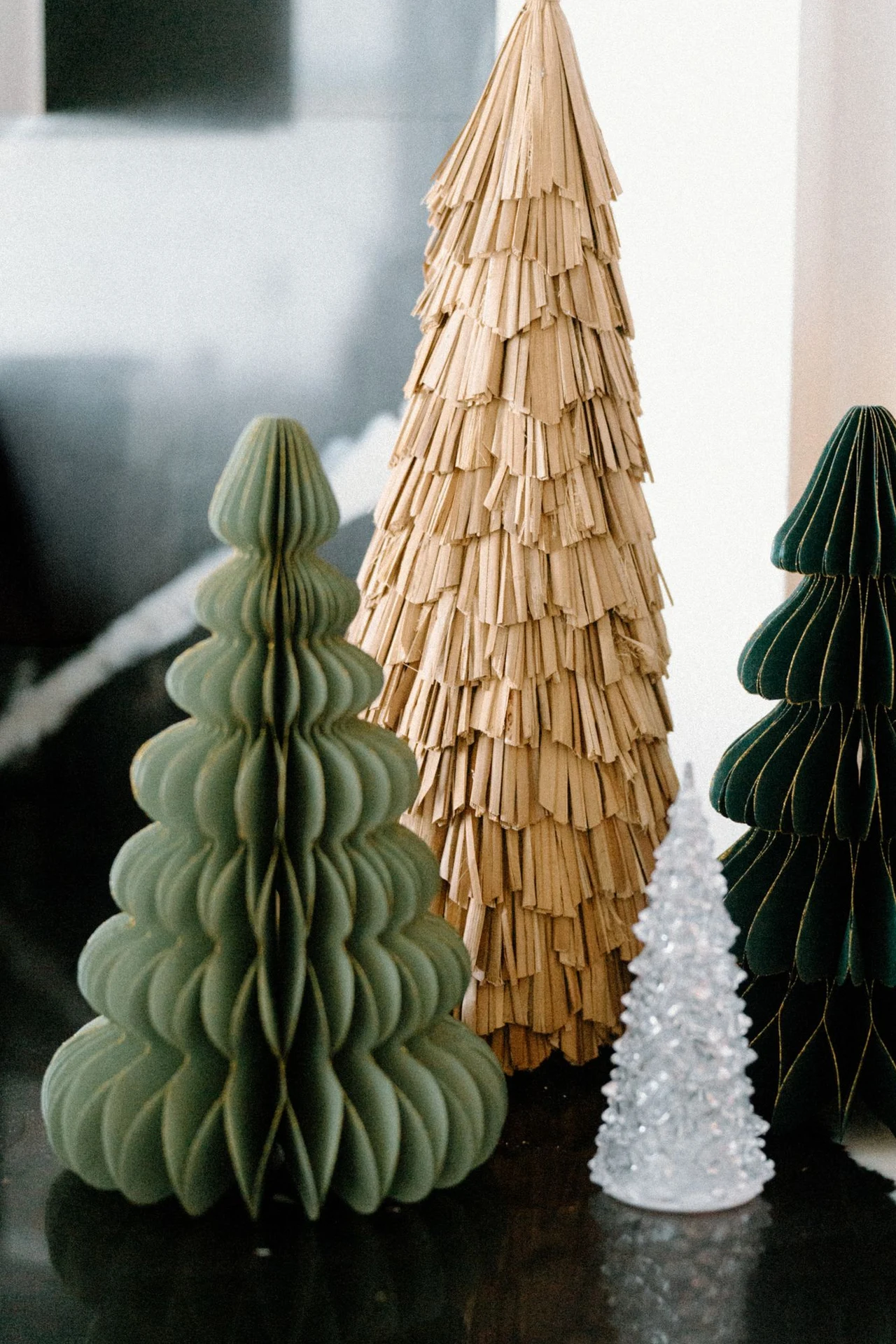
A vignette is a small, deliberate grouping of objects that tells the eye where to rest — and a basement, with its long walls and big surfaces, needs a few of them. A cluster of decorative mini trees in different materials — paper honeycomb, straw, glass — on a dark surface is the easiest one to build: three or four trees of different heights, grouped close together, read as a little forest.
Mix the textures on purpose. A matte paper tree next to a straw one and a glittering glass one gives the group depth, and because the trees are small, you can move the whole vignette in one lift when the room needs to change. Put it on a sideboard, a low shelf, or the coffee table, and keep the surface around it clear so the group has room to breathe.
Tip: Odd numbers look better than even ones — three or five trees in a group, never two or four, and vary the heights by at least a few inches.
6. Wrap the Gifts Where Everyone Can See Them
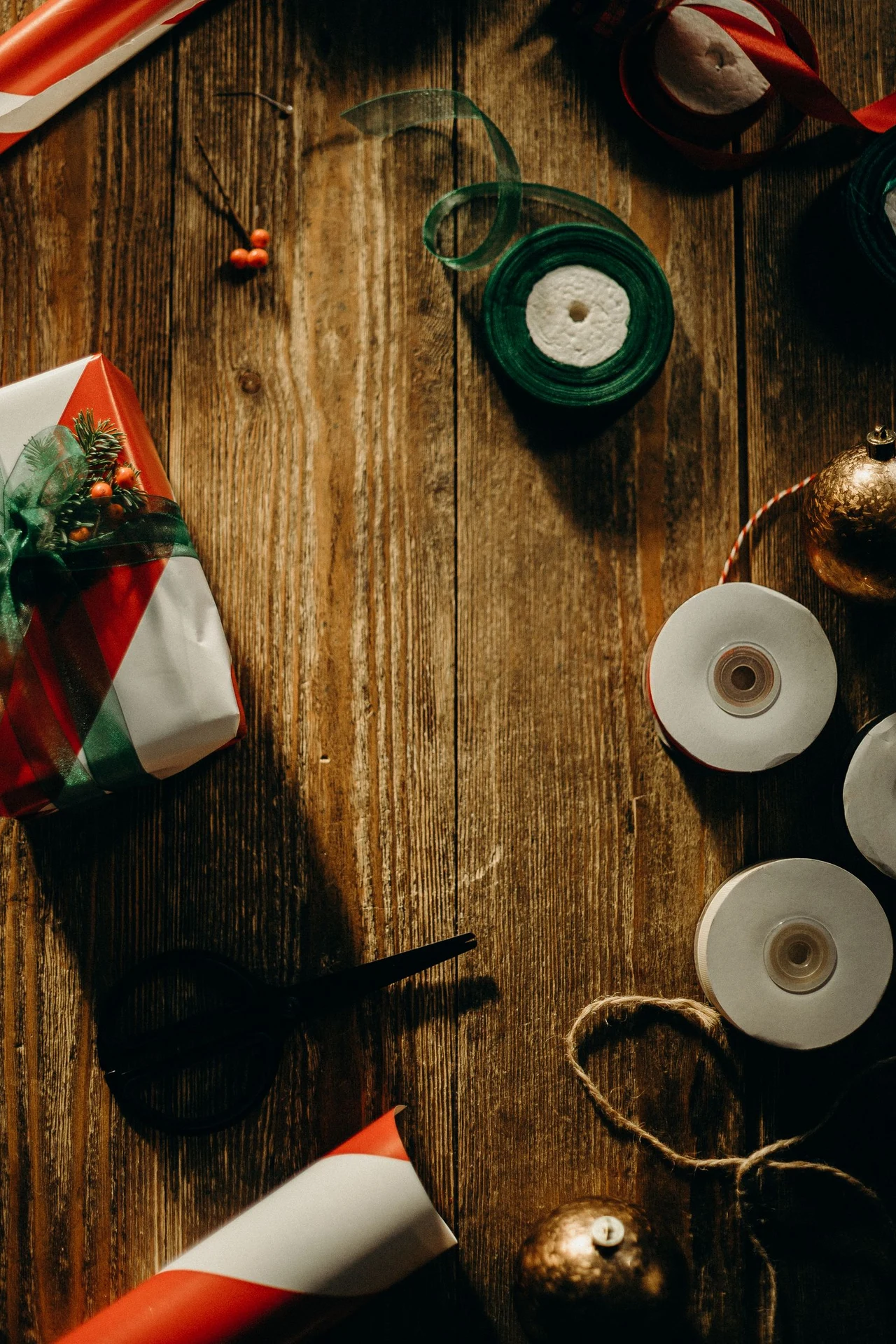
Gift wrapping is usually a chore done behind a closed door, but in a basement it can be part of the decoration. Set up a wrapping corner on a wooden table — a roll of paper, ribbon spools, scissors, twine and a few baubles scattered around — and the half-wrapped gifts become a still life that makes the room feel busy and loved. The wrapping table is the one surface in the house that is allowed to look messy at Christmas.
Keep the palette to two or three colours so the corner reads as intentional rather than chaotic. Brown kraft paper with red ribbon, or cream paper with gold twine, looks calm against the wood; five different papers in five different patterns looks like a clearance sale. Wrap a few gifts early and leave them on the table as part of the display — they are the best decoration in the room, and they cost nothing extra.
Tip: Keep a small basket under the table for offcuts and ribbon ends — the wrapping corner stays pretty only as long as the scraps have somewhere to go.
7. Make the Seating the Cosiest Spot in the House
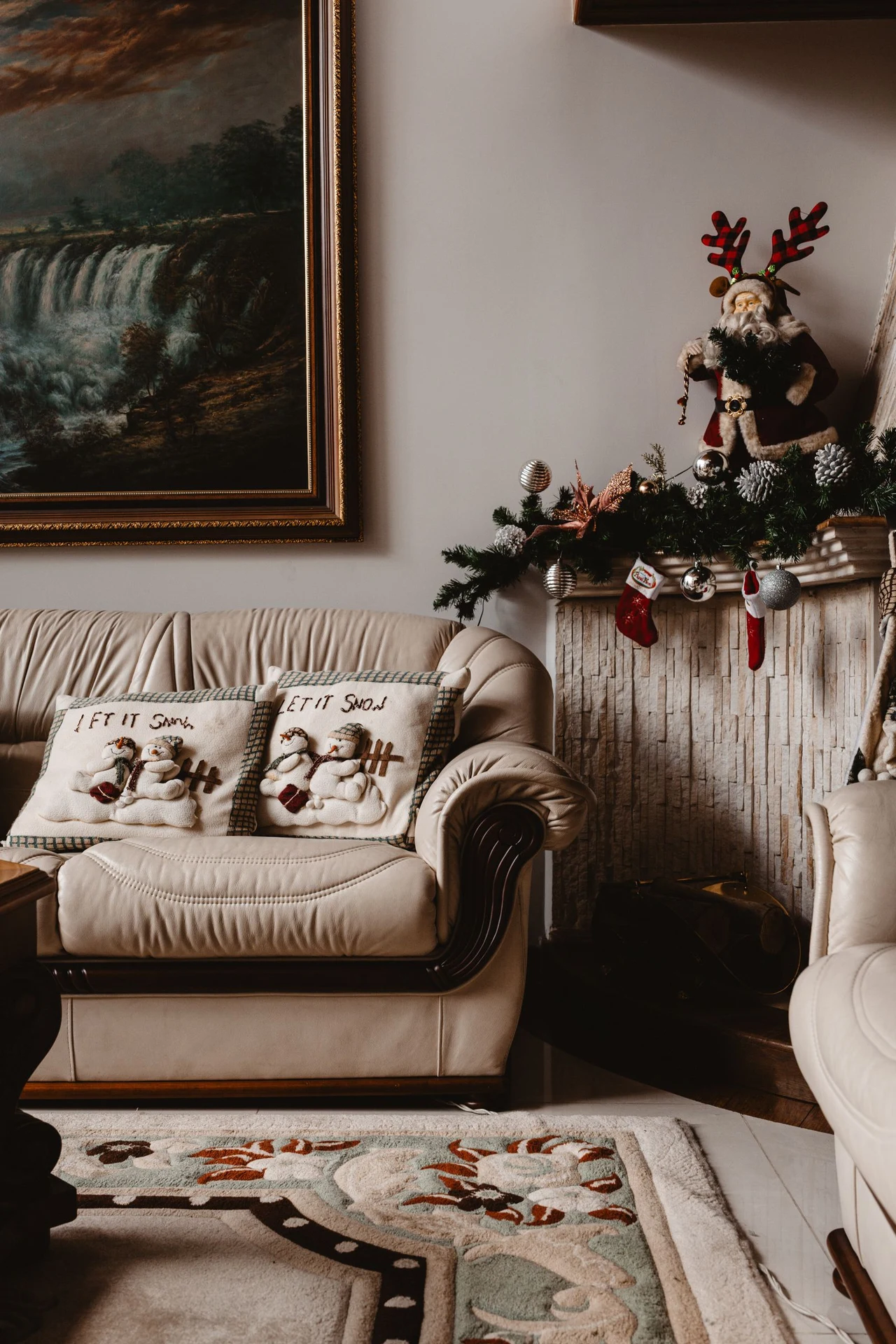
People will only stay in the basement if the seating is the most comfortable seat in the house, so make it undeniable. A leather sofa in front of the fireplace, with a garland and stockings on the mantel behind it, is the whole argument: this is where the evening happens. Add one soft layer — a throw over the arm, a cushion that is actually comfortable — and the sofa becomes the destination rather than the overflow.
Angle the seating toward the fireplace and the tree, not toward the television, so the room feels like a gathering place first and a screen room second. If the sofa faces the wall with the TV, the basement stays a TV room with decorations in it; if it faces the fire, it becomes a Christmas room that happens to have a television.
Tip: Put a small side table within arm’s reach of every seat — a mug of cocoa with nowhere to go ends up on the floor, and a floor is the coldest place in a basement.
8. Light It with Lanterns and Candles
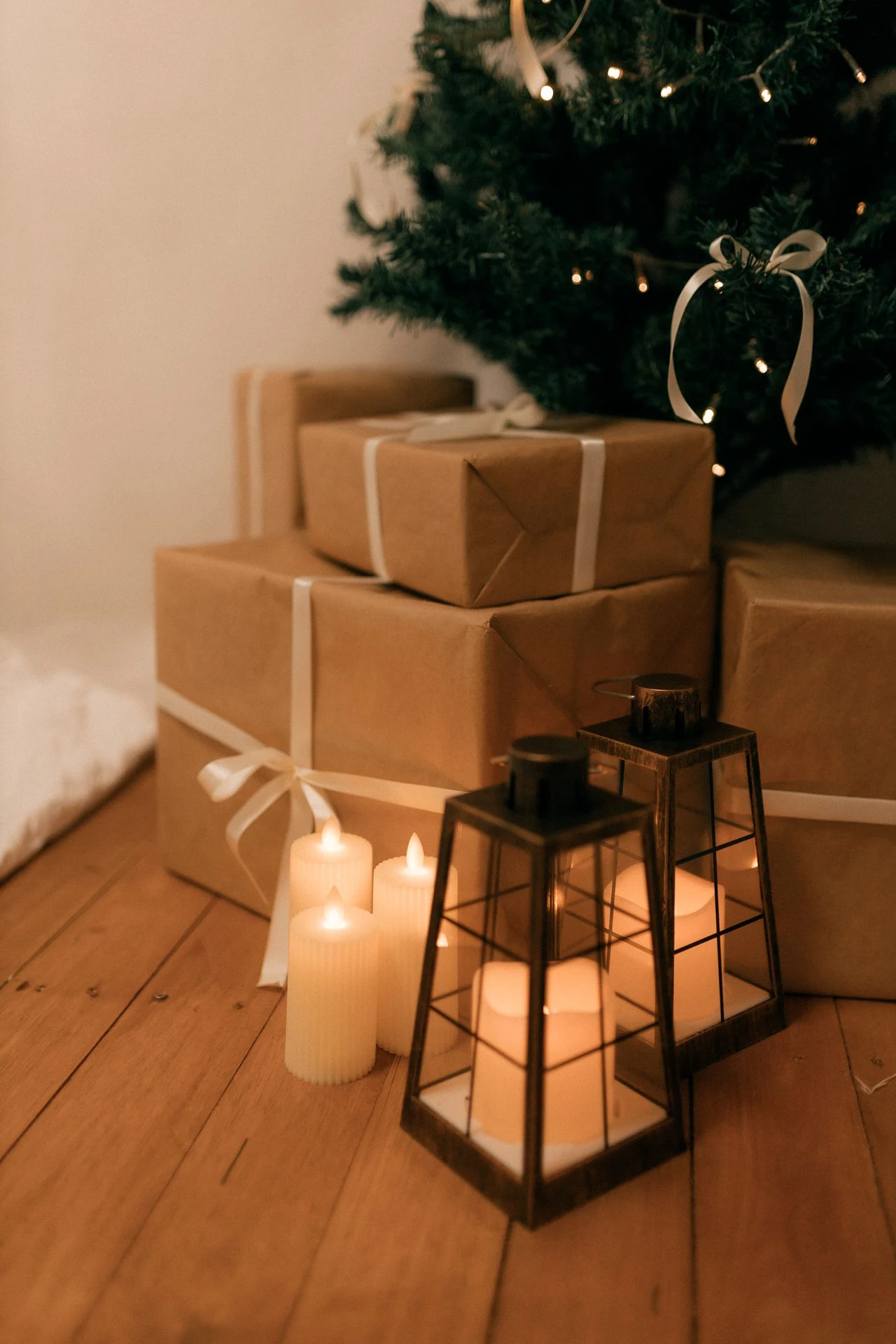
Basements are short on natural light, so the lighting has to do the decorating — and lanterns do it better than overhead lights. Two lanterns with LED candles, a few pillar candles and a kraft-wrapped gift or two on a low table give the room a glow that a ceiling light never will. The light is low, warm and flickering, which is exactly what a basement needs to stop feeling like a basement.
Use LED candles inside the lanterns and real candles only where you can see them and reach them easily. Group the lanterns in twos or threes at different heights rather than lining them up in a row — a cluster reads as a feature, a row reads as a queue. Put the brightest cluster near the seating and a smaller one by the stairs, so the light leads people down and then holds them in the room.
Tip: Put the lanterns on a timer so they come on before the family comes downstairs — walking into a room that is already glowing feels completely different from walking into a dark one and switching the lights on.
9. Plan a Christmas Movie Night
A basement is the best film room in the house — it is dark, it is quiet, and nobody has to whisper. Lean into that and make movie night a proper event rather than something that just happens. A big bowl of popcorn on the sofa, the lights low, the throws out, and a film everyone has been waiting for is all it takes; the room does the rest.
Pick the film in advance and put the time on the calendar like a real plan, because a movie night that starts with twenty minutes of scrolling is a movie night that never quite starts. Make the popcorn before everyone sits down, and keep a second bowl ready — the first one never lasts past the opening credits.
Tip: Keep a basket of blankets by the sofa so nobody has to leave the room to get warm — the moment someone goes upstairs for a blanket, the film pauses and the spell breaks.

10. Leave a Board Game Out on the Table
A board game left out on the table is an invitation that works all day long. A wooden Ludo board with its colourful pegs and die, set up mid-game on the coffee table, tells everyone who walks past that this room is for playing in — and in a basement, where the table is big and nobody needs it for anything else, the game can stay out for days without getting in the way.
Choose a game that takes minutes to learn and works for mixed ages, so a teenager and a grandparent can sit down together without a rulebook. Leave it set up, not packed away in its box — a game in a box is a chore, a game on the table is a promise that someone will sit down and play.
Tip: Keep the game pieces in a small bowl beside the board, not loose in the box lid — pieces that roll off a basement table end up under the sofa and stay there until January.

11. Hang a Wreath on the Basement Door
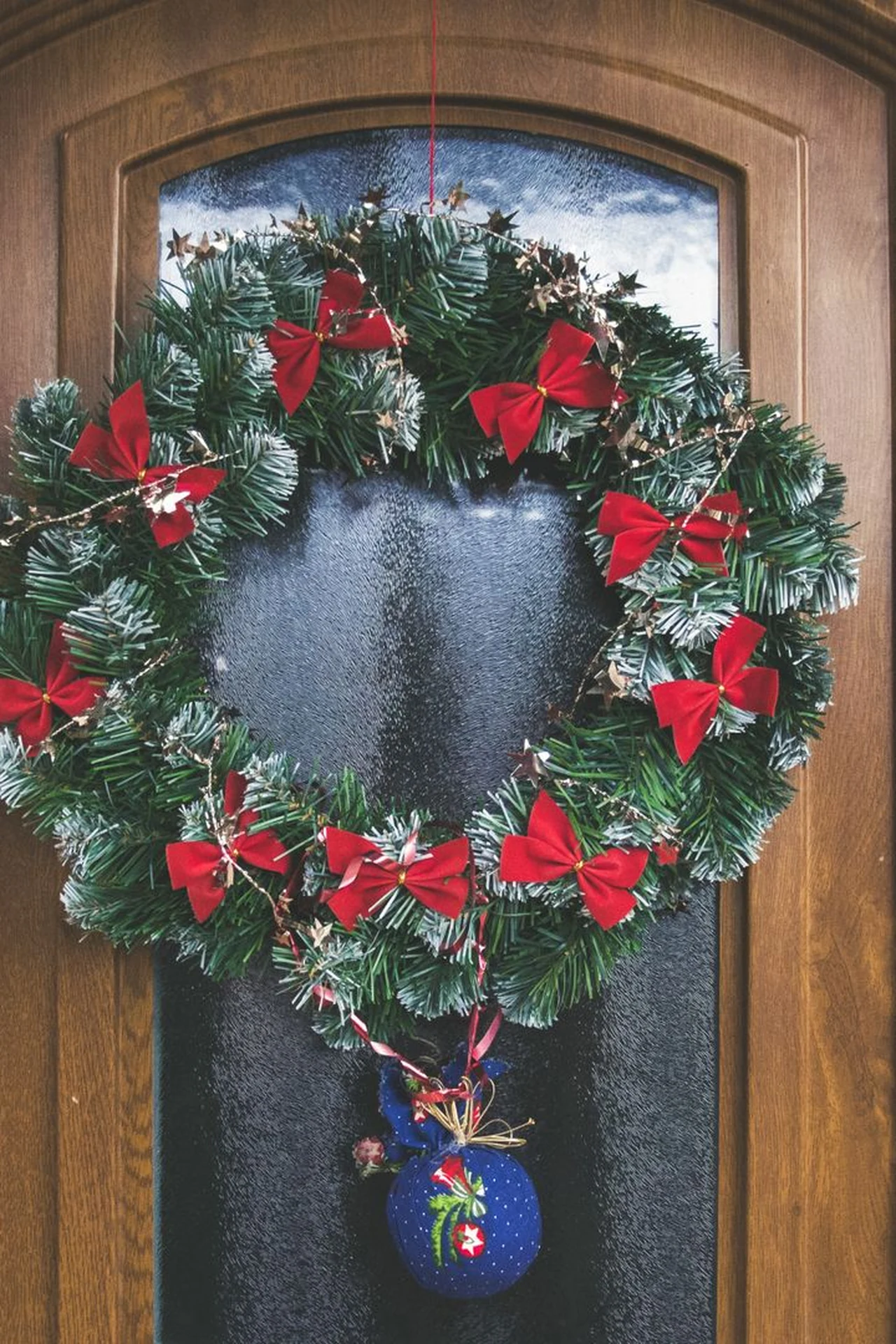
The basement door is the threshold of the whole room, and a wreath on it is the first thing anyone sees on the way down. A full frosted-fir wreath with small red bows and gold stars, hung on the door, turns a plain door into an entrance — and because the basement door is usually out of the weather, the wreath stays fresh and full all season.
Hang it at eye level, not above the door, so it is seen rather than glanced at. If the door has glass panels, the wreath reads twice — once from the hallway and once as a silhouette through the glass — which is a small bonus no other door in the house gives you. Use a proper wreath hanger over the top of the door rather than a nail, so the door itself stays undamaged.
Tip: Match the ribbon on the wreath to the ribbon on the tree — one repeated colour ties the upstairs and the downstairs together without any extra effort.
12. Lay Down a Rug That Warms the Floor
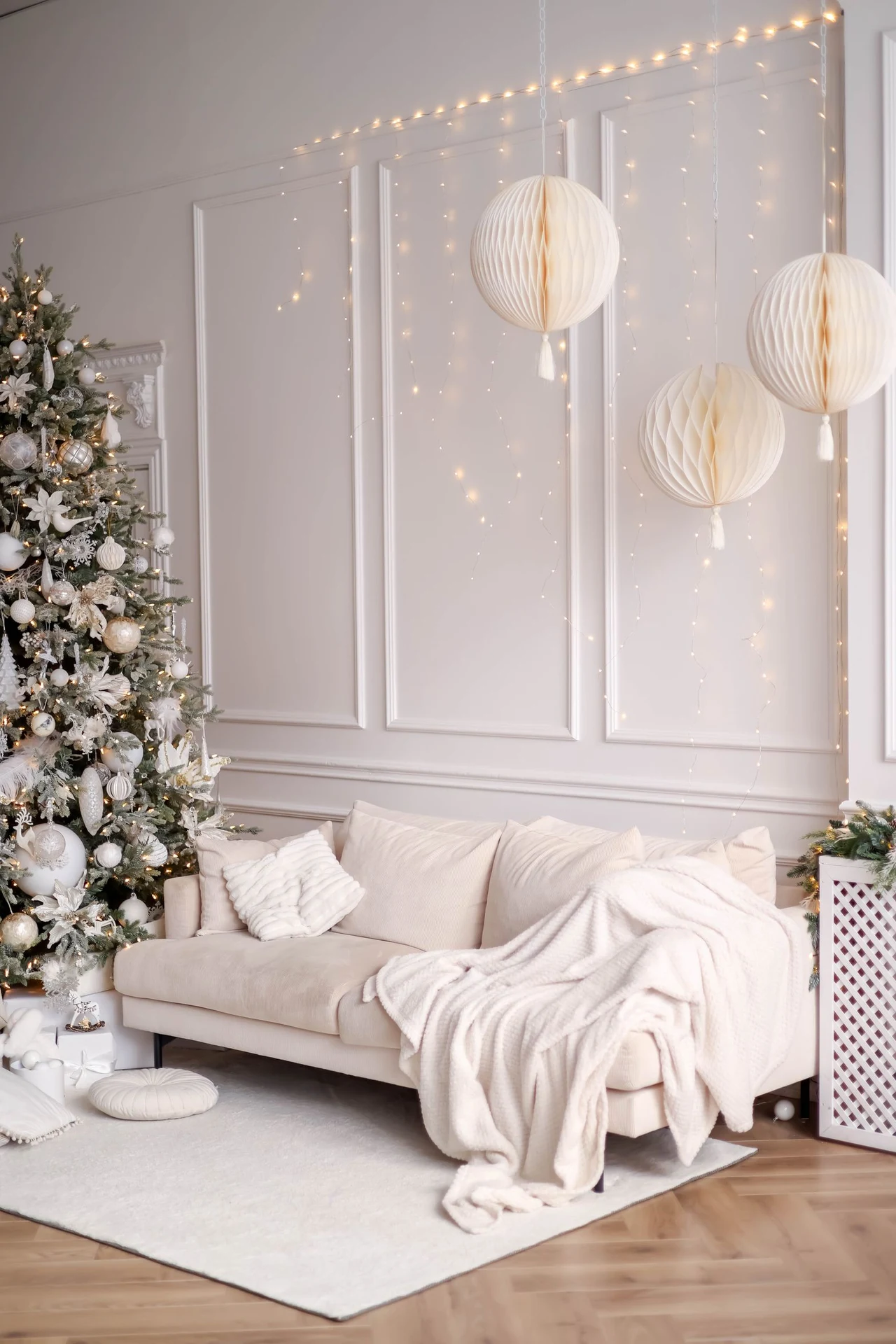
A basement floor is the coldest surface in the house, and no amount of decoration fixes a room that feels cold underfoot. A rug is the single most effective thing you can put down — it warms the floor, softens the sound, and gives the seating area a boundary that makes the room feel like a room instead of a big open space. Choose a light-coloured rug if the basement is dark; it bounces the fairy lights around and makes the whole floor glow.
Size it so the front legs of the sofa and the chairs sit on it, not beside it — a rug that floats in the middle of the floor looks like a mat, while a rug that anchors the furniture looks like a foundation. Layer a smaller, softer rug over a bigger flat one if the floor is very cold; two thin layers trap more warmth than one thick one, and the layered look suits a basement’s relaxed feel.
Tip: Put a non-slip pad under the rug, especially on a concrete or tile floor — a rug that slides on a basement floor is a hazard, not a decoration.
13. Set Up a Festive Drinks Station
If the hot chocolate station is for the evenings, the drinks station is for the whole day — a small corner where anyone can pour something warm without going upstairs. A mug of cocoa with marshmallows, set on a wooden crate with a dark background behind it, is the whole idea in one picture: warm, simple, and ready when you are. Add a second mug and a small plate of biscuits, and it becomes a station rather than a single drink.
Keep it separate from the hot chocolate station if you have the space — one is the evening ritual by the fire, the other is the all-day refuelling point by the stairs or the games table. If space is tight, combine them on one tray and let the drinks station be the daytime version of the same corner. Either way, the rule is the same: everything in one place, nothing that needs a trip upstairs.
Tip: Use a lidded jar for the marshmallows and a small jug for the milk — open packets in a basement go soft fast, and nobody wants a chewy marshmallow.

14. Give the Kids a Craft Corner
A basement with a craft corner is a basement the kids will choose over the living room. A low table by the window with paper houses, paints, glitter glue and a wooden horse figurine is enough to start — the supplies do not need to be fancy, they need to be out where they can be reached. The paper houses with glitter windows are the kind of thing that gets made once and then displayed all month, which is exactly the point.
Protect the table with a washable cloth or a sheet of brown paper, and keep the glitter in bottles with lids rather than open pots — basement carpet and loose glitter are a combination you will be finding until spring. Put a small basket beside the table for finished pieces, so the crafts have somewhere to go that is not the floor.
Tip: Set a timer for craft time rather than a limit on mess — an hour of making with a clear ending is easier to tidy than an open-ended afternoon that drifts.

15. Light Up the Windows
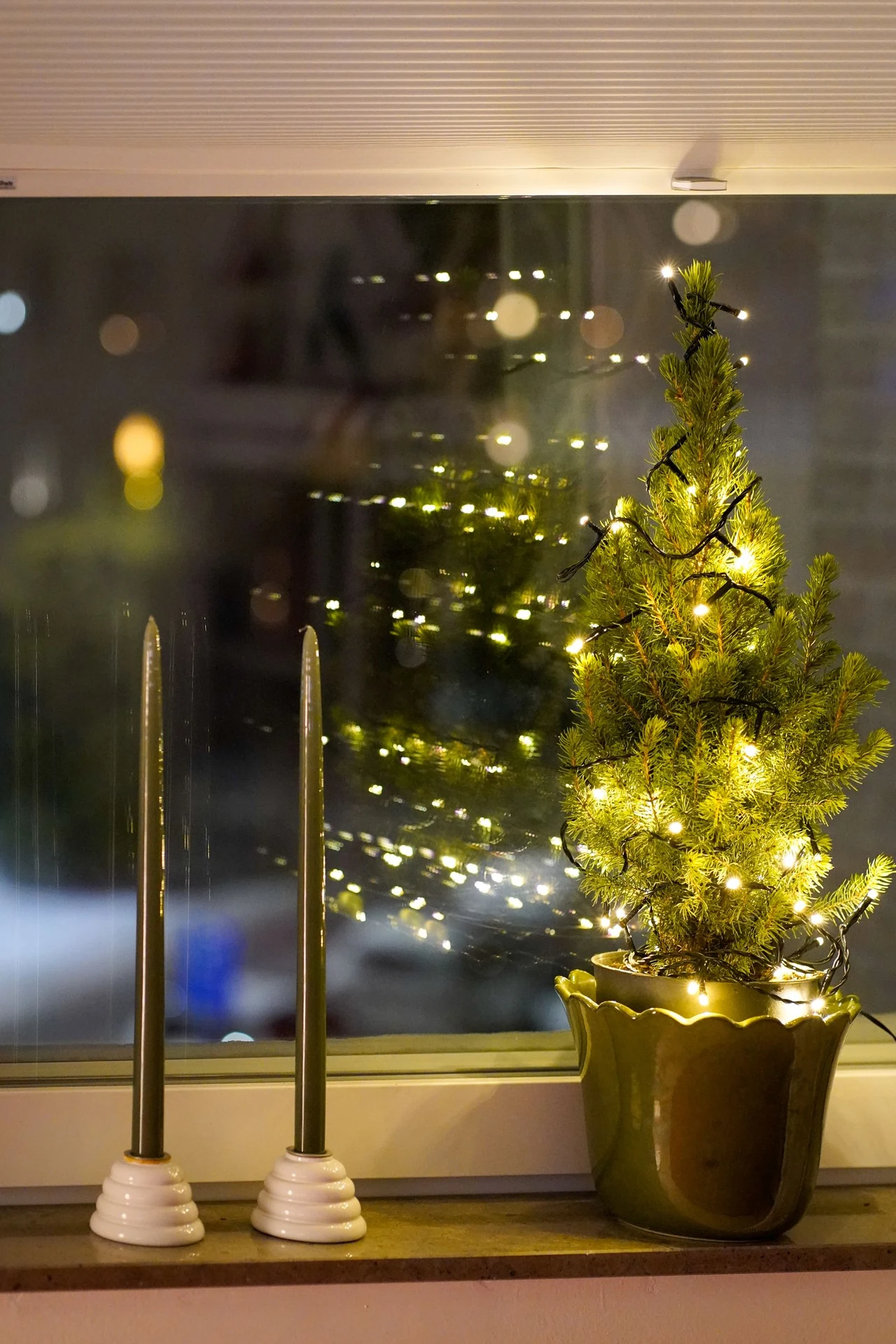
Basement windows are small and often half below ground, which is exactly why they deserve the most attention — a lit window in a basement is the one thing that can be seen from outside, and the one thing that makes the room feel less underground. A small lit tree in a green pot on the windowsill, with two tall candles beside it and fairy lights reflected in the night glass, turns a basement window into a little stage.
Use battery fairy lights so there are no wires trailing to a socket, and keep the candles tall and slim so they fit the narrow sill without crowding the tree. Light the windows in the evening, even if nobody is downstairs — the glow through the glass is the whole point, and it works just as well for the people walking past outside as for the family inside.
Tip: Put the lights on the same timer as the lanterns, so the windows and the room light up together at dusk without anyone having to remember.
16. Hang a Fairy-Light Curtain
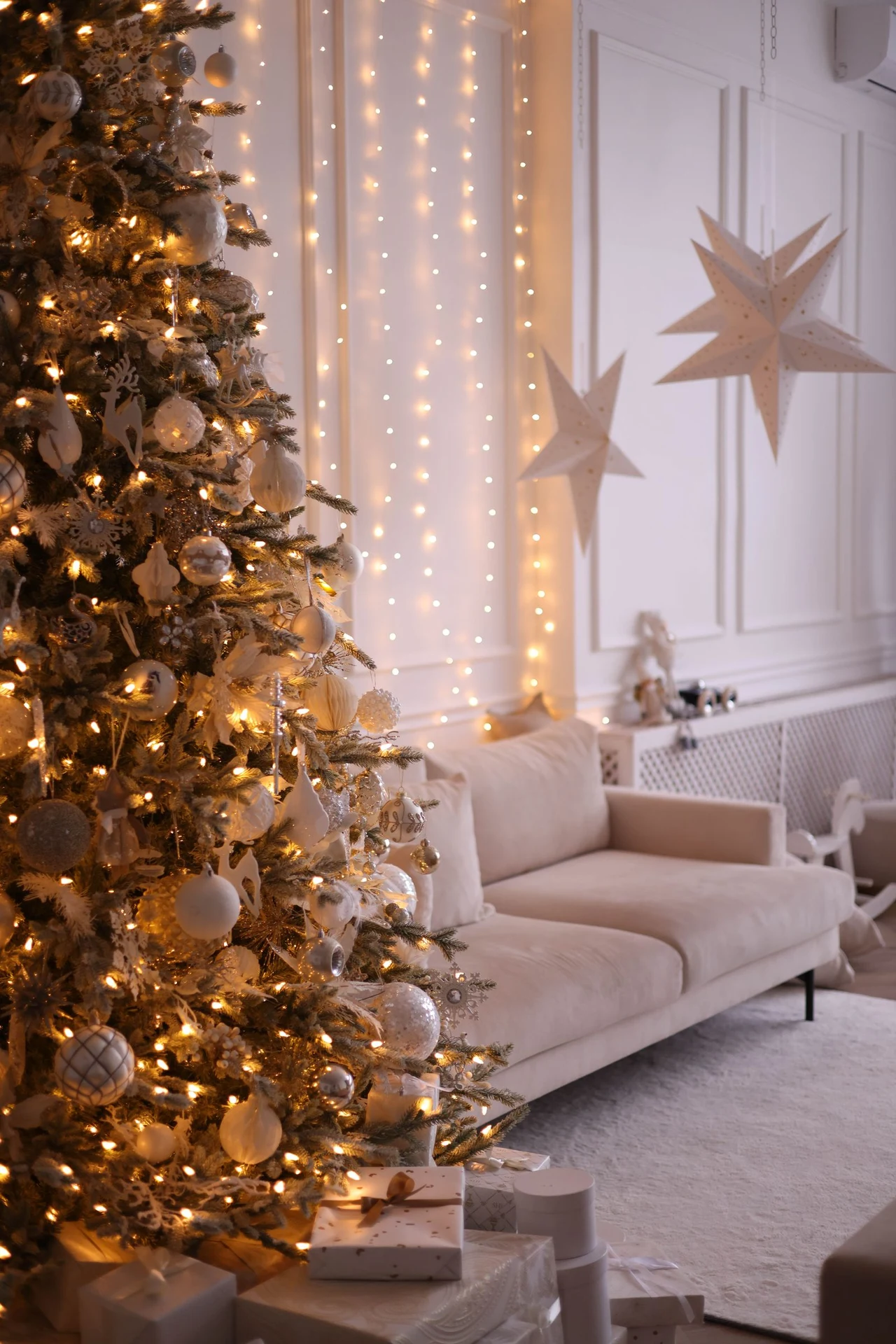
A fairy-light curtain is the fastest way to make a basement wall disappear. Strings of warm lights hung down a plain wall turn the flattest surface in the room into a glowing backdrop, and in a basement — where the walls are often bare and the light is low — that one change lifts the whole room. Hang the curtain behind the tree or behind the sofa, so the lights frame the furniture instead of competing with it.
Use warm white lights, not cool white, and hang the strings close enough together that the wall glows rather than showing separate lines. Fix them with small clear hooks rather than tape, which peels off basement paint, and let the bottom of the strings hang free — a curtain that pools slightly at the bottom looks soft, while one cut off dead straight looks like a shop display.
Tip: Hang the curtain on a tension rod or a thin dowel across the top, so it comes down in one piece in January without leaving a row of holes in the wall.
17. Pile On Throws and Pillows
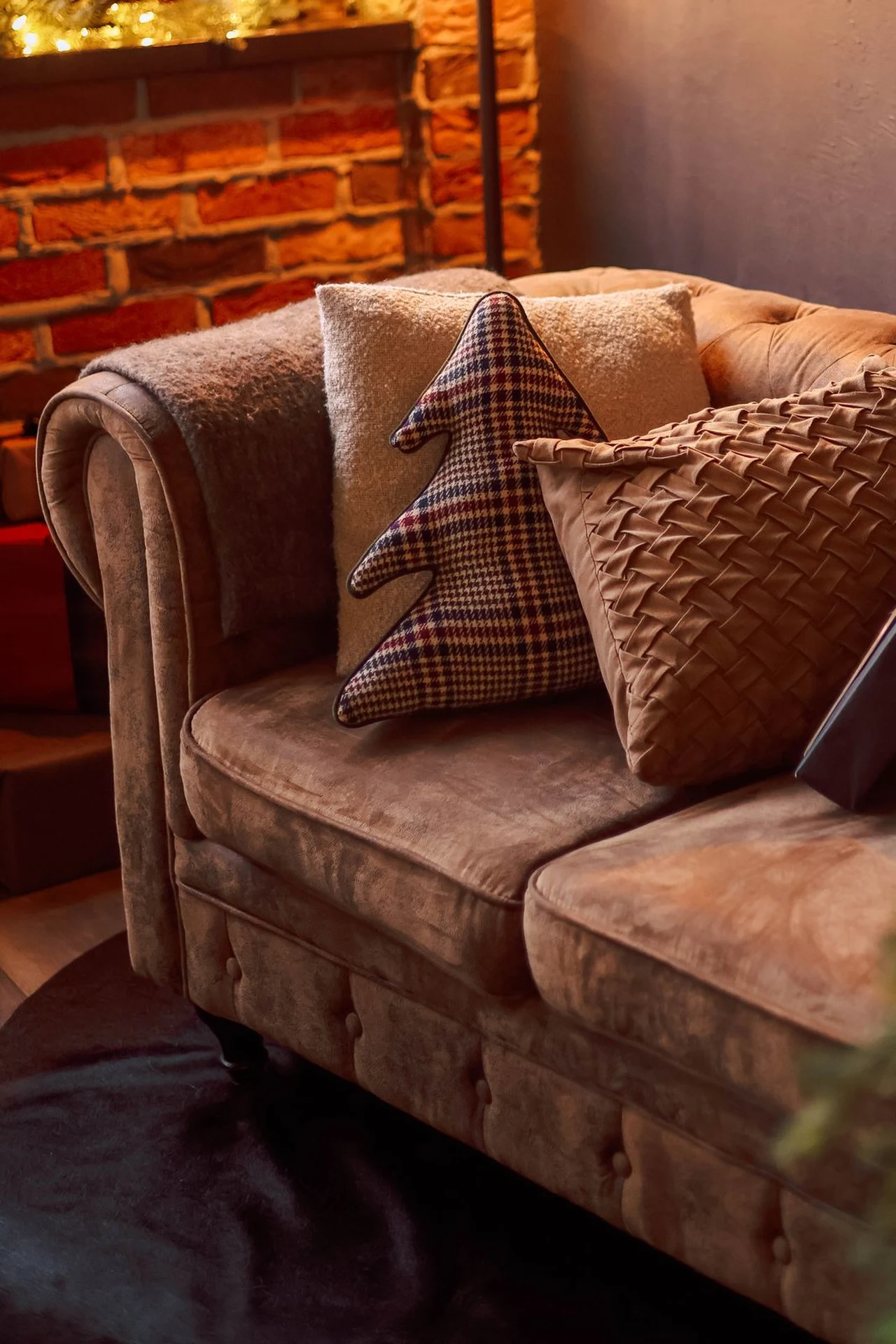
Throws and pillows are the cheapest warmth in the room, and in a basement they do double duty — they warm the people and they warm the look of the furniture. A grey throw draped over the arm of a leather sofa, a tree-shaped plaid pillow, and a woven cushion or two change a plain sofa into a Christmas sofa in about thirty seconds, with no tools and no commitment.
Mix one festive piece with two plain ones. The tree-shaped pillow is the statement; the plain beige and woven pillows are the support that stops it from looking like a novelty shop. Drape the throw so it falls naturally over the arm rather than folding it into a perfect rectangle — a throw that looks lived-in invites people to pick it up, and a throw folded like a hotel towel does not.
Tip: Keep one spare throw in a basket by the sofa, so the coldest person in the room does not have to take the one someone else is already using.
18. Hang Paper Star Lanterns
Paper star lanterns are the basement’s best ceiling decoration, because they hang down into the room instead of sitting flat on a wall. Two large white paper stars, hung at different heights from the ceiling, catch the fairy lights and throw soft shadows on the walls — and because they are light and cheap, you can hang them anywhere the ceiling allows, even in the middle of the room where nothing else can go.
Hang them where they will be seen from the sofa but not where anyone will walk into them — above the coffee table or beside the tree, not over the walkway from the stairs. Use clear fishing line rather than string, so the stars appear to float, and keep them away from the fireplace and any real candles. Battery fairy lights inside the stars make them glow from within, which is the whole effect.
Tip: Hang the stars at slightly different heights, about a foot apart — two stars at the same height look like a pair of earrings, while two at different heights look like they are meant to be there.

19. Add the Finishing Touches Last
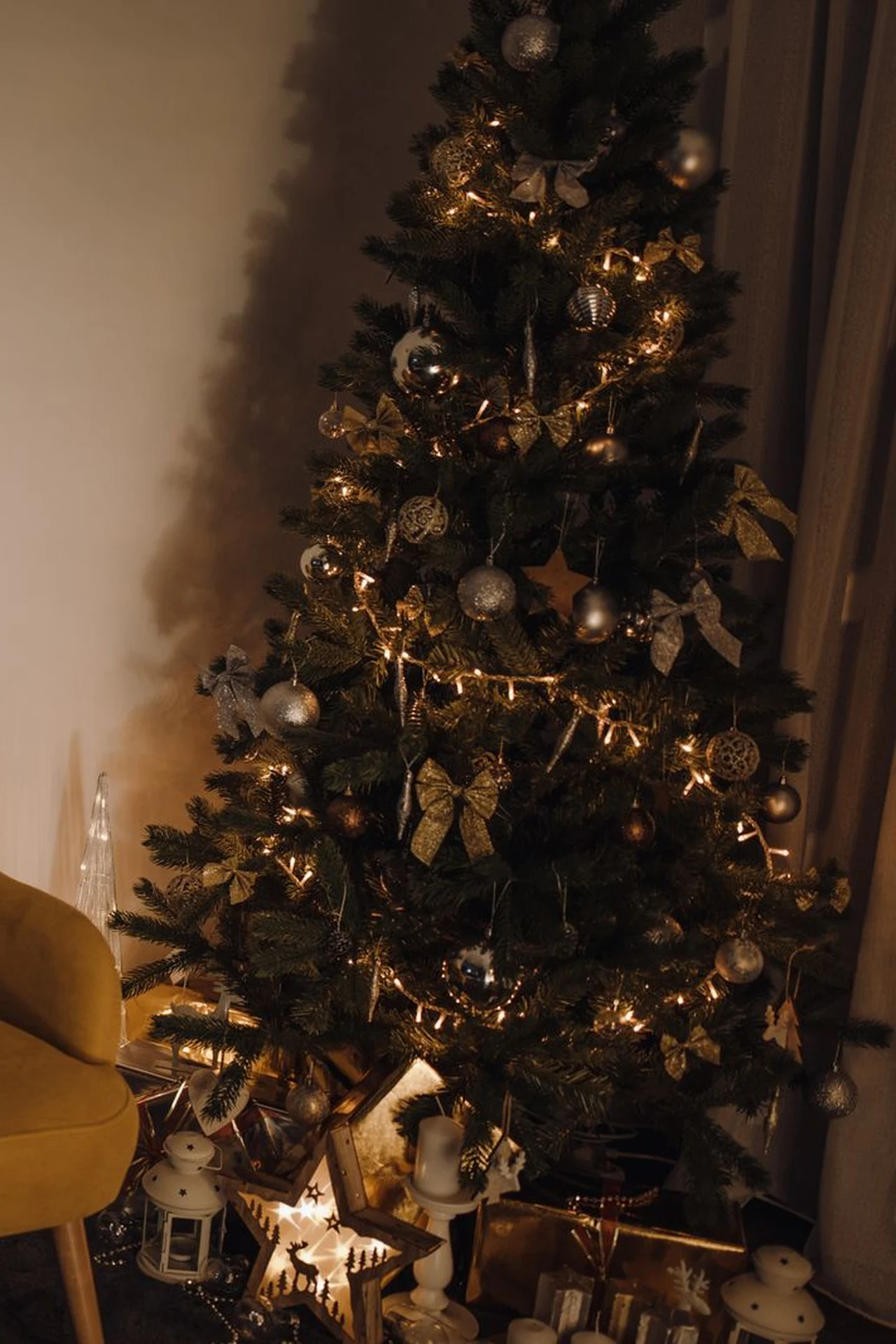
The finishing touches are the small things you add after everything else is in place — the star lantern with a reindeer silhouette by the tree, the white lantern on the floor, the candles and the gold gift boxes tucked under the branches. None of them is important on its own, and all of them together are what makes the room feel finished rather than just decorated.
Walk the room slowly once the big pieces are done, and look for the empty spots: the floor beside the tree, the corner by the chair, the top of the sideboard. One small thing in each empty spot is enough — a lantern here, a candle there, a gift box where the eye expects one. Stop when the room feels full, not when you run out of decorations; a basement with three finishing touches in the right places looks better than one with thirty in the wrong ones.
Tip: Do the finishing touches in the evening, with the lights on — it is the only time you can see what the room actually looks like when it is being used.
Your Christmas Basement Checklist
Run through this list once the decorating is done, and the room will be ready for the whole season:
- Tree up, wide rather than tall, visible from the top of the stairs
- Stockings hung on the mantel with proper holders, not adhesive hooks
- Garland fluffed twice, lights woven through before hanging
- Hot chocolate station and drinks station stocked, jars lidded
- Lanterns and window lights on timers, coming on at dusk
- Rug down with a non-slip pad, front sofa legs on the rug
- Throws and pillows on the sofa, one spare in a basket
- Movie night film picked, popcorn bowl ready, board game left out
- Craft corner set up with a washable cover on the table
- Wreath on the basement door, ribbon matched to the tree
- Finishing touches in the empty spots, checked in the evening light
- Spare batteries, a spare string of lights, and the wrapping basket in place
Frequently Asked Questions
How do I make a cold basement feel warm at Christmas?
Layer warmth rather than adding one big thing: a rug on the floor, throws on the sofa, warm fairy lights instead of overhead lights, and lanterns at a low height. The rug and the throws warm the people, the low warm light warms the look of the room, and together they make a basement feel cosy even before the heating catches up.
What size Christmas tree works best in a basement?
Go wide rather than tall. Basement ceilings are often lower than upstairs, so a tall slim tree fights the ceiling and looks cramped, while a fuller, slightly shorter tree fills the corner properly and gives you more branches for ornaments. Measure the ceiling height before you buy, and leave at least a foot clear above the topper.
How do I decorate a basement for Christmas on a budget?
Spend on the things that do the most work: one good rug, one full garland, and one string of warm fairy lights. Everything else — the vignette, the wrapping corner, the paper stars, the craft supplies — can be made from things you already own or bought cheaply. A basement decorated with three good pieces and a dozen small handmade ones looks richer than a room full of expensive decorations with no heart in them.
How do I keep basement Christmas decorations safe from damp?
Keep everything off the floor where you can — use shelves, tables and hooks rather than stacking boxes on the concrete — and keep food and drink in lidded jars. Paper decorations and fabric throws should live on high shelves or in sealed boxes when the room is not in use, and a dehumidifier running for a few hours a week keeps the air dry enough that nothing goes musty.
When should I start decorating the basement for Christmas?
Early December is the sweet spot. The basement is the room you decorate last, after the living room and the tree upstairs, because it takes the longest to feel finished — and starting it in early December gives you the whole month to enjoy it. If you leave it until mid-December, the room is still half done when the family arrives.
Read Next
Keep the festive feeling going through the rest of the house: our winter basement decor ideas keep the room cosy all season, our Christmas bedroom decor ideas carry the magic upstairs, and if the downstairs ever becomes a guest room, our basement bedroom makeover ideas show how to turn it into a proper bedroom.