
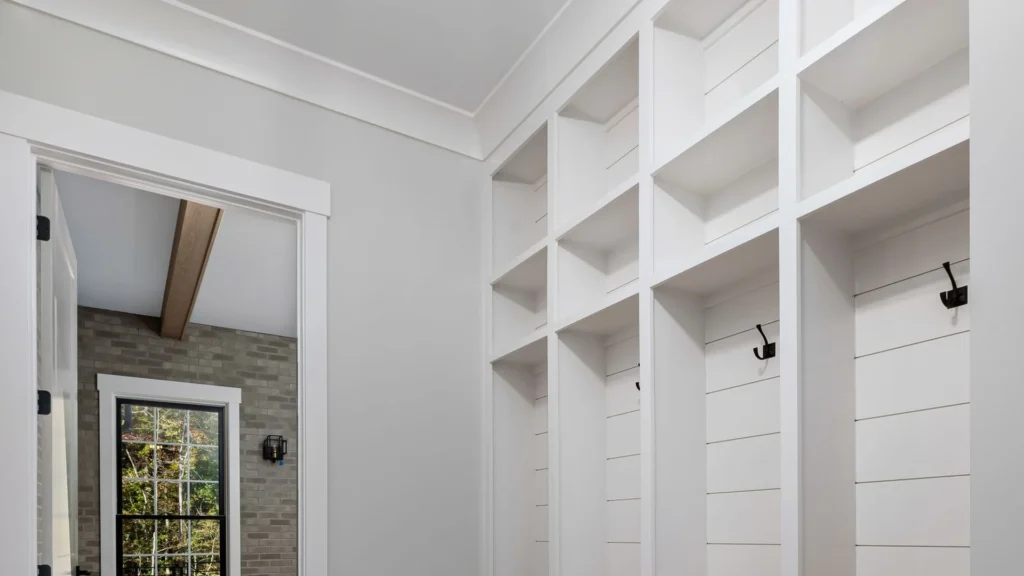
15 Winter Mudroom Ideas for Small Spaces That Actually Work
A mudroom earns its keep in winter. It is the room that catches the slush, holds the coats, and takes the wet-weather mess so the rest of the house stays clean — and when it is small, every inch has to work twice as hard.
These winter mudroom ideas are built for that small space: boot cubbies instead of piles, two rows of pegs instead of one, and storage that hides the clutter without hiding the coats. No remodelling, no knocking down walls — just a tight little room that finally works as hard as you do.
If the mudroom opens straight into the hall, our winter entryway ideas show how to carry the same warm, practical feeling through the front of the house, and our winter front porch decor takes care of the outside of the same door. For the rest of the rooms, our winter home decor ideas pull the season together without turning the house into a snow globe.
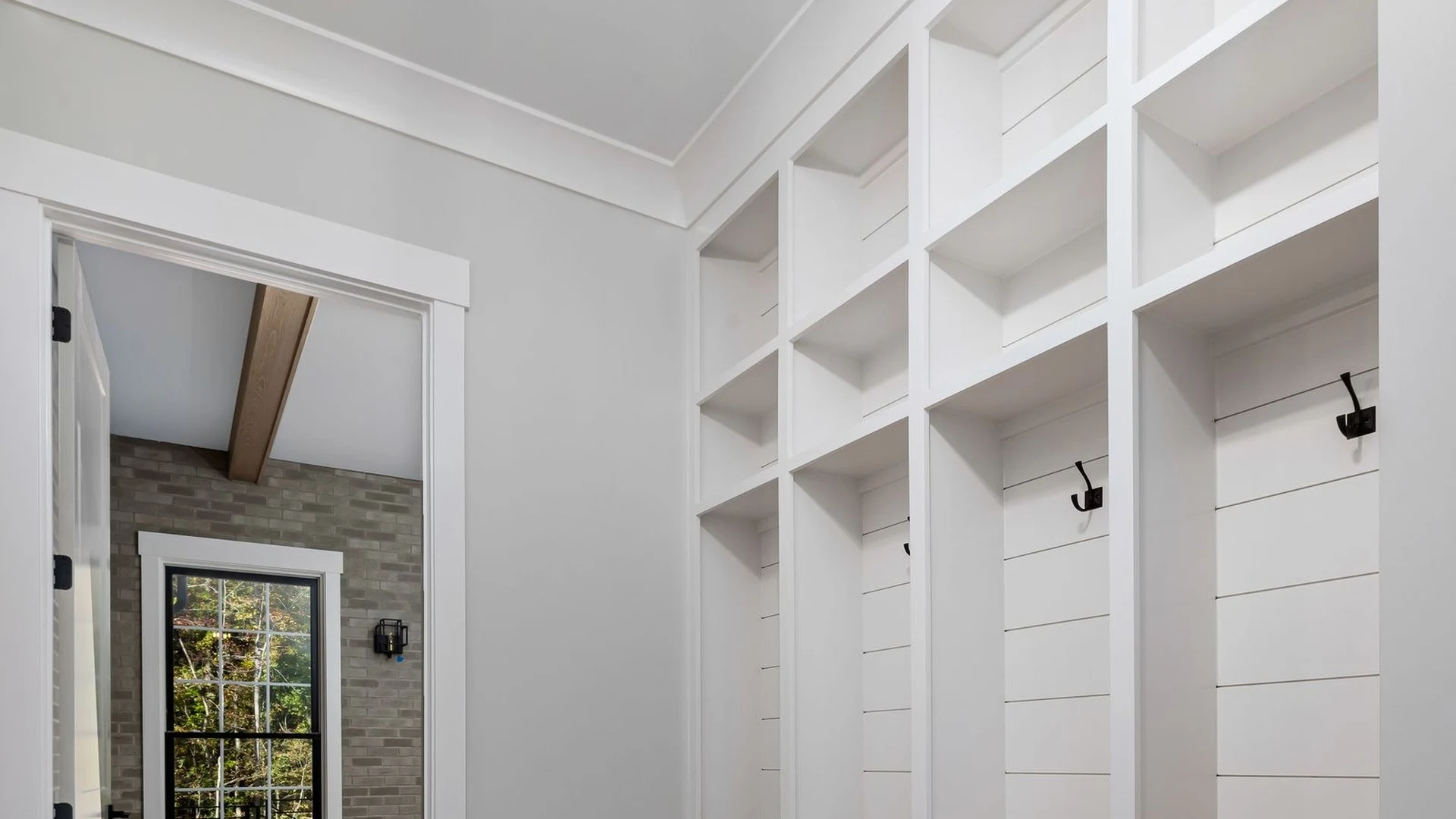
1. Give Boots Their Own Cubby Holes
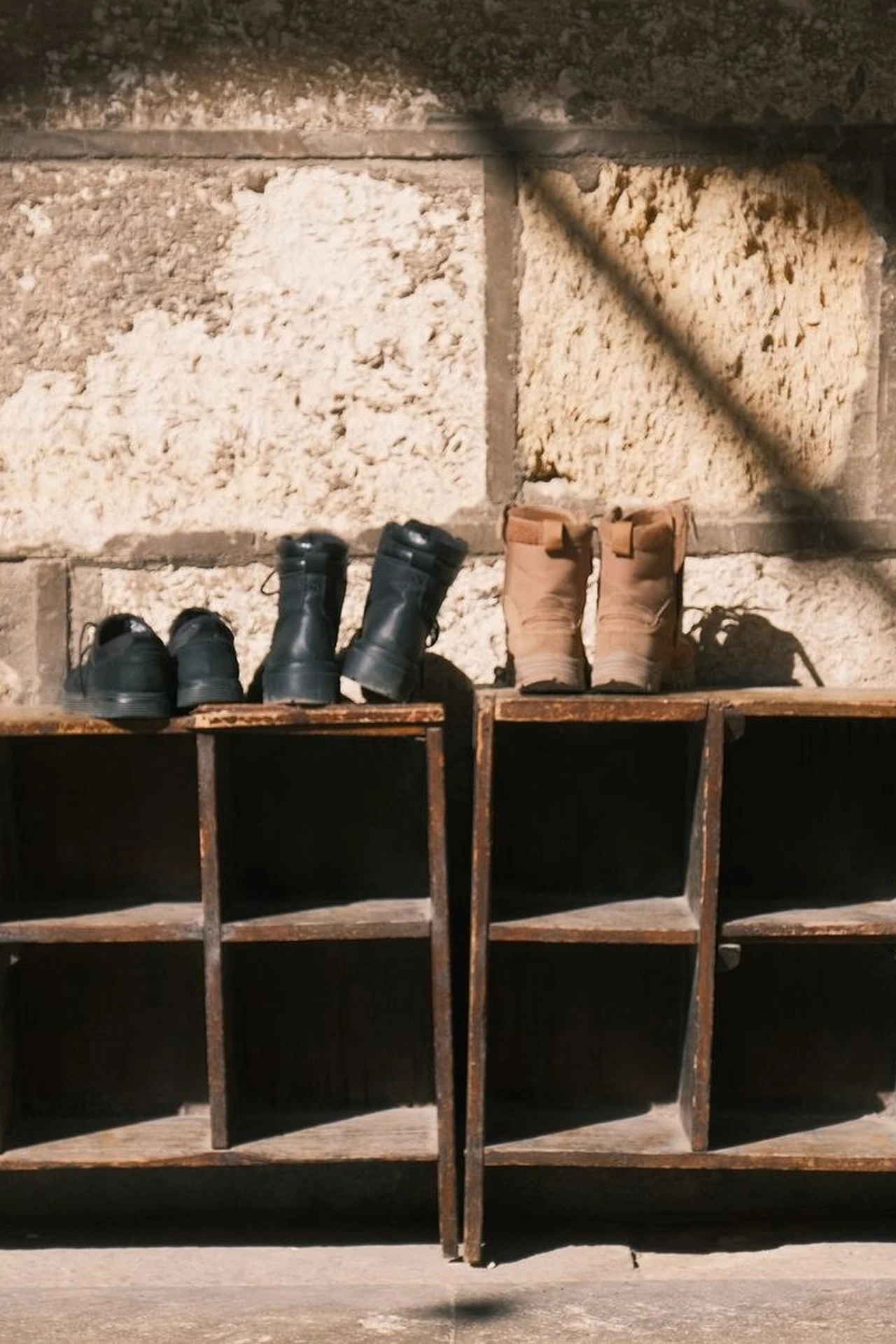
Winter boots are the first thing a mudroom has to solve, and a pile by the door is not a system. A row of open wooden cubbies gives every pair its own slot — boots go in wet, dry in the open air, and come out without a hunt through a heap. Vintage wood suits the job: it hides scuffs, warms up a cold room, and looks better the more it is used.
Keep one cubby per person and one spare for guests, and put the cubbies where boots come off, not across the room. A low unit doubles as a shelf for the things that sit on top — gloves drying, a hat, the dog lead — so the cubbies work from both sides.
Tip: Line the bottom of each cubby with a washable tray or a folded towel in the wettest months, and the wood never sits in meltwater.
2. Hang Two Rows of Pegs, Not One
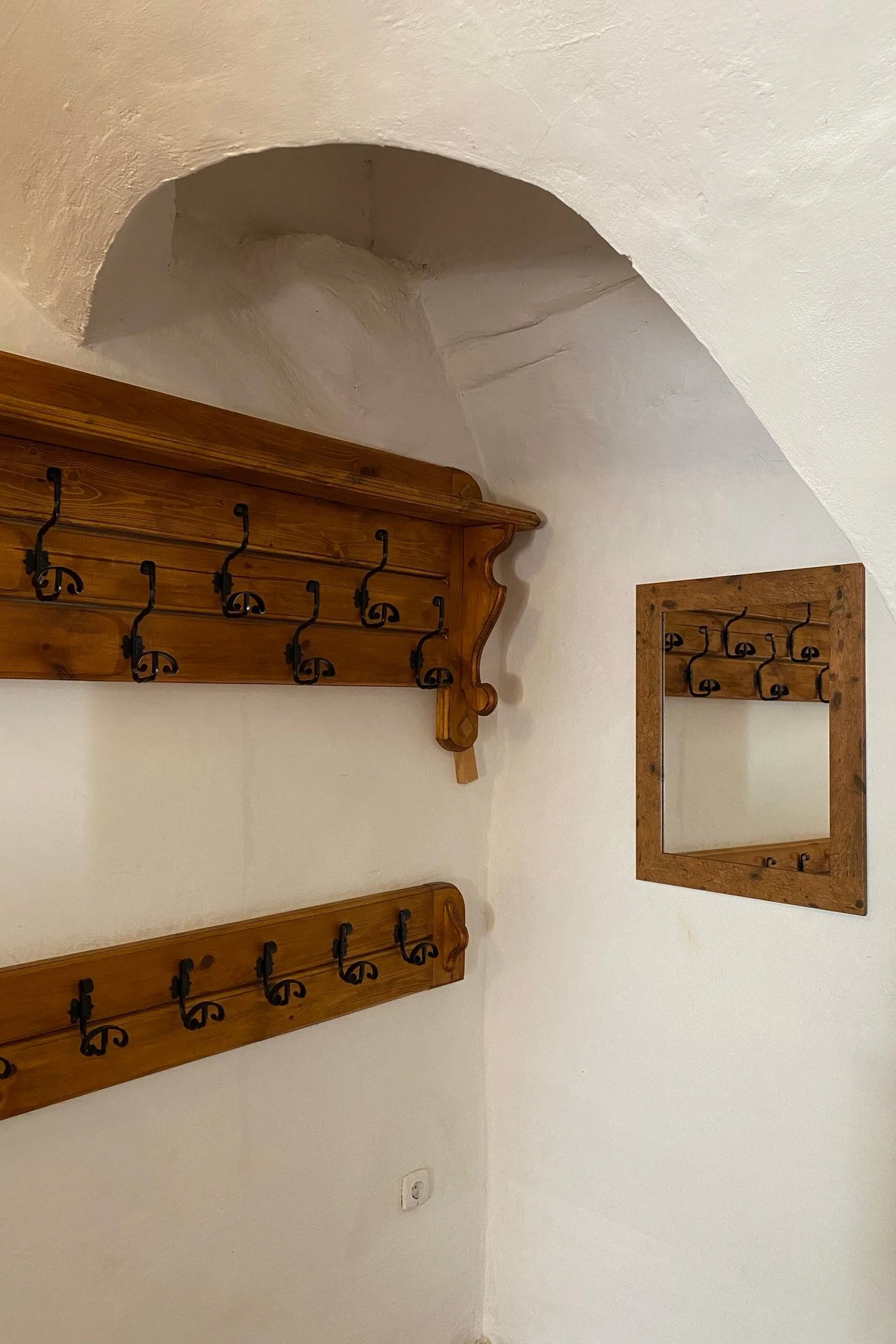
One row of hooks is never enough in winter, because coats are longer, scarves are thicker, and everyone comes home wearing three layers. Two rows of wooden pegs — one at shoulder height for coats, one lower for hats, scarves, and the dog lead — double the hanging space without taking a single extra inch of floor.
The trick is the spacing: keep the rows far enough apart that a coat on the top row does not bury the hats on the bottom one. A small mirror tucked into the same nook turns the peg wall into a last-check spot before the door, and the arched shape softens what could otherwise feel like a wall of hardware.
Tip: Put the everyday coats on the top row and the things you grab last — hat, scarf, gloves — on the lower row, so dressing for the cold runs top to bottom.
3. Build One Slim Nook That Does Everything
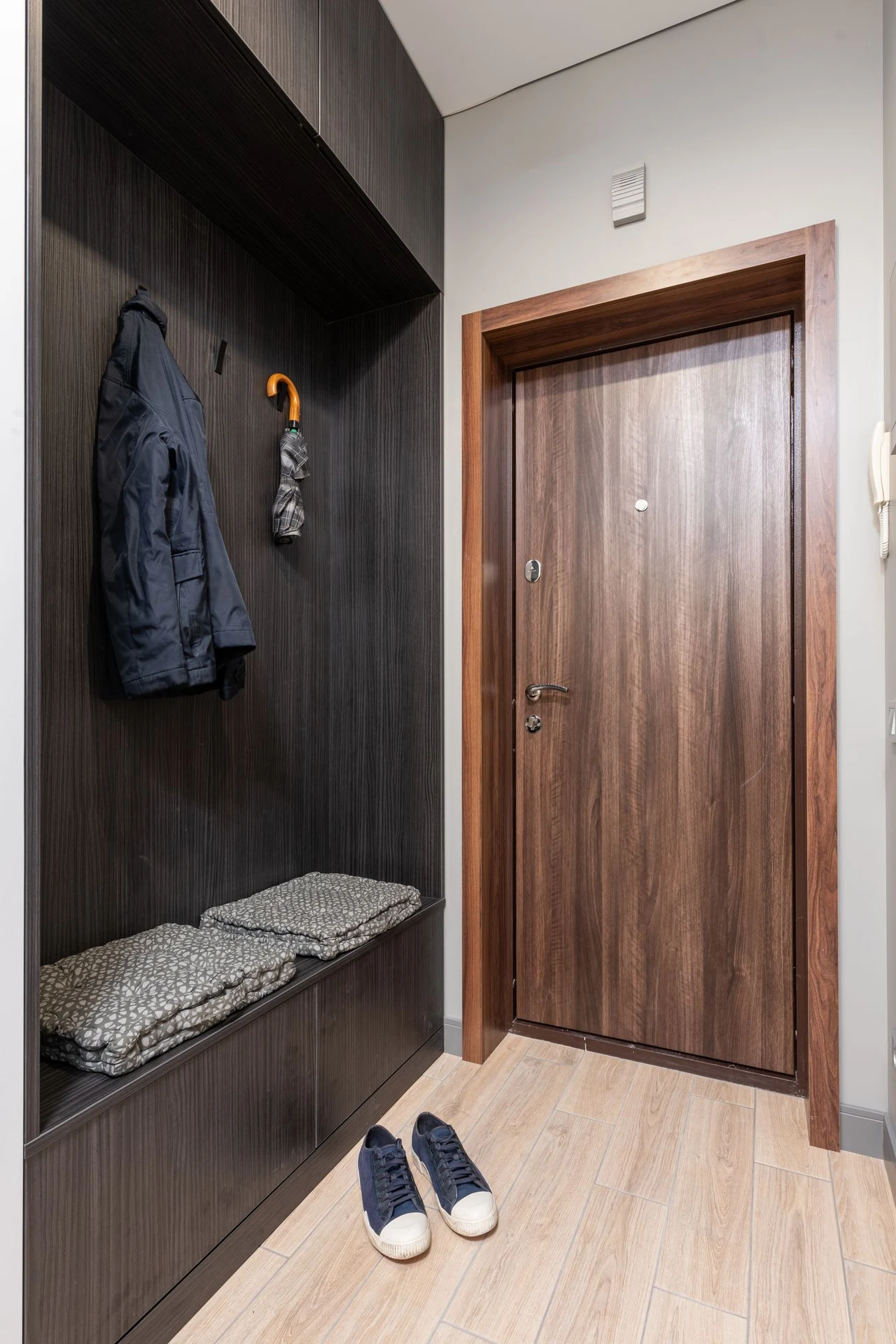
When the mudroom is barely wider than a doorway, stop spreading the jobs around and give one slim nook all of them: hooks above, a cushioned bench to sit on, and shoes tucked underneath. Everything happens in one place, so nothing drifts into the hallway — the coat comes off, the boots come off, and the room is done in one motion.
Dark panelling makes a small nook feel deliberate rather than cramped, and cushions soften the bench so it is a seat, not just a shelf. Keep the palette to two or three colours — navy, dark wood, cream — and the nook reads as a designed corner instead of a crowded one.
Tip: Leave the bench clear on purpose: the moment it becomes a shelf for bags and post, there is nowhere left to sit and lace up boots.
4. Label Bins for Hats, Gloves, and Scarves
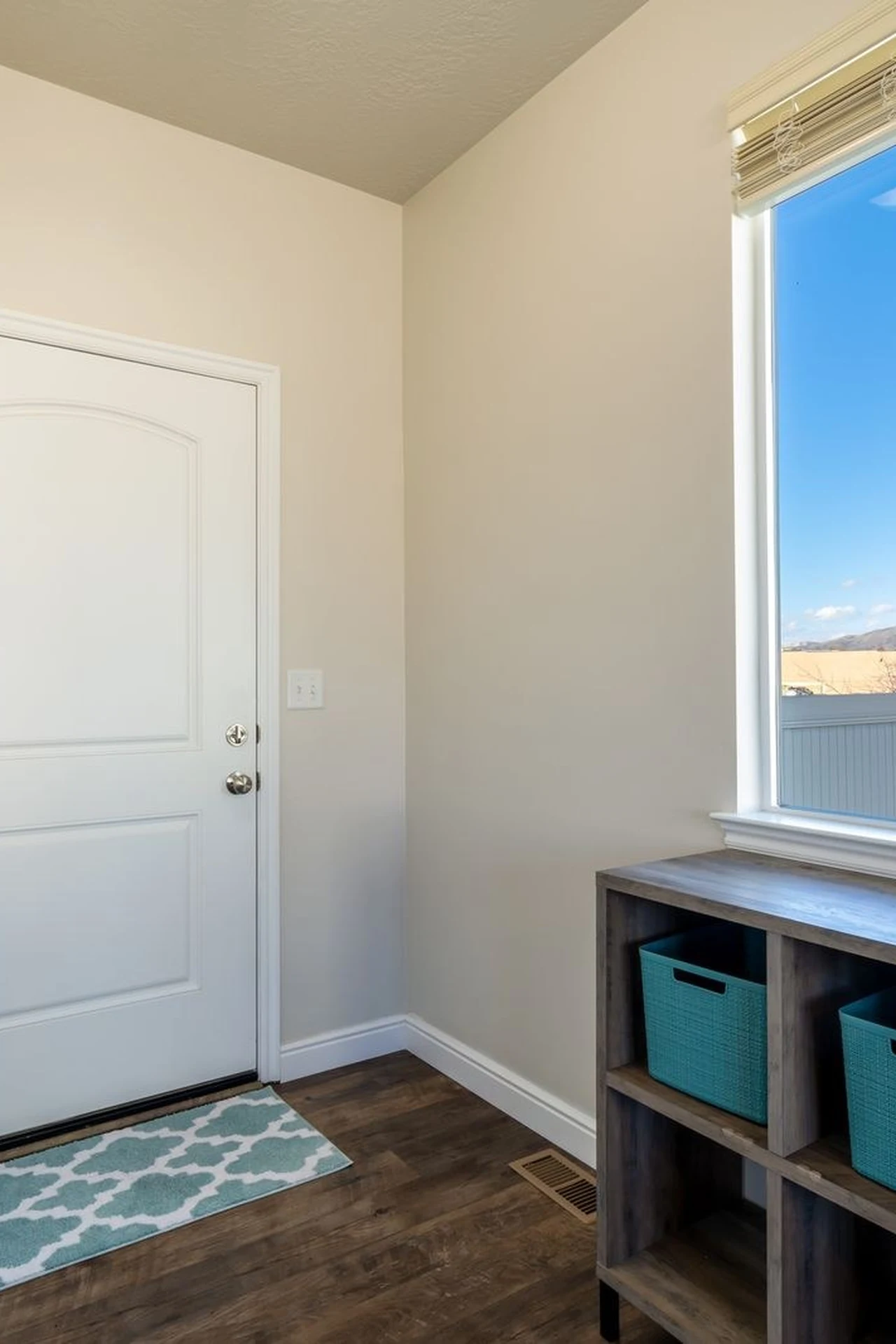
Hats, gloves, and scarves are the small things that make a mudroom look messy, because they have no natural home — they end up on the bench, on the floor, and inside coat pockets. Two or three plain bins on a cubby shelf by the door give them one, and a label on each bin means nobody has to open all three to find their gloves.
Plain bins beat patterned ones here: the room already has a patterned doormat and a busy door, so the bins should be quiet. One bin per category — hats, gloves, scarves — is enough for most households, and a fourth for the things that belong to no one in particular, like the spare torch and the ice scraper.
Tip: Empty the bins at the end of each month and return anything that has migrated there by accident — a single stray sock is how a tidy bin becomes a junk drawer.
5. Set a Cushioned Bench Beside Open Cubbies
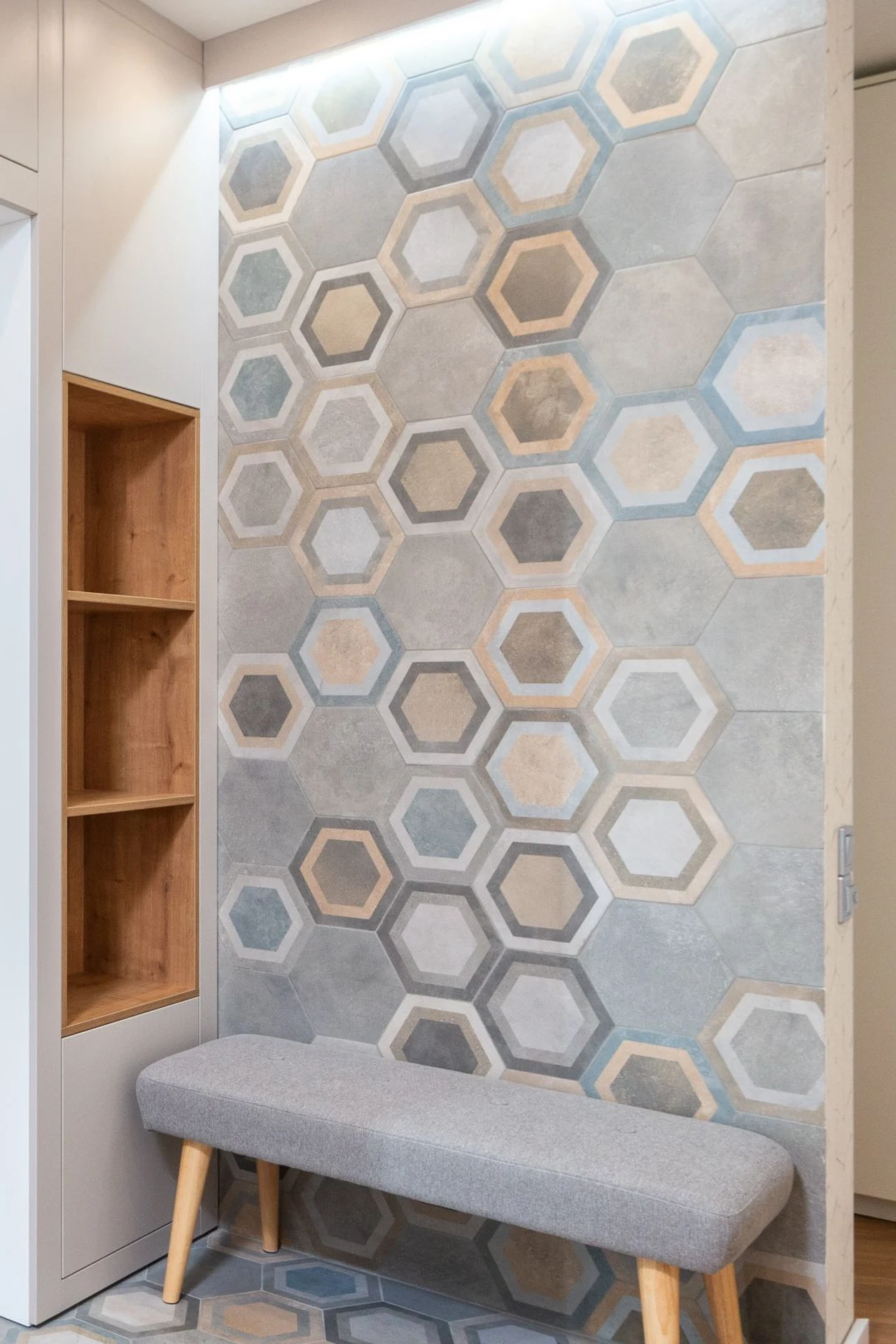
A cushioned bench with open cubbies beside it is the hardest-working corner in a small mudroom: the bench is the seat for lacing up boots, the cubbies take the things that do not hang — spare gloves, shoe polish, the lint roller — and the whole corner stays wipeable through a wet winter. A patterned tile wall behind it bounces the low winter light back into the room, so the storage never makes the space feel dark.
Three open cubbies is a good number for a small household — one per person, one spare — and because they are open, you can see at a glance what is inside instead of opening drawers with wet hands. The tile behind the bench is the wipeable part: muddy splashes wash straight off it, which matters most by February.
Tip: Pick a bench cushion with a washable cover, and put the wettest things — boots, the dog lead — in the cubbies, not on the cushion.
6. Hang a Round Mirror to Open Up a Tight Mudroom
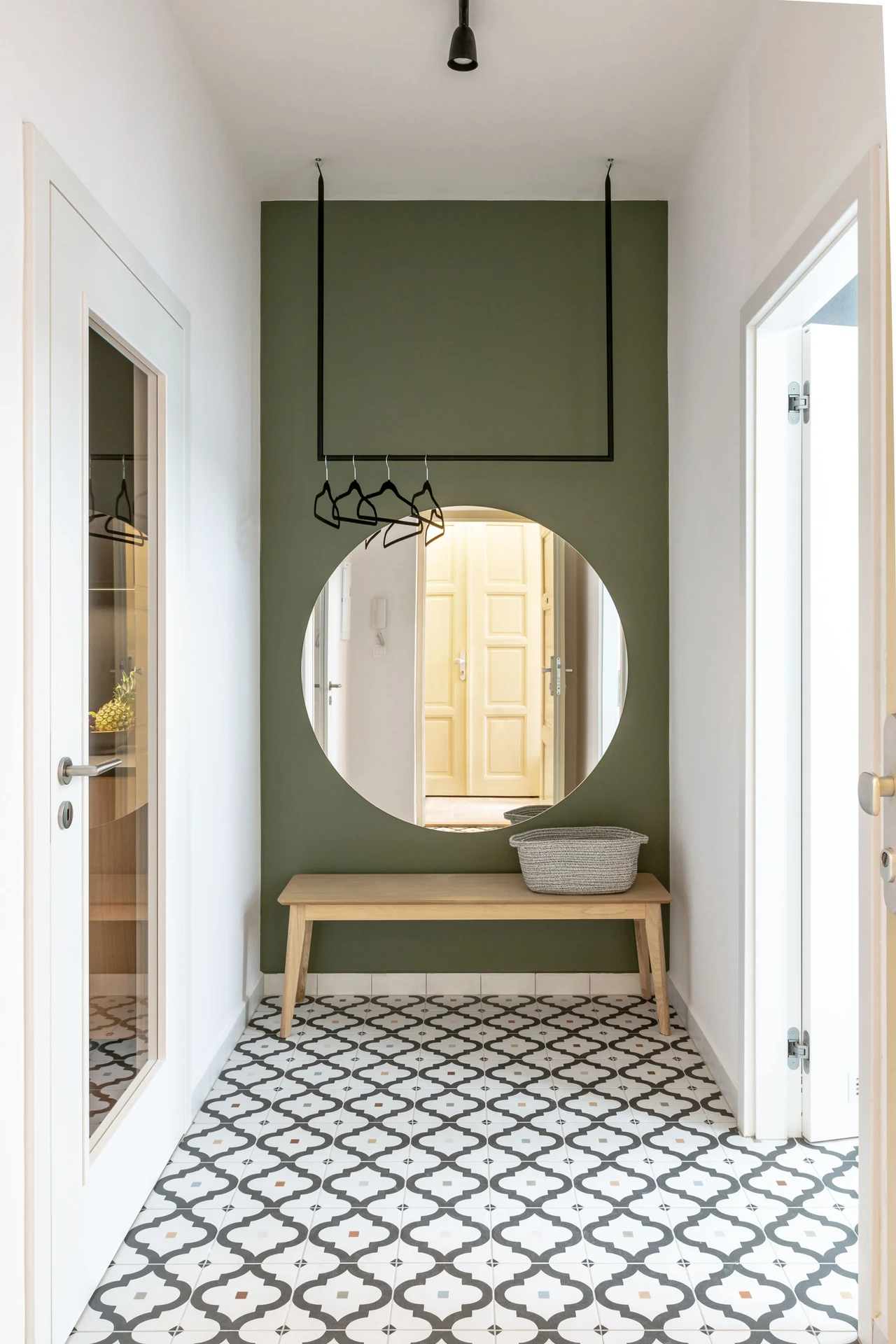
A tight mudroom feels smaller when every wall is covered in coats, so the room needs one thing that is not storage: a round mirror. It bounces the low winter light around, gives you a last look before the door, and — because it is round — it has no corners to catch a shoulder in a narrow space.
Hang it above the bench with a hanging rail above it, and the pieces become one slim system: rail, mirror, bench, and a basket for the small things. Keep the bench clear except for the basket, or the mirror just reflects clutter.
Tip: Hang the mirror opposite the door or a window if you can — it doubles whatever light comes in, which matters most on a dark winter morning.
7. Run a Peg Rail Along the Whole Wall
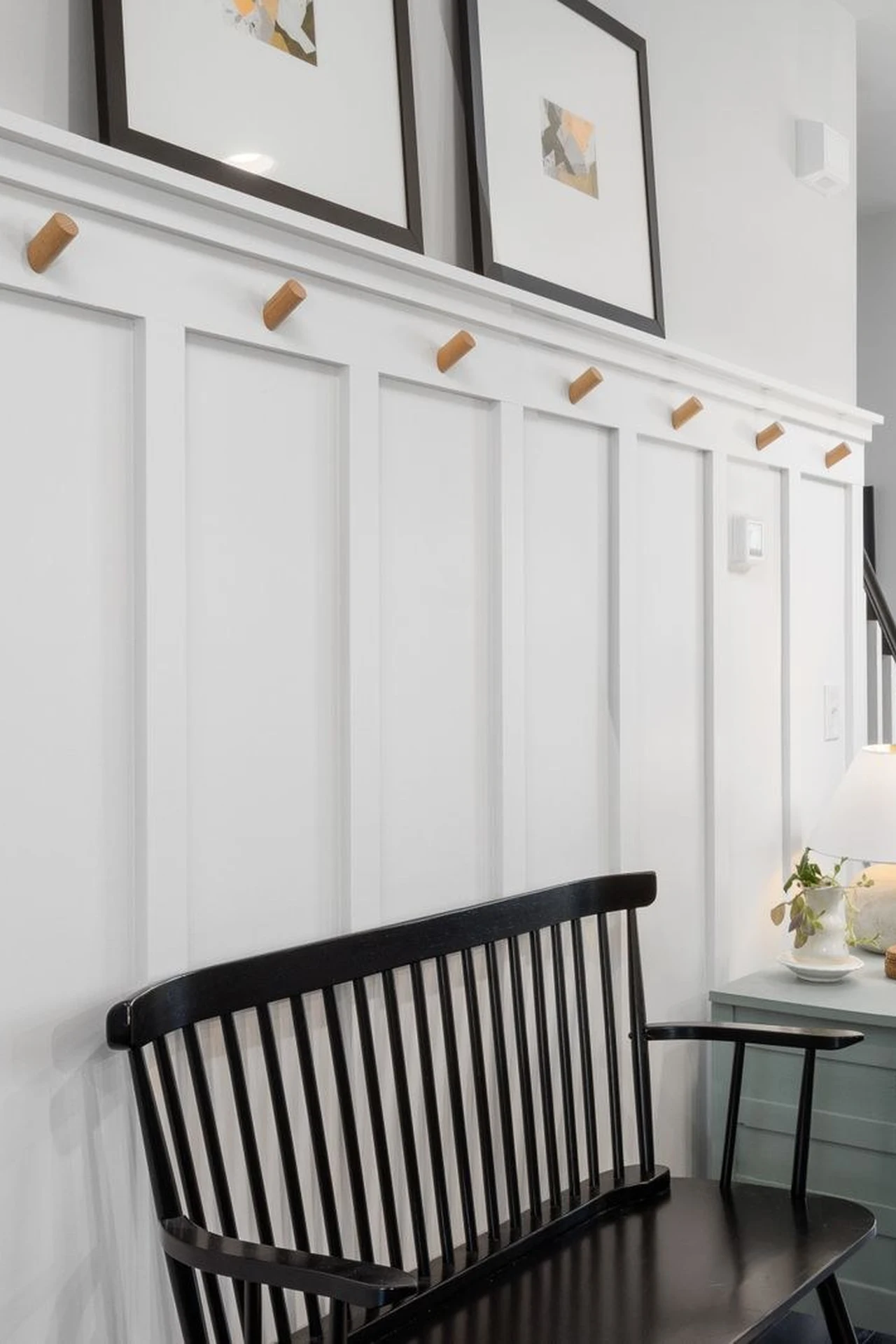
Most mudrooms hang their hooks in a short row and then wonder where the rest of the coats go. Run the peg rail along the whole wall instead, and the hanging space roughly doubles without a single new piece of furniture — the coats spread out, dry faster, and stop bunching into a damp pile.
A long rail works best with a bench beneath it, because the bench catches the things that fall and gives everyone a place to sit while the coats come off. A small cabinet at the end of the wall — pale green, in this case — holds the overflow, and a green front door at the far end keeps the long wall from feeling like a corridor.
Tip: Space the pegs about a foot apart and resist the urge to fill every one — an empty peg is where the guest’s coat goes, and where the coat you are wearing tomorrow hangs to air.
8. Give Every Person One Hook — Caps Included
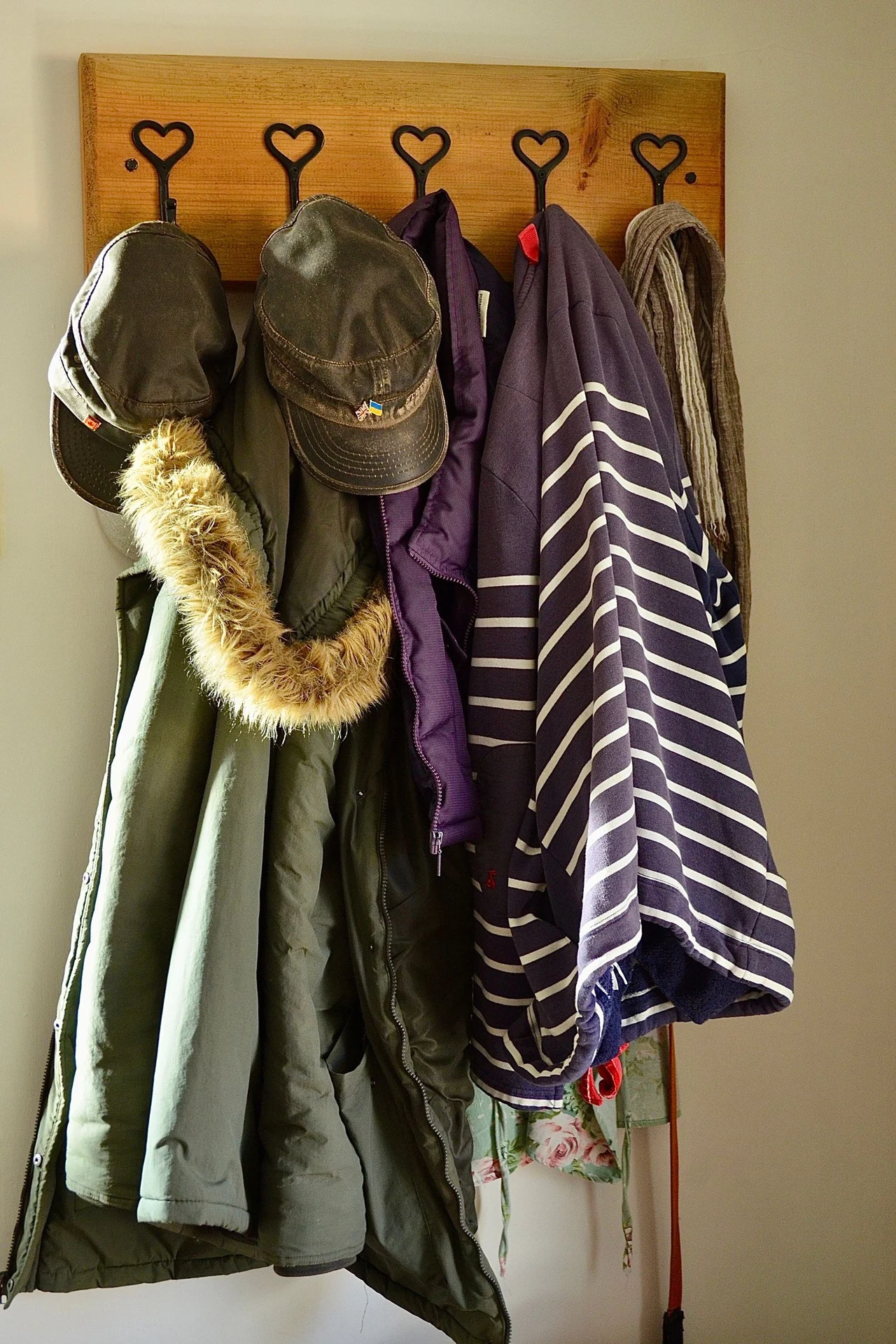
The simplest mudroom rule is also the one that sticks: one hook per person. When everyone has a named spot, coats stop migrating to chairs and door handles, and the morning hunt for a missing coat ends — because a coat that is not on its hook is a coat that is still in the wash, and everyone knows it.
Heart-shaped hooks are a gentle way to make the rule feel like decor rather than discipline, and they are sturdy enough for a heavy winter coat plus a cap and a scarf on the same hook. Hang the hooks at a height the shortest person in the house can reach, or the rule only works for the adults.
Tip: Add one spare hook by the door for the coat a guest is wearing — visitors should never have to drape theirs over a chair.
9. Hang One Strong Hook for the Heaviest Coat
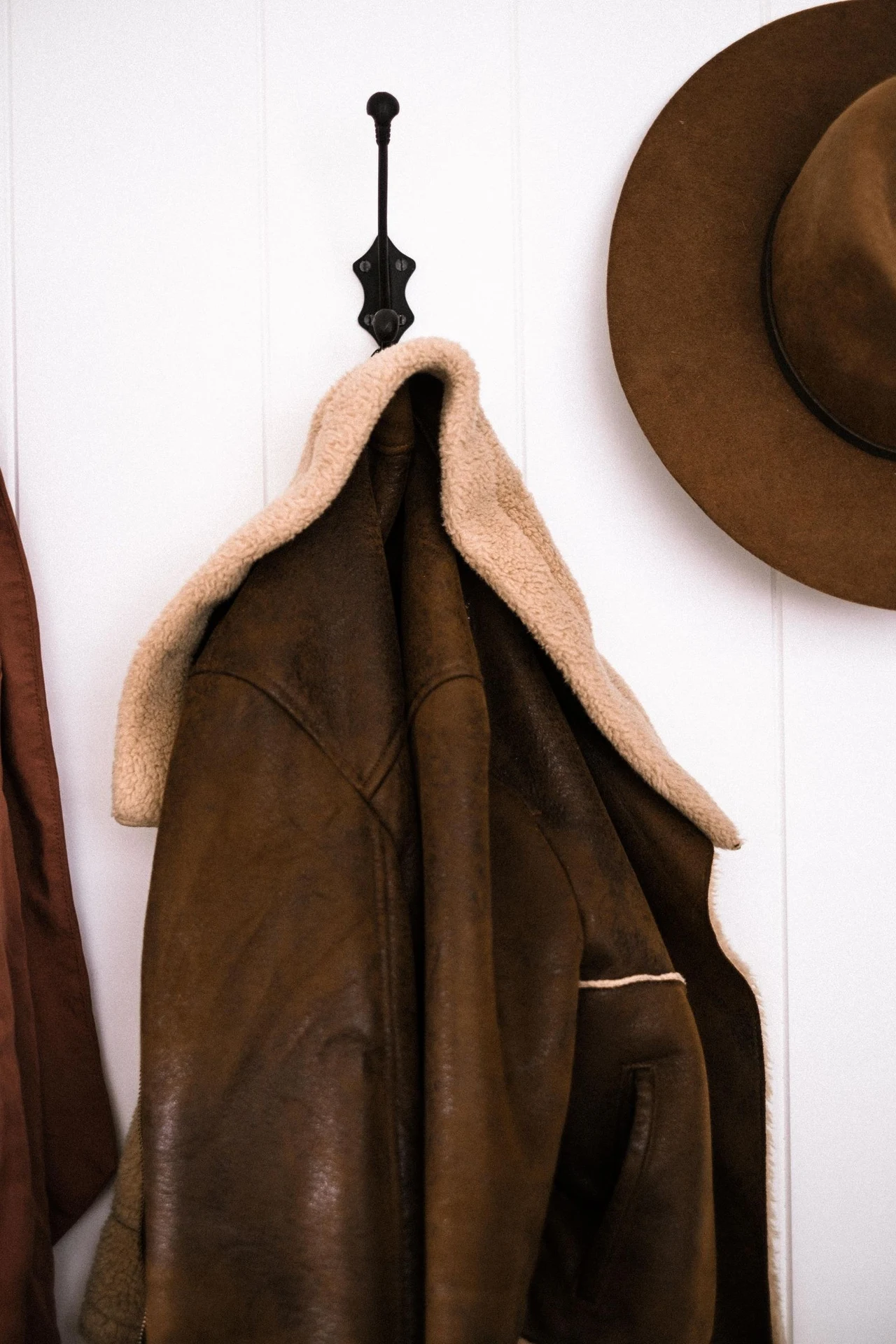
Every household has one coat that is heavier than the rest — the shearling-lined one, the long wool one, the one that comes out when the temperature drops below freezing. Give that coat one strong hook of its own, a solid iron hook screwed into a stud or a wooden rail, and it will never end up on the floor or dragging a lesser hook out of the wall.
One strong hook is also a style move: a single beautiful coat on a single iron hook against white panelling looks deliberate, like a shop display, and it sets the tone for the whole mudroom. The hat goes on the same hook, because a hat that lives with its coat never gets lost.
Tip: Test the hook with the coat plus a bag before you trust it — if it flexes at all, move it to a stud or a thicker rail.
10. Triple Up on a Single Hook

When the wall is short and the coats are many, the answer is not more hooks — it is more hook per hook. A brass triple hook holds a coat on the long arm, a scarf on the middle one, and a hat or the dog lead on the short one, so one fixing does the work of three and the wall stays calm.
Brass against textured plaster warms up a plain wall without any extra decor, and the close-up matters: a small, well-made hook is the kind of detail that makes a mudroom feel finished rather than thrown together. Use triple hooks for the coats in daily rotation, and keep single hooks for the things that only hang now and then.
Tip: Hang the heaviest thing on the longest, lowest arm — it keeps the weight close to the wall and stops the coat from sliding off.
11. Give the Umbrella Its Own Hook
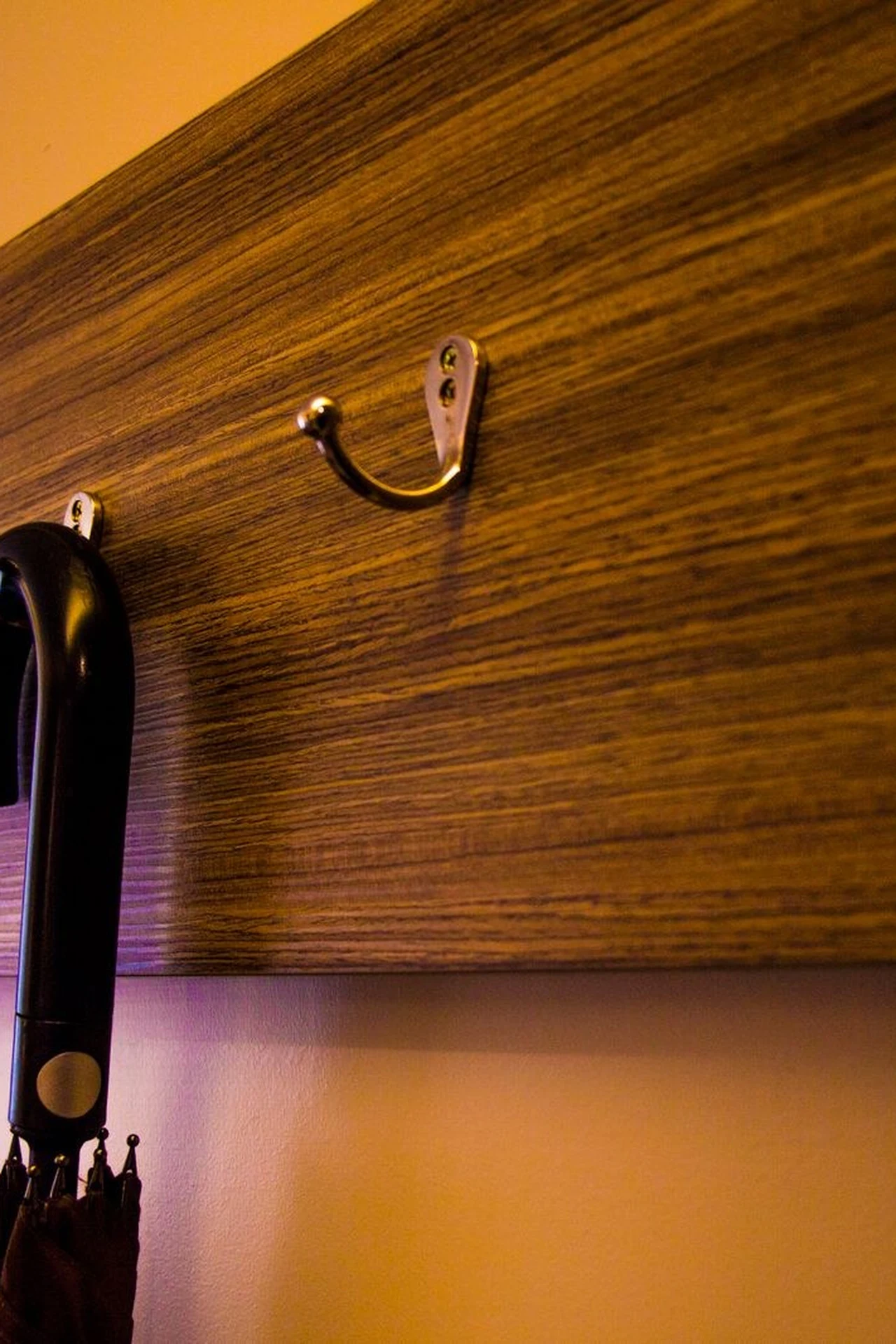
Umbrellas are the mudroom’s worst-behaved item: they fall over in corners, drip across the floor, and get forgotten on dry days and missed on wet ones. Give the umbrella its own hook on the board by the door, hung by its handle, and it stays upright, drips where it does not matter, and is visible enough to grab on the way out.
A wooden hook board with chrome hooks suits the job — the wood warms the wall, the chrome takes the wet, and the board keeps the hooks in a tidy line instead of scattered. Keep the umbrella hook at the end of the board, so the wet umbrella never drips onto the coats beside it.
Tip: Open a wet umbrella for an hour when you get home so it dries fully before you close it — a closed wet umbrella is how mildew starts.
12. Keep a Grab-and-Go Rail for Bags and the Dog Lead
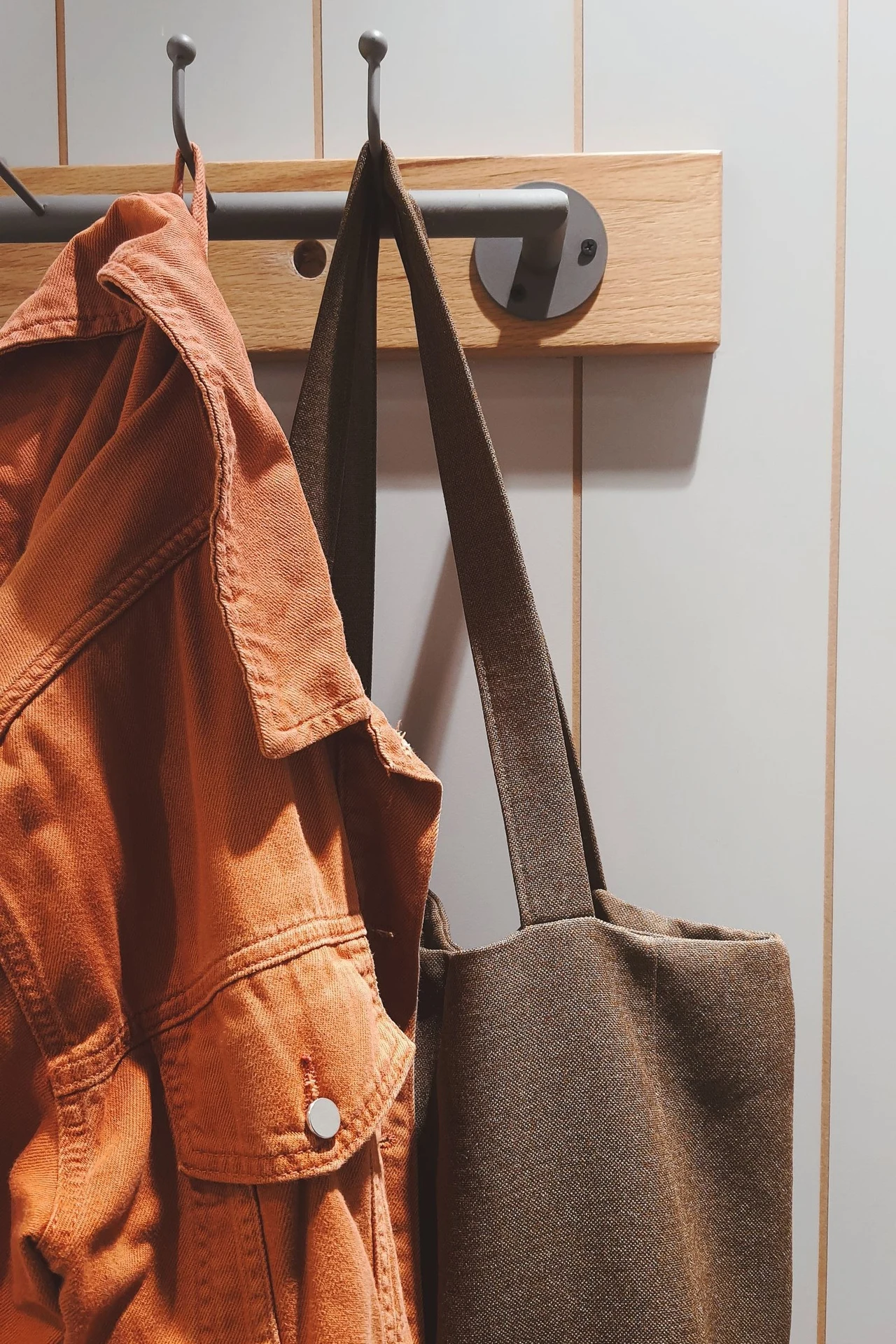
Not everything in a mudroom is a coat. The tote bag, the shopping bag, the dog lead, the jacket you throw on for a quick errand — these are the grab-and-go things, and they need a rail of their own, at hand height, right by the door. When they have a spot, you stop hunting for them with your keys already in your hand.
Keep this rail separate from the coat rail, even if it is only two hooks on the same wall. Coats are heavy and slow; the grab-and-go things are light and fast, and mixing the two means the tote bag ends up buried under a wool coat every morning.
Tip: Hang the dog lead on the hook nearest the door, so the dog’s walk starts at the rail and the lead never gets left behind.
13. Stand a Coat Post in the Corner (No Screws Needed)
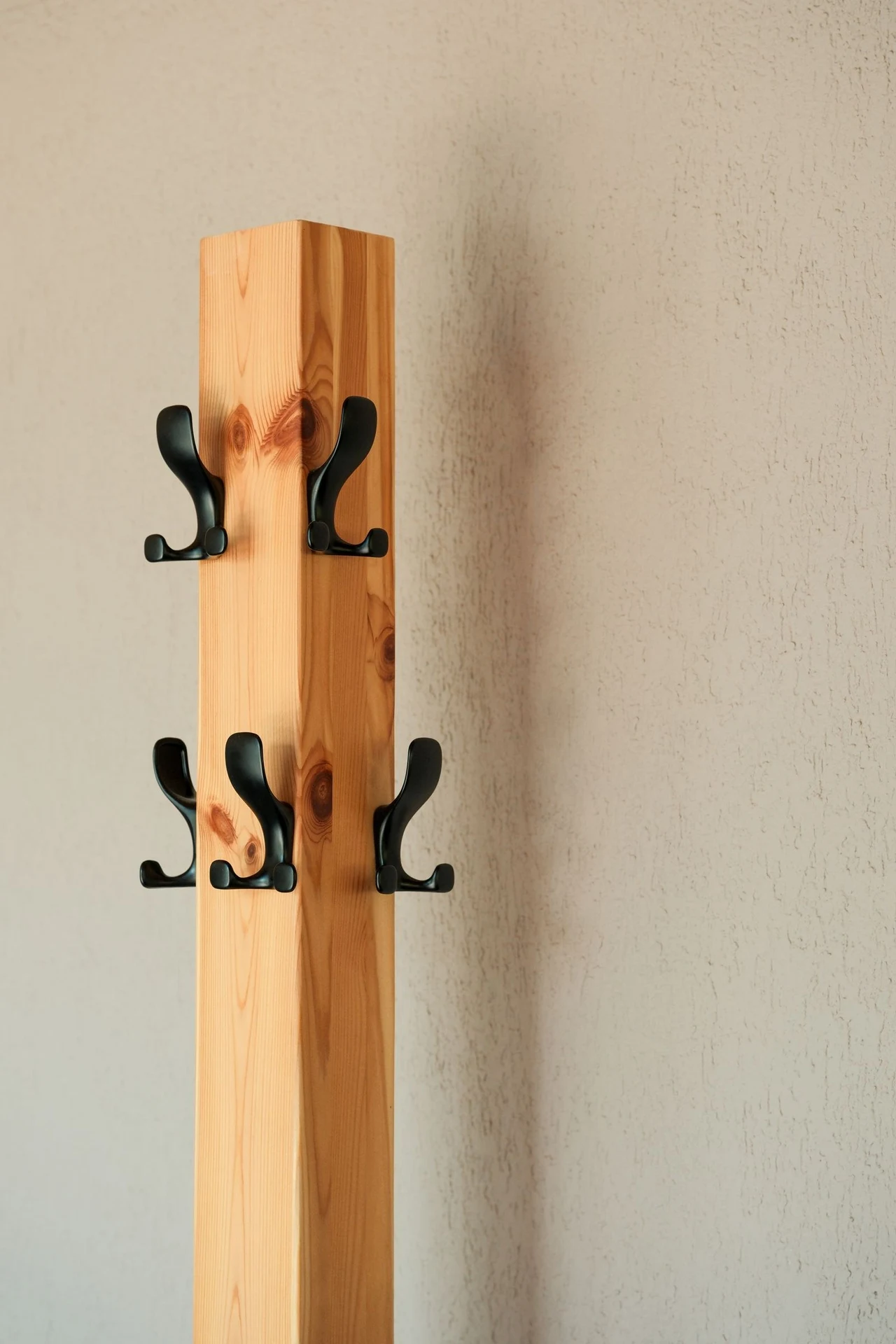
Renters and small mudrooms share the same problem: the walls are not always yours to drill into. A freestanding coat post solves it — a wooden post with black hooks at two heights, standing in a corner, holding the coats without a single screw. Move it when the room changes, take it with you when you move house.
Two heights matter: the high hooks take the coats, the low ones take the things that belong to shorter people — or the bags and scarves that would otherwise end up on the bench. A heavy base keeps it steady under a wet winter coat, so check the base before you fall for the shape.
Tip: Put the post where the evening light falls and keep its hooks free of the family’s overflow — an empty post is ready for a guest, a loaded one is just another pile.
14. Hide Shoes Behind a Slim Cabinet
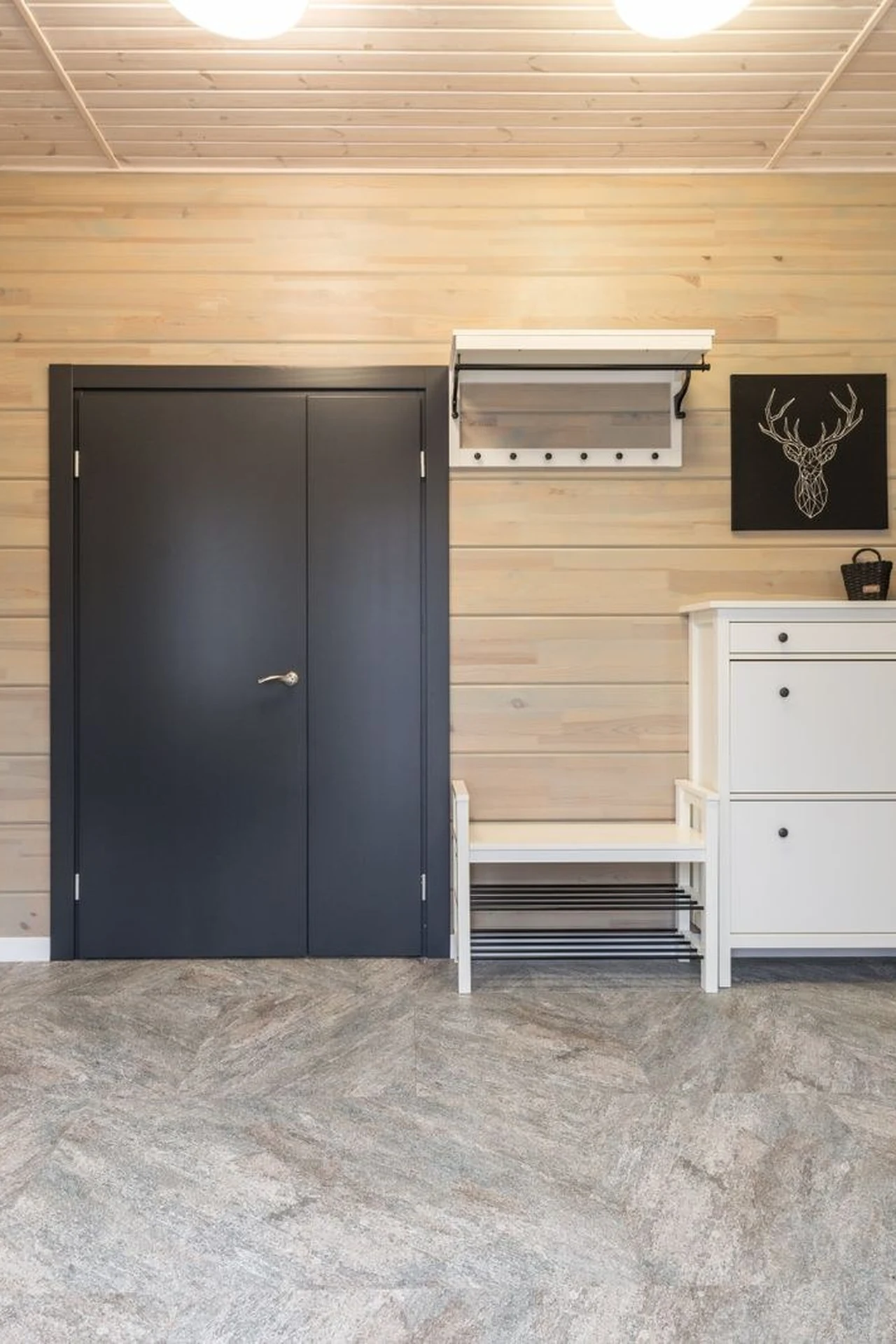
Open shoe racks show every pair, and in winter every pair is wet, muddy, and twice as bulky. A slim white shoe cabinet hides the whole lot behind flat doors, and the room instantly looks calmer — the shoes are still there, still drying, just not on display. Slim matters: a cabinet that sticks out a foot from the wall still leaves the walkway clear.
Pair the cabinet with a big mirror above it and a small bench beside it, and the three pieces form a complete winter station: check yourself in the mirror, sit on the bench, pull the shoes out of the cabinet, and go. The wood panelling behind it all warms the room up without a single extra decoration.
Tip: Put the shoes in rotation on the top shelf of the cabinet and the out-of-season pairs lower down, so the door you open every day is the one with the shoes you actually wear.
15. Warm the Wood and Let the Winter Light In
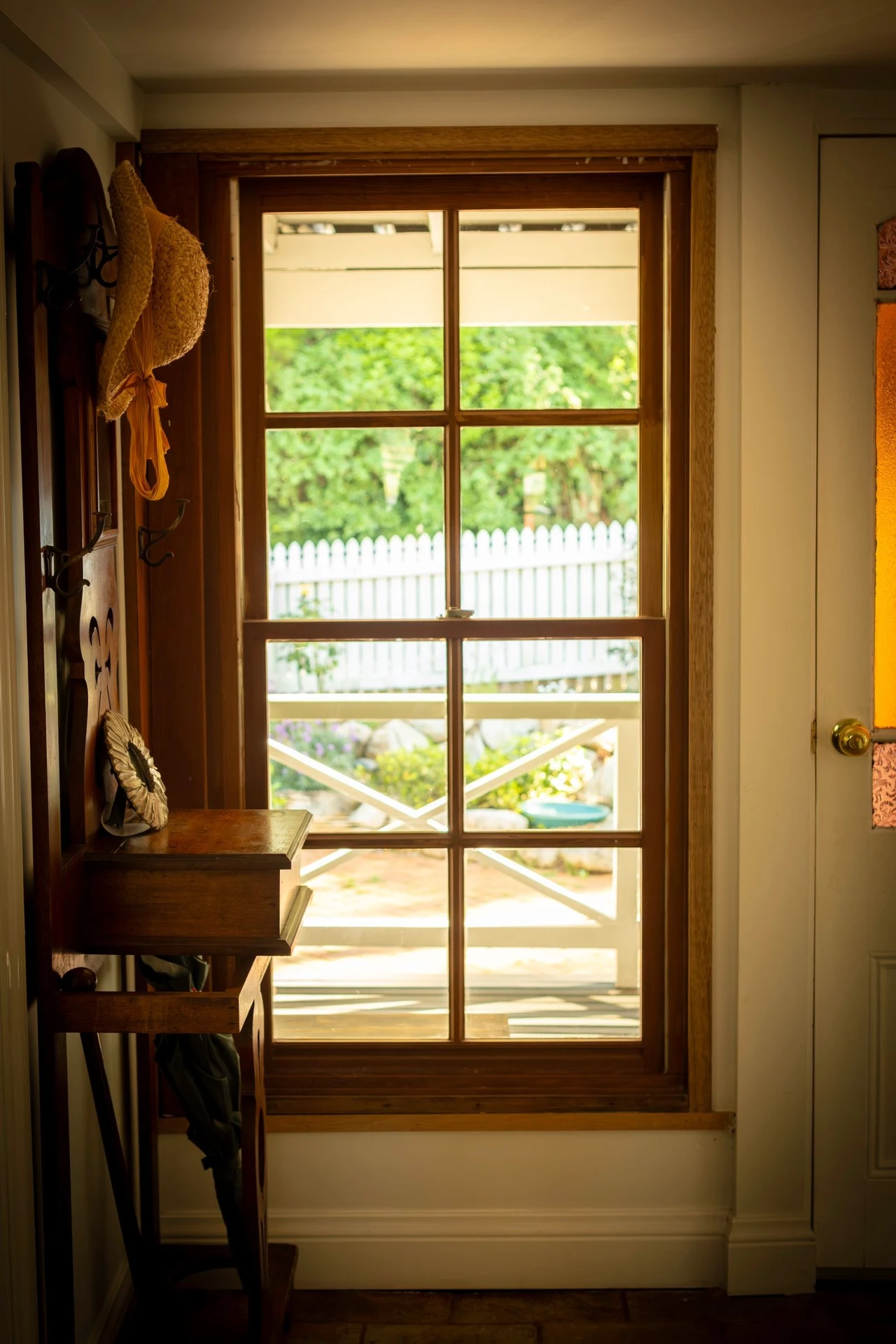
The last idea is not storage at all — it is warmth. Warm wood, a sunny window, and a little breathing room make a mudroom feel like part of the house instead of a cold cupboard by the door. A wooden hall tree with a small desk ledge, a straw hat on the hooks, and light coming through the window turn a working room into a welcoming one.
Winter light is low and short, so let it in: keep the window clear, skip heavy curtains in the mudroom, and let the wood do the warming. The room does not need more stuff — it needs the stuff it already has to look like it belongs there.
Tip: If the mudroom has a window, make it the room’s focal point instead of covering it with storage — a view and a bit of sun are worth more than one more shelf.
Your Small Winter Mudroom Checklist
Before the first hard frost, run through this list — it takes an afternoon, and it is the difference between a mudroom that works and one that just holds things.
- ☐ One hook per person, at a height everyone can reach
- ☐ A boot tray or a cubby for every pair of winter boots
- ☐ A labelled bin for hats, gloves, and scarves
- ☐ A bench or a seat to sit and lace up boots
- ☐ An umbrella hook by the door, with a drip tray below
- ☐ A mirror to bounce the low winter light around
- ☐ One empty shelf or hook, kept free on purpose
- ☐ A doormat inside and a doormat outside the door
A winter mudroom does not need to be big — it needs to be honest about the job. A tray for wet boots, a hook for every coat, a bench to sit on, and a warm corner that feels like part of the house are enough. Pick three or four of these ideas, start with the boots, and let the rest of the room follow.
Read next: more winter entryway ideas for the hall the mudroom opens into, winter front porch decor for the outside of the same door, and winter home decor ideas for the rest of the house.
How do I make a small mudroom work in winter?
Give every job its own spot in one small zone: hooks for coats, cubbies or a tray for boots, and bins for hats and gloves. Work the wall, not the floor — two rows of pegs and a slim bench with drawers double the storage without shrinking the walkway.
What is the best way to store winter boots in a mudroom?
Open cubbies or a low tray with a raised edge, right inside the door where boots come off. One slot per person keeps the pile from starting, and a washable tray underneath catches the meltwater before it reaches the floor.
How many hooks does a small mudroom need?
One per person, plus one spare for a guest and one low hook for the dog lead or a child’s coat. If the wall is short, use triple hooks or a second, lower row of pegs instead of spreading hooks across more wall.
How do I keep a mudroom from smelling damp in winter?
Let things dry in the open air: open cubbies instead of closed cupboards for wet boots, space coats so air moves between them, and empty the boot tray every evening. Open a wet umbrella to dry before closing it, and air the room out for a few minutes a day if it has a window.
Can I make a mudroom out of a hallway corner?
Yes — a freestanding coat post, a slim bench, and a boot tray are enough to mark a mudroom in a hallway corner, no building work needed. Add a peg rail on the wall above the bench and a doormat to define the zone, and the corner works like a room.