Curtains are one of the easiest ways to change how a small room feels — and one of the easiest ways to overspend. A compact bedroom or living room doesn’t need custom panels, designer fabric, or elaborate hardware to look polished. In most cases, getting the proportions right matters more than spending more money. A curtain at the right height, wide enough to frame the window, in the room’s palette, looks more expensive than it is. Here’s where to put the money first — and where to save.
Spend on Proportions Before Fabric
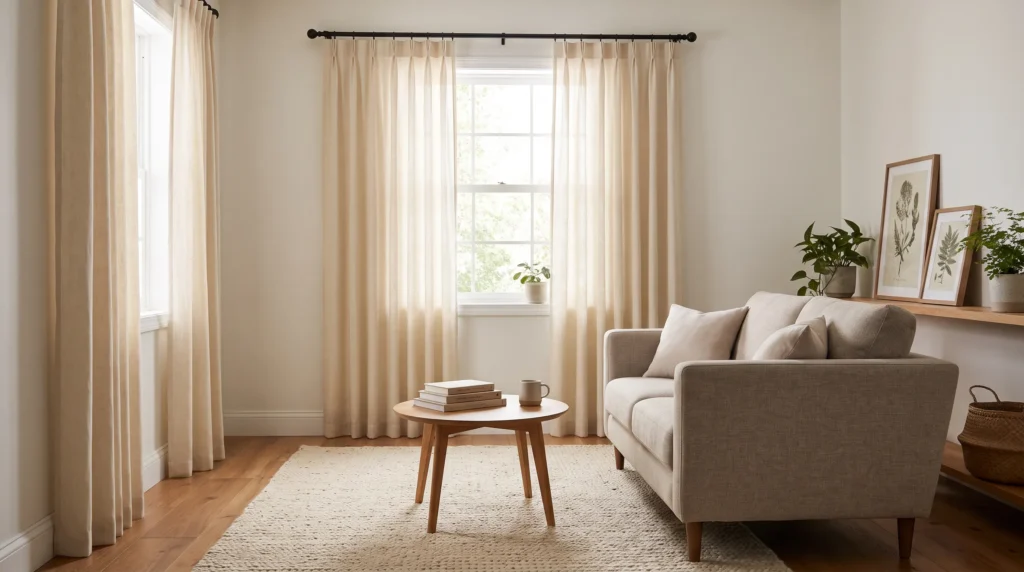
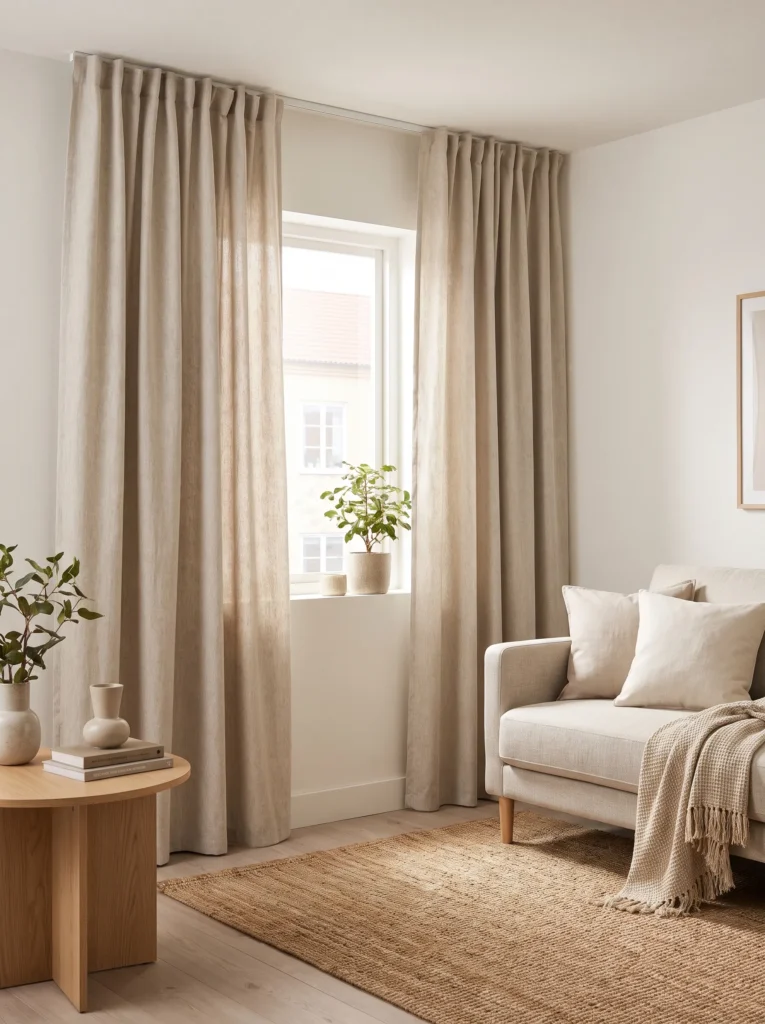
On a limited budget, don’t start with expensive fabric — start with dimensions. Too-short curtains chop the room visually; panels that barely clear the window shrink the whole wall. Simple ready-made curtains look surprisingly polished when they’re long enough to reach the floor, wide enough to frame the window, hung at the right height, and full enough to fold naturally. Proportion matters more than price — a basic curtain with good proportions beats an expensive one in the wrong size.
Hang the Rod Higher Than the Window
Small rooms need vertical help: mount the rod higher on the wall instead of right above the frame. The eye travels up, the ceiling feels taller, and the window connects to the wall instead of sitting trapped in a small rectangle. It costs almost nothing and it’s one of the best low-budget improvements you can make.
Save on Ready-Made (When Dimensions Work)
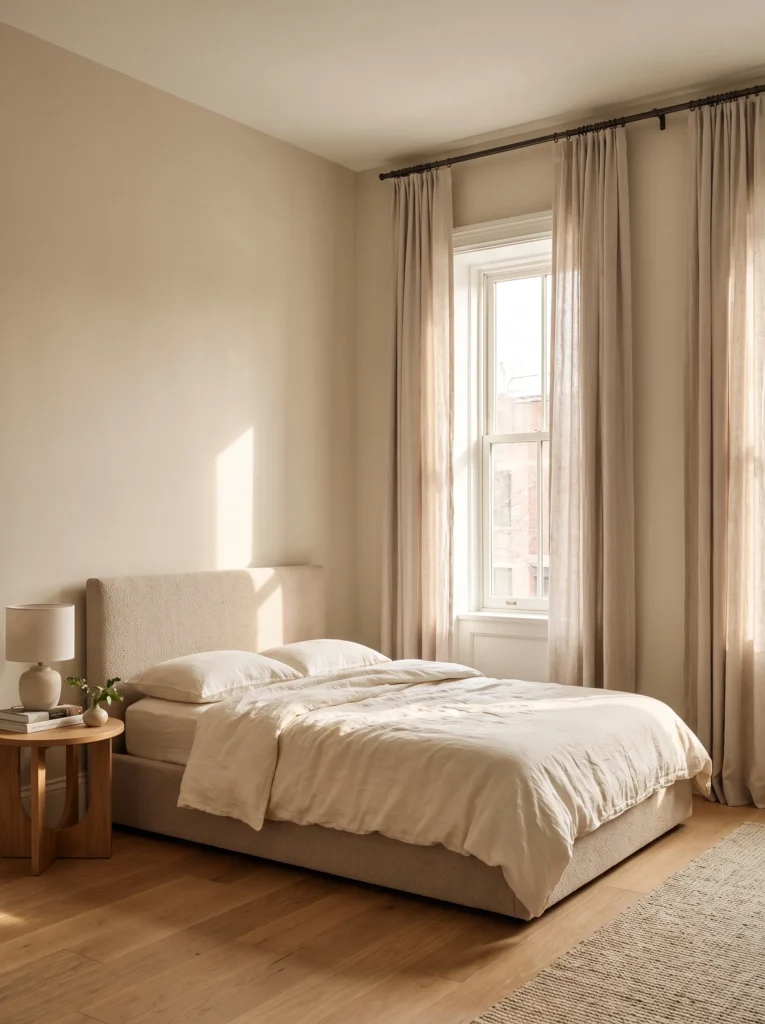
Custom curtains are beautiful but not automatically necessary. Measure the window and the hanging area first, watching length especially. If a ready-made panel is close, buy it and alter slightly rather than paying the full custom premium — and spend the savings where you’ll notice it more.
Spend on Visible Hardware
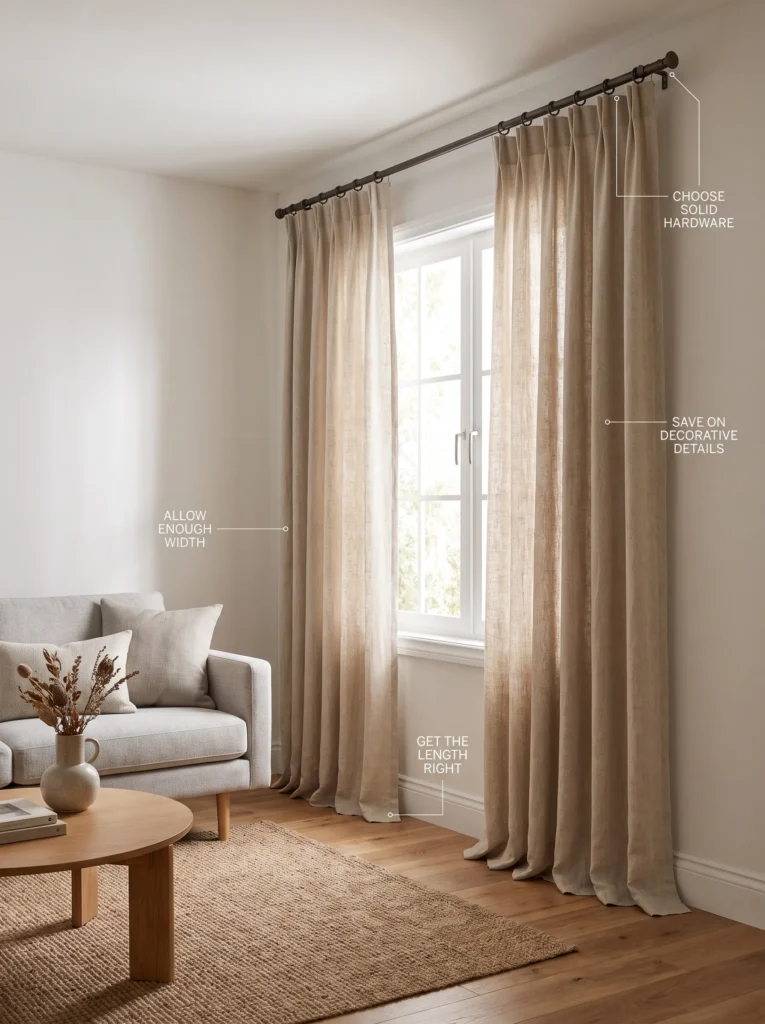
Rods are easy to overlook, but in a small room they’re highly visible. A thin, poorly finished rod cheapens good curtains. You don’t need expensive hardware — just a rod with a room-appropriate finish, enough diameter to support the panels, sturdy brackets, and restrained finials. A modest, well-proportioned rod out-polishes a fussy cheap set. Small spending increase, disproportionate visual effect.
Full-Length Beats Short in Small Rooms
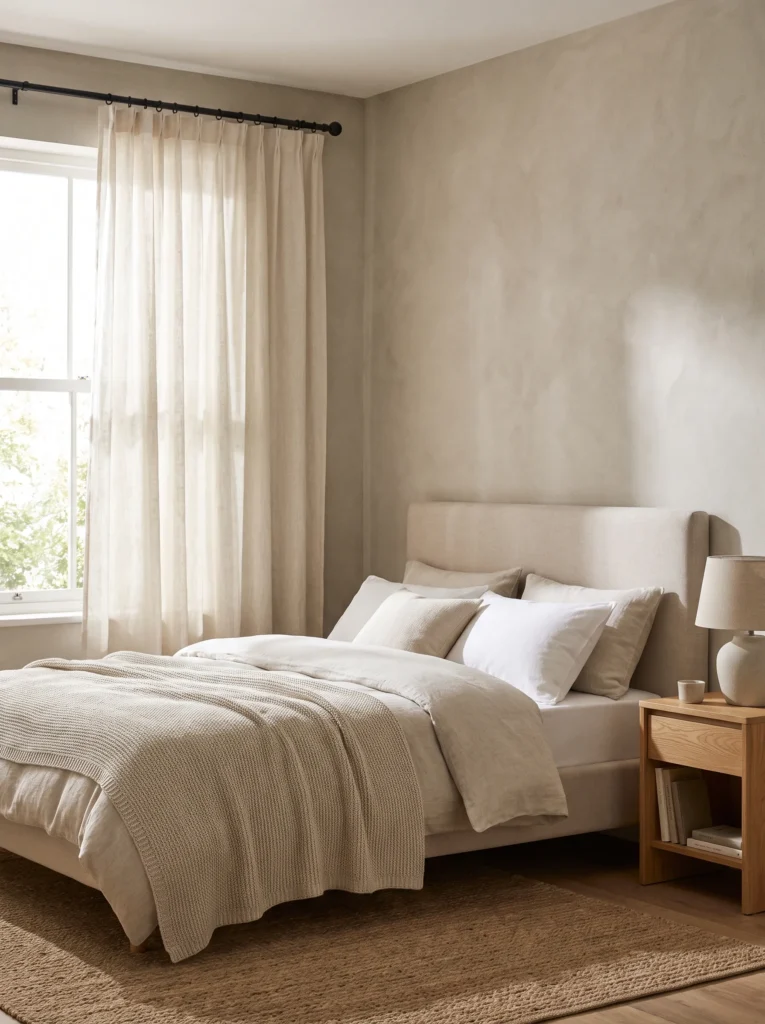
Short curtains seem practical but create a horizontal stopping point that shortens the wall. Full-length panels draw a stronger vertical line and can extend beyond the window’s actual dimensions. Unsure about length? Our curtain length guide walks through the options before you order.
Save With Simple Fabric
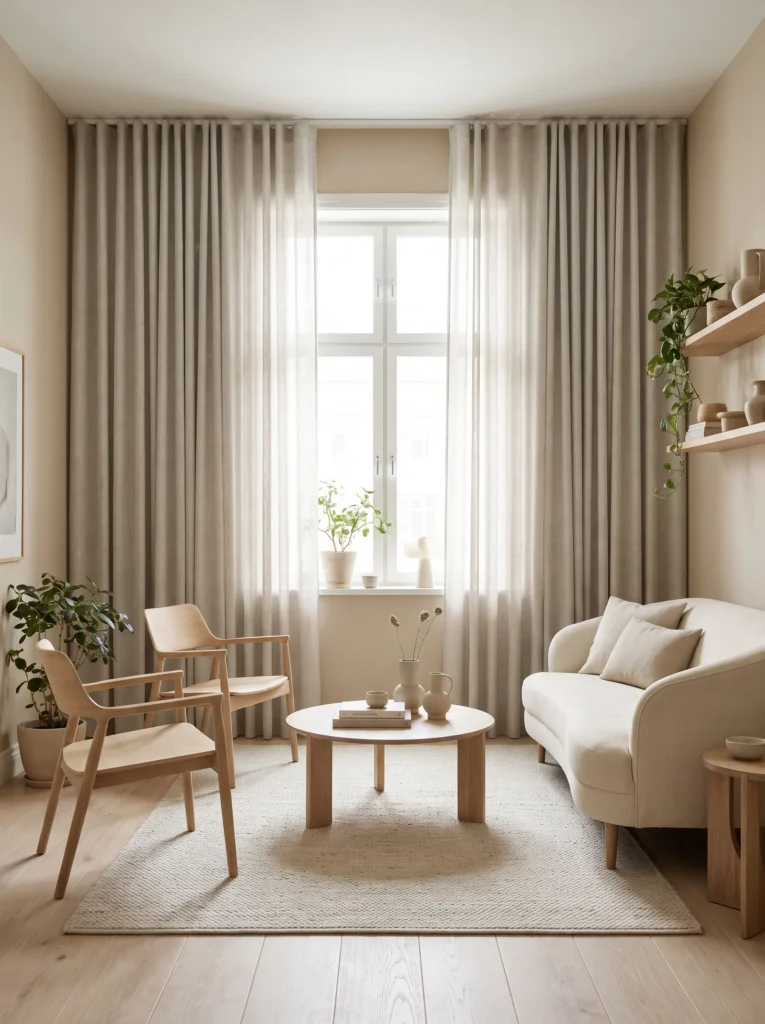
You don’t need heavy texture, bold pattern, or luxury fabric. In a small room, simple is an advantage: quiet linen-look panels, cotton blends, lightweight textures, simple weaves add softness without overwhelming — especially when walls, furniture, or flooring already carry texture. Let the curtain support the room, not star in it. Restrained fabric also calms a small space.
Spend When the Curtain Must Perform
Sometimes cheap isn’t better value. Intense afternoon sun? Lightweight curtains won’t cut it. Privacy needs? You may need substantial lining or sheer + opaque layering. A bedroom? Light-blocking may be worth paying for. Spend when you’re buying real improvement in light control, privacy, insulation, durability, fabric quality, or maintenance — not just a pricier fabric.
Don’t Default to Heavy Curtains
Heavy curtains don’t automatically equal luxury in small rooms — velvet or thick lined panels can turn visually dense fast, especially with dark furniture, small windows, and limited light. Lighter curtains admit more daylight while keeping softness and privacy. The goal isn’t invisible curtains; it’s curtains that don’t overpower the room.
Use Color to Keep Things Open
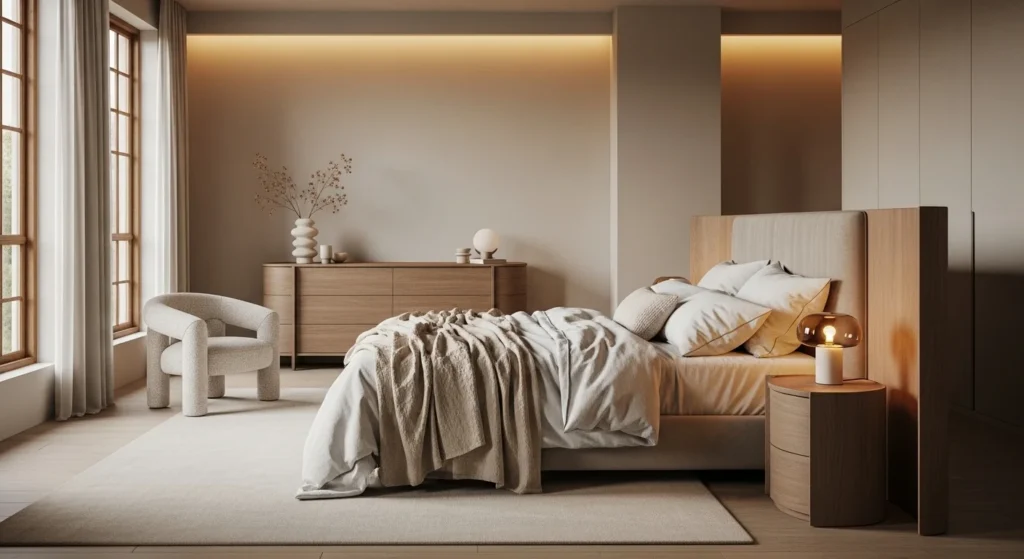
Curtains covering a big wall section make color count. For spaciousness, stay close to the wall color — soft taupe, muted sage, dusty blue, warm gray create quiet transitions. Strong contrast makes the treatment prominent; tonal match makes the wall feel continuous. Neither is automatically better — decide whether the curtains should blend in or become a feature.
Save With One Continuous Treatment
Several narrow windows close together? One continuous treatment reads as a single larger architectural feature instead of fragments — and needs fewer rods and less hardware. Cleaner visually, potentially cheaper. Don’t force it if doors, furniture, or radiators make separate treatments more practical.
Pattern: Mind the Scale
Pattern isn’t the enemy in small rooms — scale and repetition are. A large, high-contrast print covering a big wall section becomes a dominant element. Busy room? Choose a quieter curtain. Simple neutral room? A subtle pattern adds personality without crowding. Judge patterned fabric from across the room, not up close — overall effect beats the individual print.
Don’t Pay for “Luxury”
Premium-looking rooms come from coordinated proportions, restrained materials, and thoughtful placement — not expensive pieces. A modest curtain feels elevated when it hits the right height and width, folds naturally, hangs on a scaled rod, matches the walls, and installs cleanly. A limited budget doesn’t produce an unfinished room; it just demands selectivity about where money goes.
Your Spending Priority Order
1. Correct size and length — never sacrifice proportions for a cheaper panel.
2. Useful performance — blackout, privacy, insulation, durability when genuinely needed.
3. Hardware — sturdy, appropriately scaled.
4. Fabric quality — upgrade when texture, drape, or longevity will show.
5. Decorative details — easiest place to save; skip elaborate trim and designer labels.
The Most Expensive Mistake: Wrong Curtains
A $30 curtain that works beats a $150 curtain that doesn’t. Before buying: will they make the ceiling feel taller? Frame the window properly? Block too much daylight? Fight the furniture? Perform as needed? Will the dimensions actually work? Getting this right saves you from replacing them later — which is where “budget” purchases get expensive.
Quick Answers
How high should I hang curtains in a small room?
Higher than the window frame — mounting the rod well above the frame draws the eye up and makes the ceiling feel taller. Avoid trapping the window in a tight rectangle.
Should curtains touch the floor in a small room?
Usually yes — full-length panels create a stronger vertical line that makes walls feel taller. See our curtain length guide for the full breakdown of kiss, puddle, and floating options.
Are custom curtains worth it for small rooms?
Only if ready-made can’t hit your dimensions. Measure first — a close-enough ready-made panel with minor alterations usually beats the custom premium, freeing budget for hardware and fabric quality.
Affiliate Disclosure: As an Amazon Associate, I earn from qualifying purchases. If you click a link and buy, I may receive a small commission at no extra cost to you. Thank you for supporting my content!