The best flooring for a pet household isn’t necessarily the toughest material. A floor can be extremely durable and still be wrong if it shows every paw print, turns slippery when wet, or makes accident cleanup miserable. What matters is how the flooring responds to what your pets actually do every day. A large dog running through the house stresses a floor differently than a quiet indoor cat; a puppy makes moisture resistance the priority; a senior pet needs traction. So instead of asking which flooring is universally “best,” ask: what does your home need the floor to handle? Scratches? Wet paws? Accidents? Shedding? Heavy traffic? Slipping? Once you know, choosing gets much easier.
Start With Your Pet’s Hardest Habit
Before comparing materials, name your biggest frustration: muddy paws at the door? A dog sprinting the same hallway? Litter tracked everywhere? Accidents? Or just a floor that’s easy to sweep and mop daily? A young-dog household prioritizes moisture resistance and easy cleaning; a large active dog needs scratch resistance and traction. This also keeps you from paying for features you don’t need — a showroom sample can’t tell you what your house demands.
If Scratches Are the Problem
Claws mark floors over time, especially where animals run, turn, and jump. But look beyond the material name: finish, texture, color, and pattern all change how visible wear becomes. A smooth, dark, glossy floor reveals small marks far more than a subtly textured or naturally varied surface. Durability and visual forgiveness are different qualities — a floor that handles wear well and doesn’t advertise every tiny mark is usually the more practical pet choice.
If Accidents and Wet Paws Are the Problem
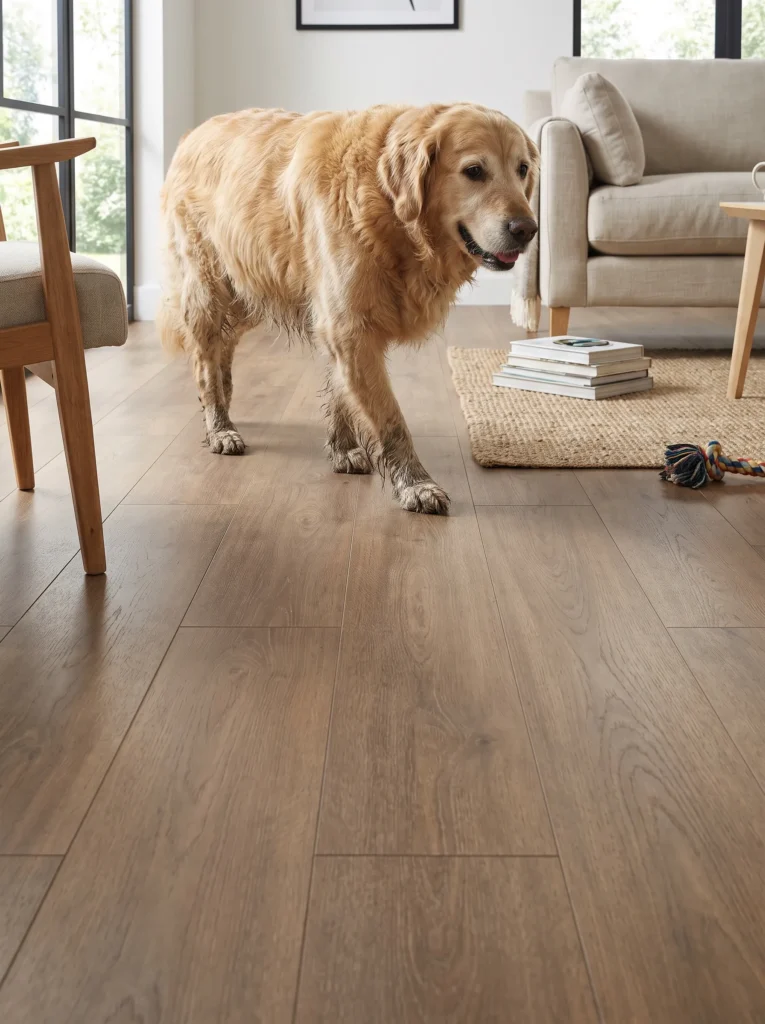
Puppies, senior pets, messy drinkers, frequent outdoor trips: moisture deserves serious attention. Hard, non-porous surfaces clean up straightforwardly — tile and quality resilient flooring shine here. But don’t stop at the material: seams, joints, grout, edge transitions, and installation quality matter as much. A water-resistant surface with vulnerable seams fails where accidents actually happen. For accident-prone rooms, the complete flooring system matters more than the sample in your hand.
If Easy Cleanup Matters Most
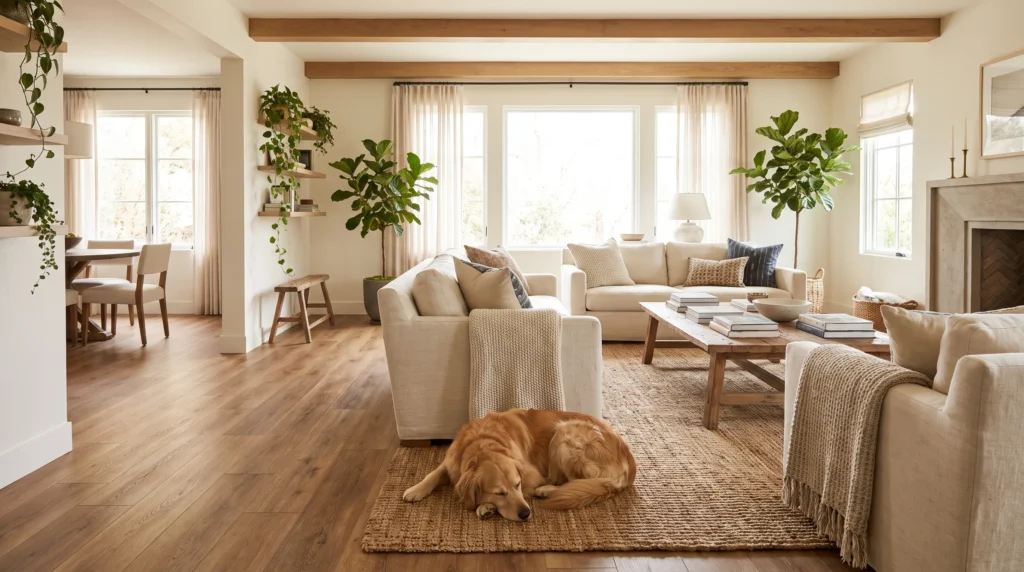
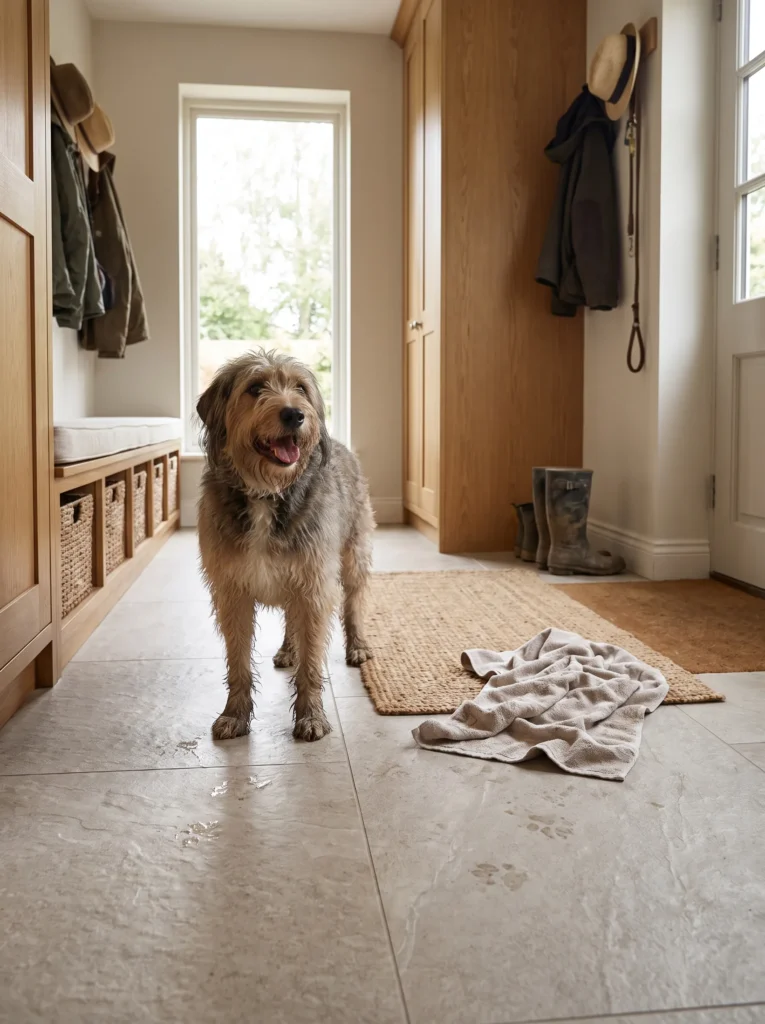
Pet hair finds every corner. Smooth flooring sweeps and mops easier than heavily textured surfaces — but color and pattern count too. Very dark floors spotlight light fur; very pale floors spotlight dark fur; moderately varied surfaces forgive between cleanings. Don’t choose purely to hide hair — choose for how the floor looks on an ordinary Tuesday, not right after cleaning. And flooring is only half the pet equation: the sofa fabric matters too, especially when pets live on the furniture.
If Traction Is the Priority
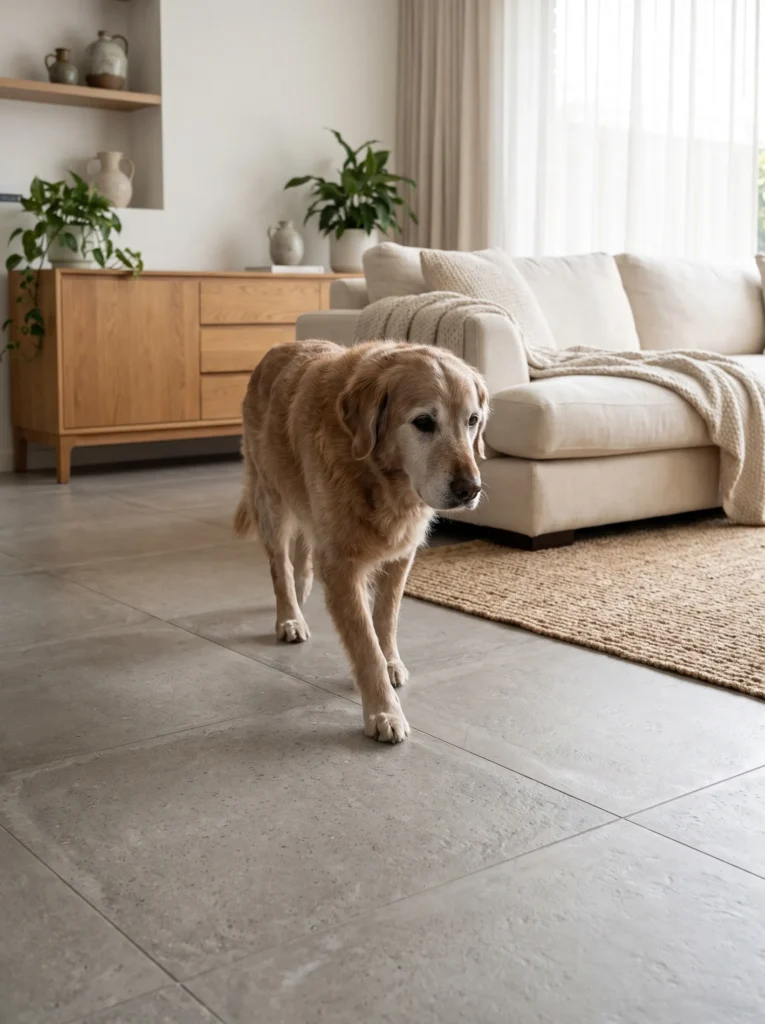
A highly polished floor can be miserable for pets that struggle with footing — running, turning quickly, moving across damp surfaces. This matters most for older or less mobile animals. Some texture gives confidence underfoot, but excessive texture traps dirt and hair. The sweet spot: enough grip for how your pet actually moves, without becoming hard to clean. Don’t choose the roughest floor — choose the right grip.
The Hardwood Question
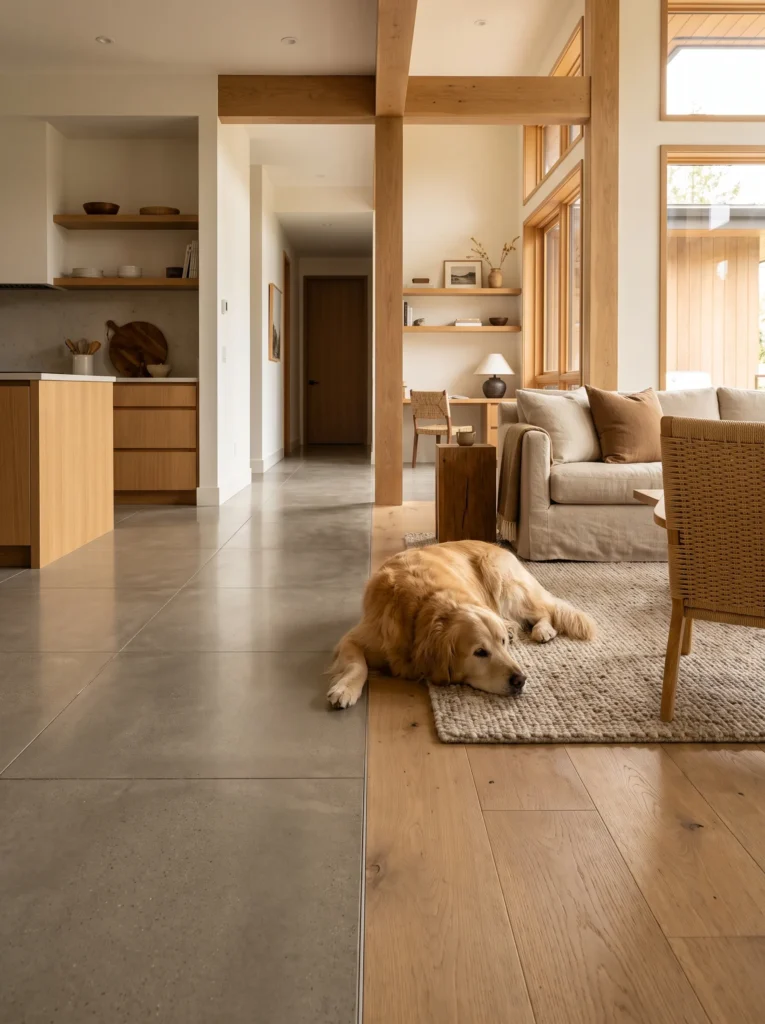
Hardwood’s warmth and character are real — and pets don’t automatically rule it out. Species, finish, color, texture, and your maintenance tolerance all matter. Some floors will show wear in high-traffic pet areas; if you love natural wood, you may simply accept visible patina and choose finish and species accordingly. Or pick a wood-look material for similar character with different performance. Don’t choose a wood-look floor because it looks like hardwood — choose it because its everyday performance matches your household.
When Tile Makes Sense
Hard, durable, straightforward to clean — tile excels where wet paws, mud, food spills, water bowls, and accidents concentrate. The trade-offs: hard and cool underfoot, smooth surfaces can lack traction, and many small tiles mean many grout lines to maintain. Look at the entire surface — tile plus grout plus transitions — not just the tile.
When Resilient Flooring Makes Sense
Luxury vinyl and similar options offer moisture resistance, easy cleaning, a softer feel than tile, and wide visual range including wood and stone looks. But quality varies enormously — check specifications, installation requirements, wear layer, and care instructions. The best choice is the specific product that fits your household, not the category with the best reputation.
What About Carpet?
Carpet is complicated with pets: soft and comfortable with excellent traction, but spills, accidents, odors, hair, and embedded dirt raise maintenance. It doesn’t have to vanish entirely — bedrooms and low-moisture areas where comfort matters can still work. Think about where, not whether. A practical home uses different flooring in different rooms.
The Six-Factor Balance
Don’t shop for the hardest floor and call it done. A practical pet floor balances: scratch resistance (your pets’ activity level), moisture resistance (accidents and wet paws manageable?), cleanability (hair, dirt, spills removed easily?), traction (pets secure moving across it?), comfort (works for how pets use the room?), and appearance (acceptable between cleanings?). The winner is the right combination for your household — a puppy owner ranks moisture first; two big dogs rank scratch and traction; an older cat ranks comfort and easy cleaning.
Different Rooms, Different Floors
You don’t need one material everywhere. The entryway needs moisture resistance (wet paws arrive first); the kitchen needs easy cleanup; the bedroom can prioritize warmth; a mudroom may need something else entirely. Ask “what does this room need to handle?” instead of “what’s the best pet flooring” — and you’ll decide better.
Test Against the Worst Day
Samples look their best in showrooms. Instead, imagine the most demanding ordinary day: wet paws through the door, a spilled water bowl, hair along the edges, a muddy footprint across the kitchen, an accident needing immediate cleanup, a sharp turn at full sprint. Would this flooring make those situations easier or harder? That question beats any showroom comparison. The right floor isn’t the one that looks best clean — it’s the one that keeps working when real life happens.
Quick Answers
What is the best flooring for dogs?
There’s no universal winner — match the floor to your dog’s habits. Prioritize moisture resistance for puppies, scratch resistance and traction for large active dogs, and comfortable traction for seniors. Luxury vinyl, tile, and forgiving wood-look surfaces all work depending on the room.
Can I have hardwood floors with pets?
Yes, with eyes open. Choose a harder species, a forgiving finish and color, and accept some patina — or pick a wood-look alternative for hardwood character with different performance. The key is matching performance to your household, not just appearance.
Is carpet bad for homes with pets?
Not automatically — it’s comfortable with great traction, but harder to maintain around spills, accidents, and odors. It works best in low-moisture areas like bedrooms. Many pet homes use hard flooring in living areas and carpet where comfort matters most.
Affiliate Disclosure: As an Amazon Associate, I earn from qualifying purchases. If you click a link and buy, I may receive a small commission at no extra cost to you. Thank you for supporting my content!