Buying a rug seems simple — until you bring it home. The pattern you loved suddenly makes the living room feel cramped, dining chairs catch on the edges, or the bedroom looks oddly unbalanced. Nine times out of ten, the problem isn’t the rug. It’s the size. The right rug defines conversation areas, anchors furniture, and makes a room feel intentionally designed. Too small and even beautiful furniture looks disconnected; properly sized and the same room looks larger and more cohesive. Here’s the designer approach, room by room.
The One Rule
The rug should connect the furniture — not float alone in the middle of the room. That’s it. Instead of asking “will this fit?”, ask: does it connect the pieces? Does it leave walking space? Does the room feel balanced? Those questions beat dimensions every time. Leave a border of visible flooring around the edges as a natural frame, and treat guidelines as starting points — open plans and odd layouts need adjustments.
Mistakes That Shrink Your Room
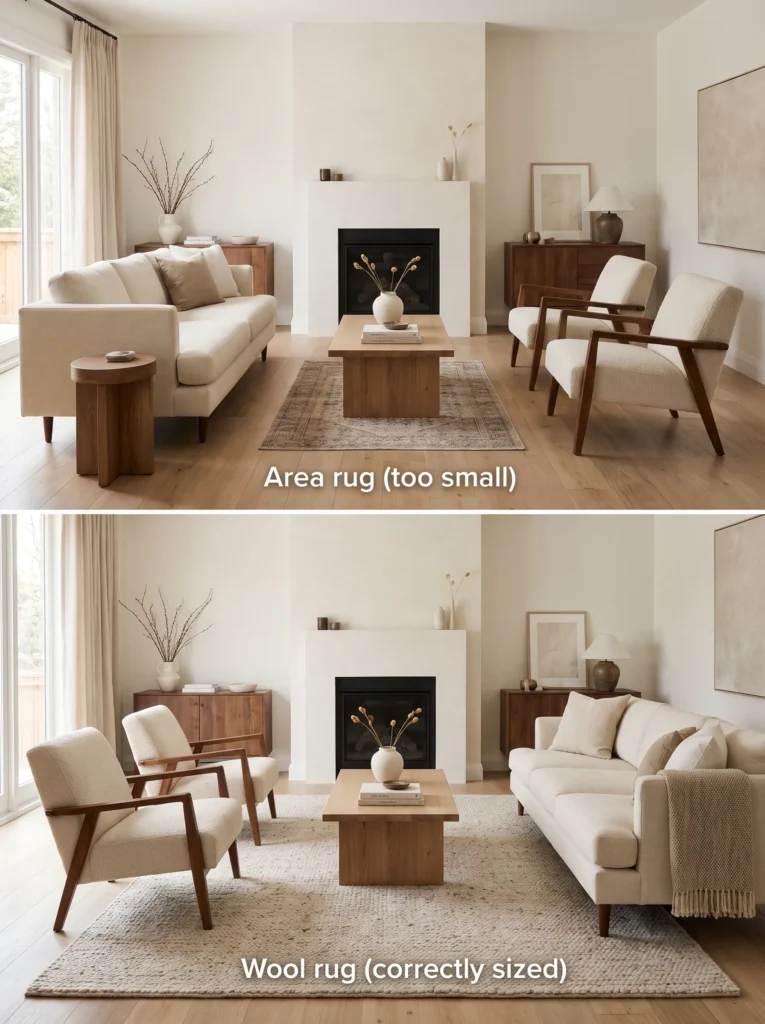
The coffee-table-only rug. The most common error: a rug that sits under just the coffee table while the sofa and chairs float outside it. Every piece looks stranded. Get at least the front legs of your seating onto the rug.
Buying before measuring. Small rugs look bigger online and in showrooms. Measure the room, note furniture placement, and outline the footprint with painter’s tape — walk around it, open doors, pull out chairs before you spend a cent.
Ignoring the room’s shape. Long narrow room? A runner or long rectangle. Square seating area? A larger rectangle or square. Match the rug’s proportions to the room’s.
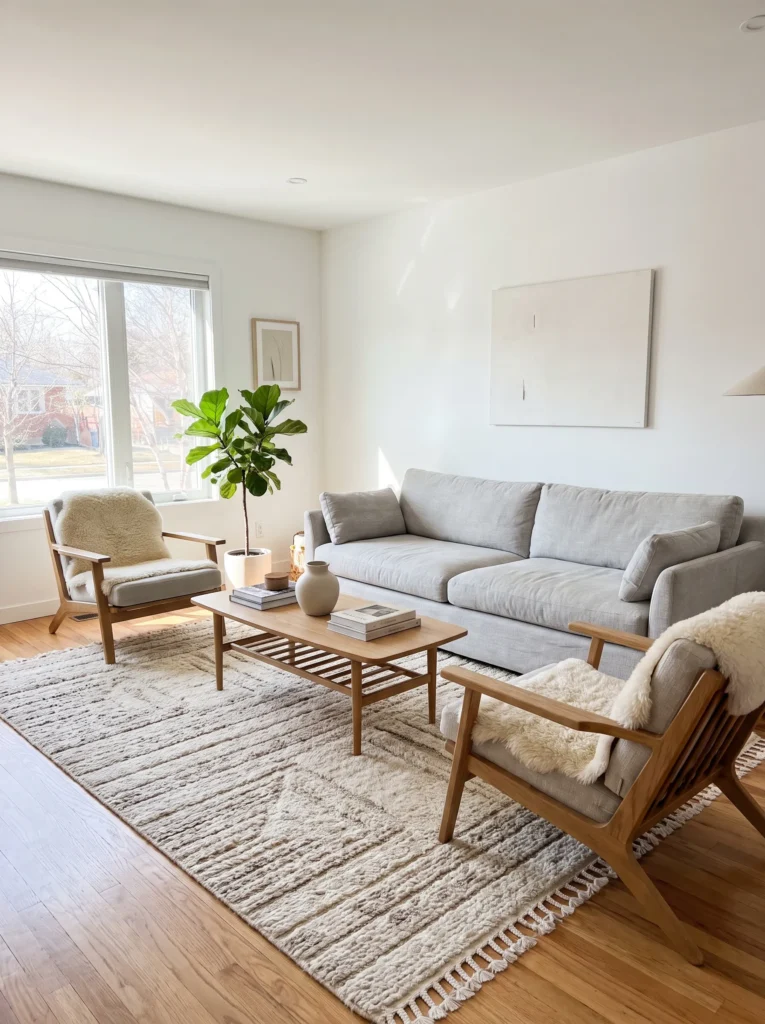
Living Room: Anchor the Seating
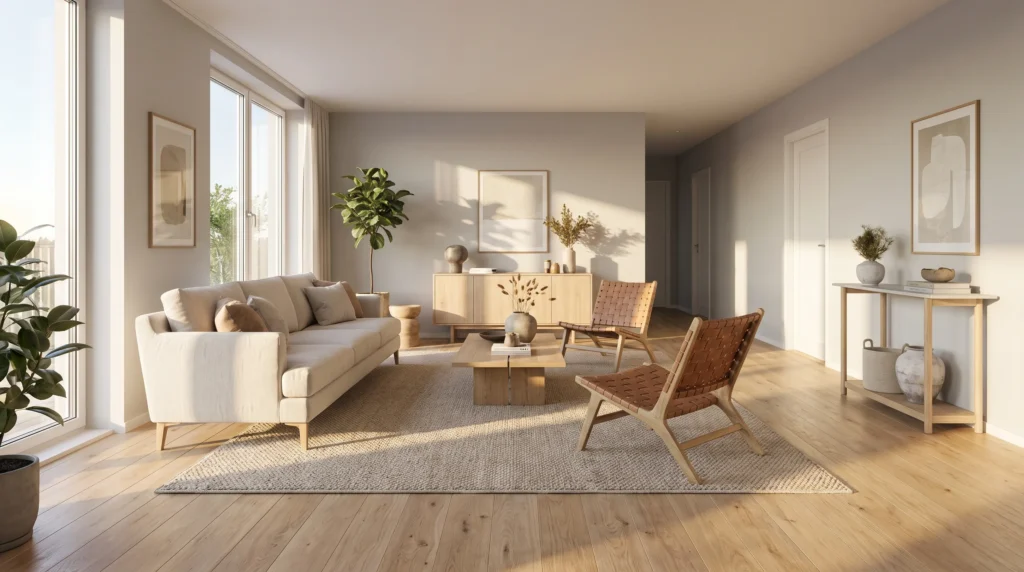
This is where size matters most. Start from your furniture layout, not the room dimensions: at minimum, the front legs of the sofa and chairs rest on the rug. In large rooms, all legs on the rug looks luxurious — but front-legs-on is the rule that works almost everywhere. Small living room? Resist the tiny rug. A slightly larger one visually expands the seating area instead of chopping it up — often worth the extra cost. In open-concept spaces, the rug’s real job is zoning: it should fit the seating arrangement (not the whole open space) to separate living from dining without walls.
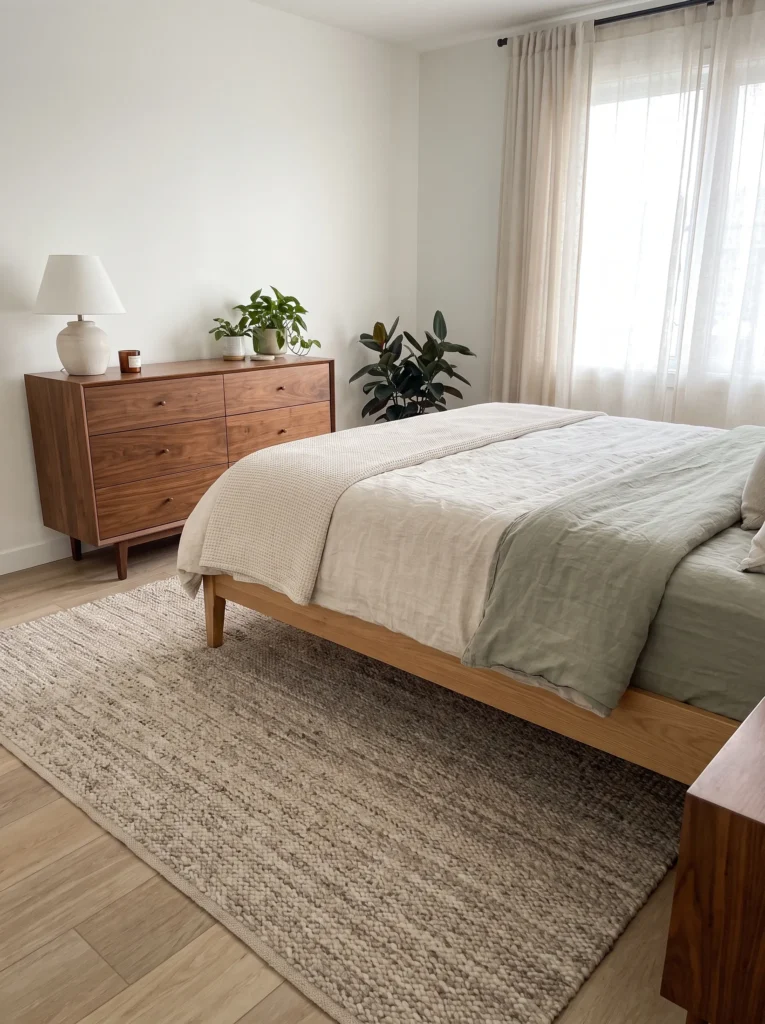
Bedroom: Frame the Bed
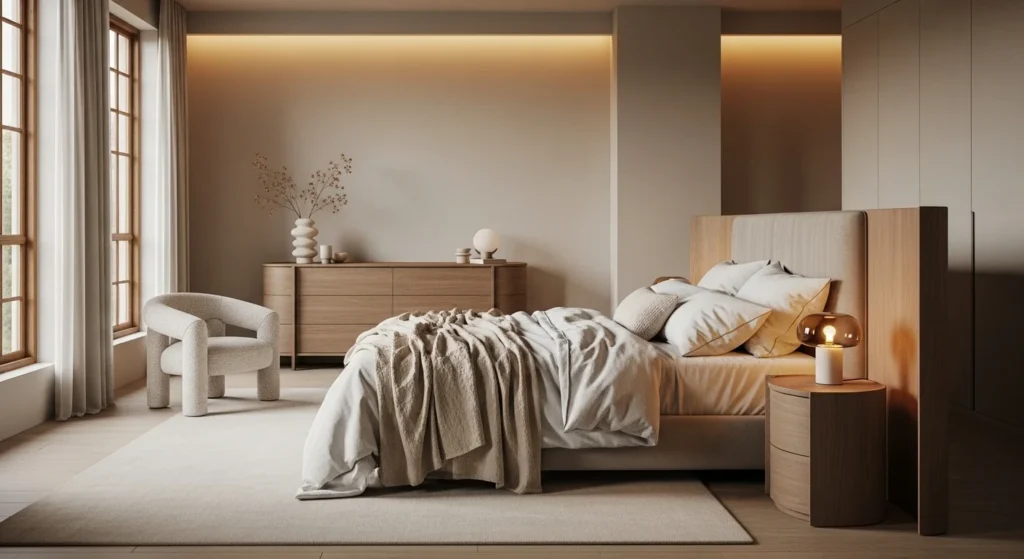
Size around the bed — the room’s largest piece. The classic move: rug partially under the bed, extending past the sides and foot, so you step onto softness every morning and the sleeping area feels framed. The goal is a generous visible border, not a narrow strip peeking out. No room for a full area rug? Runners along each side of the bed, or one rug at the foot, still look intentional — the key is that it feels deliberate, not like an afterthought. More bedroom ideas in our dark moody bedroom guide.
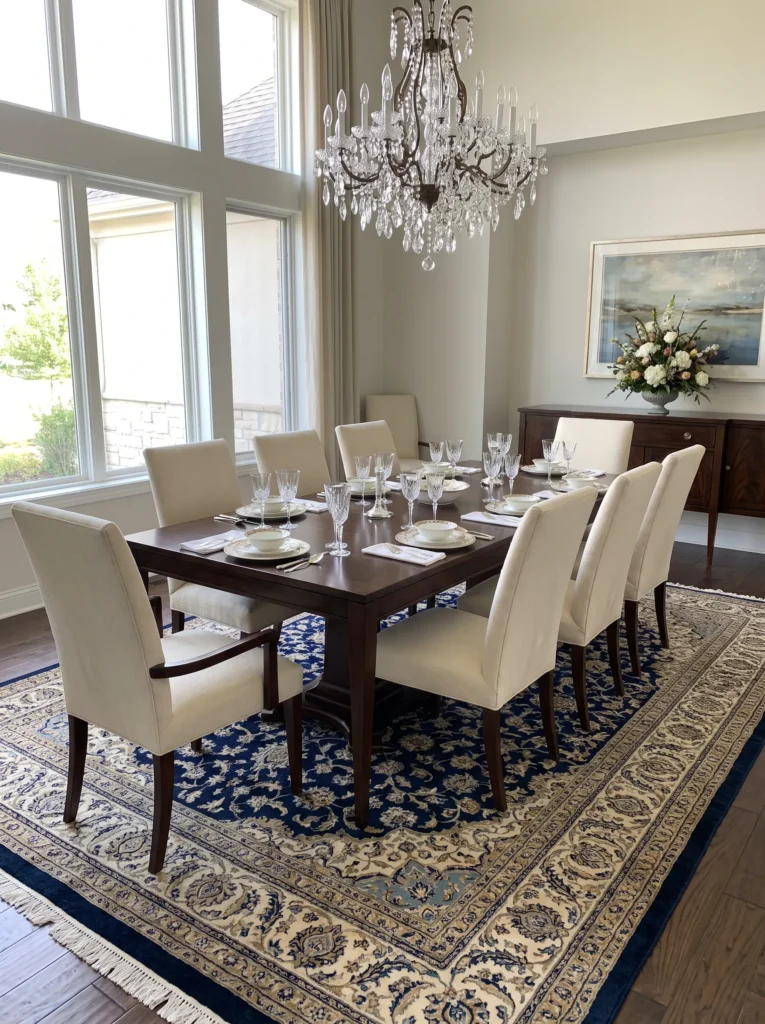
Dining Room: Chairs Stay On
One non-negotiable: the rug must fit the table and chairs, even pulled out. If chairs slide off the edge every time someone sits, the room feels uncomfortable and the rug wears unevenly. Test it mentally before buying — every chair, fully pulled out, still on the rug. Match shapes: rectangular table → rectangular rug, round table → round rug, square → square. Visual harmony without crowding.
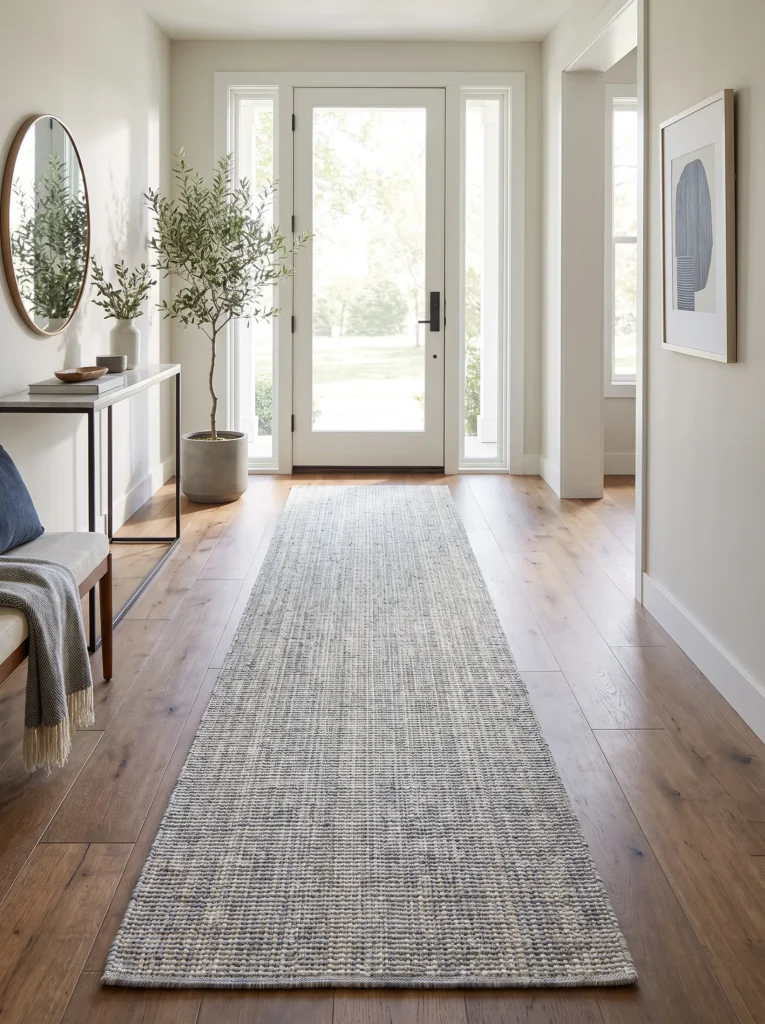
Entryway & Hallway: Support the Flow
These are movement spaces — the rug should guide flow, not interrupt it. Leave a border of visible flooring so it doesn’t read wall-to-wall, and check door clearances: a thick or oversized rug that blocks doors is a daily annoyance. Low-pile solves most clearance issues. Long hallways want runners (they emphasize the natural proportions); square entryways suit area rugs matched to the room’s shape. Enhance the architecture instead of fighting it.
Placement Rules for Every Room
Connect, don’t isolate. A rug floating alone in a room’s center disconnects everything around it.
Protect the walkways. Plan how people actually move — keep rug edges out of traffic paths and door swings.
Balance over measurements. Does it feel centered? Is there breathing room around the edges? Does the room feel grounded, not crowded? Trust your eye alongside the tape measure.
Quick Size Reference
| Room | Placement | Common sizes |
|---|---|---|
| Living room | Front legs of seating on rug | 5×8, 8×10, 9×12 |
| Bedroom | Under lower bed, border at sides | 6×9, 8×10, 9×12 |
| Dining room | Table + chairs, even pulled out | 8×10, 9×12 |
| Entryway | Centered, flooring visible around | 3×5, 4×6 |
| Hallway | Runner centered, sides visible | 2×6, 2×8, 2×10 |
Measure your room and furniture before buying — these are starting points, not laws.
Quick Answers
What is the biggest rug size mistake?
Buying too small. A rug that only fits the coffee table disconnects the furniture and makes the room feel smaller. When in doubt, size up.
Should all furniture sit on the rug?
At minimum, the front legs of sofas and chairs. All legs on the rug is luxurious in large rooms but unnecessary in most spaces.
How do I test a rug size before buying?
Outline the dimensions with painter’s tape on your floor. Walk around it, open doors, pull out chairs, sit on the sofa. What looks right in a product photo often feels different in your actual room.
What rug size for a queen bed?
An 8×10 placed under the lower two-thirds of the bed is the classic choice — generous borders on the sides and foot. A 9×12 works for larger rooms.
Affiliate Disclosure: As an Amazon Associate, I earn from qualifying purchases. If you click a link and buy, I may receive a small commission at no extra cost to you. Thank you for supporting my content!