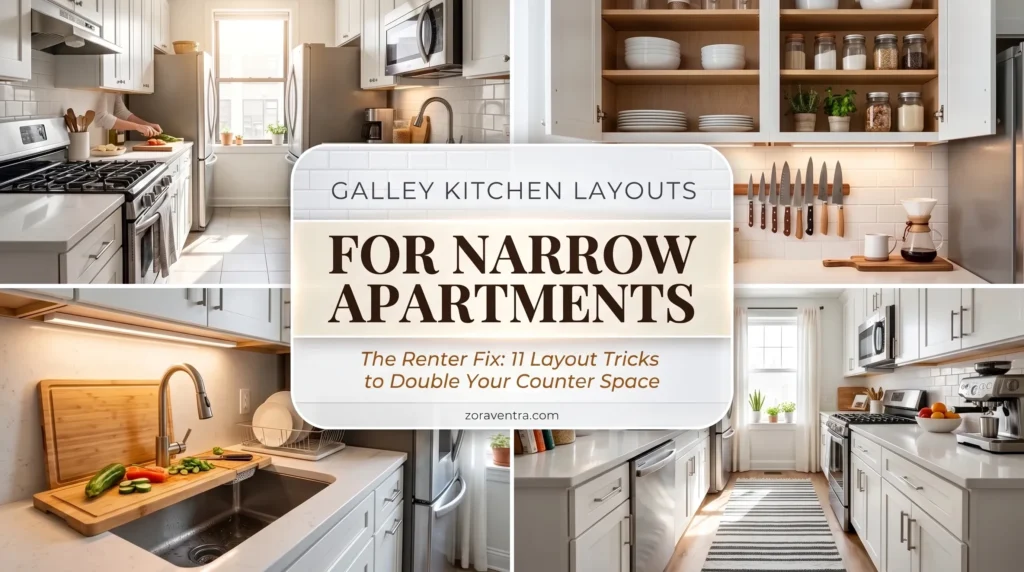
You love to cook, but your apartment came with a long corridor of a kitchen. Partner walks in for water while you’re chopping — gridlock. Cabinet doors clash, counter space barely exists, and the uppers cast a tunnel gloom over everything.
As a renter you can’t knock down walls. But you don’t have to accept a frustrating kitchen. Organization, lighting, and smart temporary tricks can make a galley feel twice as wide. Eleven of them:
1. Zone Your Work Triangle
A galley’s strength is efficiency — everything within reach. Its weakness is traffic. Map three zones: Prep (sink), Cook (stove), Store (fridge). Keep your main prep spot directly next to the sink, and keep the stove-to-fridge path clear of trash cans and mats so a second person can grab things without crossing your cooking line.
2. Clear the Counters
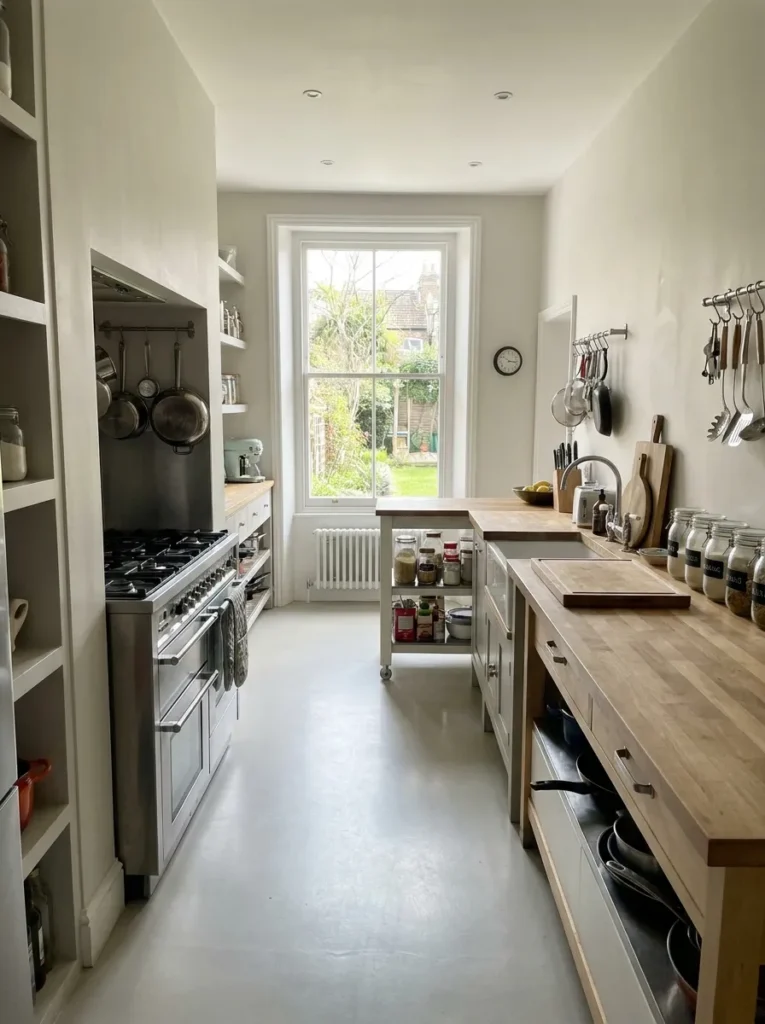
Twenty-four inches of counter with a toaster, blender, and knife block on it leaves no room to actually cook. Adopt a zero-counter policy for anything non-daily: small appliances go in lower cabinets, and a magnetic knife strip on the backsplash replaces the bulky block — instant inches back.
3. De-Door One Side of Uppers
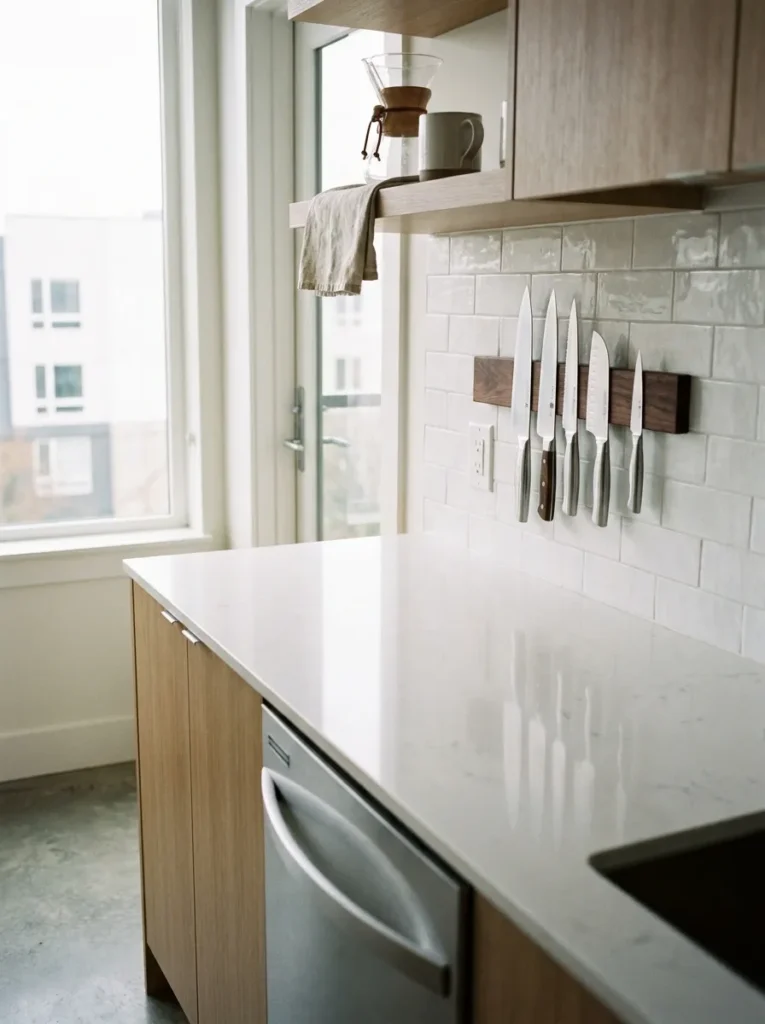
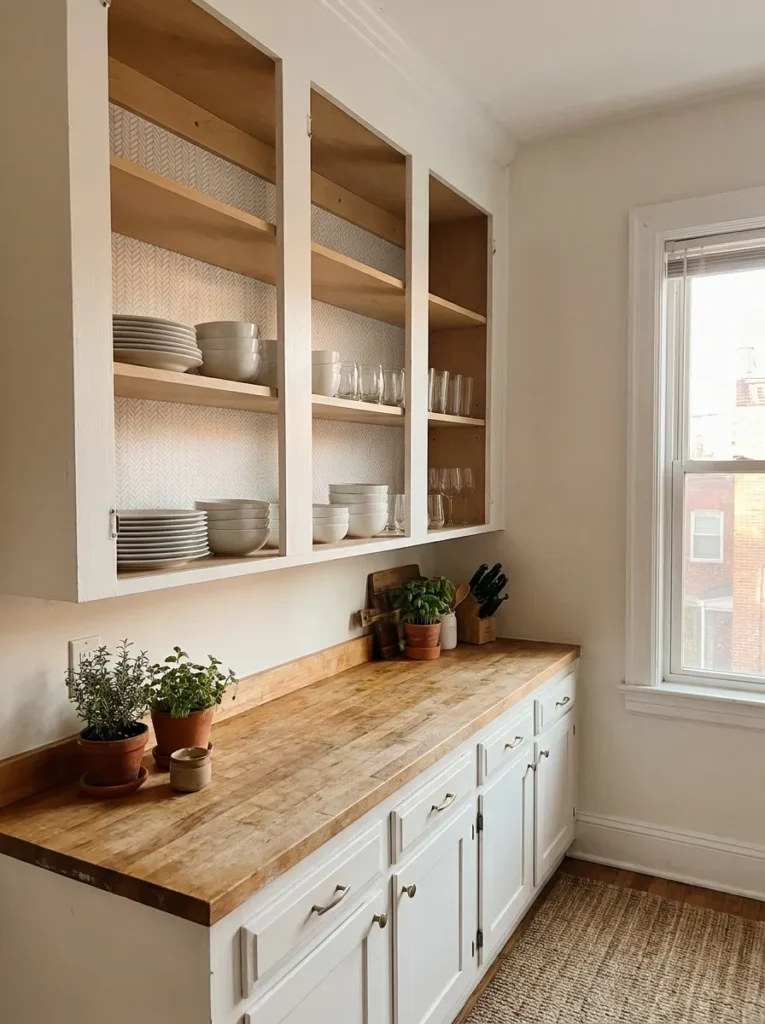
Heavy upper doors on both sides act like blinkers, trapping your peripheral vision. Renter trick: carefully unscrew the doors on just one side (label the hinges, store the doors safely), line the interiors with white contact paper. Instant open shelving that breaks the tunnel effect at eye level.
Or add real shelves: Solid Wood Floating Display Shelves
4. Cook Over the Sink
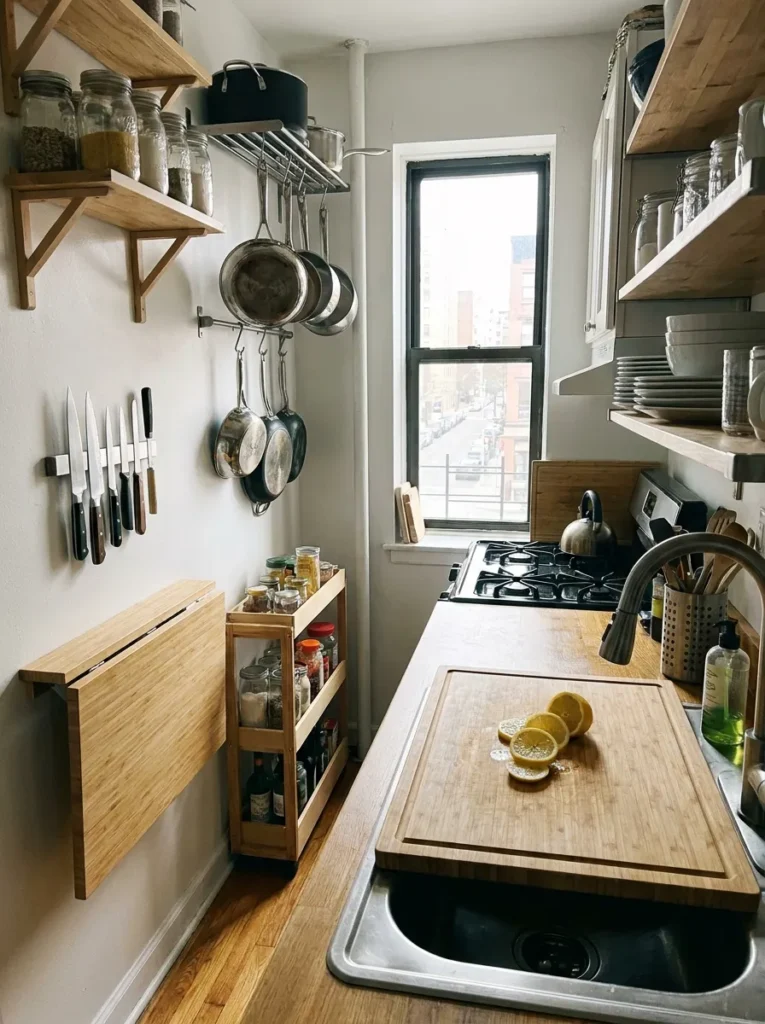
The sink basin is dead space most of the day. An over-the-sink wooden cutting board plus a roll-up steel drying rack (about $30 together) invents two feet of prep surface right over your water source. Unroll to dry pots, lay the board to chop.
5. Pegboard the Fridge Side
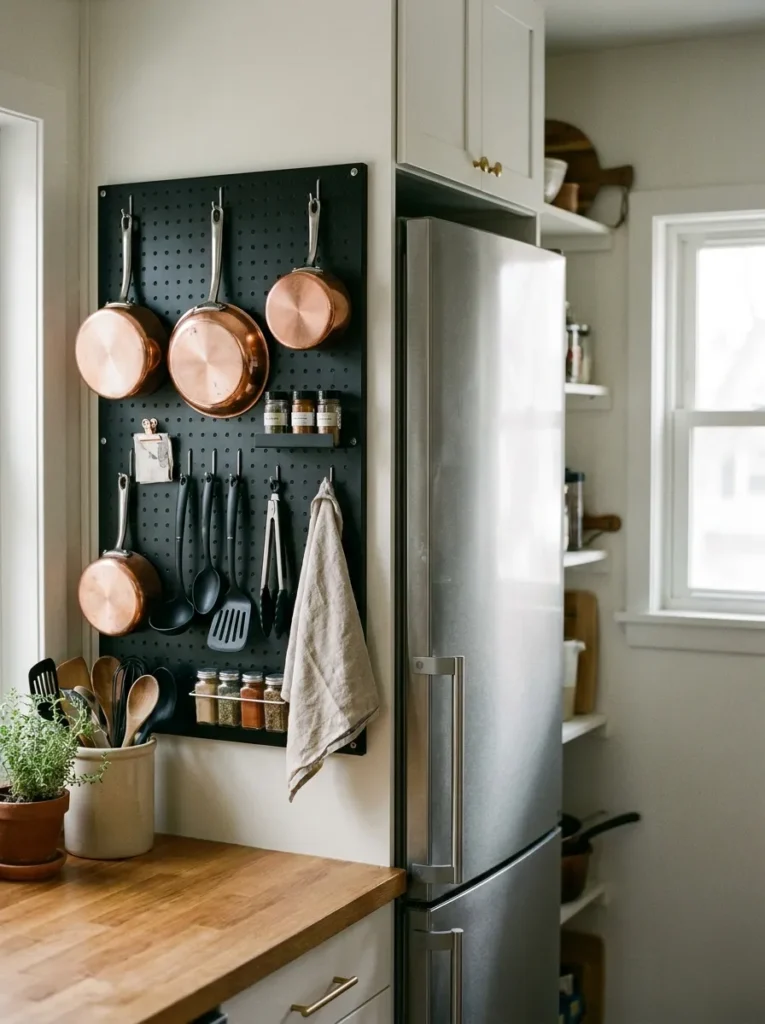
No blank wall? Use the fridge. A freestanding or magnetic metal pegboard panel ($45) stuck to the fridge’s side with heavy-duty magnets holds your bulkiest pots, pans, and colanders — industrial-chic display that frees two cabinet shelves below.
Vertical storage: Magnetic Pegboard Panel Kit
6. Light the Counters, Not Your Back
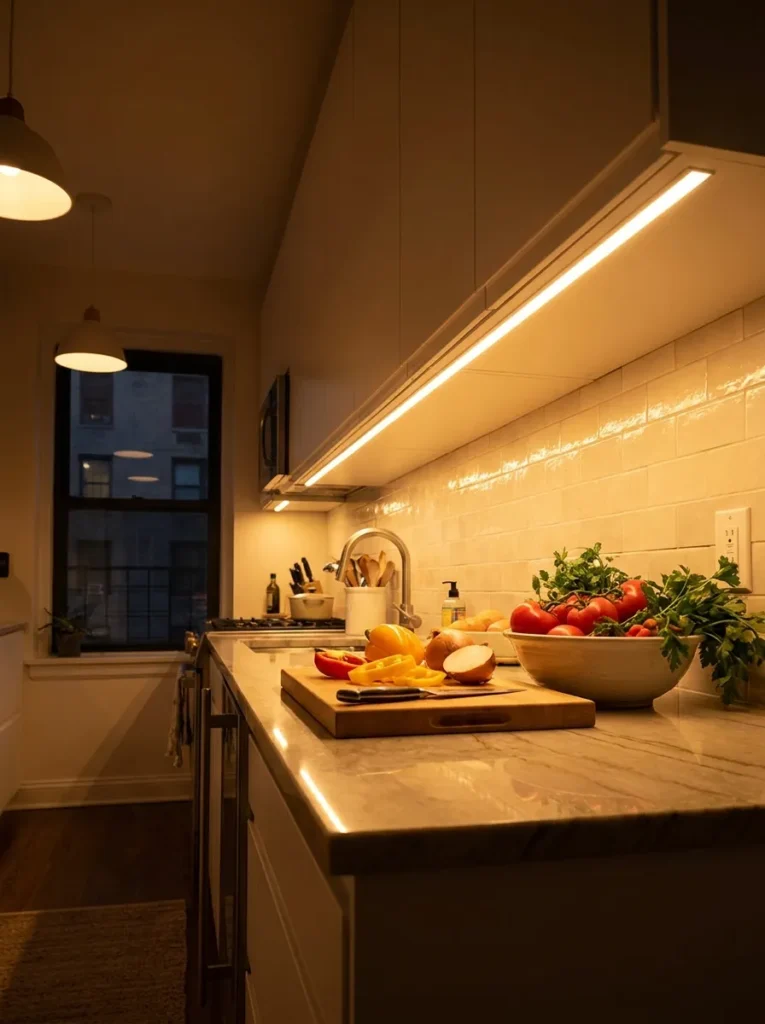
One ceiling dome means your body shadows your own cutting board. Stick ultra-thin rechargeable LED strips under the uppers — about $25 — in warm white (3500K). Flooded counters, erased shadows, and the room’s perceived boundaries expand. Our small kitchen lighting guide covers the full layering system.
7. A Drop-Leaf Coffee Spot
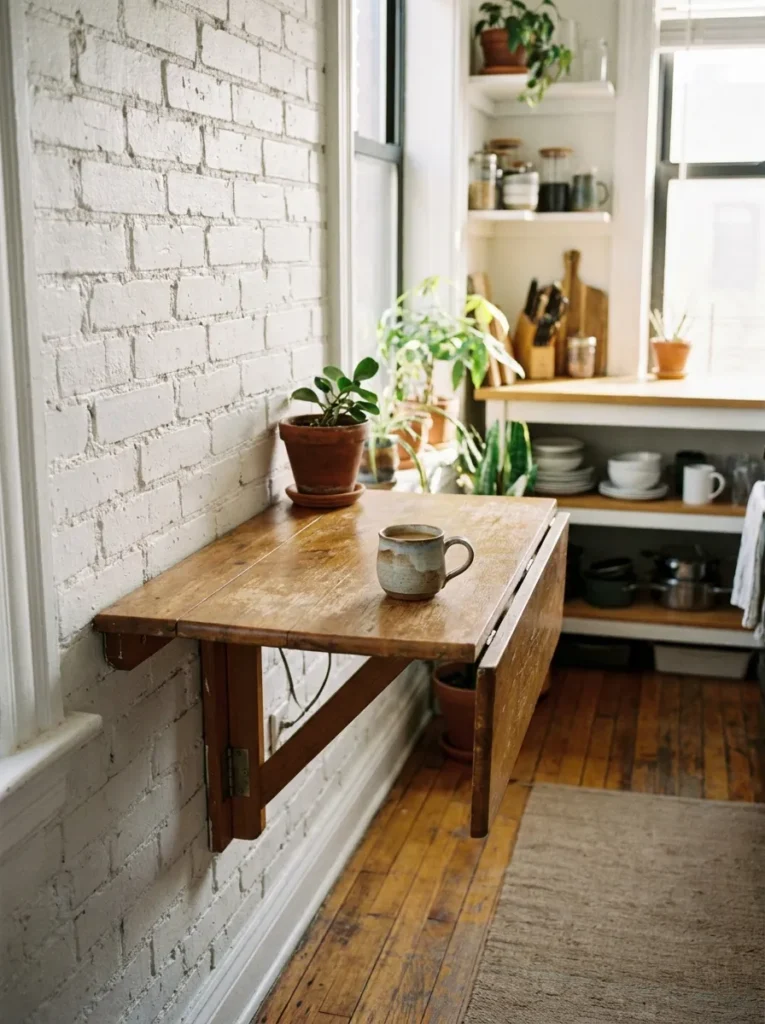
Three feet of dead space at the walkway’s end? Mount a folding wooden drop-leaf table ($40) to the wall or under the window with one folding stool. Espresso in the morning, flat against the wall for dinner prep. Walkway never compromised.
8. Run a Runner (Fool the Eye)
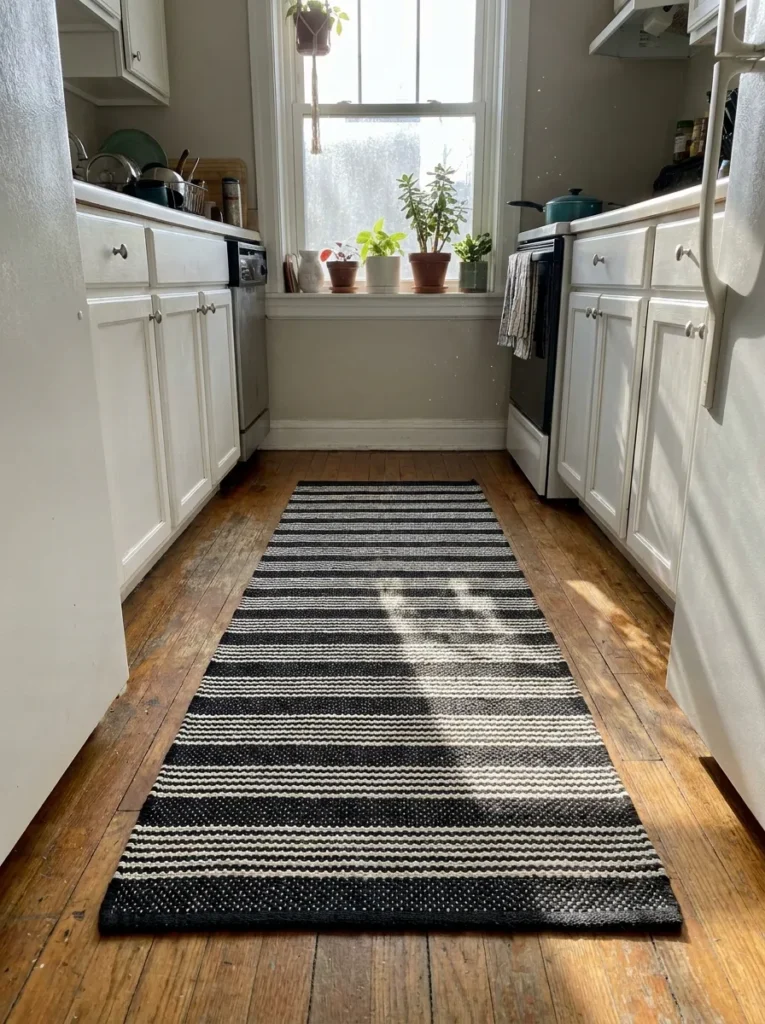
Narrow rooms pull the eye to the tight horizontal gap. Counter it: a long runner rug stretching nearly the full aisle, in bold vertical stripes or linear geometry. The elongated lines drag the eye forward — the corridor reads as an expansive hallway, not a stubby tunnel. Ditch small square mats; they chop the floor up.
9. The Slim Rolling Cart
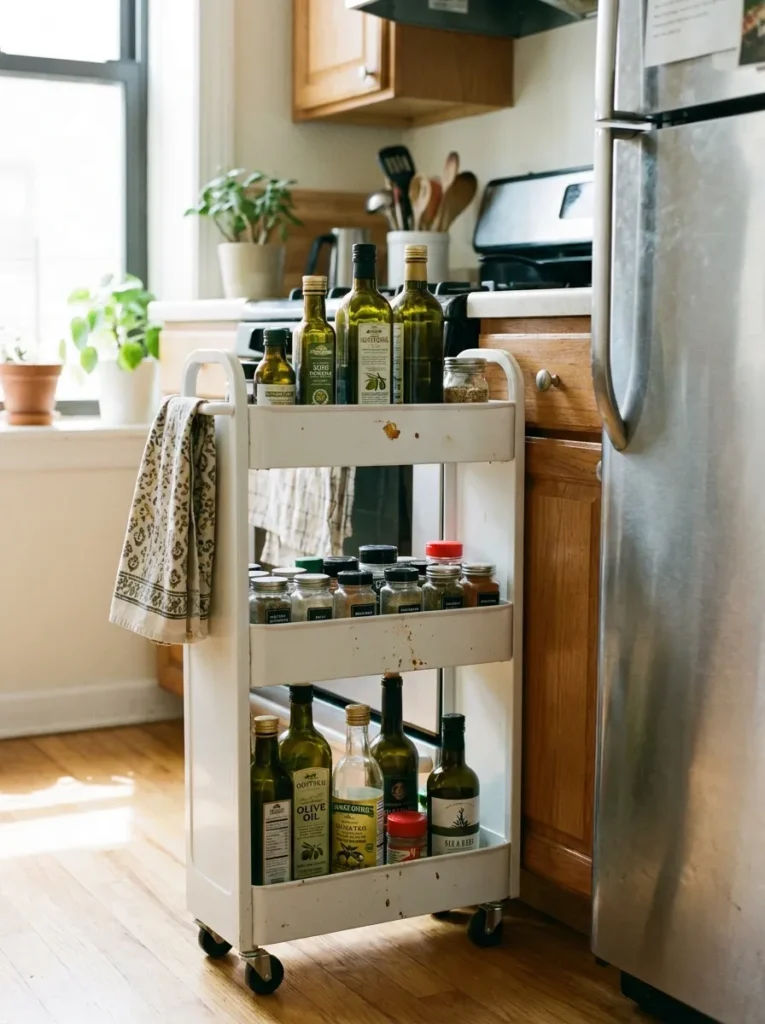
Got a gap between stove and sink across the aisle? An ultra-slim 3-tier rolling cart (8 inches wide, ~$30) tucks beside the fridge as a spice and oils station, then rolls out as an auxiliary island for heavy prep. Vanishes when dinner’s served.
10. Decant Everything
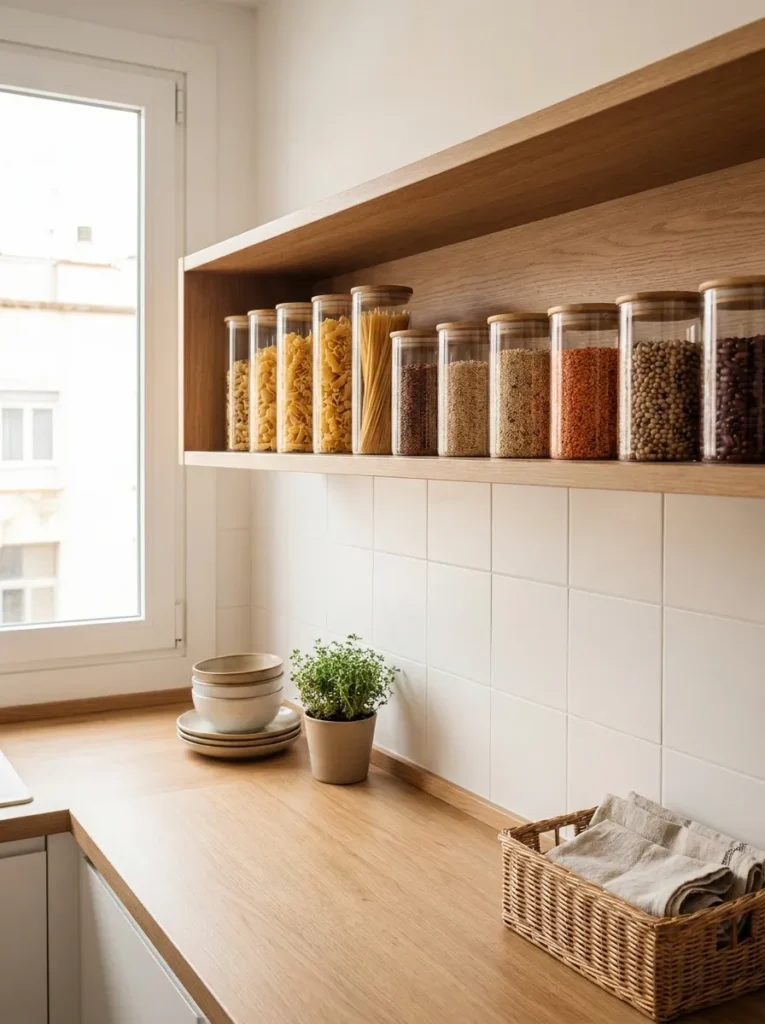
Mismatched cereal boxes and neon spice jars create visual noise that makes small spaces feel smaller. A $25 set of uniform glass jars or clear bins for flour, sugar, pasta, spices: streamlined shapes, calm colors, and your open shelves suddenly look intentional and high-end.
11. Dress the End Wall
Every galley ends at a window or blank wall — that’s your focal point, make it count. Window? Keep it pristine, no clutter on the sill, maximum light down the corridor. Blank wall? One large vibrant art piece or a floating shelf with a cascading pothos. Give the eye a beautiful destination and the tight sides stop mattering.
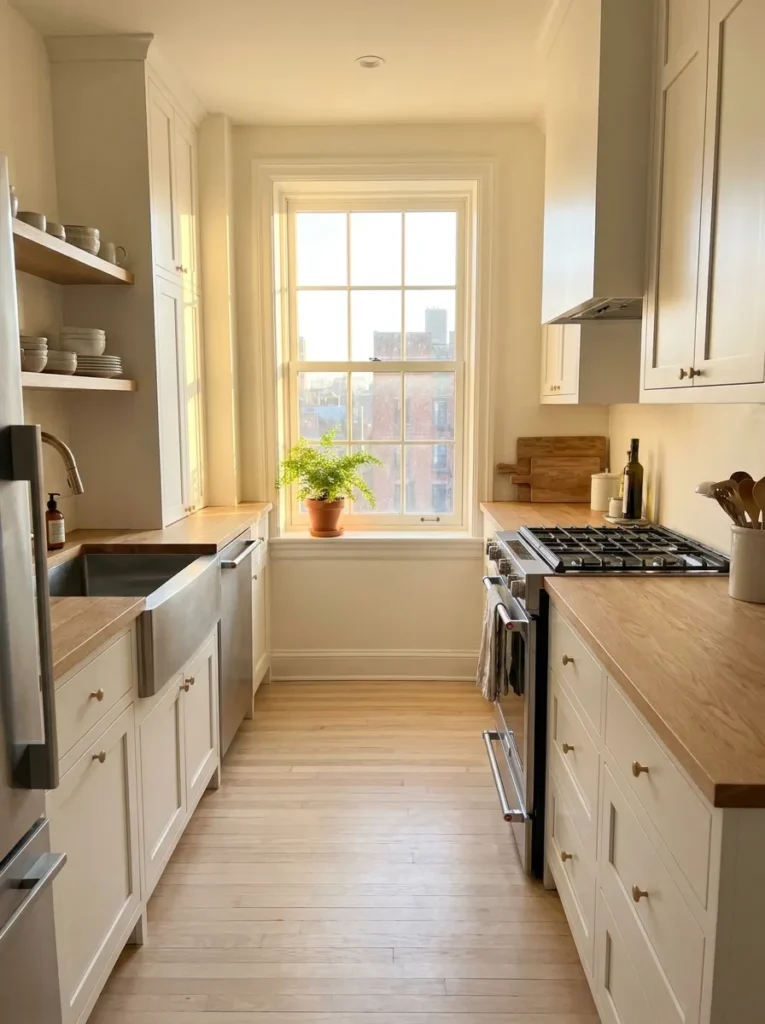
The $215 Renter Makeover
Magnetic knife strip + contact paper ($25). Over-sink board and rack ($30). Fridge pegboard ($45). Two LED strips ($25). Striped runner ($35). Slim rolling cart ($30). Glass jar set ($25). Total: $215 for a kitchen that cooks twice as big.
Quick Answers
How do I make a galley kitchen feel wider?
De-door uppers on one side, add under-cabinet lighting, run a long striped runner, and keep counters clear. Light and sightlines do more than square footage.
Can I put an island in a galley kitchen?
A fixed island needs 36”+ walkways on both sides — rare in galleys. Use a slim rolling cart instead: island when you need it, gone when you don’t.
What’s the best lighting for a galley kitchen?
Under-cabinet LED strips in warm white (3500K). They eliminate the shadow your body casts and visually widen the corridor. One ceiling light alone will always disappoint.
Affiliate Disclosure: As an Amazon Associate, I earn from qualifying purchases. If you click a link and buy, I may receive a small commission at no extra cost to you. Thank you for supporting my content!