
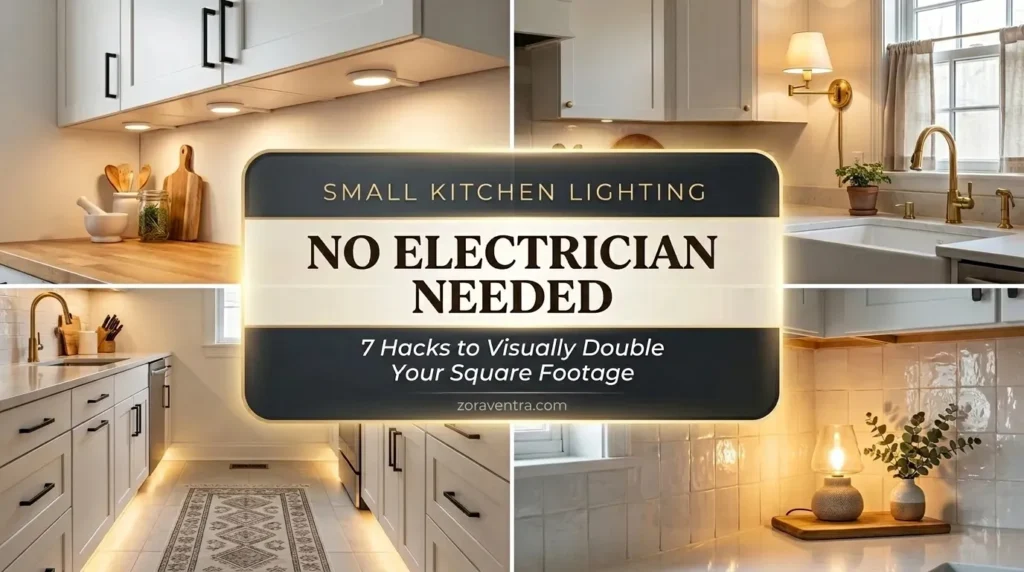
Small kitchens rarely lack style — they lack light. Shadows pool in corners, counters disappear under upper cabinets, and one ceiling fixture can’t cover the whole room. The fix usually isn’t more fixtures or a renovation. It’s putting light in the right places and layering it like designers do. Seven ideas, none requiring an electrician.
1. Swap the Bulky Ceiling Fixture
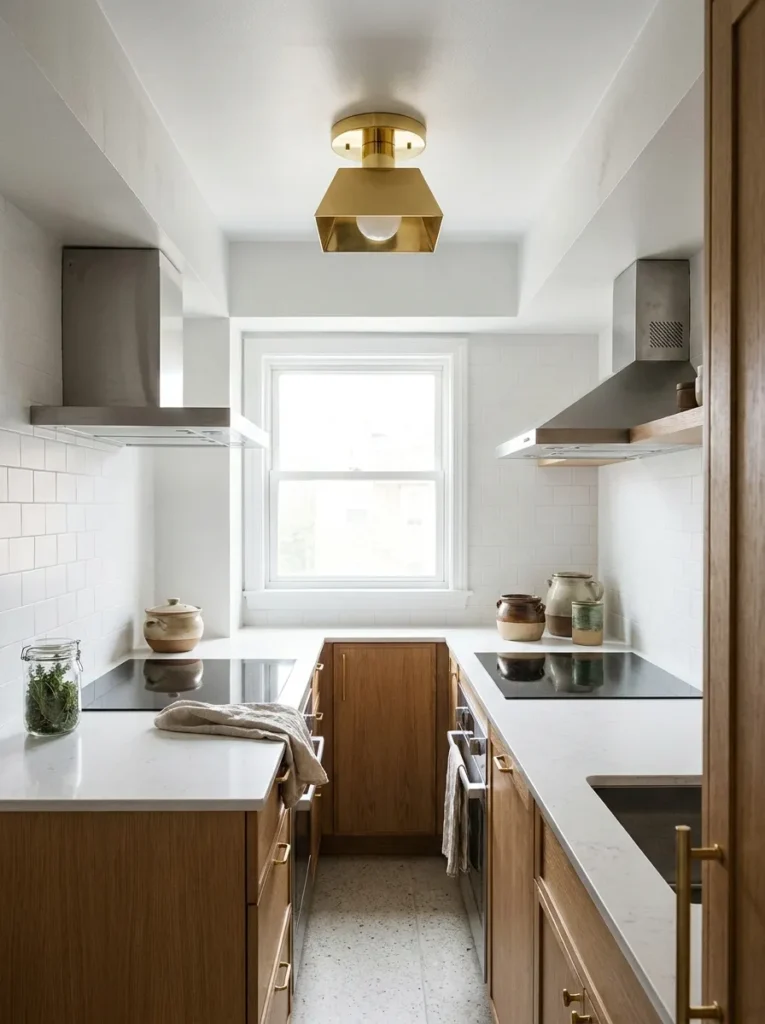
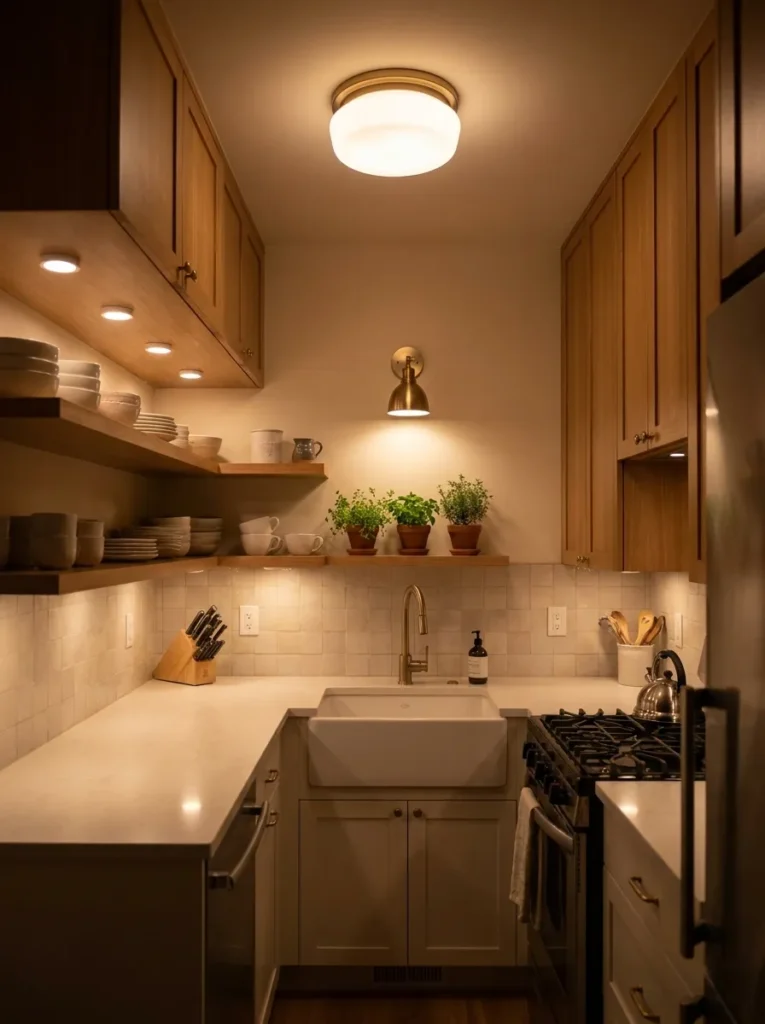
That low-hanging pendant or dated fan is eating your airspace and dragging the ceiling down. Replace it with a sleek semi-flush or flush mount — a wide low-profile brass or matte black drum hugs the ceiling, reclaims vertical space, and the room instantly feels taller.
Size it right
Under 100 sq ft: 12–16 inch fixture. Medium kitchens: 16–20 inches. Larger open kitchens: 20+ inches. Proportional beats impressive in a small room.
Reclaim the ceiling: low-profile brass flush mount light.
2. Erase Cabinet Shadows With Puck Lights
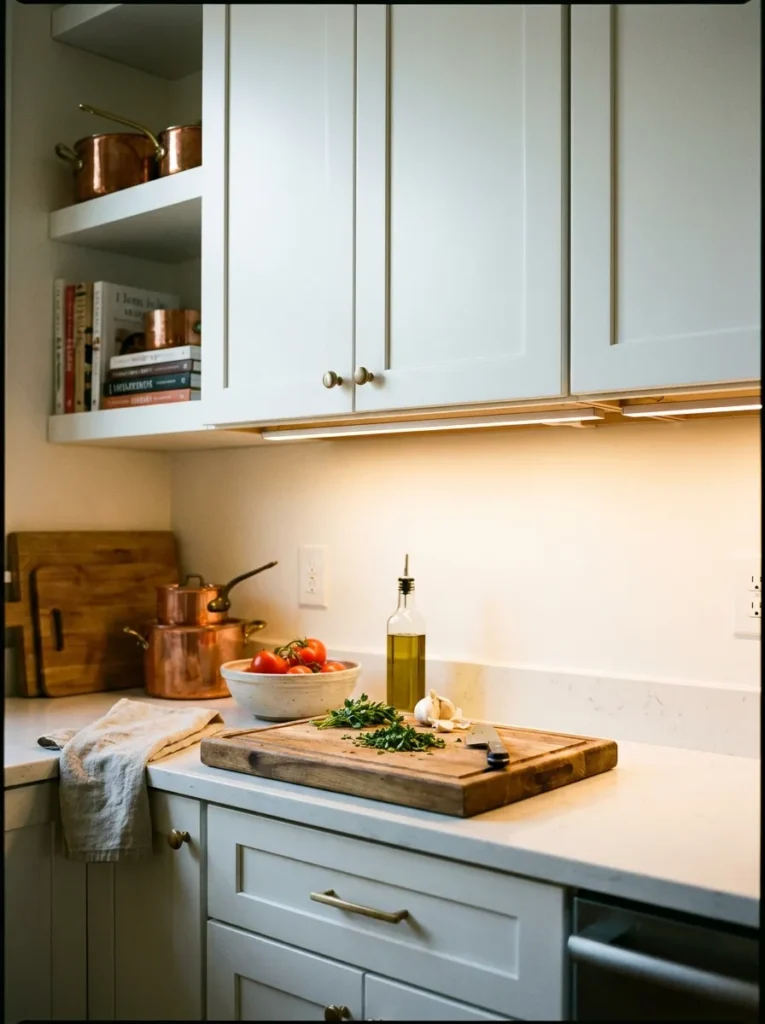
Upper cabinets cast a massive shadow over your counters — chopping in the gloom is miserable. Fix it without an electrician: ultra-thin rechargeable LED puck lights or magnetic bars, stuck under the uppers with adhesive strips. Brilliant focused task lighting, instant transformation.
Fastest upgrade: rechargeable under-cabinet puck lights.
Why Layered Lighting Wins
Designers never rely on one fixture. Three layers, three jobs: Ambient — overall brightness from ceiling fixtures. Task — focused light on counters, sink, cooktop. Accent — highlights for shelving, architecture, decor. Together they erase shadows without adding glare.
3. A Plug-In Sconce Over the Sink
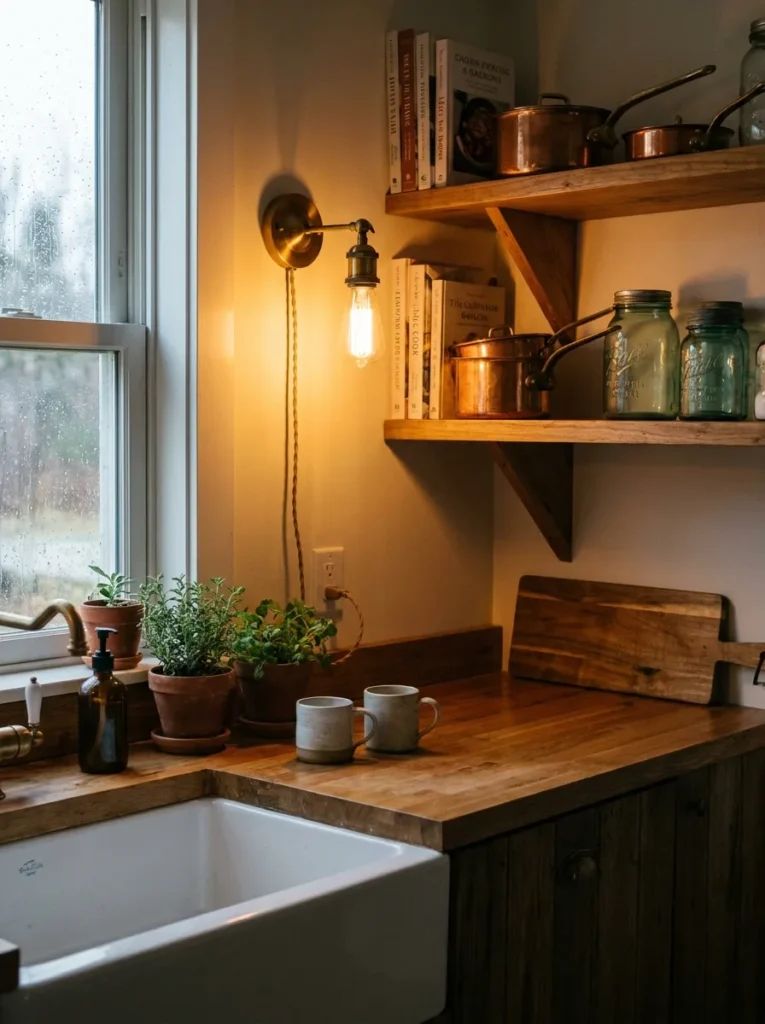
The sink zone is often a dark void, and a table lamp would eat precious counter space. Mount an articulating brass or matte black plug-in sconce above the sink — two screws, cord to the backsplash outlet. Architectural character, real task light for dishes, zero counter lost.
No hardwiring: plug-in brass wall sconce.
One Pendant, Sized Right
Got a compact island or peninsula? One well-sized pendant beats two oversized ones. Choose roughly one-third the island’s width and hang it 30–36 inches above the counter — task light without blocking sightlines.
4. LED Strips on the Toe-Kicks
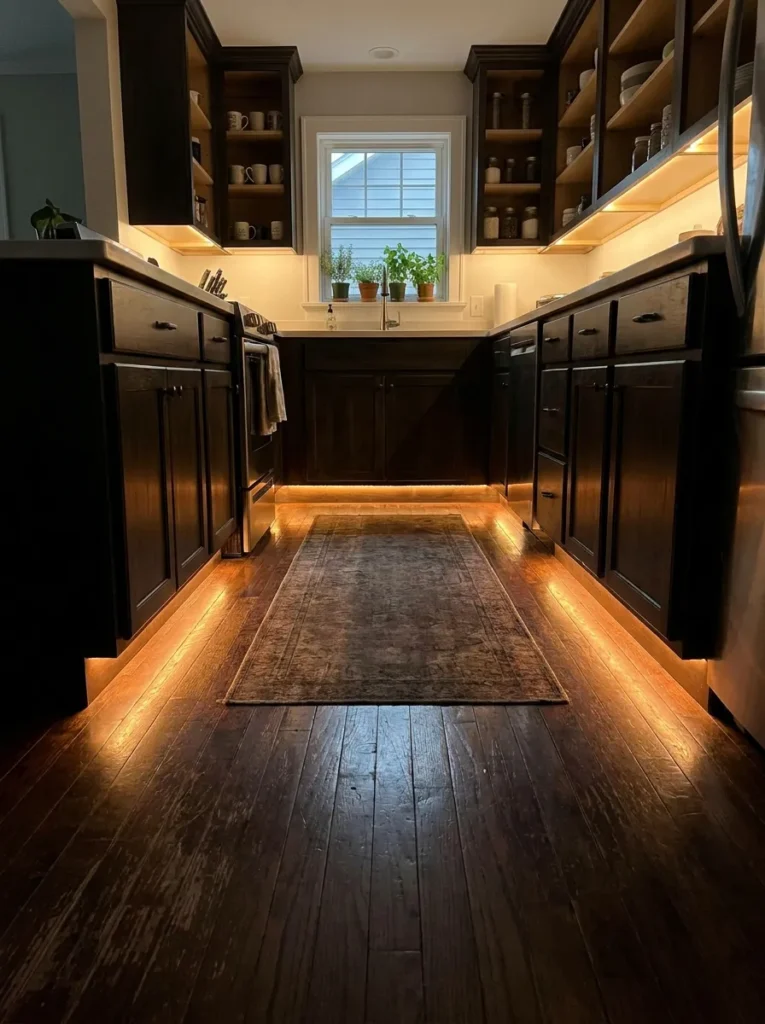
The designer secret for galley kitchens: look down. Toe-kicks sit in deep shadow, grounding the cabinets and shrinking the floor. Run cut-to-size LED strips along the underside of the base cabinets — the floor glows, the cabinets appear to float, and a tight walkway feels noticeably wider. The floating effect: cut-to-size LED strip lights.
5. Unify Your Bulb Temperature
Cool blue ceiling light + warm yellow under-cabinet strips = visual chaos. The cheapest high-impact fix in any kitchen: make every bulb and strip the same temperature — soft warm white, 3000K–3500K. One unified glow reads as calm, high-end, intentional.
Standardize it: warm white LED bulbs (3000K).
Kelvin cheat sheet
2700K: warm white, cozy evenings. 3000K: soft warm white, most residential kitchens. 3500K: neutral white, brighter task areas. 4000K+: cool white — utility rooms, not kitchens.
6. A Tiny Accent Lamp
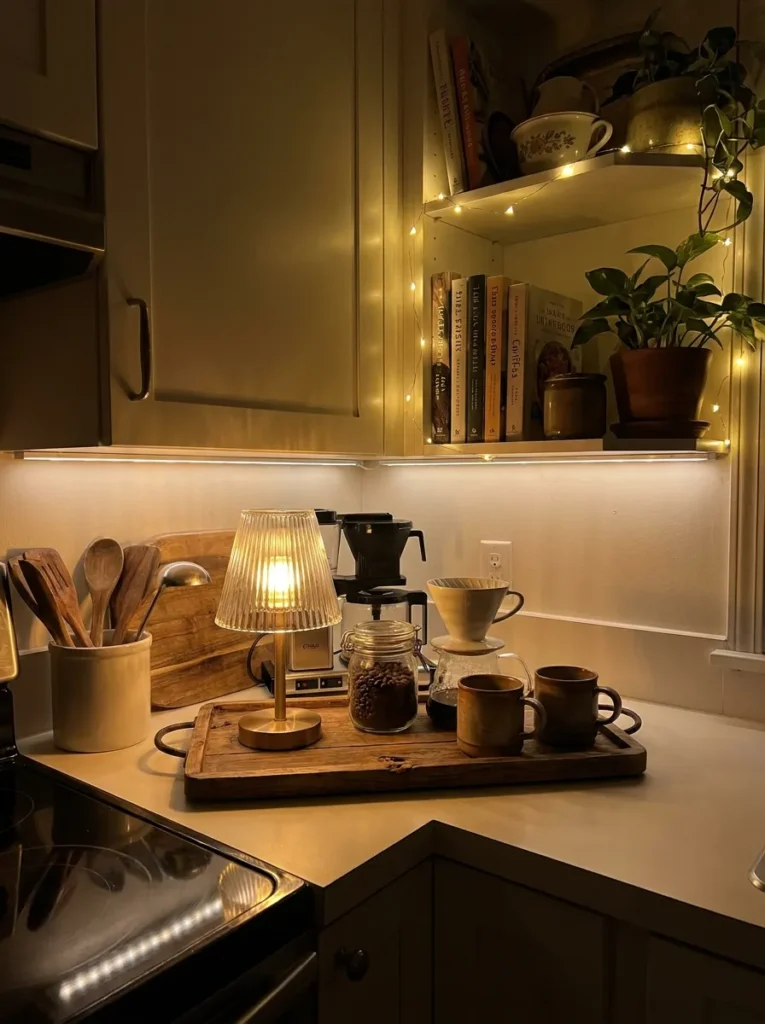
Evenings don’t need the overheads blazing — but a fully dark kitchen feels cold. A tiny battery-operated micro lamp on a tray by the coffee maker: dimmable glass or brass, a cozy nightlight glow over a styled corner. Personality and warmth, no outlet needed.
7. Bounce Light With Glossy Surfaces
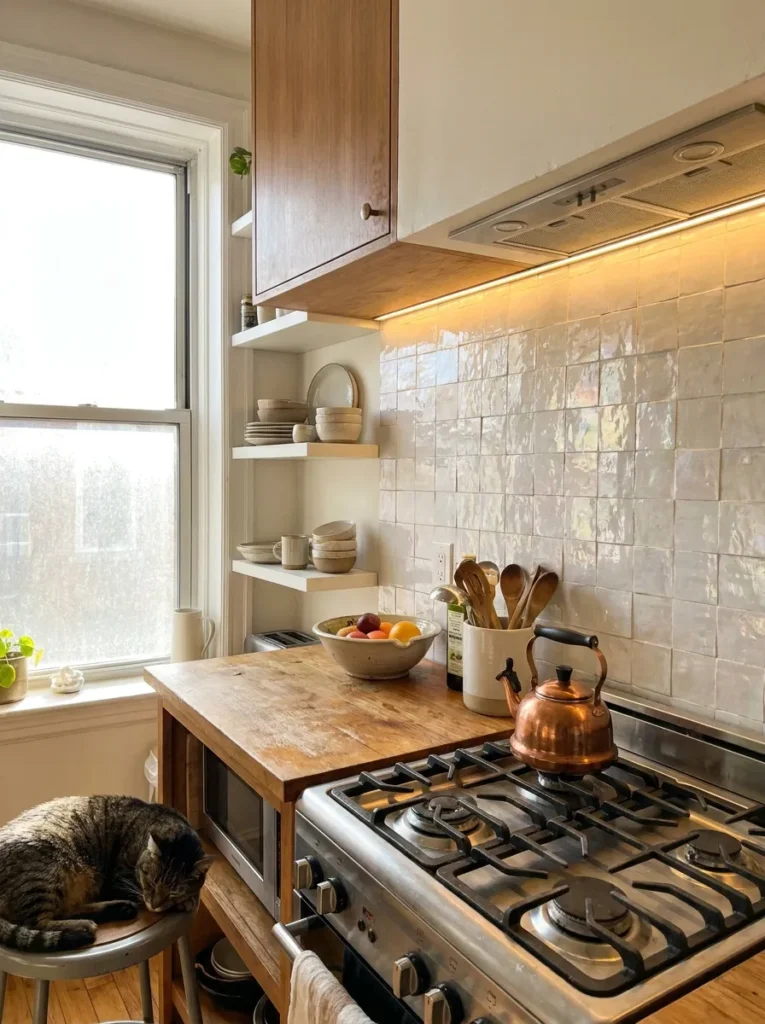
Lighting isn’t just bulbs — it’s reflection. Glossy subway tile, pearlescent zellige, even a mirrored backsplash act like reflector boards, multiplying your sconce and puck light output through the room. Our subway tile guide covers the glossiest layouts.
Mistakes to Avoid
One lonely ceiling light. Mixed bulb temperatures. Oversized pendants that dominate. Skipping under-cabinet task lighting. Bright bulbs with no dimmers for evenings. Small corrections beat expensive fixtures every time.
Quick Answers
How can I brighten my kitchen without an electrician?
Rechargeable puck lights under cabinets, plug-in sconces, battery LED strips on toe-kicks, and a micro accent lamp — all install in minutes with no wiring.
What color temperature is best for kitchens?
3000K–3500K (soft warm to neutral white). Warm enough to feel cozy, bright enough for food prep. Keep every fixture the same.
How do I light a galley kitchen?
Flush-mount ceiling light + under-cabinet pucks + toe-kick LED strips. The floor glow makes the walkway feel wider; the layers erase the tunnel effect.
Affiliate Disclosure: As an Amazon Associate, I earn from qualifying purchases. If you click a link and buy, I may receive a small commission at no extra cost to you. Thank you for supporting my content!

Pingback: 7 Boho Kitchen Backsplash Ideas for a Warm, Eclectic Space - zoraventra.com