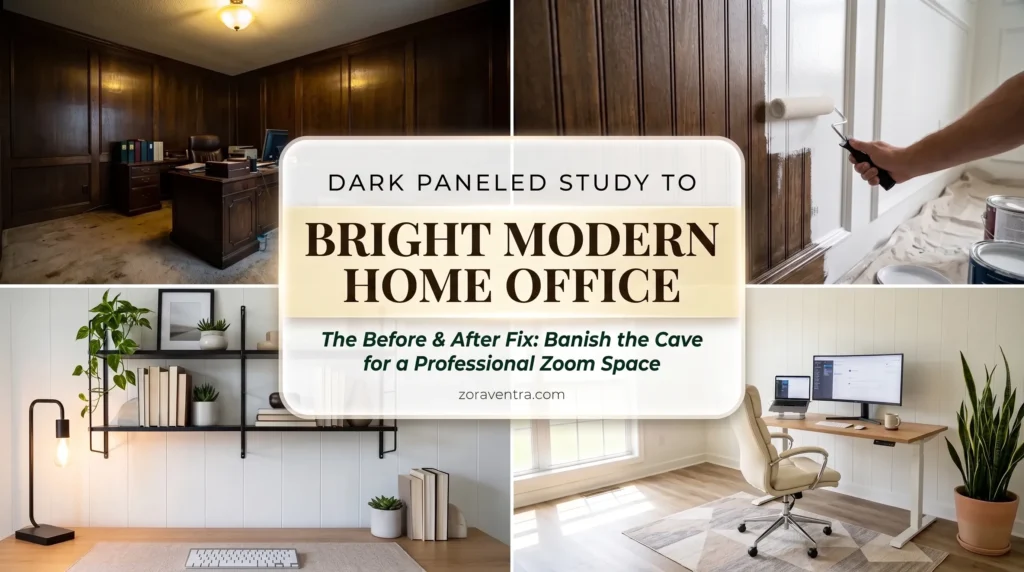
Older home offices often have great bones — but years of dark finishes, heavy materials, and one sad overhead light can make them feel smaller and gloomier than they are. Wood paneling, deep-colored carpet, bulky furniture: each one steals a little light.
The good news: brightening a workspace rarely requires tearing down walls. Thoughtful updates to paint, flooring, lighting, furniture, and layout can completely change how the room feels. This guide walks through the decisions that make the biggest difference — whether you’re updating an old office or converting a spare room.
Before You Start: Evaluate the Room
Every office has different problems, so spend a few minutes diagnosing before buying paint. Watch how natural light moves through the room during the day: does it reach your desk? Does glare hit your screen? Which corners stay dark?
Then list what makes it feel dated — dark walls, worn flooring, oversized furniture, bad lighting. Fixing the practical issues first beats buying accessories every time. And photograph everything now; you’ll want the before-and-after.
1. Figure Out What’s Making It Dark
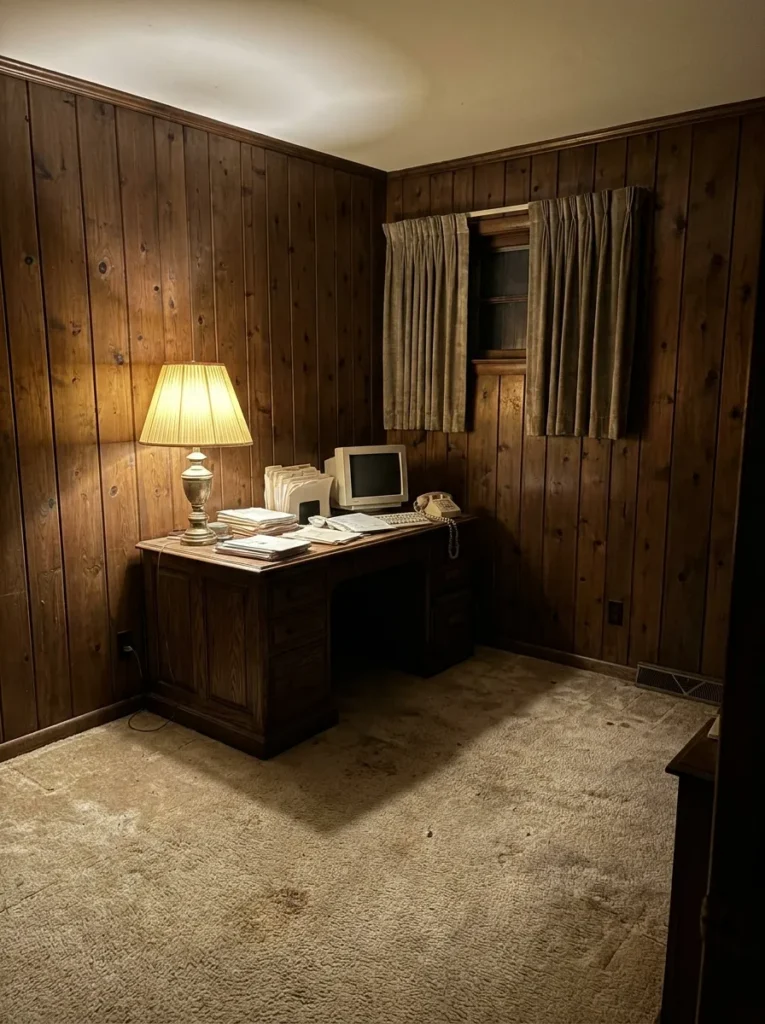
In the office this guide is based on, three things worked together against it: dark wood paneling absorbing light, worn carpet weighing the room down, and a single ceiling fixture leaving corners in shadow. None was fatal alone — together, they made an average-sized room feel enclosed.
Write your own list. Fixing two or three major issues usually transforms a room more than replacing every accessory.
2. Prep Wood Paneling Properly Before Painting
Painting paneling delivers the biggest visual impact in a dark office — but only if you prep. Lightly sand to remove the gloss, clean off the dust, then apply a stain-blocking primer everywhere. This stops wood tannins bleeding through light paint and gives you a finish that lasts years instead of months.
Yes, it adds a day. It’s the difference between a professional result and one that starts showing wear by spring.
3. Choose Paint That Reflects Light
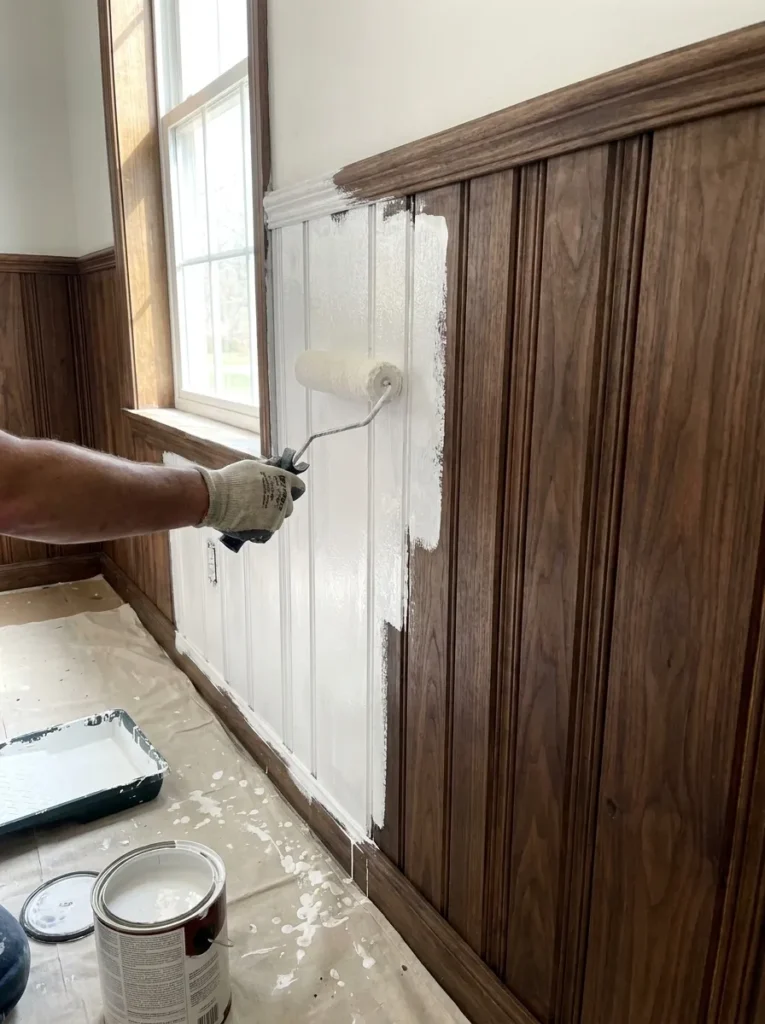
Paint is the single most influential decision — everything else builds around it. And here’s the counterintuitive part: skip the brightest white. Warmer whites with cream, ivory, or greige undertones reflect daylight without feeling clinical.
On paneling, paint the grooves instead of filling them — the texture reads as custom millwork once finished. Test samples at morning, afternoon, and evening; white paint shifts dramatically under different light.

4. Brighten the Flooring
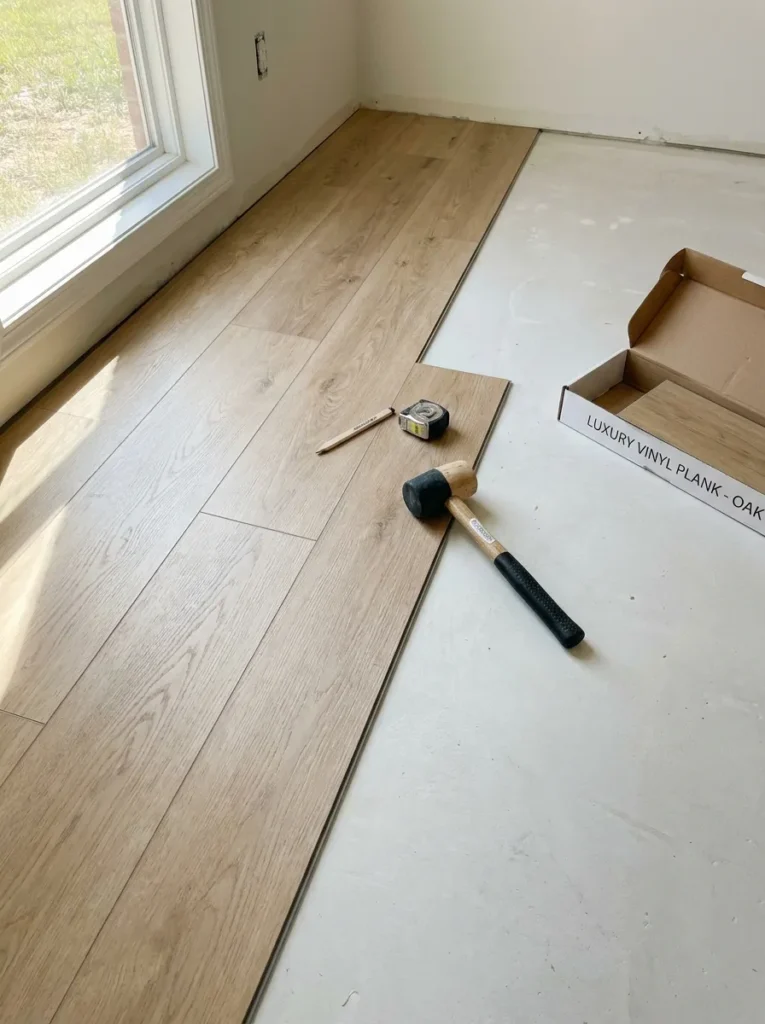
Flooring is the room’s largest surface — it sets the light level. Swapping worn carpet for lighter flooring (luxury vinyl plank in medium-light oak, natural maple, or soft ash) reflects more daylight and modernizes the whole foundation. Subtle grain over heavy rustic texture keeps it visually open.
Can’t replace the floor? A generously sized light-colored area rug still makes a real difference.
5. Anchor with the Right Rug
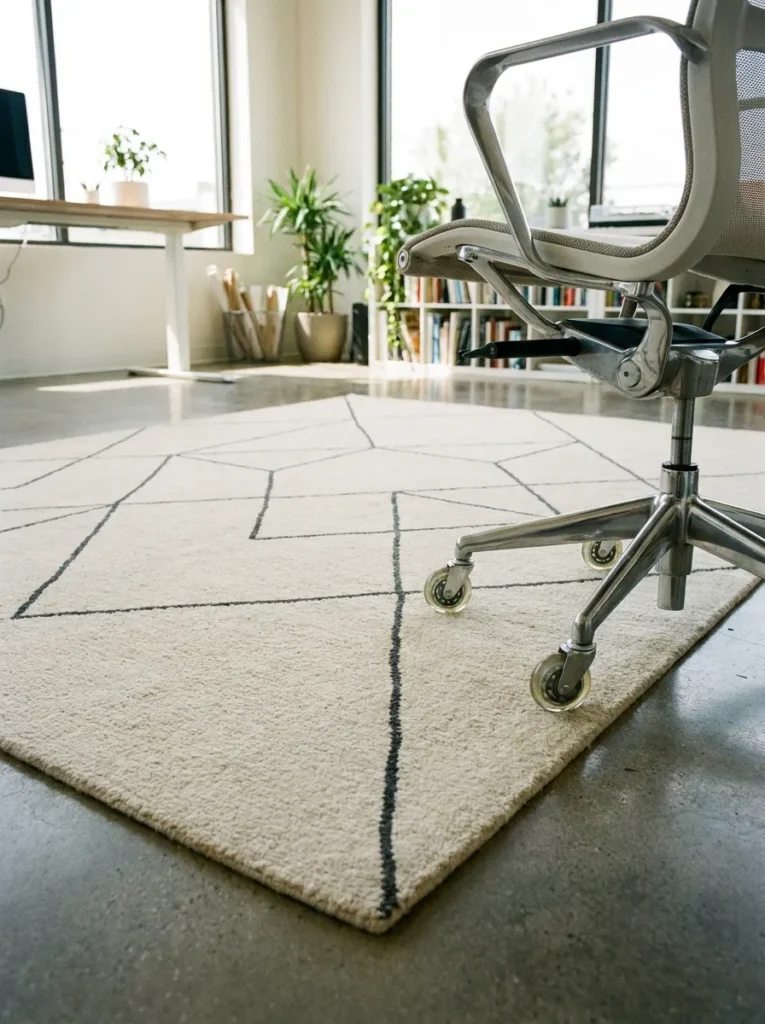
Once hard flooring is in, a rug finishes the room: softness underfoot, visual anchor for the furniture, less echo. Size it so desk and chair both sit comfortably on it. Low-pile is the office pick — chair wheels glide instead of catching.
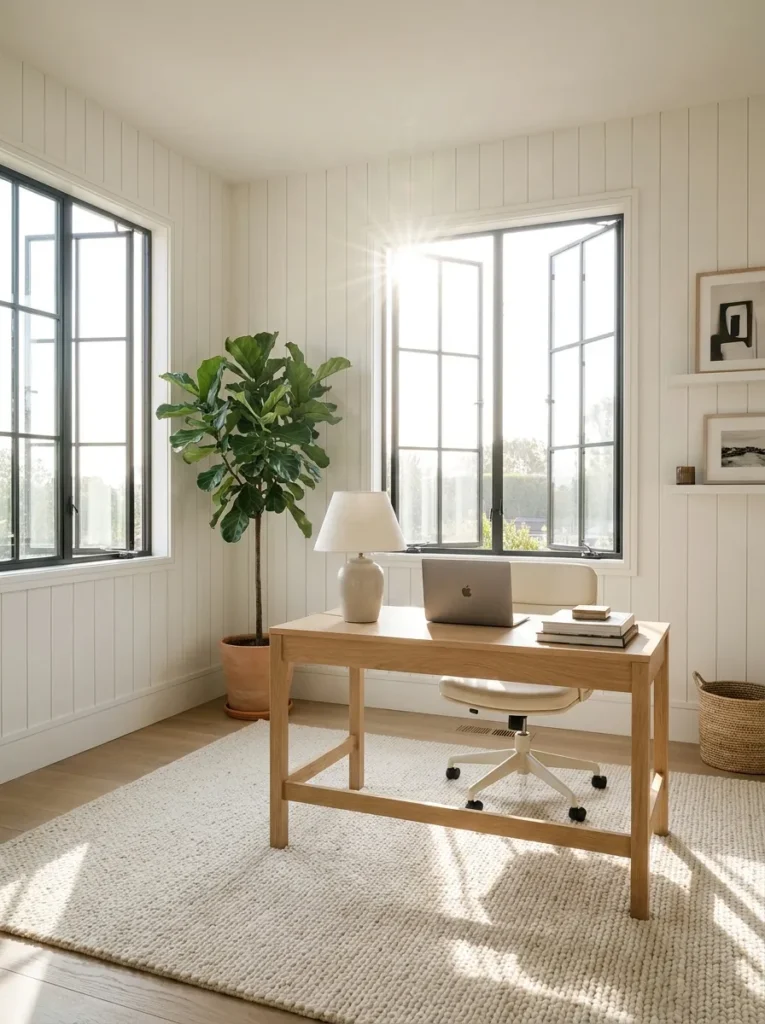
With light walls and oak floors, a cream rug with a subtle geometric pattern adds texture without competing. Think of the rug as a design layer, not an accessory.
6. Layer Your Lighting (Three Sources Minimum)
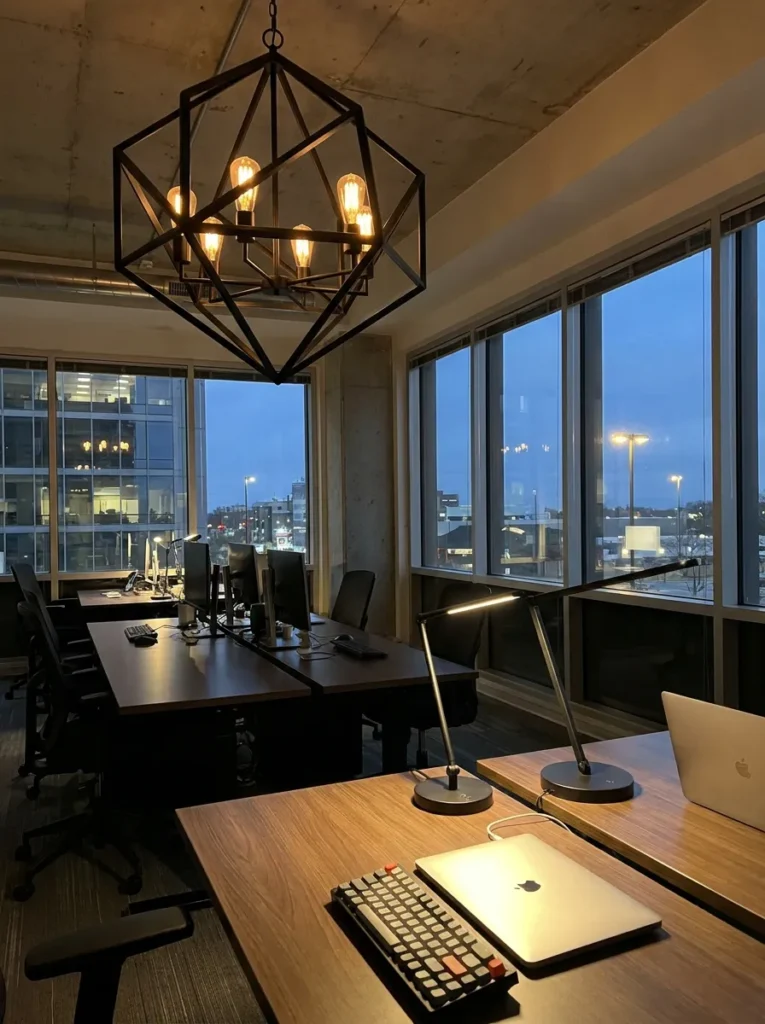
One ceiling light is never enough for a real workspace. You need three layers: ambient (overall fill), task (focused on the work surface), and accent (softening dark corners). Desk near natural daylight first — supplements should enhance daylight, not replace it.
Warm white LEDs (2700K–3000K) hit the sweet spot: bright enough to work, warm enough to feel comfortable. And keep the desk out of direct screen glare — that one move beats brighter bulbs.
7. Style a Camera-Ready Background
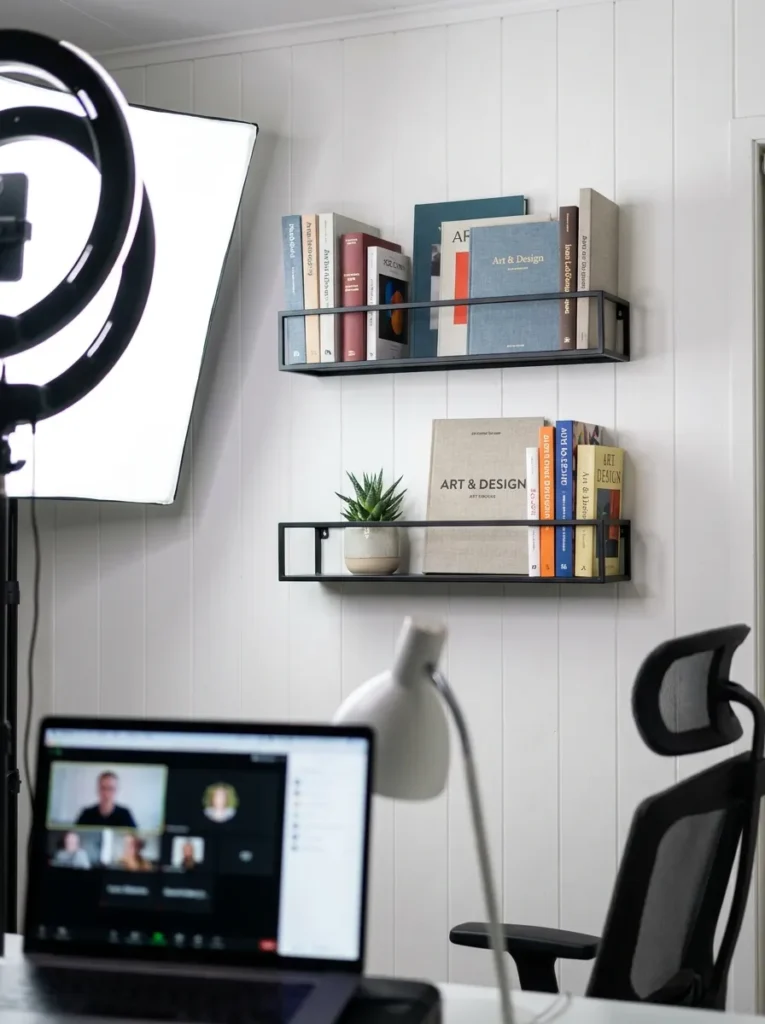
The wall behind your desk matters as much as the desk itself now. Floating shelves with a few books, framed art, small plants, simple ceramics — interesting but uncluttered. Skip the wall of personal photos and anything reflective; both distract on camera. Neutrals and natural materials look timeless on video.
8. Choose Furniture That Keeps It Open
After brightening the room, don’t shrink it again with bulky furniture. A desk with clean lines and slim legs keeps sightlines open; a supportive ergonomic chair handles long days without the visual weight. Lighter woods, soft neutrals, matte black accents — contrast without clutter.

9. Finish with Personal Layers (Sparingly)
Resist filling every surface the moment the renovation ends. One healthy plant, a piece of framed art that feels like you, a few considered accessories — that’s what makes an office feel personal instead of corporate. Keep the desktop mostly clear (focus and cleaning both get easier), and rotate decorative pieces seasonally instead of displaying everything at once.
For daily desk styling ideas, see our feminine office desk decor guide — and if your “office” is a tight nook, our under-stairs study ideas show how to make small work.
Mistakes That Undo a Good Remodel
Furniture too big for the room. Measure twice; oversized pieces kill movement.
One lonely ceiling light. Layer three sources or don’t bother.
Icy bright white paint. Warm whites reflect light without the sterile feel.
Shelves stuffed full. Breathing room is a design choice.
Visible cable spaghetti. Ten minutes with clips and a box fixes it.
Budget Smart: Remodel in Phases
Start with what permanently changes how the room functions: paint, flooring, lighting. Those three give the biggest visual return per dollar. Then add furniture, shelving, and storage over time; accessories and art last.
Phasing isn’t just about money — each layer informs the next, and you avoid buying things for a room you haven’t finished understanding yet.
Your Remodel Checklist
Bright wall color that reflects light. Durable flooring a chair can roll on. A genuinely comfortable ergonomic setup. Layered lighting for day and evening. Storage that hides clutter. A camera-ready background. One plant or piece of art with personality. Accessories kept simple and intentional. Hit most of these and the room transforms.
Quick Answers
How much does a home office remodel cost?
A cosmetic refresh (paint, lighting, rug, accessories) can run a few hundred dollars. Adding flooring and furniture pushes into the low thousands. Phasing the work spreads it across months.
What’s the first thing to fix in a dark home office?
Paint and lighting — they deliver the biggest brightness gain for the least money. Everything else builds on those two.
How do I make a small home office feel bigger?
Light walls, visible floor (slim-legged furniture), a mirror or art above the desk, and layered lighting. Our cozy office ideas have more small-space tricks.