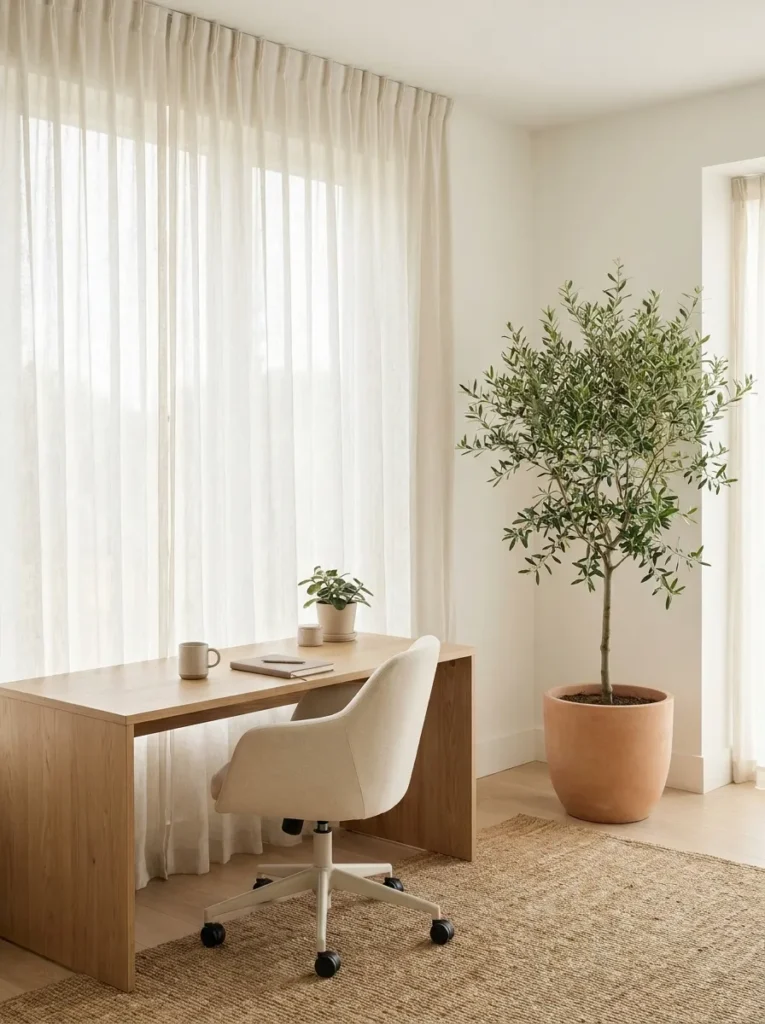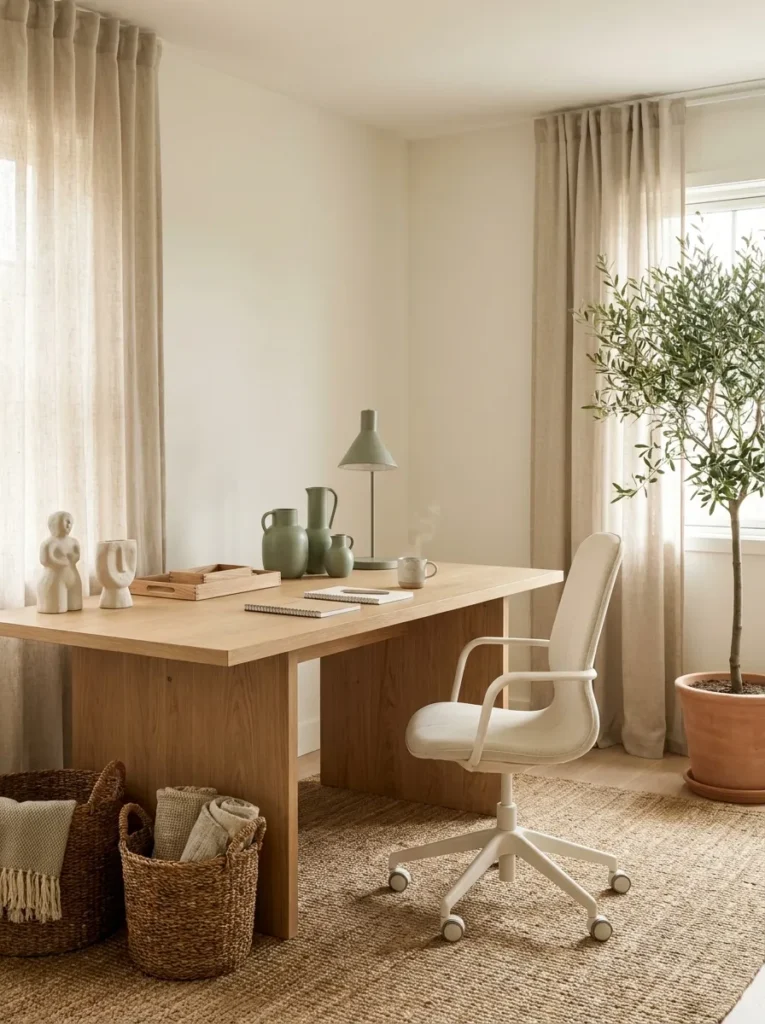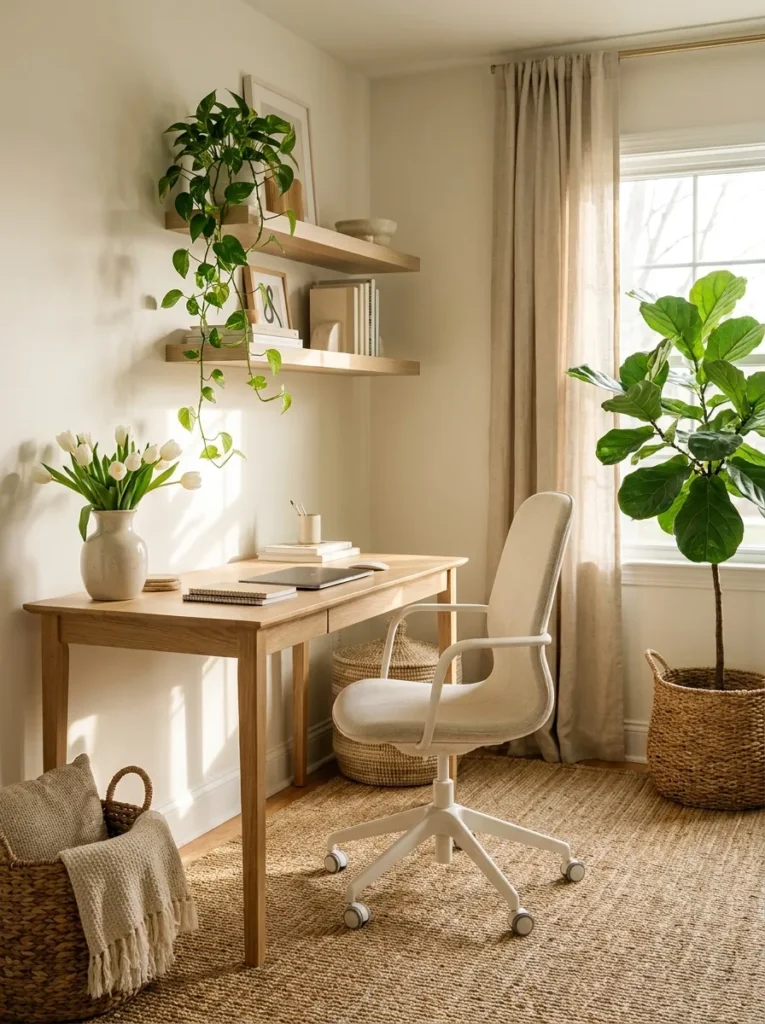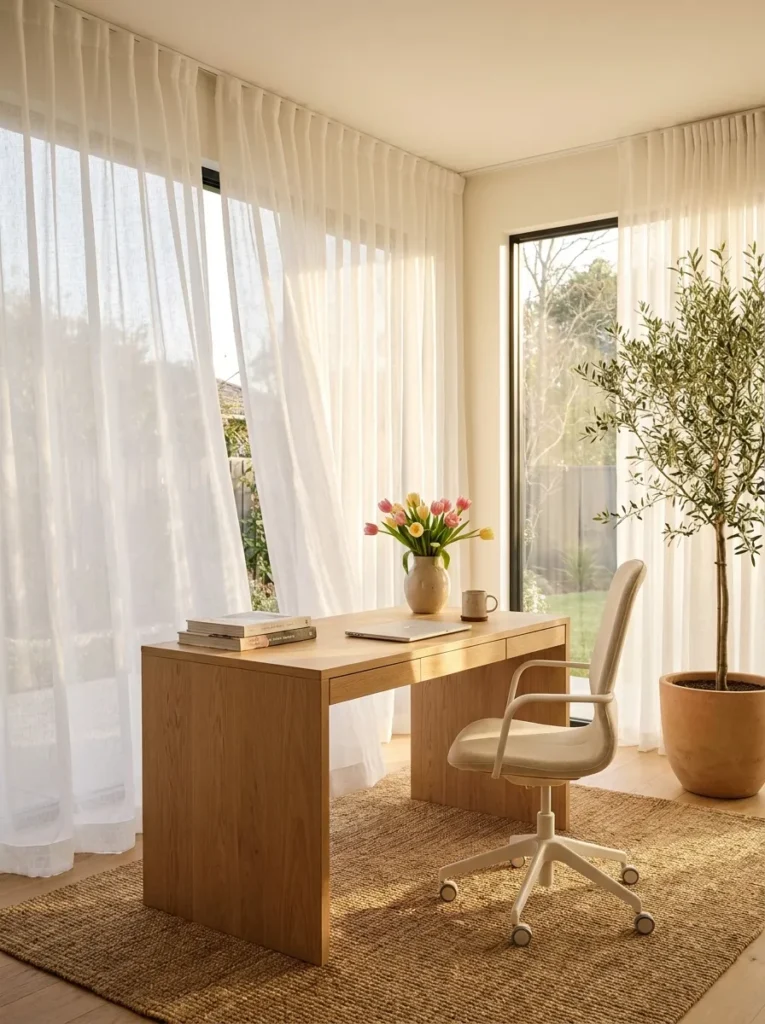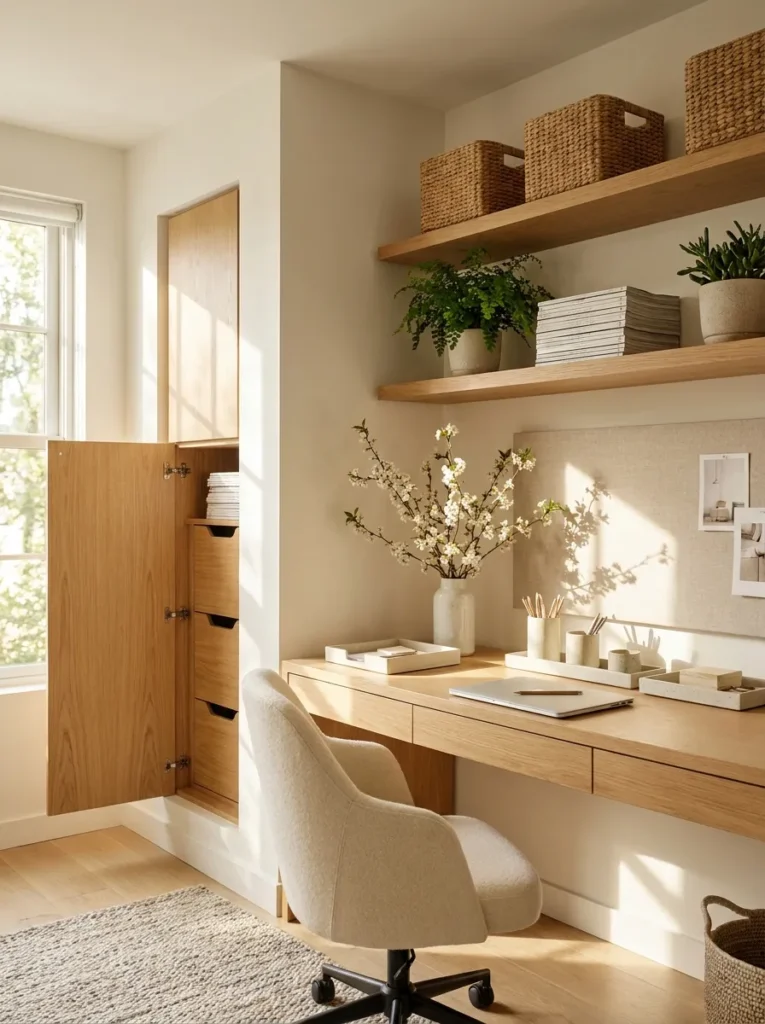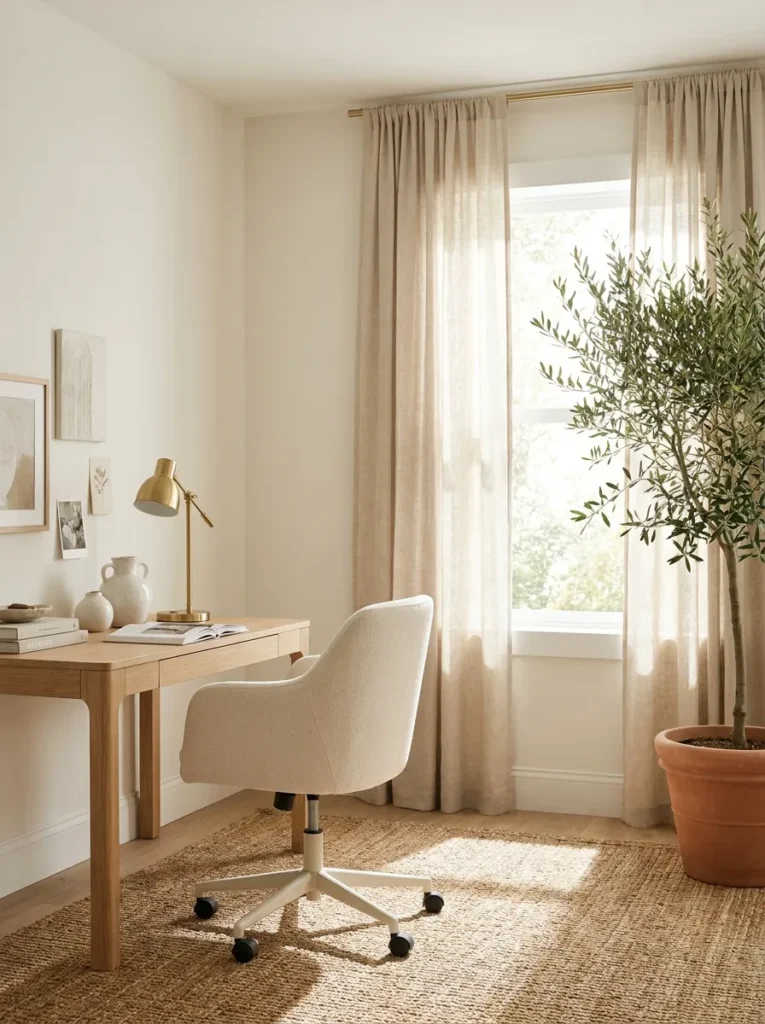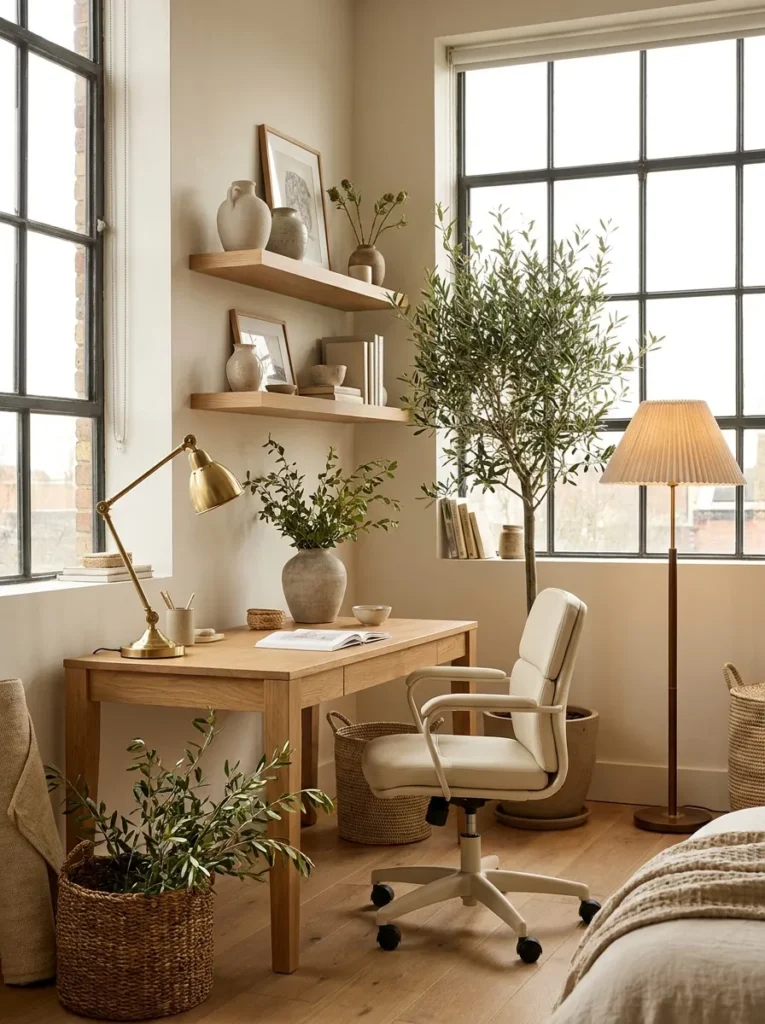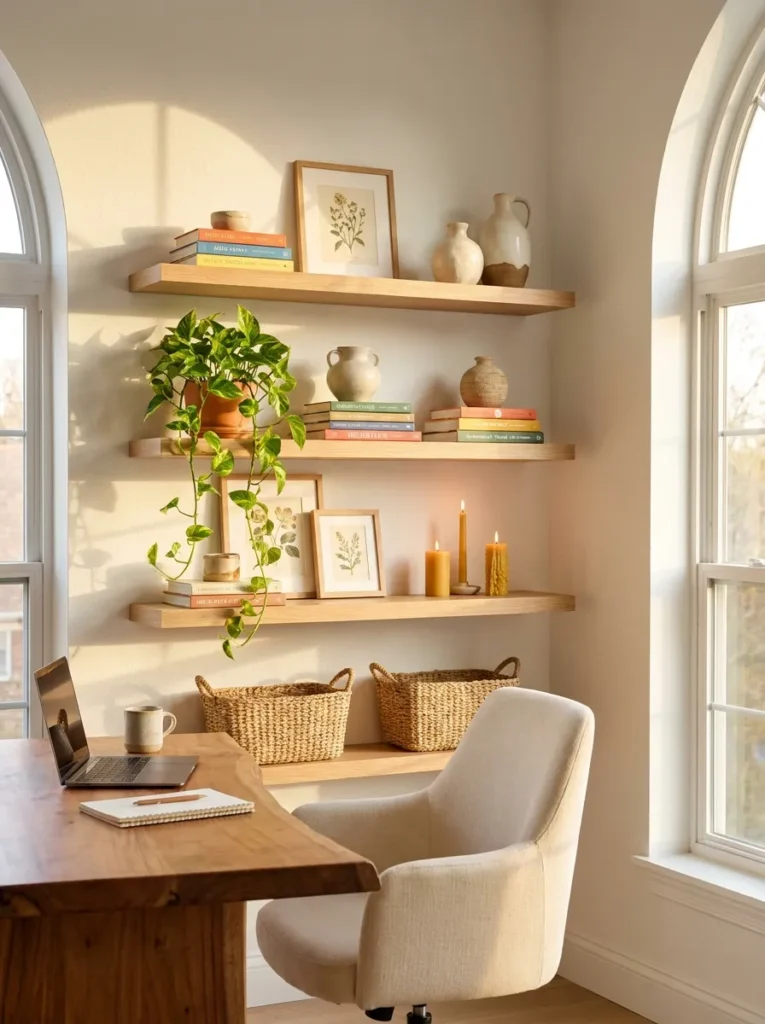
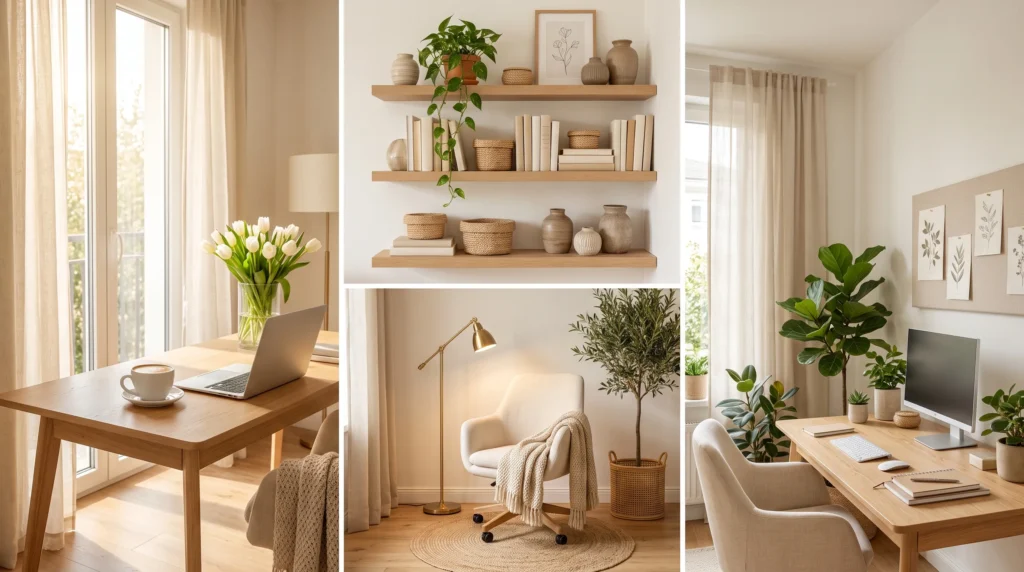
Collage of bright spring home office decor ideas featuring natural light, indoor plants, organized storage, and layered lighting.

Spring Home Office Decor Ideas: How to Create a Workspace That Feels Bright, Calm, and Productive

A home office should be a place that helps you think clearly, stay organized, and enjoy the work you’re doing. Yet many workspaces slowly become a collection of mismatched furniture, tangled cables, overflowing paperwork, and décor that no longer reflects how you live today. Even if everything functions perfectly, the room can still feel heavy, uninspiring, or disconnected from the rest of your home.

Spring offers the perfect opportunity to refresh that environment. As the days become longer and natural light fills our homes again, even small decorating updates can completely change the atmosphere of a workspace. Swapping heavy fabrics for lighter textures, introducing greenery, reorganizing shelves, or simply repositioning your desk can make the room feel brighter and more comfortable without requiring a full renovation.

The most successful home offices aren’t necessarily the most expensive ones. They are carefully planned around the person who uses them. A well-placed desk, supportive chair, thoughtful lighting, and a calm color palette often have a greater impact than buying the latest furniture trends.

Whether you work remotely every day, manage your own business, study from home, or simply need a dedicated place to stay organized, the ideas in this guide are designed to help you create a workspace that feels balanced, welcoming, and productive throughout the season—and well beyond it.

Before You Begin: Design Your Office Around the Way You Actually Work

Before shopping for new furniture or choosing fresh décor, spend a few minutes evaluating how you use your workspace each day. The most beautiful office in the world won’t improve your routine if it doesn’t support the way you naturally work.

Think about where you spend the majority of your time. Do you work on a desktop computer for eight hours a day? Do you regularly attend virtual meetings? Are you sketching, writing, editing photos, or managing paperwork? Each activity benefits from a slightly different layout, storage solution, and lighting arrangement.

Next, pay attention to the room itself. Notice how sunlight moves through the space from morning until evening. Does glare hit your monitor during the afternoon? Is one corner naturally brighter than another? Understanding the room before making changes often prevents expensive decorating mistakes later.

Finally, identify what currently frustrates you. Perhaps your desk always feels cluttered, your office lacks storage, or the room simply feels darker than the rest of the house. Solving those everyday frustrations should always take priority over buying decorative accessories.

Once the practical foundation is right, creating a beautiful office becomes much easier.

1. Position Your Desk Where Natural Light Can Do Most of the Work

Natural light is one of the most valuable design elements in any home office, yet it’s often overlooked when arranging furniture. Many people place their desk against whichever wall happens to be empty, only to realize later that they’re working in shadows for most of the day or constantly battling glare on their screen.

Whenever possible, position your desk close to a window rather than directly facing or turning your back to it. This allows daylight to brighten your workspace while reducing harsh reflections on your monitor. Side lighting generally creates the most comfortable environment because it evenly illuminates the room without shining directly into your eyes.

Beyond improving visibility, natural light can make the office feel more open and connected to the outdoors. Watching the changing weather, nearby trees, or a garden throughout the day brings subtle movement into the room and creates a calmer atmosphere that’s difficult to replicate with artificial lighting alone.

If your office doesn’t receive abundant sunlight, don’t worry. Simply placing your desk in the brightest available part of the room and keeping the surrounding area visually light can still make a noticeable difference. Mirrors positioned across from windows and lighter wall colors can also help reflect daylight deeper into the space.

Rather than forcing the room to fit your furniture, allow the available light to guide your layout. It’s often the simplest change with the biggest impact on how your workspace feels every day.

Light oak desk positioned beside a bright window with natural spring sunlight filling a modern home office.

2. Choose a Light, Cohesive Color Palette That Feels Fresh All Season

One of the easiest ways to refresh a home office for spring is by simplifying the color palette. Heavy colors that feel warm and comforting during winter can sometimes make a workspace feel smaller or darker once brighter spring light begins filling the room. A lighter palette helps the space feel open, calm, and naturally energizing throughout the day.

Start with timeless neutral tones for the largest elements in the room. Warm white walls, soft beige, light greige, or gentle ivory create an excellent backdrop because they reflect natural light without feeling stark or clinical. Unlike bright cool whites, warmer shades soften the room and complement natural wood furniture beautifully.

Once the foundation is in place, introduce seasonal color through smaller decorative pieces rather than permanent fixtures. Cushion covers, desk accessories, artwork, ceramic planters, or a simple desk mat in muted sage green, dusty blue, soft terracotta, or pale olive can refresh the room without requiring a complete redesign. These accents are easy to update throughout the year while keeping your larger furniture timeless.

Natural materials also play an important role in the overall palette. Light oak, ash wood, linen fabrics, woven baskets, matte ceramics, and brushed brass accents create warmth without adding visual heaviness. Together, these textures make the room feel layered and inviting while maintaining the clean appearance that supports focus and productivity.

When choosing colors, consistency is more important than variety. Limiting yourself to a small palette of complementary tones creates a workspace that feels intentional rather than busy, allowing the room to remain visually calming even during your busiest workdays.

Spring home office decorated with warm white walls, light wood furniture, soft sage green accents, and natural textures.

3. Bring Spring Indoors with Greenery That Softens the Workspace

Plants do much more than decorate a room. They introduce natural color, soften straight architectural lines, and help create a workspace that feels calmer and more welcoming throughout the day. Even one carefully placed plant can make a noticeable difference in how a home office feels.

Consider the amount of natural light your office receives before selecting greenery. Bright rooms with generous sunshine can support larger statement plants such as an olive tree, fiddle leaf fig, or bird of paradise, all of which add height and create a strong visual focal point. If your workspace receives moderate or lower light, snake plants, pothos, ZZ plants, and peace lilies are reliable options that remain attractive with relatively little maintenance.

Fresh flowers are another simple way to celebrate the season. A small arrangement of tulips, daffodils, eucalyptus, or seasonal branches placed on your desk or side cabinet instantly introduces spring without overwhelming the room. Because flowers are temporary, they also encourage small seasonal updates that keep your workspace feeling fresh throughout the year.

Avoid scattering numerous small plants across every available surface. Instead, allow each plant enough space to become part of the room’s overall design. A larger floor plant in one corner, paired with a single tabletop arrangement, often creates a stronger impression than filling every shelf with greenery.

The goal isn’t to turn your office into a greenhouse. It’s to create a balanced connection between your indoor workspace and the season outside, making the room feel more relaxed, inviting, and enjoyable every time you sit down to work.

Modern spring home office with indoor plants, fresh flowers, natural wood furniture, and bright daylight.

4. Replace Heavy Window Treatments with Light, Airy Fabrics

One of the quickest ways to make a home office feel refreshed is by looking at the windows rather than the furniture. Heavy drapes that were perfect for winter often block valuable daylight once spring arrives, leaving the room feeling darker than it needs to be.

Replacing thick curtains with sheer linen or lightweight cotton panels instantly changes the atmosphere. These fabrics gently filter sunlight instead of blocking it completely, allowing the room to feel brighter while still maintaining privacy. As natural light moves through the space during the day, the soft texture of linen creates a relaxed, effortless look that suits almost every decorating style.

If replacing your curtains isn’t in the budget, simply pulling them wider or switching to lighter-colored curtain panels can have a similar effect. Hanging curtain rods slightly higher than the window frame also helps create the illusion of taller ceilings and larger windows, making even a compact office feel more spacious.

Choose neutral shades such as ivory, warm white, oatmeal, or soft beige so the curtains complement the rest of the room rather than becoming the main focal point. The goal is to allow natural light to become the feature while the fabrics quietly soften the overall design.

A brighter room naturally feels more welcoming, making this one of the simplest updates you can make before changing any furniture or décor.

Spring home office with sheer linen curtains, soft natural light, and a bright modern workspace.

5. Create a Workspace That Stays Organized Without Looking Cluttered

A productive workspace doesn’t need to feel empty or minimalist, but it should make it easy to find what you need without constantly moving piles of paperwork from one side of the desk to the other. Good organization creates a sense of calm that supports concentration throughout the day.

Start by keeping only your daily essentials on the desktop. A notebook, laptop, desk lamp, pen holder, and perhaps a small plant are usually enough for most people. Everything else should have a designated place nearby rather than remaining permanently on display.

Floating shelves are ideal for storing books, decorative objects, and reference materials while keeping valuable desk space clear. Closed cabinets or drawers can hide office supplies, charging cables, and paperwork that would otherwise create visual clutter. Woven baskets and matching storage boxes help maintain a consistent look while making it easier to group similar items together.

If your office doubles as another room, concealed storage becomes even more important. A storage cabinet with doors, decorative boxes, or a filing drawer allows your workspace to blend naturally with the rest of your home’s décor instead of looking like a traditional office.

Rather than buying more organizers, focus on reducing unnecessary clutter first. When every item has a purpose and a permanent home, the room feels lighter, more functional, and much easier to maintain.

Organized spring home office with hidden storage, woven baskets, floating shelves, and a clutter-free desk.

6. Invest in a Comfortable Chair That Complements Your Home

The office chair is often the hardest-working piece of furniture in the entire room, yet it’s frequently chosen as an afterthought. While comfort should always come first, today’s ergonomic chairs prove that you don’t have to sacrifice style to create a workspace that’s supportive and beautiful.

Look for a chair with adjustable height, proper lumbar support, and breathable upholstery that remains comfortable during long work sessions. Soft woven fabrics, performance linen, or high-quality textured materials often feel warmer and more inviting than traditional black mesh while blending more naturally into residential interiors.

Color also plays an important role. Cream, light gray, oatmeal, taupe, or warm beige chairs complement spring decorating beautifully and help the office feel connected to the rest of the home. Pairing the chair with natural wood furniture and subtle brass or matte black accents creates a timeless combination that works well beyond a single season.

If replacing your chair isn’t possible, consider simple upgrades instead. A supportive seat cushion, lumbar pillow, or even replacing worn chair casters can improve both comfort and appearance without the expense of buying new furniture.

A chair that supports your body while complementing your décor encourages better posture, longer focus, and a workspace you’ll genuinely enjoy using every day.

Elegant ergonomic office chair in a bright spring home office with modern organic décor.

7. Layer Your Lighting Instead of Depending on a Single Ceiling Fixture

Natural daylight may be the foundation of a bright home office, but thoughtful lighting allows the room to remain just as comfortable after sunset or on cloudy days. Depending entirely on a single ceiling fixture often creates harsh shadows and uneven illumination that can make working for long periods uncomfortable.

Instead, think of lighting in layers. Start with natural daylight whenever possible, then add a quality desk lamp that provides focused light for reading, writing, or detailed work. Finally, introduce a floor lamp or table lamp to create softer ambient lighting that makes the room feel warm and welcoming during the evening.

Desk lamps with adjustable arms are particularly useful because they allow you to direct light exactly where it’s needed without creating glare on your computer screen. Choosing warm white LED bulbs between 2700K and 3000K helps maintain a comfortable atmosphere while still providing excellent visibility.

Lighting also contributes to the room’s overall style. Brass finishes, matte black fixtures, natural wood bases, and linen lamp shades complement spring decorating beautifully while blending seamlessly into modern, traditional, or transitional interiors.

Good lighting isn’t simply about seeing your work more clearly. It creates an environment that feels comfortable enough to spend hours in, whether you’re answering emails, attending meetings, or finishing an important project late in the day.

Spring home office with layered lighting including a brass desk lamp, floor lamp, and soft natural daylight.

8. Style Open Shelving with a Balance of Function and Personality

Shelving can add character to a home office, but it’s also one of the easiest places for clutter to accumulate. The goal isn’t to fill every shelf—it’s to create an arrangement that feels useful, balanced, and visually calming.

Begin by storing the items you reach for most often, such as reference books, notebooks, or storage baskets for office supplies. Once the practical items are in place, introduce decorative pieces that reflect your personality without overwhelming the space. A ceramic vase, framed artwork, small sculpture, or trailing houseplant can add warmth while making the office feel less formal.

When arranging shelves, vary the height and shape of objects to create visual rhythm. Stack a few books horizontally, place others vertically, and leave small pockets of open space between decorative items. These empty areas allow each piece to stand out while preventing the shelves from looking overcrowded.

Keeping your color palette consistent also makes a noticeable difference. Neutral book covers, natural baskets, matte ceramics, and wood finishes create a cohesive look that supports the calm atmosphere you’re trying to achieve throughout the room.

Think of your shelves as part storage, part display. They should tell a little about your interests while still supporting the practical demands of your daily work.

Spring home office with beautifully styled floating shelves featuring books, plants, baskets, and decorative accessories.

9. Finish the Space with Personal Details That Inspire You

The final stage of decorating a home office isn’t about buying more accessories—it’s about choosing the right ones. Personal details transform a workspace from a functional room into an environment that feels motivating, comfortable, and genuinely enjoyable to spend time in.

Start by selecting décor that has meaning rather than simply filling empty surfaces. A favorite piece of artwork, a framed travel photograph, handmade ceramics, or books that have influenced your career can all make the office feel more personal without creating visual clutter.

Fresh flowers are another simple seasonal addition that instantly brightens the room. A small arrangement of tulips, ranunculus, or eucalyptus on your desk introduces color and reminds you of the season without requiring a complete redesign. As the months change, these small updates help keep the workspace feeling fresh while your larger furniture remains timeless.

Scent can also influence how a room feels. A lightly fragranced candle, reed diffuser, or essential oil diffuser with fresh botanical scents can subtly enhance the atmosphere, making the office feel calmer during busy workdays.

As you complete the room, take a final look around. Every piece should either serve a practical purpose or bring genuine enjoyment. If something doesn’t do either, it may not belong in the space.

The most beautiful home offices are rarely the ones filled with the most expensive furniture. They’re the ones that feel thoughtfully designed around the person who uses them every day.
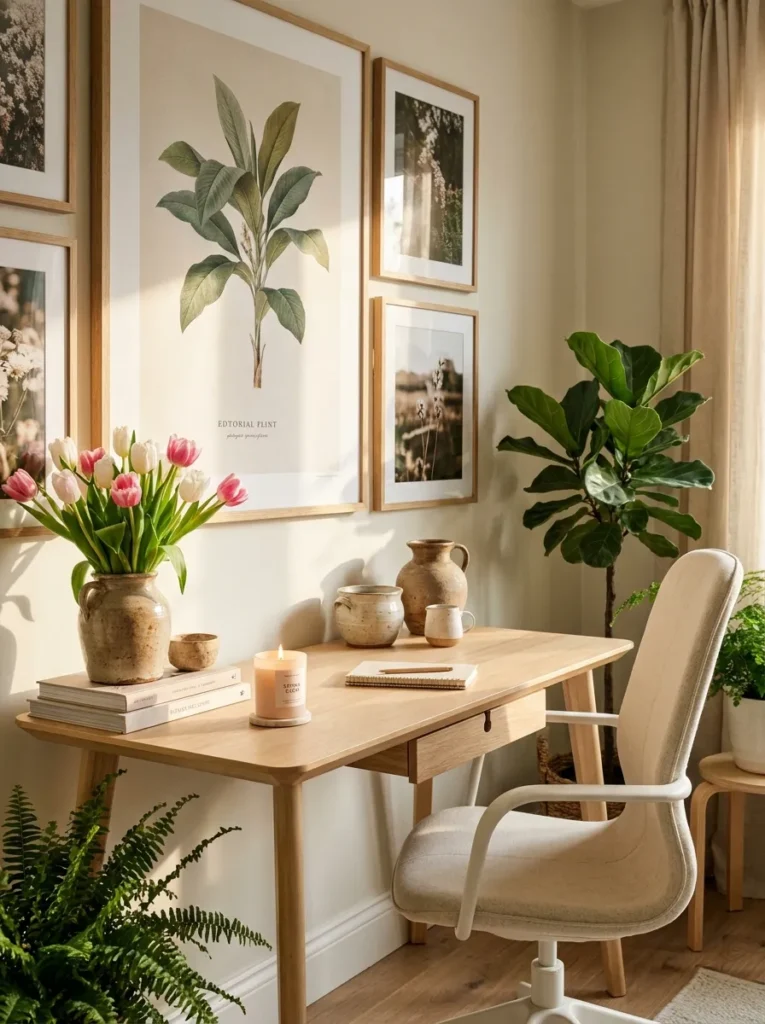
Spring home office with personal décor including artwork, fresh flowers, books, and meaningful decorative accents.

Common Spring Home Office Decorating Mistakes to Avoid

Refreshing your home office for spring doesn’t have to involve a complete makeover. In fact, many decorating disappointments happen because small details are overlooked rather than major design decisions. Before you finish your workspace, take a few minutes to check for these common mistakes. Avoiding them will help create an office that feels brighter, more comfortable, and easier to work in every day.

Prioritizing Appearance Over Comfort

A beautifully styled office won’t be enjoyable if your desk and chair aren’t comfortable enough for daily use. While it’s tempting to choose furniture based on appearance alone, ergonomics should always come first.

Invest in a supportive chair, position your monitor at a comfortable height, and make sure your desk suits the type of work you do. Once the foundation is comfortable, decorating becomes much more rewarding because you’ll actually enjoy spending time in the space.

Blocking Natural Light with Furniture

One of the biggest mistakes is placing large bookcases, storage cabinets, or even your desk where they interrupt the flow of natural light.

Whenever possible, keep windows clear and allow daylight to spread throughout the room. If privacy is needed, choose sheer linen curtains or light-filtering shades instead of heavy blackout drapes during the day.

Natural light instantly makes a workspace feel larger, fresher, and more inviting.

Using Too Many Spring Colors at Once

Spring decorating doesn’t mean every pastel belongs in the same room.

Instead of combining soft pink, lavender, mint green, pale yellow, baby blue, and floral patterns together, choose one or two accent colors and let neutral tones do most of the work.

A restrained palette always feels more sophisticated and creates a workspace that’s easier to enjoy long after spring has ended.

Filling Every Shelf with Decorations

Open shelving should support both storage and styling, but overcrowding every shelf quickly creates visual clutter.

Leave some breathing room between books, baskets, artwork, and decorative objects. Empty space is an important part of good interior design because it allows your favorite pieces to stand out instead of competing for attention.

If a shelf feels crowded, remove a few accessories before adding anything new.

Forgetting to Hide Everyday Clutter

Chargers, paperwork, sticky notes, cables, and office supplies can quickly take over an otherwise beautiful workspace.

Decorative storage boxes, woven baskets, drawer organizers, and cable management solutions help keep everyday essentials accessible without leaving them permanently on display.

An organized workspace doesn’t just look better—it often feels less stressful to work in.

Depending on One Overhead Light

Even the brightest ceiling fixture rarely provides ideal lighting for an entire workday.

Layer your lighting by combining natural daylight, a quality desk lamp, and a warm ambient floor lamp. This creates a more comfortable environment while reducing eye strain during early mornings, cloudy afternoons, or evening work sessions.

Buying Décor Before Solving Practical Problems

Many people begin by purchasing artwork, decorative accessories, or trendy office décor before addressing the things that actually affect their daily routine.

If your chair is uncomfortable, your storage is overflowing, or your lighting isn’t working properly, solve those issues first. Decorative accessories should enhance a workspace—not compensate for problems that could have been fixed more effectively elsewhere.

Final Thoughts

Refreshing your home office for spring isn’t about following every seasonal trend or replacing perfectly good furniture. The most successful workspaces evolve through thoughtful decisions that improve both the way the room looks and the way it functions every day.

Start with the elements that have the greatest impact—natural light, furniture placement, comfort, and organization. Once those foundations are in place, simple additions such as fresh greenery, lighter textiles, natural materials, and carefully chosen decorative accents can completely transform the atmosphere without requiring a major investment.

Remember that a well-designed home office should support your work while also feeling connected to the rest of your home. When the room is comfortable, organized, and filled with natural light, it’s easier to stay focused, more enjoyable to spend time in, and a space you’ll appreciate long after spring has passed.

Take your time, make changes gradually, and choose pieces that genuinely improve your daily routine. A workspace designed with intention will always feel more inviting than one that’s simply following the latest decorating trend.

Happy decorating!
Leave a Comment

Your email address will not be published. Required fields are marked *