Winter Balcony Decor Ideas: 7 Steps to a Warmer Balcony
Most balconies spend winter empty, and it is a shame, because a cold balcony only needs a few small changes to feel like a room you actually want to sit in. This guide walks through seven practical steps, in the order that makes the biggest difference first, so you can warm up your balcony one weekend at a time.
If you are warming up the rest of your home too, start with our winter home decor ideas for the rooms inside, then steal the same thinking for the space outside your door. The same layered approach works on a winter front porch, and if your balcony has glass doors and a roof, a winter sunroom follows the same seven steps with even less wind to fight.
Step 1: Warm the Floor First With a Thick Outdoor Rug
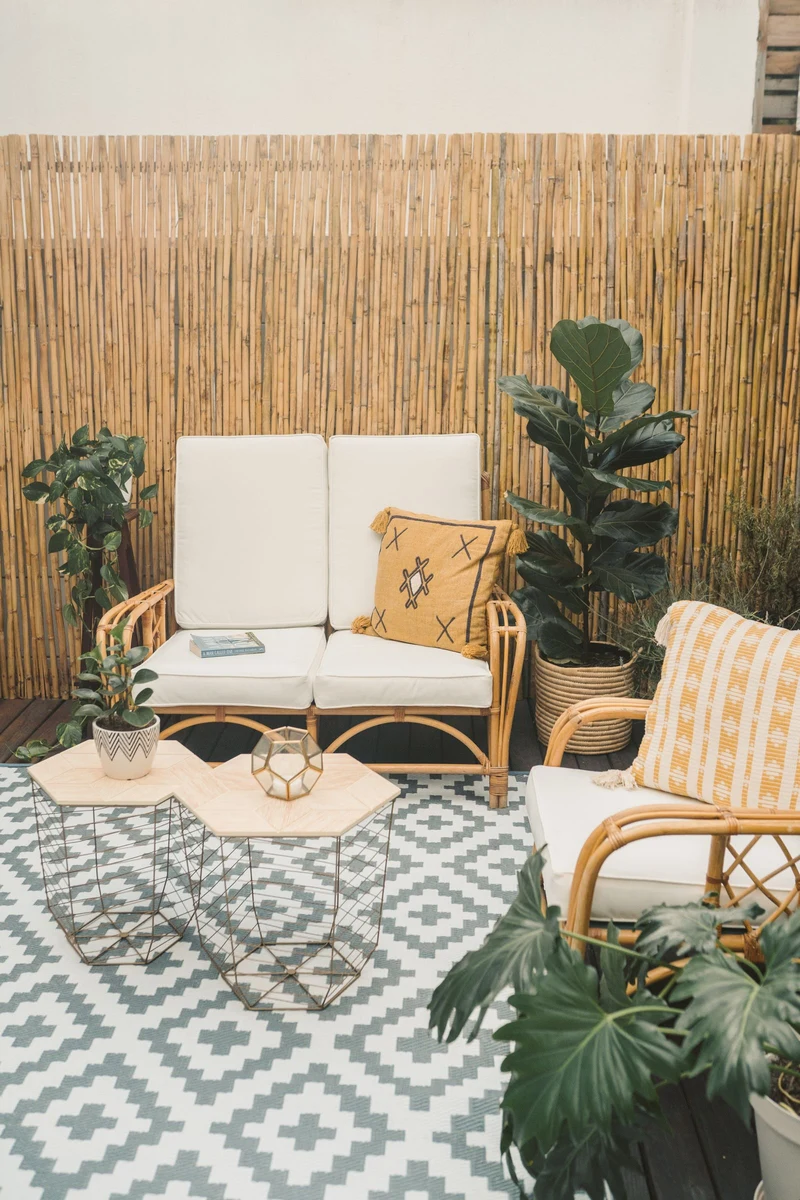
A bare balcony floor is the coldest thing about the space. Stone, tile and concrete pull heat straight out of your feet, and no amount of blankets fixes that, because the cold comes from below. A thick outdoor rug is the single fastest change you can make: it breaks the contact with the cold surface, softens the whole look of the balcony, and makes the space feel like a room instead of a ledge.
Choose a low-pile outdoor rug in a size that fits under your main seat with room to spare. A rug that is too small looks like a mat and does nothing for the cold; one that runs under the chair legs and out to the edges of the balcony anchors the whole seating area. Flat-weave polypropylene rugs dry fast after rain or snow, which matters more than the pattern, so pick the colour you love and check the material first.
If your balcony already has a bamboo screen, a trellis or a tall planter along the railing, the rug works even better, because the screen cuts the wind while the rug cuts the cold from below. Together they take the edge off a space that felt unusable in November.
Tip: Lay the rug, then stand on it barefoot for ten seconds. If your feet still feel the cold through it, add a second thin rug underneath or a layer of interlocking deck tiles below the rug.
Step 2: Add One Real Source of Heat
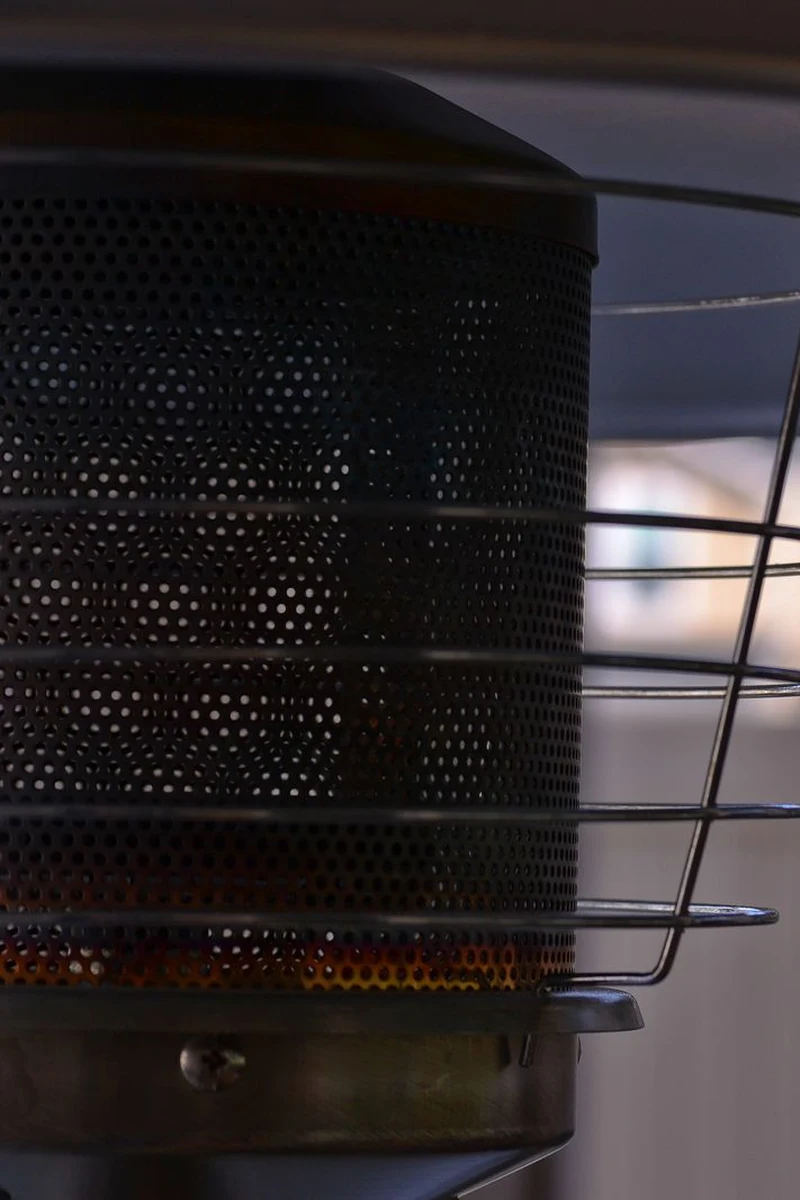
A rug fixes the floor, but the air is still winter air, and that is where most people give up. One real source of heat changes the maths completely. A slim tower patio heater, a small electric infrared heater or even a tabletop heater will warm the person sitting next to it rather than trying to heat the sky, and that is all a balcony needs.
On a small balcony, go electric rather than gas. Electric heaters are slimmer, they have no tank to store, and you can point an infrared heater at your chair so the warmth lands on you instead of drifting away. Measure the space before you buy: you need about a metre of clear space around the heater, away from the rug, the cushions and the railing.
Place the heater beside your seat, not across the balcony, and angle it toward where you sit. Heat on a balcony is personal, not room-wide, so the heater earns its place by warming one chair well, not by warming the whole outdoors.
Tip: Put the heater on a timer plug or a smart plug so it switches off by itself. A warm balcony is lovely; a heater forgotten overnight is not.
Step 3: Layer the Light With String Lights Along the Railing
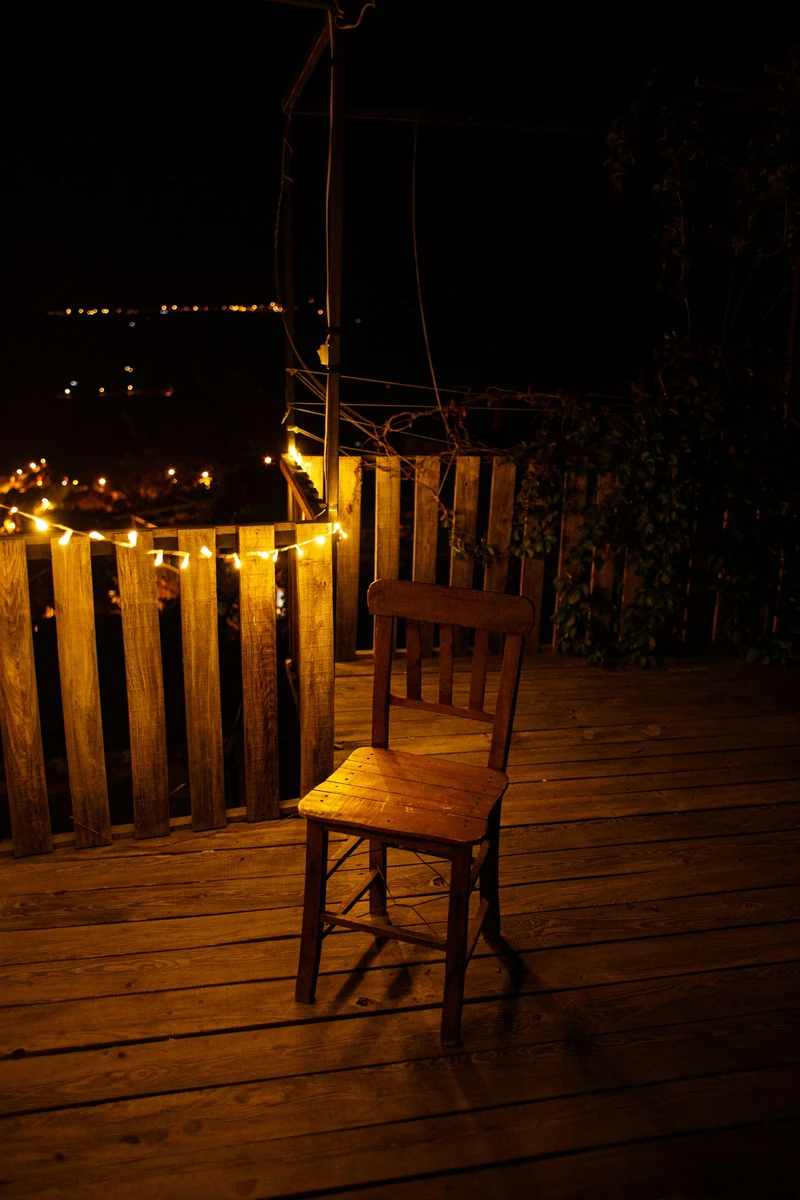
Winter evenings arrive early, and a dark balcony is a balcony nobody uses. String lights are the cheapest way to make the space glow, and they do double duty: they light the railing so the balcony reads as a room, and their warm colour makes the cold air feel softer. Run one strand along the top rail and let it drape slightly, rather than pulling it drum-tight.
Warm white is the colour to choose. Cool white reads like a security light and makes everything feel colder, while warm white at 2700K feels like candlelight from a few steps away. Solar string lights work if your balcony gets a few hours of sun, but a plug-in set with a timer is more reliable through the darkest weeks, when the sun barely clears the roofline.
Keep the lights low and close to where you sit. A strand at railing height and a second short strand near your chair will do more than a whole ceiling of lights, because the glow lands on you and the seat instead of washing out into the night.
Tip: Clip the lights to the railing with small clear clips instead of tape. Tape fails in the cold and leaves marks; clips hold all winter and come off clean in spring.
Step 4: Give Yourself One Cosy Seat, Not a Full Set
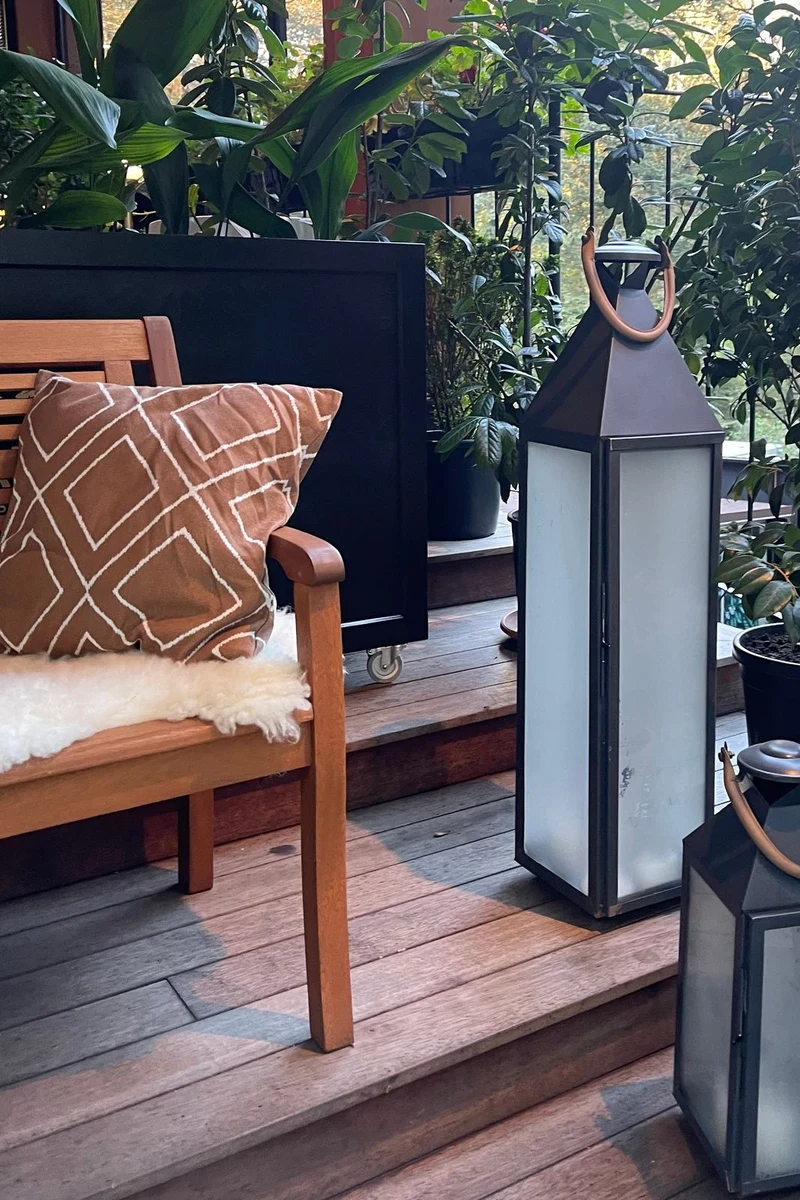
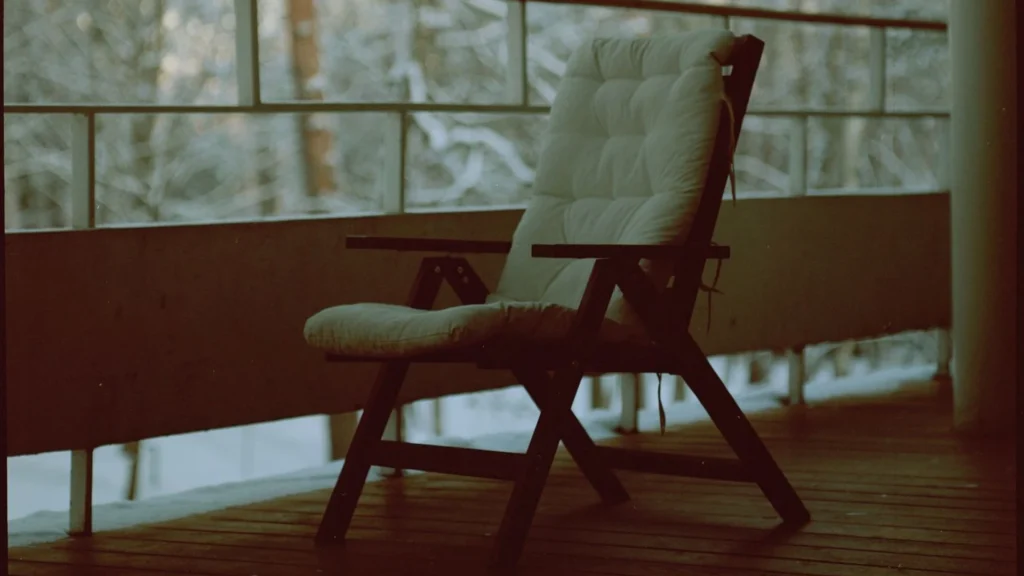
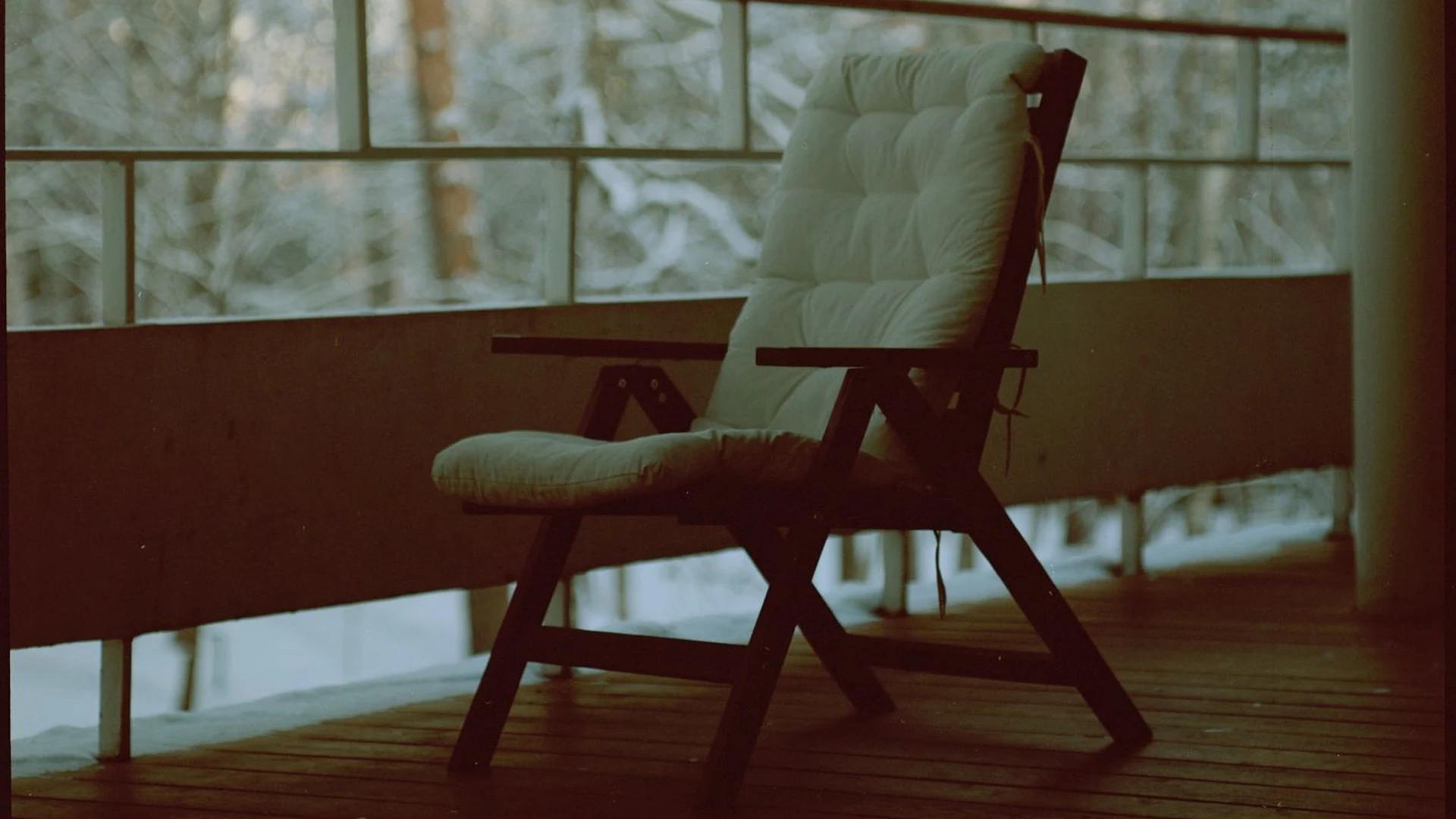
Most balconies are too small for a full outdoor set, and a full set is the wrong goal in winter anyway. What you need is one seat that is genuinely comfortable in the cold: a bench or a single armchair with a thick cushion, a sheepskin or a heavy wool throw folded over the back, and a cushion you actually want to lean into.
Dress the seat in layers, the way you would dress yourself. A waterproof cushion underneath, a thick throw over the back, and a small pillow at the lumbar spot. The throw is the key piece: it is the thing you pull around your shoulders when the evening turns, and a sheepskin or a chunky wool throw holds warmth far better than a thin cotton blanket.
Keep the rest of the balcony clear. One good seat with a small side table for your drink beats four chairs nobody sits in, and it leaves room for the heater and the planters that make the space feel finished.
Tip: Store the throw and the cushion in a waterproof box or bring them inside when you are done. Dry cushions stay soft and warm; damp ones stay cold no matter how thick they are.
Step 5: Keep Something Green With Potted Evergreens

A balcony with nothing alive on it feels abandoned in winter, and that is half the reason nobody goes out there. A potted evergreen fixes it in one move: it stays green through frost and snow, it gives the balcony shape and height, and it looks better in the cold than it does in summer.
Small spruce, dwarf pine, boxwood and juniper all survive winter in pots, and they ask for almost nothing. Choose a pot that is bigger than you think you need, because a large pot holds more soil, and more soil means the roots freeze less and dry out less. Terracotta looks lovely but can crack in a hard frost, so use a frost-proof ceramic, wood or metal planter, or slip the terracotta pot inside a larger outer pot.
Place one tall evergreen in the corner where the wind hits hardest, and a smaller one beside your seat. The tall one breaks the wind and gives the balcony a backbone; the small one sits at eye level when you are in your chair, so the green is part of the view, not a chore at the far end.
Tip: Water your evergreens on mild days, even in winter. Pots dry out in cold wind, and a thirsty evergreen in January is usually a dead evergreen by March.
Step 6: Set Out Lanterns for Low, Warm Light
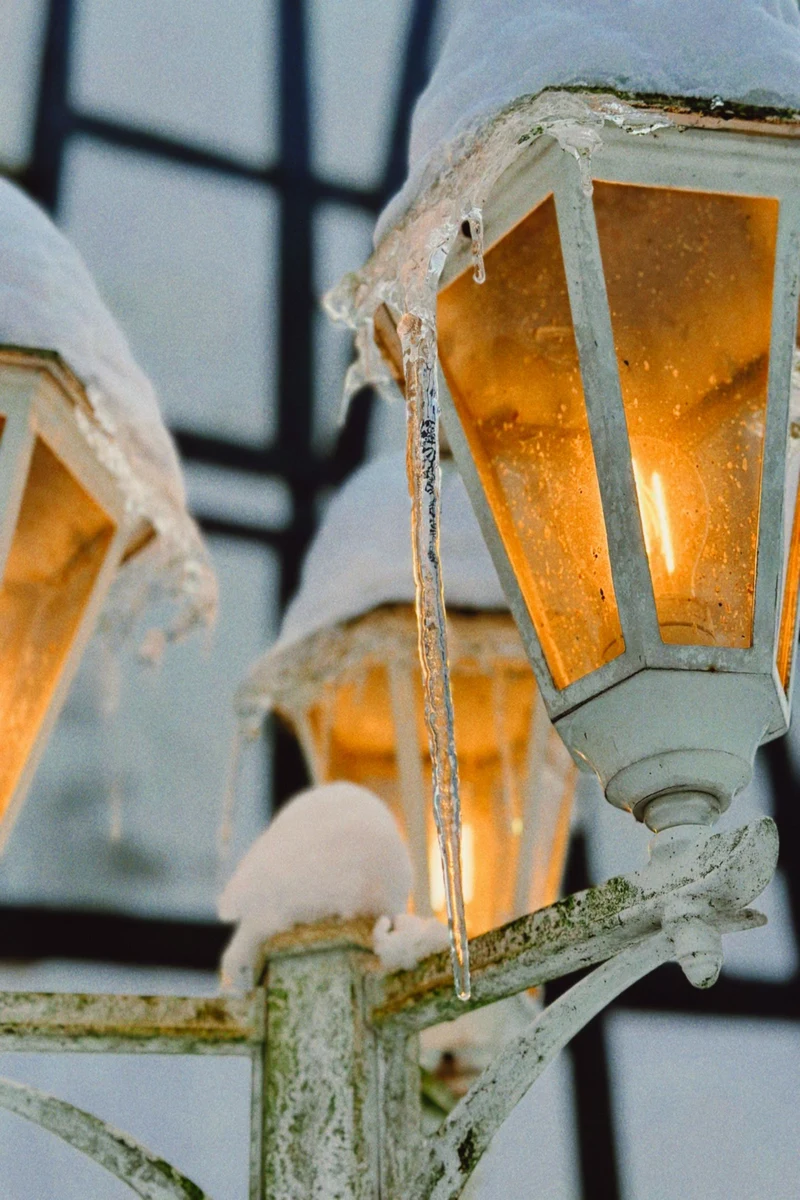
String lights give the balcony its glow, but lanterns give it its warmth. A lantern sits low, its light pools on the floor and the seat beside it, and it makes the space feel sheltered in a way that overhead light never does. Two or three lanterns of different heights, grouped near your chair, are enough.
Use LED candles inside them rather than real flames. A real candle on a windy balcony gutters out in minutes and is a risk near a throw or a cushion; a good LED pillar with a flicker setting gives the same low light and stays lit all evening. Choose lanterns with glass panels rather than open frames, so the wind cannot reach the light at all.
Set the tallest lantern on the floor beside your seat and a smaller one on the side table. The two heights make the corner feel layered, and the warm light against the snow outside is the exact moment the balcony starts to feel like the best seat in the house.
Tip: Put the lanterns on a timer to switch on at dusk. Coming home to a balcony that is already glowing is the best reason to step outside instead of past it.
Step 7: Make a Small Warm-Drink Corner

The last step is the smallest and the one that makes the balcony a habit. Give yourself a reason to go out there every day, and the simplest reason is a hot drink. A small side table or a wide ledge beside your seat, a favourite mug, and a tray that lives by the door are all it takes.
Keep a tray by the balcony door with two mugs and a small jar of cocoa or tea. When the tray is ready, the decision is already made: you carry it out, you sit for ten minutes, and the balcony becomes part of your day instead of a project you finished once. A thermos on the tray means a second cup without going back inside, which is what turns ten minutes into half an hour.
This is the step that ties the other six together. The rug warms your feet, the heater warms the air, the lights and lanterns make it glow, the seat holds you, the evergreen gives you something to look at, and the drink gives you a reason to stay.
Tip: Use a mug with a lid or a travel cup on windy days. A hot drink that stays hot is the whole point; a cold one is just a reason to go back inside.
Your Winter Balcony Checklist
- Thick outdoor rug under the seat, big enough for the chair legs
- One electric heater placed beside the seat, on a timer plug
- Warm-white string lights clipped along the railing
- One cosy seat with a waterproof cushion and a heavy throw
- One tall potted evergreen and one small one by the seat
- Two or three lanterns with LED candles, on a dusk timer
- A tray by the door with mugs and a thermos, ready to carry out
Winter Balcony Budget
| Item | Budget pick | Typical cost |
|---|---|---|
| Outdoor rug | Flat-weave polypropylene rug | $40–$80 |
| Heater | Slim electric infrared heater | $90–$180 |
| String lights | Warm-white plug-in set with timer | $15–$30 |
| Seat dressing | Sheepskin or heavy wool throw | $30–$60 |
| Evergreens | Small spruce and juniper in frost-proof pots | $25–$50 |
| Lanterns | Two glass-panel lanterns with LED candles | $20–$45 |
| Drink corner | Tray, two mugs and a small thermos | $10–$25 |
| Total | Whole balcony, one weekend | $230–$470 |
Start with the rug and the lights if the budget is tight: those two alone change how the balcony looks and feels, and the heater can wait until the first really cold week.
Frequently Asked Questions
Can you use a balcony in winter?
Yes. A balcony is usable all winter once the floor is insulated with a rug, there is one source of heat aimed at the seat, and the wind is broken by a screen or a tall planter. Most people stop using their balcony because it is cold underfoot and dark by five o’clock, and both of those have cheap fixes.
How do I keep my balcony warm in winter?
Warm the person, not the outdoors. A thick rug stops the cold coming up through the floor, a slim electric heater warms the seat area, and a heavy throw keeps the warmth on you. A windbreak, such as a bamboo screen or a tall evergreen, makes the heater work far better by stopping the wind from carrying the warmth away.
What is the best outdoor rug for a winter balcony?
A low-pile, flat-weave polypropylene rug. It dries fast after rain or snow, it does not hold damp the way natural fibres do, and it is thin enough to sit flat under chair legs. Pick a size that runs under your main seat with room to spare, and avoid high-pile rugs, which stay wet and freeze.
Are patio heaters safe on a small balcony?
Electric heaters are the safer choice for a small balcony: no gas tank, no open flame, and most have tip-over shut-off. Keep about a metre of clear space around the heater, keep it away from the rug, cushions and throws, and never leave it running unattended. Check your building’s rules first, as some apartments restrict heaters on balconies.
What plants survive winter on a balcony?
Small spruce, dwarf pine, juniper and boxwood all survive winter in pots and stay green through frost and snow. Use a large, frost-proof pot so the roots have enough soil around them, water on mild days, and skip anything tender or tropical, which will not survive the first hard frost.
Read Next
If your balcony is sorted, the same warm-layer thinking works everywhere else. Start with our winter home decor ideas for the rooms inside, then carry the glow out to the winter front porch and the winter sunroom.