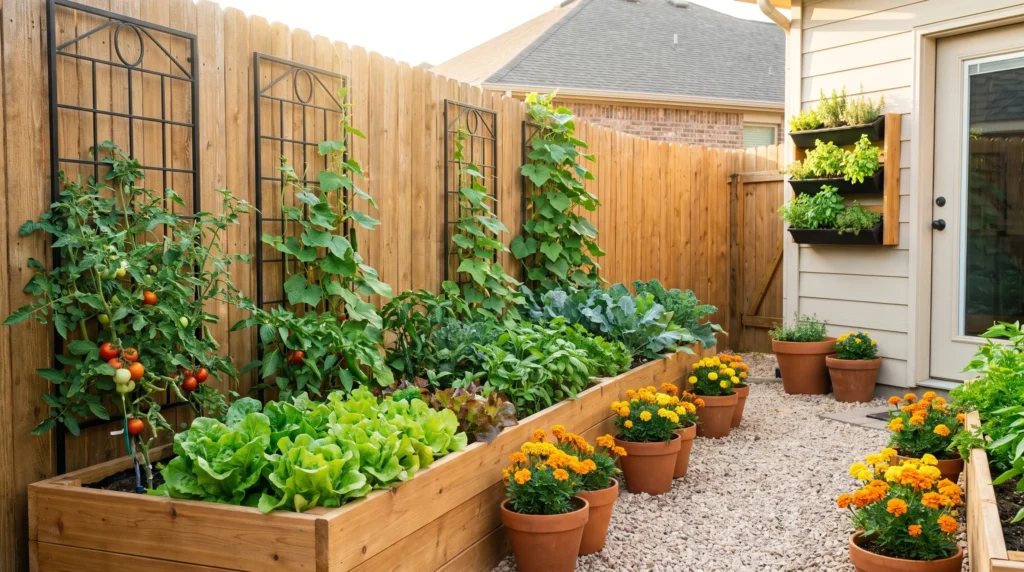
A productive vegetable garden doesn’t begin with a large backyard. It begins with a thoughtful plan.
Many of the most successful kitchen gardens are surprisingly compact, making clever use of fences, walls, raised beds, and vertical supports instead of relying on wide open spaces. Growing upward rather than outward allows you to harvest more vegetables while keeping the garden organized, accessible, and enjoyable to spend time in.
Vertical gardening also changes the way a backyard feels. Plants become part of the landscape instead of sprawling across every available inch of ground. Tomatoes climb neatly toward the sun, cucumbers hang within easy reach, herbs stay close to the kitchen door, and pathways remain open for watering, harvesting, and everyday use.
Rather than filling your yard with random planters or following every gardening trend, it’s worth taking a step back and designing a growing space that suits both your backyard and the vegetables you actually enjoy eating. The best vertical garden isn’t necessarily the biggest one—it’s the one that works naturally with your available sunlight, your routine, and the amount of time you want to spend maintaining it.
This guide explores practical vertical vegetable garden solutions for small backyards, helping you compare different growing methods and understand where each one works best. By the end, you’ll have a clear plan for creating a backyard that’s productive, attractive, and easy to maintain throughout the growing season.
Before You Buy Anything, Understand How Your Backyard Works
It’s easy to get excited by beautiful garden photos online, but every successful vegetable garden starts with understanding the space you already have. Spending a little time observing your backyard before buying materials often leads to better results—and can save money by preventing costly mistakes.
Start by paying attention to sunlight. Most vegetables need at least six to eight hours of direct sun each day, If parts of your backyard receive only a few hours of sunlight, consider creating a shade garden instead of forcing sun-loving vegetables into those areas. especially crops such as tomatoes, peppers, cucumbers, and beans. Watch how sunlight moves across your yard from morning until evening. You may discover that the brightest area isn’t where you originally planned to build your garden.
Next, think about convenience. A vegetable garden that’s close to your house is more likely to be watered regularly, harvested often, and maintained throughout the season. If carrying watering cans across the entire yard already sounds tiring, choosing a location near an outdoor tap can make gardening much more enjoyable.
Take inventory of the structures you already own. A sturdy fence, garden wall, pergola, or even the side of a shed can become part of your vertical growing system without requiring additional construction. Using existing features not only saves money but also helps the finished garden feel integrated with the rest of your landscape.
Finally, consider how you want your backyard to function beyond gardening. If children play outside, pets use the lawn, or you enjoy entertaining guests, leave enough open space for those activities. A well-designed vegetable garden should enhance your backyard rather than take it over completely.
Once you understand your space, choosing the right growing system becomes much easier because you’re working with your backyard instead of against it.
Use the Fence You Already Have Before Building Anything New
One of the most overlooked features in a small backyard is the fence. While many homeowners see it simply as a property boundary, gardeners see valuable growing space that’s already built and waiting to be used.
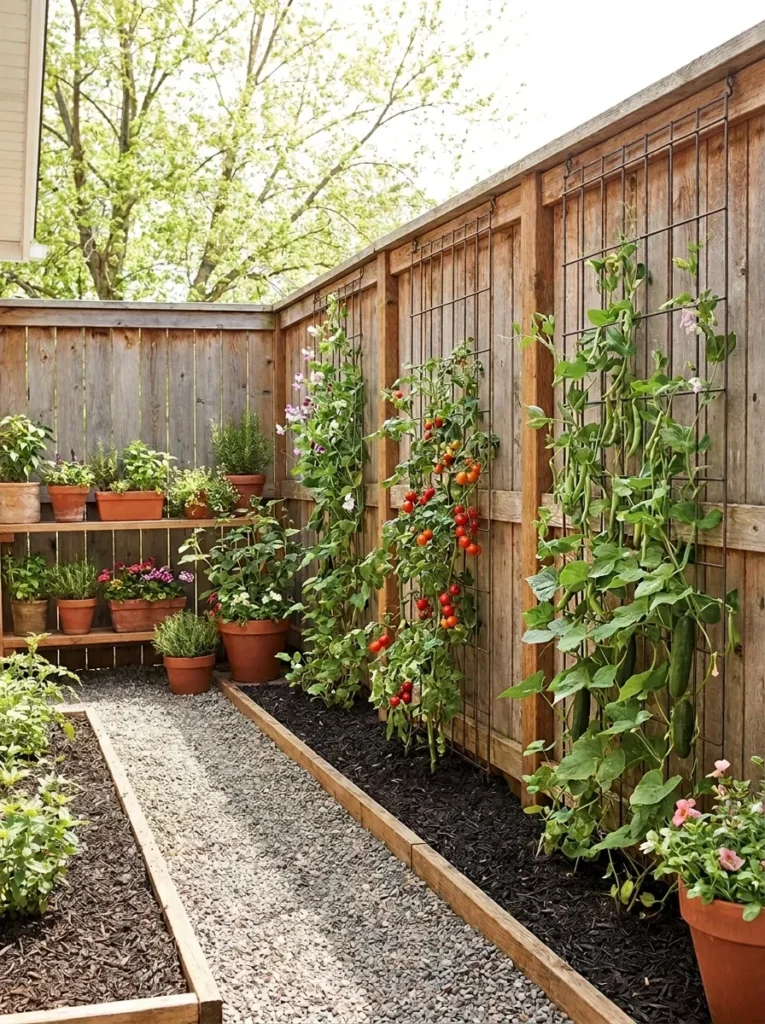
A sturdy wooden or metal fence can support climbing vegetables with very little modification. By attaching wire mesh, cattle panels, nylon garden netting, or simple wooden trellises, you can create vertical growing space without sacrificing any of your limited ground area. This approach keeps pathways open while allowing vegetables to receive better airflow and sunlight.
Climbing crops are especially well suited to fence gardening. Pole beans naturally wrap around supports as they grow, cucumbers produce straighter fruit when allowed to hang freely, and many indeterminate tomato varieties become easier to prune and harvest when trained vertically. Peas also thrive on lightweight trellises during cooler months, making excellent use of the same growing structure before summer crops take over.
Another advantage is maintenance. Plants growing vertically are easier to inspect for pests, diseases, and ripe vegetables because everything remains visible at eye level. Leaves dry more quickly after rain, which can also help reduce common fungal problems compared to vegetables sprawling across the ground.
Choose durable materials that can remain outdoors through changing weather conditions. Galvanized wire panels, cedar trellises, or powder-coated metal supports generally last much longer than lightweight plastic options and require very little upkeep once installed.
By making your existing fence part of the garden instead of treating it as empty background space, you’ll immediately increase your growing area without making the backyard feel crowded.
Choose a Trellis That Matches the Vegetables You Want to Grow
Not every vegetable climbs in the same way, which is why choosing the right support system matters just as much as choosing the plants themselves. A lightweight string trellis might work perfectly for peas, while heavy tomato vines loaded with fruit need a much stronger structure to stay upright throughout the season.
Before buying any materials, think about what you plan to harvest most. If tomatoes are your priority, invest in sturdy cattle panels, metal trellises, or heavy-duty wooden frames that can comfortably support the weight of mature plants. Cucumbers also benefit from strong vertical supports because hanging fruit stays cleaner, develops a more even shape, and is easier to spot during harvest.
Pole beans are among the easiest vegetables for beginners because they naturally wrap themselves around almost any vertical support. Simple bamboo teepees, wire panels, or garden netting are often all they need to produce an abundant harvest in very little space. Peas follow a similar growing habit during cooler months, making them an excellent choice for early spring planting before warmer-weather crops take over.
Matching the support to the vegetable also makes maintenance much easier. Pruning, watering, harvesting, and inspecting plants for pests become quicker tasks when vines have enough room to grow naturally instead of becoming tangled together.
A strong trellis may seem like a larger investment at first, but unlike annual plants, a well-built support system can serve your garden for many growing seasons. Choosing durable materials from the beginning often saves both time and money in the long run.
Add Raised Planters When Ground Space Is Limited
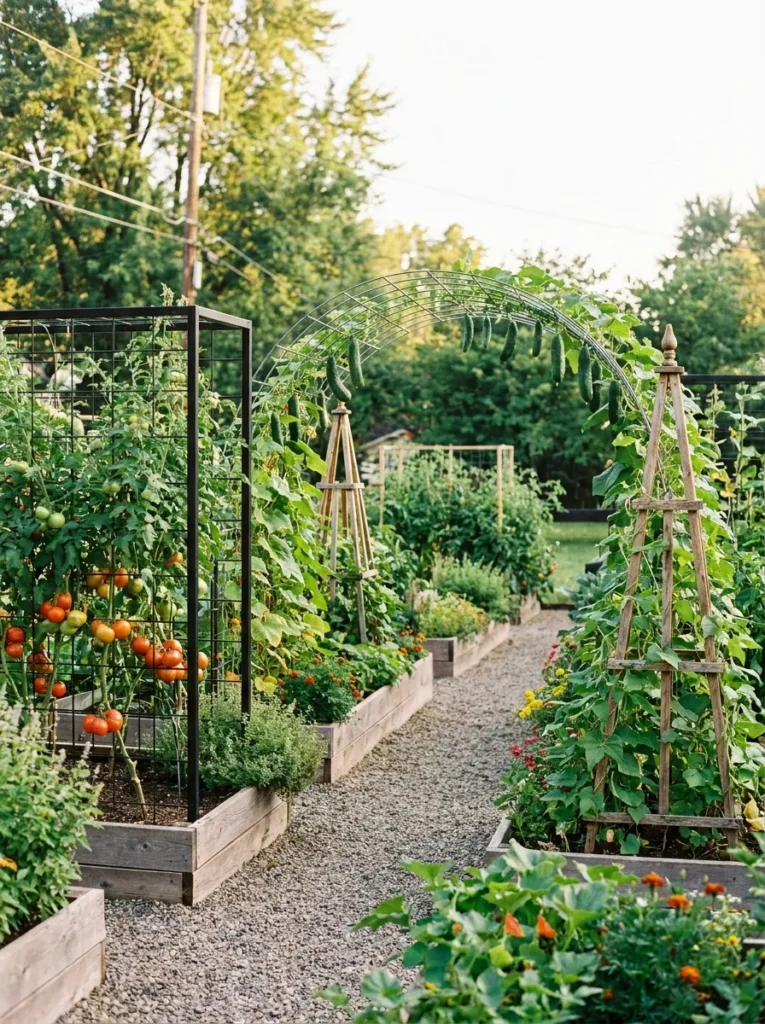
Some backyards simply don’t have enough open soil to support a traditional vegetable garden. If you’re working with a patio or paved area, container gardening is another practical way to grow vegetables without digging into the ground. Patios, paved areas, uneven ground, or poor-quality soil can make planting directly in the ground frustrating. Raised planters offer a practical solution while working beautifully alongside vertical growing systems.
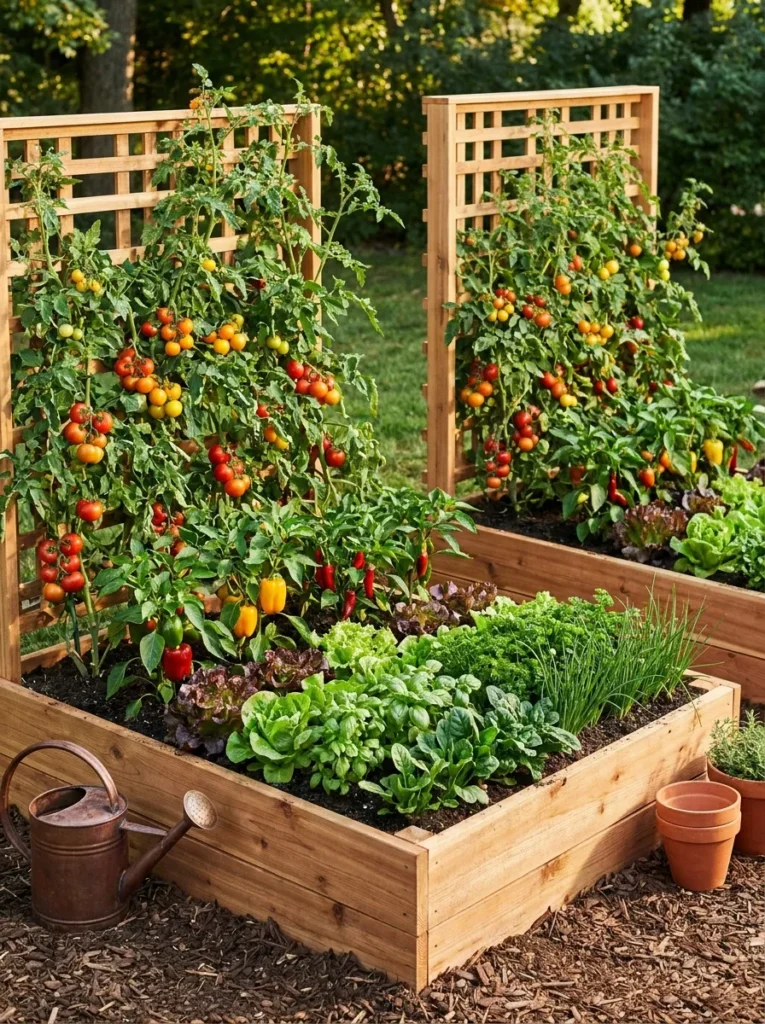
A raised planter creates a defined growing area that can be filled with nutrient-rich soil, making it easier to grow healthy vegetables from the start. Pairing the planter with a built-in trellis instantly doubles its productivity by using both the planting space below and the vertical space above.
This setup works particularly well for tomatoes, cucumbers, pole beans, peas, and climbing squash. Herbs such as basil, parsley, thyme, and chives can fill the lower sections while taller vegetables grow upward, creating a compact but highly productive garden.
Raised planters also improve accessibility. Because the soil sits higher than ground level, planting, watering, and harvesting require less bending, making gardening more comfortable for people of all ages. Better drainage is another advantage, especially in regions where heavy spring rains can leave traditional garden beds waterlogged.
When choosing a planter, look for materials that will withstand years of outdoor use. Cedar is naturally resistant to rot, galvanized steel offers exceptional durability, and composite materials require very little maintenance. Whichever option you choose, ensure the planter is deep enough for the vegetables you want to grow, as crops like tomatoes develop extensive root systems that need room to thrive.
For many small backyards, one thoughtfully placed raised planter can produce more vegetables than several scattered containers while keeping the overall garden neat and easy to maintain.
Turn an Empty Wall Into a Productive Kitchen Garden
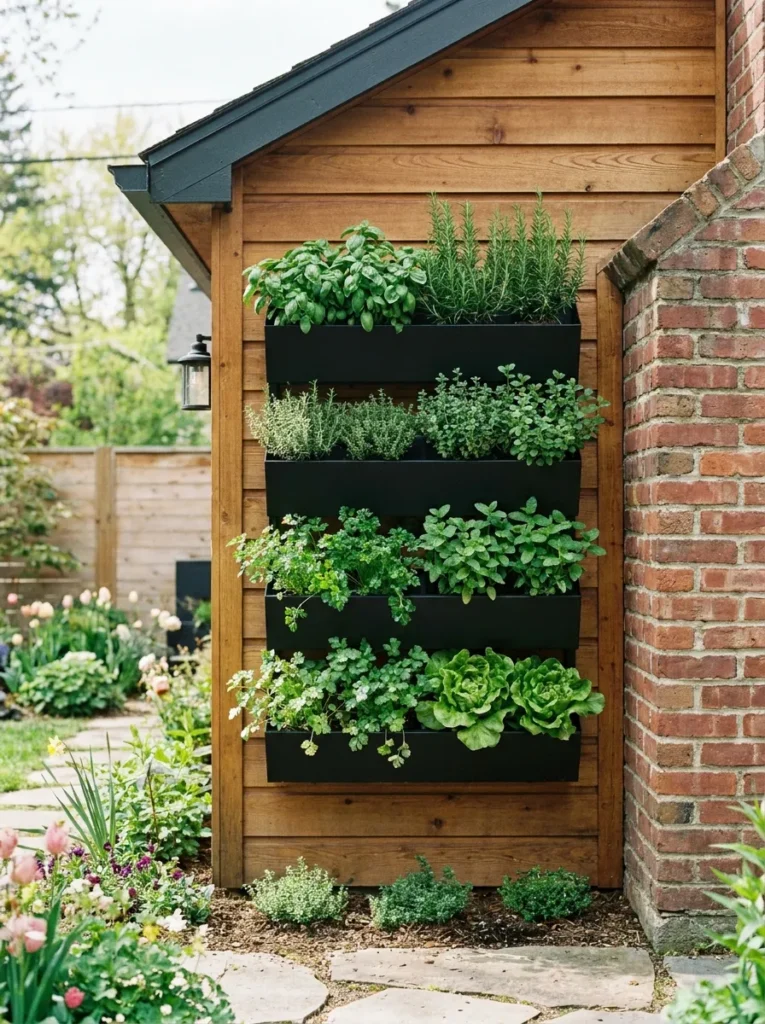
Blank walls often become overlooked spaces in a backyard, yet they can provide some of the most efficient growing areas available. Whether it’s the side of a garage, a garden shed, or a sunny exterior wall, these vertical surfaces can support a surprising variety of edible plants without taking away valuable floor space.
Unlike climbing vegetables that require trellises, wall-mounted systems are ideal for crops with shallower roots. Herbs such as basil, oregano, mint, parsley, cilantro, and thyme grow exceptionally well in mounted planters or modular pocket systems. Leafy greens including lettuce, spinach, and arugula also thrive when harvested regularly, allowing you to enjoy fresh salads just steps from your kitchen.
When planning a living wall, think beyond productivity. Repeating the same style of planter and keeping a consistent spacing between rows creates a clean, organized appearance that complements the rest of the backyard rather than making it feel cluttered. Choosing neutral containers in black, charcoal, or natural wood tones also allows the vibrant green foliage to become the main visual feature.
Watering deserves careful consideration before installation. Wall gardens dry out more quickly than traditional beds because they’re exposed to increased airflow and sunlight. Positioning them near an outdoor tap or installing a simple drip irrigation system can make long-term maintenance much easier.
A vertical herb wall not only saves space but also brings everyday cooking closer to the garden. Stepping outside to pick a handful of fresh basil or rosemary moments before preparing a meal is one of the simple pleasures that makes growing your own food so rewarding.
Make the Most of Vertical Space with Tiered Growing Systems
When every square foot counts, it’s worth thinking beyond a single planting level. Tiered growing systems allow you to use both height and depth, creating several productive planting zones within the footprint of one garden bed.
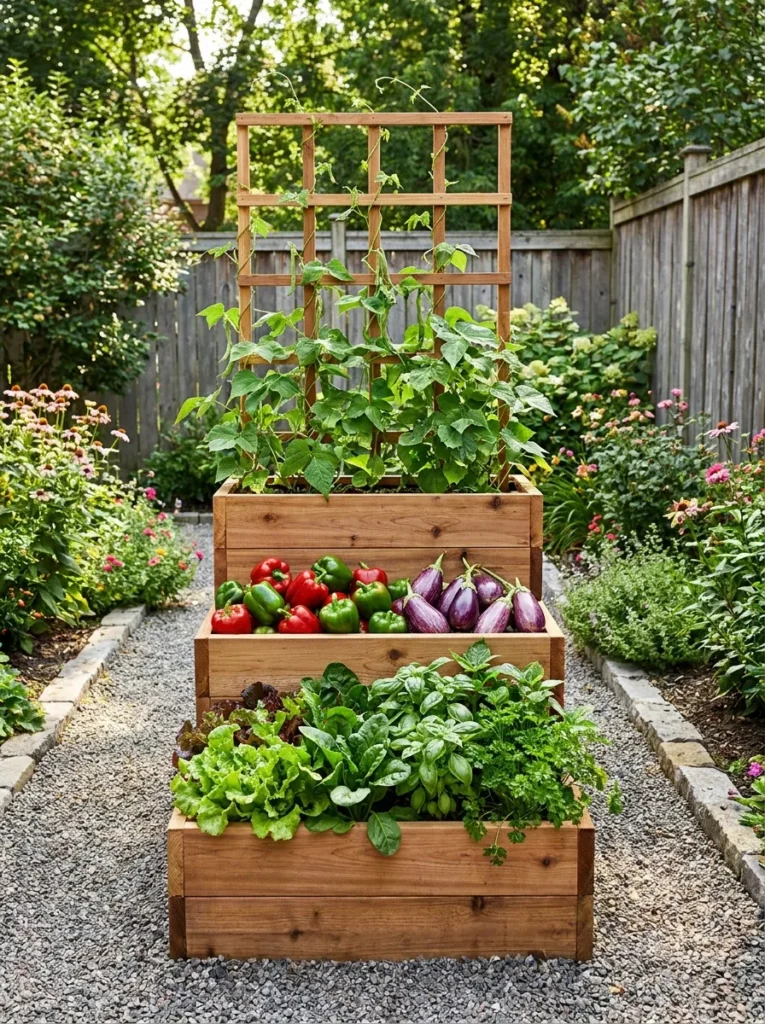
Unlike a standard planter, a tiered system places vegetables at different heights, making better use of available sunlight while giving each crop enough room to grow. Taller vegetables can climb upward on a trellis at the back, medium-sized crops can fill the center, and herbs or leafy greens can thrive along the front edge where they’re easy to harvest.
This layered approach also creates a more attractive garden. Instead of looking like a collection of separate containers, the planting feels intentional and balanced, with different textures and shades of green adding visual interest throughout the season.
A practical combination might include climbing beans growing along the rear trellis, compact pepper plants in the middle, and basil, lettuce, or spinach along the front. Every layer serves a purpose while making full use of the available growing space.
Tiered systems are especially helpful in narrow backyards where expanding outward isn’t an option. They maximize productivity without making the garden feel crowded, leaving enough room for comfortable walkways and everyday outdoor living.
Combine Vegetables, Herbs, and Flowers Instead of Growing Them Separately
A productive vegetable garden doesn’t have to look purely functional. Some of the most beautiful backyard gardens mix edible plants with herbs and flowering companions, creating a space that’s just as enjoyable to look at as it is to harvest.
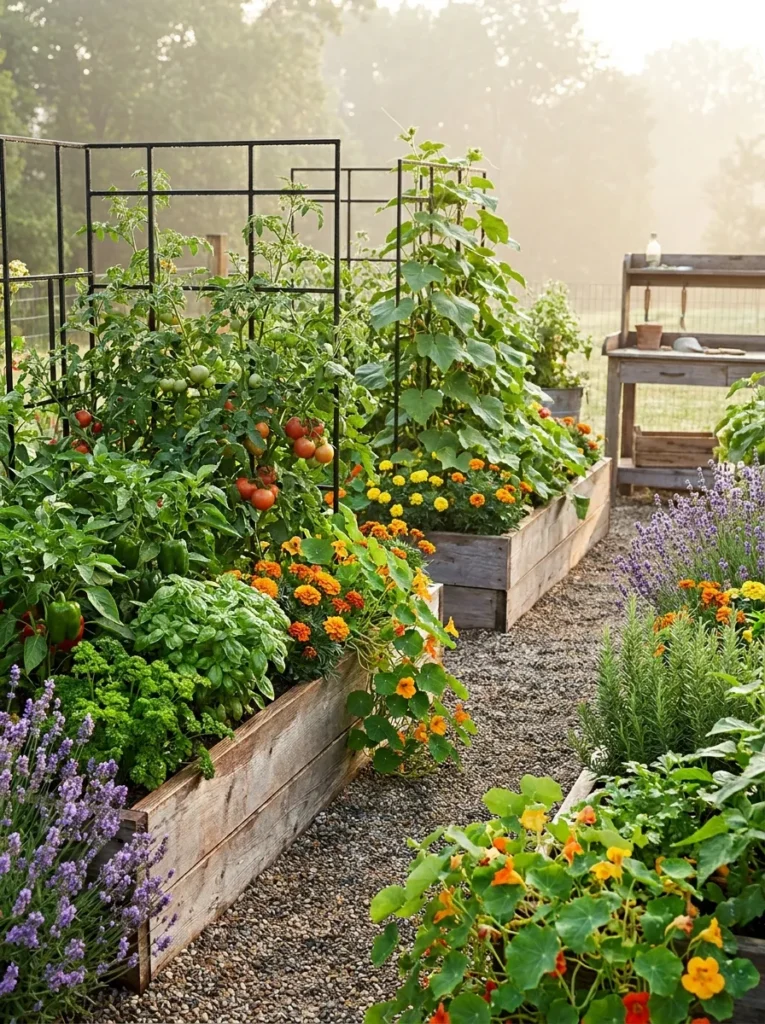
Herbs naturally fit into vertical gardens because many varieties stay compact while providing fresh ingredients throughout the growing season. Basil pairs beautifully with tomatoes, thyme grows happily near peppers, and parsley fills small gaps around larger vegetables without competing for space.
Adding flowering plants also offers practical benefits. Calendula, nasturtiums, marigolds, and alyssum attract bees and other pollinators that improve vegetable production while introducing welcome color throughout the garden. Some companion flowers can even help discourage certain garden pests, reducing the need for chemical treatments.
When planning the layout, think about appearance as well as function. Repeating similar planter styles, grouping herbs together, and allowing flowering plants to soften the edges of raised beds creates a backyard that feels designed rather than simply planted.
The result is a garden that changes naturally throughout the season. As vegetables mature, herbs become fuller, and flowers bloom, the entire space develops a layered, cottage-style character that feels welcoming without becoming difficult to maintain.
Leave Room to Walk, Water, and Harvest Comfortably
One of the most common mistakes in small backyard gardens is trying to grow too much too quickly. It’s tempting to fill every available corner with vegetables, but a garden that’s difficult to move through often becomes harder to care for as the season progresses.
Before placing your first planter or raised bed, think about how you’ll use the space several months from now. You’ll need room to carry watering cans, prune tomato plants, harvest vegetables, and occasionally kneel beside your crops without crushing nearby plants.
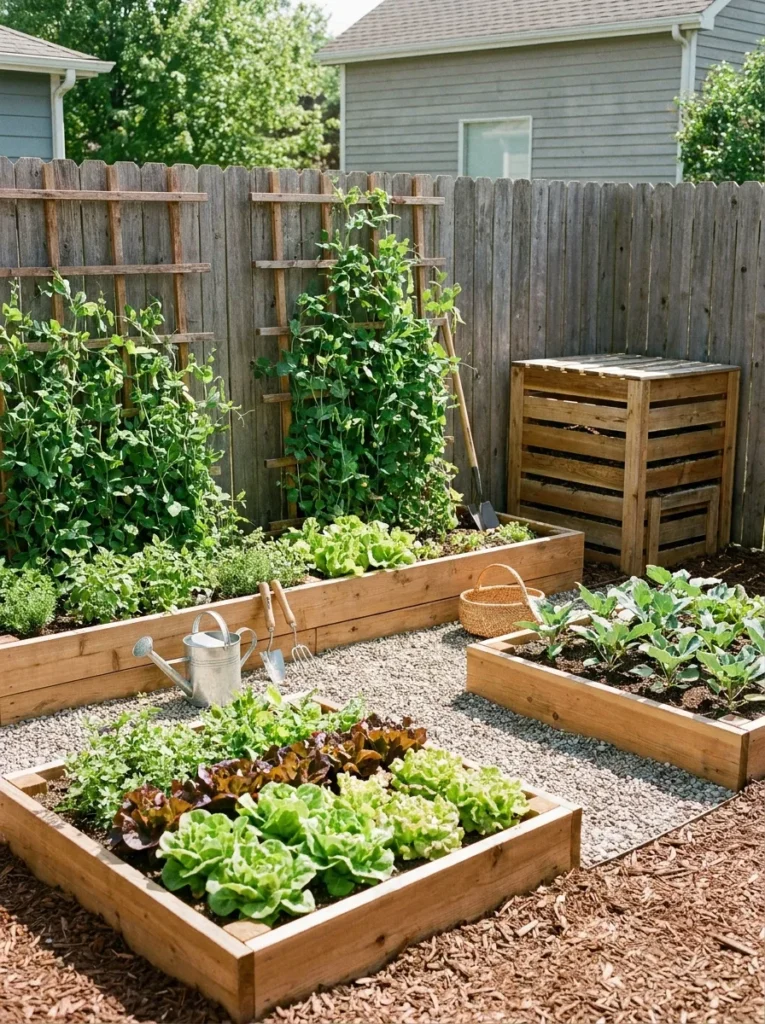
Even a simple pathway can make a noticeable difference. Gravel, mulch, stepping stones, or compact paving create clean walking areas while helping define different sections of the garden. These paths also reduce muddy footprints after watering or rainfall and make harvesting much more enjoyable.
Try grouping similar vegetables together rather than scattering them throughout the yard. Keeping climbing crops along one fence, herbs near the kitchen, and raised beds in a dedicated growing area makes everyday maintenance more efficient and creates a more organized appearance.
A well-planned garden should invite you to spend time outdoors. Leaving a little breathing room between growing areas often produces a backyard that feels larger, functions better, and remains easier to care for throughout the season.
Choose Materials That Will Last Through Every Growing Season
A vertical vegetable garden is something you’ll build once but hopefully enjoy for many years. While it’s tempting to choose the least expensive materials available, investing in durable structures usually pays off through lower maintenance and fewer replacements.
For wooden planters and trellises, naturally rot-resistant woods such as cedar are a reliable choice because they withstand outdoor conditions without requiring frequent treatment. Powder-coated steel and galvanized metal are equally dependable for trellises that need to support heavier crops like tomatoes, cucumbers, and squash.
If you’re working with a limited budget, don’t overlook reclaimed materials. An old wooden ladder can become a tiered herb display, sturdy pallets can be transformed into vertical planters with proper preparation, and leftover timber from previous projects often makes excellent raised bed frames. The key is making sure every structure is stable enough to support mature plants, soil, and regular watering throughout the growing season.
Containers deserve just as much attention. Large planters dry out more slowly than shallow ones, giving vegetables a healthier root environment and reducing how often you’ll need to water during hot summer weather.
Choosing quality materials doesn’t necessarily mean spending more — Reclaimed wood, recycled planters, and sustainable materials can also help you create a more eco-friendly garden.It means selecting pieces that continue performing year after year while keeping your garden looking attractive.
Which Vertical Garden Fits Your Backyard Best?
Every backyard has different strengths, which means there isn’t one perfect vertical gardening system for everyone. Instead of choosing what’s most popular online, match your growing method to the space you already have.
| If your backyard has… | The best solution is… | Why it works well |
|---|---|---|
| A long wooden fence | Wire trellis or cattle panel | Creates maximum growing space without using the lawn. |
| Very little planting area | Raised planter with built-in trellis | Combines vertical and ground growing in one footprint. |
| Mostly patio or paving | Freestanding planter towers | No digging required and easy to reposition. |
| Sunny exterior wall | Wall-mounted herb planters | Keeps herbs close to the kitchen while saving floor space. |
| Narrow side yard | Slim vertical trellis | Makes productive use of overlooked spaces. |
| Decorative backyard | Mixed vegetables, herbs, and flowers | Combines productivity with attractive landscaping. |
| Beginner gardener | Raised planter and simple trellis | Easy to build, maintain, and expand over time. |
Rather than trying to install every growing system at once, begin with the option that suits your yard today. As your confidence grows, you can gradually add new planting areas without redesigning the entire garden.
A Simple Seasonal Planting Plan for Continuous Harvests
One of the advantages of vertical gardening is that many structures can support different crops throughout the year. Instead of leaving trellises empty after one harvest, think of your garden as a changing space that evolves with the seasons.
Spring
Start with cool-season vegetables such as peas, lettuce, spinach, radishes, and herbs. These crops establish quickly and make good use of mild temperatures before summer arrives.
Summer
Replace spring crops with warm-season favorites including tomatoes, cucumbers, pole beans, peppers, and climbing squash. These vegetables benefit from strong vertical supports and produce heavily during the warmest months.
Autumn
As temperatures begin to cool, plant another round of leafy greens, kale, Swiss chard, and herbs. Many vegetables continue producing well into autumn when protected from early frosts.
Winter
Even if your growing season pauses, winter is an excellent time to improve the garden. Repair trellises, refresh soil with compost, clean containers, and plan new planting combinations for the following spring.
Viewing the garden as a year-round project rather than a single-season hobby helps every structure deliver more value while keeping your backyard productive for much longer.
A Beginner-Friendly Backyard Layout You Can Copy
If you’re starting from scratch, resist the urge to fill every corner immediately. A simple, well-planned layout is easier to manage and often produces better results than an overcrowded garden.
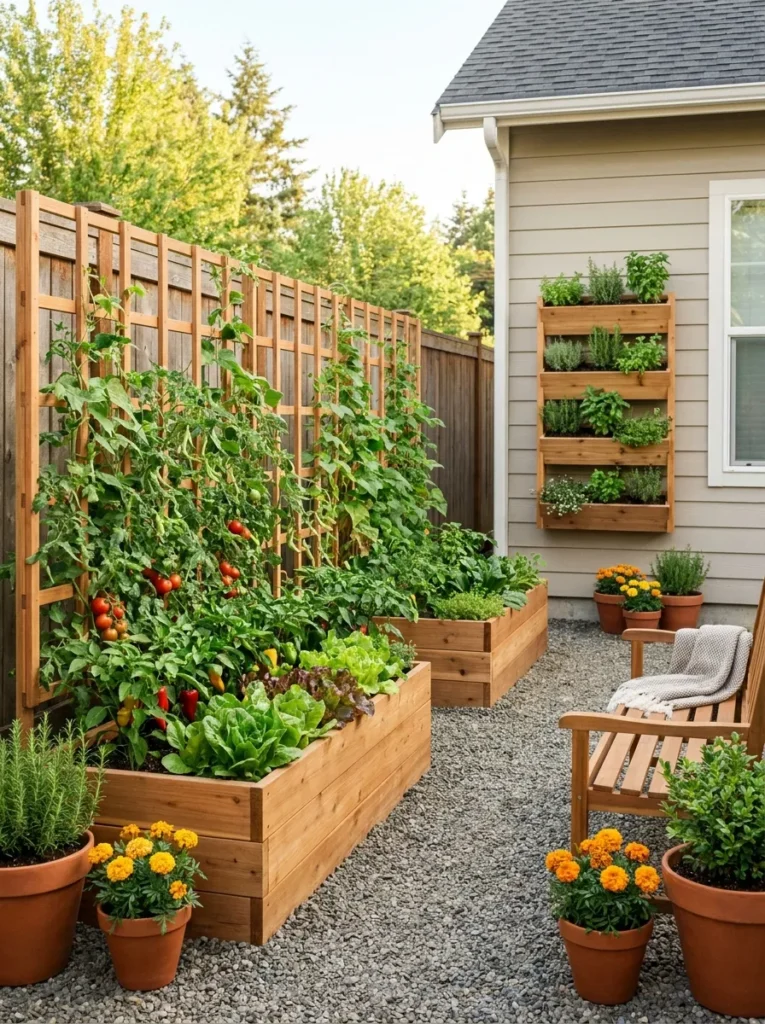
A practical setup for a small backyard might include one sturdy trellis installed along the sunniest fence for tomatoes and climbing beans. Nearby, place two raised planters where peppers, lettuce, herbs, and companion flowers can grow together. A wall-mounted herb garden beside the back door keeps everyday ingredients within easy reach, while a narrow gravel or mulch pathway connects each growing area without making the space feel cramped.
Leaving a small seating area nearby is equally worthwhile. Adding soft garden lighting allows you to enjoy the space long after the sun goes down. A simple bench or chair turns the vegetable garden into a place where you can enjoy your morning coffee, monitor plant growth, or harvest fresh herbs while spending time outdoors.
The goal isn’t to fit the largest possible number of vegetables into a small backyard. It’s to create a space that’s productive, easy to care for, and enjoyable to return to throughout every growing season.