
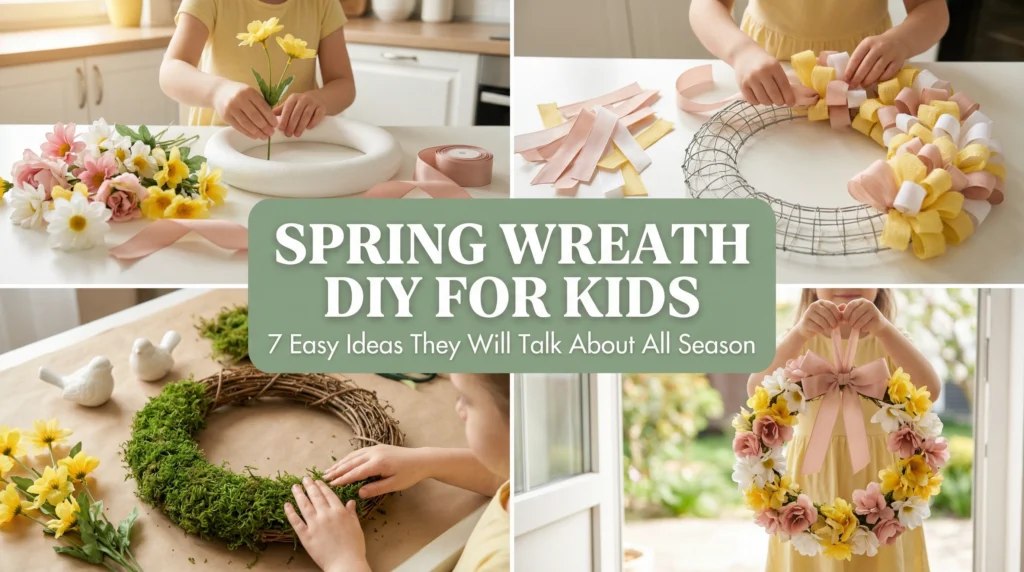
Spring wreath DIY for kids is one of those rare crafts that ticks every box: simple supplies, a project children genuinely finish, and a result pretty enough for the front door. The seven ideas below were designed for real kids at real kitchen tables — no fiddly steps, no expensive materials, and nothing that falls apart before it gets hung up. If you are planning a whole season of making, bookmark our easy Easter crafts for kids as well, since most of those projects use the same craft-box supplies. And if you would like a wreath of your own to match, our Easter wreath ideas use the same techniques in grown-up versions — then these spring mantel decor ideas will help the inside of the house keep up with the front door.
1. Start With Three Colours
Before your child touches a single flower, ribbon, or stem, choose three spring colours together and commit to them. Soft yellow, white, and sage green. Blush pink, cream, and lavender. Bright coral, white, and fresh green. Every flower, ribbon, and piece of moss that goes onto the wreath has to belong to this palette — anything else stays in the craft box.
This one decision does more for the finished wreath than anything else you will do. It is also one of the most enjoyable parts of the project: picking colours together gives children real ownership from the very first moment, and the finished wreath looks cohesive instead of every-colour-in-the-box chaotic.
2. The Foam Ring Wreath (Done in Under 30 Minutes)
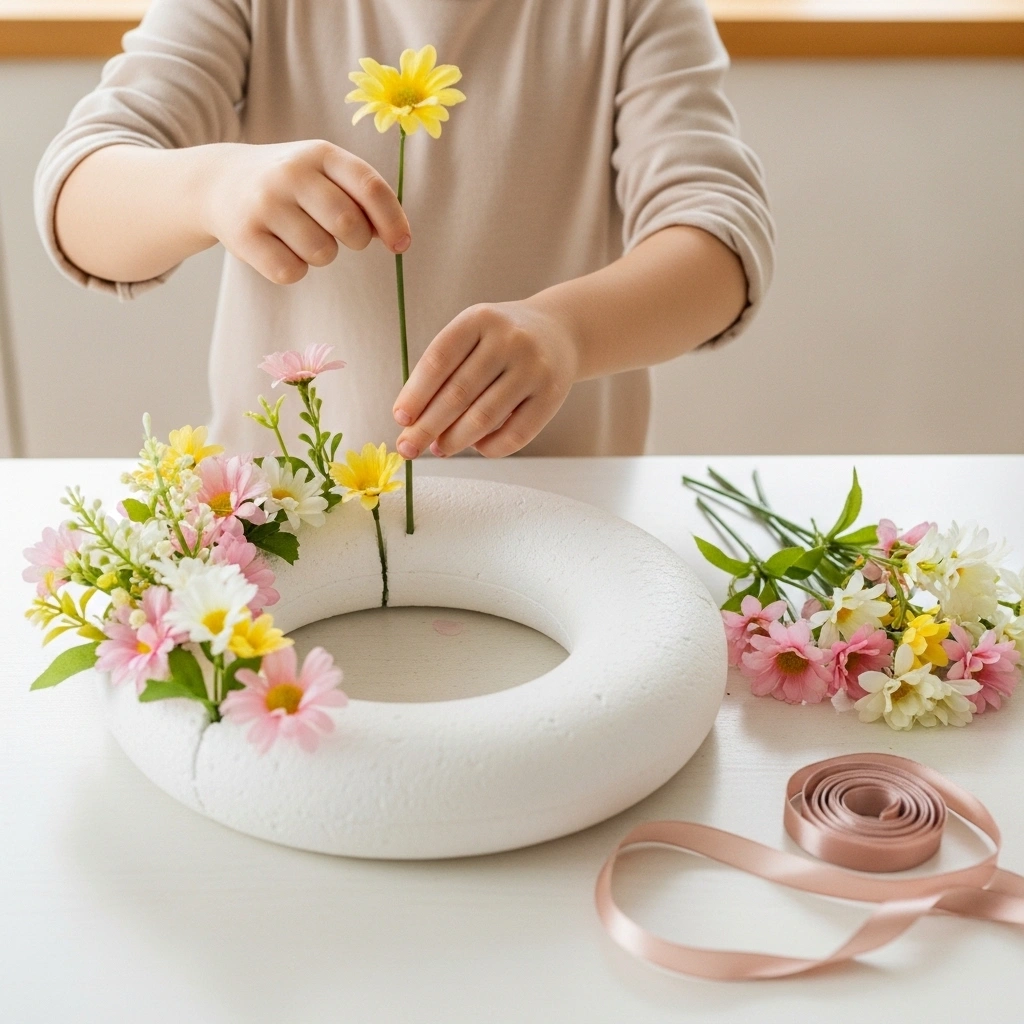
The most common reason a wreath craft fails with kids is not the mess. It is the moment twenty minutes in when the project still is not finished and the interest has completely evaporated. The fix is simple: choose a project that shows visible progress within the first five minutes.
A foam ring base is perfect for this. It is soft and lightweight, and small hands can push stems straight into it with no tools and no hot glue. Every stem pushed in is instantly visible, so the wreath looks more finished with each flower added. You need only four materials: a foam ring base, a bundle of artificial spring flowers in your three chosen colours, a length of ribbon in your accent colour, and some jute twine for hanging. Young children need no scissors and no glue at all.
Most kids finish this wreath in under thirty minutes — and hanging it on the front door straight away creates a moment of pride that no shop-bought decoration can match.
3. The Ribbon Wreath (No Glue, No Tools)
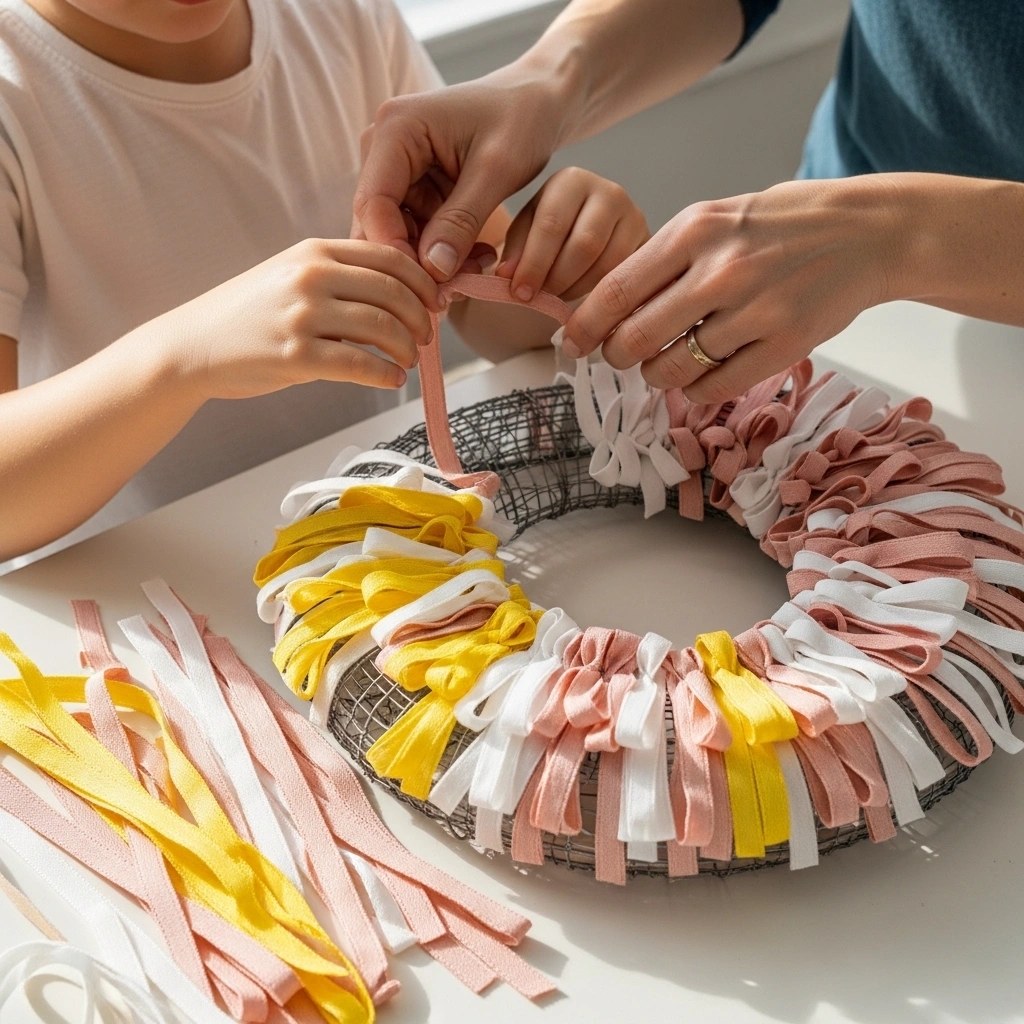
A ribbon wreath is the most visually dramatic project on this list, and it needs zero flowers, zero glue, and zero tools. You need a wire or mesh wreath base and a collection of ribbon offcuts in your three chosen spring colours.
Cut each ribbon into strips about twelve inches long. Fold a strip in half, push the folded loop through a gap in the mesh with a pencil or your finger, pull both ribbon ends through the loop, and pull gently to tighten. Repeat until the whole base is covered in a full, fluffy ribbon wreath. Every step is achievable by small hands — no heat, no sharp tools, no waiting for glue to dry — which keeps children engaged from the first loop to the last.
The finished result looks far more professional than most people expect from a children’s craft, and that surprise is a big part of the pride kids feel when they see it on the door.
4. The Moss Wreath (Sensory and Stunning)
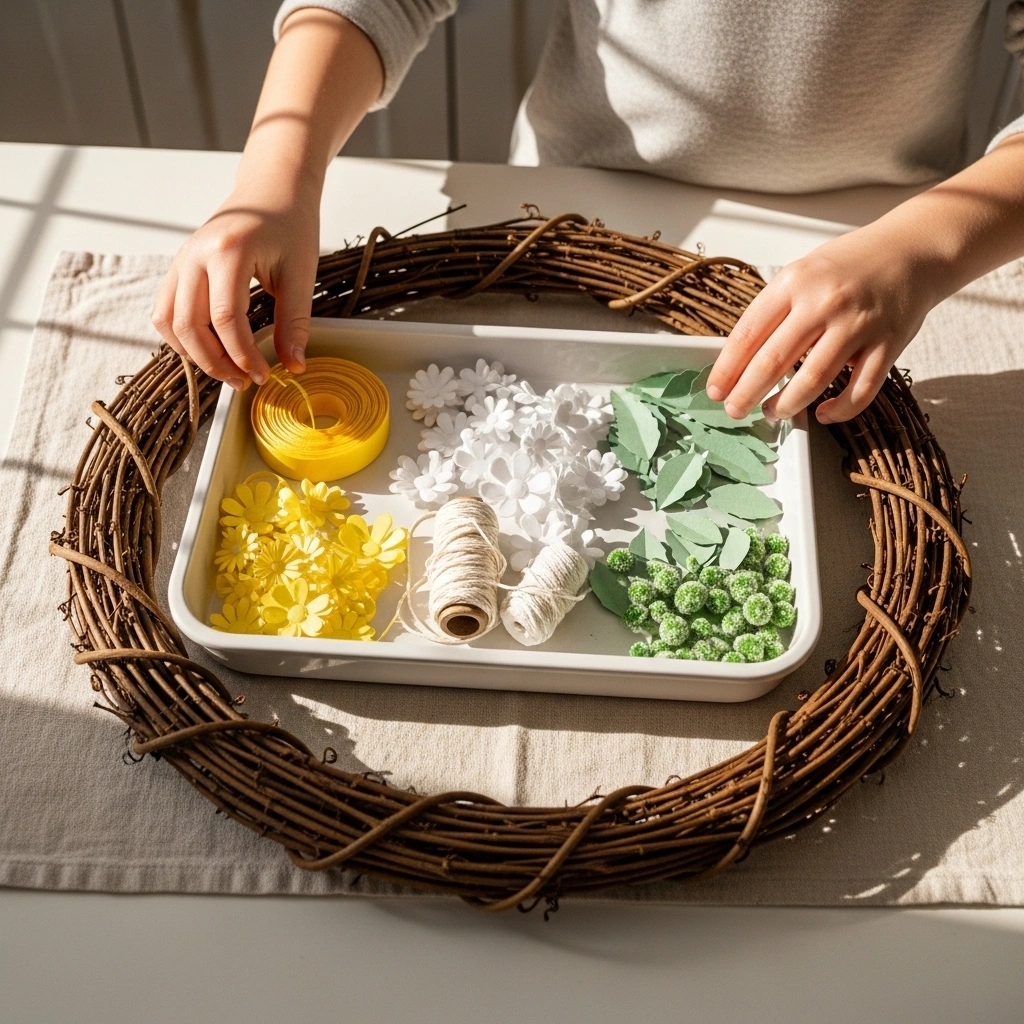
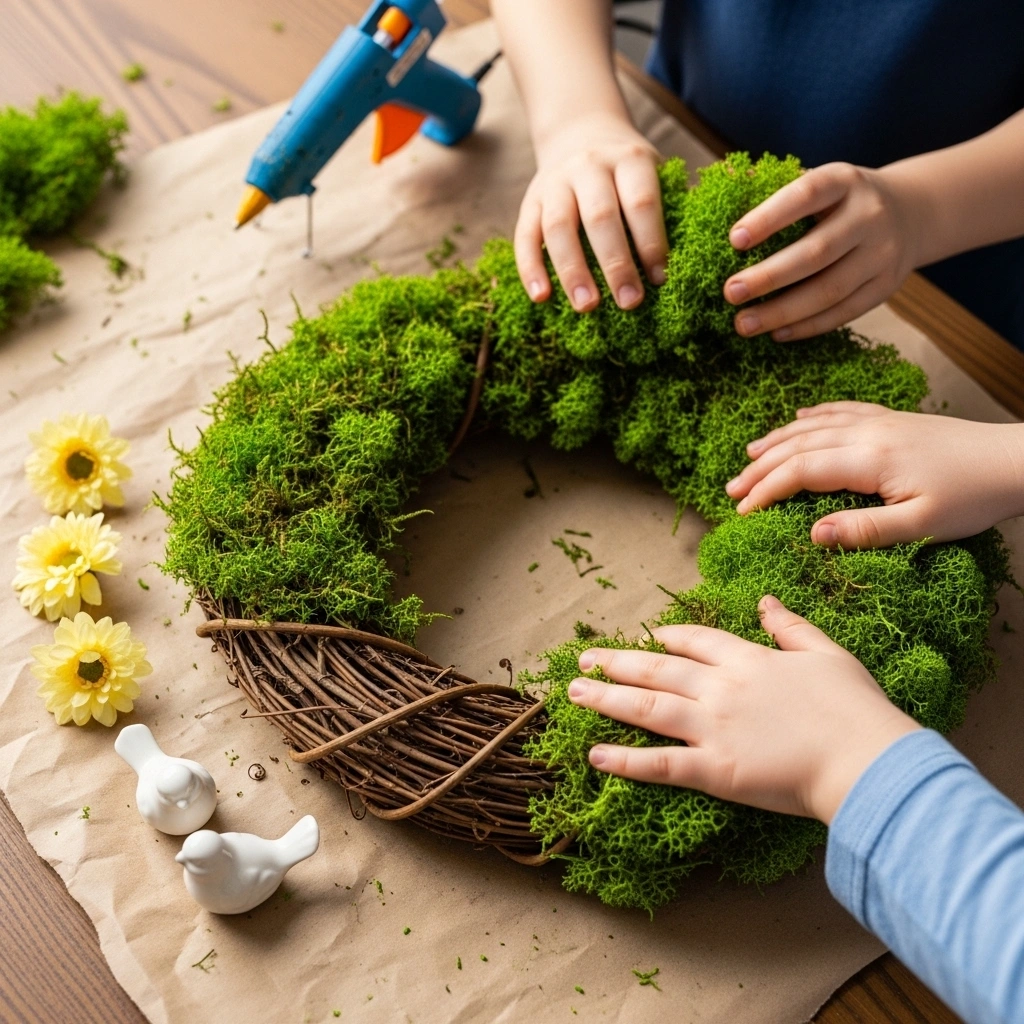
A moss wreath is the most hands-on, nature-connected project here, and it is much easier than it looks. You need a grapevine or twig wreath base, a bag of preserved sheet moss, a low-temperature hot glue gun (adult use only), and a few decorations in your colour palette — small artificial flowers, dried botanicals, a tiny ceramic or resin bird, a simple ribbon bow.
The child’s job is the best part: pressing handfuls of soft, springy moss onto the sections you have glued, arranging the flowers, and choosing exactly where each piece goes. Those decisions give kids real creative ownership of a genuinely beautiful result. The sensory side matters too — pressing cool, soft moss is one of the most pleasurable craft textures for young hands, and it is why children ask to make this one again the following year.
A finished moss wreath lasts the whole spring without wilting, and the mix of rich green moss, soft flowers, and grapevine peeking through looks like it came from a boutique garden shop.
5. The Paper Flower Wreath (The Giftable One)
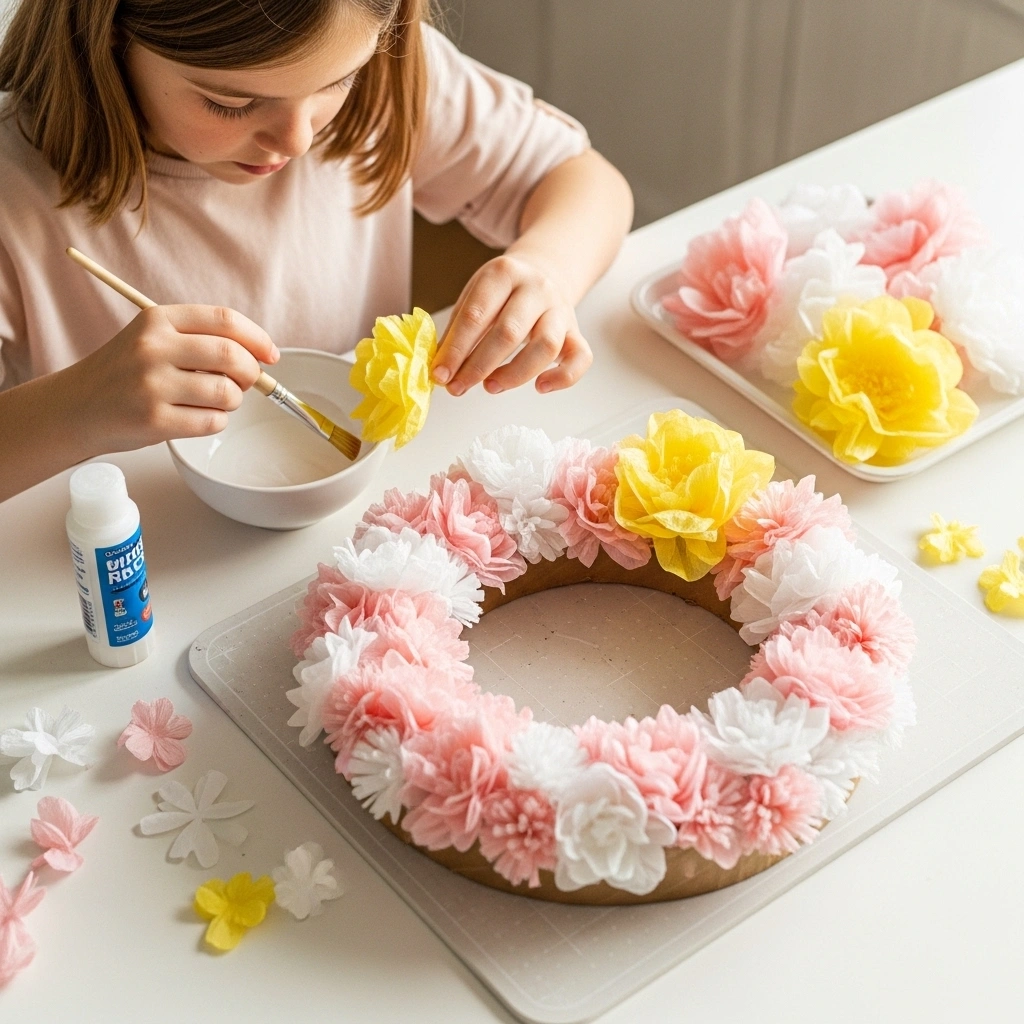
A paper flower wreath is the most giftable project a child can make — and it produces one of the prettiest results from the simplest materials. You need a cardboard ring base cut from a cereal box, tissue paper or coffee filter flowers (made in advance or made together), craft glue, and ribbon for hanging. The child glues each flower onto the ring, working from the outer edge inward until the ring is completely covered.
Making the flowers first and building the wreath second gives you a complete afternoon project with two satisfying stages, which keeps children engaged far longer than a single-stage craft. And the finished wreath makes a wonderful gift for a grandparent, teacher, or neighbour — a purpose beyond decoration that gives the making real meaning, and makes this the project kids remember longest.
6. A May Wreath for the Heart of Spring
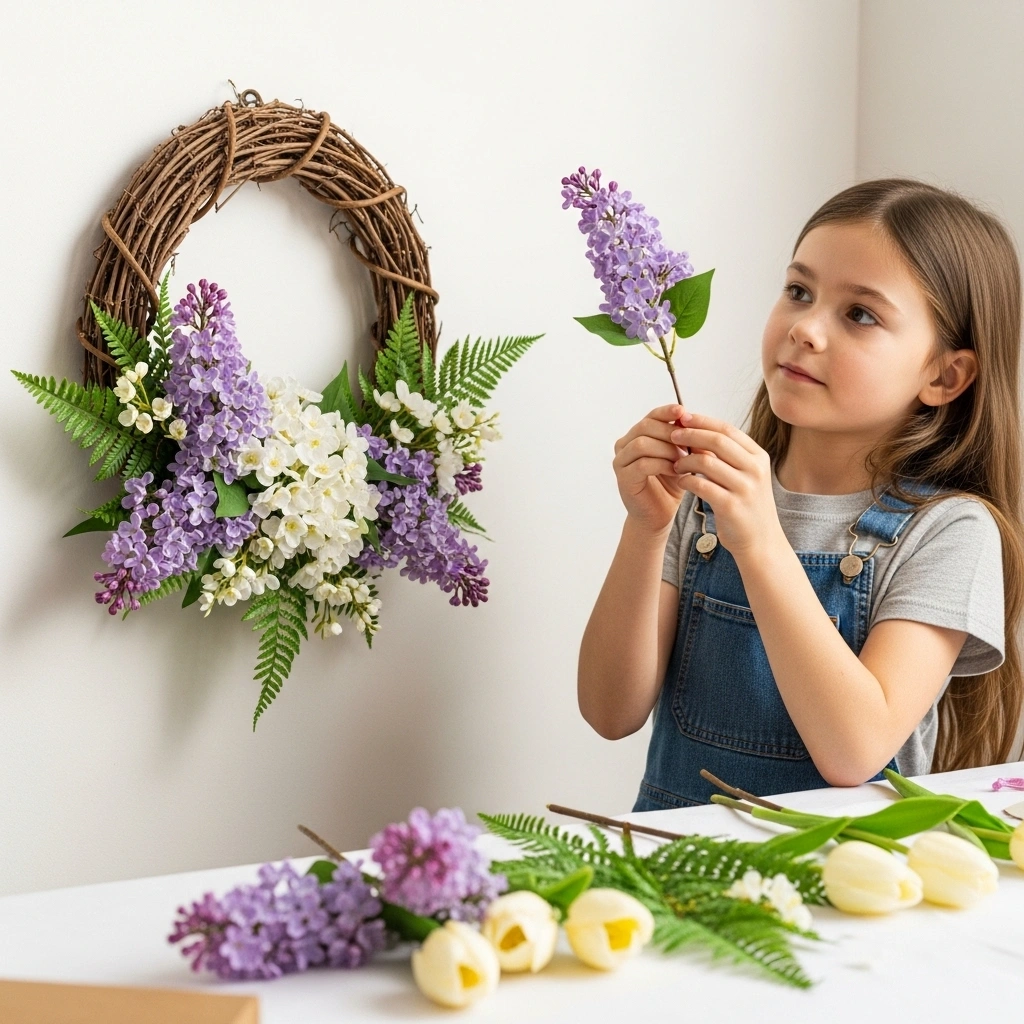
A May wreath is made to celebrate a specific moment in the calendar rather than just decorate a surface, which makes it feel especially meaningful. Use a simple wire or grapevine base and focus on distinctly May botanicals: lilac stems, small white hawthorn blossom sprigs, soft green fern fronds, a few cream or blush tulips. Those are the details that say May specifically, not just spring generally.
This one also opens up a lovely conversation with your child: what is blooming in the garden right now, what does May smell like, what colour is the tree at the end of the road? Connecting the wreath to the real season outside the window makes the finished piece meaningful rather than merely decorative — and a May wreath hung by the child who made it creates a small daily moment of pride every time they come home.
7. Finishing Touches That Make It Look Professional
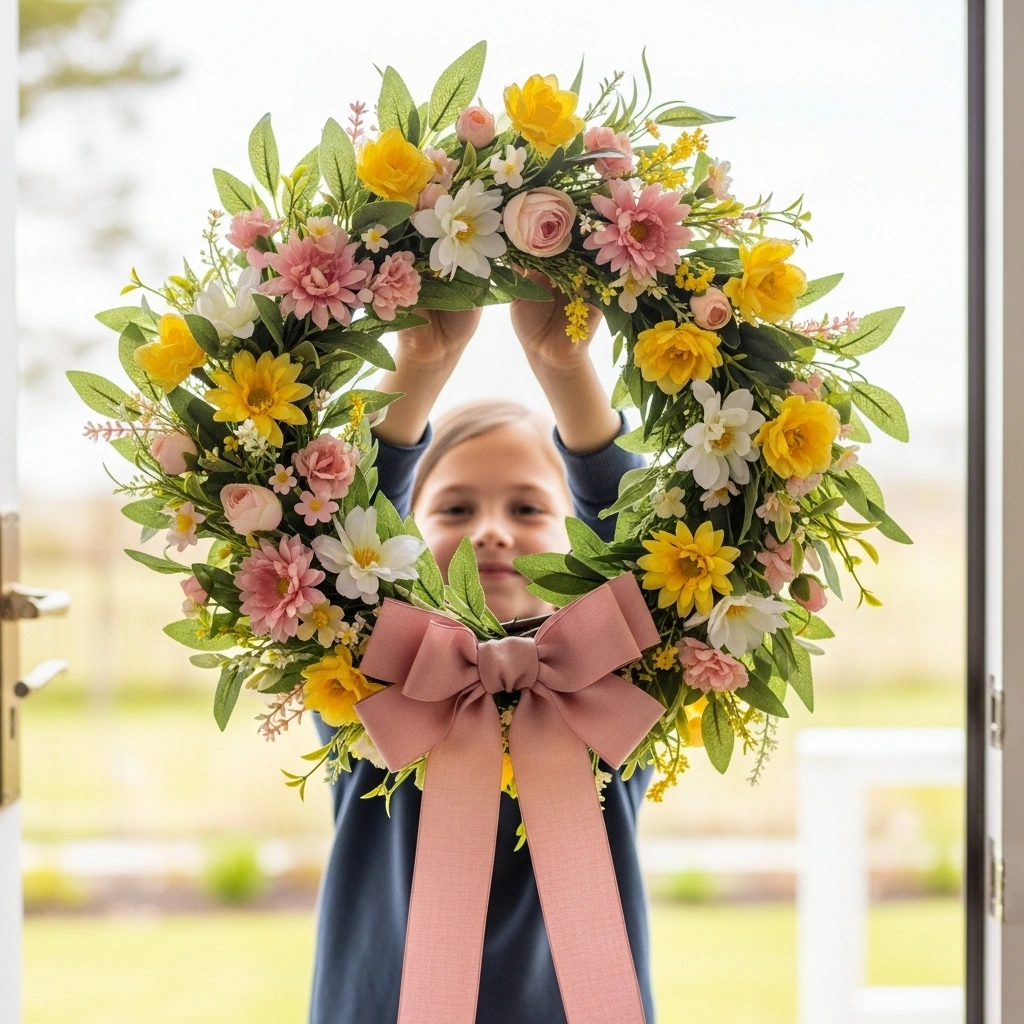
The difference between a wreath that looks like a children’s craft and one that looks boutique-made is almost always in the finishing touches — and all of them are easy for a child with a little guidance. First, tie a ribbon bow at the top or bottom of the wreath in your accent colour; that single addition makes any wreath look more intentional. Second, tuck in one or two small unexpected details: a tiny ceramic bird nested in the greenery, a butterfly clip hidden among the flowers, a little tag handwritten by your child with the date and their name. Third, step three feet back and check the balance — if one side feels heavier, move one or two elements. Thirty seconds of adjusting makes the difference between almost right and genuinely lovely.
Finally, photograph your child holding the finished wreath — at the front door, in the garden, or in a bright doorway. That photo, maker and made together, is often the most treasured part of the whole afternoon, long after the wreath itself has been packed away.
Five Golden Rules for Wreath-Making With Kids
These work every single time.
Three colours before you start. Agree on three spring colours together before opening a single craft supply. Anything that does not fit the palette stays in the box.
Visible progress within five minutes. Choose a project where your child can see real progress almost immediately. Visible progress keeps children engaged longer than any amount of encouragement.
Child decisions always. Where does this flower go? Which ribbon? How many stems on this side? Those are your child’s decisions. Your role is to enable, not direct — the wreath should look like them, not like you.
One unexpected detail always. A tiny hidden bird, a handwritten tag, a butterfly tucked into the greenery. One small detail that is entirely the child’s idea makes the wreath genuinely theirs.
Photograph the maker with the made. Before the wreath goes up, photograph your child holding it. The wreath hangs for a season; the photograph lasts forever.
Quick Answers
What ages are these spring wreath projects best for?
Children from around age 3 up to 12 can all take part, matched to the right project. The foam ring, ribbon, and moss-pressing wreaths suit ages 3 and up with a grown-up nearby. Hot glue is strictly an adult job at every age — the child presses the moss and places the decorations while you handle the glue gun. From about age 8, most kids can manage the cutting, tying, and arranging steps on their own.
How long does each wreath take to make?
Plan 20 to 30 minutes for the foam ring and ribbon wreaths, which are designed to be finished in one sitting. The moss wreath takes 30 to 40 minutes with an adult helping on the glue. The paper flower wreath works best across two sittings — make the flowers one day, build the wreath the next — so nobody runs out of steam.
How do I keep the mess under control?
Work on a washable tablecloth or a large craft tray, pre-cut the ribbon strips and paper flowers before the kids sit down, and use washable craft glue. Moss sheds a little, so keep a damp cloth handy for wiping the table — the wreath itself holds together well once hung. If you want an almost mess-free option, choose the foam ring or ribbon wreath.
What tools do kids need, and is anything unsafe?
Most of these wreaths need no tools at all — stems push into foam by hand, and ribbon loops need only fingers or a pencil. The one exception is the moss wreath, where an adult must handle the low-temperature hot glue gun (low-temperature still burns). Older children can use child-safe scissors for cutting ribbon and paper. Using artificial flowers also avoids pollen, which helps children with spring allergies.
Final Thoughts
A spring wreath made with your child is never really about the wreath. It is about the afternoon you spent making it together — the colour decisions at the kitchen table, the small hands pressing moss and threading ribbon, the moment of pride when the finished wreath goes up on the front door.
Choose your three colours together. Set out the materials. Step back and let them lead.
The wreath they make will be imperfect. It will be beautiful. And it will be entirely, wonderfully theirs.