A spring floral centerpiece is the fastest way to make any table feel completely transformed for the season. One arrangement of fresh flowers changes the energy of a whole room — whether it is your everyday kitchen table, a long farmhouse dining table, or a table styled with spring wedding table decor for a big celebration.
These nine ideas cover every style, every budget, and every occasion. If you love dressing tables for the seasons, you will also enjoy these spring dining room table decor ideas — and the same simple arrangements work beautifully for a Mother’s Day table or the first summer outdoor dining evenings of the year. Let your table bloom.
Start With One Lush Low Bowl
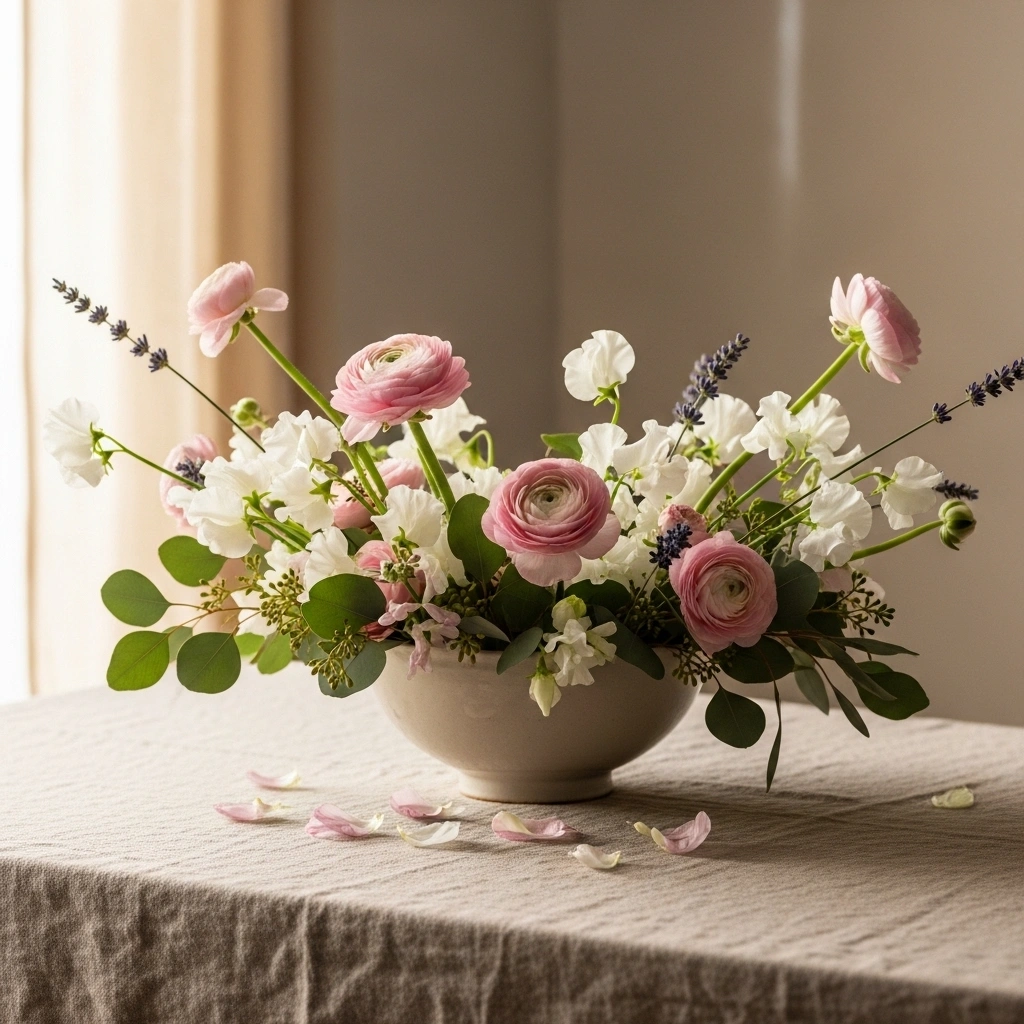
The most universally beautiful spring centerpiece is also the simplest: a wide, low bowl filled loosely with spring flowers. Nothing formal, nothing perfectly arranged — just generous and alive.
Keep it low so guests can see each other across the table, and keep it full so it feels abundant. For 2026, mixed combinations look best: blush ranunculus with white sweet peas and trailing eucalyptus; yellow tulips with white anemones and sage greenery; blush peonies with lavender sprigs and cream garden roses. Aim for the look of flowers gathered from a garden that morning — slightly imperfect, slightly unruly, completely real. The less you try to make it perfect, the more beautiful it becomes.
Everyday Beauty for the Kitchen Table
Your kitchen table centerpiece is the one you will look at every morning. It does not need to be grand — just genuinely beautiful enough to make you pause while the coffee brews.
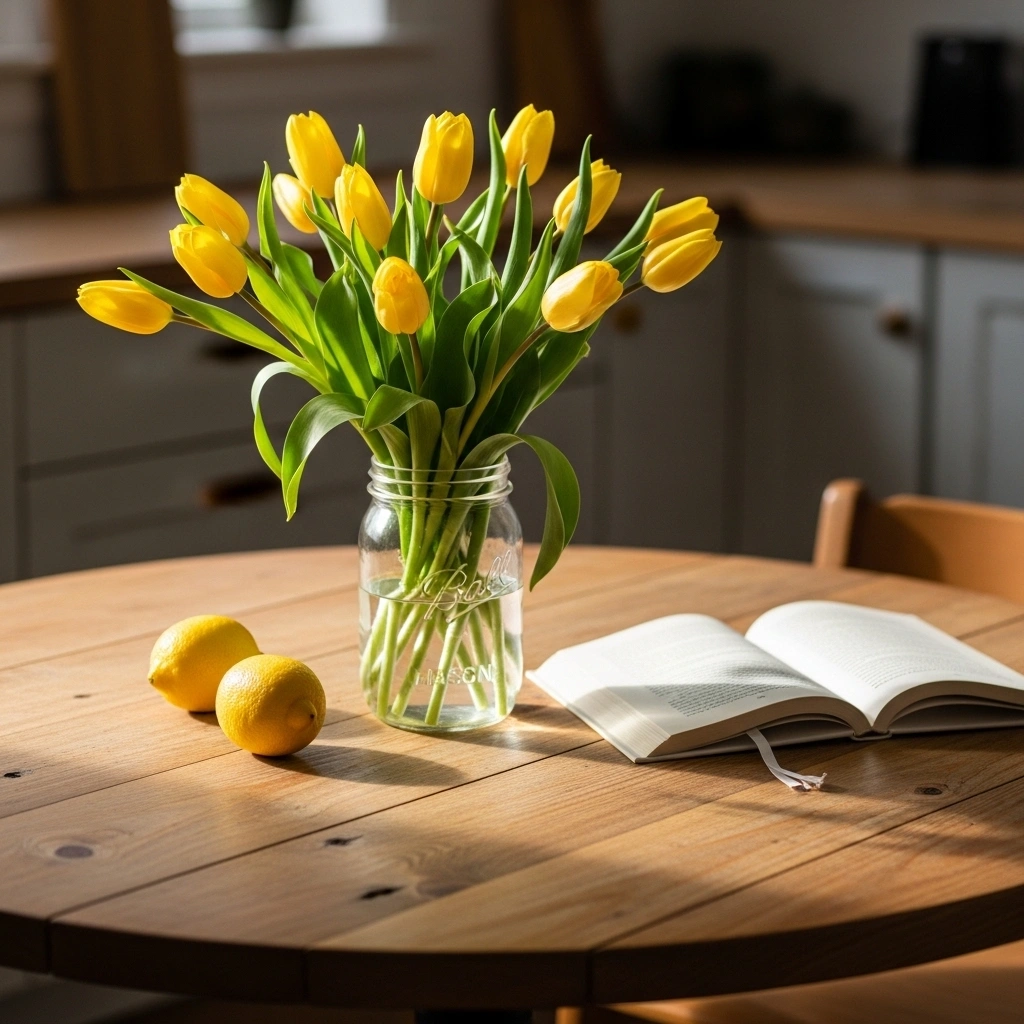
A clear glass jar of grocery store tulips. A small ceramic pitcher overflowing with garden-cut wildflowers. Three bud vases at different heights, each holding a different spring stem. These everyday arrangements cost almost nothing, yet they make the kitchen feel like a different, more beautiful place every single day.
Change the flowers weekly to keep it feeling fresh all season — yellow daffodils one week, blush tulips the next, white sweet peas after that. Your kitchen table becomes a small, self-updating seasonal display.
Varying Heights for Maximum Impact
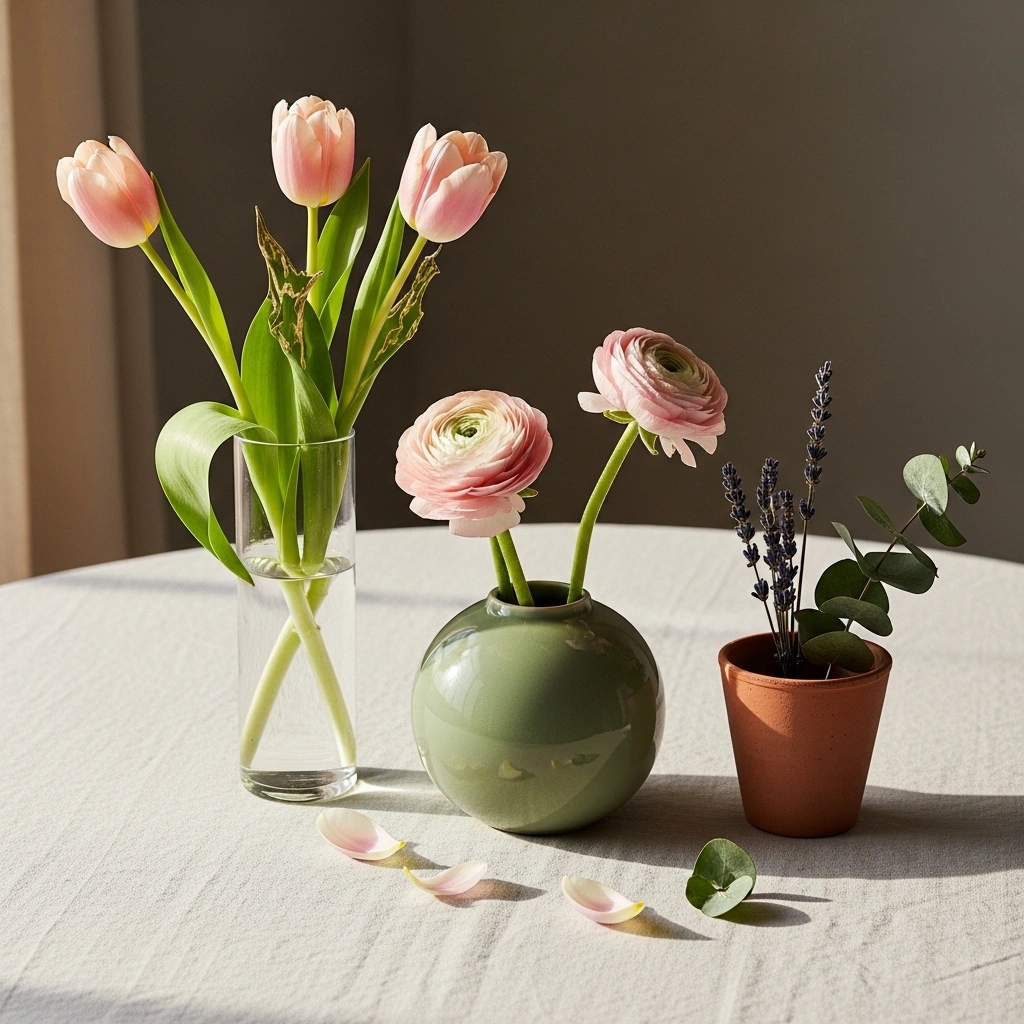
The single most effective trick for a stunning centerpiece is height variation. Three bud vases grouped together — each a different height, each holding a different spring stem — creates more rhythm and visual interest than one arrangement in one vase ever could.
Mix your vessels on purpose: a tall slim glass cylinder, a medium ceramic vase in a spring tone, a short terracotta pot. Try tulips in the tall one, ranunculus in the medium, eucalyptus or lavender in the short. Scatter a few loose petals between them on the table to connect the grouping into one cohesive display.
A Full Table Runner of Flowers
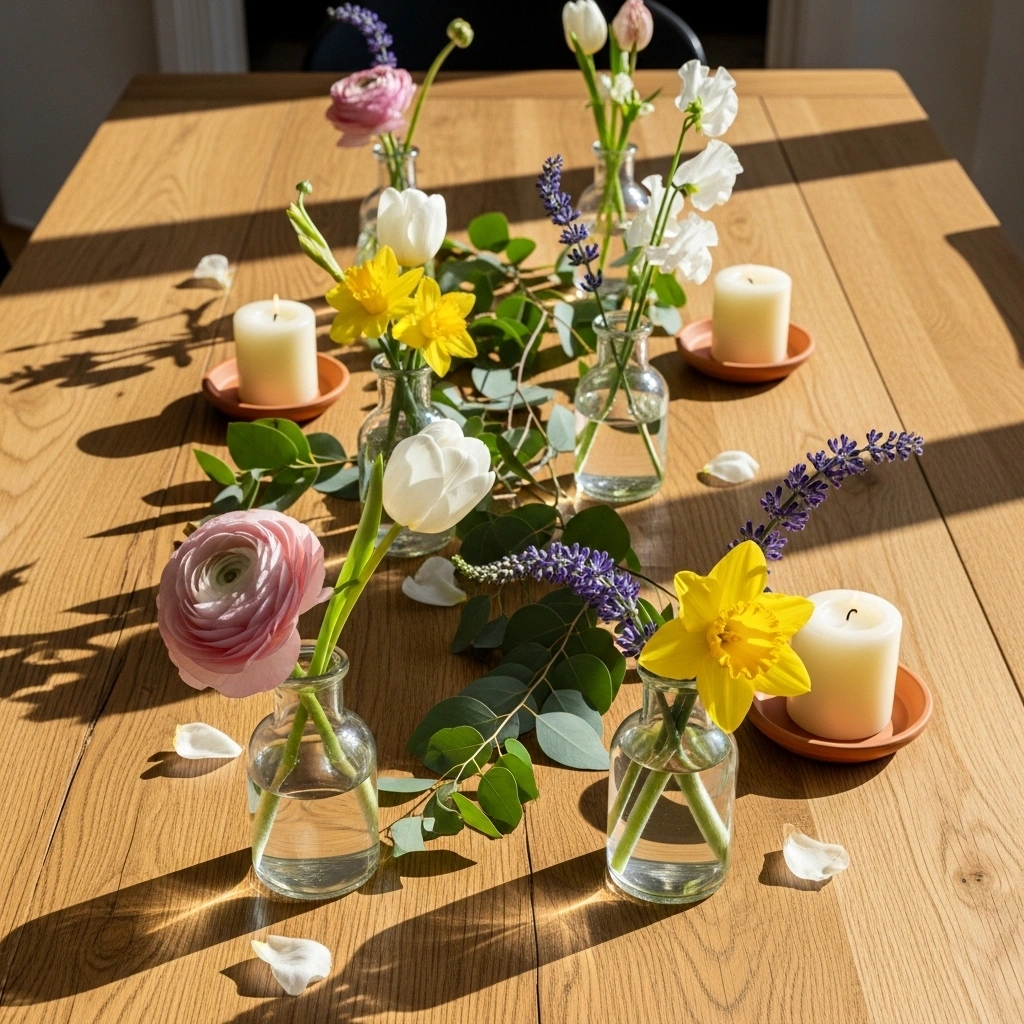
For a long dining table, one centerpiece sometimes is not enough. A floral runner — small arrangements, greenery, and seasonal accents running the full length of the table — makes every seat feel equally celebrated, and it photographs beautifully from above.
You do not need expensive florist arrangements: place three or five small bud vases at intervals down the center, each with a different spring stem. Lay loose eucalyptus and ivy between them as green connectors, add pillar candles for height contrast, and scatter a few petals. It takes under twenty minutes and looks luxurious for very little — a few stems per vase from the garden, market, or grocery store is all it takes.
Maximalist Garden Abundance
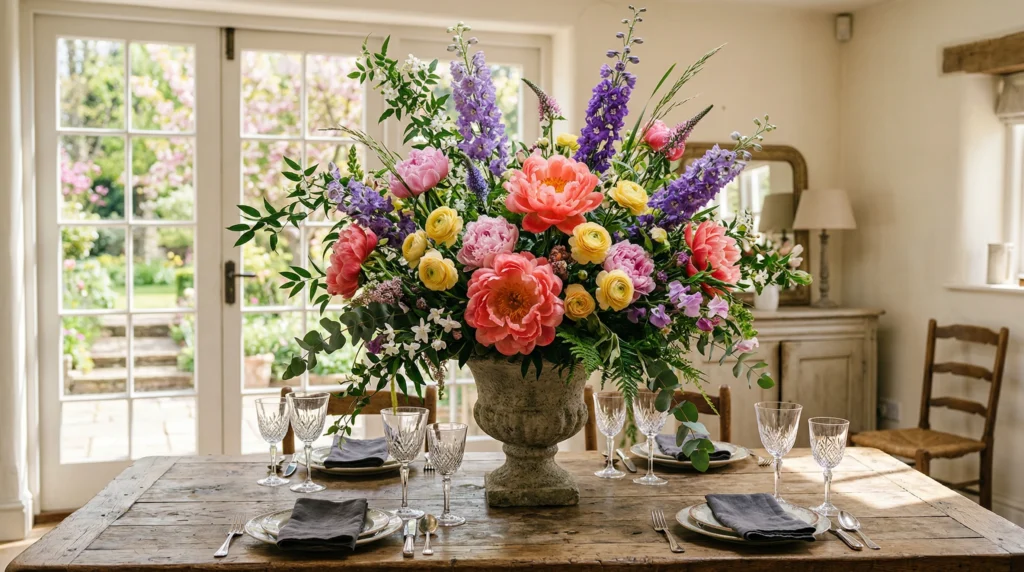
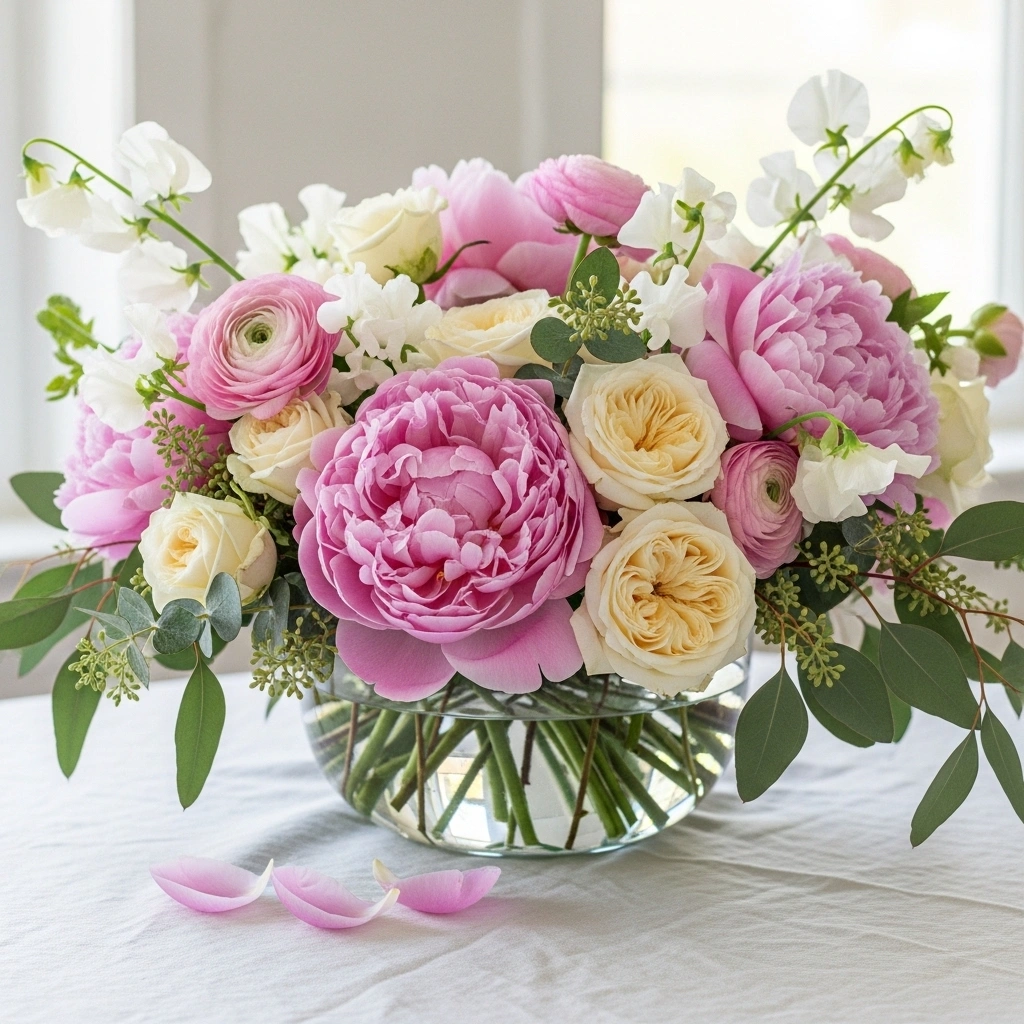
Sometimes more really is more, and spring is the season when maximalist arrangements look their best. Picture someone walking in from a cutting garden with armfuls of blooms: lush peonies, garden roses, ranunculus, sweet peas, tulips, and trailing greenery, all overflowing from one generous wide-mouthed vase.
Mix at least four flower types, loosely and without fuss. Add stems one by one, turning the vase as you go, and let each stem find its own position. The slight imperfection — leaning stems, uneven heights, a fallen petal — is exactly what makes it look like a real garden arrangement instead of a shop display. A low, wide vessel lets everything spread outward naturally.
A Potted Spring Bulb
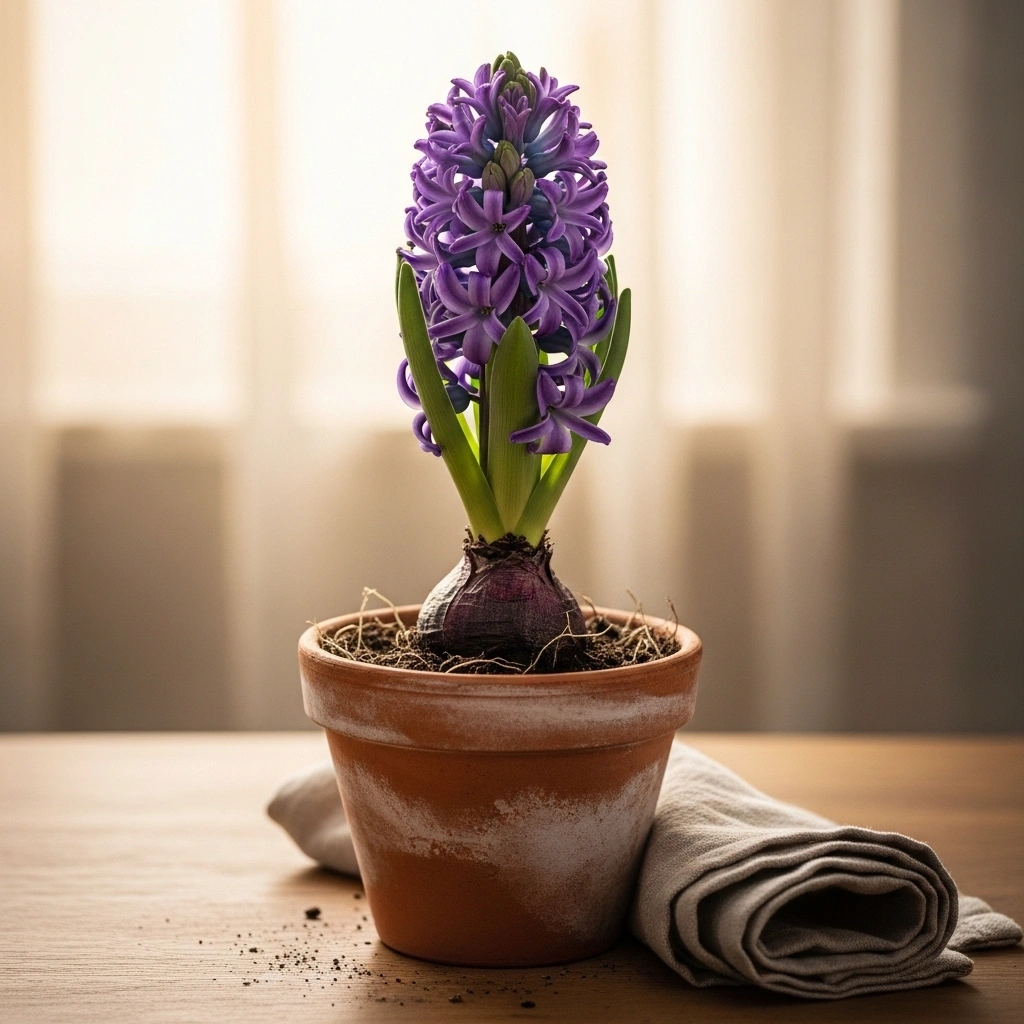
One of the most beautiful — and most underrated — spring centerpieces is a living one. Tulips, hyacinths, daffodils, and muscari are all sold as growing potted plants every spring. Transplant one into a pretty ceramic or terracotta vessel, and your centerpiece keeps developing and opening over the following days instead of fading.
Hyacinths are especially lovely for their fragrance — one small pot of purple or blush hyacinth can perfume a whole kitchen. And when the flowers are spent, plant the bulb outdoors and it will return next spring. It is the most sustainable, most alive centerpiece of all, and it usually costs less than a bunch of cut flowers.
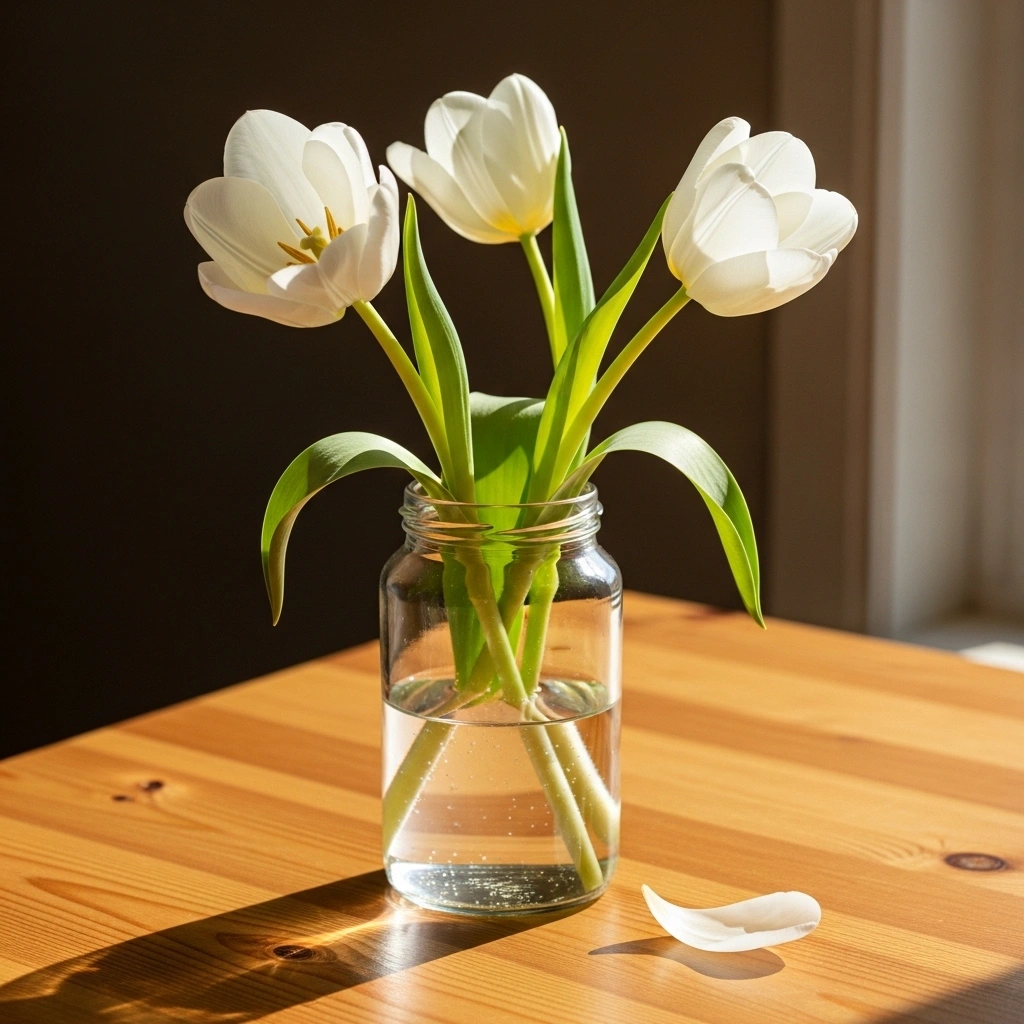
Three Tulips in a Glass Jar
The simplest spring centerpiece is also one of the most beautiful: three tulips in a clear glass jar. That is it. Pick your favorite spring color — yellow, blush, white, lavender — and place three long stems loosely in the jar, leaving the stems visible through the glass.
It works because of what it does not do: it never overwhelms the table or competes with the food and conversation. It just adds a small, warm spring moment. Three tulips cost only a few dollars at any grocery store and last a week with fresh water.
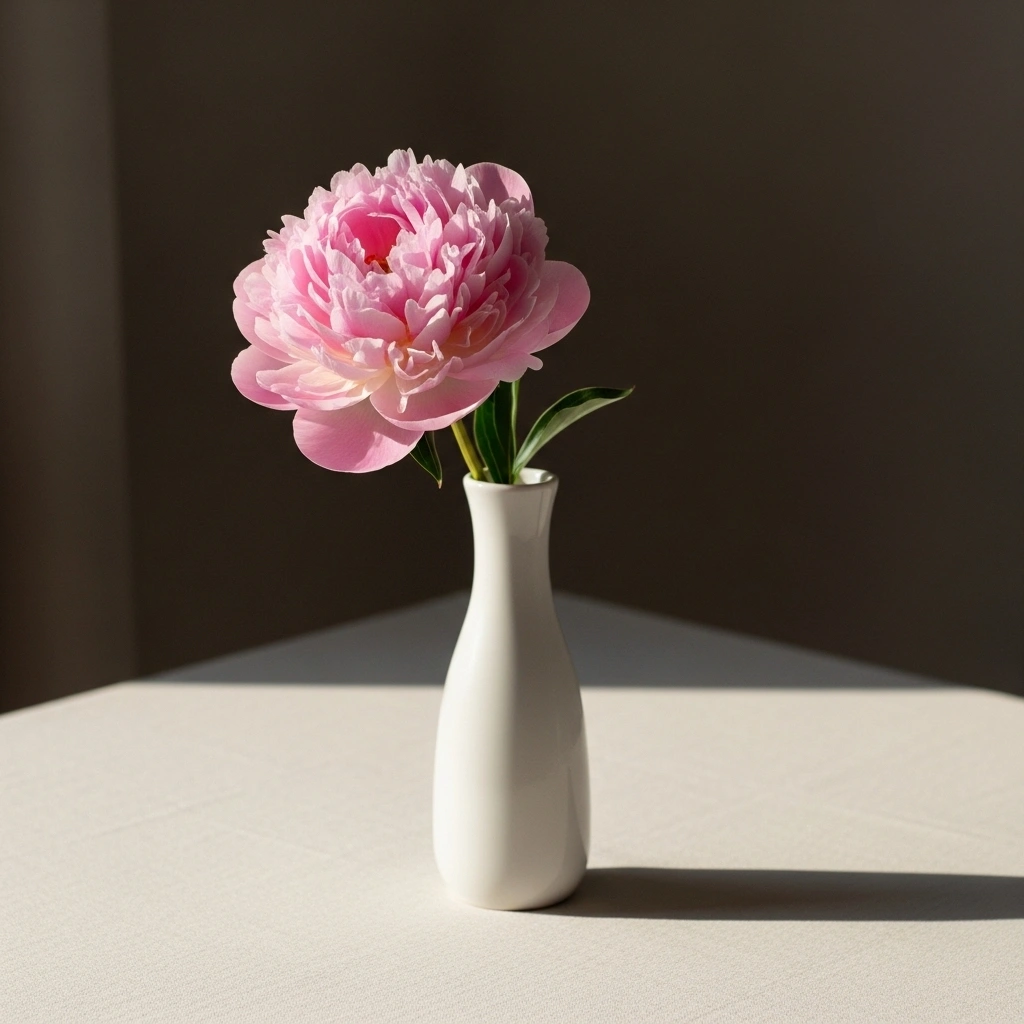
One Single Stem in the Right Vessel
Sometimes the most sophisticated centerpiece is a single stem in an exceptional vessel. One perfect peony in a slim ceramic vase. One branch of cherry blossom in a tall glass cylinder. One stem of white foxglove in dark stoneware — deliberately chosen, given empty space to be fully appreciated.
This single-stem approach fits the quiet luxury mood of 2026 perfectly. It always photographs beautifully, because nothing competes for attention — the flower and its vessel are the whole story. And it costs almost nothing: one stem from a market, garden, or hedgerow is all you need.
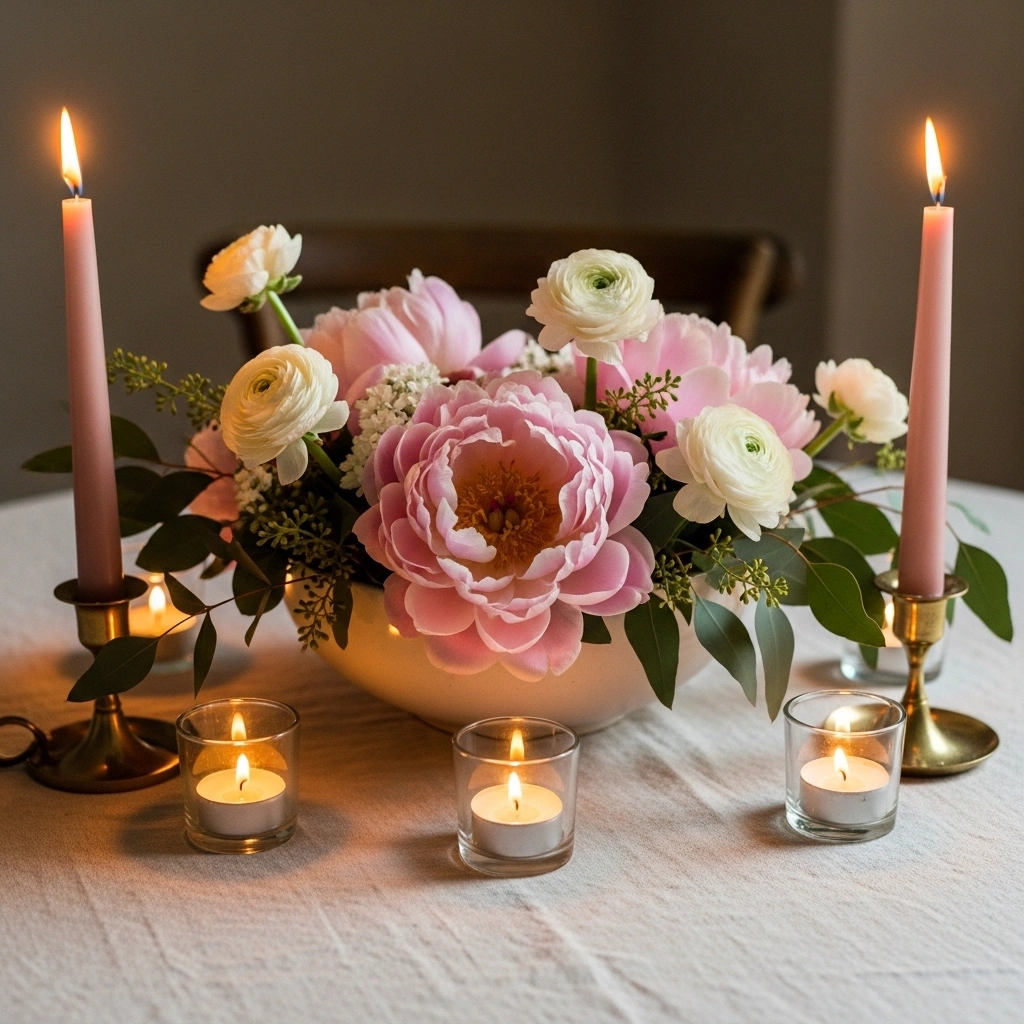
Flowers and Candles, Day and Night
A centerpiece that looks stunning by day should feel magical in the evening, too. The trick is combining fresh flowers with candles in the same display: by day the blooms are the star, and by night the candlelight catches the petals and makes the greenery glow.
The formula is simple. One main floral arrangement as the anchor, two or three slim taper candles in coordinating holders at slightly different heights on either side, and a few tea lights in small glass votives scattered around the base. One display, two moods — and warm candlelight against fresh spring blooms is one of the most saved table looks on Pinterest every year.
Five Golden Rules for Every Spring Floral Centerpiece
These always work. No exceptions:
Keep it lower than thirty centimetres. If your guests cannot see each other across the table, the centerpiece is too tall. Great conversation matters more than great drama.
Choose odd numbers. Three flower types. Five stems. Seven bud vases. Odd numbers look gathered and natural; even numbers look purchased and arranged.
Let imperfection be the style. A slightly asymmetric arrangement, a fallen petal, a leaning stem — these are not flaws. They are what make a spring centerpiece look real and alive.
Change fresh flowers at least weekly. A wilted arrangement is worse than no arrangement. Fresh water, trimmed stems every two to three days, and a weekly swap keep everything spring-fresh.
Let the vessel earn its place. A beautiful flower in the wrong vessel is less beautiful than a simple flower in the right one. Vessel and flower should enhance each other in colour, scale, and material.
Final Thoughts
A spring floral centerpiece is one of the most joyful decorating moves you can make this season. No renovation, no repainting, no big budget — just a few stems, a vessel you love, and a little intention.
Start with whatever drew you in most: the simple three-stem jar, the maximalist garden bowl, the single perfect peony. Then step back, look at your table, and feel how much a few spring flowers change everything.
Quick Answers
What are the best flowers for a spring centerpiece?
Tulips, ranunculus, peonies, sweet peas, daffodils, anemones, and hyacinths are all in season and affordable. For a 2026 look, mix three or four varieties loosely rather than using a single type — blush ranunculus with white sweet peas and eucalyptus is a combination that always photographs beautifully.
How do I make my spring centerpiece last longer?
Trim stems at an angle every two to three days, change the water completely, and keep the arrangement out of direct sun and away from fruit bowls — ripening fruit releases gases that age flowers faster. Most spring blooms last a full week with this care; swap them weekly.
How tall should a table centerpiece be?
Keep it lower than about thirty centimetres so guests can see and talk across the table. If you want drama, put it above eye level instead — hanging installations or tall branches in a slim vase give height without blocking conversation.
What is the cheapest way to make a spring centerpiece?
Grocery store tulips in a glass jar, a single stem in a vase you already own, or a potted hyacinth bulb from a garden centre — all cost just a few dollars. Bud vases are your best friend: one stem per vase looks intentional and stretches a single bunch across the whole table.