
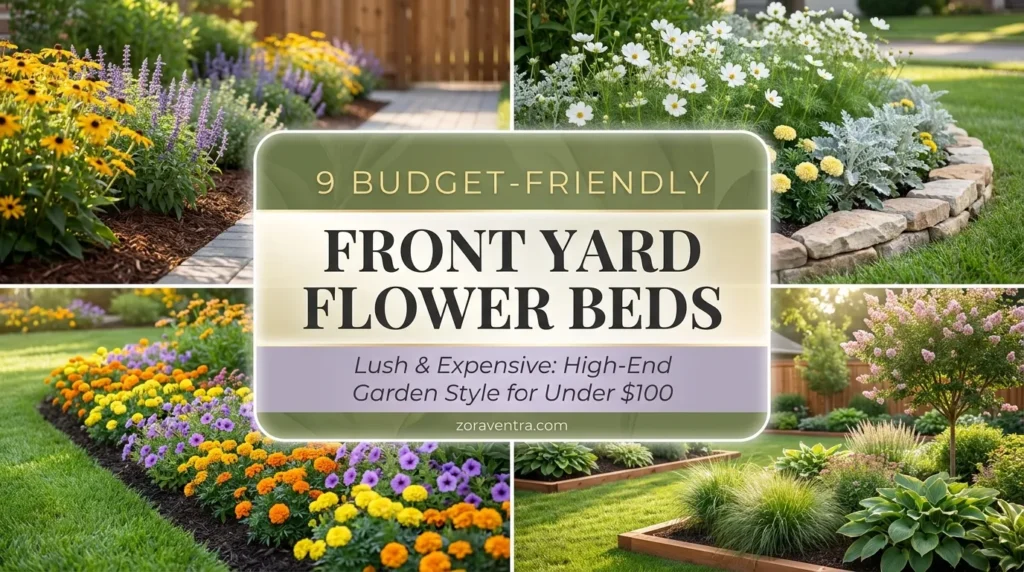
You don’t need a landscaping crew or a big budget for a beautiful front yard. With smart planning and the right plants, a lush layered flower bed can look high-end for under $100 — and it comes back stronger every year. The method: thriller-filler-spiller planting, strategic color blocking, and native perennials you plant once.
1. Prep the Soil, Define the Border
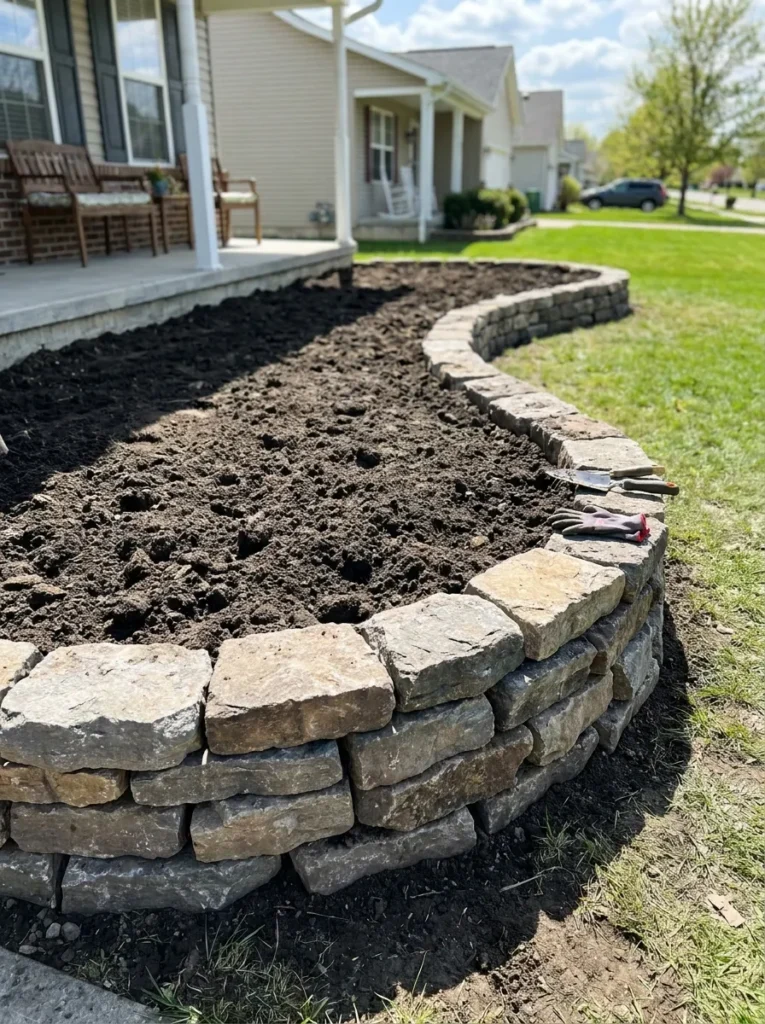
The secret to a professional-looking bed isn’t fancy plants — it’s good soil and clean edges. Remove grass in a gentle curve, add 2–3 inches of cheap compost or aged manure, then install a border of stones, bricks, or recycled edging. A clean border makes the whole bed look intentional and expensive. Budget tip: source free rocks from local groups, or buy basic edging for $15–25. A no-dig garden edging kit makes this a one-afternoon job.
2. The Thriller-Filler-Spiller Method
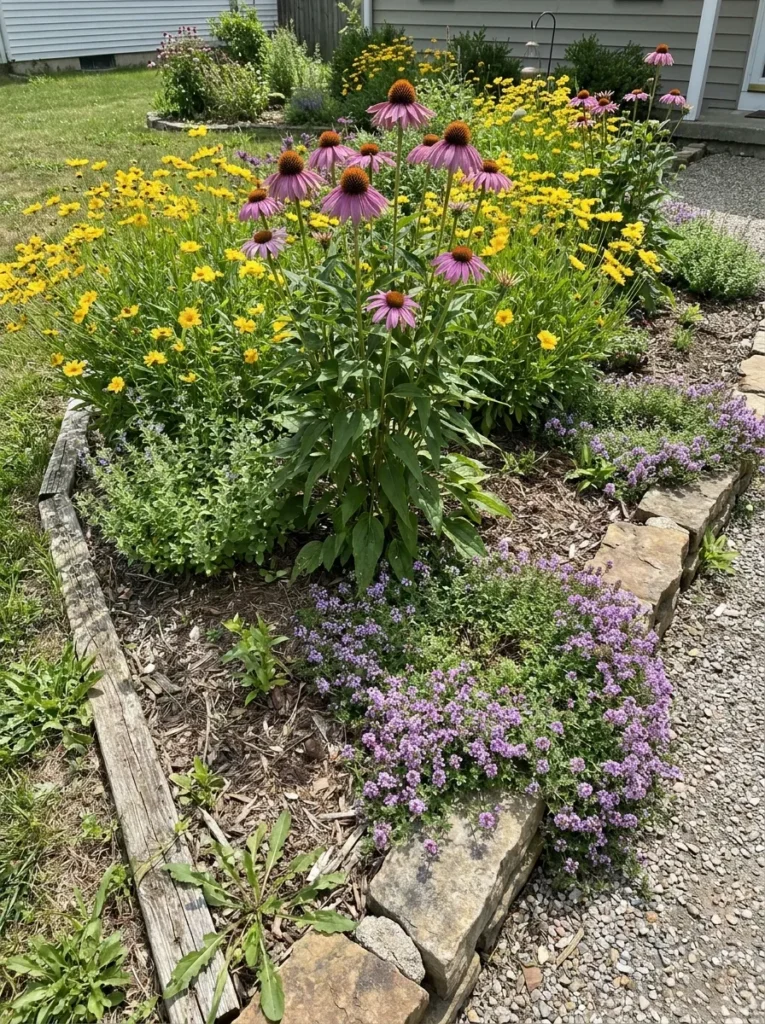
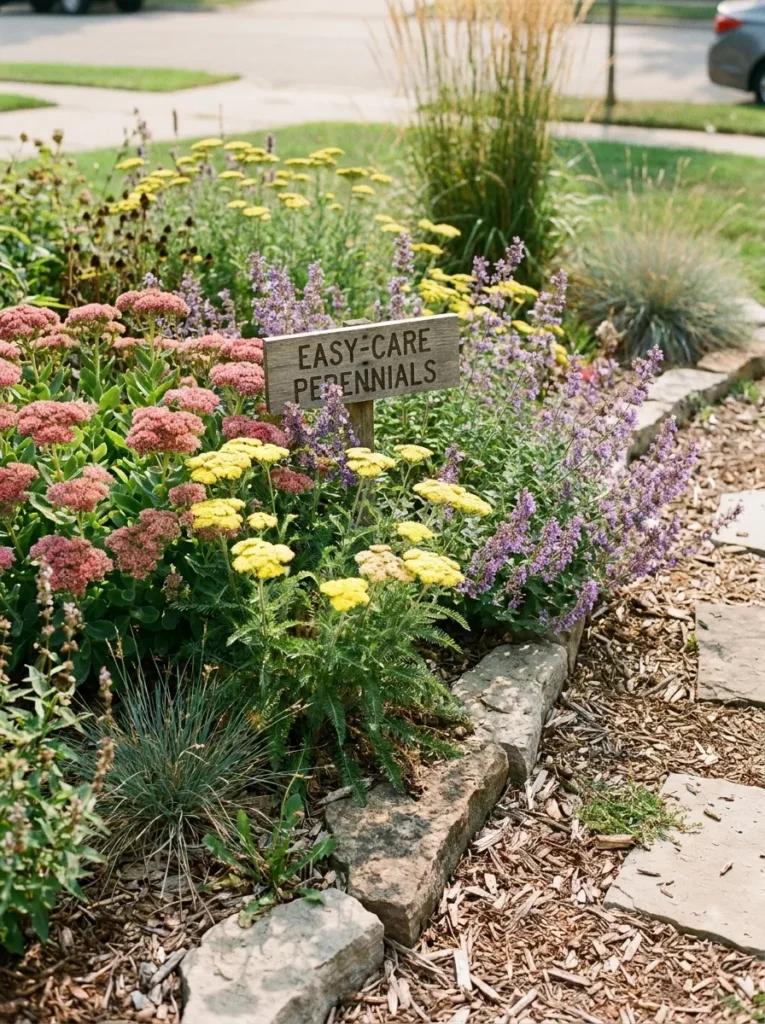
The fastest way to make a cheap bed look expensive: thriller (tall focal: ornamental grass or coneflower) + filler (middle: coreopsis, salvia, black-eyed Susan) + spiller (trailing edge: creeping thyme, sedum, sweet alyssum). Plant in groups of 3–5 of the same variety — depth, movement, low maintenance.
3. Color Block for Impact
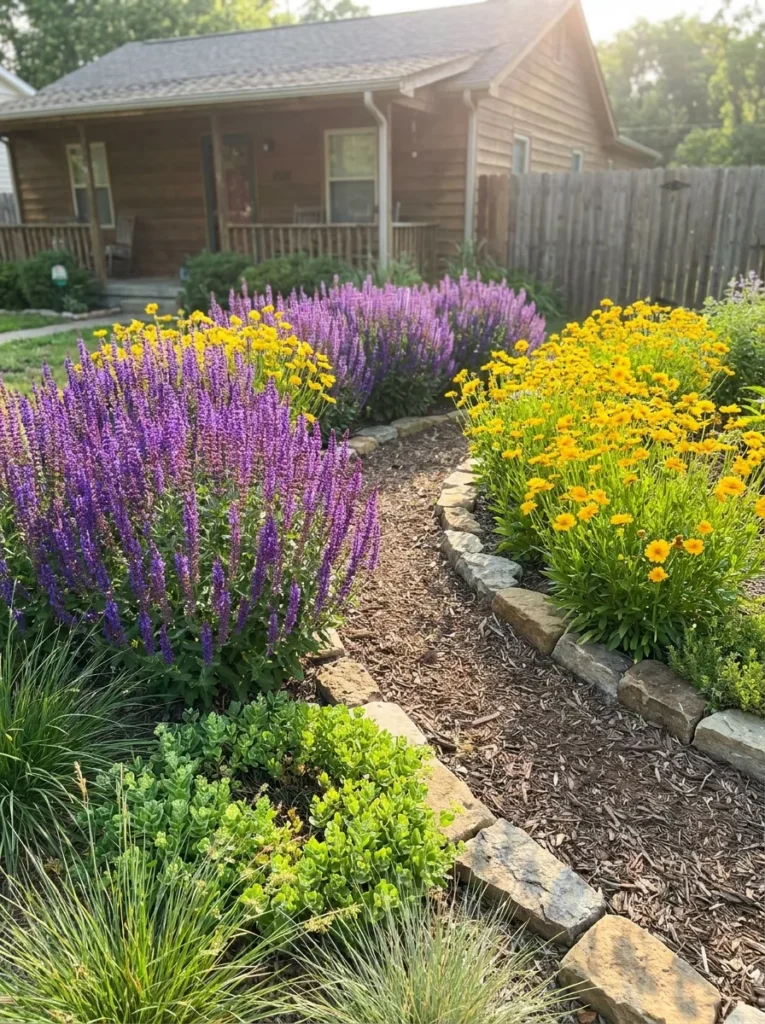
Random planting looks messy; large drifts of one color look designed. Purple + yellow, pink + white, red + orange — bold combinations make even small beds feel abundant. UV-resistant artificial lavender bundles fill gaps instantly while perennials establish.
4. Go Native
The smartest budget move: native perennials that return every year with almost no care. Black-eyed Susan, purple coneflower, Russian sage, blanket flower — tough, pollinator-friendly, and you never buy them twice.
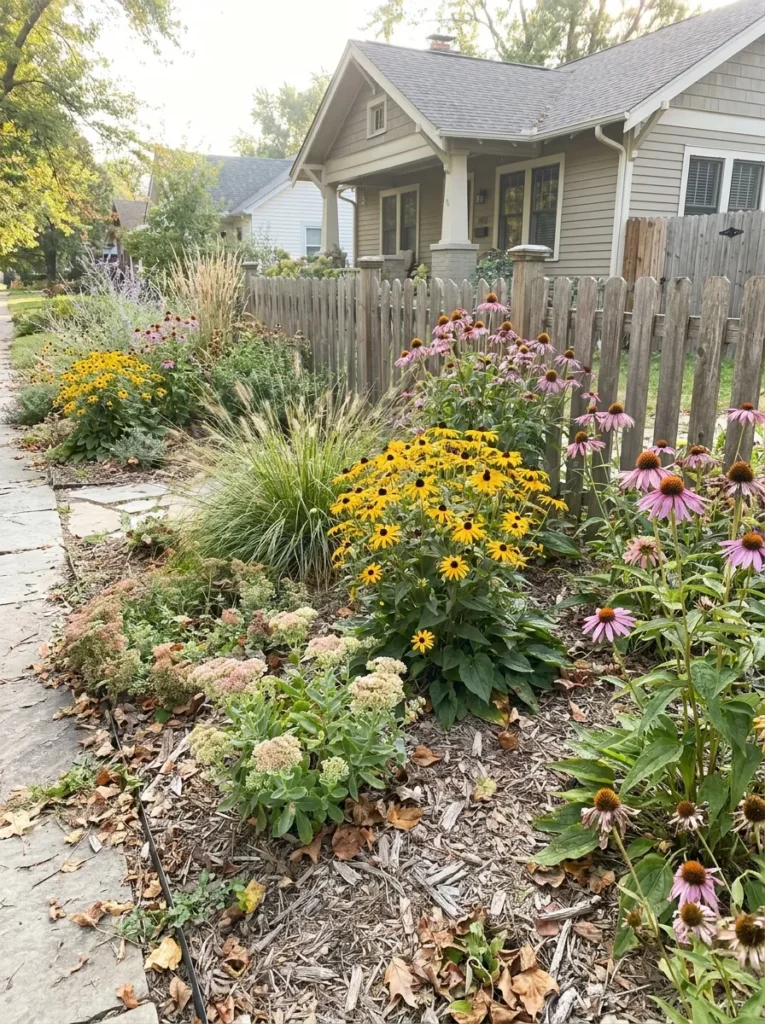
5. Vary the Heights
Flat beds bore the eye. Tall in back, medium in the middle, short in front — the layered look reads full and expensive while staying easy to maintain.
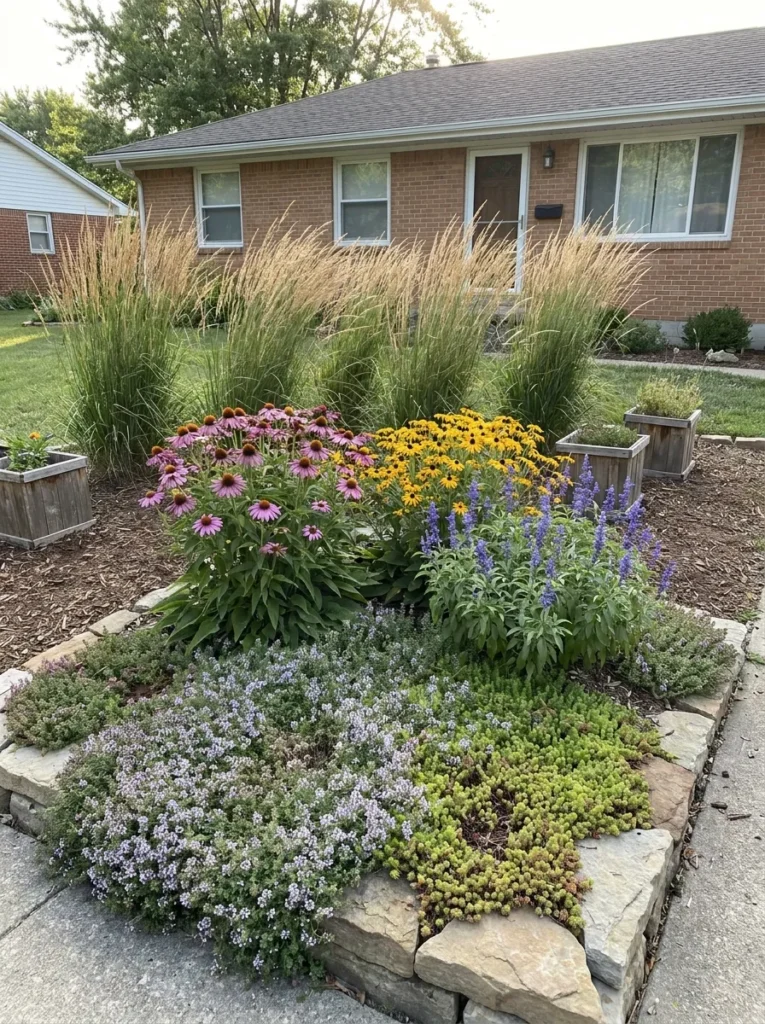
6. Mulch Everything
Bare soil looks unfinished. Two to three inches of cheap mulch (pine bark or shredded hardwood) suppresses weeds, retains moisture, and gives the polished “just installed” look for very little money.
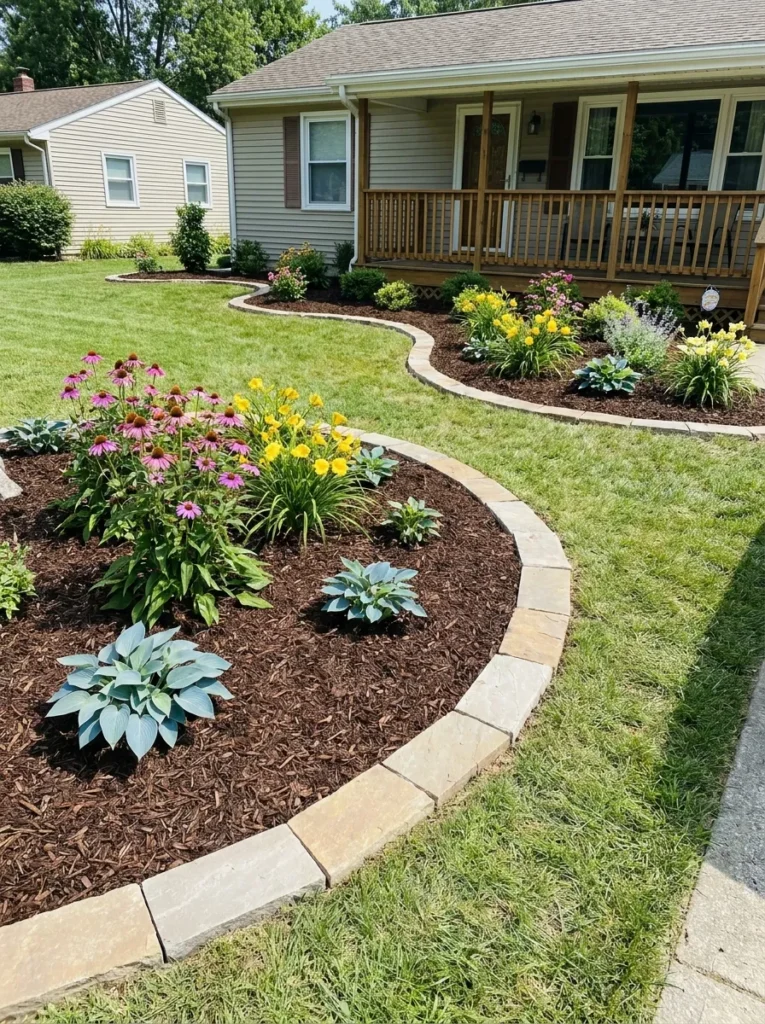
7. Repeat, Don’t Collect
One of everything looks random; groups of the same plant look designed. Repeat 3–5 of each variety through the bed — rhythm is the cheapest design trick there is.
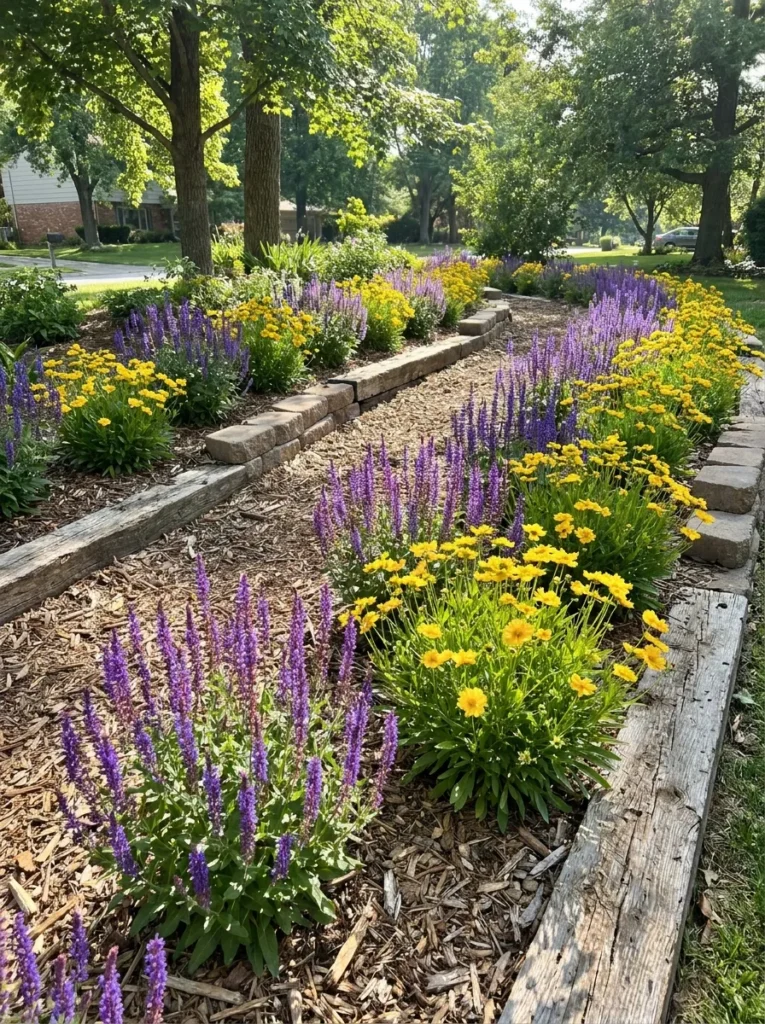
8. Start With Forgiving Plants
New gardener? Sedum, yarrow, daylilies, catmint — nearly impossible to kill, bigger every year. Plant in spring or fall, water well the first season, then let nature take over.
9. Path + Lights to Finish
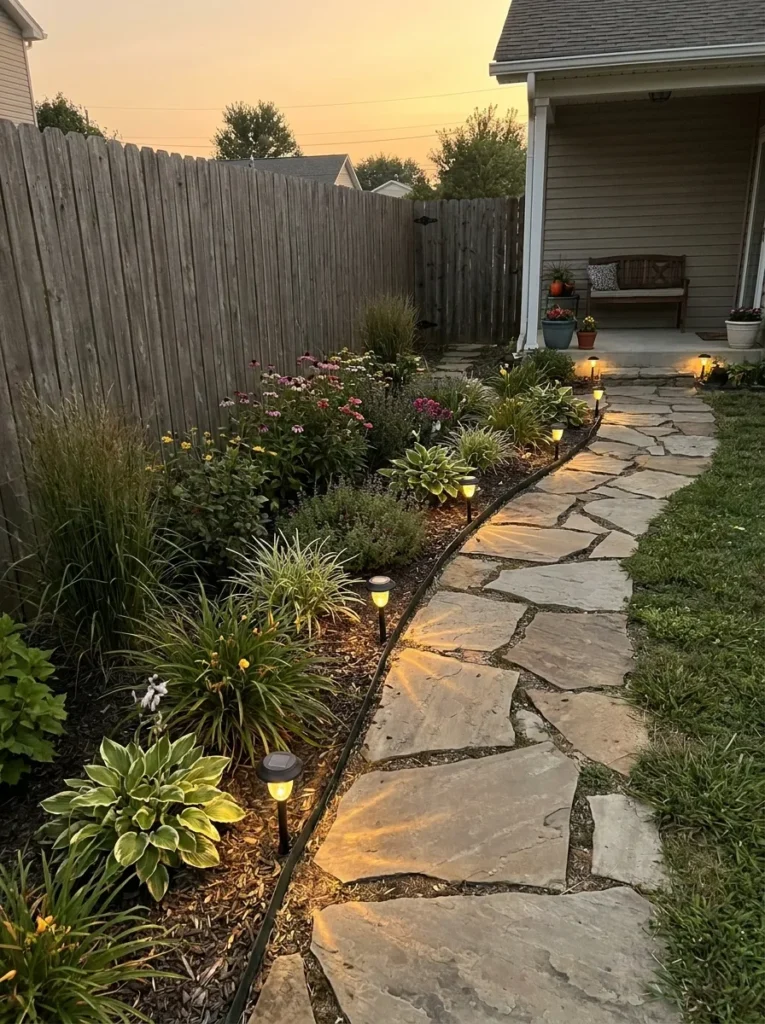
A simple gravel or stepping-stone path and a few solar lights along the edge tie the whole design together. Professionally landscaped look — still under budget.
Your 5-Step Weekend Plan
1. Plan a gentle curved shape. 2. Remove grass, add compost. 3. Install edging and mulch. 4. Plant in groups with thriller-filler-spiller. 5. Water deeply the first season. Then watch it get more beautiful every year.
More outdoor wins: our front yard curb appeal ideas and low-maintenance front yard landscaping.
Quick Answers
How much does a front yard flower bed cost?
Under $100 is realistic: compost, a simple border, mulch, and a flat of native perennials. The perennials return yearly, so the cost drops to nearly zero after year one.
What is the easiest flower bed design for beginners?
A gentle curve, thriller-filler-spiller layers, plants in groups of 3–5, heavy mulch. Forgiving perennials like daylilies and sedum make it nearly foolproof.
How do I make a cheap flower bed look expensive?
Clean edging, mulch, color blocking in large drifts, and repetition of the same varieties. Design discipline beats plant prices every time.
Affiliate Disclosure: As an Amazon Associate, I earn from qualifying purchases. If you click a link and buy, I may receive a small commission at no extra cost to you. Thank you for supporting my content!
Pingback: 11 Front Yard Curb Appeal Ideas: Transform Your Outdoor Space Zone by Zone Like an Outdoor Room - zoraventra.com