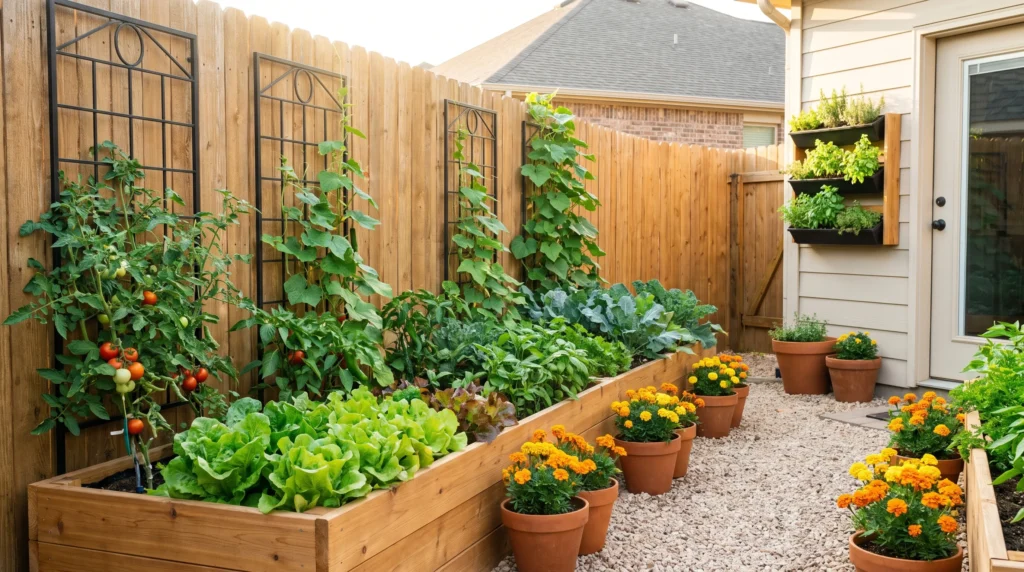
A productive vegetable garden doesn’t begin with a large backyard — it begins with a thoughtful plan. The most successful kitchen gardens are often surprisingly compact, making clever use of fences, walls, raised beds, and vertical supports. Growing upward instead of outward means more harvest from less space, kept organized and enjoyable. Vertical gardening changes how a backyard feels, too: tomatoes climb neatly toward the sun, cucumbers hang within reach, herbs stay by the kitchen door, pathways stay open. This guide walks through the practical decisions — sunlight, structures, systems — so you end up with a plan that fits your yard, your routine, and your appetite.
First, Understand Your Backyard
Before buying anything, observe. Most vegetables need 6–8 hours of direct sun — tomatoes, peppers, cucumbers, beans. Watch how sunlight moves across your yard through the day; the brightest spot may surprise you. Deep-shade areas are better suited to a shade garden than forced sun-lovers. Think about convenience: a garden near the house gets watered, harvested, and maintained more. Near an outdoor tap beats a long watering-can trek. Take inventory of existing structures — a sturdy fence, wall, pergola, or shed side can become vertical growing space with almost no construction. And leave room for the rest of backyard life: kids, pets, entertaining. The garden should enhance the yard, not conquer it.
Use the Fence You Already Have
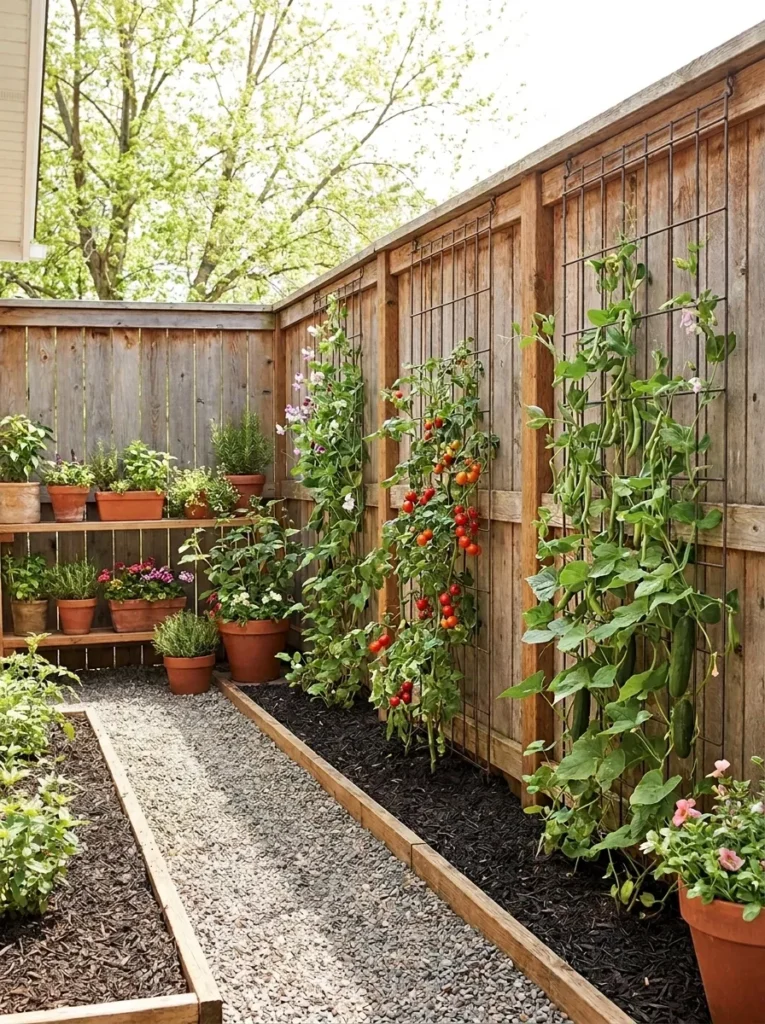
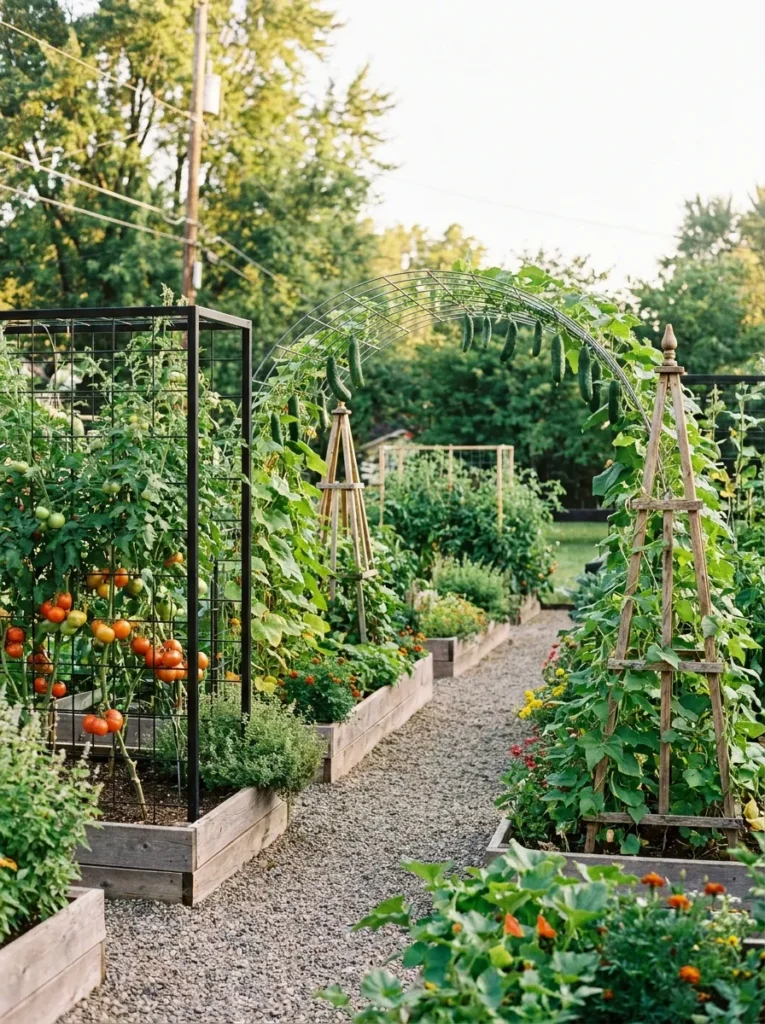
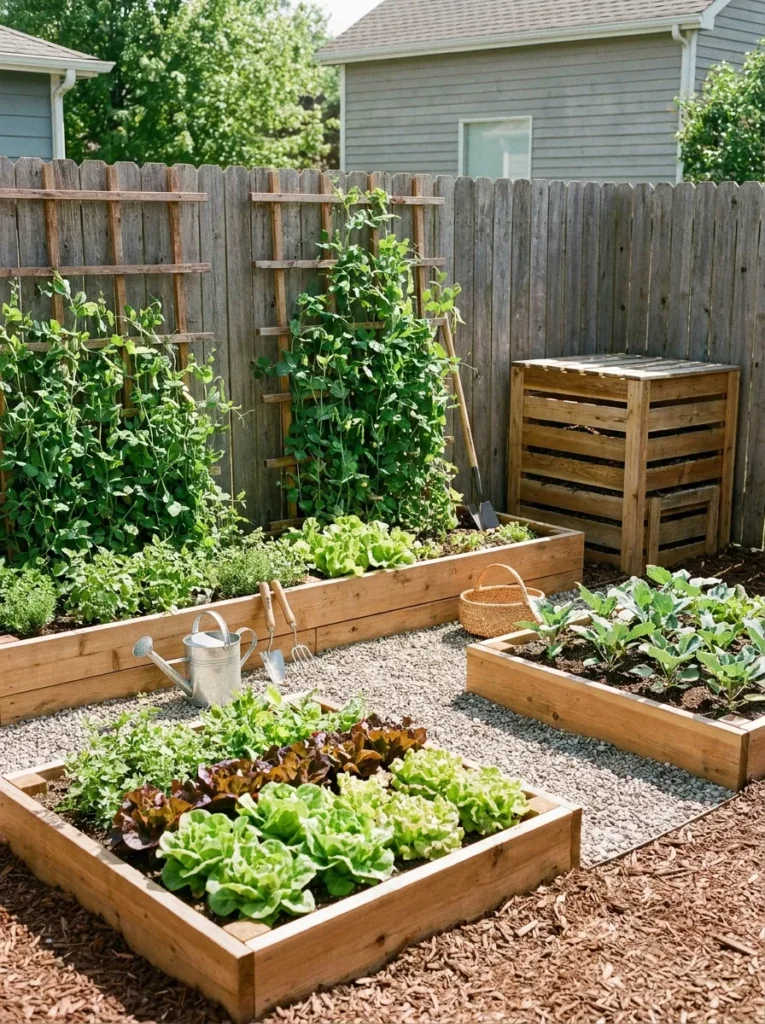
A sturdy fence is free growing space. Attach wire mesh, cattle panels, garden netting, or simple trellises and you’ve created vertical square footage without sacrificing ground. Pole beans wrap naturally; cucumbers hang straighter and cleaner; indeterminate tomatoes prune and harvest easier trained up; peas thrive on light trellises in cool months. Vertical plants are also easier to inspect — pests, disease, and ripe vegetables all visible at eye level, leaves drying faster after rain (less fungus). Choose durable supports: galvanized wire, cedar trellises, powder-coated metal outlast cheap plastic by years.
Match the Trellis to the Vegetable
Light string trellises suit peas; heavy tomato vines loaded with fruit need cattle panels or sturdy frames. Cucumbers want strong vertical supports for clean, straight, easy-to-spot fruit. Pole beans need almost nothing — bamboo teepees or netting produce abundantly in tiny space. A well-built trellis serves for many seasons; buy durable once instead of flimsy repeatedly.
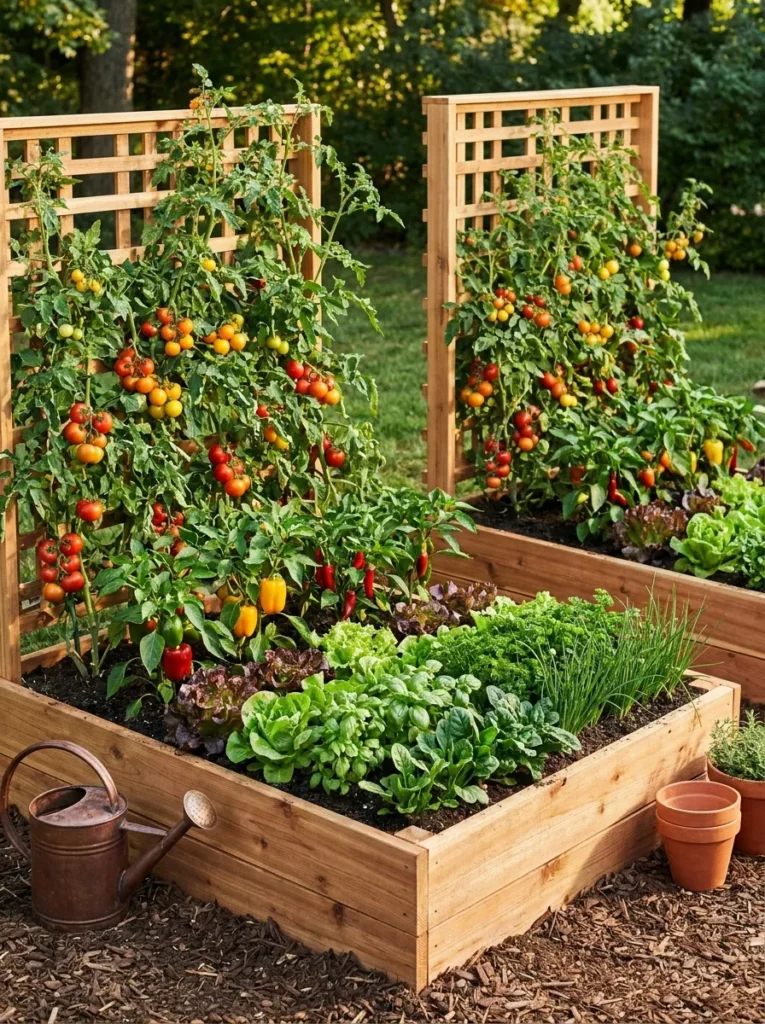
Add Raised Planters With Built-In Trellises
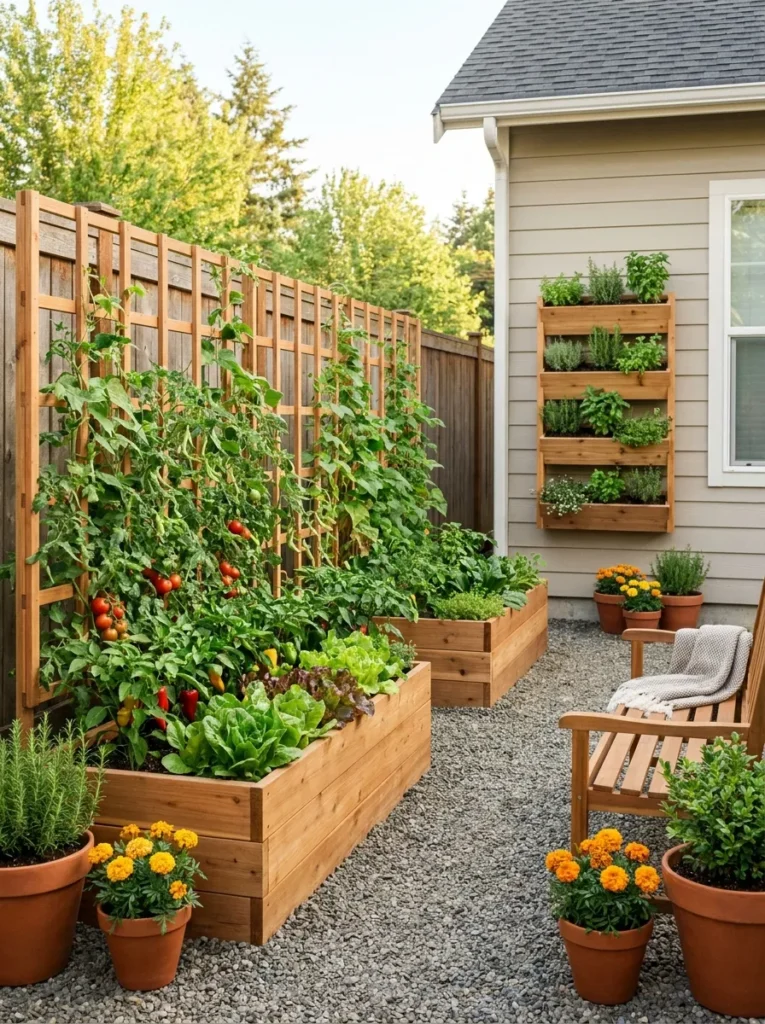
No open soil? A raised planter with a built-in trellis doubles productivity: planting space below, vertical space above. Tomatoes, cucumbers, pole beans, peas, climbing squash above; basil, parsley, thyme, chives, lettuce below. Raised soil means less bending, better drainage, and nutrient-rich growing from day one. Cedar, galvanized steel, or composite — deep enough for tomato roots.
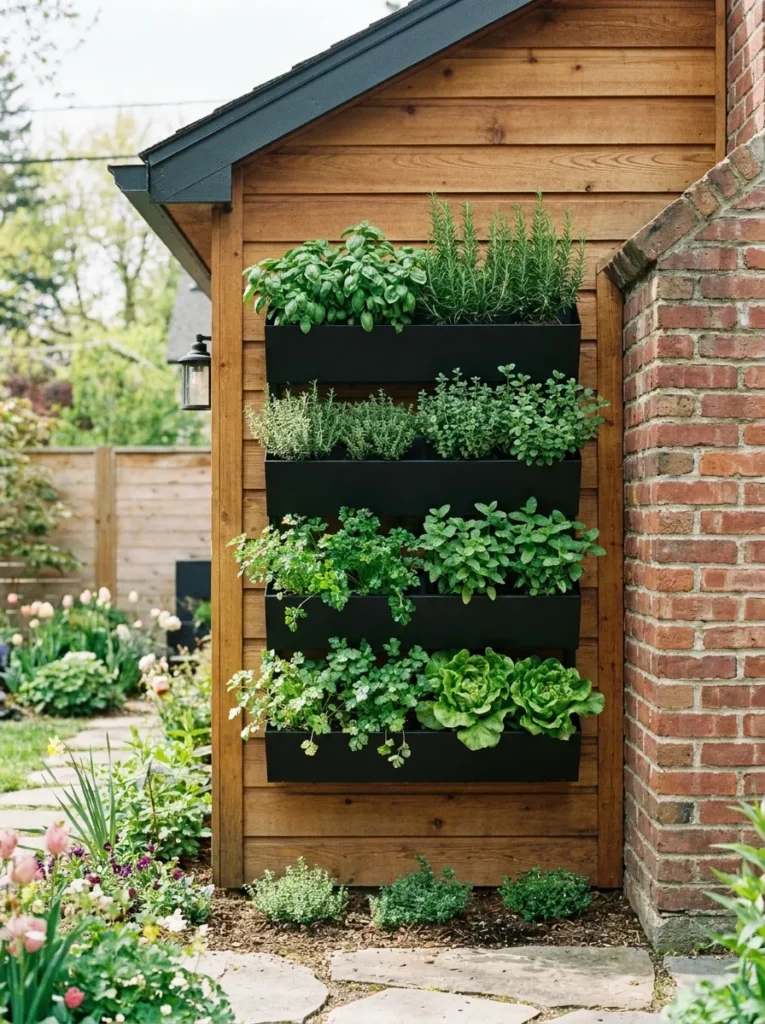
Turn an Empty Wall Into a Kitchen Garden
Garage sides, shed walls, sunny exterior walls: ideal for shallow-rooted crops in mounted planters or pocket systems. Herbs (basil, oregano, mint, parsley, cilantro, thyme) and leafy greens (lettuce, spinach, arugula) thrive steps from the kitchen. Keep planters consistent in style and spacing for a clean look; neutral containers let the green be the feature. Plan watering — wall gardens dry fast, so site near a tap or add drip irrigation.
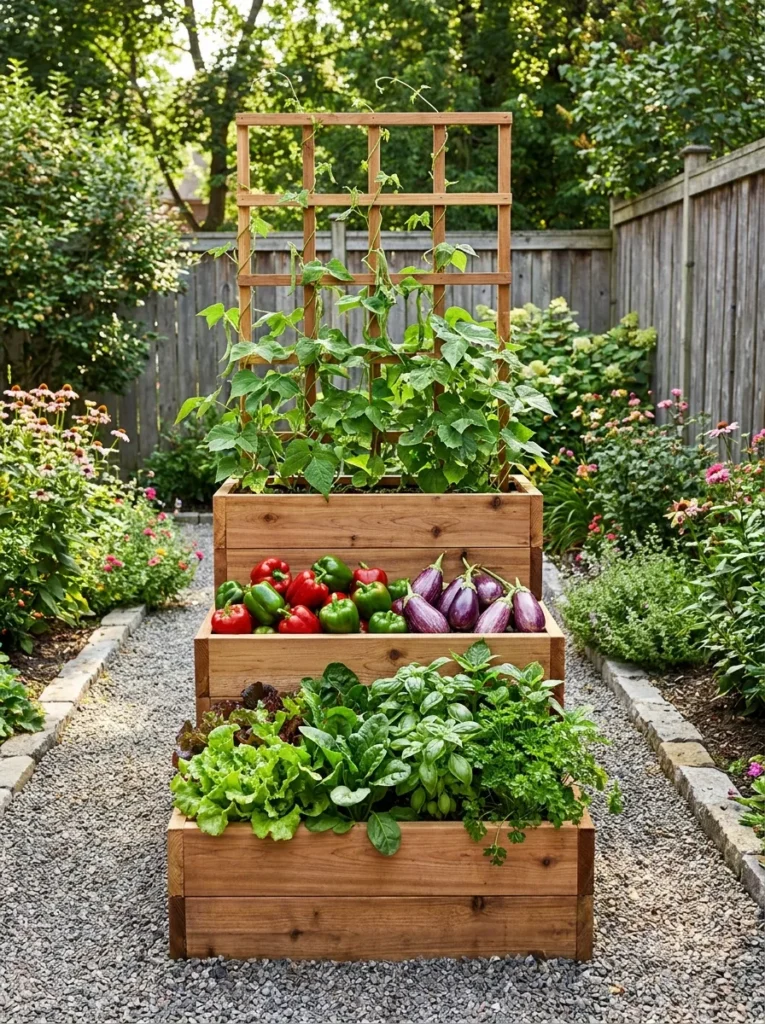
Think in Tiers
Tiered systems use height and depth in one footprint: climbing beans on the rear trellis, compact peppers in the middle, basil and lettuce along the front edge. Every layer earns its place, sunlight gets shared efficiently, and the planting looks intentional — textures and greens layered like a designed bed. Perfect for narrow backyards where outward expansion isn’t an option.
Mix Vegetables, Herbs, and Flowers
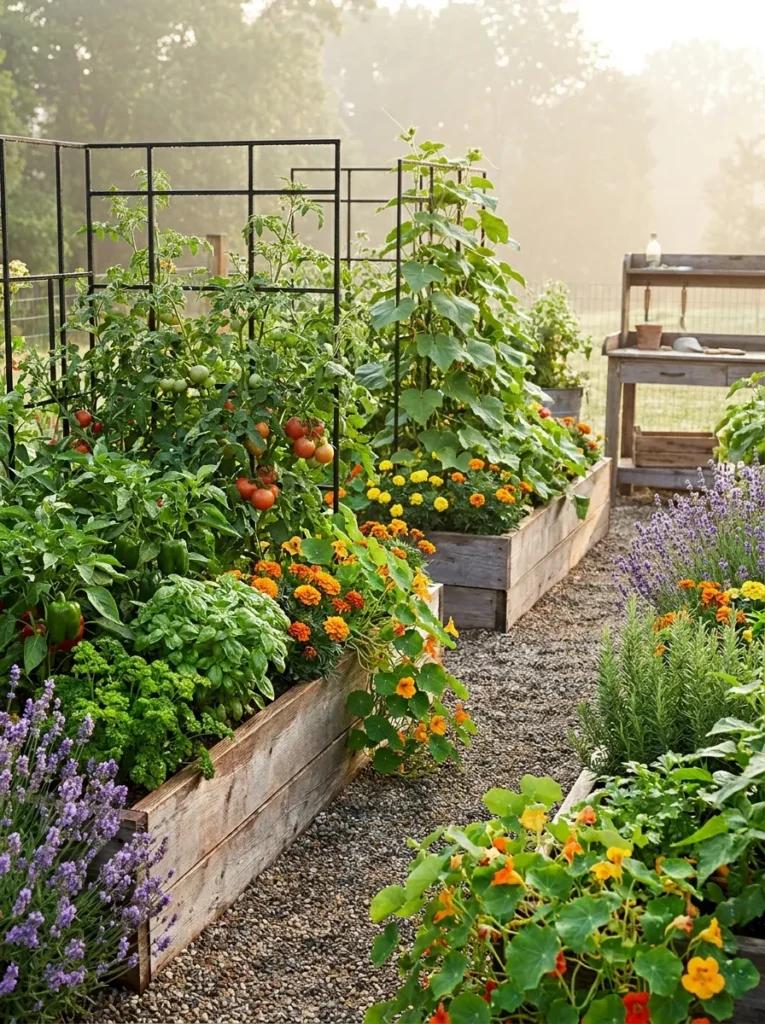
The prettiest productive gardens mix it all: basil with tomatoes, thyme near peppers, parsley filling gaps. Calendula, nasturtiums, marigolds, and alyssum bring pollinators (better yields), color, and even pest discouragement. Repeating planter styles and grouping herbs keeps it designed, not chaotic — a cottage-style character that builds through the season.
Leave Room to Walk, Water, and Harvest
The classic small-garden mistake: planting every corner, then being unable to move through it by August. Before placing planters, imagine the garden at peak season — room for watering cans, pruning, harvesting, kneeling. A garden you can move through is a garden you’ll actually maintain.
Your Planning Checklist
Map your sun. Site near water and the kitchen. Use existing fences and walls. Match trellises to crops. Consider one raised planter with a trellis. Add a wall herb garden. Think in tiers. Mix in flowers. Leave walkways. Start with vegetables you actually eat — the best vertical garden is the one that fits your life.
Quick Answers
What vegetables grow best vertically?
Pole beans, cucumbers, peas, indeterminate tomatoes, and climbing squash. Herbs and leafy greens suit wall-mounted systems instead.
How much sun does a vegetable garden need?
Most vegetables want 6–8 hours of direct sun daily. Leafy greens tolerate a bit less; fruiting crops (tomatoes, peppers) need the full amount.
Can I grow vegetables with no yard at all?
Yes — wall-mounted planters, tiered systems, and raised planters with trellises work on patios and balconies. Herbs and greens are the easiest starting point.
Affiliate Disclosure: As an Amazon Associate, I earn from qualifying purchases. If you click a link and buy, I may receive a small commission at no extra cost to you. Thank you for supporting my content!