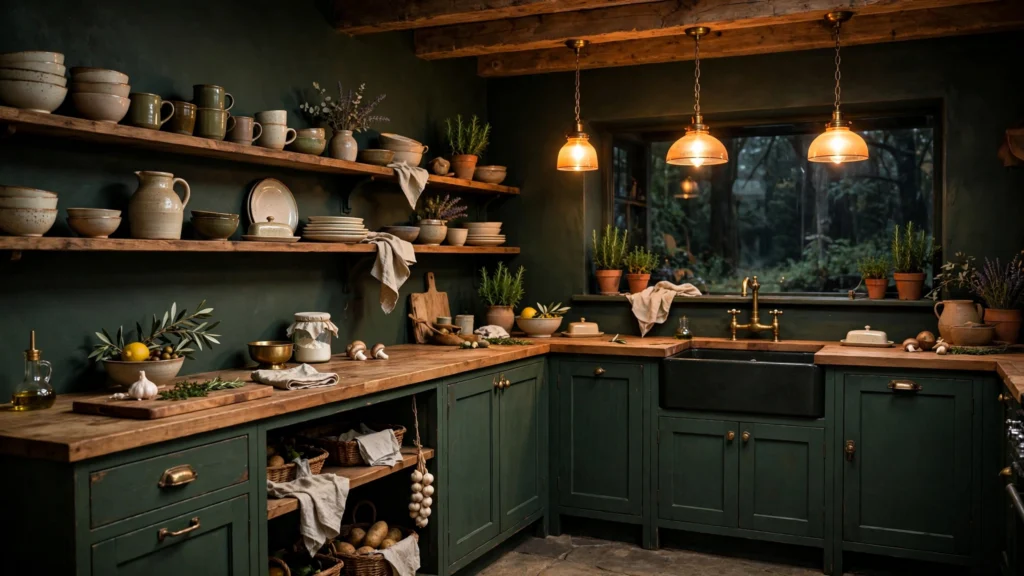
There’s a special kind of magic in a kitchen that glows amber at dusk — deep green cabinets catching the candlelight, copper pots hanging within reach, the smell of something herby simmering on the stove. That’s the dark cottagecore kitchen: part enchanted forest, part grandmother’s farmhouse, and entirely irresistible.
If classic cottagecore is all sunshine and wildflowers, its moodier sister trades the pastels for forest greens, inky charcoals, and candlelit corners. The good news? You don’t need a full renovation to get there. These 15 ideas start with a single paint can or a thrifted brass lamp — pick the ones that make your heart skip.
If you’re starting with the bones of the room, these backsplash ideas for dark cabinets pair beautifully with every color below, and if you love the rustic side of the look, our farmhouse cottage kitchen guide covers the lighter, wood-heavy version of this style.
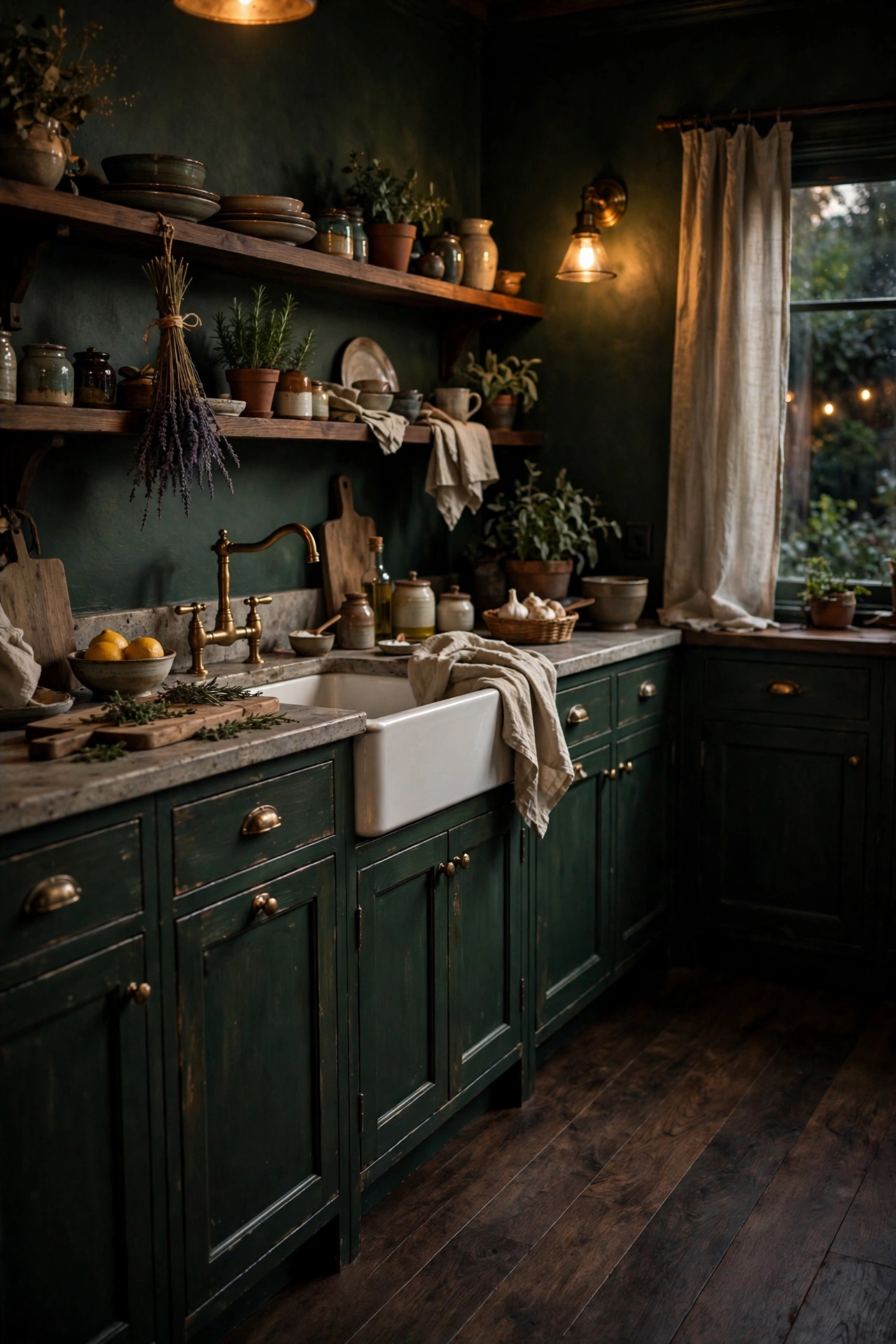
1. Forest Green Cabinets With Brass Hardware
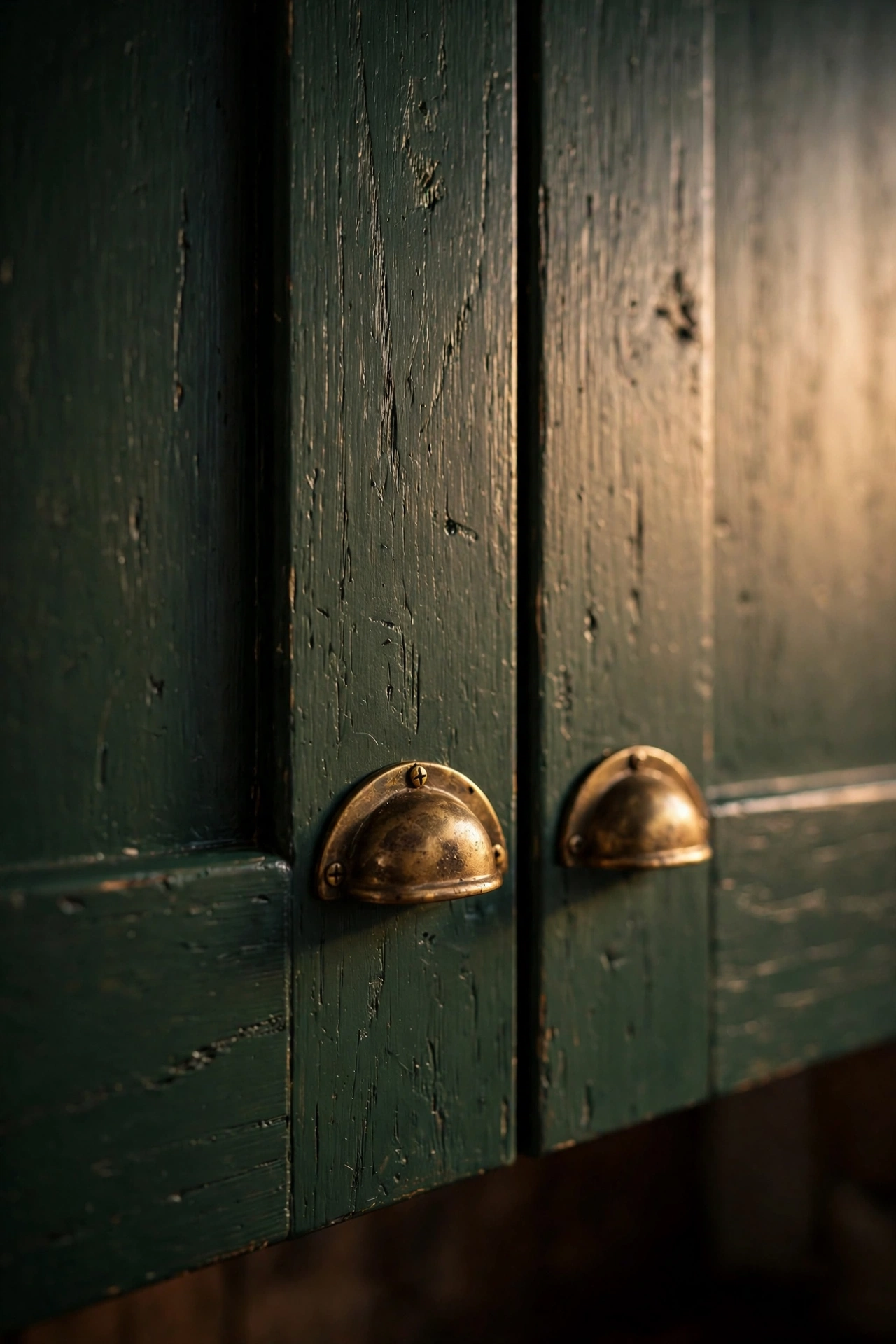
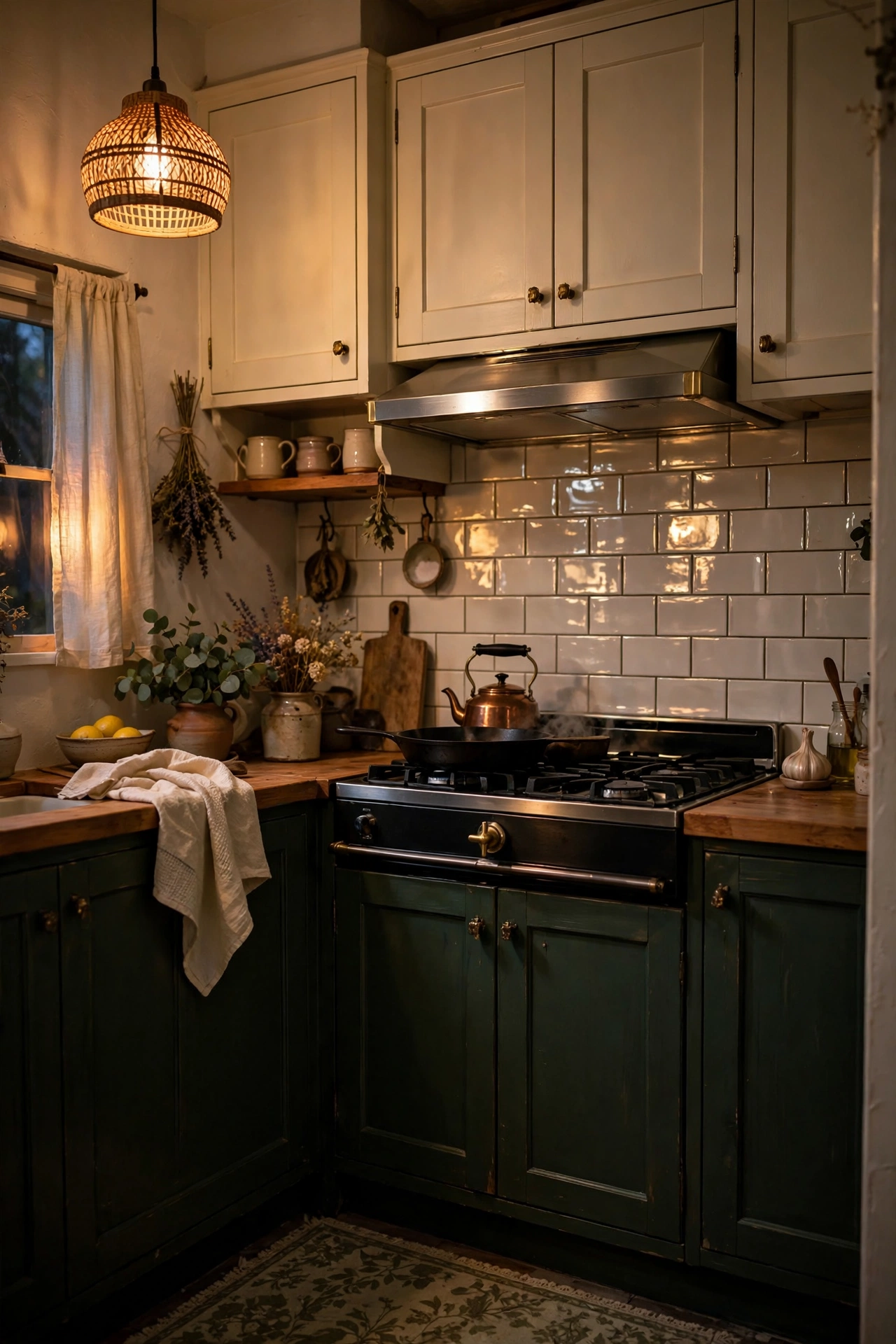
This is the signature dark cottagecore look for a reason. Forest green feels like the woods just outside the window — deep, calm, and endlessly flattering to warm wood and brass. Pair it with cup pulls or knobs in aged brass and the whole kitchen instantly reads “storybook.”
Tip: Choose a matte or eggshell finish, not gloss — shine reads modern and undoes the aged cottage feeling in one coat.
2. Charcoal Lowers, Cream Uppers
Not ready to commit every cabinet to the dark side? Paint just the lower cabinets charcoal and keep the uppers cream or warm white. You get all the moodiness at eye level where it counts, while the lighter uppers keep the room breathing.
Tip: This two-tone trick is also the kindest option for small kitchens — the dark color grounds the room instead of closing it in.
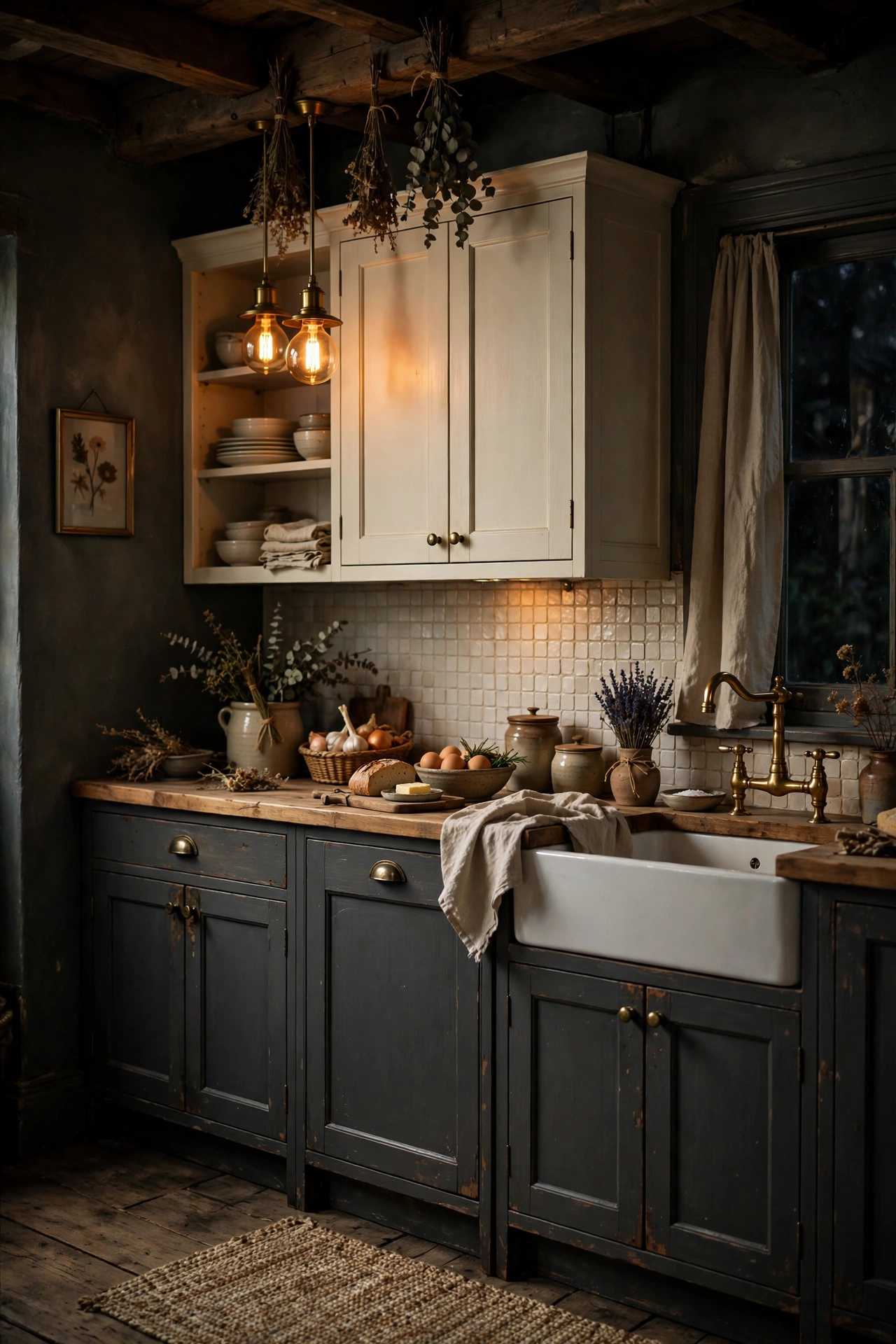
3. One Wall of Dark Floral Wallpaper
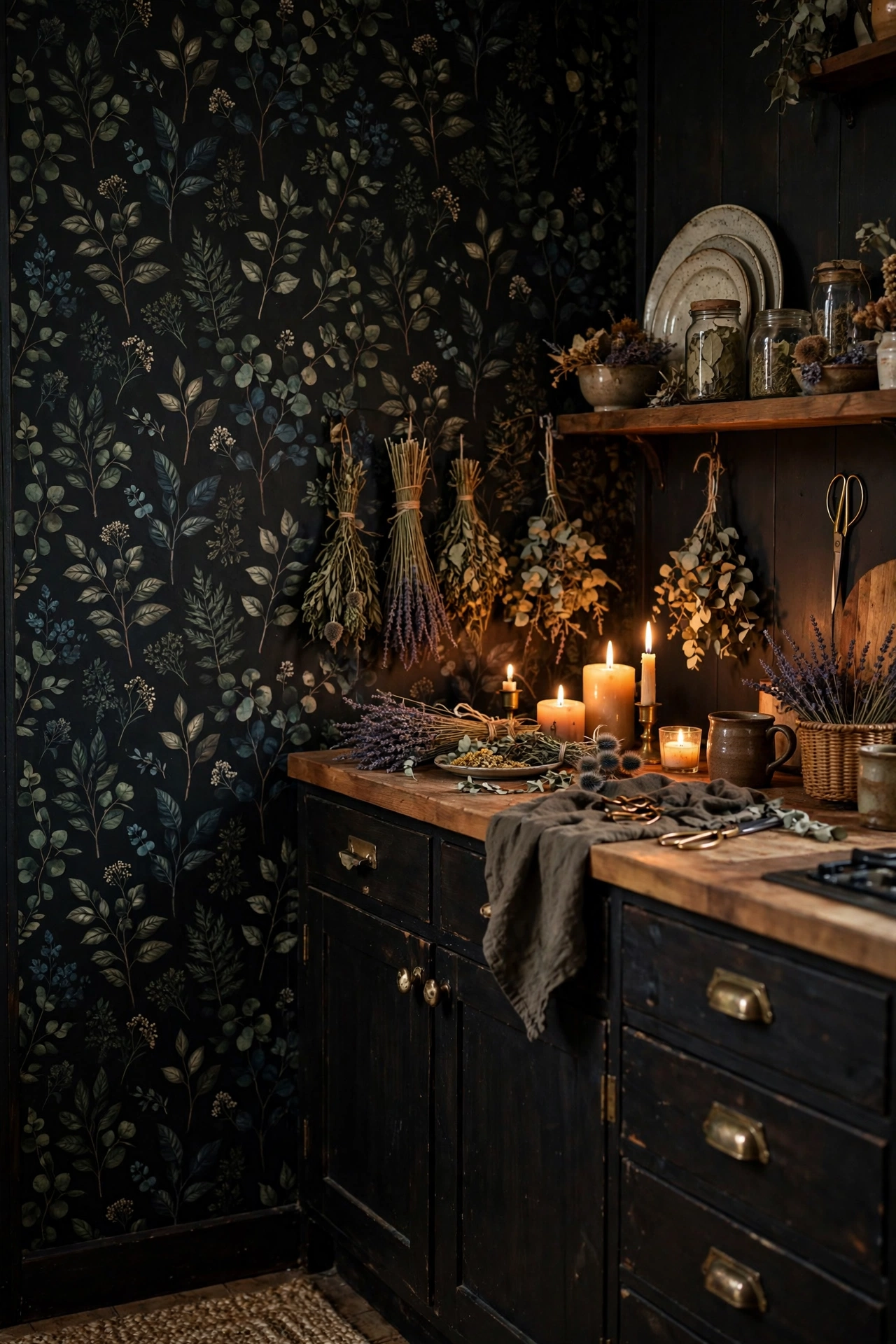
Dark floral wallpaper does something paint alone can’t — it wraps the room in pattern and makes it feel like a page from an old botanical book. Moody blooms on a near-black background are peak dark cottagecore.
Tip: Use it on a single wall or inside a breakfast nook; a busy pattern on all four walls gets overwhelming fast. Peel-and-stick versions make it renter-friendly.
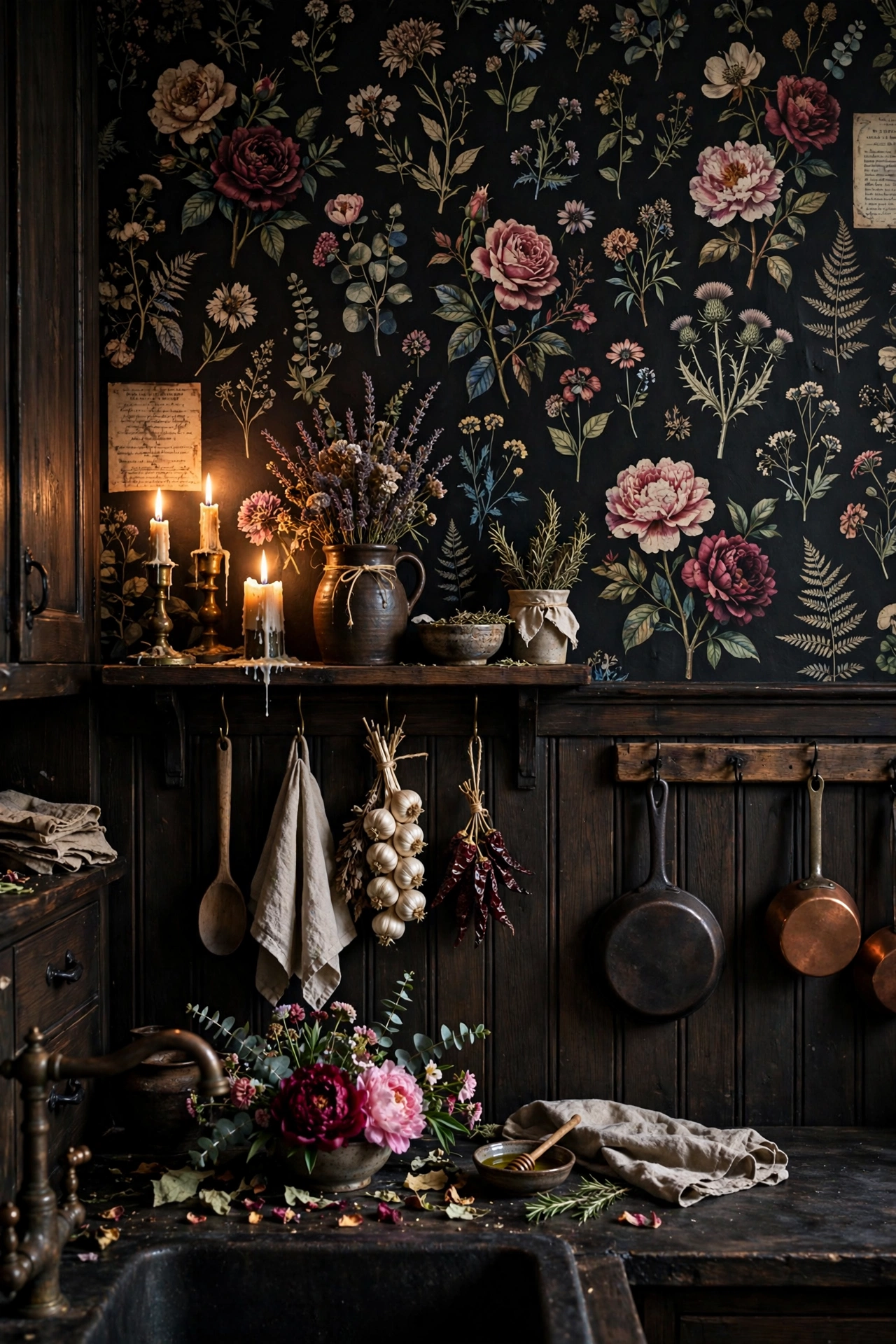
4. Open Wooden Shelves for Your Prettiest Things
Dark cottagecore is not a minimalist look, so let your shelves show off. Chunky, thick wooden shelves — the heavier the better — lined with hand-thrown pottery, amber glass jars, and trailing plants turn storage into the main decoration.
Tip: Tie handwritten paper labels onto jars with string. That tiny detail is what makes a shelf look properly cottagecore instead of just cluttered.
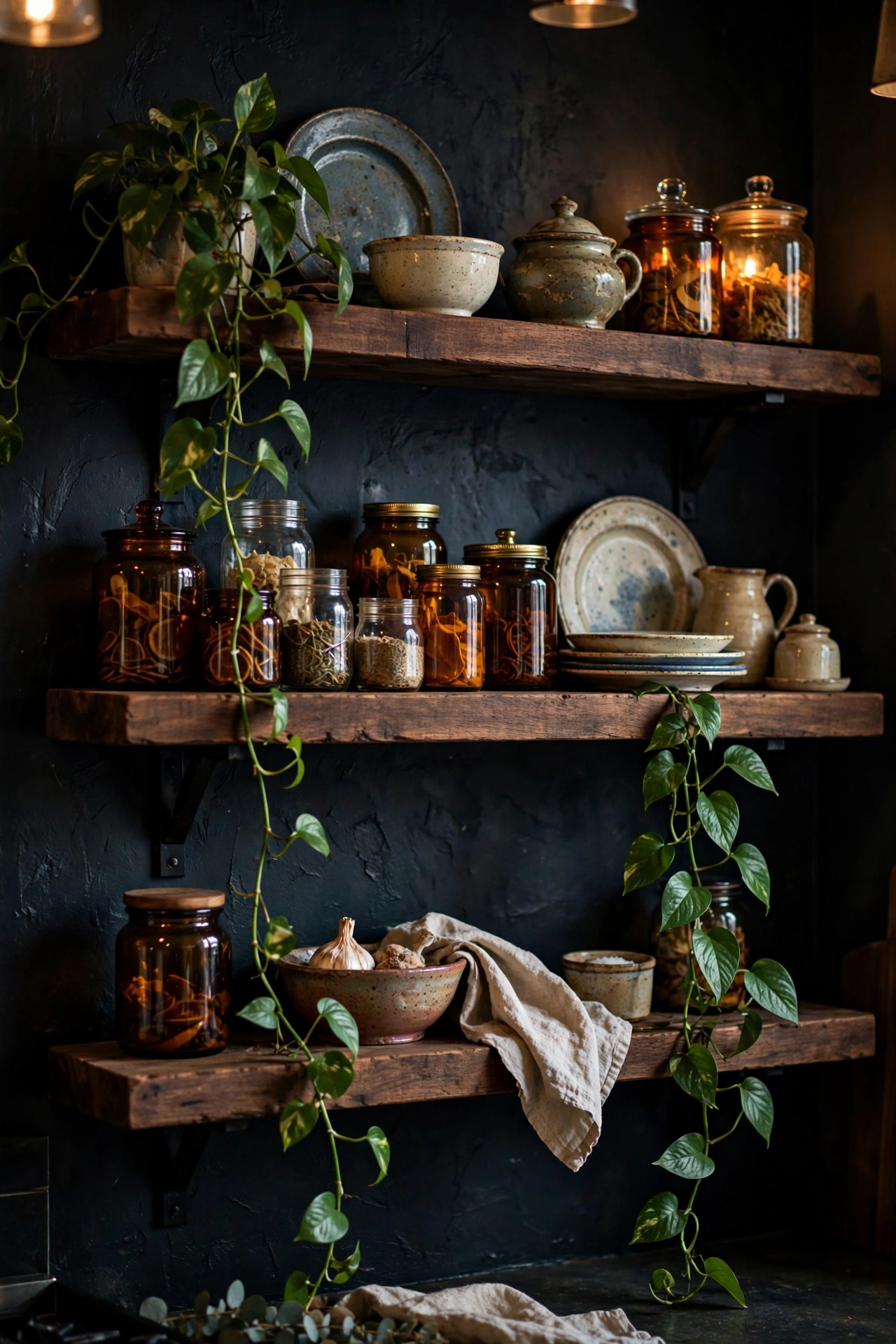
5. Butcher Block Counters With a Lived-In Patina
Butcher block is the backbone of the cottagecore kitchen — warm, touchable, and better looking with every knife mark and coffee ring. Against dark green or charcoal cabinets, the honey tones of the wood practically glow.
Tip: Oil the wood twice a year with food-safe mineral oil. A thirsty, gray-looking countertop is the fastest way to lose the cozy factor.
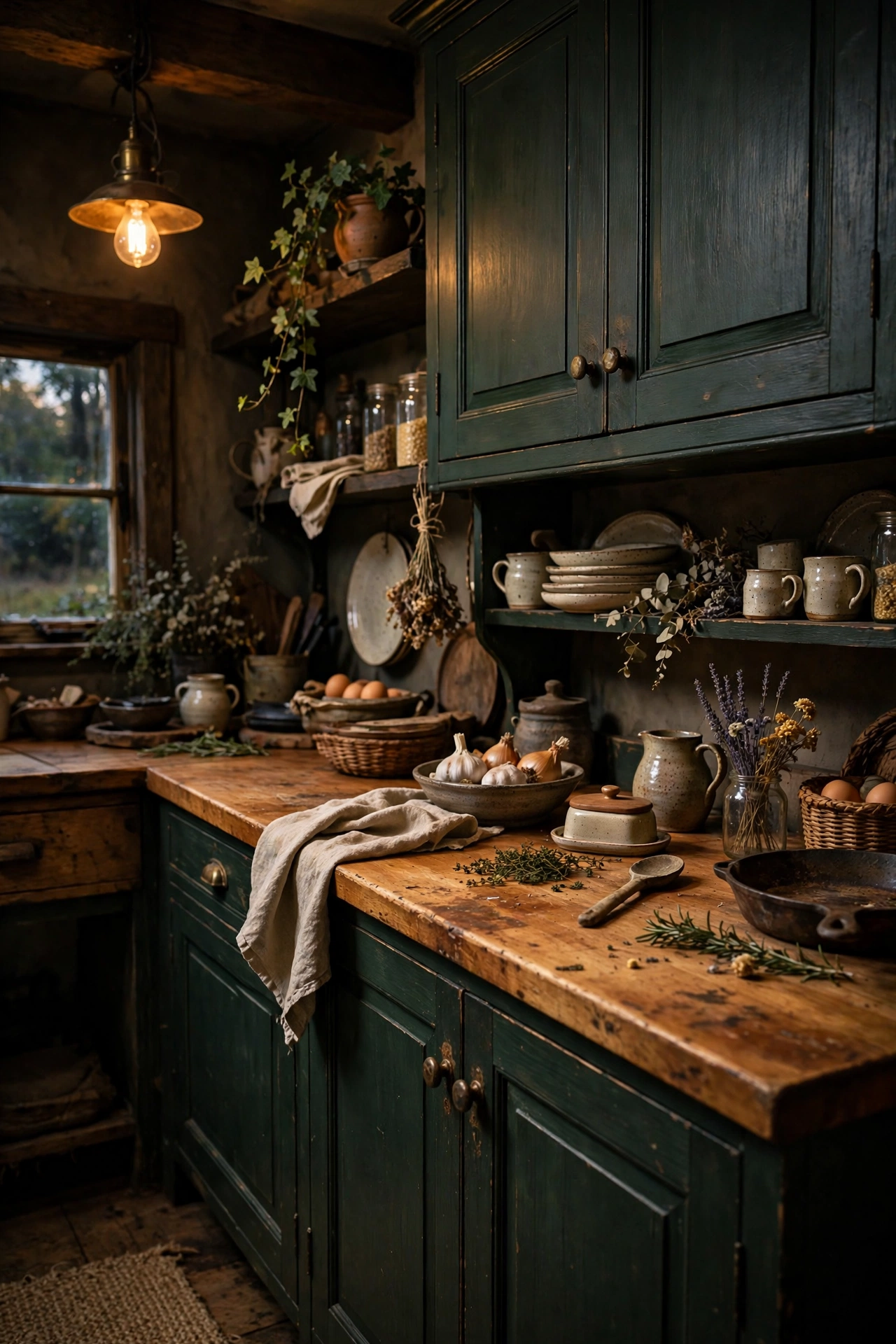
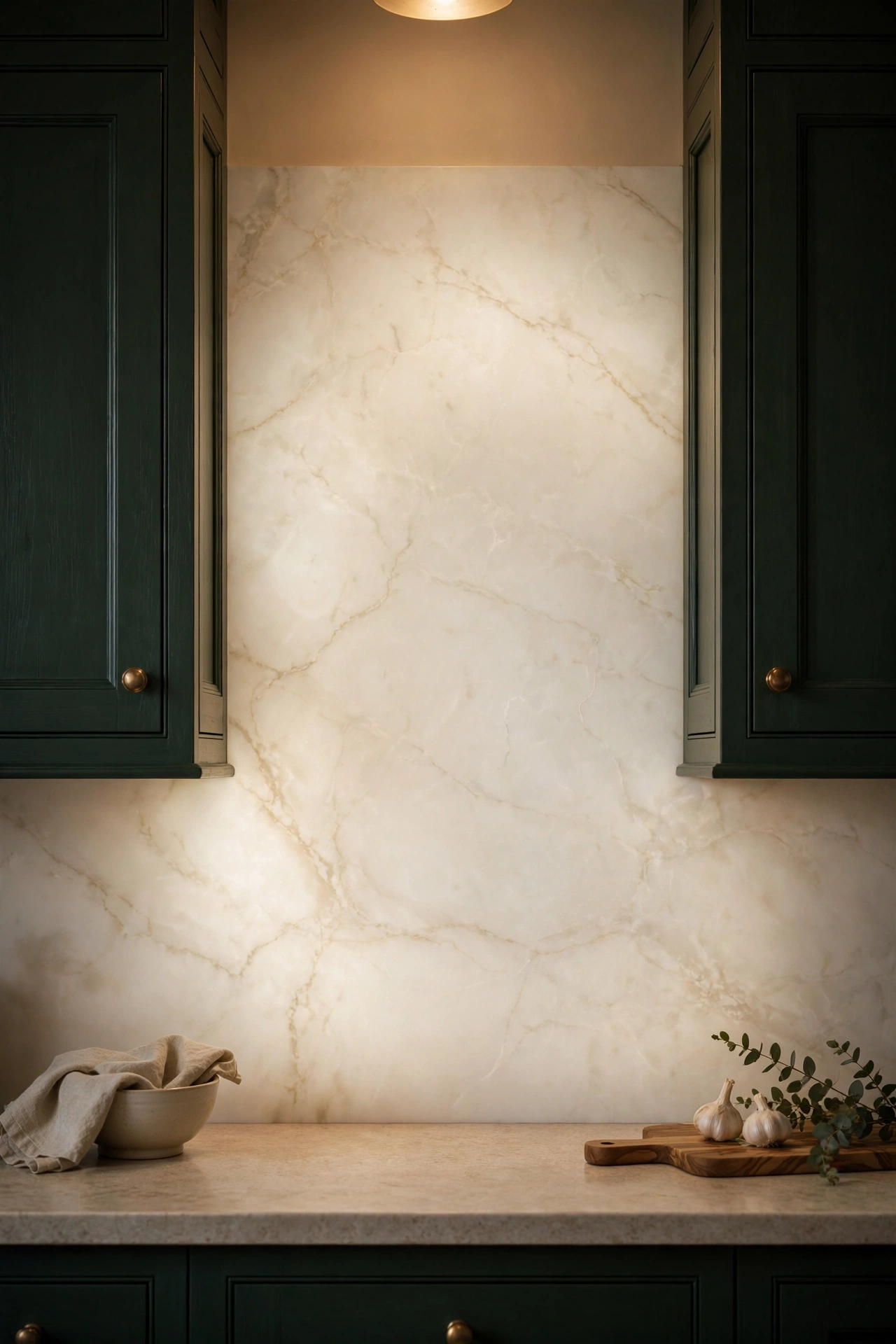
6. A Marble Backsplash Against Dark Cabinets
If butcher block is the rustic choice, marble is the romantic one. White or cream marble with soft veining lights up a dark cabinet run like moonlight — dramatic contrast without any extra color.
Tip: Can’t swing real marble? A marble-look ceramic tile gives you 90% of the effect at a fraction of the price, and nobody will know from across the room.
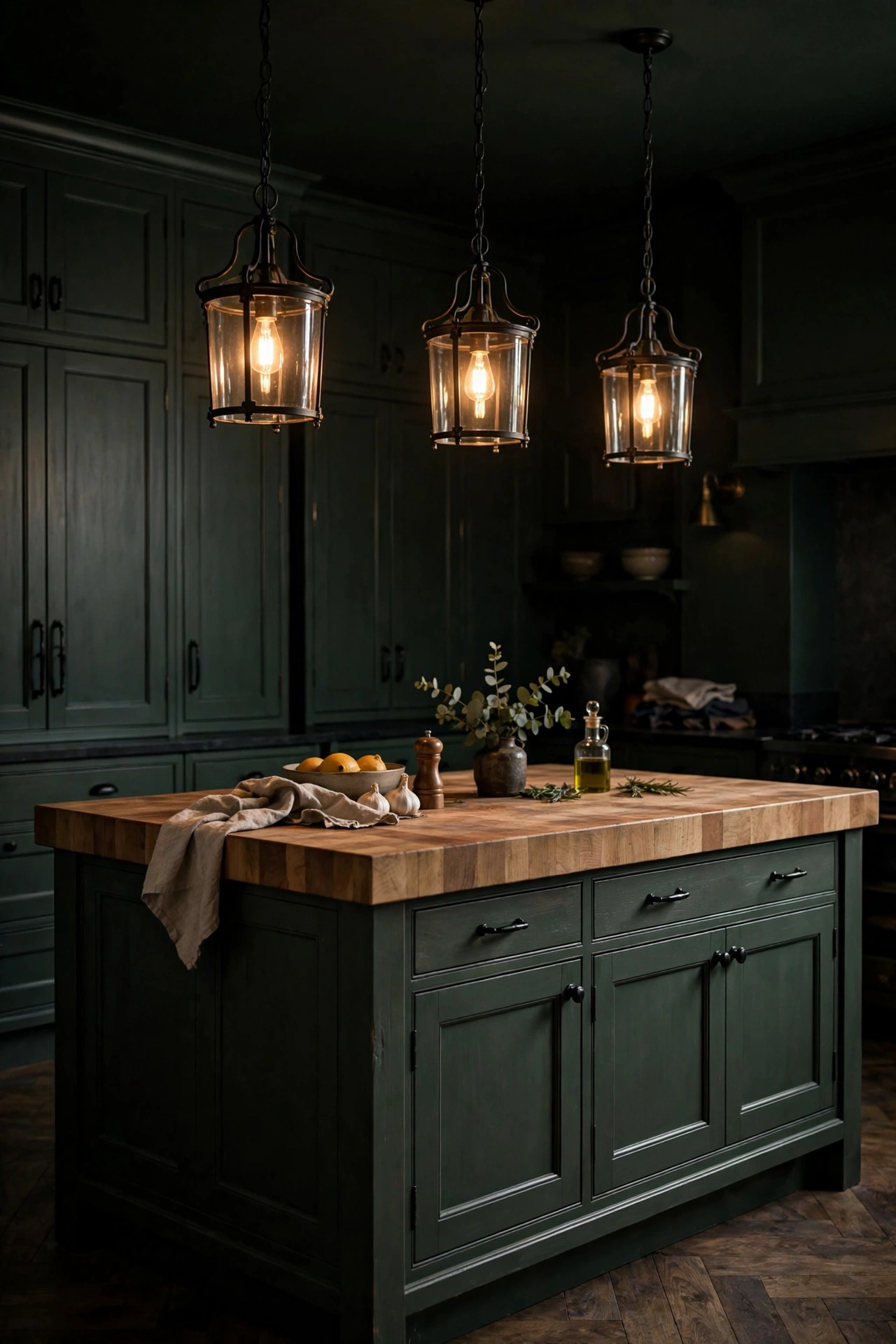
7. Wrought Iron Pendants Over the Island
Lighting makes or breaks this style. Overhead daylight LEDs will murder the mood instantly — swap them for wrought iron or lantern-style pendants with warm Edison bulbs and watch the whole kitchen turn golden at 6pm.
Tip: Hang pendants 30–36 inches above the island counter. Lower feels intimate and cottage-y; higher starts to feel like a showroom.
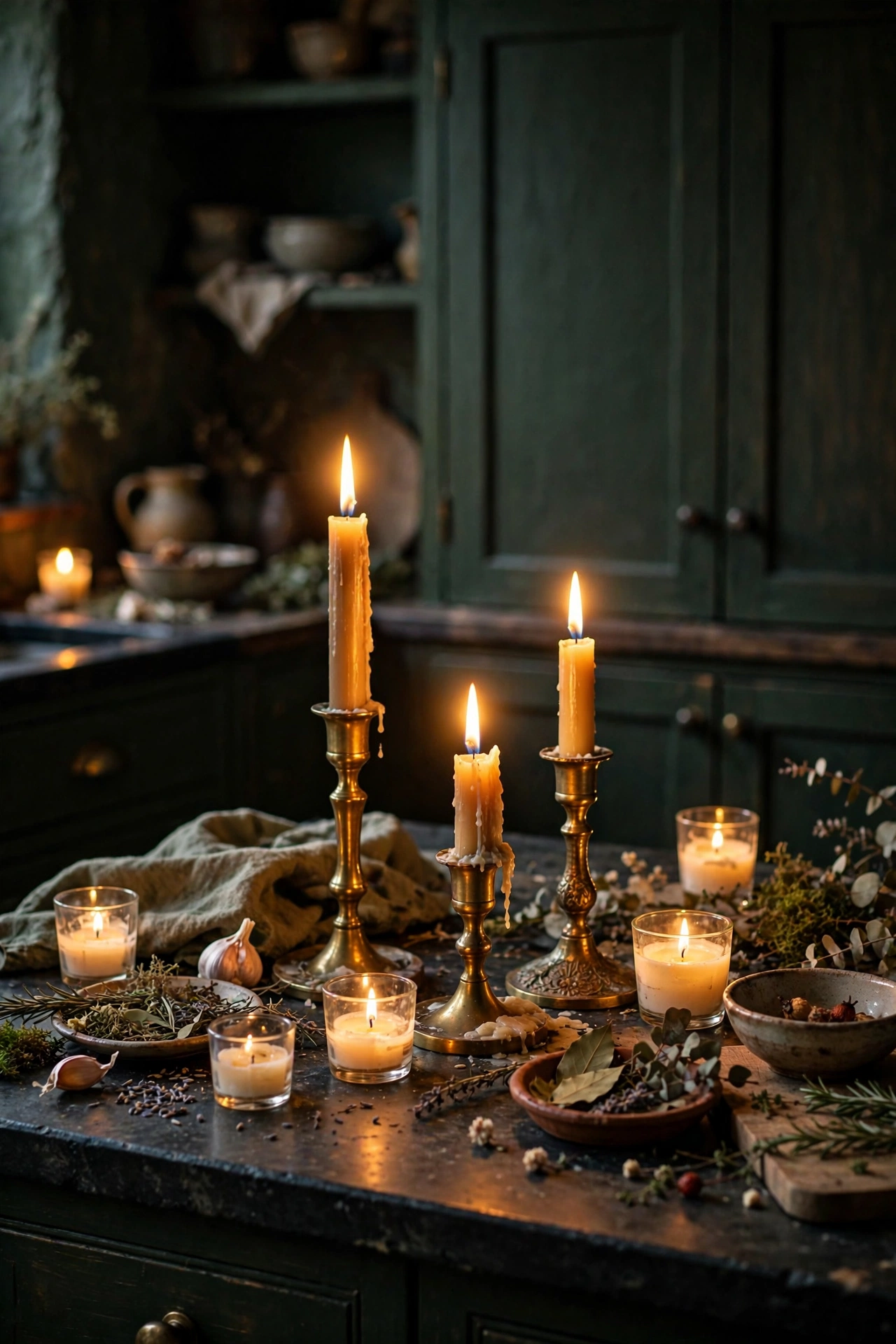
8. Candlelight in Mismatched Holders
Nothing says enchanted cottage like real candlelight. Gather brass candlesticks, little glass votives, and one slightly-too-tall pillar candle, and light them when you cook — even on a Tuesday.
Tip: Thrift stores are goldmines for quirky brass and glass candle holders. Buy the odd ones; matching sets look too new for this style.
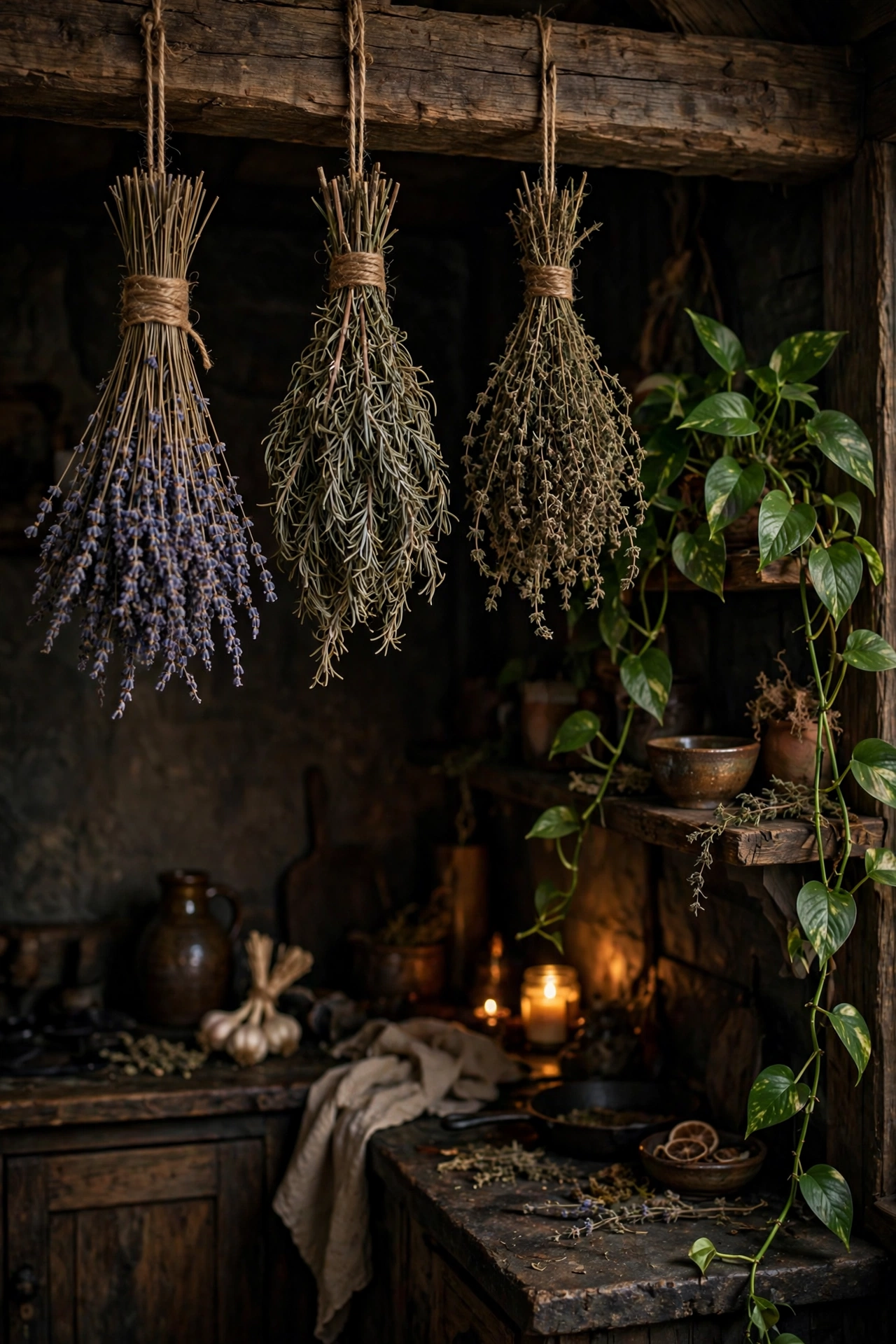
9. Dried Herbs Hanging and Trailing Plants
Bundles of dried lavender, rosemary, and thyme hanging from a beam or rail are decoration you can cook with. Add a pothos or ivy trailing off the top shelf and the kitchen starts to feel alive in the best way.
Tip: Hang herbs upside down in small bunches away from the stove’s steam — they’ll dry in two weeks and last for months.
10. Swap the Hardware: Brass Cup Pulls and Iron Hooks
The cheapest transformation on this list. Swapping standard silver pulls for aged brass cup pulls or black iron latches changes the personality of the cabinets overnight — no paint required.
Tip: Most cabinet hardware unscrews in minutes, so this is fully renter-friendly. Keep the originals in a labeled bag for move-out day.
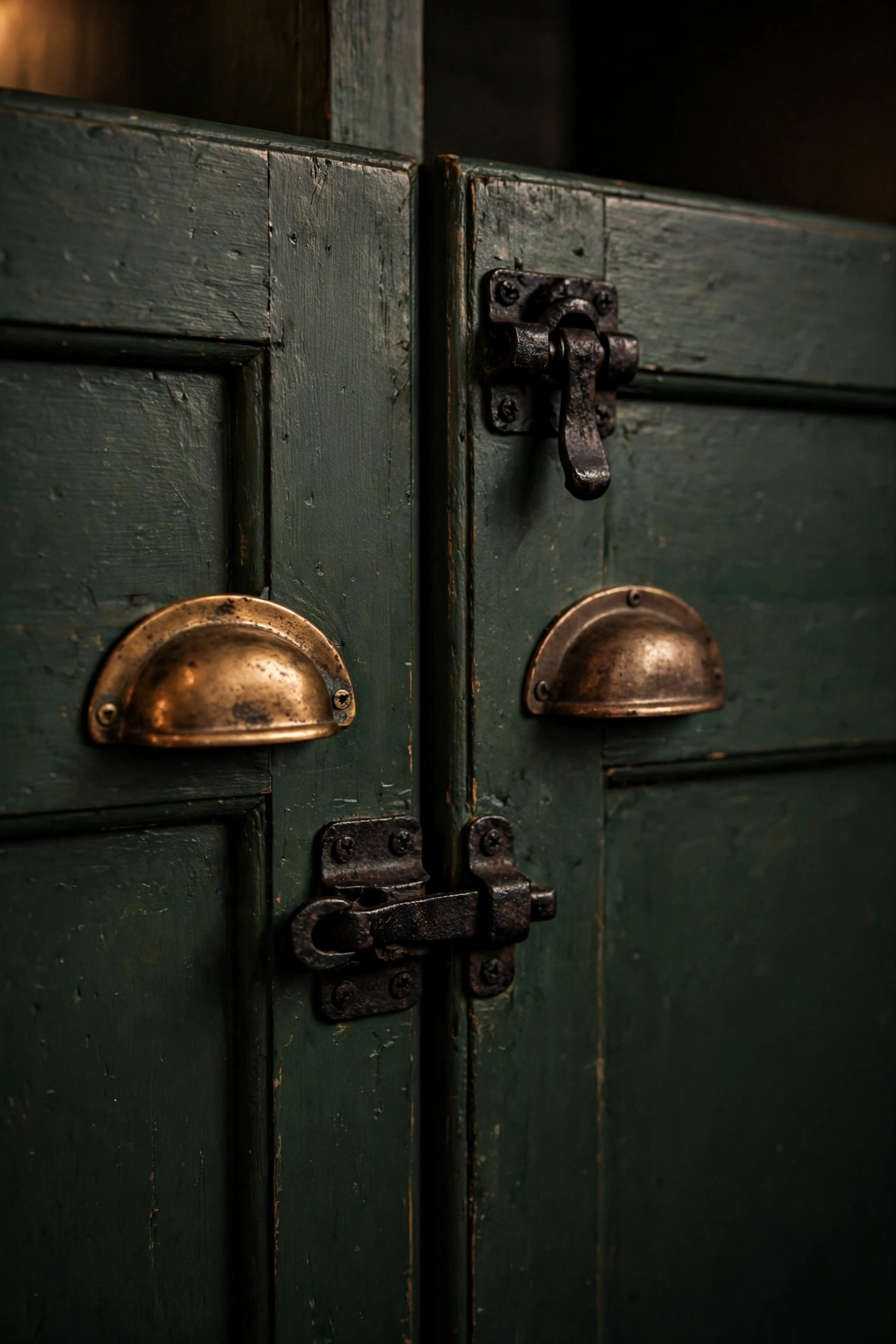
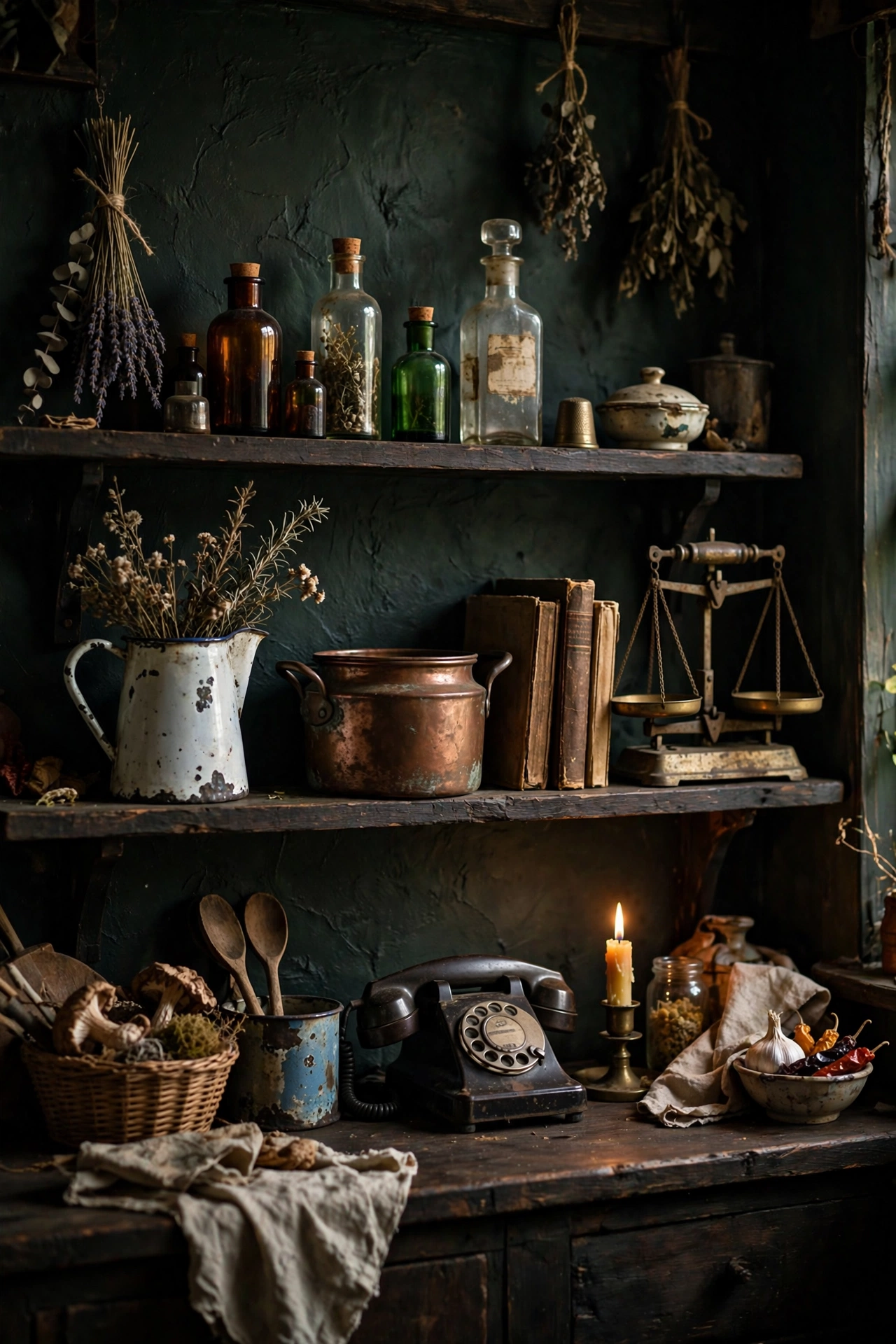
11. Thrifted Vintage Finds as Everyday Decor
Dark cottagecore is built for thrifting. An old copper pot, a chipped enamel pitcher, apothecary bottles, a retro mixer — the slightly-worn, collected-over-time look is the whole point, and it’s the cheapest way to decorate.
Tip: Give yourself a “one in, one out” rule for thrifted kitchen decor, or the collected look tips into clutter faster than you’d think.
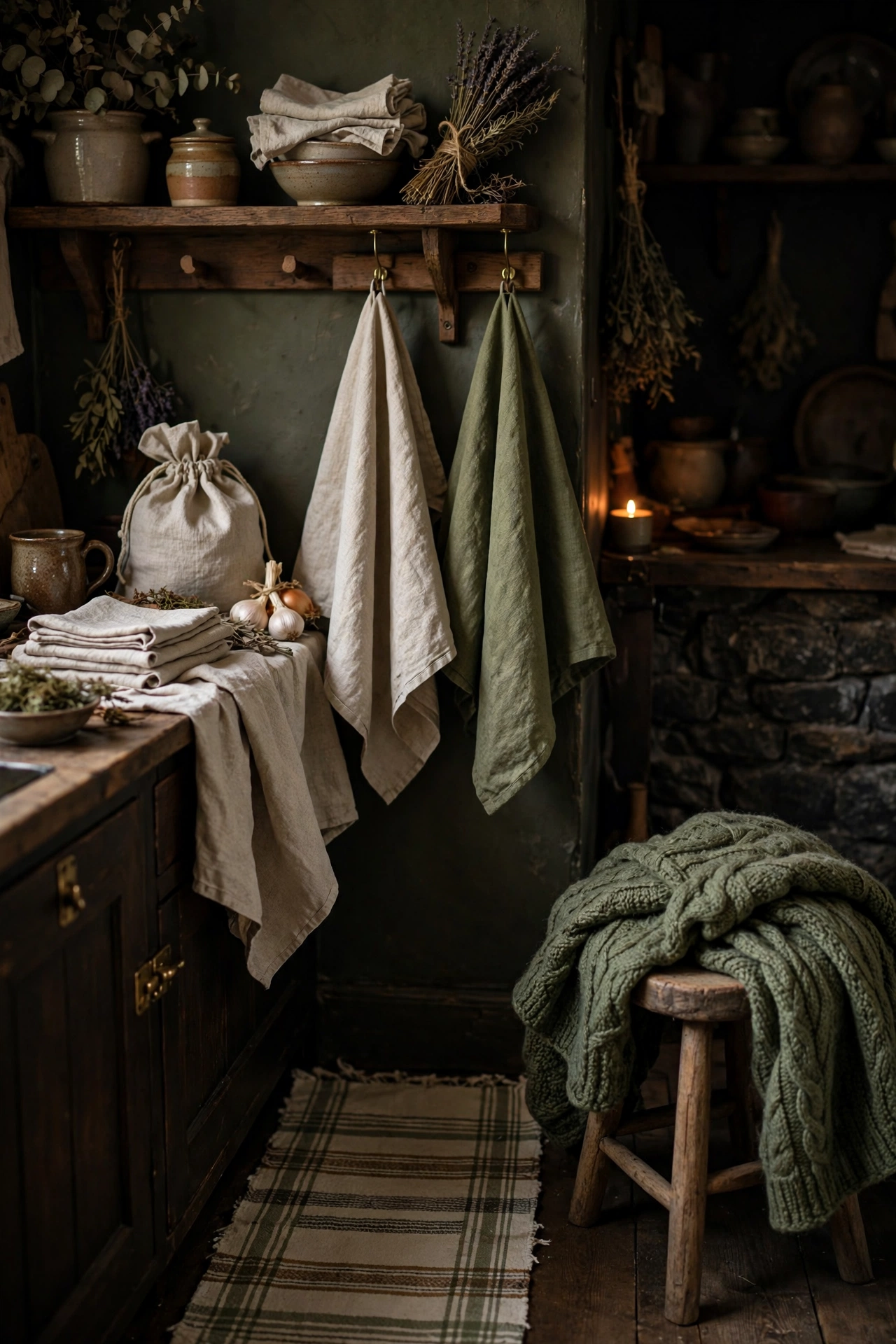
12. Linen and Earthy Textiles
Softness is what keeps a dark kitchen cozy instead of cave-like. Linen tea towels in oatmeal and moss, a striped runner, a wool throw over a stool — textiles in natural fibers warm up every hard surface.
Tip: Stick to three or four earthy tones across all your textiles (cream, sage, rust, charcoal) so the layers feel intentional rather than random.
13. Dark-Stained Wood Floors
If you’re already refinishing, a deep walnut stain on wood floors grounds the whole room and hides a multitude of sins — crumbs, scuffs, and all. It also makes lighter elements like cream ceramics pop beautifully.
Tip: Not refinishing? A large jute or vintage-style rug over existing floors gives you 80% of the warmth with zero commitment.
14. The Small-Kitchen Version
Small kitchens can absolutely go dark — you just ration the color. Paint only the lower cabinets or a single accent wall, keep uppers cream or open shelving in light wood, and add a mirror or glossy tile behind the stove to bounce light around.
Tip: In a galley kitchen, run the dark color on the windowless wall only. You keep the depth without the tunnel feeling.
15. The Thrift-First Budget Makeover
Here’s the secret: most of this look costs almost nothing. Peel-and-stick dark botanical wallpaper on one wall, thrifted brass hardware, dried herbs from the grocery store, candles you already own — under $100 and a weekend can completely change the room’s mood.
Tip: Start with lighting and textiles before you touch paint. Warm bulbs and linen curtains alone will take a kitchen halfway to cottagecore.
Quick Answers
What colors work best in a dark cottagecore kitchen?
Forest green is the classic choice, followed by charcoal, deep navy, and muted burgundy. Pair them with warm cream, aged brass, and natural wood tones — the contrast between the deep base and warm accents is what makes the style feel cozy rather than cold.
How do I keep a dark kitchen from feeling gloomy?
Layer warm lighting at three levels: pendants or sconces overhead, a small lamp on the counter, and candles for evenings. Then add texture — wood, linen, plants — because a dark room with varied surfaces reads as rich, while a dark room with flat surfaces reads as a cave.
Can I do cottagecore in a small rental kitchen?
Absolutely. Use peel-and-stick dark floral wallpaper on one wall, swap the cabinet hardware for brass pulls (keep the originals for move-out), and layer in the portable stuff — dried herbs, vintage finds, linen textiles, and warm lighting. None of it touches a fixed surface permanently.
What backsplash goes with dark green cabinets?
Cream or white marble (or marble-look tile) is the most striking pairing — it lights up the dark green like moonlight. Warm handmade-look subway tile in cream is the cozier, more cottage-like option, and a reflective or glossy tile also helps bounce light around a darker room.